

Caroline Lucas On The State Of Nature
By
6 months ago
C&TH meets the former Green Party leader
We are very well acquainted with discussions around the state of the nation, whether that is by attending a lecture or sitting around the dinner table. But too often we shy away from the state of nature. Channel 4’s recent factual drama Dirty Business recently got the nation talking about water quality – but do you know how our trees are faring? Our wildlife? Our air?
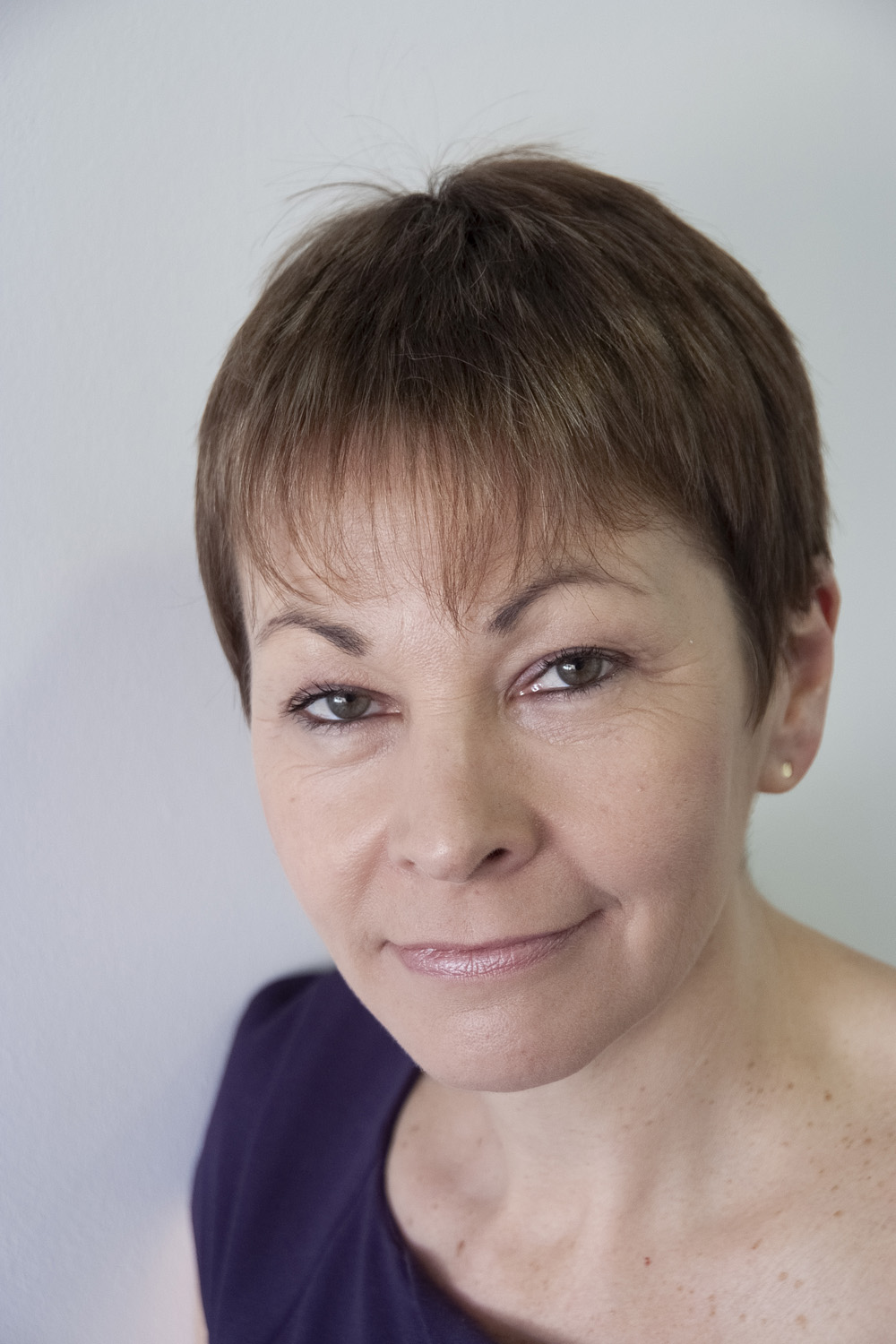
Next week, former Green Party leader Caroline Lucas will head to Cambridge Literary Festival to present the inaugural State of Nature Lecture (Friday 24 April at the Cambridge Union). It joins fellow annual lectures the Room of One’s Own Lecture (this year delivered by Deborah Levy) and the State of the Nation Lecture (this year delivered by Rachel Clark). They join a festival line-up that includes everyone from Ed Davey and Mary Berry to Zadie Smith and Faithful crime writer Harriet Tyce.
Ahead of her lecture, we sat down with Caroline to find out more about the State of Nature.
Q&A: Caroline Lucas
‘State of the nation’ is something we are quite used to as a concept, but ‘state of nature’ is not something we often get at literary festivals like Cambridge’s. Why do you think it’s important to deliver in 2026?
Well, I suppose I would say that most ‘state of the nation’ reports pay inadequate attention to the fact that whatever our state of the nation is, it is fundamentally dependent on the health of our natural world and our ecosystem, upon which everything else depends. So I see this inaugural state of nature lecture as a very welcome opportunity to try to redress that balance, and to remind all of us that unless we have a thriving natural world, then everything else that we try to create on it is at risk, because the natural world is so important. In other words, the economy is a subset of our wider ecosystem, rather than the other way around.
One of the places I’m going to start the lecture is looking at a report from the Joint Intelligence Committee (JIC), a committee that includes MI5, MI6 and GCHQ. The government commissioned them to look at the impact of climate breakdown and nature loss on national security. And the conclusions were so shocking that the government tried to suppress the report. It was supposed to be due out last October, and lots of people have been campaigning to get it released. And finally, a Freedom of Information request was made in January, and the report was finally published. Even now, it’s only published in redacted form – but even redacted, it’s deeply shocking.
It talks about the fact that every single critical ecosystem is on a pathway to collapse. They look in particular at the impact of what they call six critical ecosystems on the UK specifically, and they note that our food security is particularly at risk because we depend on imports for so much of our food security. The report talks about things like the collapse of fisheries, declining crop yields, degradation of arable land – and it talks about how that could manifest itself in the UK in terms of empty supermarket shelves, civil unrest and spiralling prices.
Essentially, the whole issue of the state of nature is increasing in terms of its critical salience to the very security of life on Earth. That’s really the top line message of the lecture.
How did the talk come about?
I would love to say that I was instrumental in the idea of this lecture, but honesty compels me to admit that I’ve worked before with the director of the festival [Cathy Moore]. We were working together on what would have been a very exciting festival programme all about literature around nature and climate, which then got cancelled because of Covid. That might be why she came to me, but it was their idea [Cambridge Literary Festival’s] completely. I’m just delighted that they decided to do it.
If that was five years ago, why are these conversations still salient now? It feels like climate conversations have rebounded since Covid…
I think Covid did just remind all of us of something we’ve often taken for granted, which is just how important access to the natural world is for our physical and mental well being. There have been quite a lot of reports done since, pointing out that access is not equally distributed, and lower income families and more marginal groups have much less easy access to good quality nature.
I think people have become more aware, as well, of the threats to the natural world. That can often be a very local thing – if you think about how the campaign for cleaner rivers and so forth has absolutely taken off because it’s become such a visible and obvious outrage that the water companies are just spewing raw sewage into the rivers that people care so deeply about. To some extent, post Covid, we’ve also rediscovered our love of the natural world.
One of the things I wanted to explore in the lecture as well is, ‘What is nature?’, which sounds a bit daft, but if we’re going to talk about the state of nature, we should be clear about what we’re talking about. There’s an increasingly strong argument that one of the reasons that so much environmental degradation has taken place is our disconnection from the natural world. Particularly in a country like the UK, where we pride ourselves on being a nation of nature lovers, and yet we’re also one of the most nature depleted countries in the world.
There’s an interesting campaign being run by a group called Lawyers for Nature. They point out that in the Oxford English Dictionary, the definition of nature is basically ‘the living world, with the exception of human beings’ – they define it very specifically as not human. It’s only in an obsolete definition that there’s a recognition that nature includes human beings. The campaign from Lawyers for Nature is trying to change that, to make the dominant definition one that includes human beings.
The argument that I would make is that we have seen nature as being something outside of ourselves, and since the Industrial Revolution, really, we’ve also seen ourselves as above nature. Nature has been seen in such transactional, instrumental terms – what can nature do for us? – that we’ve lost a much more deeply rooted sense of the intrinsic rights and worth of nature. That’s accelerated, I think, in recent years; all of the language we now have around ‘ecosystem services’ and ‘biodiversity net gain’. It’s almost as if the Green Movement has willfully allowed itself to co-opt language which could not be more off putting and meaningless to the vast majority of people if it tried.
So how do we start those conversations, to get people to care?
I think better than conversations, in many ways, is a direct experience and immersion in it, which is one of the reasons that as an MP, one of the campaigns I was most proud of was about trying to get a new GCSE in Natural History. That has now been agreed, and it’s due to come into force in a couple of years. It’s taken a very long time, but the point of doing that is making sure that from a relatively young age, young people have a real direct experience of the natural world. This wouldn’t be a GCSE that’s entirely desk based. It wouldn’t be the same as Geography or Biology, it would involve making field diaries and noticing what’s growing on the pavement on your way to school – much more about getting the soil under your fingernails.
I think education does have a big role to play. I’m also involved in the Right to Roam campaign. In Scotland, for the last 20 years or so, it’s been law that, unless there’s a good reason otherwise, like ground nesting birds, then people have access more or less to wherever they want to go. Obviously they need to exercise that responsibly. Whereas in England and Wales, we only have a legal right to roam on about 8 percent of the land and 3 percent of rivers. We have a wonderful network of footpaths and we need to protect that, but I think that sense of feeling at home in the natural world, feeling welcome there, feeling that you can be confident there and having an intimacy and a familiarity with your surroundings, is something that’s so important to experience. And the more we can promote that, the better.
Any environmental facts that make you feel optimistic?
There is optimism. Obviously there are animals that are being reintroduced. There’s been lots of excitement about the reintroduction of beavers and the recognition of all of the benefits there are in terms of flooding and water management – as well as just the sheer beauty of having beavers back in our rivers. I think that’s really important.
I think some of the rewilding schemes have caught people’s imaginations, and there’s a lot of reconnecting that’s going on through those schemes. The rewilding scheme at Knepp on the West Sussex-Hampshire border has had such amazing results. Huge numbers of butterflies are back, including endangered species. It’s just been incredibly positive.
It is important to celebrate the positives and to recognise that if we act fast, we can change things. We’re not on an inevitable route to doom, but things are looking pretty grim unless we do act urgently.
What can individuals do?
I would recommend not being an individual! Although obviously there are individual things that people can do: even if they’ve only got a window box, you can grow things and take care of things. But I think even more powerful is when people come together. It’s interesting how many initiatives there are now at a local level, whether that’s cleaning up a bit of local land and planting some food on it. In Brighton, for example, quite a few street corners have community allotments – on tiny bits of land! But they’re beautiful to look at, and they provide food for people who are just walking past. It’s a very inclusive thing to do. There are just so many projects like that up and down the country. I think what’s so lovely about them is that there’s something particularly inclusive, I think, about working on the land. I was looking at some examples in London, where, in particular, refugees and asylum seekers have been very involved, because it’s a way of helping people to feel more rooted in their communities.
Caroline Lucas presents Cambridge Literary Festival’s inaugural State of Nature Lecture on Friday 24 April 2026. Tickets start from £14pp.