


Dreaming Of A Positive Future For Our Planet Is The Only Way We’ll Achieve It
By
3 months ago
Re-engage with climate action by staying positive about our chances
Climate action feels shoved to the back of the room right now – but we’re telling the story all wrong, argues Rob Hopkins, who says rekindling our collective longing for a better tomorrow can unlock momentum.
It’s Time To Re-Engage With Climate Action
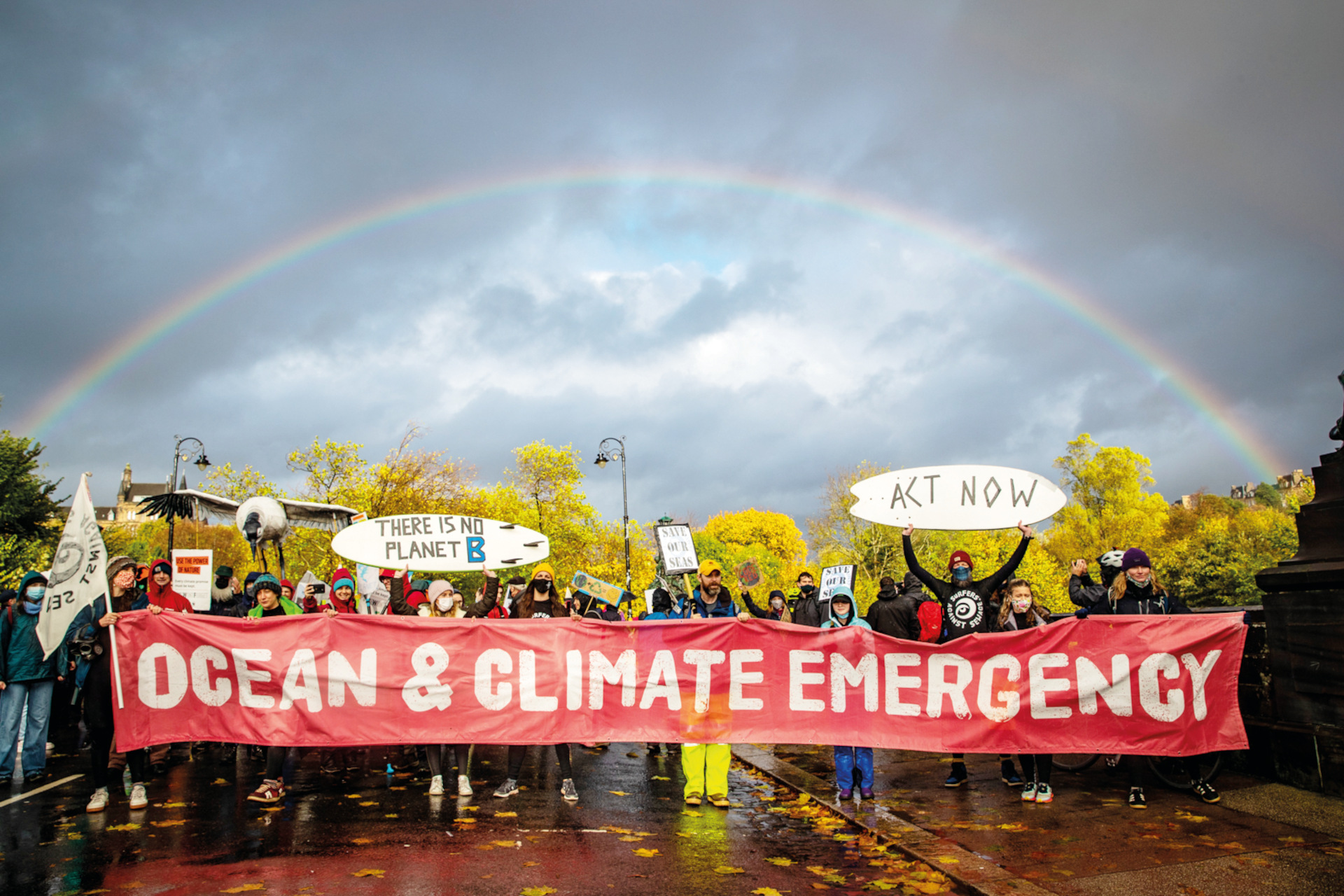
Those heady days of Extinction Rebellion and Fridays for Future, of streets full of people demanding rapid action on climate change, feel like a long time ago. That feeling of the Overton window shifting, of the climate emergency being discussed across the media, being taken seriously, of local authorities everywhere declaring Climate Emergencies, has been swept aside by a new sense of pessimism, the rise of ideas we had very much hoped were consigned to history, and the closing down of possibilities. Despondency and exhaustion stalk the land. While it is worth reminding ourselves that oil and gas, plastics and other companies have spent a huge amount of money to bring this about by funding disinformation campaigns, paying off governments who then defund climate science and proudly proclaim it is no longer a problem, it is also clear that climate activism needs some fresh thinking right now. You care about this stuff, I know you do. It’s just that it’s so hard to figure out where to direct our energy.
For years, my work has been focused on the Transition movement, a bottom-up, community-led response to the climate emergency. Up and down the country, and in 49 other countries too, communities continue to come together to create community energy companies, new food systems, new local businesses, street-by-street energy conservation projects, planting food forests and community gardens and so much more. There may well be a Transition group where you live. But over time a new question has arisen for me, one that is so insistent, and which makes me so curious, that it has shifted the direction of the work I do. It began when, in 2021, I saw a T-shirt a young woman was wearing at a Black Lives Matter protest in the US which read, ‘I’ve Been to the Future. We Won’. It gave me goosebumps. Perhaps it’s giving you goosebumps as you read this. It felt to me like it contained the essence of a very different approach. Just talking about collapse and extinction, presenting people with information to motivate them to act, these things don’t cut it anymore. They aren’t working at scale.
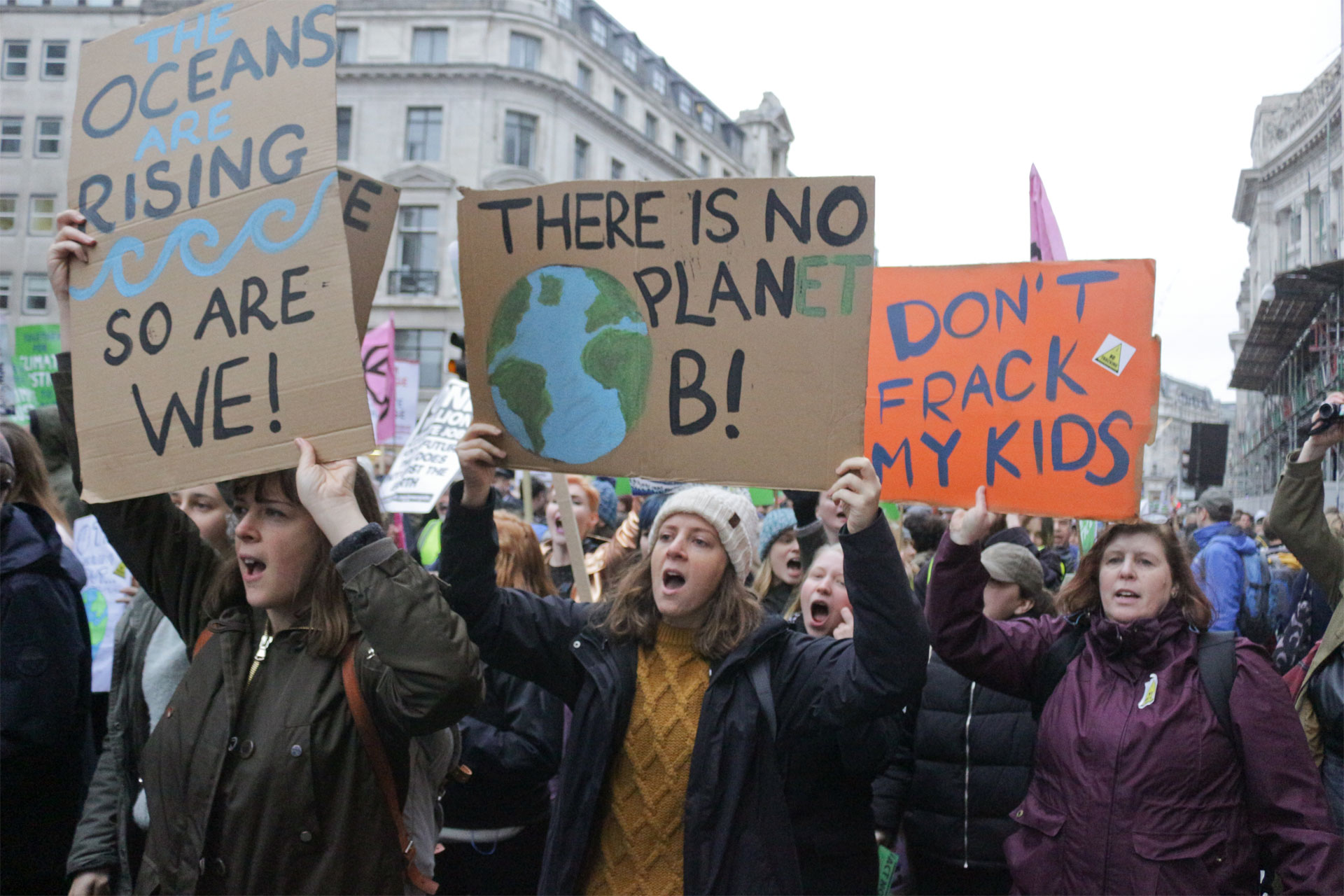
Together For Climate Justice protesters in 2018. Photo by Steve Eason via Flickr.
The question that comes up for me is this: what would our activism, our working towards change, look like if we were to see its primary objective as the cultivation of longing? What if we saw the objective of our work as helping people to fall in love with a future that could come from our doing everything we could possibly do to address the climate and ecological crisis? As novelist Don DeLillo once wrote, ‘longing on a large scale is what makes history’. Longing is an incredibly powerful human emotion. The process that led to Neil Armstrong setting foot on the Moon started, it could be argued, not with JFK announcing the Apollo mission, but with Jules Verne writing From the Earth to the Moon in 1865. This thrilling tale inspired other writers and also scientists and engineers to storytell about how we might get to the Moon and what we’d do once we got there. There were films, comic books, dances about going to the Moon. Mickey Mouse went there, as did Popeye and Tintin. Science writer Michael Benson wrote that ‘most major achievements, be they personal or collective, arrive after rehearsals […] an entire branch of speculative fiction – novels, short stories and also feature films – lies behind the first human footprints on another world’. With the climate emergency we don’t have 100 years to figure this out, but the same principle applies.
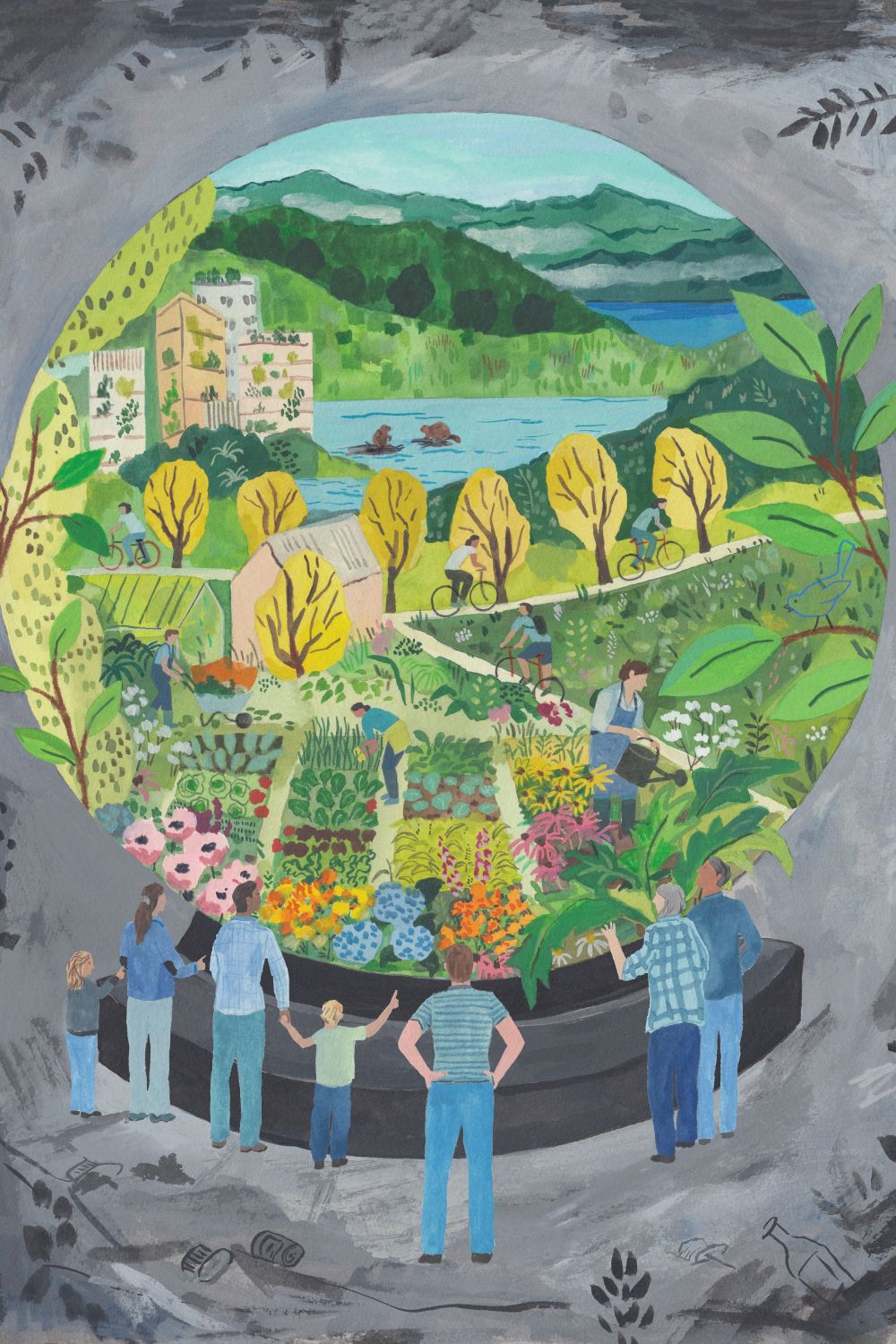
There are political voices right now who will tell you that Net Zero will be too expensive; would not work anyway; and depends on technologies that don’t work (only partly true, but there are nuances). But what if we were able instead to bring to life the future that would result from our doing everything we possibly could, in a way that was so delicious, so appealing, so irresistible, that we create a new North Star for people? A future in which, in our cities, we have built such amazing cycling infrastructure and free public transport that there would be absolutely no point in owning a car. A world of bicycle rush hours and so many underground car parks repurposed as bicycle storage spaces that, just like we did for cars back in 2025, we now need digital display boards showing where the free spaces are. A world in which no child goes hungry, in which access to good, sustainably produced food is recognised as a universal right, and where every city is building a ‘food belt’ around itself.
A world in which we see much less flooding because we developed the humility to recognise that beavers are far better hydrological engineers than human beings could ever be, and we handed back to them upland areas where flood waters come from. In return they created an explosion in biodiversity, drew down huge amounts of carbon and created a buffer against fire and drought. A world in which most of our energy comes from renewable sources, fossil fuel companies are going out of business one by one, and as communities we benefit from the large percentage of that renewable energy that is in community control. A world in which much of the economy is now dedicated to regenerative businesses and regenerative agriculture, and one where that horrible feeling in the pit of the stomach so many of us experienced in 2025 – of going to work for a company whose activities are eroding our children’s chances of a liveable future – has long since disappeared. It’s a world that smells amazing.
It’s a world in which, unlike back in 2025, there’s a look in people’s eyes, a sense of excitement, of possibility, a sense of ‘I think we might just do this’. People can see the world around them changing rapidly, the mental health of young people improving, the natural world bouncing back, and are exhilarated by what they see. Climate change hasn’t disappeared, and yes, we have still lost much that we can’t replace, but we are on the best possible path, throwing everything we possibly can at this, and experiencing a great renaissance as a result.
Feels a bit different than if I had just spent the previous 800 words talking about collapsing ice sheets and CO₂ levels, doesn’t it? We have very little time left to avert the worst-case scenarios. We need all hands on deck. This is no time to be a bystander. How might you, at the place you work, on your street, in your community, bring the future you long for to life, in conversations, in art, in the stories you share, in the activism you do? Science-fiction writer Ray Bradbury once wrote that ‘it’s part of the nature of man to start with romance and build to a reality’. Imagine the future you want, then go build it, one neighbourhood, one street at a time.
So what might this look like? Bannau Brycheiniog National Park recently built a ‘time machine’, a repurposed mobile planetarium, to invite people to step into alternate futures, and are now passionate advocates for other local authorities doing the same. At the Abergavenny Food Festival, a group of campaigners made a meal from the future, a vision of the future that worked with the taste buds, not just ideas. You could learn how to facilitate Open Space events and invite your community together to explore the future they’d most like to see, as well as make moves towards achieving it. Start a Transition group. Begin the process of bringing empty buildings into community ownership. Start a community energy company. Look to the work being done in Liège in Belgium to build a ‘food belt’ around the city and start taking the first steps towards it yourself. Host a ‘Town Anywhere’ workshop, an incredible day-long activity developed by Ruth Ben-Tovim which invites people not just to imagine the future but to step into it and literally build it with cardboard, sticks and sticky tape. As US prison abolitionist Mariame Kaba puts it, ‘we must imagine while we build, always both’.