



International Women’s Day & Women’s History Month: The Lowdown
By
7 months ago
March is all about women
While International Women’s Day (8 March) is perhaps more popular here in the UK, in the US the entirety of March is Women’s History Month, and it’s a growing observance on this side of the Atlantic, too. But what is the history of these celebrations, and how can we get involved in 2026? We’ve got the lowdown.
A Guide To International Women’s Day & Women’s History Month
International Women’s Day is an annual celebration observed globally to recognise and honour the achievements of women across different fields and sections of society. Dating back as far as 1909, it is officially recognised by the United Nations and serves to raise awareness of gender gaps, calling for acceleration towards equality and the upholding of women’s rights.
Today, IWD is most commonly observed in schools to empower young women and girls, and in workplaces to highlight the discrepancies women still face. But the roots of IWD can be traced back to the early 20th century, when it was a majority far-left movement marked by socialist and communist groups.
The first ‘Women’s Day’ was organised by the Socialist Party of America in New York City on 28 February 1909, which inspired the German International Socialist Women’s Conference to propose ‘a special Women’s Day’ in 1910. In 1911, demonstrations occurred across the US and Europe (including in Austria, Denmark, Germany and Switzerland) in support of women’s rights, but it wasn’t until women gained suffrage in Russia in 1917 that International Women’s Day as we know it came to be. From then on, International Women’s Day became a national holiday celebrated every year by socialist movements and communist countries, but it wasn’t until the 1970s that the day was adopted by global feminist movements.
IWD is observed on 8 March every year – in 2026, that’s Sunday 8 March – and falls inside Women’s History Month, which was spearheaded by Laura X in 1969. Abandoning her surname in favour of ‘X’ in the same year, Laura X is named to symbolically reflect her rejection of men’s legal ownership of women, declaring that, like Malcolm X, ‘I don’t want to have my owner’s name, either.’
Laura X organised a march in Berkeley, California on International Women’s Day 1969 – which by then had largely been forgotten in the States. She thought it unfair that half of the human race only had one day a year, and called for a national Women’s History Month to be built around IWD.
The protest led to the formation of the Women’s History Research Centre, a HQ for the women’s movement from 1968 to 1974. And in 1980, President Jimmy Carter declared the formation of Women’s History Week; by 1987, the National Women’s History Project had successfully lobbied congress to stretch the week into a month, and thus Women’s History Month was born.
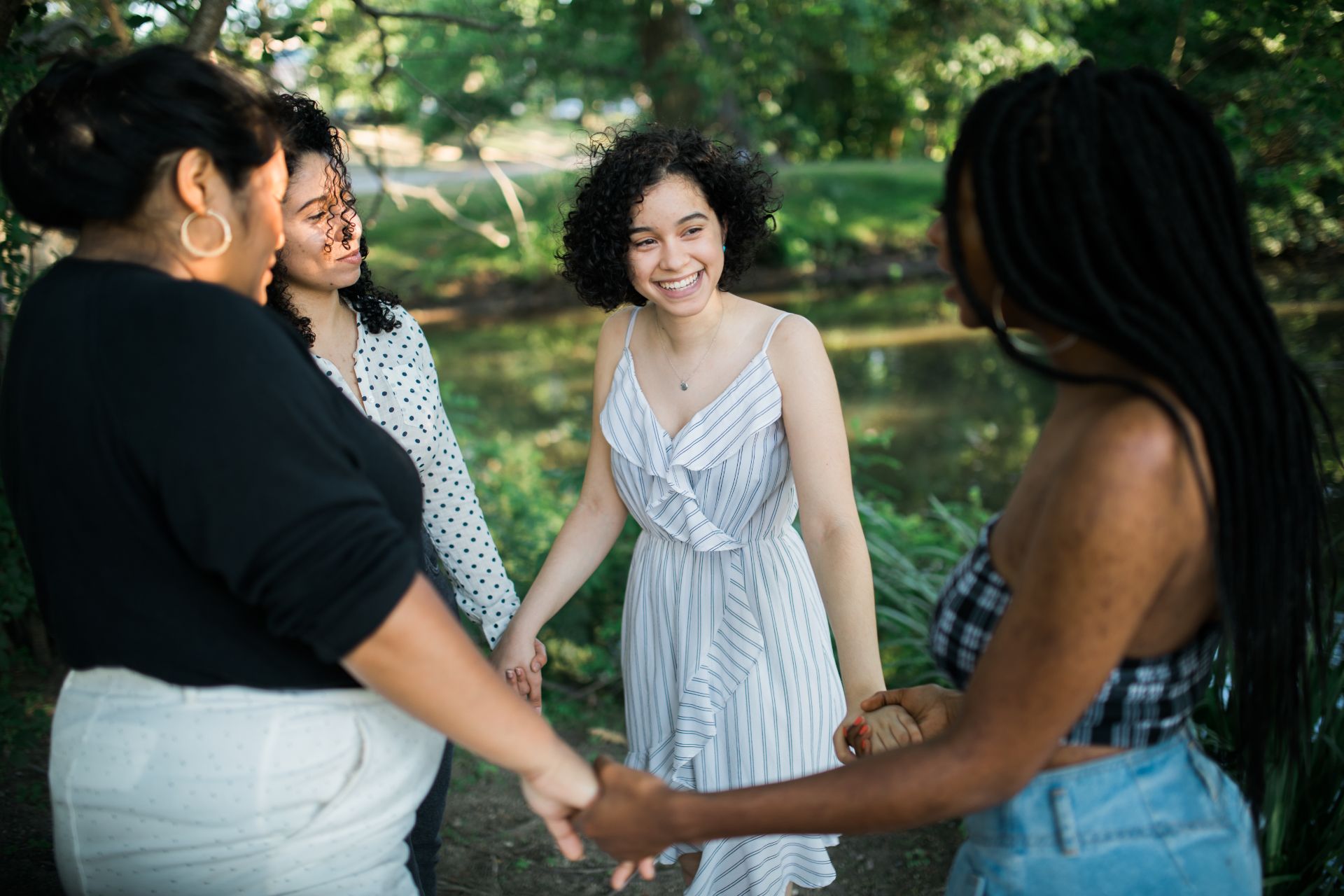
Images courtesy of Canva’s Natural Women Collection.
What Is The Theme?
In 2026, the theme of Women’s History Month is ‘Leading the Change: Women Shaping A Sustainable Future’, acknowledging the overlapping global challenges women face in 2026. That includes ‘climate change, economic insecurity, healthcare disparities, and threats to democratic participation,’ the National Women’s History Alliance explains. ‘These issues are deeply intertwined – and women, particularly from marginalized communities, often experience their impacts most acutely.’
Ultimately, the goal is to teach women about women’s leadership and their contributions to historical sustainable development as well as contemporary challenges, as well as learning to see themselves as agents of change. You can read the full breakdown here.
Meanwhile the theme of IWD 2026 is ‘Give To Gain’, which IWD explains as follows:
When we give, we gain.
Together, let’s help forge gender equality through abundant giving.
The IWD 2026 Give To Gain Campaign encourages a mindset of generosity and collaboration.
Give To Gain emphasizes the power of reciprocity and support. When people, organizations, and communities give generously, opportunities and support for women increase. Giving is not a subtraction, it’s intentional multiplication. When women thrive, we all rise.
Whether through donations, knowledge, resources, infrastructure, visibility, advocacy, education, training, mentoring, or time, contributing to women’s advancement helps create a more supportive and interconnected world.
What will you Give to Gain gender equality?
Get Involved
Feeling inspired? Learn about five women doing amazing things for the planet here, meet five women founders here, and find eight inspirational quote for IWD here.
You can also learn more about women’s art here, read about the impact of foundations like the Women’s Prize Trust here and find C&TH‘s female authors hub here for your next great read.
Learn more and get involved at internationalwomensday.com