


‘If You’re Not Taking Risks, Why Write?’: Nick Harkaway On Picking Up The Baton From John Le Carré
By
1 hour ago
The author, and son of John Le Carré, chats the new George Smiley novel and the books he can’t stop returning to
Even if you don’t recognise Nick Harkaway’s name, you probably recognise his late father’s – or at the very least his father’s pen name: John le Carré. Author of bestselling spy novels – including Hollywood hits like Tinker, Tailor, Soldier, Spy and The Spy Who Came In From The Cold – John’s real name was David John Moore Cornwell. And, without stirring confusion, Nick’s real name is Nicholas Cornwell. With so many dual identities, pseudonyms and secret names, it feels like something straight out of their spy novels.
Yes, their spy novels. These days, Harkaway has picked up the baton from his father (who passed away on 12 December 2020 at the age of 89), keeping his legacy alive by continuing his beloved and bestselling George Smiley crime series. No need to raise the nepo baby alarms quite yet. Whilst Nick was, of course, greatly influenced by his father, he did establish a writing career of his own before taking on the Smiley-verse. His novel, Kill Jackie, has recently been adapted for Prime Video with Catherine Zeta-Jones.
It was only when Nick read the letter of wishes from his dad upon inheriting the estate that he even thought about making the Smiley novels his own. ‘It said, more or less: take care of the fish, don’t let the plants die, and while you’re at it, it would be great if you could make me the most famous novelist in the history of the English language,’ says with a Nick a smile. ‘I can picture him writing it, a slightly morbid exercise, with a glass of Scotch in one hand and a vast grin, imagining us receiving this gentle nudge. As he’d say: pick the bones out of that.’
There are various ways to secure a legacy. Getting your book on the national curriculum is one (‘though everyone in that generation will loathe you’). TV, film and theatre adaptations are another (‘my brothers have those in hand’). And then there’s more books. Nick had prepared for the conversation by compiling an exciting list of people qualified for the job. ‘Then my oldest brother, Simon, said, “I think it should be you.”’
Nick, at that point, had already bowed out. But hearing his brothers enthusiasm got him reconsidering the role from a new angle. ‘All my reasons for not doing it became reasons to do it: it’s my father’s world; it’s an extraordinary cultural touchstone that means so much to so many people; it’s a literary mountain. If you’re not taking risks, why are you writing?’
And so now he sits in his father’s chair, both physically and metaphorically. (‘It’s actually really uncomfortable. None of my brothers wanted it, nobody else wanted it. It was absolutely unsellable.’) Despite the physical discomfort, there is a sense of unification. ‘I’m moving the levers as he moved them, with my hands on the helm where his were, confronting the same story difficulties and the same characters.’ And although it wasn’t quite the ‘Obi-Wan Kennobi moment’ he expected (‘I expected him to show up in the corner of the room and say, “Remember the semicolon.”’), it was, he says, ‘a very touching father-to-son transmission of responsibility, creative work and joy. And it moved me.’
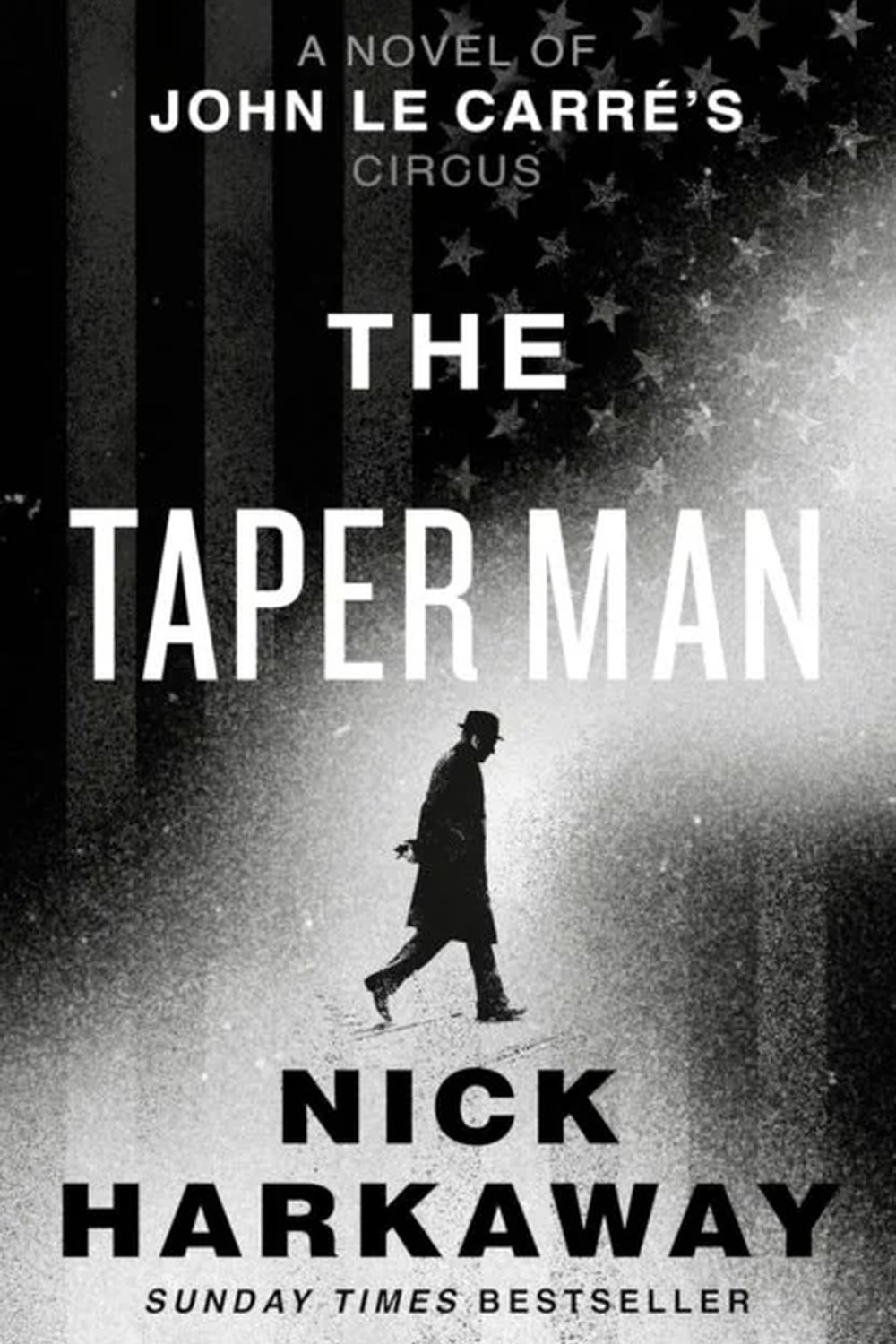
The process started in chunks. Smiley doing things here and there, snippets of the universe, as he attempted to forge a voice that worked. ‘I wrote the first book, and that was only ever going to be one. I’m very bad at making future determinations.’ That book was Carla’s Choice. It was (in Nick’s own words) ‘to everyone’s slight shock’ rather good. Leaving demand for more. Now more comfortable pushing the boundary of where his father ends and he begins, in this latest novel, The Taper Man, George Smiley makes his first foray into the US.
America has, as Nick says, always been a major presence in the books, but we’ve never actually gone there. Giving me the elevator pitch, Nick explains that in this new instalment ‘Smiley is playing defence and offence at the same time. He’s pursuing a spy and also trying to protect one of his own. A separate fork of the book has Roy Bland behind the Iron Curtain in Leningrad, or St Petersburg as it is now, which is great fun. That’s the beating heart of Cold War espionage.’
Central to this latest thriller is a character named Esther Vane, an African American woman who served in her country’s intelligence services during the Second World War, when the US military was still segregated. ‘Part of the story,’ says Nick, ‘is her navigating mid-20th-century American culture, and that’s a hell of a narrative in and of itself.’ Esther’s presence would have perhaps been surprising in John Le Carré’s own late 20th century novels. But in Nick’s attempts to write a Smiley story for 2026, he’s done what his dad always did: peg the book to a specific historical event, while making it simultaneously feel like now: ‘His books were always about the moment he was writing in.’
His father’s books were too, he says, always apolitical and full of historical perception. ‘Above all they were full of compassion, which was a kind of metric for whether you’re a good guy or a bad guy. If you can find compassion even for the enemy, there’s a chance the world might be okay. If you see everybody as targets or sheep, you’re probably adding to the problem rather than solving it. I wanted to explore that more, and Esther’s story felt like a very apt theatre for that combination of history, compassion and recognising everyone’s humanity.’
Shelf Life: Nick Harkaway
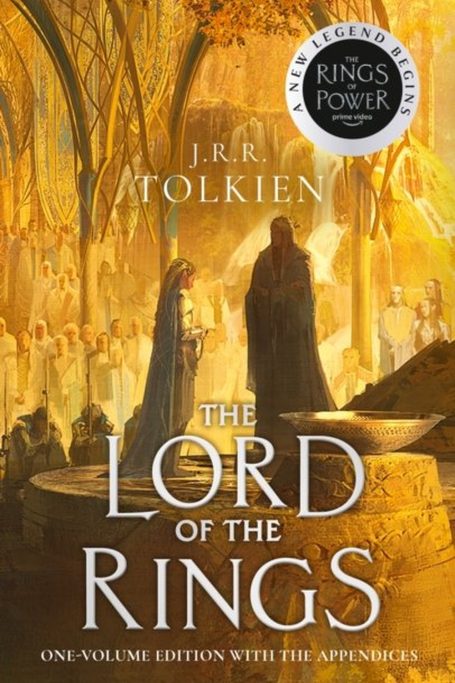
This book made me a reader…
The Lord of the Rings by JRR Tolkien. There were so many books, because I started reading quite young. But I read The Lord of the Rings when I was seven, and then again and again and again. I just lived in that book. Before that my parents read me all kinds of things. My dad used to read Sherlock Holmes to all of us on winter evenings. We’d sit round a log fire in this incredibly storm-tossed house on the edge of the Cornish cliffs while he read The Speckled Band. Then there were his own books. He was writing the Smiley novels in the 70s, and I was born in 1972, so while I was learning to talk he’d be reading across the table to my mother. I was bathed in the Circus, baptised in it. So the easy answer is The Lord of the Rings, but it’s more complicated than that.
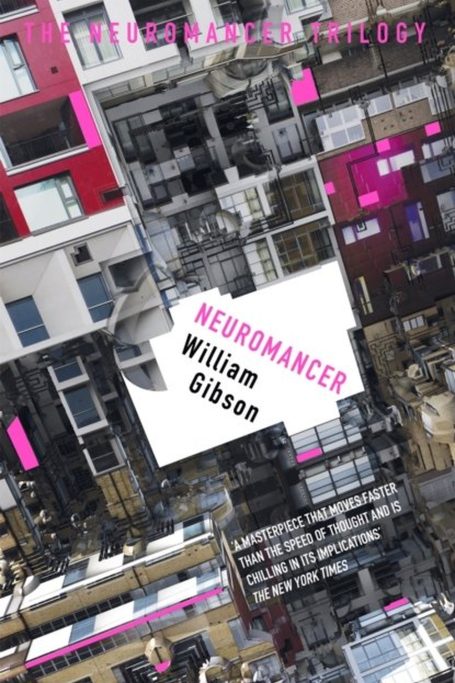
This book was formative in my youth…
Neuromancer by William Gibson. It was formative for a lot of people. One of the great pleasures of my adult writing life is that Bill and I are now friends, and he’s a really great guy. Somewhere, 16-year-old me is screaming. It’s like meeting Gandalf.
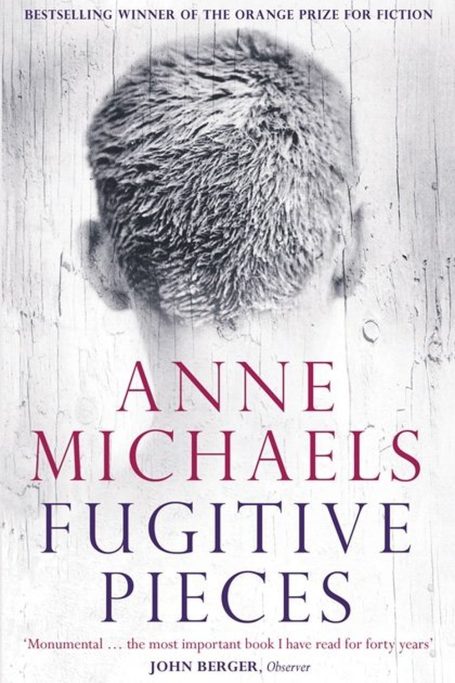
This book is one I can’t stop returning to…
Fugitive Pieces by Anne Michaels. She’s a Canadian poet, and the book has the best opening sequence: weird, beautiful and strange. I go back and reread it every so often because there’s something in it that fires my creative urge.
This book broadened my horizons…
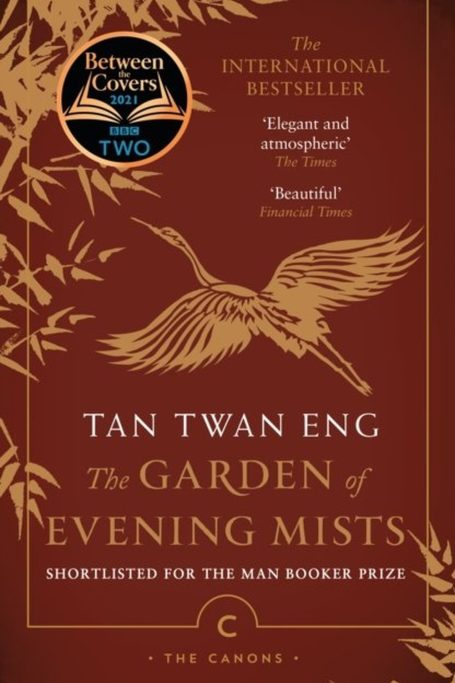
The Garden of Evening Mists by Tan Twan Eng. They all do that, but I’m a huge fan of Tan Twan Eng, and this book did something I thought was impossible. It’s a kind of deathbed memoir for its central character. It’s not quite deathbed, but she’s very ill and recounting a life full of beauty, suffering and strangeness. It should be a depressing, melancholic book. Instead it’s captivating and an absolutely astonishing achievement. That’s no surprise from Tan Twan Eng, but it’s a wonderful book.
This book is my comfort blanket…
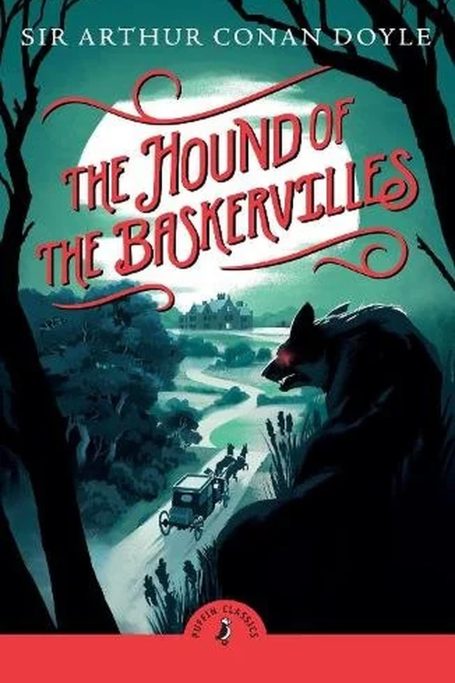
The Hound of the Baskervilles by Arthur Conan Doyle. It’s the comfort blanket I give my kids. I read it to them because my dad read it to me. I recently did a short radio spot for Radio 2 where they asked for my book, and I asked if I could have The Hound of the Baskervilles. It’s the best Sherlock Holmes story. It’s perfect: spooky enough without being alarming, and the relationship between Holmes and Watson is very warm. Because it’s Conan Doyle, everything comes right in the end. It’s a beautifully written, simple detective story that does exactly what it says on the tin. It has no secondary agenda. You don’t come out a wiser, more politically informed person. You’ve just read a really great book.
I wish I’d written this book…
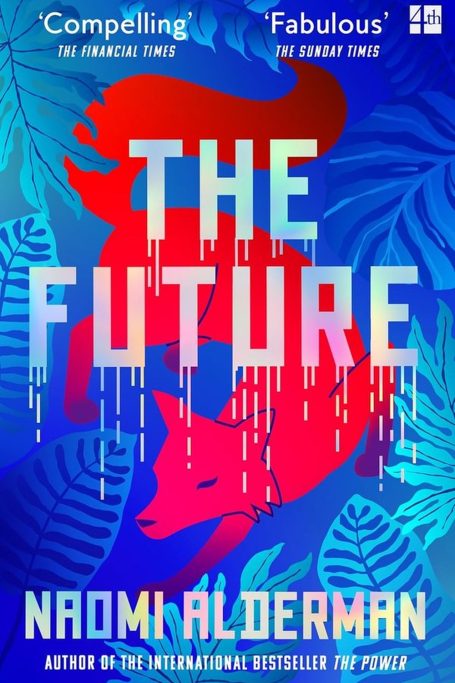
The Future by Naomi Alderman. That was the last book that gave me real envy. I was reading it and thinking, ‘oh, this is so damn good’. A fascinating bunch of writers give me that ‘you absolute monster’ feeling. When I read Cloud Atlas I was so angry about how good it was that I started writing a new novel. Other people’s books are a constant spur to do better and do more. You think, how would I come up with something that crazy, or that special, or that intimate, or that gentle? Six weeks later you’re sitting there thinking, ‘This is the most exciting book I’ve ever written,’ and you don’t always realise the genesis was being furious with someone else’s novel.
I can’t stop talking about this book…
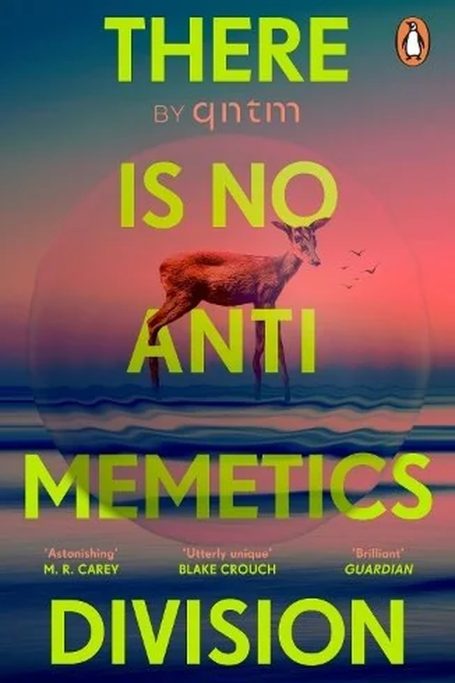
There Is No Antimemetics Division by qntm. It’s philosophically and psychologically interesting. What is it? A science fiction horror ontological thriller? A magical realist novel about memory? It very much depends which bookseller you ask. I think it’s one of the most interesting novels I’ve read recently, and it’s just great. Apparently I can’t stop talking about it.
I can’t wait for this book to hit shelves…
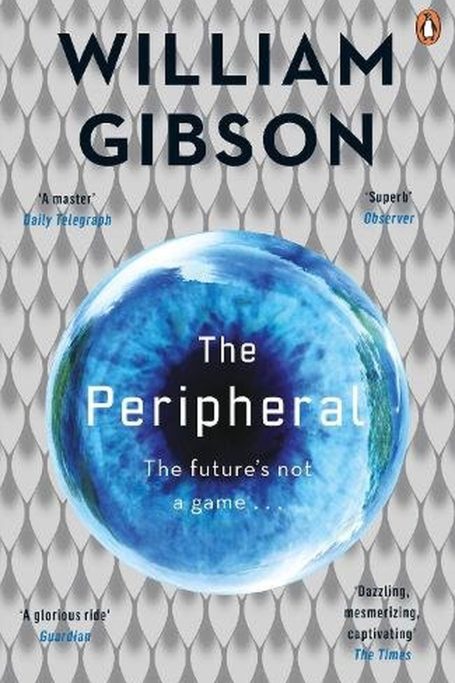
The third book in William Gibson’s Peripheral series. Bill claims the third part of the story is coming soon. I read everything he writes with great delight and fascination, but I really can’t wait for that one.
The title of the third instalment is yet to be officially announced.
I’d recommend this book to anyone and everyone who will listen…
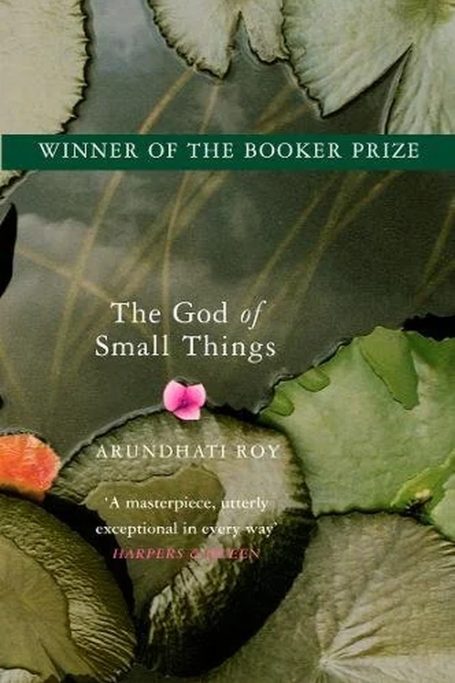
The God of Small Things by Arundhati Roy. It’s pretty unmissable. There was a time I’d almost have been embarrassed to say it, because it was such an obvious choice. It was just that extraordinary. But it’s been long enough that people need reminding. Go and read it.
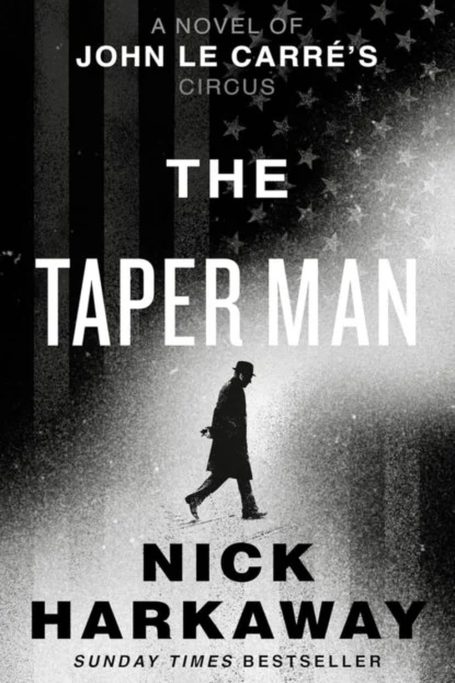
The Taper Man by Nick Harkaway is out now
Viking, Hardback, £22