



The Eden Project Turns 25
By
5 months ago
...And it's looking ahead to the next 25 with global ambitions.
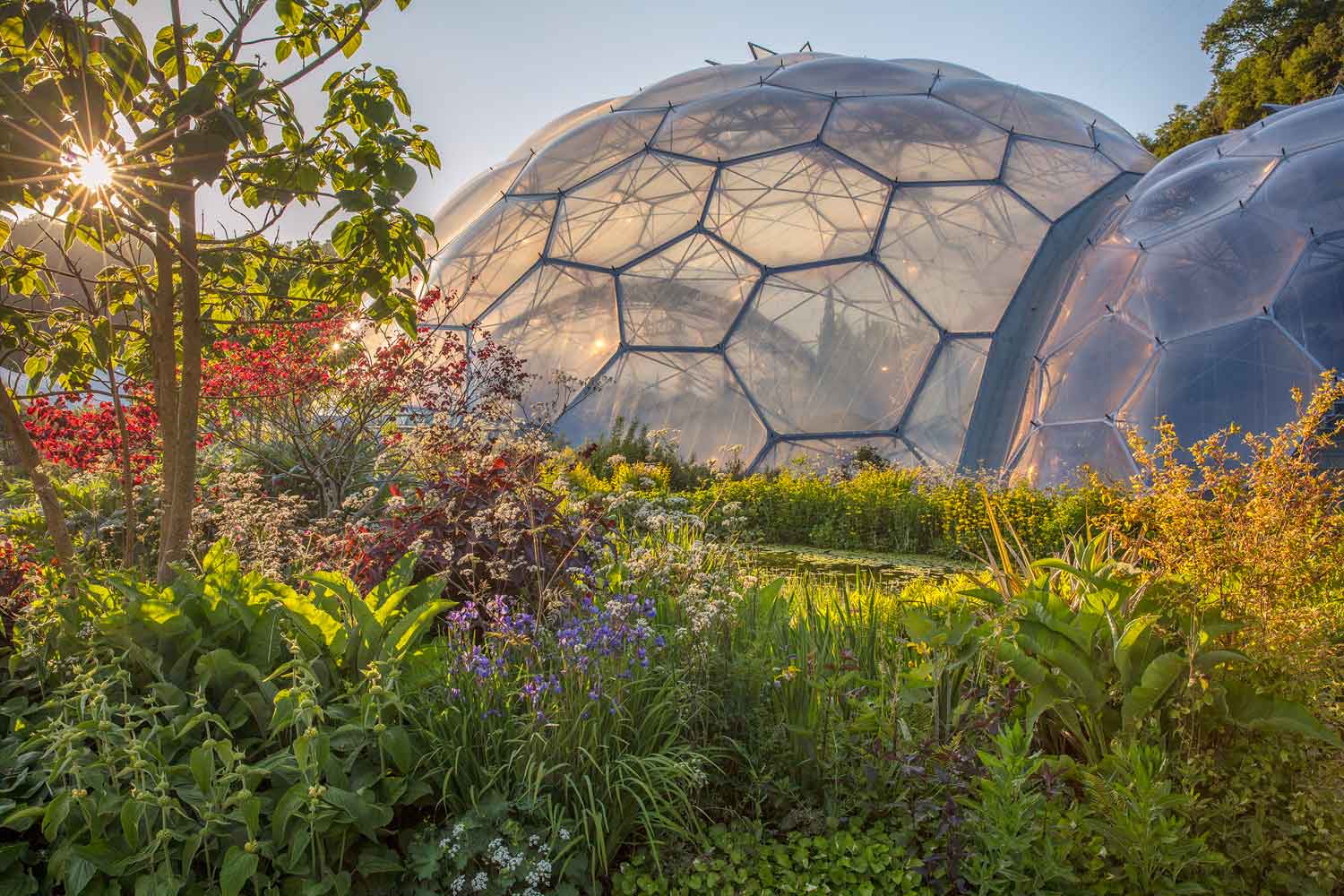
The Eden Project turns 25 this year, marking a milestone that celebrates the past while looking to the future. Built in a former clay pit in Cornwall, the now-iconic biomes have become a symbol of regeneration: environmental, cultural, and economic.
Since opening in 2001, Eden has welcomed more than 25 million visitors, helping to generate an estimated £8.4 billion in visitor spend. Its wider economic footprint is even more striking, with a reported £6.8 billion impact on the South West alone. What began as an ambitious Millennium Commission project has evolved into an example in how nature-led initiatives can drive long-term regional growth.
The project’s impact goes beyond the economic. At its core, Eden is an educational charity, and its influence extends far beyond tourism. More than a million young people have taken part in its schools programme, fostering a deeper understanding of sustainability, biodiversity, and our relationship with the natural world. The so-called ‘Eden Effect’ now reaches well beyond Cornwall. In Costa Rica, the organisation is restoring a dry tropical rainforest, working with local communities to rebuild habitats and support livelihoods. Meanwhile, international outposts in Dubai’s Expo City and Qingdao, China, continue to expand its global vision.
Back in the UK, that vision is still unfolding. Eden Project Morecambe is in development, while Eden Project Scotland is in the design phase, each aiming to bring the same blend of environmental storytelling and economic revitalisation to new regions. As co-founder Sir Tim Smit and CEO Andy Jasper look ahead, the message is clear: purpose-led destinations can be catalysts for meaningful change. Twenty-five years on, the Eden Project remains a living experiment, and we spoke to the duo about what we should expect from the next 25 years.

Rainforest Steps at The Eden Project
Q&A: Sir Tim Smit, Co-Founder Of The Eden Project
Looking back over the past 25 years, what achievement at Eden stands out to you as the most transformative?
There are key highly visual moments such as the launch of Live 8 ‘Africa Calling’ opened live from South Africa by Nelson Mandela on 2 July 2005 and there was the G7 event with world leaders and Her Majesty the Queen, but, when all is dust my major emotion is one of awe at the response of people in Qingdao in China and Morecambe and Dundee in the UK to the news that Eden is coming, acting like a strange exorcism banishing the expectation of failure and decline. It is deeply humbling and even more so when the projects start to turn to reality and people realise that it is their project not ours. We give confidence. For me, a romantic through and through, I am enraptured by the notion of kissing frogs and watching them transform into princes or princesses!
Eden began to reconnect people with the natural world. How has that vision evolved in response to today’s environmental and social challenges?
Nature is us. End of. Our challenge has been and remains, embedding a story of understanding: that to harm nature is to hurt ourselves. The journey has definitely begun but we have a gap to bridge of real emotional connection which requires quiet observation and listening. Skills under threat from the distractions of constant stimulation. Our thinking is that there is something in the linking of gamification to observation outside that may unlock this door.
The Eden Effect now spans continents, how do you ensure the original ethos of Eden translates across such diverse cultures and ecosystems?
The cultural span is little problem. Young people across the world are painfully aware of the failures of my entitled generation. Our pleasure is seeing how different people communicate because in truth, if we were as good as we’d like to think we are, half the problems we seek to mediate would be solved!
Learning from others all the time is key. It is interesting that so many millions of pounds have been spent on Hollywood blockbusters championing climate action but it’s having little effect. A new storytelling arc needs to be put in train.
When you look at Eden 25 years on, what do you think the future of this sort of tourism looks like over the next quarter century?
I’m hoping that we can morph from being classified as a Tourism destination to part of a “grand tour” where people come to have their aspirations lifted and horizons shifted. Obviously we must remain entertaining but more than that become a shop window on the possible good futures that remain ours to make.
The climate and biodiversity crises are accelerating. How is Eden balancing its dual role as a place of hope and a driver for urgent action?
The truth is I’m not sure how the balance between hope and dread is best held in some sort of equilibrium. Speaking frankly I believe we have as a generation allowed politics to overshadow our moral compass and have allowed inter-generational misbehaviour that should be severely punished. Somehow the notion that attacking the standards of business has distorted judgement.
Where will The Eden Project be in another 25 years?
In another 25 years I hope we’ll be dancing on the dreams of Elon Musk saying our own planet is beautiful and provides all that we need and good luck on Mars Elon! Eden will be an exhibition of excitement about clever humans and the joy of abundance.
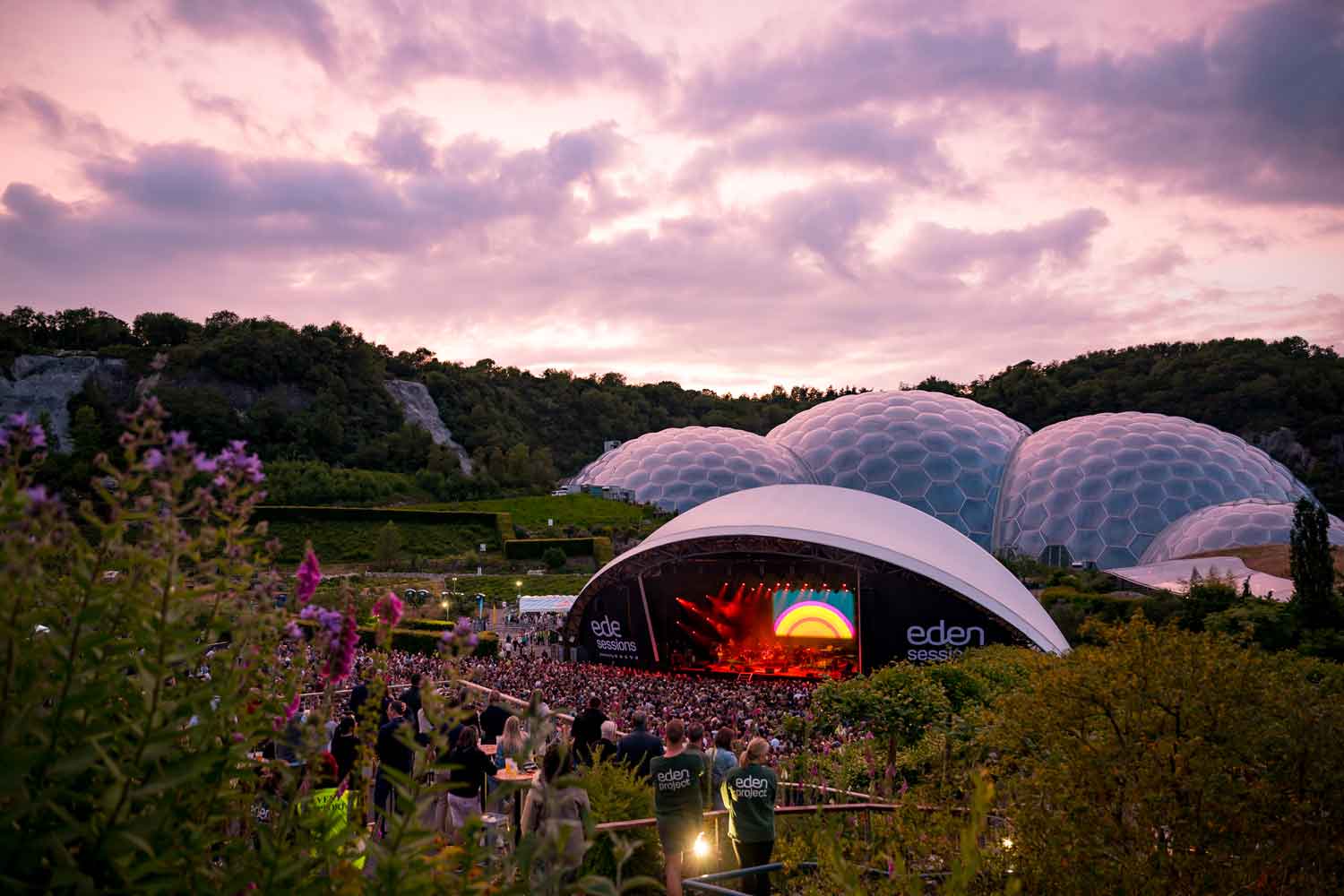
(c) Caitlin Mogridge
Q&A: Andy Jasper, CEO Of The Eden Project
The new impact report reveals £6.8 billion in economic value to the South West; an extraordinary figure. How do you see Eden’s role in regional regeneration evolving moving forward?
The £6.8 billion figure is a powerful reflection of what can happen when you combine ambition with environmental and social purpose and strong economic thinking through good supply chain policy. For us, it is not an endpoint, we see the first 25 years as a platform for what comes next. As Eden continues to grow through our new destinations, partnerships and programmes, our role in regional regeneration in the UK and beyond and it will only deepen and diversify through time. We are increasingly focused on whole place transformation spearheaded by our work with destinations that support local economies, strengthening community cohesion and helping people feel proud of where they live.
Programmes like The Big Lunch, which now sees over 10 million people coming together each year, demonstrate how simple ideas can tackle loneliness, build social capital and inspire volunteering. Initiatives such as Eden Dock in Canary Wharf bring nature into dense urban environments, reaching new audiences and reconnecting people with the natural world in their everyday lives. Alongside this, our Nature Connections work is helping people rediscover the wellbeing benefits of nature in practical, accessible ways.
New projects such as Eden Project Morecambe and Eden Project Scotland will extend this impact further, creating jobs, attracting investment and acting as catalysts for regeneration in the North West and Scotland, just as Eden Project Cornwall has done for Cornwall and the South West.
With Morecambe under construction and Scotland in design, what lessons from the first 25 years are shaping these new Edens?
Eden Project Cornwall has provided us with a strong and tested blueprint but importantly not a rigid formula. One of the key lessons is that success has come from being deeply rooted in the locality – the place and its people. That means that we have always worked very closely with local communities, shaping education in partnership with our universities, colleges, schools and pre-schools. For example the development of the Morecambe Bay Curriculum and building strong relationships with local businesses and the tourism sector.
We have also learned the importance of embedding sustainability into every layer from local sourcing and supply chains through to long term operational models. At the same time, each Eden must reflect its own identity. In Scotland, for example, we are building on the momentum created by Dundee’s cultural regeneration, including the V&A, and ensuring Eden becomes the next important chapter of that story. The lesson is to take what works, stay true to the vision and values and design each individual Eden Project to belong authentically to its place.
Eden describes itself as an educational charity as much as a visitor attraction. How do you measure success today?
We measure success through a combination of rigorous evaluation and human impact. Both are essential. Over the past 25 years, we have developed robust ways of assessing outcomes across our programmes from formal education and international initiatives to community based work. This includes large scale reach such as live broadcasts from our Rainforest Biome that engage tens of thousands of young people at a time as well as curriculum development work with partners such as Lancaster University.
Beyond the metrics, what matters most is the lasting impact on people’s lives. Now that we are 25 years old, we frequently hear from individuals who visited Eden as children and were inspired to pursue careers in environmental science, horticulture or conservation. For example, an oceanographer studying microplastics in the Pacific came to Eden and wanted to speak to me about the fact she felt her career choice could be traced back to her visit to Eden at the age of 11 with her school – when I recounted this to the team, they said to me that this happens all the time – I was absolutely delighted to hear. For me, this really is the true measure of success when a single moment, a moment of inspiration leads to a lifetime of positive action.
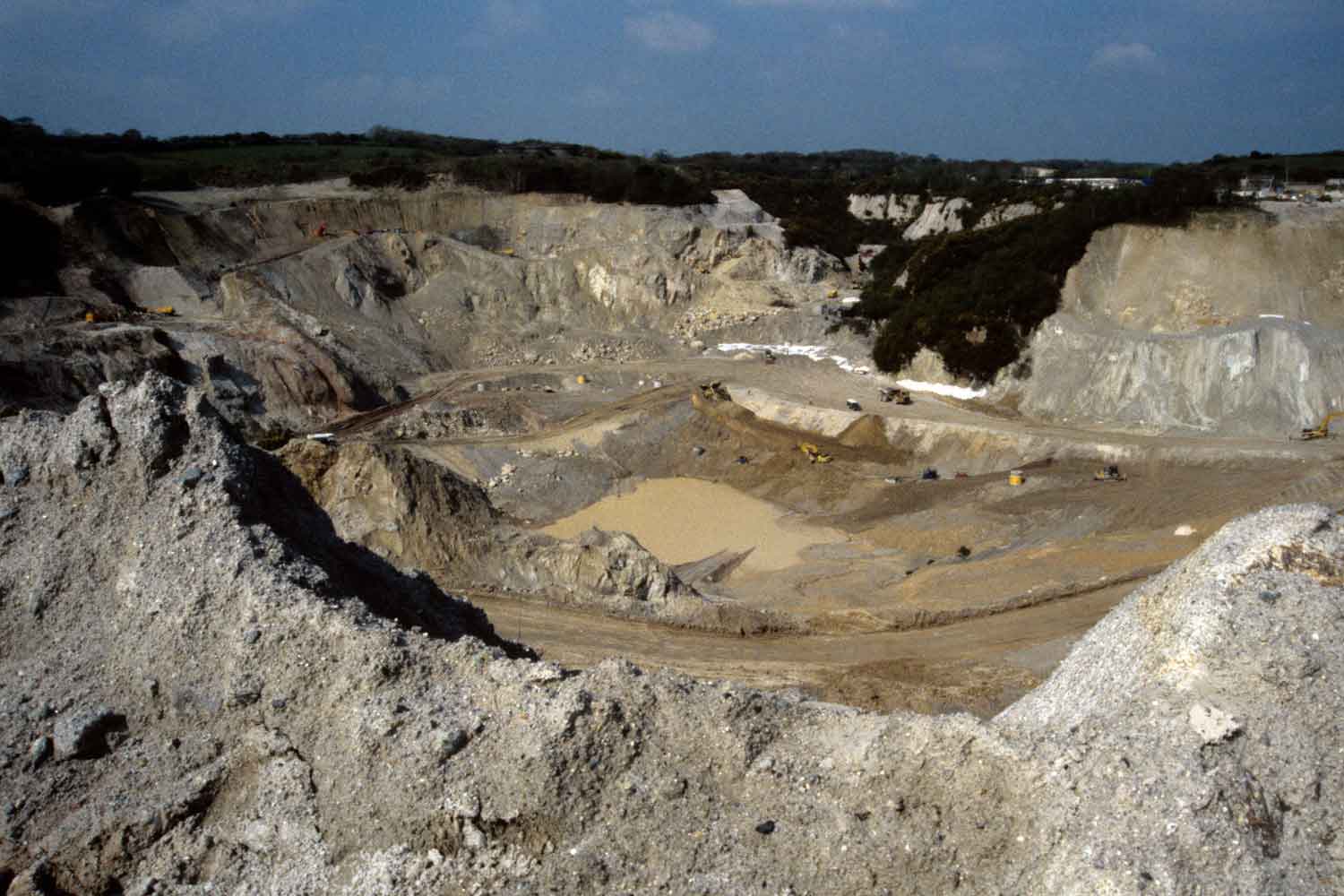
Bodelva Pit
The climate and biodiversity crises are accelerating. How is Eden balancing its dual role as a place of hope and a driver for urgent action?
I believe those two roles are inseparable. Hope without action is hollow and action without hope is impossible to sustain. At Eden, we aim to demonstrate that change is not only necessary but possible. A good example is our geothermal energy project in Cornwall. After a decade of experimentation, of relentless pursuance of funding, we now have perhaps the only working geothermal plant in the country where this energy from 5km into the center of the earth, is used to heat our biomes and offices, significantly reducing carbon emissions while also creating a model to inspire others who can learn from this. Although it was not an easy journey, and many would have said it was too complex or too ambitious, that is precisely the point. Meaningful change requires persistence and a willingness to challenge assumptions and it is completely worth it in the long run. Our role is to show what can be done, to inspire others to act and to create practical pathways for change whether through technology, behaviour or community action.
What will define The Eden Project’s next chapter?
This moment, our 25th anniversary, feels both a milestone and a springboard. Over the past quarter century, the charity Eden Project has helped reshape how people think about the relationship with the natural world, the relationship between people and nature. Our global garden has contributed to economic renewal, created jobs and inspired millions of people to feel more connected, hopeful and empowered.
Looking ahead, our next chapter is about scaling that impact nationally and internationally while staying true to our core purpose. I see the charity Eden Project becoming one of those enduring institutions that belongs to the nation. Open, accessible and rooted in public value. Like the great organisations that have shaped our cultural, historic and environmental landscape, our role is to convene, to amplify and to broadcast – to inspire and to help society navigate the challenges ahead. We will continue to bring people together, deepen connections with the natural world and demonstrate that a better future is not only possible but within our reach. Because ultimately, the future remains ours to make.
Find out more about The Eden Project.