


The National Gallery’s Project Domani: Everything You Need To Know
By
4 months ago
A whopping £375 million has been raised to fund the project
It has been a big year for The National Gallery, which houses the UK government’s encyclopedic art collection on behalf of the British public. After concluding its bicentenary celebrations at the start of 2025, the Gallery unveiled its revitalised Sainsbury Wing and launched its all-new member’s clubhouse, Supporters’ House.
And now there is even more newness to look forward to: The National Gallery is officially on the hunt for an architect to rustle up designs for a new wing, with £375 million in cash pledges committed to the project and a shortlist of six architects whittled down from 65 submissions.
‘With the Bicentenary celebrations now completed, the NG looks to the future,’ says Sir Gabriele Finaldi, The National Gallery’s director. ‘We want to be the place where the UK public and visitors from across the globe can enjoy the finest painting collection in the world from medieval times to our own, in a superb architectural setting. We are hugely excited by these developments and are immensely grateful to our donors for their support – on an unprecedented scale – as the National Gallery steps into its third century.’
Nicknamed ‘Project Domani’, this is set to be the largest transformation the Gallery has seen in its 200 year existence; here’s what you need to know.
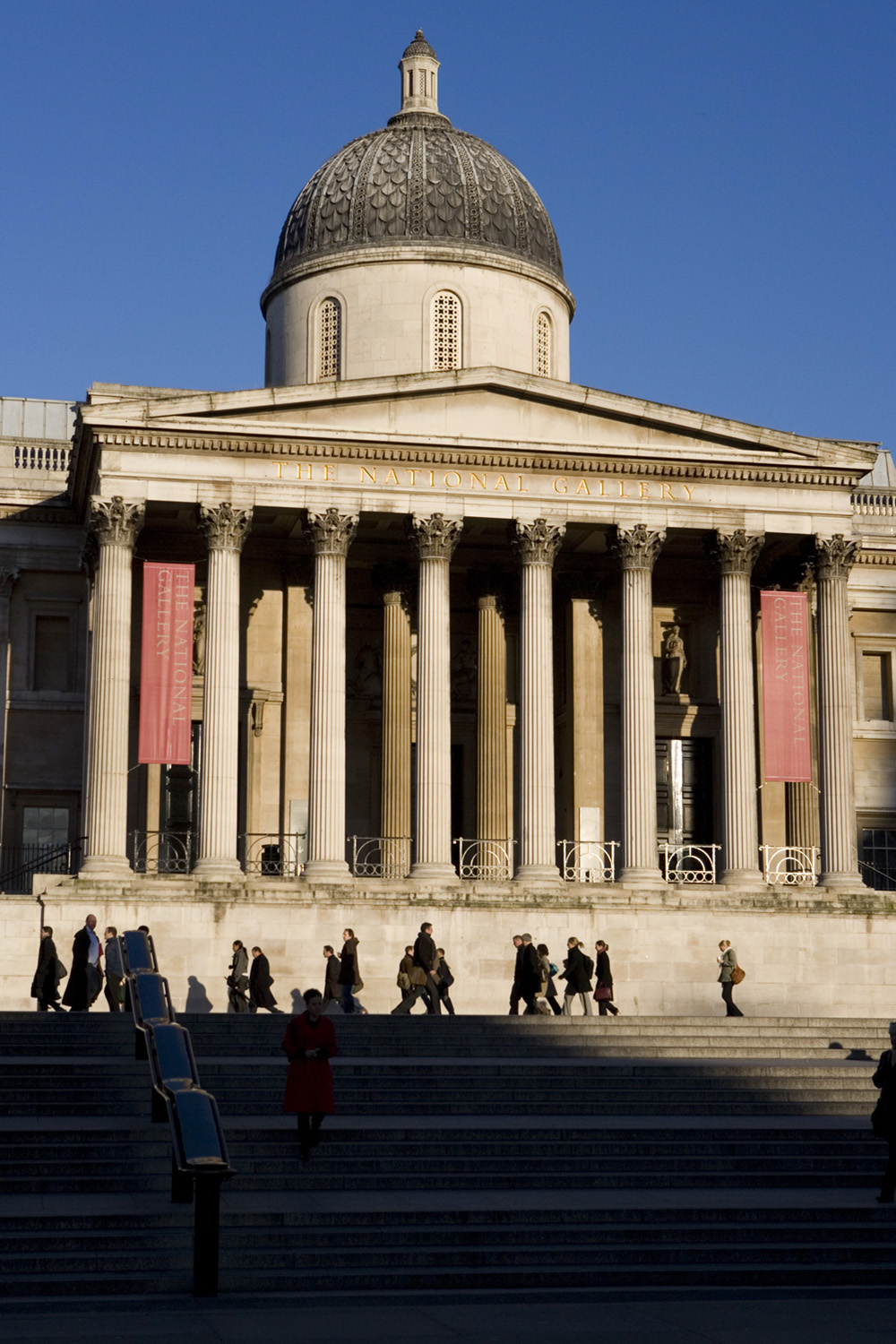
The National Gallery and Tate together house the UK government’s encyclopedic art collection on behalf of the British public. (© National Gallery, London)
The National Gallery’s New Wing: Everything We Know
Nicknamed ‘Project Domani’ (‘domani’ translating to ‘tomorrow’ from Italian), after 200 years at the heart of the British art scene, The National Gallery is set to create a huge new wing and expand its historic collection (which already tallies around 2,500 important works) in the coming years. This will see the central London art gallery expand its collection beyond the year 1900 for the very first time, making Trafalgar Square the one place in the world presenting the complete history of Western painting.
Formed two centuries ago to make art accessible to all (an idiosyncrasy that sets the Gallery apart on the global stage), culture secretary Lisa Nandy hopes the move will bolster The National Gallery even further in the highly competitive international art landscape. ‘I’ve been clear that we want the arts to be accessible for everyone and that philanthropy is crucial to that mission,’ she said on the news of Project Domani. ‘The new wing at the National Gallery will open up world class art for millions of people from home and abroad. I want to thank the generous donors who will help to transform the National Gallery, cementing its position as one of the most loved and visited institutions that will inspire people for generations.’

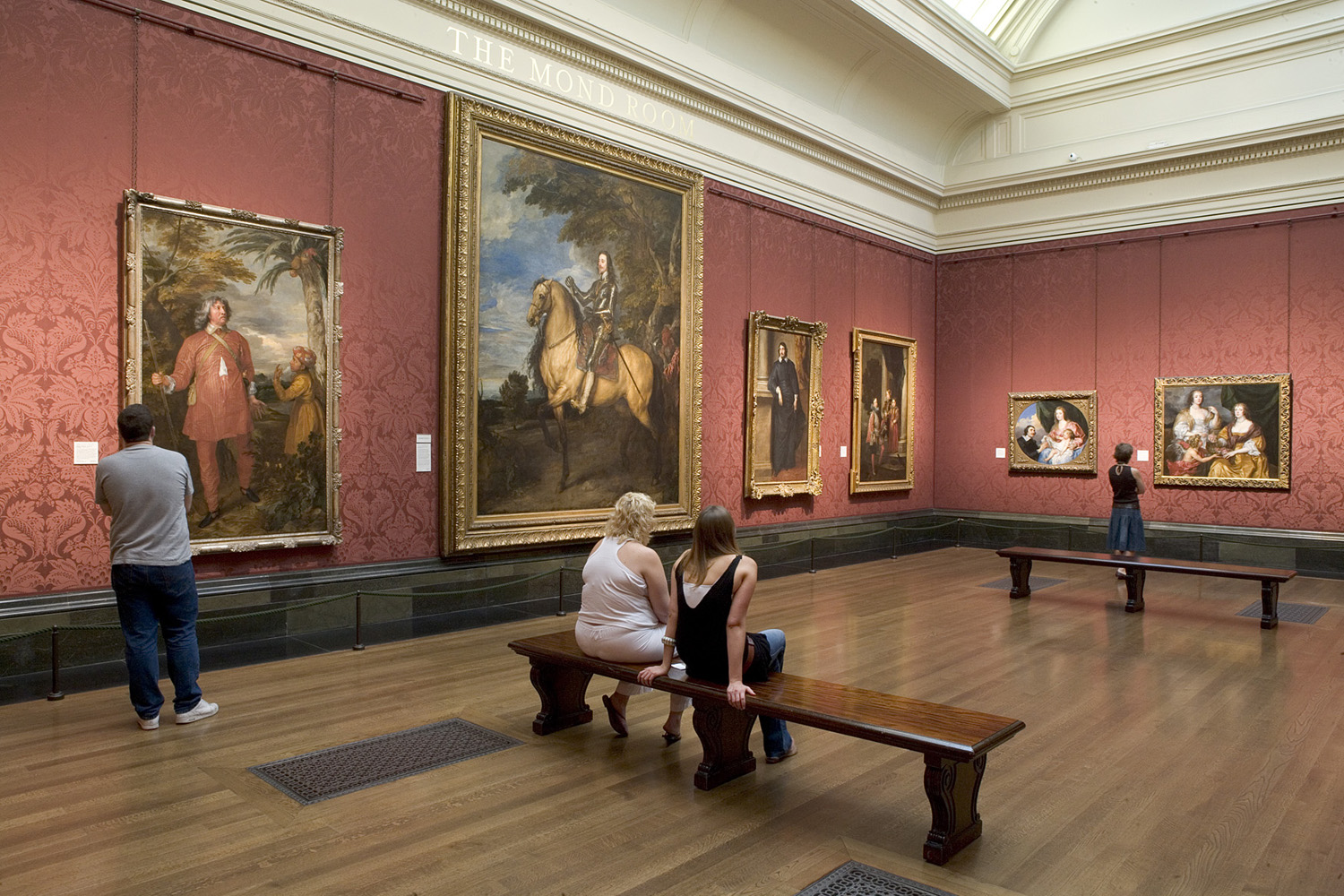
The National Gallery’s new Supporters’ House clubhouse opened earlier this year. (© National Gallery, London)
Those ‘generous donors’ include two of the largest ever publicly reported single cash donations to a museum or gallery anywhere in the world, including £150 million apiece from the Julia Rausing Trust (established in memory of the late British philanthropist Julia Rausing) and Crankstart (the charitable foundation of Sir Michael Moritz KBE and his wife, Harriet Heyman, devoted to widening access to the arts, better education, job prospects and housing security, and protecting civil rights).
The late Julia’s husband Sir Hans Rausing describes Julia as ‘a passionate supporter of the National Gallery and its role in making great art accessible to all’.

John Booth & Sir Hans Rausing
‘Julia would have wholeheartedly embraced the vision and ambition behind this project, recognising its potential to transform the understanding and appreciation of art, and to reinforce the Gallery’s role on the world stage,’ Rausing adds. ‘This gift is given in her memory, so that others may discover the same beauty and inspiration in art that meant so much to her.’
With further donations from the National Gallery Trust, the chairman of the Gallery’s trustees John Booth and a slew of anonymous donors, this brings the total fund for Project Domani to a healthy £375 million. ‘We are humbled by the generosity and vision of Crankstart, the Julia Rausing Trust and all the other donors who are supporting the National Gallery at this pivotal moment in its history,’ Booth says. ‘Their investment will inspire, educate and thrill generations to come, enriching the cultural landscape of our nation.’
That said, we are only halfway there: ‘Project Domani is a £750 million campaign that will redefine the National Gallery for the next century,’ Finaldi says. ‘Thanks to the remarkable support we have already received, we are building momentum towards our vision of creating new spaces to house an expanded collection, building an acquisitions fund for modern paintings, while also ensuring the Gallery’s long-term financial sustainability through a robust endowment.’
He adds that increased accessibility for all is rolled into the Gallery’s vision, from local to national and international visitors. ‘We now look forward to welcoming new donors and partners to help us realise this shared ambition,’ Finaldi says.

Sir Gabriele Finaldi: ‘We want to be the place where the UK public and visitors from across the globe can enjoy the finest painting collection in the world from medieval times to our own.’ (© National Gallery, London)
The National Gallery Is Expanding Its Collection
The expansion of The National Gallery’s collection – which is already the world’s pre-eminent collection of paintings made in the Western tradition – will be achieved thanks to new collaborations with Tate (The National Gallery’s joint custodian of the National Collection) and other museums in the UK and across the globe.
We’re told to expect ‘enhanced displays, exhibitions, research, public programmes and educational initiatives’, and it seems the Gallery will be broadening its current scope (1500 to 1900) to include modern art from the 20th and 21st centuries with help from Tate. As the Gallery is one of the most visited museums in the world, it hopes to service ‘a larger, more diverse public’, so there might be even more international work in there, too.
‘Tate congratulates the National Gallery on the announcement of this transformational gift,’ Tate director Maria Balshaw says. ‘As the UK’s national collection of British art from 1500 and international art from 1900, Tate looks forward to working closely with colleagues at the National Gallery on loans, curatorial and conservational expertise to support the development of their new displays.
‘The Trustees of both institutions recently held a joint meeting and, together, established a Working Group with Trustee and Curatorial representatives from each to determine the ways in which we can collaborate to further the national collection as a whole,’ Balshaw explains.
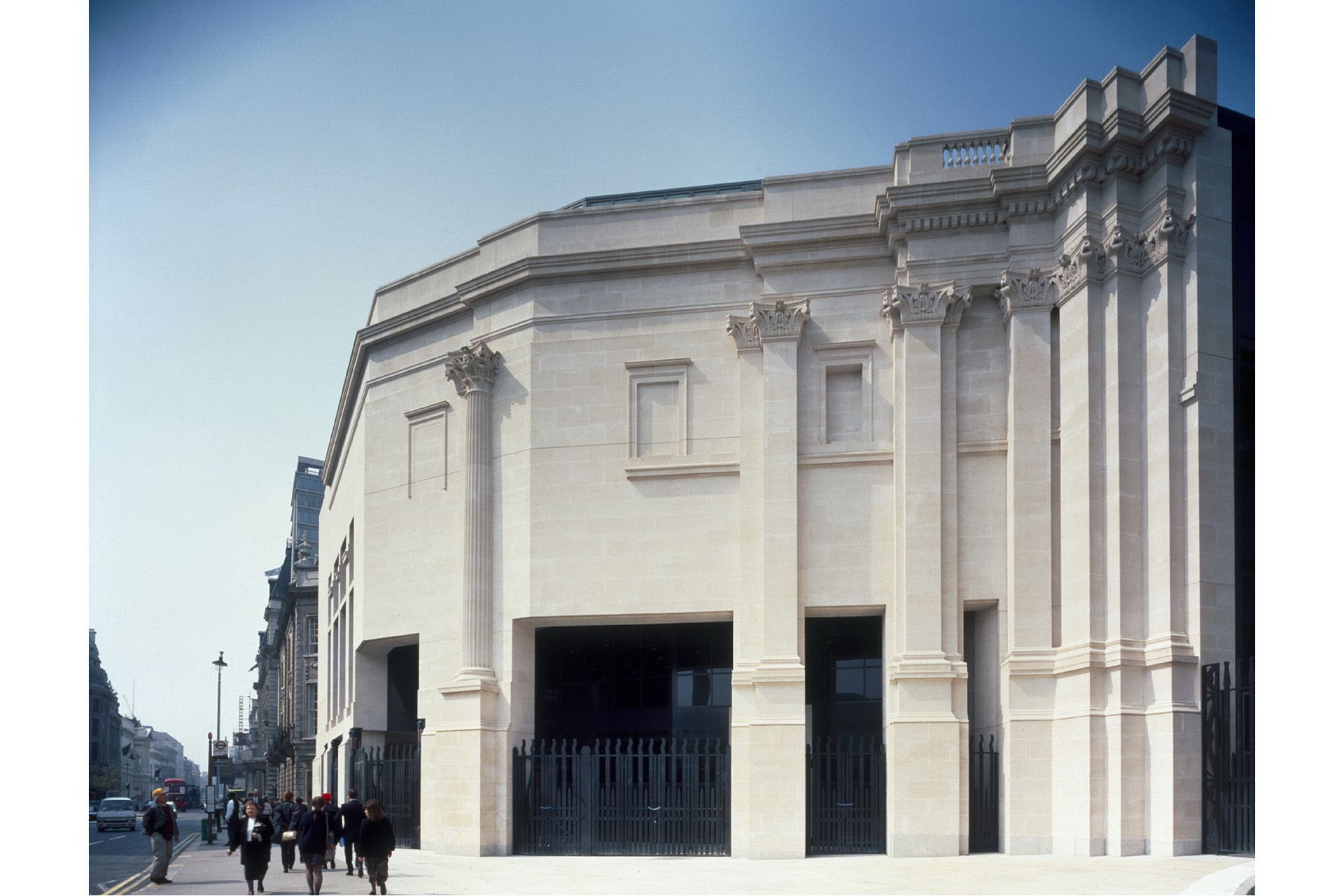
Open since 1991, The Sainsbury Wing was reopened in 2025 after a massive overhaul. (© National Gallery, London)
A New Wing Is On Its Way
The National Gallery’s new wing will be built on the site of St Vincent House which sits to the west of the main Gallery building, separated from Leicester Square by Orange Street. A brutalist 1960s building with no protection stipulations, St Vincent House has been in The National Gallery’s property portfolio since 1998 with the intention to eventually expand onto the land, and we expect it to be demolished to make way for Project Domani.
At present, St Vincent House is home to an office complex and the hotel Thistle London, and St Martin’s Street separates the building from the main gallery. Like the Sainsbury Wing, an enclosed bridge could connect the new wing to the main building, and we’re told Project Domani will help to revitalise these borderlands between Leicester Square and Trafalgar Square.
The shape the new wing will take is by no means set in stone (as it were). In September The National Gallery launched an international competition to hunt for fresh architectural talent to build the new wing, from long-established ‘starchitects’ to younger, more off-beat contenders. Managed by Colander with a jury of seven judges, a shortlist of six architects has been revealed, four of which see two firms teaming up, with all six involving a British firm. They are:
- Farshid Moussavi Architecture + Piercy & Company (both UK)
- Foster + Partners (UK)
- Kengo Kuma and Associates (Japan) + BDP (UK)
- Renzo Piano Building Workshop (Italy) + Adamson Associates (UK)
- Selldorf Architects (USA) + Purcell (UK)
- Studio Seilern Architects (UK)
The shortlisted contenders are now taking part in a design competition, with the winner set to be appointed in April 2026. While the winning architect is far from decided, we know The National Gallery intends to utilise the dramatically advanced building techniques that have come about in recent years, prioritising sustainability.
Project Domani marks The National Gallery’s first totally new wing since the controversial Sainsbury Wing was added to the west of the main gallery in 1991, revisalising a derelict WWII bomb site and funded by benefactors John, Simon and Timothy Sainsbury. Back then, the now-King Charles III famously called an early design by Ahrens, Burton and Koralek ‘a monstrous carbuncle on the face of a much loved and elegant friend’. The Gallery quickly steered plans away from that design, settling on a postmodern yet classically elegant design by Venturi Scott Brown, though Lord John wasn’t best pleased by this design either – something we would discover more than three decades later.
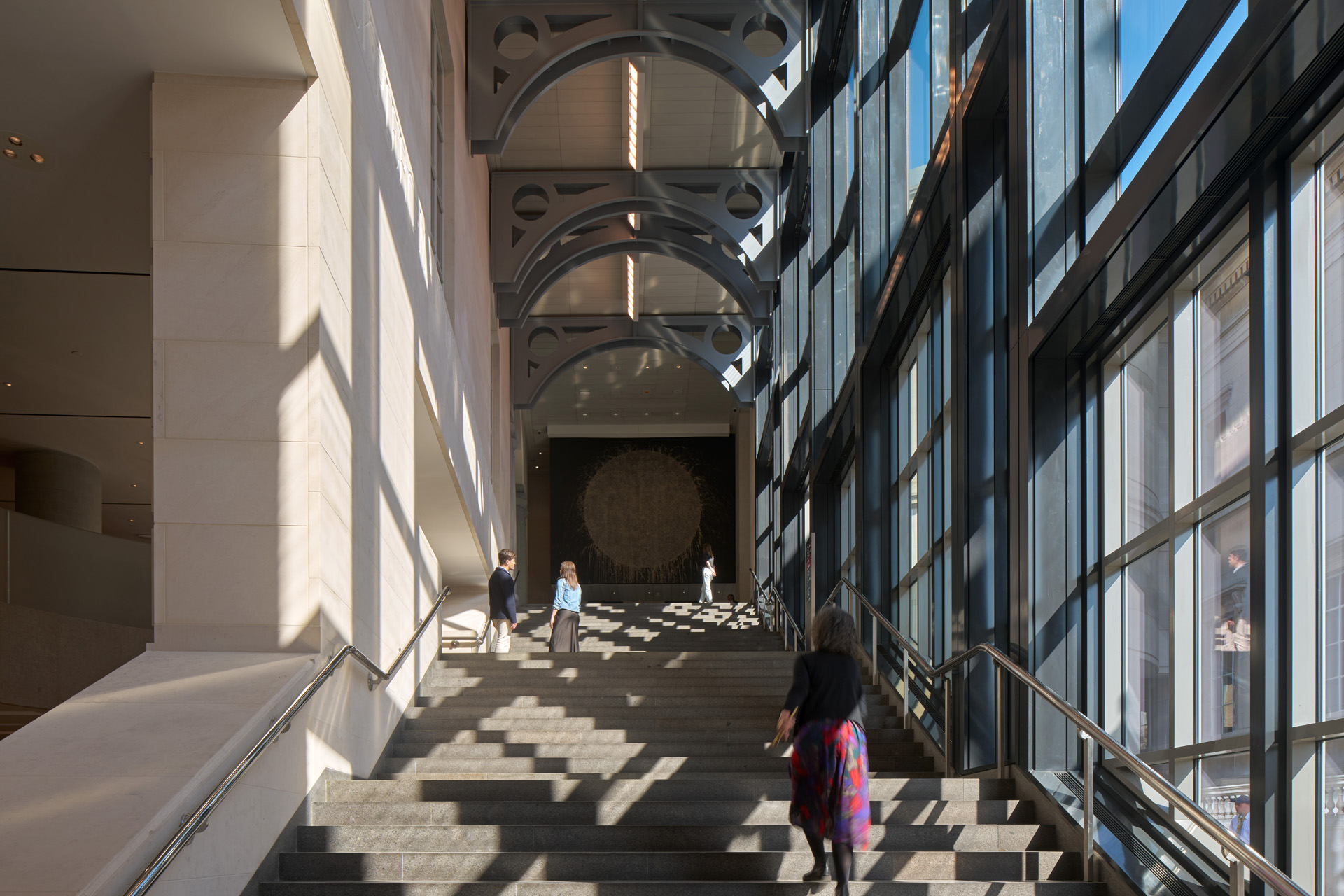
Sainsbury Wing Grand Staircase (© The National Gallery, London/Edmund Sumner)
Earlier this year The National Gallery unveiled its light-filled reimagining of the 30-year-old Sainsbury Wing to much acclaim. During the refurbishment in 2024, a curious note was discovered: in a Sainsbury-headed letter dated 26 July 1990, Lord John Sainsbury typed in all caps: ‘If you have found this note, you must be engaged in demolishing one of the false columns that have been placed in the foyer of the Sainsbury Wing of the National Gallery. I believe that the false columns are a mistake of the architect and that we would live to regret our accepting this detail of his design. Let it be known that one of the donors of this building is absolutely delighted that your generation has decided to dispense with the unnecessary columns.’
The note was encased in a plastic folder and hidden in one of the offending columns, only to be discovered when, in John Sainsbury’s view, the Wing was put to rights. Sadly the note was discovered two years after the benefactor’s death, but his widow Anya told the Art Newspaper: ‘I was so happy for John’s letter to be rediscovered after all these years, and I feel he would be relieved and delighted for the gallery’s new plans and the extra space they are creating.’
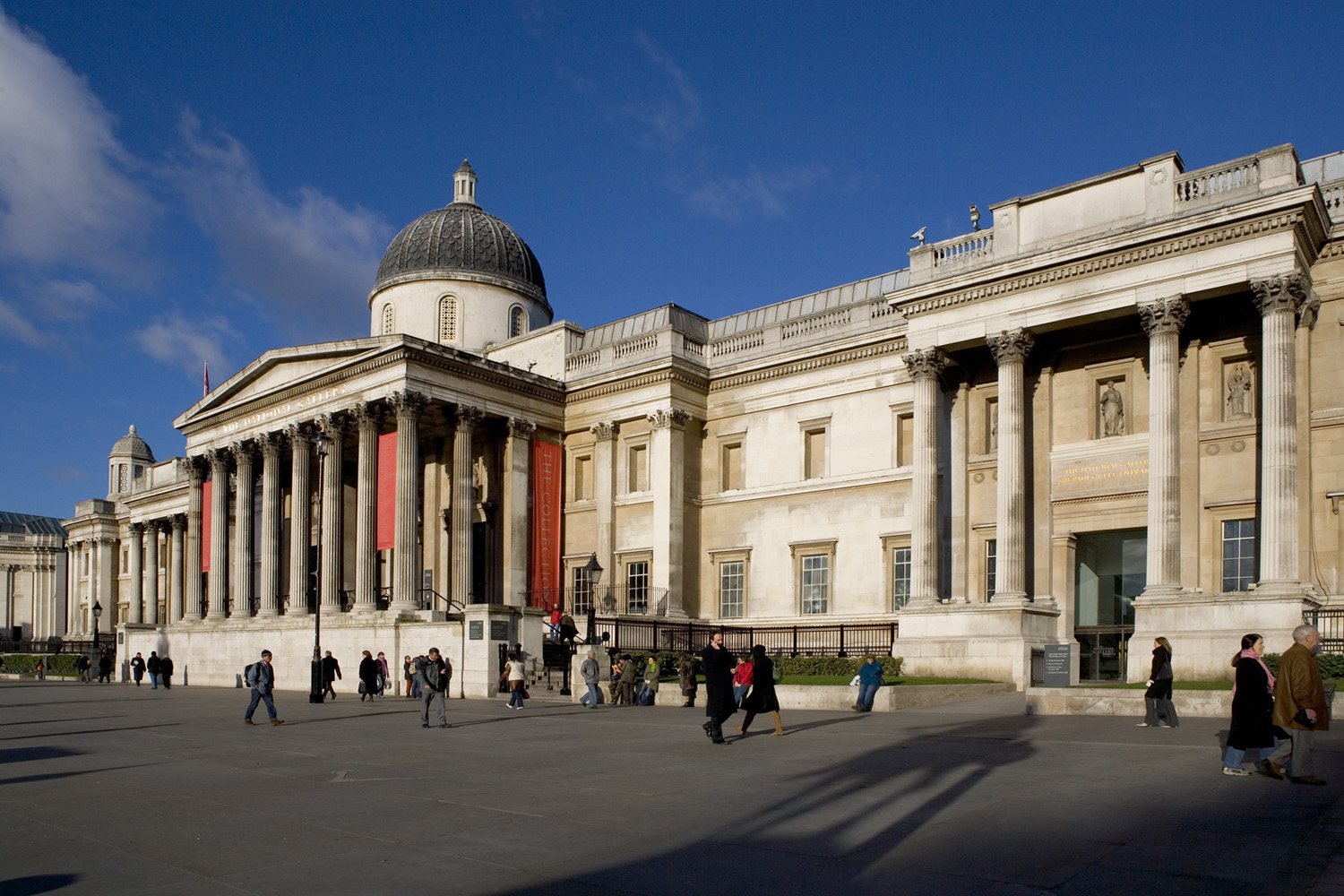
The National Gallery’s new wing won’t be open before the 2030s. (© National Gallery, London)
When Will The National Gallery’s New Wing Open?
Project Domani’s new wing is expected to open in the 2030s. Based on the large donations, in line with the Sainsbury Wing and the Roden Centre for Creative Learning (funded by Stuart and Bianca Roden), we think it will be named for one of the £150 million donors – for example the Julia Wing, the Crankstart Wing or the Rausing Wing.
In the meantime we expect The National Gallery to continue making acquisitions to expand its collection with a view to display the works in the new wing when it opens.
The National Gallery is open daily on Trafalgar Square, and is free to all.