


How To Grow Your Own Food – No Matter How Small Your Garden Is
By
2 months ago
From a five-by-eight-metre London plot to a kitchen windowsill, urban gardener Martha Swales is proof that you don't need an allotment to grow your own supper.
Whether it’s rising food prices, a Covid hangover, or just an increasing desire to connect with the earth, the urge to grow our own food has never been stronger. According to Google data, UK interest in ‘how to grow tomatoes’ has officially equalled ‘how to grow grass’ for the first time on record. Vegetable gardening searches have surged by 100 per cent year on year, and seven of the top ten trending ‘how to grow’ searches are now for edible plants. Gardening is undeniably cool right now.
The Urban Gardener
Martha Swales has seen this coming for a while. The urban gardener, author of Give It a Grow who has 1.2 million Instagram followers tracking her progress, tends a five-by-eight-metre plot attached to a council flat in London. It is, by her own admission, smaller than most living rooms. It is also, depending on the season, home to tomatoes, aubergines, grapes, lemons, miniature kiwis, pears, peaches, saffron, sweet potatoes, carrots, garlic, mushrooms, and enough cut flowers for a year’s worth of indoor bouquets. She is speaking in front of a table holding an absolute bounty of mushrooms, flowers, micro-greens and more. She motions across it: ‘I just really wanted to give you a sense of the sort of abundance that you could create in the smallest spaces,’ she says.
She started growing at 21, got her first allotment at around the same time, and is largely self-taught. ‘I’ve learned most things by Googling, and then trial and error.’ And she doesn’t think that the rise in gardening’s popularity is a backlash to improving tech, but that they go hand in hand. Now she uses Google’s AI assistant Gemini to troubleshoot specific problems, plan new projects, and check in on plants when she can’t be there in person. Recently she’s used Gemini to plan and grow a friend’s wedding bouquet and rescue some mushrooms after a few days absence from home. But the tools matter less than the starting point and for anyone overwhelmed by where to begin, Martha’s advice is to go for something achievable, quick, and ideally, something you can’t easily buy in a supermarket.
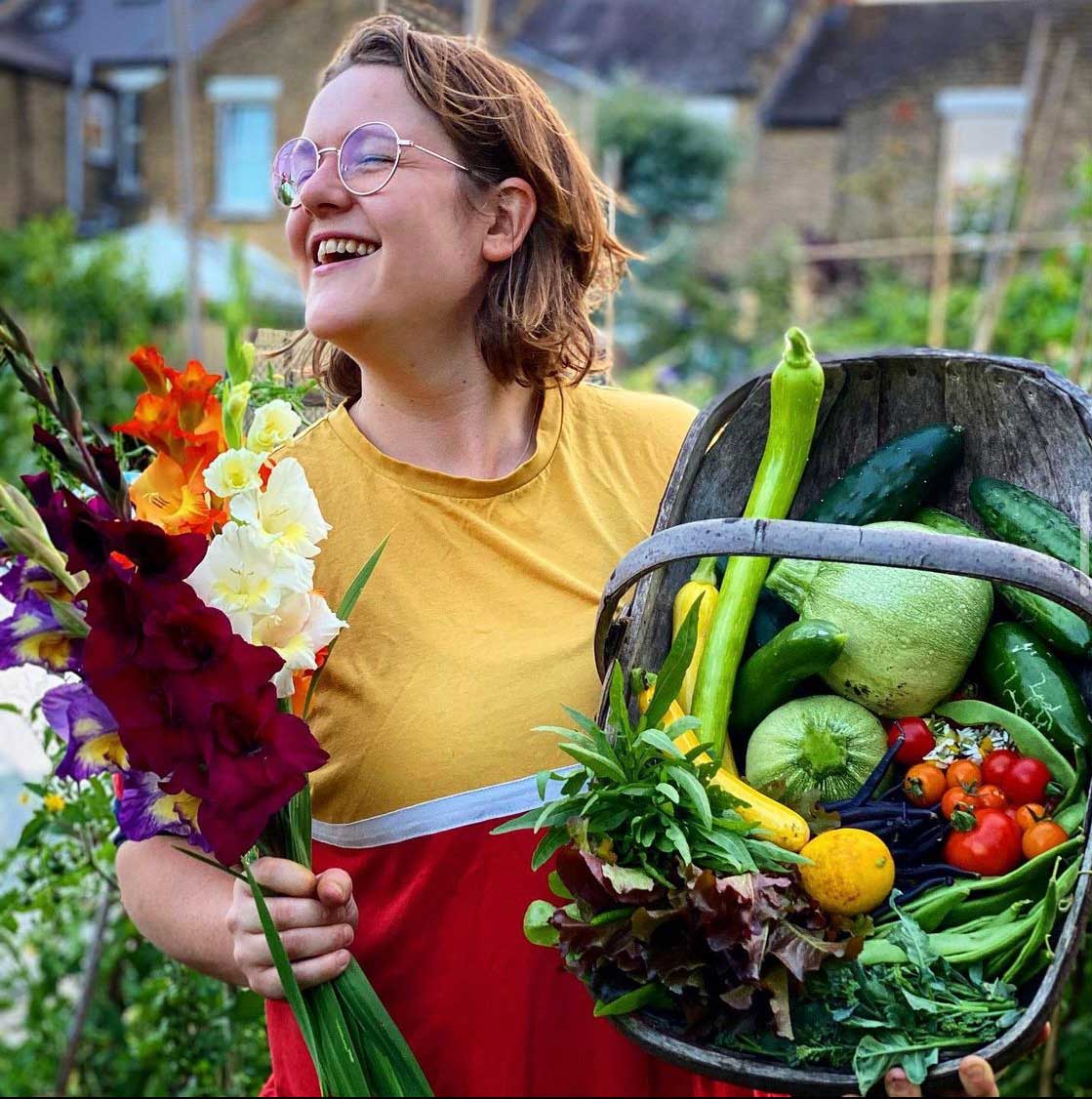
Martha Swales
Start Where You’re At
‘When you’re thinking about small spaces,’ Martha says, ‘what you want to do is find the most productive thing for the amount of space that you’re using.’ That might mean fast-growing microgreens on a windowsill, or a herb planter on a balcony that doubles as a pollinator haven. It could be a hanging basket tomato, provided you plant the right variety. ‘You want to make sure you’re planting the right tomato in the right place,’ she says. A tumbling or trailing variety will fill a basket and give you fruit all summer; a full-size Costoluto Fiorentino needs a greenhouse and, left to its own devices in a hanging basket, will produce very little.
Complete Beginner? Plant These Foods
For complete beginners, she recommends courgettes, cherry tomatoes, or potatoes. ‘They produce repeatedly, and potatoes are pretty quick… Tomatoes are a gateway to grow your own food,’ she says. Once you’ve grown one thing successfully, you want to grow more.
Garlic Greens & Supermarket Herbs
Garlic greens are something Martha posts about regularly and recommends to new growers. She says: ‘You need a bulb of supermarket garlic, a bowl of water, and two weeks’. The greens grow to about 20 centimetres and can be snipped over garlic bread, stirred into a salad, or made into garlic mayo. ‘It’s taking something familiar and making it into something that people hadn’t realised,’ she says.
Microgreens are another easy-grower that can be grown on a windowsill if you don’t have a garden. Essentially the immature seedlings of familiar plants, they can be grown in sardine tins, bamboo boxes, or any shallow container with drainage. Broccoli, radish, pink kale, and cress are all good options. ‘These ones I grew in the last couple of weeks,’ Martha says, gesturing to an abundant spread of about 30 tinfuls she’d produced entirely in her flat. ‘Really, believe.’ They grow in under a fortnight, taste considerably better than shop-bought cress, and look beautiful on a plate.
Mint from a supermarket pot is another easy win. Rather than using the plant up, strip the leaves for tea and keep the stem. Pop it in a glass of water, leave it for a few weeks, and it will grow roots. ‘This is a mint I grew from the supermarket,’ Martha says, holding up a healthy plant. ‘I’ve had it for four years.’
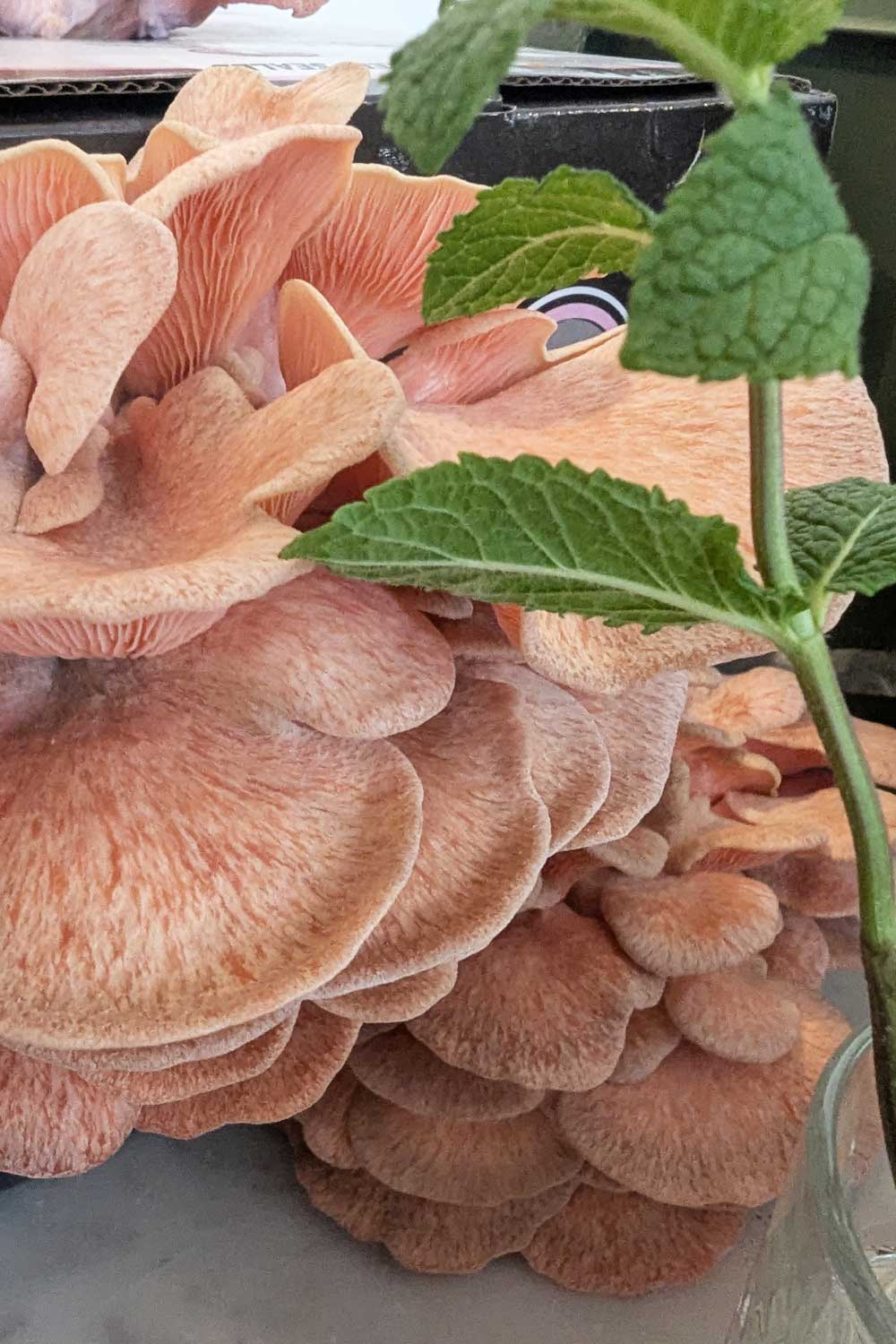
Some of the mushrooms Martha grew in her home.
Advanced Grows That You Can’t Find In Supermarkets
One of Martha’s recurring arguments is that small spaces suit unusual crops particularly well: there’s no point filling limited square footage with things you can pick up cheaply in any supermarket. Her list includes saffron, Chinese artichokes, sweet potatoes propagated year on year from a single tuber, and multiple varieties of basil. ‘If you grow basil, you might as well grow five kinds. Cinnamon basil. Purple basil. Why not?’
The same logic applies to herbs. Her herb planter, roughly the size of a large chopping board, is packed with varieties you won’t find on most supermarket shelves. ‘You let them flower and all the bees come.’
Why Should We Grow Our Own?
Wondering what all the fuss is about? ‘Growing food has just been on an upward trend since Covid, and it’s only going to get more,’ says Martha. ‘Food insecurity, all sorts of things going on that make people feel unsettled. And gardening is grounding. It gives you a feeling of connecting to something that people have been doing throughout the whole of history.’
It also allows you to have greater control of what you’re eating. ‘Everything I grow is completely organic. I don’t do anything for pests. If you have healthy plants and garden organically, you need lots of organic matter, you pay attention to when they need watering – they don’t attract pests in the same way,’ she says. People want to know where their food comes from. Growing your own is the most direct answer. Martha says it’s pretty addictive, too: ‘Once you start, you can’t stop.’