


Inside Martell, One Of The World’s Oldest Cognac Houses
By
2 months ago
Behind-the-scenes at the famous French distillery
As Martell opens its chateau to the public, Richard Hopton delves into the history – and future – of the prestigious drinks brand
A Trip To Martell, Cognac
‘Claret is the liquor for boys; port for men; but he who aspires to be a hero must drink brandy.’ So said Dr. Samuel Johnson, the 18th-century lexicographer and wit. We shall never know whether Johnson was recommending that his dinner guests should drink Martell’s brandy but he might have been as by his day, Martell was already half a century old and well known in England. Martell is the oldest producer in Cognac, having been founded in 1715, the last year of the reign of Louis XIV.
The Story Of Cordon Bleu
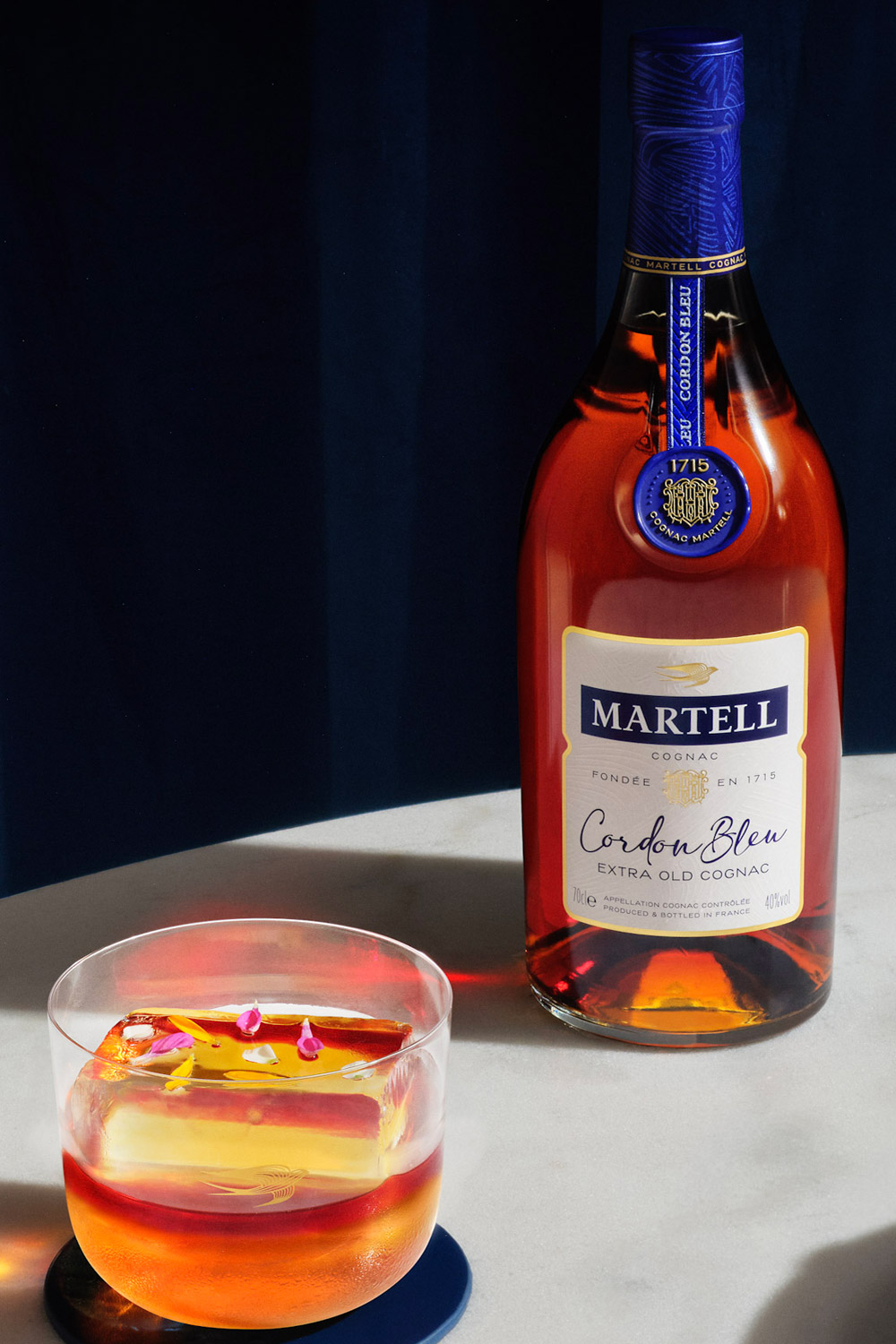
Martell’s best-known cognac, Cordon Bleu, has been a by-word for quality and consistency since 1912. Two years in the making, Cordon Bleu was created to satisfy a demand for high-quality cognac among the wealthy tourists who flocked to the upmarket seaside resorts at Deauville and on the Riviera in the years before the First World War. Indeed, as if to make the point, Cordon Bleu was trialled at the Hotel de Paris in Monaco. It is now the world’s best-selling XO (‘extra old’) cognac; remarkably, one in every two bottles of XO cognac sold is Cordon Bleu. That Cordon Bleu has retained precisely the same character and quality consistently for over a century is testament to the skill of the seven cellar masters at Martell who have overseen the blending of the cognac since 1912. The present cellar master, Christophe Valtaud, has the notes made by Edouard Martell, the great-grandson of the founder, defining the Cordon Bleu blend, containing 150 eaux des vies.
Cordon Bleu’s name – and the blue ribbon which ornaments its bottles to this day – is a nod to the Blue Riband awarded to the fastest crossing of the Atlantic by a passenger liner, a fiercely contested honour in the early and mid-20th century. It was also a reference to the fact that Jean Martell traded indigo when he first arrived in Cognac in the early 18th century, the blue which remains the Martell livery colour. Cordon Bleu has an illustrious history: it was served at dinner during the Queen Mary’s first Atlantic crossings in 1936 and on board Concorde’s early flights between Paris and New York in the 1970s. It is frequently served at state visits and other important events.
Getty Images
Cognac Town
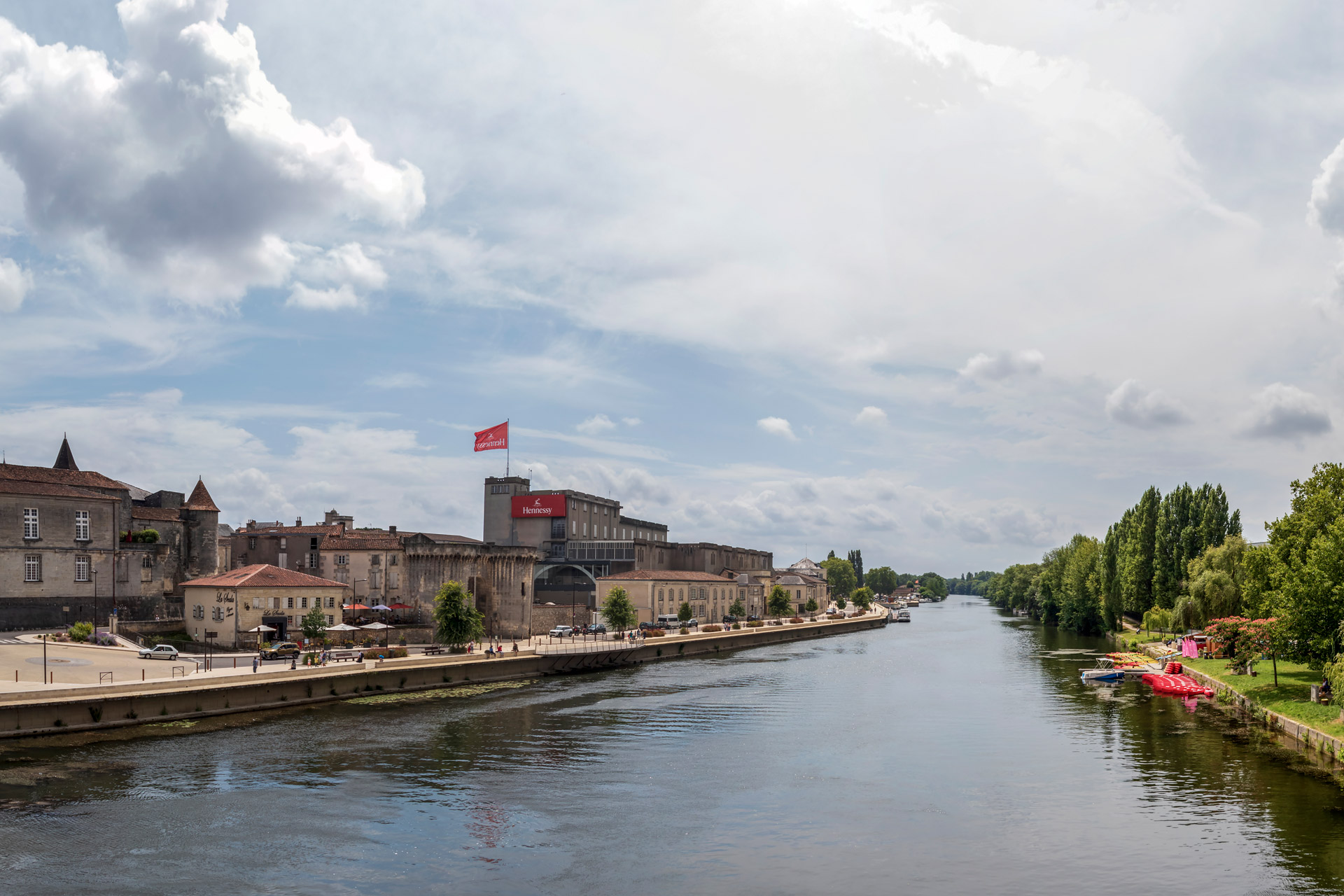
Martell occupies an extensive site in the middle of Cognac, a historic town on the banks of the grey-brown Charente, swollen by winter’s December rain. The old centre of the town, built in local stone the colour of rich double cream, sits on a hill above the river where the castle used to be; a single bastion is all that remains of its former size and strength.
Cognac has a royal connection, too: François I, King of France and contemporary of Henry VIII, was born there in 1494. Until 2001, all Martell’s cognac was bottled in a 1930’s building on the site and many of the barrels were aged there, too. In that year, all the cognac houses moved their operations out of the town at the request of the municipal authorities to reduce the risk of fire for the local population. Now, the old cellars are empty, a chilly, echoing reminder of three centuries of activity, their walls blackened with torula, the yeastlike organism produced by the evaporation of the ageing brandy. In the chai de mariage – blending cellar – a double line of huge oak vats once used for blending the cognacs has been retained as a memorial, filled with spirit to preserve them, a mute, immobile guard of honour from Cognac’s past.
How Is Cognac Produced?
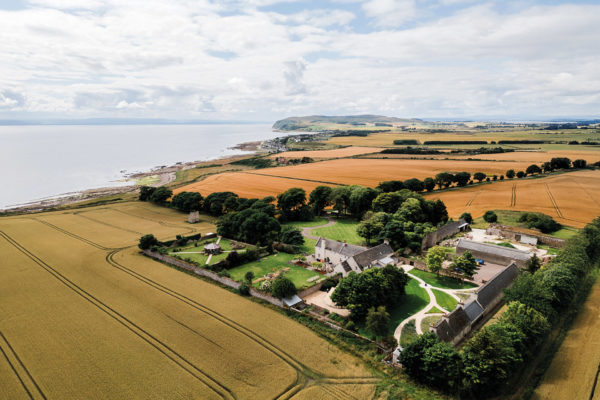
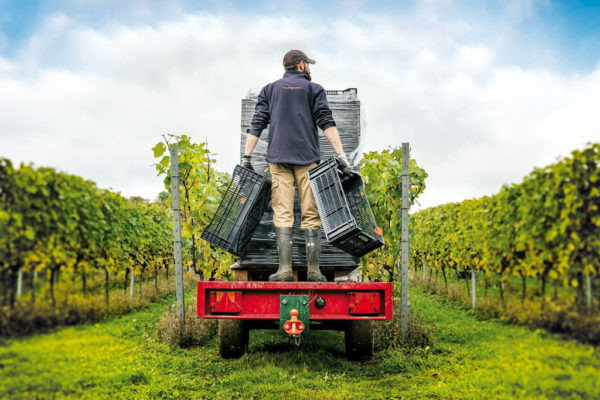
The production of cognac, rather like that of champagne, depends upon a vast network of small local producers. Cognac has around 80,000 hectares of vines, which makes it the largest white wine appellation in France. Six different grape varieties are permitted but 98 percent of the vines are ugni blanc which is the most disease-resistant of the six. Martell owns around 450 hectares of vines but this supplies a mere three percent of the grapes it requires; the vast bulk of the grapes needed for the company’s production comes from around 1450 independent local growers, big and small.
Some of these growers have supplied Martell for generations. Likewise, Martell owns some distilleries but supplements its own eaux des vies with spirits from 600 other distilleries, large and small, all within the appellation. Making cognac is a reductive process: 2500 litres of wine will produce approximately 550 litres of usable spirit and of that half will be lost for every thirty years it is aged in barrel. On the other hand, distillation concentrates the flavour of the wine ten fold.
The regulations of the Cognac appellation require that the eaux des vies are double distilled and aged for a minimum of two years in French oak casks. Martell uses casks made from fine-grained sessile French oak, which releases its flavours slowly as the eau de vie matures, from the famous forests of Bercé and Tronçais.
Blending the eaux des vies into the cognac is a remarkable skill which is both innate and learned. According to Christophe Valtaud, 95 percent of the blender’s job is done by the nose; ‘Cognac is for me a perfume rather than a spirit,’ he says. The wines which are the base element of cognac are subject to the vagaries of the weather during every growing season and, as a result, vary enormously. It is the blender’s job to counteract this impact by producing a cognac which is identical, year after year. At Martell, this work is done in a modern, glass-walled tasting room set in a 19th-century cellar, dramatically lit and furnished like a stage set with barrels and bottles.
Martell’s New Chateau Dining
The Chateau de Chanteloup, located outside Cognac in the Borderies – the smallest and the finest of the Cognac crus – is the beating heart of the Martell operation and was the Martell family’s home until 1967. The present chateau was built in the early 1930s in the Norman style, although its interiors are in the classic grand French style. Enfolded by an extensive deer park its peaceful, sylvan setting exudes a douceur de vivre which has all but vanished from the modern world.
Until recently, the chateau was used for entertaining important corporate guests but is now opening its doors to the public with the launch of Signature Martell. This is a joint venture between the chef Alexandre Mazzia – whose restaurant in Marseilles, AM par Alexandre Mazzia, has the coveted three Michelin stars – and Martell’s cellar master Christophe Valtaud.
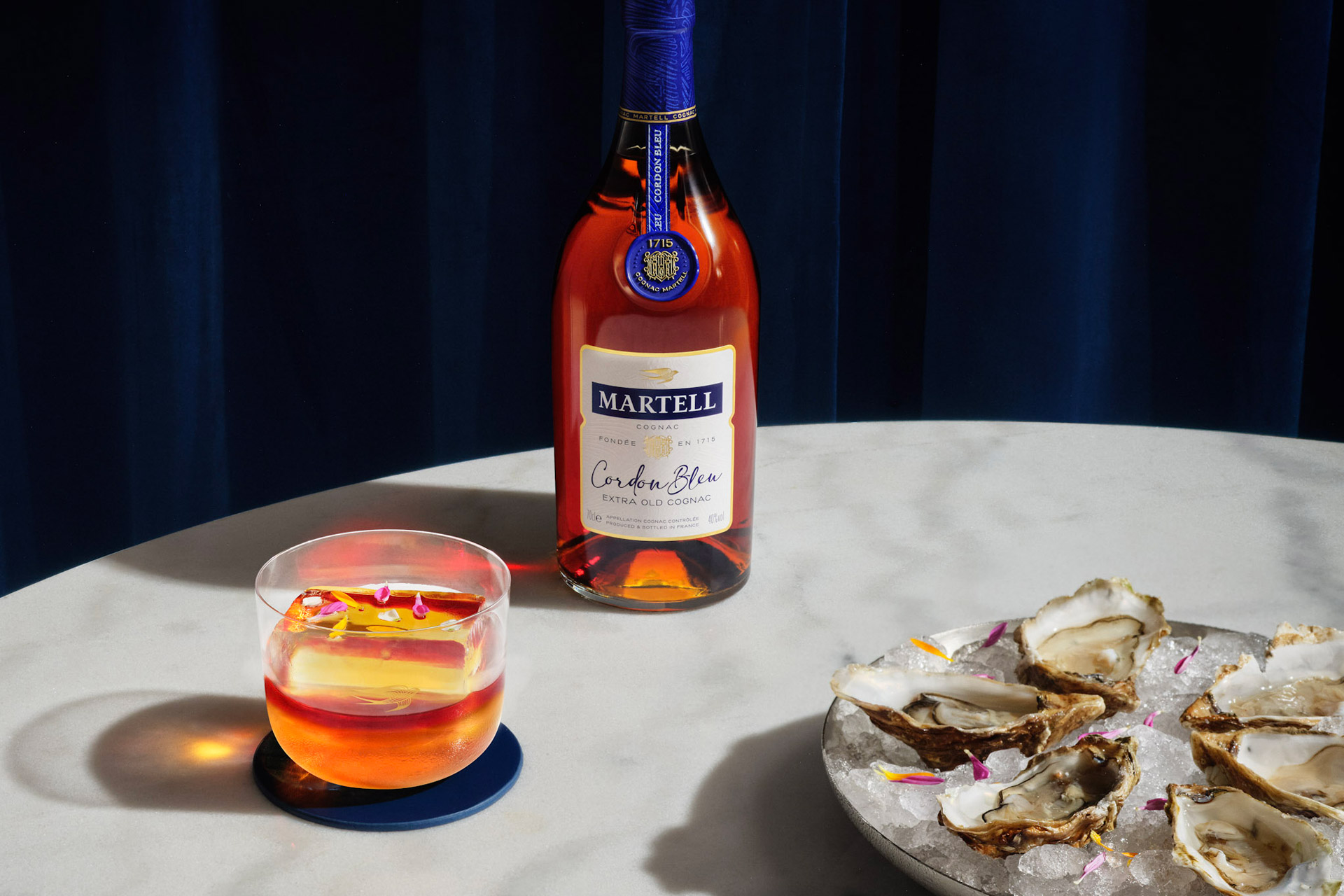
The collaboration is aimed at demonstrating that Martell’s cognacs and Mazzia’s inventive dishes complement each other perfectly. The distinctive character of Mazzia’s cuisine, its roasted and smoked flavours, spices and peppers, is interpreted to reveal the rich nuances of the cognacs. To my mind, the combination is most effective in seafood dishes, red mullet, crab, scallops, mussels, clams, or langoustine. The pairing of food and spirits is an audacious idea which has also been tried by whisky distillers. Innovation and challenging accepted norms are thoroughly laudable but I am not wholly convinced that neat cognac, however delicious it may be, is always the best accompaniment to a meal, especially at lunchtime, and there are some dishes which cry out for a glass of wine.
Similarly, Martell is modernising the image of its cognacs with the ‘Make it with Martell’ initiative. Directed by mixologist Rémy Savage, owner of London’s A Bar with Shapes for a Name, it offers a range of cocktails based on Martell’s cognacs. One of them, the Théodore, is an audacious blend of cognac and red wine; another is the Cordon Bleu Gourmand, a bold reinterpretation of the classic French café gourmand: Cordon Bleu poured over sweetened coffee chilled by an ice cube. It is delicious.