


The Interior Designers Launching Their Own Furniture Empires
By
8 minutes ago
Savvy interior designers are launching their own beautifully crafted collections
Rugs, chairs, lighting, even paint: the interior design world’s biggest names are quietly building furniture empires of their own, says Mark C. O’Flaherty. Here’s who’s doing it, and why.
Why Interior Designers Are Building Their Own Furniture Collections
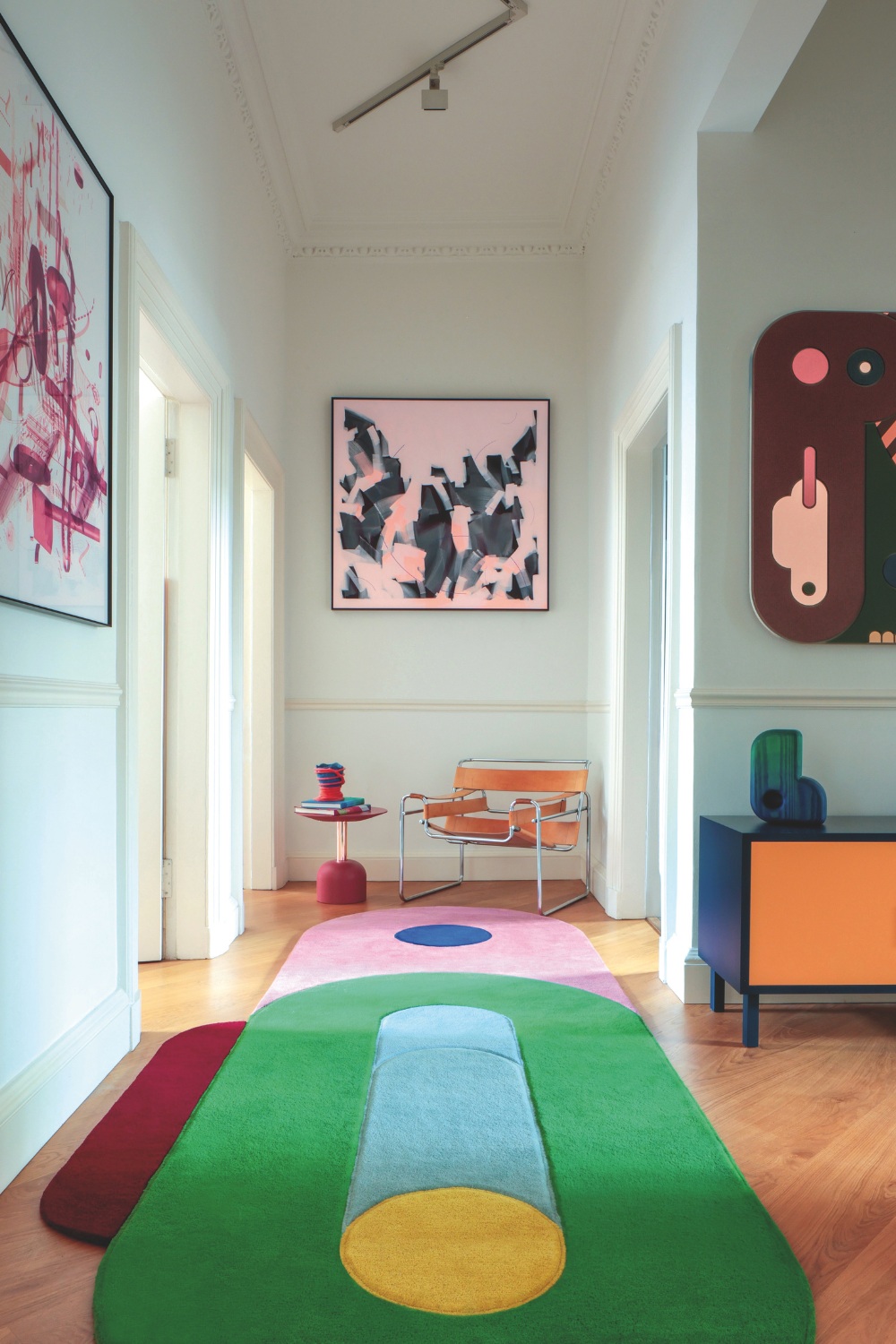
Often, it’s a simple rug that’s the gateway drug. Designers spend years forging a business with bespoke product for one-off projects, then they prototype something for retail, it sells, and the business grows. Sam Buckley, known for his brilliantly colourful post-modern projects, discovered this recently with his DiscoRectangle collection with CC-Tapis. Similarly, Christian Bense worked with 16Ten three years ago for the Henge rug, with graphic stone formations in the weave, ahead of a standalone product collection currently in the pipeline.
Tim Gosling‘s first foray into his own range was an Art Deco-inspired collection, created with the Rug Company way back in 2013. He went on to expand with the Regency-style furniture of his Gosling collection, including the Bibliotek chair, inspired by Danish open-framed armchairs. There’s also his Restoration Chateau paint range for Graphenstone, developed for Gosling’s own ongoing 50-room chateau project in Normandy. His horizons carry on expanding but remain firmly rooted in his established style, reinforcing his signature with his clients and safeguarding his business. ‘I’ve always created bespoke furniture,’ he says, ‘but creating “demi-bespoke” pieces allows us to weather the ups and downs of the global markets.’
Across the Atlantic, powerhouse designers George Yabu and Glenn Pushelberg began with their Grid collection of rugs, made with Warp & Weft and inspired by urban topography. Fast-forward to this year and the duo launched a new range of products at Salone, including the vast, stage-like Lanai bed with Poliform, which is ‘intended’, they say, ‘to reinvent the bedroom as an environment rather than a single-purpose space’. It certainly does, in showy, retro-glam, Halston-like fashion. It’s an example of the ambition of many designers, essentially moving from couture into ready-to-wear.
Launching a full collection in one go conjures an incredible room set to bring a designer’s vision to life. A rug is one thing, but what you put on and around it tells the story. In 2023, Bryan O’Sullivan, best known for his work with Claridge’s, unveiled 42 products, including the Jellyfish mirror, reminiscent of Ettore Sottsass at his most Hollywood, and the tubby soft folds of the Croissant sofa. Today there are 75 pieces; the bubble-like Barbican pendant, in a range of colours, is the latest. O’Sullivan lives in one of the towers of London’s iconic brutalist estate with his husband, the studio’s commercial director, James O’Neill. ‘Lighting is our bestselling category,’ says James. ‘But the Spring chair is our most popular piece.’
Sister by Studio Ashby
Martin Kemp launched the first products from his new furniture range, From the Avenue, at WOW!house earlier this year. The Parlour featured 30 pieces, and Kemp plans to create a catalogue of over 500 in the future. ‘The ambition is to establish a standalone brand,’ he says. The Arizona armchair, with ingeniously shaped elements inspired by desert rock formations and upholstered in lush purple jacquard with floral and bird motifs, is a manifesto of sorts. ‘This is a retail brand operating at couture-like levels,’ says Kemp, who also wants to invite guest designers to work with From the Avenue in future, positioning himself as a master manufacturer as well as designer.
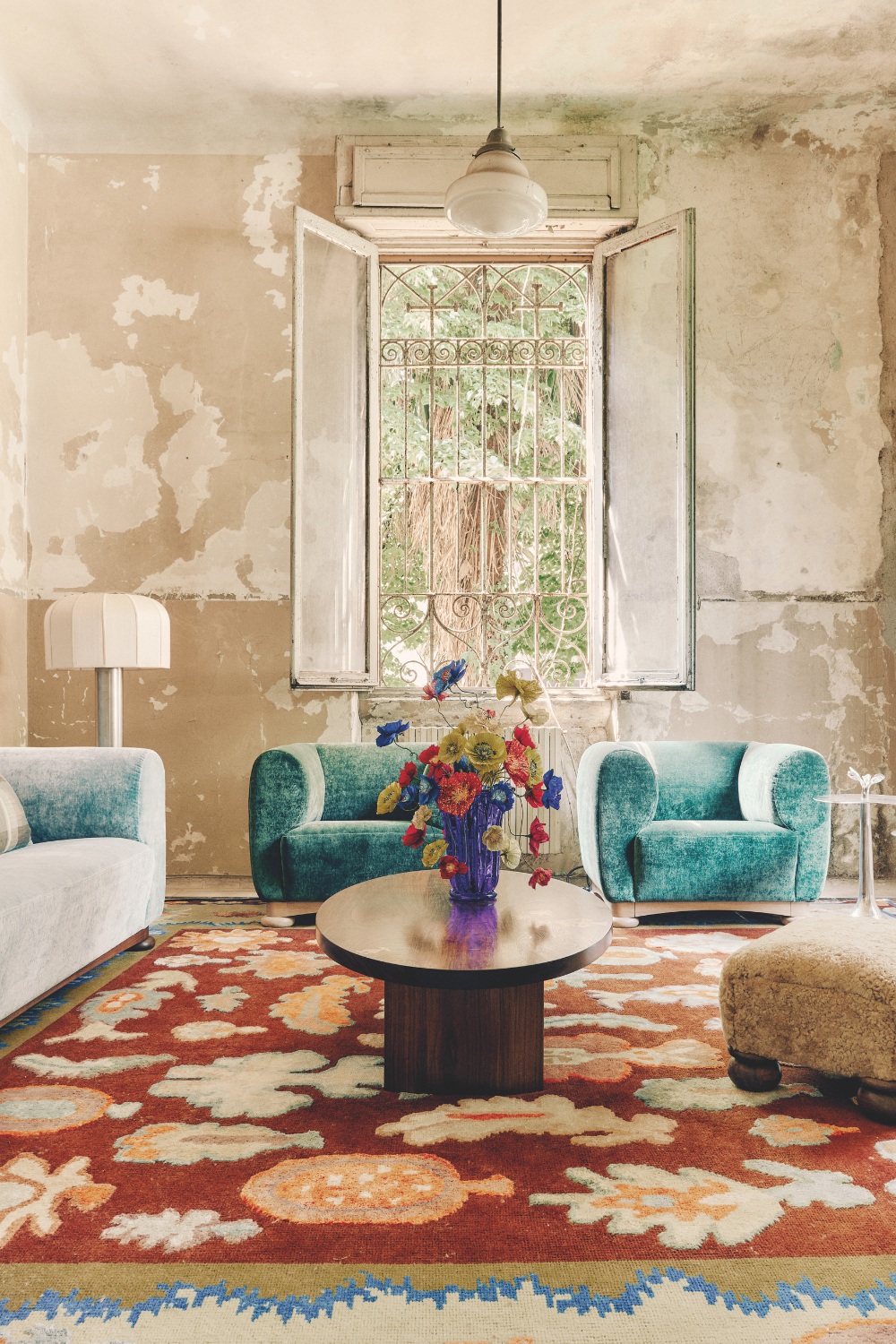
New releases from Sister by Studio Ashby, launched by Sophie Ashby in 2020 as a sibling entity to the practice she founded in 2014, include The Felix lamp, comprising a sculpted, solid brass column with a weathered patina and a Dupion silk shade that gives a soft glow. Howes & Landino is another sibling brand, launched in 2024 by Taylor Howes founders Karen Howes and Jane Landino. ‘Time and again we’d find ourselves searching for something that simply didn’t exist,’ says Howes. ‘So we’d design it ourselves. This year, we’re expanding with bespoke mirrors in collaboration with Patrick Ireland, sculptural artworks with Locker & Riley, and a new range of in-house accessories.’
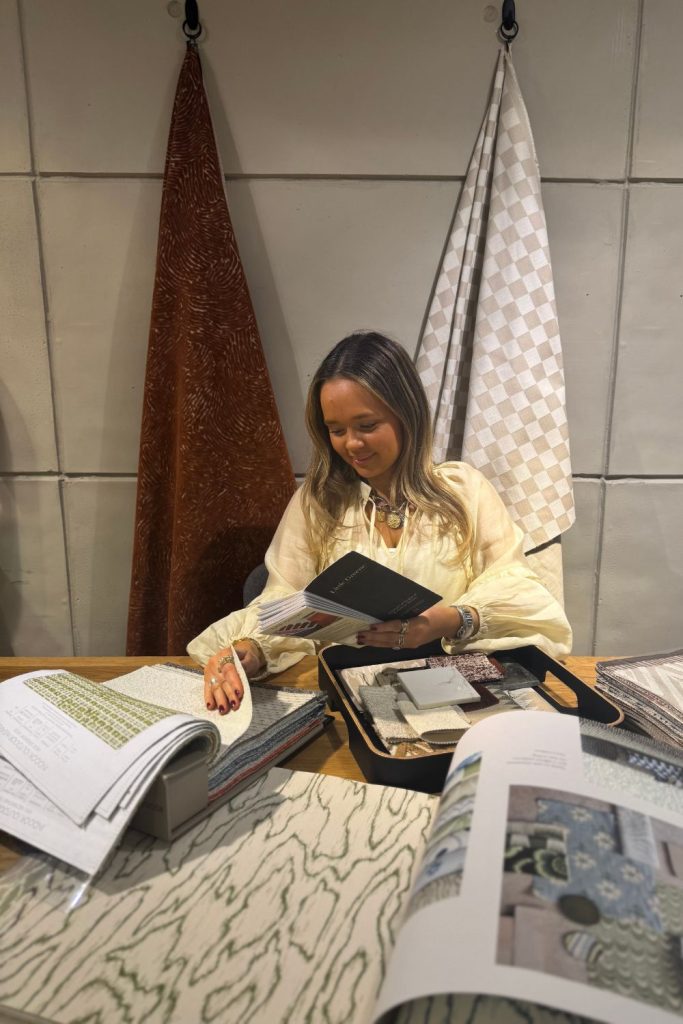
Fabrics represent a key area for designers to grow into; after all, it’s easier to distil your DNA into a graphic than a suite of furniture. Mary Graham and Nicole Salvesen first brought their classic and ornate future heritage aesthetic to a broader market in 2016, with a David Seyfried chair they upholstered. There’s now a full range of brightly coloured, checked furniture, often Georgian in silhouette and proportions. The duo’s latest release, The Collection by Salvesen Graham, is a range of fabrics and wallpapers inspired by 18th-century European archive designs. ‘We think of it as a designer’s toolkit: an edit of patterns, plains and textures that are designed to layer effortlessly together.’
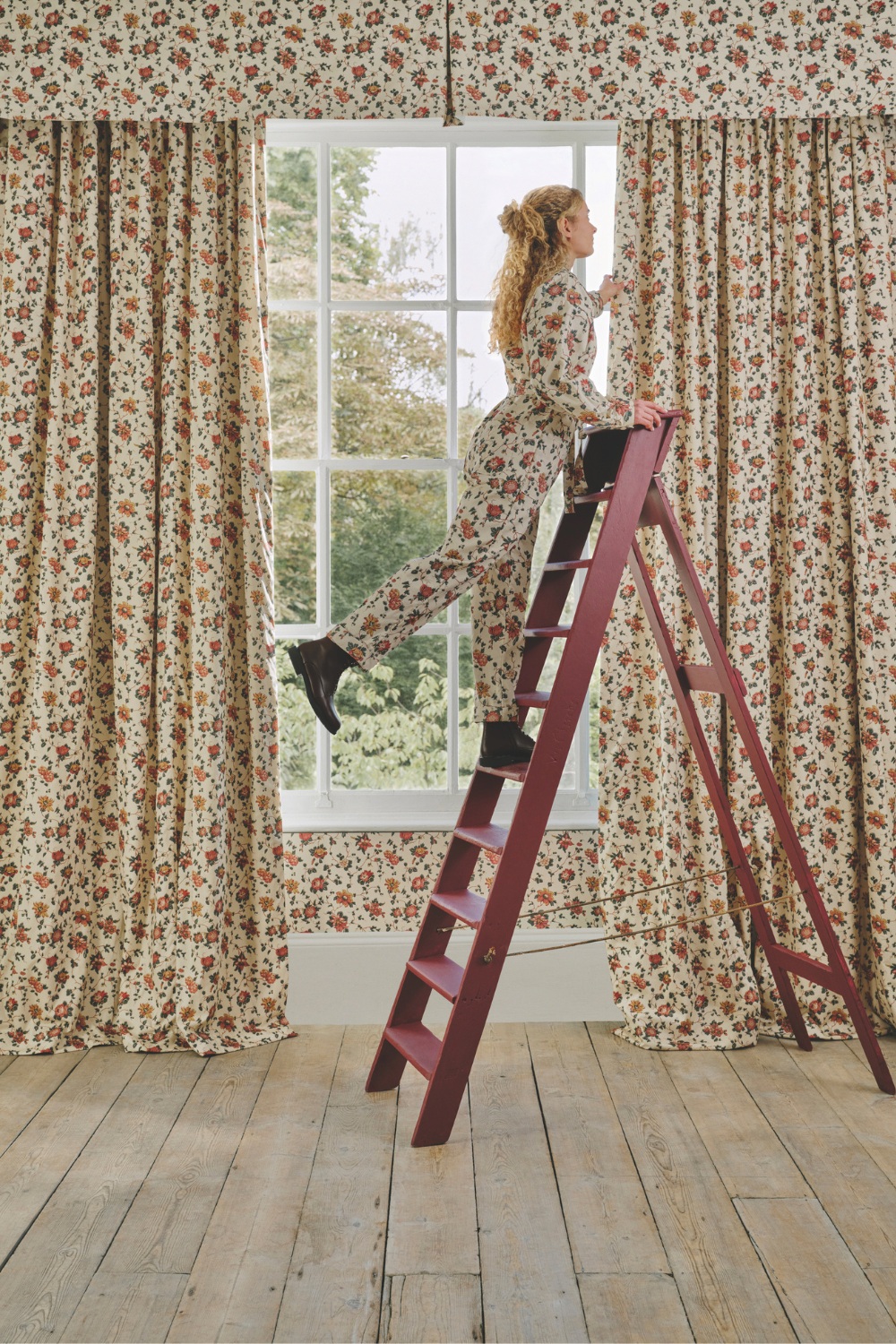
Salvesen Graham
Guy Goodfellow also looked back to the 18th century for his new Fresco Flower fabrics and wallpapers, inspired by the dappled and worn imagery from an archival French document. These are florals with nuance that will age beautifully.
Tiling is another strong area for interior designers to put their stamp on. Sims Hilditch has been working with Marlborough Tiles for years and recently added new colourways to the White Hart collection, a series of handpainted Delft ceramics with tulip, strawberry, oak leaf and mistletoe motifs, which first appeared last year.
While a full interiors commission can take months or years to complete, once designed and manufactured, product can provide a solid income for designers. On the flip side, a Katharine Pooley interior could cost a king’s ransom, but the picture frames, trays, tissue boxes and backgammon sets from her new British Isles collection represent entry-level designs. This isn’t ‘merch’ though; you’re paying over £2,000 to roll the dice on that backgammon board, it’s a future heirloom.
For some designers, their own-brand collections have eclipsed the rest of their business. Around 80 per cent of Beata Heuman‘s turnover is now product, which continues to grow, allowing her to pick and choose her interiors clients. ‘Beata’s book, Every Room Should Sing, came out in 2021 and our furniture sales rocketed overnight,’ says John Finlay, managing director and Heuman’s husband. ‘That year, product made up over half of our revenue.’
Yes, there’s a rug in Heuman’s inventory, the Gurli floral design, named after the couple’s eldest daughter and inspired by a rug hanging on the wall of Heuman’s childhood home, but her bestselling item is the £1,860 Dodo Egg lantern, a clear glass pendant with a brass plumage flourish. It’s off the peg but looks one of a kind. It shows the hand of a brilliant interior designer, both in terms of talent and business nous.