


How To Lay The Table Like A Jane Austen Heroine
By
7 minutes ago
Francesca Di Mottola chats to C&TH about sensorial treasures in Sense and Sensibility
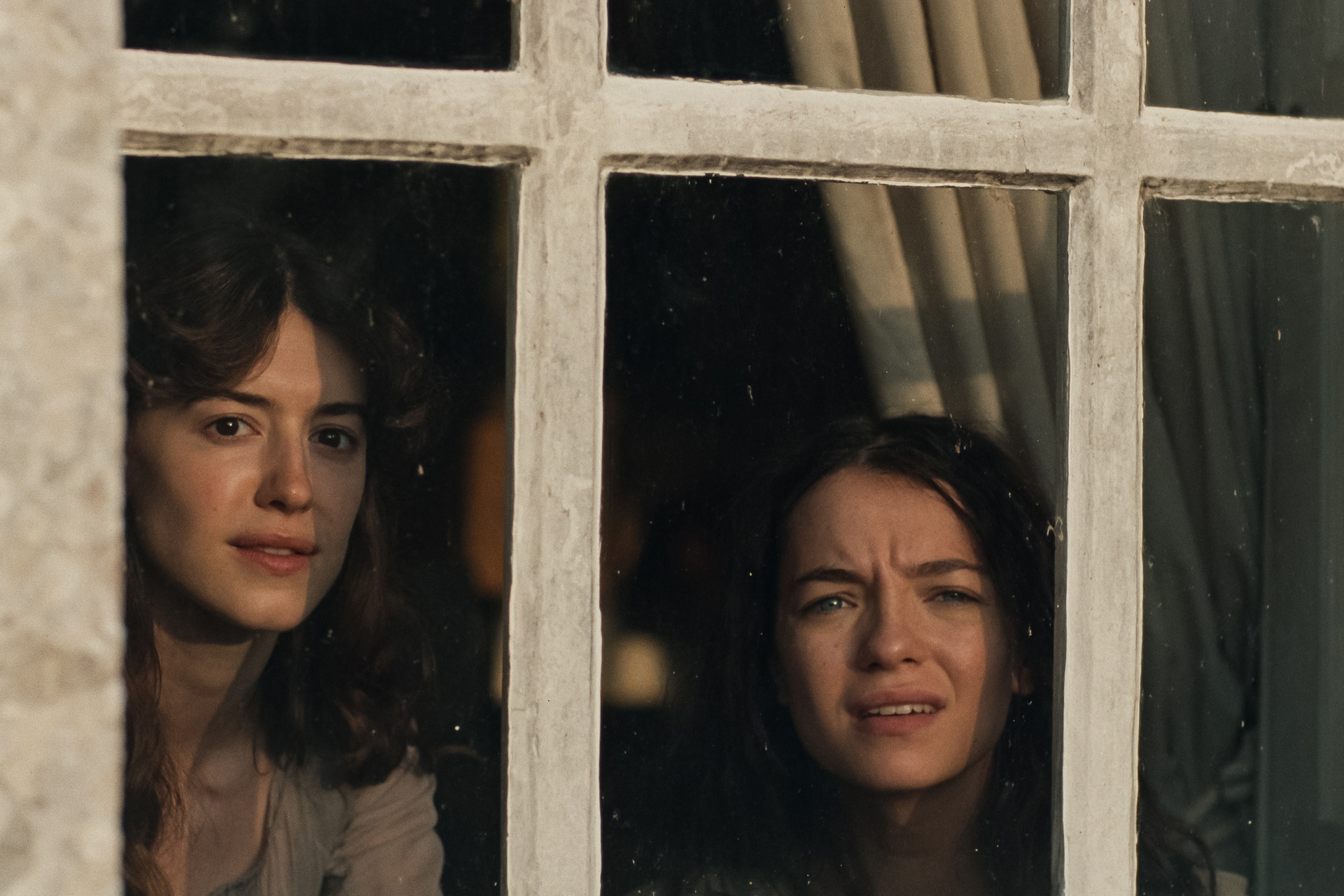
The latest Austen adaptation lands in cinemas today. More than 30 years after it hit the silver screen, Sense and Sensibility has been revived for a new generation of literary fans. Starring Daisy Edgar-Jones and Esmé Creed-Miles as Elinor and Marianne (our ‘sense’ and ‘sensibility’) respectively, this retelling centres more on the plight of sisters learning to understand each other and grow as individuals. (But don’t worry, there is still plenty of romance – read: dashing Austen men.) But between the period costumes and star talent, there’s one unsung hero to keep an eye out for: the interiors. Ahead of the film’s cinematic release, C&TH sat down with production designer Francesca Di Mottola to talk Regency interiors, playing on the senses and what it really takes to set a standout table befitting Sense and Sensibility.
Francesca Di Mottola On Designing Interiors For Sense And Sensibility
When she got the call from Georgia Oakley, Sense and Sensibility’s director, Francesca Di Mottola was ready. The Italian-born, Britain-based production designer was well-versed in period titles, having cut her teeth on Cold Mountain (2003) and Sweeney Todd: The Demon Barber of Fleet Street (2007) as a draftsperson before heading up production design for Hulu drama The Great (2020-2023). Even as we catch up over Zoom, she tells me that she’s working on yet another period production (which she can’t yet say the name of).
But with Sense and Sensibility, she tells us that the beauty of the project was that she ‘already felt like I knew 18th century England inside out. So rather than doing a crazy amount of research, we delved into the work with Georgia straight away, just talking about what the world wanted to feel like – it’s not got to be exactly like this, this is what it looked like back then.’
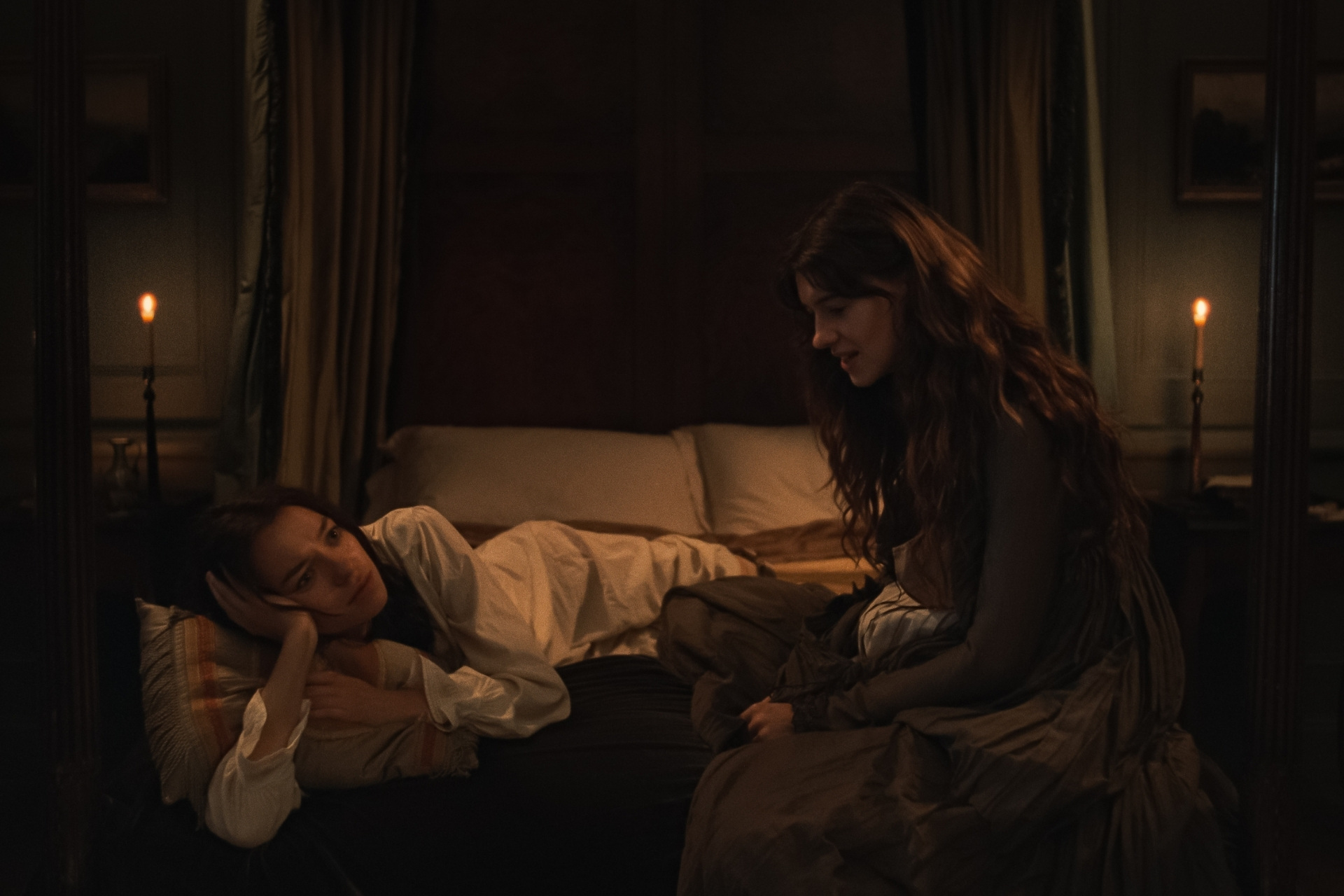
Esmé Creed-Miles as Marianne and Daisy Edgar-Jones as Elinor in Sense and Sensibility (c) Alex Bailey / 2026 Focus Features LLC
Oakley’s retelling of the beloved novel – Austen’s first published work – is set around the time she initially drafted it, rather than when it was published. This meant that the team were looking at inspiration from as early as 1795, compared to the typical 1810 grounding. ‘It was always about interpreting the material in a way that felt right,’ the production designer tells us. ‘I remember asking Georgia how reverential she was to the period. And while the idea of the actual period being correct was always super important – you need to take the audience with you on this journey of make-believe – what Georgia had very clear in her mind was the scale.’
This ‘scale’ refers to how scenes unfold in their respective spaces. ‘When the Dashwood family leaves Norland, their family house, and moves to a cottage, it’s a big change,’ she says. ‘The cottage really had to feel like a cottage as we know it nowadays – this family living on top of each other, with minimal staff, if any at all. It was about telling the story of a family who is really living through the death of their father, their husband, and downsizing in a way that’s believable.’
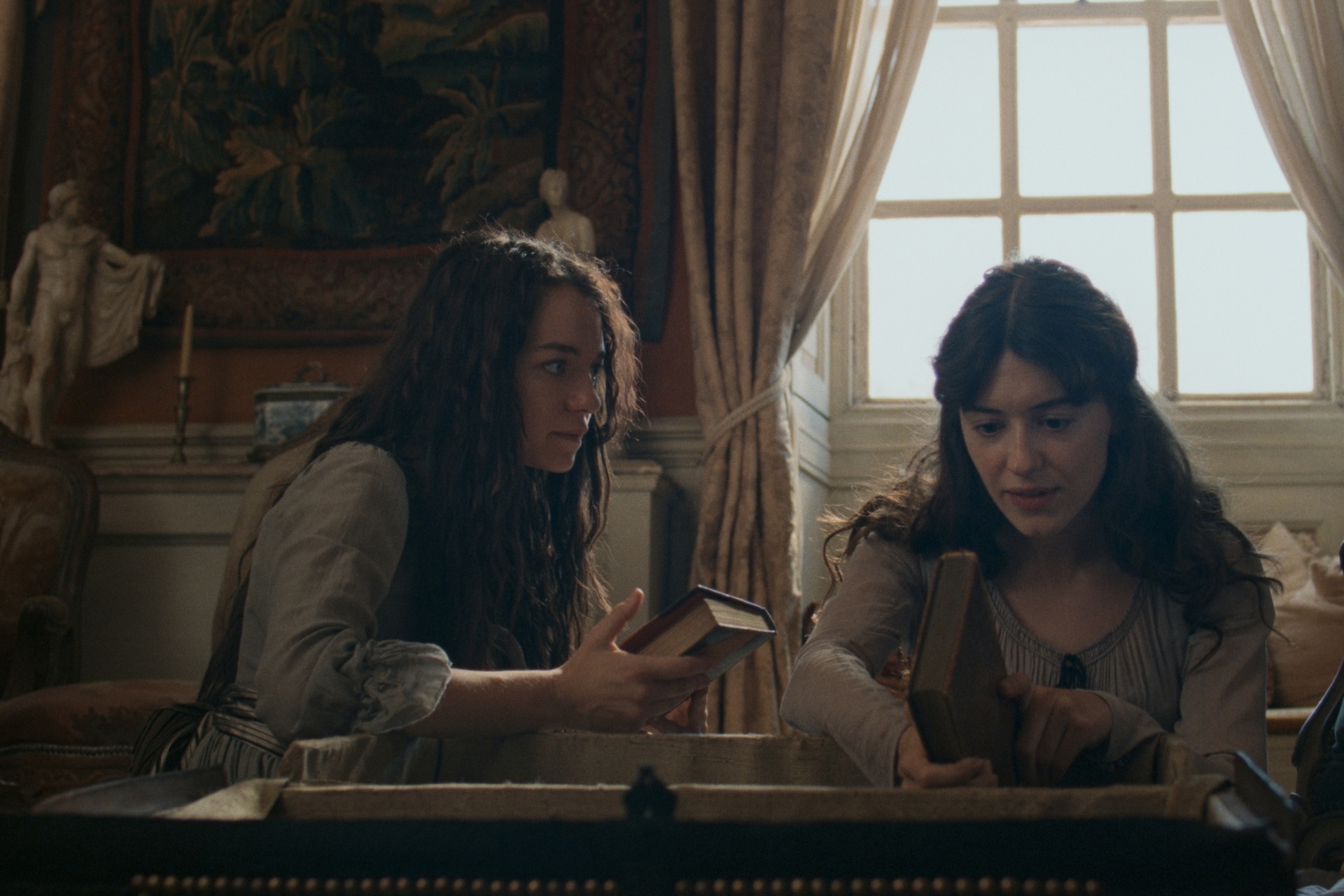
Esmé Creed-Miles as Marianne and Daisy Edgar-Jones as Elinor in Sense and Sensibility (c) Alex Bailey / 2026 Focus Features LLC
And compared to the small, contained stately homes and countryside cottages, the space outdoors is seemingly unending. ‘Nature was super important, this idea of being so much more exposed to the weather and the landscape. I feel like nature guided so much of the aesthetic choices – it dictated the colour palette of the movie, the tones being very natural, earthy tones rather than poppy pastel colours. It was almost like nature invading the world in every way.’
The attention to sensory details is one of the major details that sets the 2026 rendition of Sense and Sensibility apart from its onscreen predecessors. When we, naturally, come to the topic of comparisons with Ang Lee’s 1995 feature film starring Emma Thompson and Kate Winslet, Di Mottola already has her answer prepped: ‘It was a movie I absolutely loved and watched many times,’ she says. ‘But it didn’t scare me to retell the same story. A story can be told in any number of ways. Georgia was telling ours almost like a coming-of-age story, and our picture was maybe more pared down, more sensory.
‘It’s the sensorial part of it we were trying to translate: you walk into the cottage kitchen and something smells like it’s cooking, the girls have been there for days trying to make a pie, but they can’t really cook, so it’s a bit disgusting. All of that – learning to clean their own clothing, planting their own vegetable garden – was so important to us. It was definitely inspiring, as so many period movies were to me, but it felt like such a specific approach of our own.’
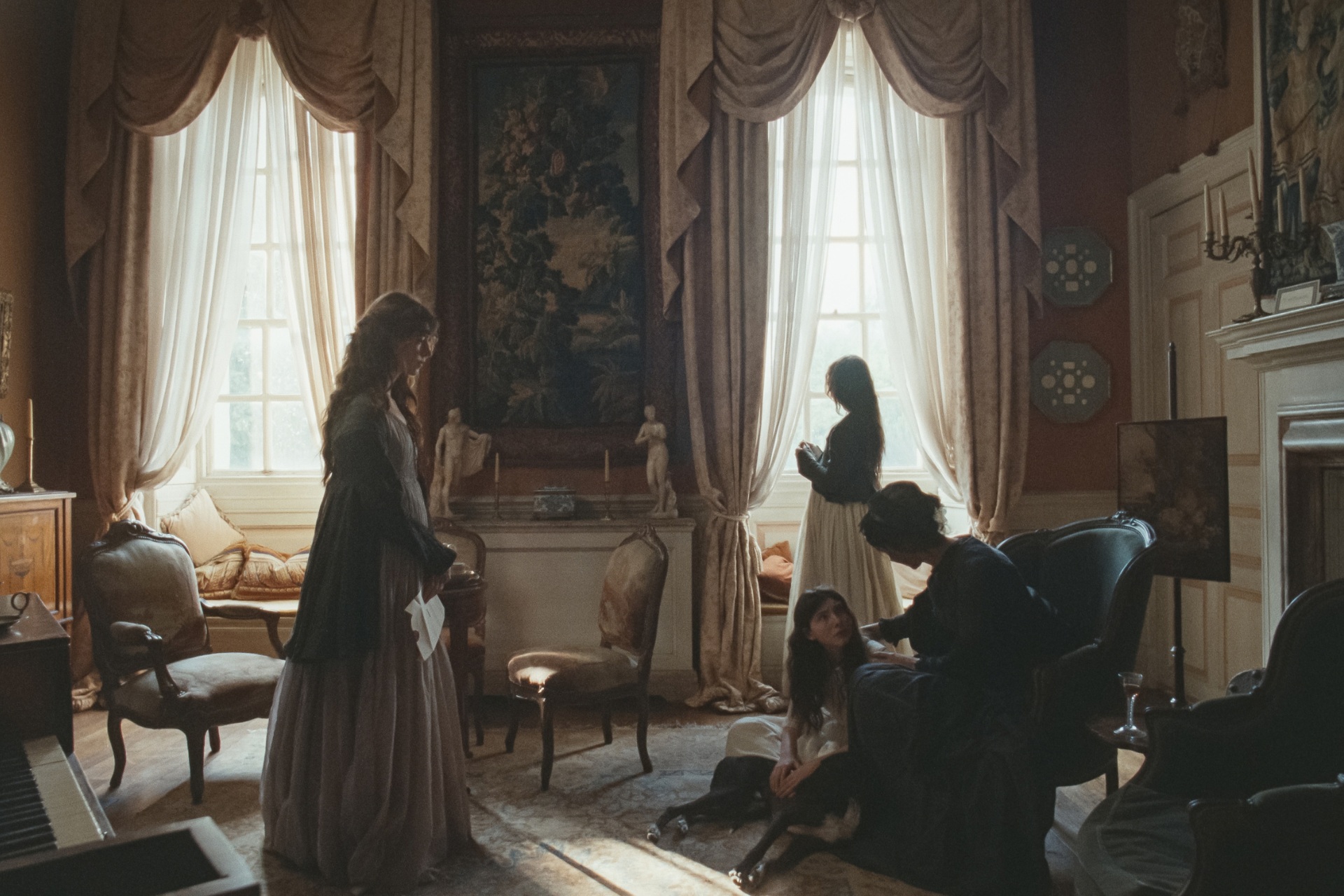
Daisy Edgar-Jones as Elinor,Esmé Creed-Miles as Marianne, Bodhi Rae Breathnach as Margaret and Caitriona Balfe as Mrs Dashwood in Sense and Sensibility (c) Alex Bailey / 2026 Focus Features LLC
Starting At Norland
The events of Sense and Sensibility begin to unfold at Norland, the family home of Mrs Dashwood and her daughters Elinor, Marianne and Margaret. Dealing with the recent death of Lord Dashwood, the family is left to wonder on the future of their life on the estate – and what it means when John Dashwood (the son of the late Lord Dashwood, from his previous marriage) and his wife Fanny move in.
‘We found this absolutely stunning location in Dorset that had never been filmed in before, which we used for Norland,’ says Di Mottola, referring to the 17th century mansion Kingston Russell House. While the building itself (and its real-life historical interiors) are certainly beautiful, the production designer emphasises that Norland itself was not meant to be ‘opulent’. (After all, this is a family on the verge of financial struggle.) ‘I wouldn’t necessarily say Norland is opulent, though it belongs to a wealthy family in terms of class back then.’
Filming at Kingston Russell House came with its own challenges, too. ‘I didn’t actually have all the spaces I needed within it,’ she tells C&TH. ‘It’s an important house, but not huge, and there was a lot of trickery involved. For example, we had to create a library out of one small room and then turn it around a week later into Marianne’s bedroom.’
But other spaces needed very little intervention at all – like the dining room. ‘The walls were covered in stunning hand-painted chinoiserie, in a colourway that’s very rarely seen: tones of browns and blacks, some ochres and pinks. That’s quite rare; chinoiserie tends to be greeny, bluey and pink, more in the pastel range. I was fascinated by that wallpaper.’

Frank Dillane as John Willoughby in Sense and Sensibility (c) Alex Bailey / 2026 Focus Features LLC
The Flight To Barton Cottage
Barton Cottage, by contrast, is about as stripped back as you can get with a period drama. Compared to the papered walls and roaring fires of Norland, the cottage is much smaller and much more humble in its design – although the work that went into it would say otherwise.
‘When we found the cottage, the landscape it sat in was really important – we were guided by the landscape,’ says Di Mottola. The team found a structure in the middle of Dartmoor National Park in Devon to double as the cottage. ‘It was a bit of a shell, so we had to recreate the whole interior: we secured the floors, more or less recreated the roof using real reclaimed slates, and clad the ground-floor ceiling because the existing material wasn’t right.’
The team prepped the cottage in just three and a half weeks – and had to fight the elements every step of the way. ‘The weather was really bad at one point, then it was super hot. We also didn’t know if there was a bat living on the roof, so we almost lost the location altogether. Our very first shoot day was a disaster – it was so stormy that all the work we’d done in the garden was almost lost, and we had to start again from scratch.’
But building on a set wasn’t an option. ‘Georgia was really keen that the cottage was in an actual location,’ recounts Di Mottola. ‘She wanted it to feel immersed in nature and in the landscape, and I think she was so right.’
And immersed in nature it was. Besides the rolling moors, the outdoors surrounding the cottage was also host to a number of animals. ‘They were a big part of production – casting the right animals took a lot of research. Everything from the wild ponies to a real sheep farm became part of the movie.’
Inside, meanwhile, had to feel like a fresh slate for the family moving in, who now had so little in terms of possessions. ‘The space was so intimate that the set dressing had to be really considered. We tried to tell a story through objects, with the idea that they might find things there that belong to the distant cousins hosting them, plus a few pieces brought from Norland, because they weren’t allowed to bring much.’
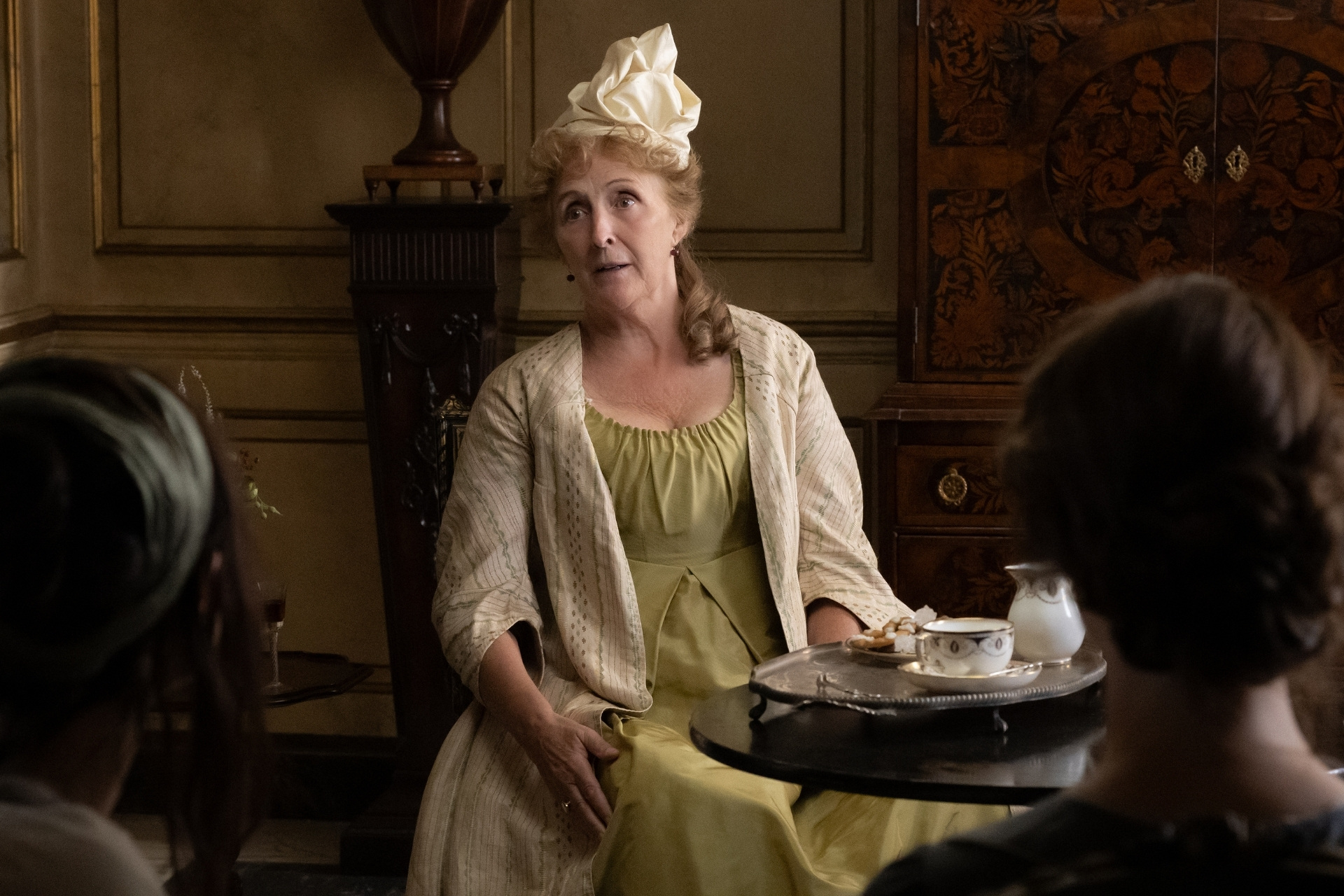
Fiona Shaw as Mrs Jennings in Sense and Sensibility (c) Alex Bailey / 2026 Focus Features LLC
Navigating London
Later in the film, Elinor and Marianne relocate once more – this time to London, chaperoned by Mrs Jennings in the hopes that they might find husbands. (Or in the girls’ cases, old flames.)
Having been cooped up in the countryside, Di Mottola reveals the goal was to make the capital feel much bigger and grander than their previous life. ‘I think you get that sense when they drive into London, it’s a big difference coming from Barton,’ she says.
But again, nothing is made to feel opulent – including Mrs Jennings’ Portman Square home. ‘It’s not a huge mansion – it’s a beautiful Georgian townhouse,’ says the production designer. The real life location, Rainham Hall, sits in Essex. ‘It’s great to be in London, in a beautiful, luxurious house, but still never opulent.
‘I don’t think we have any space that reads as truly opulent, apart from the ball,’ she adds. The famous ball, where both sisters’ relationships famously turn awry, was the most ornately decorated moment of the film. This was shot at West Wycombe Park in Buckinghamshire, a space known for its lavish 18th century Neoclassical and Palladian interiors inspired by Sir Francis Dashwood’s Grand Tours (yes, the estate was owned by a real life Dashwood). ‘It’s the one time you go in and see people looking up at painted ceilings, thinking, “oh my god.”’
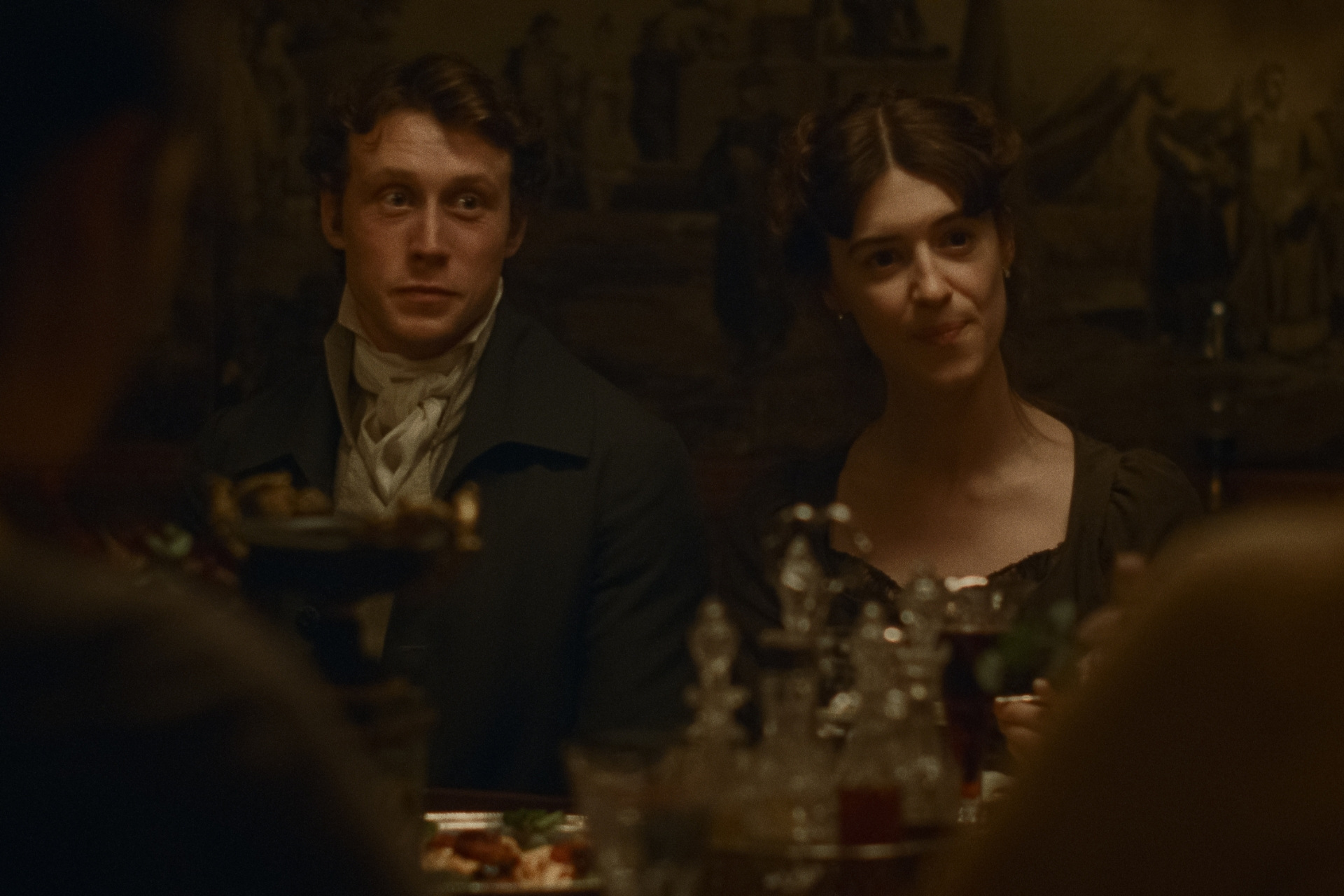
George MacKay as Edward and Daisy Edgar-Jones as Elinor in Sense and Sensibility (c) Alex Bailey / 2026 Focus Features LLC
The Standout Detail: An Austen Tablescape
While it’s easy to become fixed on the characters, costumes and stories in the film, one intriguing piece of dialogue running through the film is an unlikely feature: the table. From the long wooden dining tables of Norland to the messy countertops of Barton Cottage, tablescapes played a huge role in bringing the world of Sense and Sensibility to life.
But it wasn’t a one-woman job. ‘There’s so much work that goes into table-laying and table design,’ reveals Di Mottola. ‘It’s a big collaboration with the set decoration department and the props buyers – there are so many people involved. And things can obviously change on the day, too. Sometimes the scene plays better if we change the seating, and that changes the dressing along with it.’
This mode of storytelling is introduced early on, with rows of silverware lining the dining table at Norwood – first to be cleaned by the house staff, and later to be cleaned by the house’s new lady of the house, Fanny. ‘That was such an important scene for us,’ recounts Di Mottola. ‘It tells us a lot about Fanny’s character, her approach to the family’s wealth and unwillingness to share with the Dashwood women.
‘We knew it was going to be a top shot. Designing for that and thinking about the heights was like creating a sculpture. We planned it all out very carefully.’
Di Mottola created several – if not hundreds – more tables for the film that offered insight into the characters’ plight. There’s the crammed butcher’s block in Barton cottage, laden with ingredients pulled from the garden as the girls navigated their new life; the candlelit dinner parties at Barton House, which highlighted the countryside setting with platters of game; the buffet tables at the ball, filled to bursting with cakes, pastries, punch and party food.
Even the small side tables at Mrs Jennings’ London townhouse, when Edward comes clean to Elinor about his engagement to Lucy, tell a story: a decanter of what looks like sweet wine or sherry (a popular choice at the time for gentlemen callers) with two glasses left untouched, acting as an awkward divider between the two as their relationship starts to split.
But beyond filling us in on the events unfolding onscreen, these tables make excellent dinner party inspiration. So, we posed Di Mottola one crucial question: how should we lay the table if we want our next soiree to feel like a night in Regency Britain?
Get The Look
Light Some Candles
The first trick? Good lighting. To channel the spirit of a Jane Austen dinner party, you’ll want to dim the overhead lights and scatter some candles across the table. ‘We weren’t going for mega-opulent, so candles were a major part of the table – lighting always is, for anything,’ says Di Mottola. ‘I’d say plan your lighting, and how candlelight will fall on your silverware or glassware – I really enjoy using glass in film and the way it reflects light, and metal too.’
Use The Good China
While the focus might be the food on your plate, the plate itself also has a starring role on the table. ‘Choosing your china properly matters in the same way as lighting: china with some pattern is always going to read better than something flat with one gilded line,’ confirms Di Mottola. ‘There was one tableware setting I really liked, with beautiful green leaves, for a breakfast scene on the morning when Edward is about to arrive.’
Bring The Outside In
A sensorial representation of how sense and sensibility come together in the film is how refined indoor spaces come to be filled with the wilderness outside. And when it came to a table, Di Mottola saw this as a chance to go all out with plants and flowers. ‘We were really focused on floristry throughout,’ she tells C&TH. But rather than compose neat and tidy bouquets, the team tapped into the local flora surrounding the set for something that felt more authentic to the location. ‘I never wanted it to feel like there were florists working in these houses, so we worked with an amazing flower designer whose arrangements always looked like they’d been picked from the field.’
So while there’s no question that the new Sense and Sensibility offers a feast for the senses, if there’s one thing you fixate on during your next watch, make it this: the tables.
WATCH
Sense and Sensibility is in cinemas now. focusfeaturesfilms.co.uk