


Inside A Vintage Victorian Villa In London
By
6 months ago
Vintage glamour meets Victorian splendour in this home transformation
London is home to an impressive collection of historical homes – including a number of Victorian villas, which have been preserved and updated for modern tenants. But, as is the case with any period home, the tricky bit is finding a balance between the then and now. Calling on Verity Woolf, designer and founder of WOOLF Interior, the owners of this Victorian villa wanted to honour their home’s key historical features – while showcasing their flair for playful design. Below, the designer gives us the tour (and shares some highlights from the project).
Look Inside… A Victorian Villa Designed By WOOLF Interior
The Property
A home with plenty of history, this elegant five-storey Victorian villa in north London boasts a catalogue of striking features: generous proportions, original fireplaces and tall sash windows. And when brought together, they offered designer Verity Woolf the perfect canvas – a richly detailed framework for a more layered, design-led interior.
The designer tells us that the layout unfolds with a natural rhythm: a kitchen and dining space at lower-ground level; a series of living, creative and social rooms on the ground floor; and more private, restorative spaces above, including bedrooms, bathrooms and a loft studio. While the house had undergone a large-scale architectural extension, it was time for the interiors themselves to change – for the better.
The Brief
The owners of the property asked Woolf to reinvigorate their entire home. (Woolf calls it an ‘evolution rather than a transformation’.) Now with children in their teens, the homeowners wanted to reimagine how the house functioned; this entailed finding ways to introduce their art collection to living spaces and giving the home a collectively connected feel.
‘They were passionate about original design-led furniture and unusual one-off pieces, not anything overly polished or prescriptive,’ says Woolf. ‘Instead, they wanted comforting, characterful schemes with a softly glamorous 1970s undertone – spaces that felt collected rather than composed, and entirely reflective of their personalities.’
Take The Tour
Living Room / Music Room
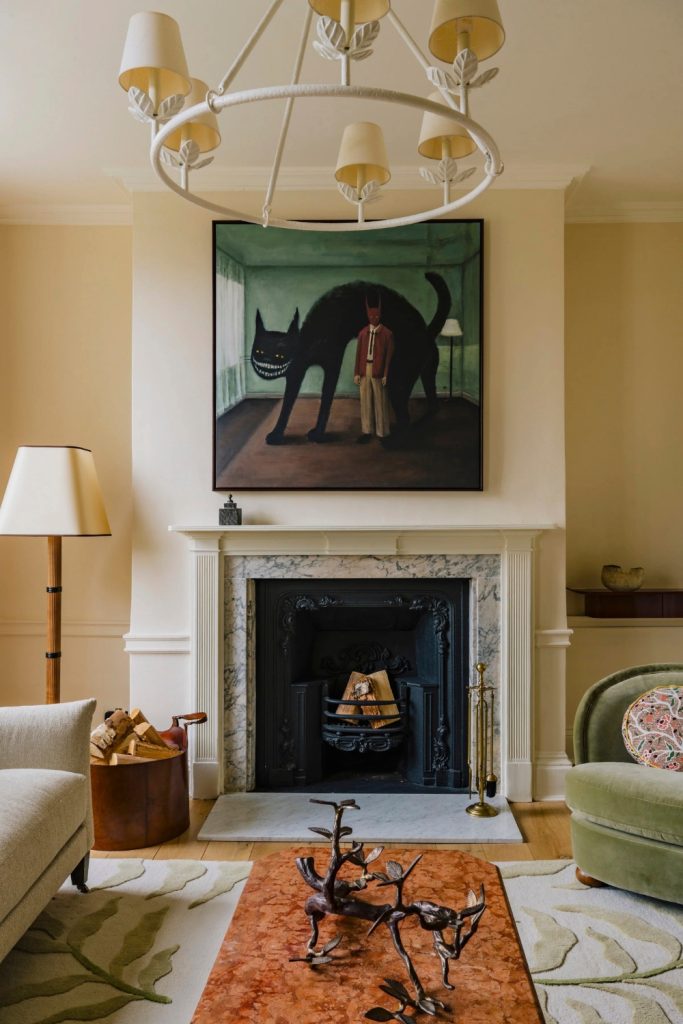
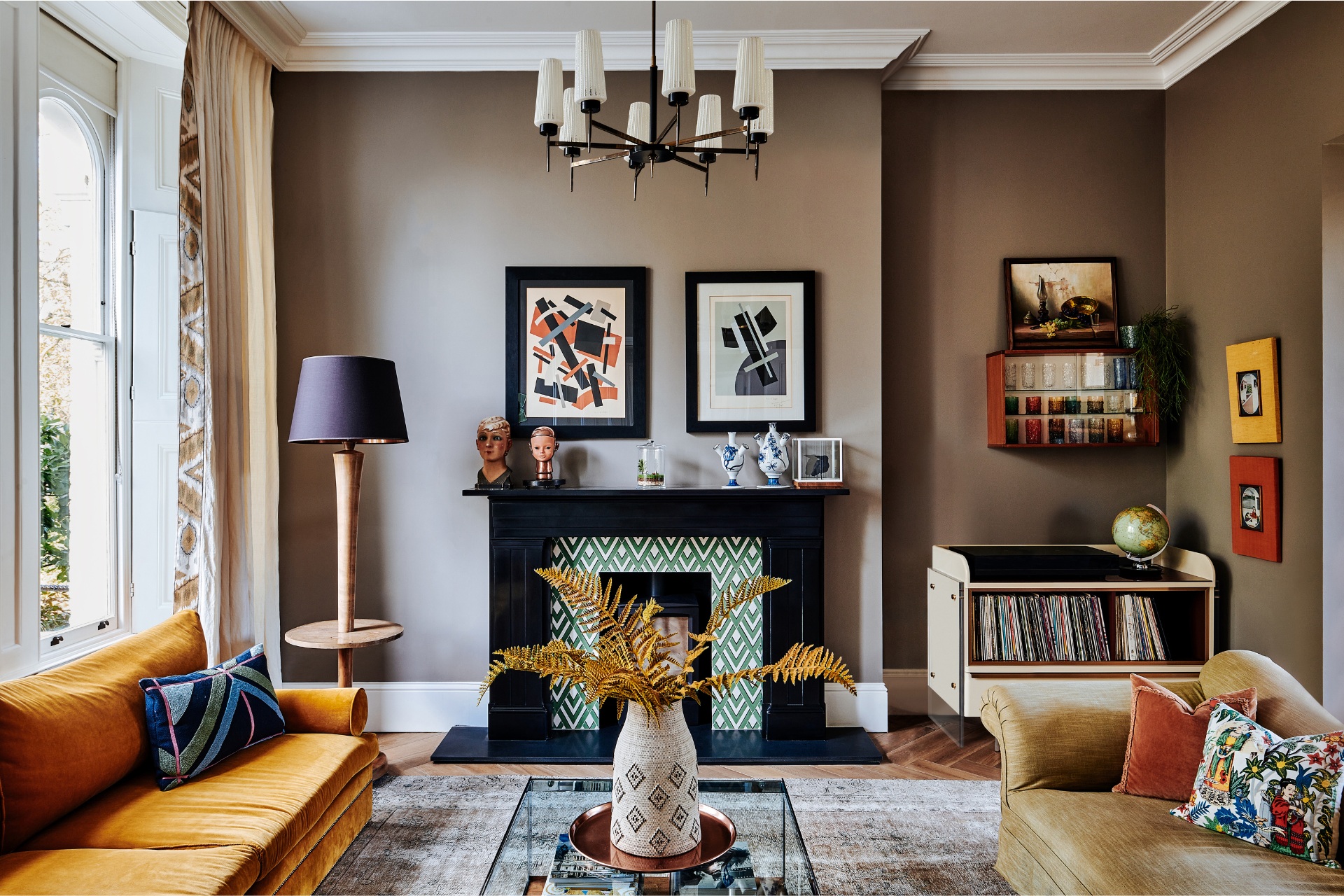
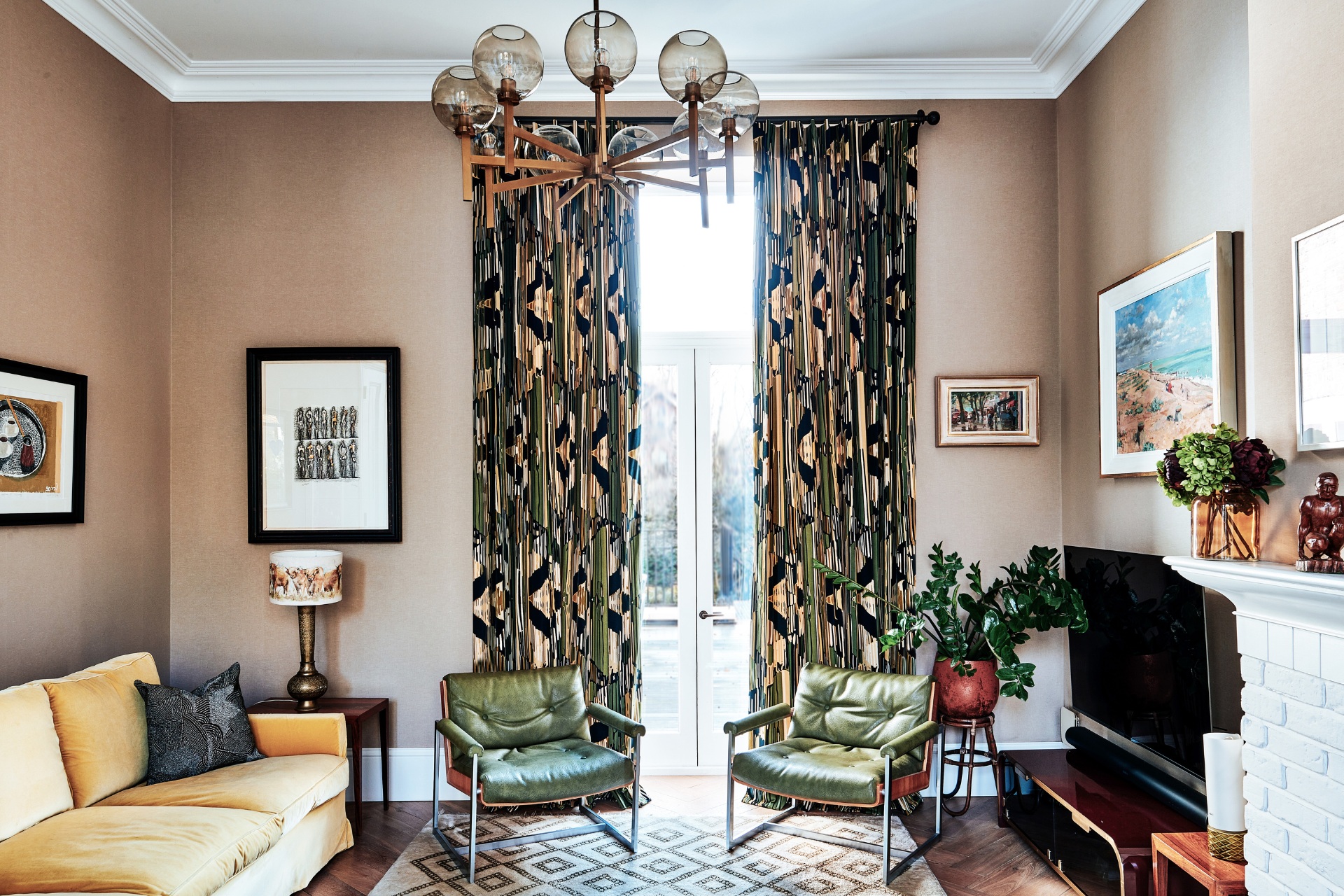
Starting with the heart of the home, the Victorian villa’s living room was designed to feel relaxed and immersive – a space for slowing down and gathering the family for quality time together. Woolf opted for a range of warm earthy tones, spanning from the tobacco-toned walls to the caramel-hued sofas. Softness was also created through a combination of vintage seating and textiles – with layered textiles (even across single items) highlighted to emphasise depth and softness.
And, as a nod to the client’s affinity for collecting, the designer ensured that pattern was treated almost as artwork within the room; it decorates rugs, upholstery and even the geometric fireplace that sits in the living room’s centre.
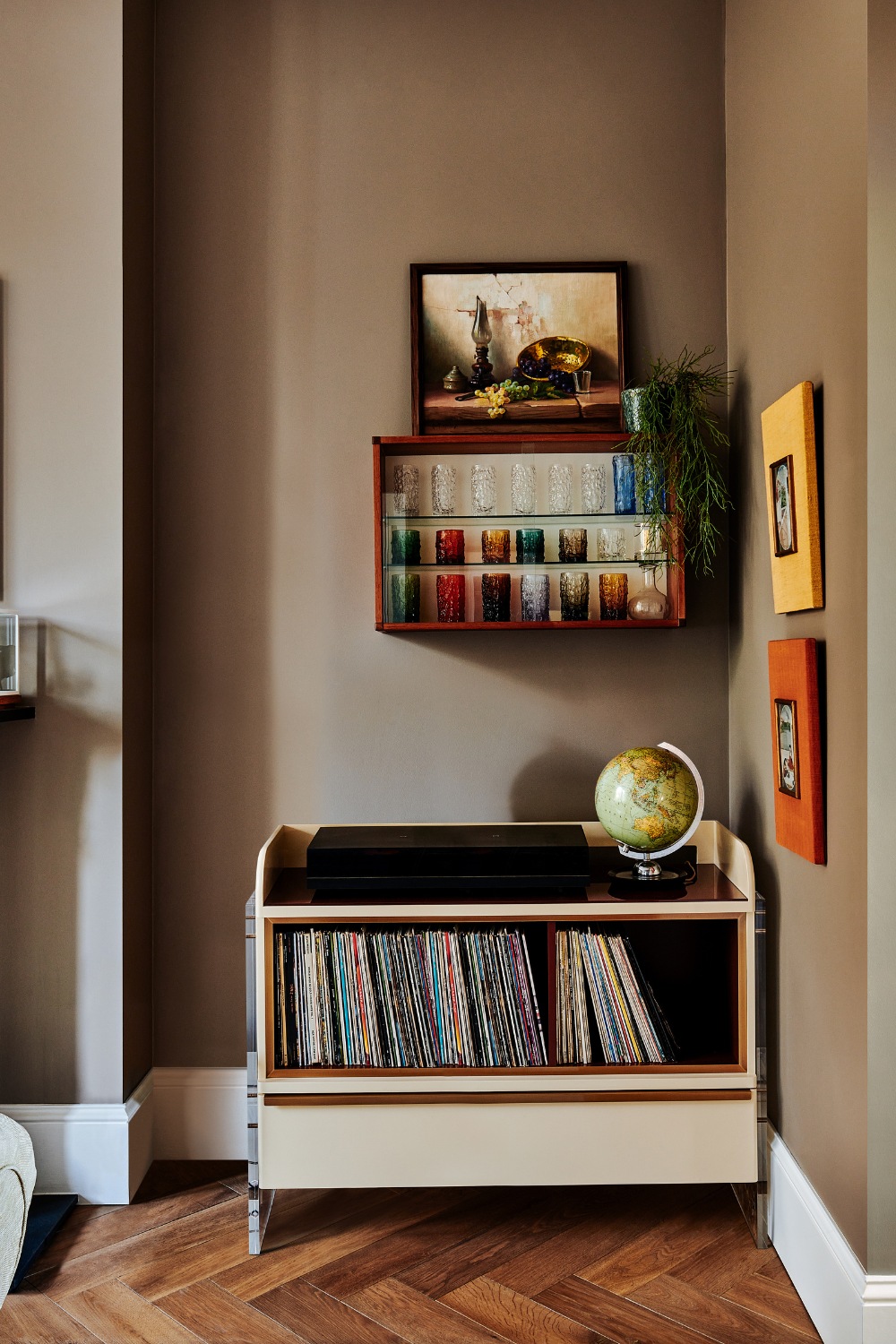
A more modern touch, meanwhile, is the bespoke Perspex and lacquer record cabinet – stocked with vinyls gathered and collected over the years – to make the space feel comfortably lived in.
WOOLF Interior
Kitchen & Dining Area
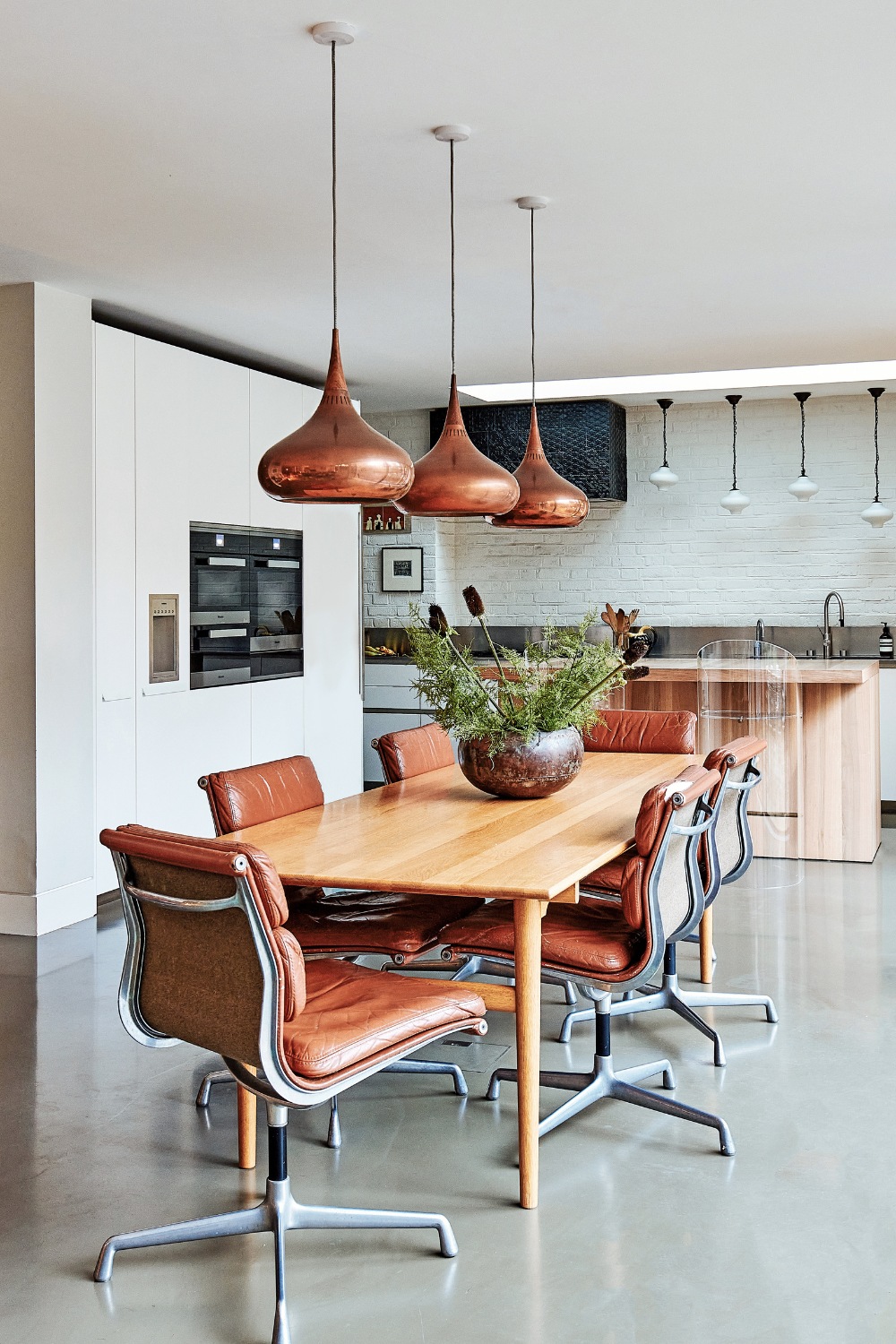
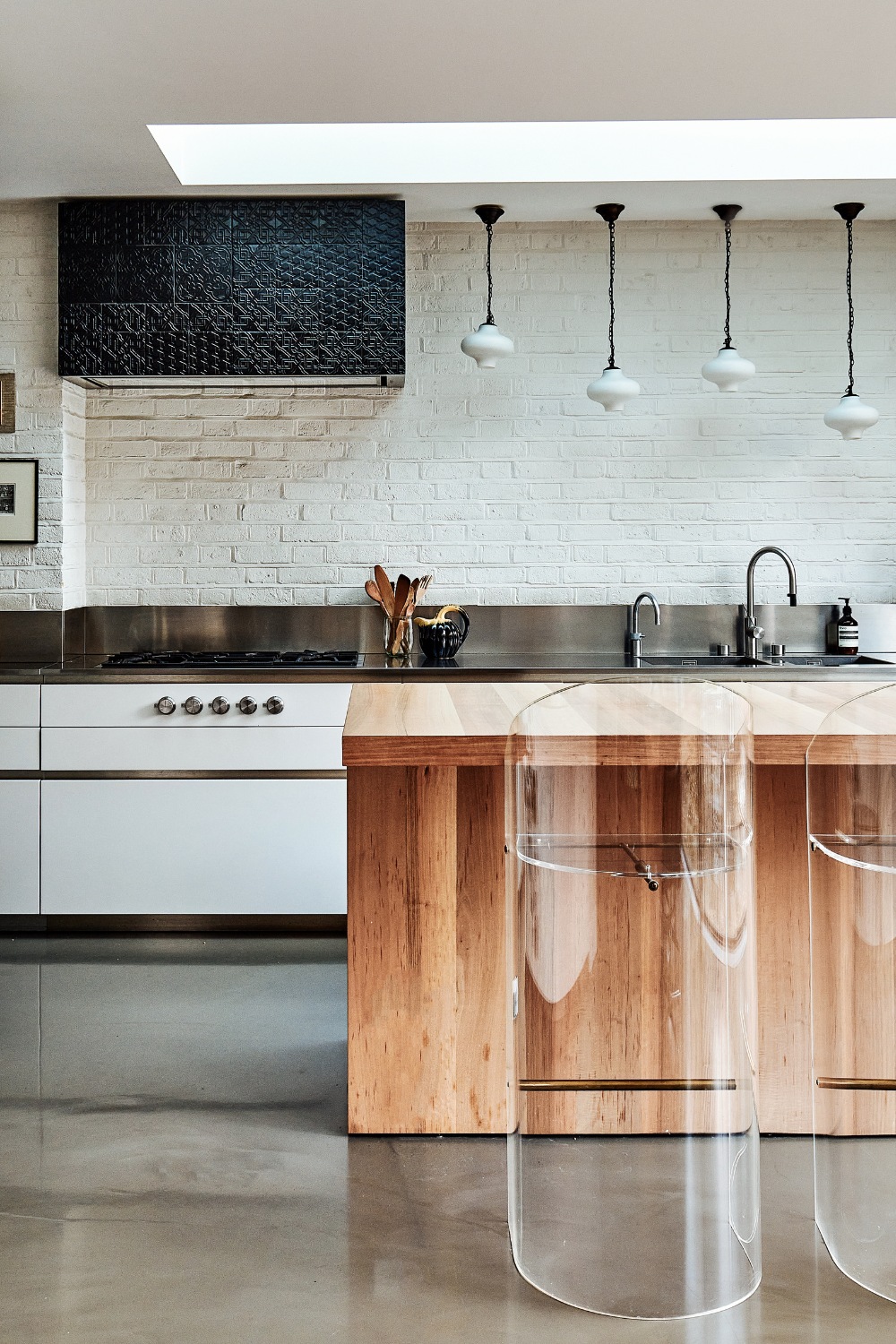
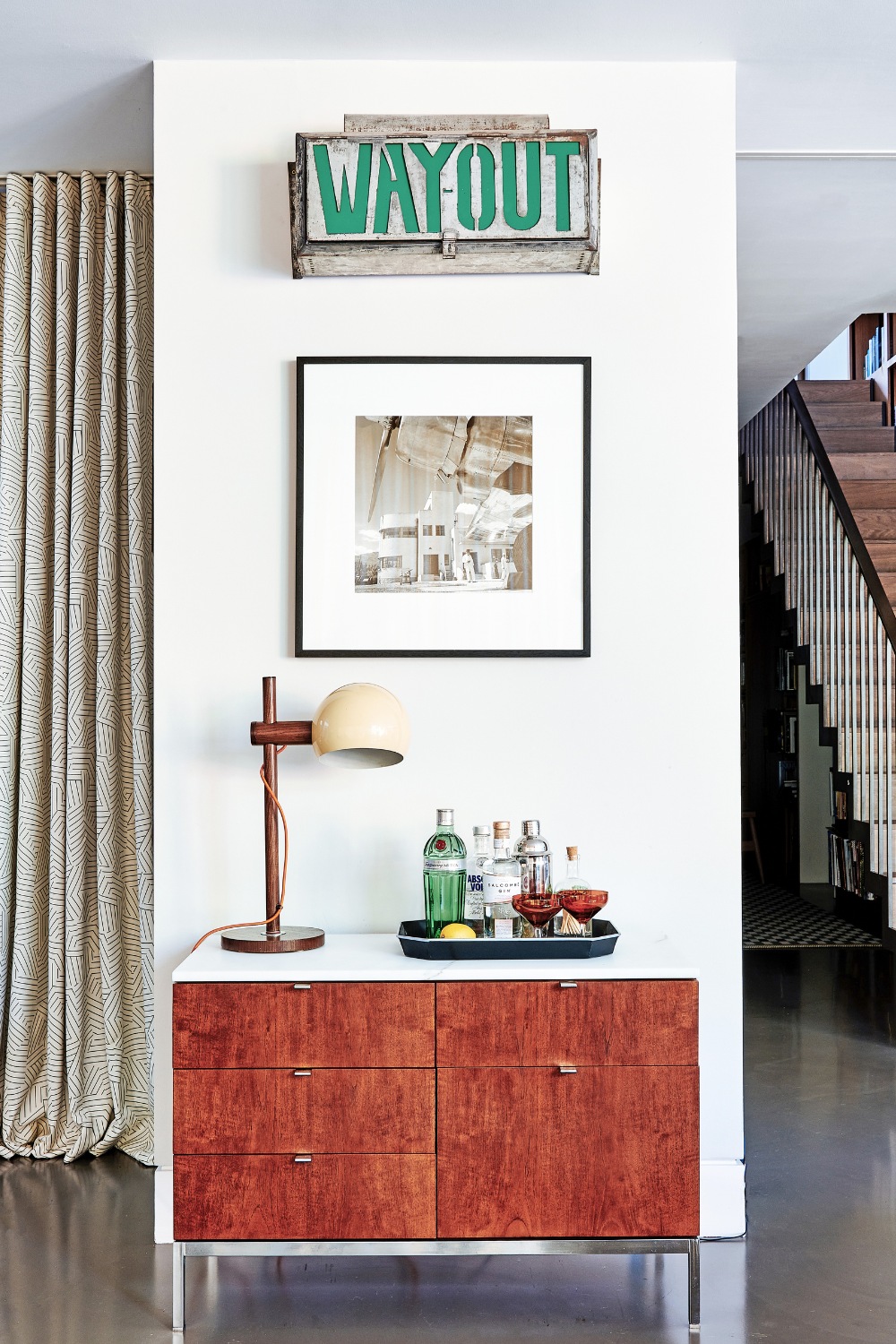
The kitchen is arguably one of the more contemporary spaces within the property, with a large, open-plan layout that serves the dual purpose of being functional yet warm and inviting. The space juxtaposes utilitarian materials with sculptural vintage furniture – a choice that Woolf describes as ‘quiet tension’. Anchored by rubber flooring, the light and airy space is also home to a number of classic pieces, including a marble-topped Knoll unit.
WOOLF Interior
Playroom
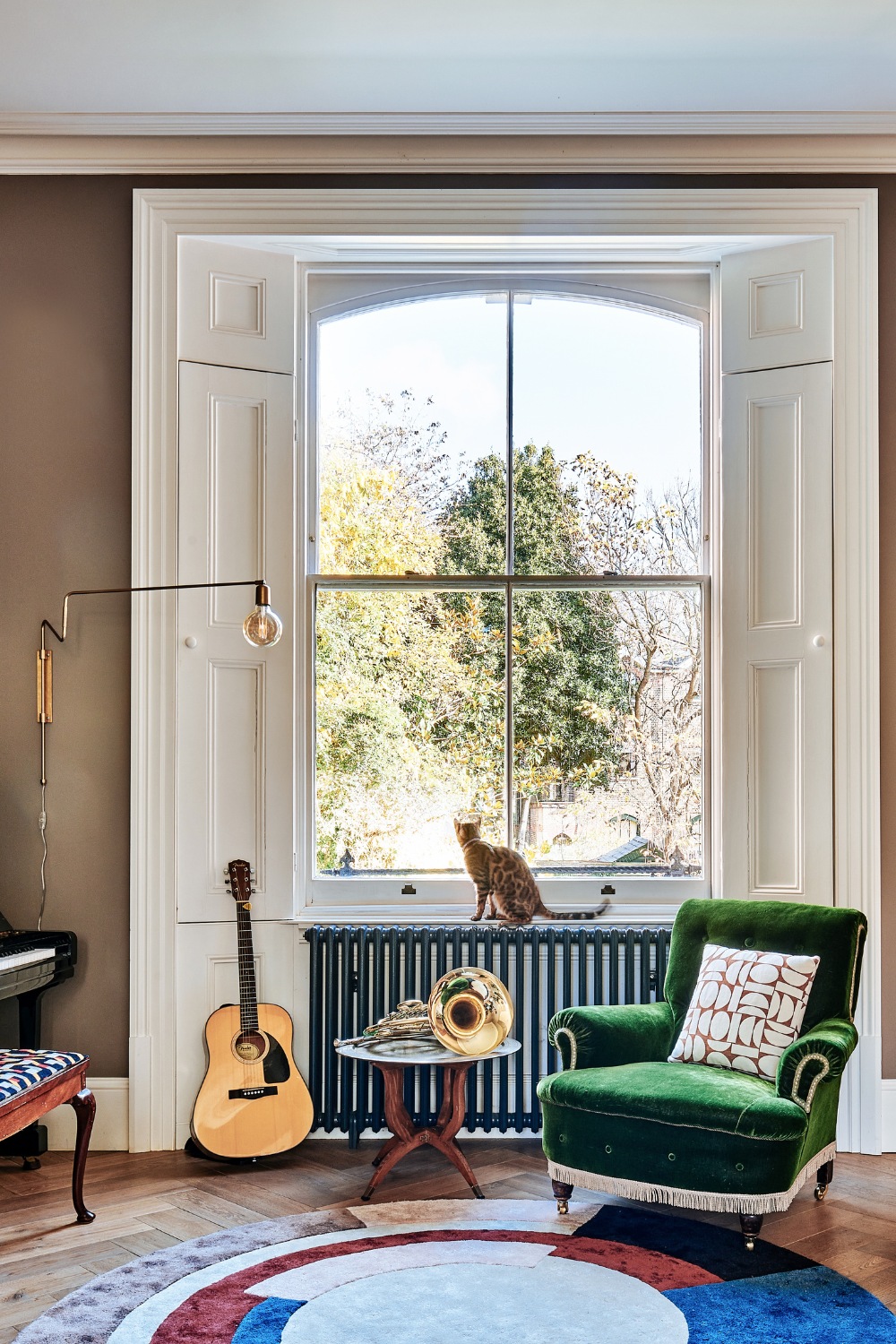
A room you can’t help but smile at – the playroom was designed to feel light-hearted and relaxed, a space that encouraged creativity in all its forms. Contrasting with the aforementioned tobacco walls are considered pops of colour: a patchwork bespoke circular rug and vintage furniture reupholstered in bottle green mohair velvet. Musical instruments also feature heavily in the space, with a piano, guitar and trumpet all sitting in the spotlight of an adjustable swinging wall lamp. Woolf describes this room as ‘is a space that feels joyful, expressive and entirely personal.’
WOOLF Interior
Office
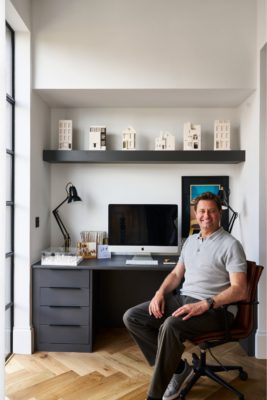
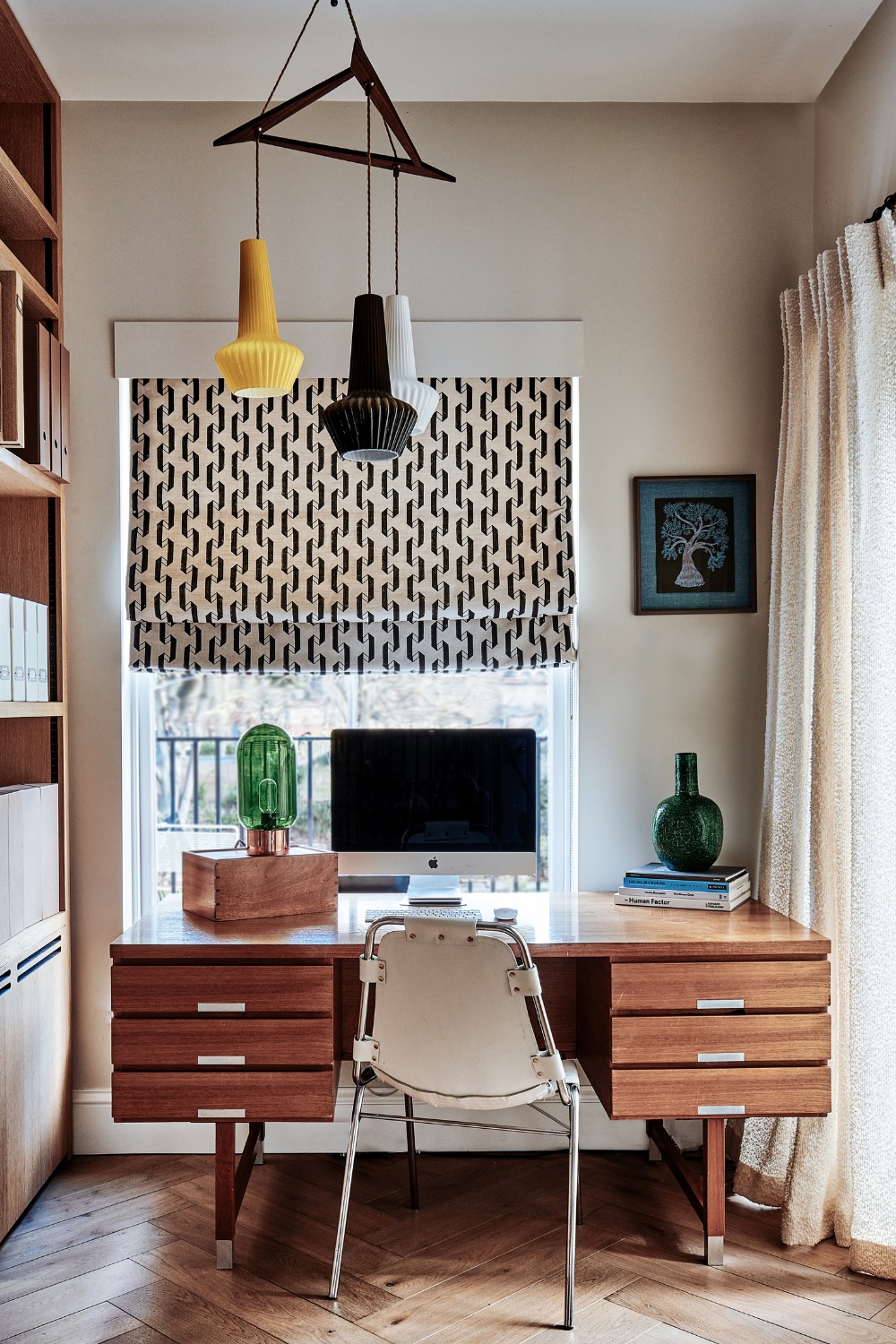
Tucked away from the household buzz, the office acts as a small sanctuary to productivity. A focused (yet no less inviting) space, Woolf decorated with a 1950s desk and Les Arcs dining chair, blending these mid-century design pieces with modern fabrics (a textured curtain and a patterned blind) and sculptural lighting choices.
WOOLF Interior
Dressing Room
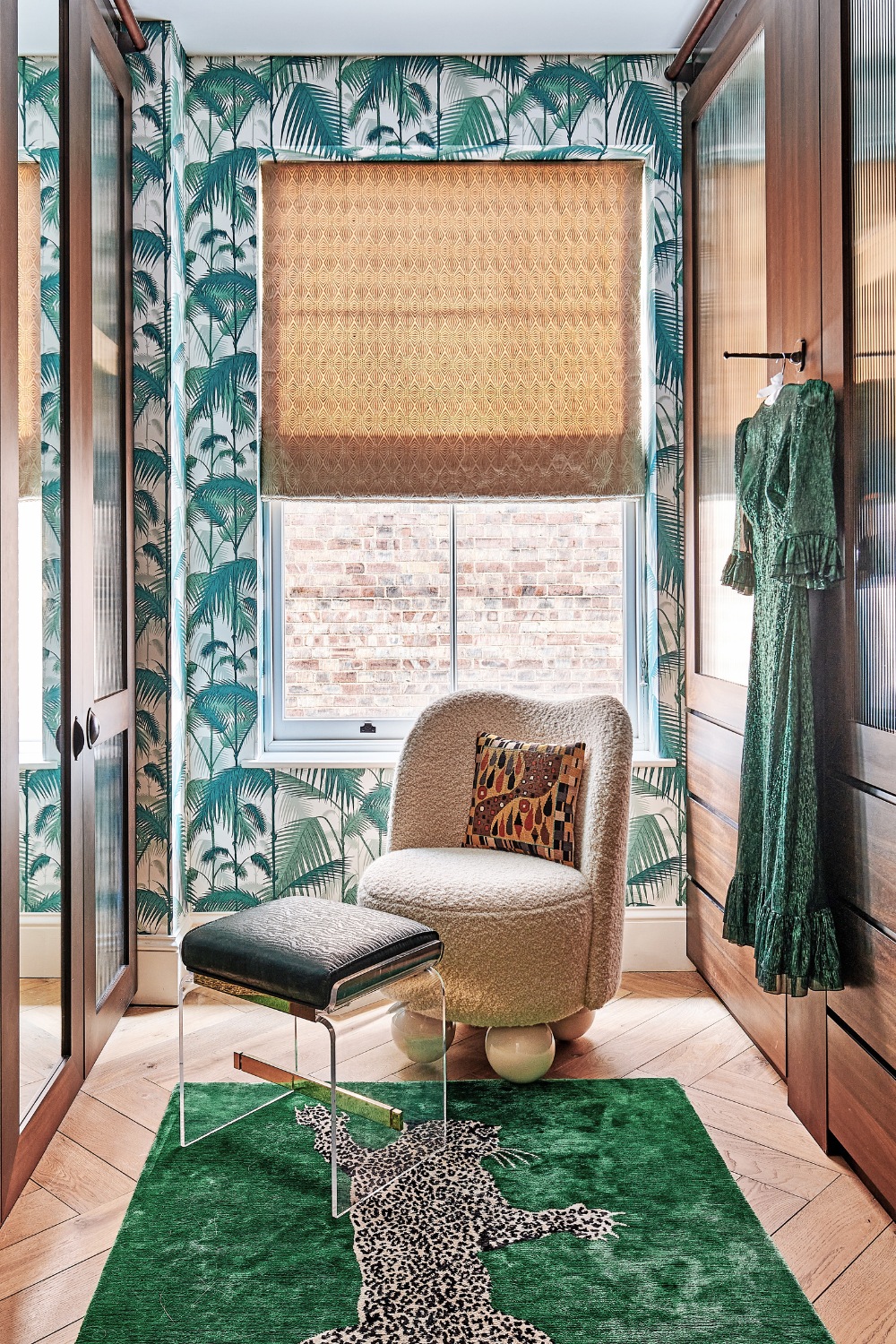
This chic dressing room was inspired by 1970s glamour, pulling on more playful visual references to make the art of dressing up feel more like a party than a mundane chore. Lined with sculptural walnut joinery – perfect for squirreling away clothes, accessories and odds and ends – the room’s natural woody tones are offset by a bold palm-print wallpaper and a similarly-hued leopard rug.
WOOLF Interior
Landing
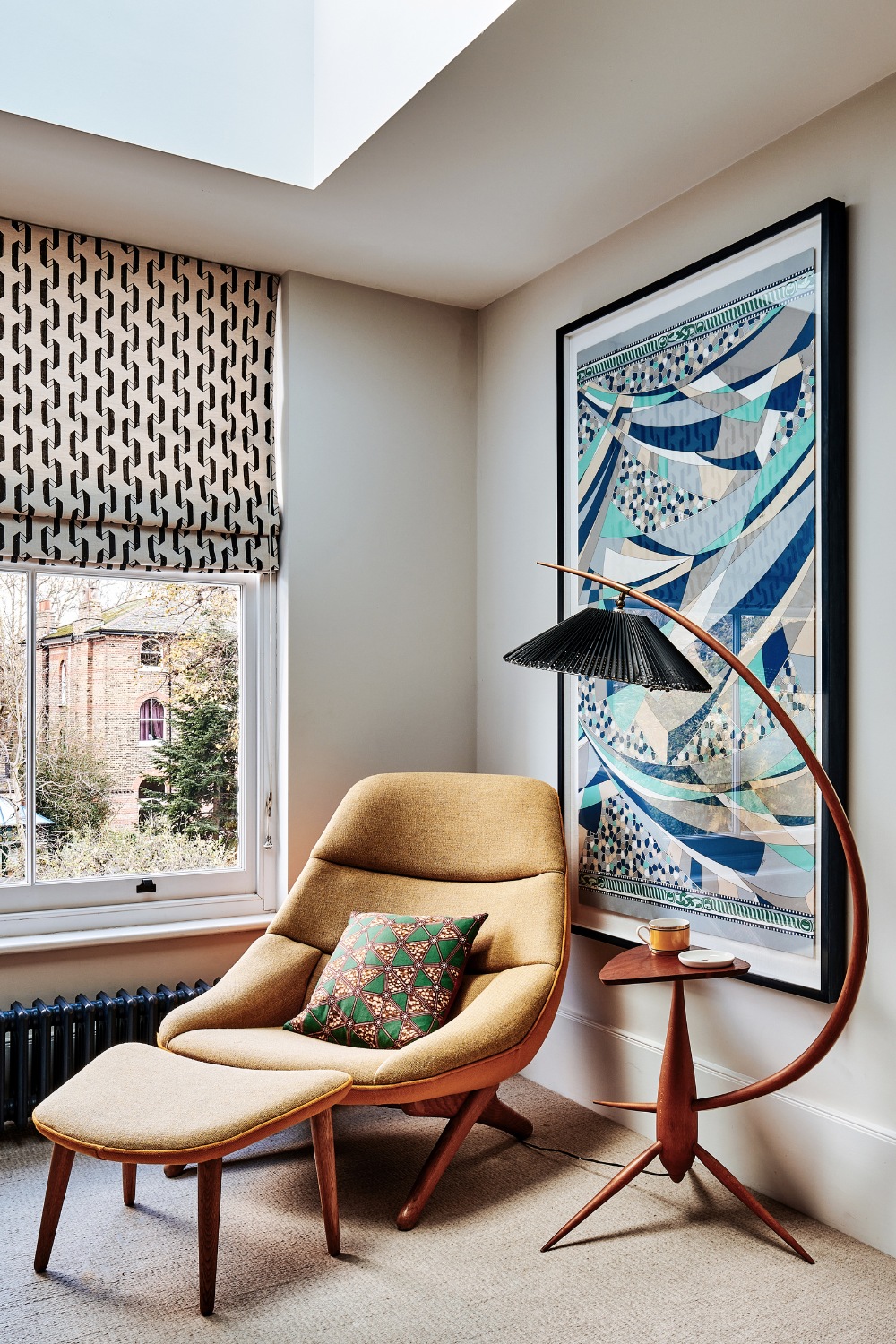
Acting as the tether between rooms, Woolf wanted the landing to feel quiet and reflective. Home to a vintage lounge chair and a striking artwork – as well as a one-off Pucci fabric framed on the wall – this in-between space was intended to feel expressive but not overwhelming. An invitation to sit down and relax, while offering a peek into the homeowners’ eclectic tastes.
WOOLF Interior
Design Notes With Verity Woolf
How did the Victorian Villa compare to previous projects you’ve undertaken?
This project felt particularly curatorial. Rather than starting from a blank canvas, we were working with a home that already had a strong identity – refining, editing and elevating what was there.
It allowed for a more nuanced layering of vintage and contemporary pieces, and a deeper engagement with the clients’ existing collection. Compared to more urban projects, there was a softness here – a willingness to embrace warmth, texture and a sense of lived-in ease.
What were your top priorities for this project?
Cohesion was central. I wanted to ensure each space felt part of a wider narrative while retaining its own character.
Equally important was comfort and authenticity. The intention was to create a home that felt instinctive and personal, avoiding anything overly ‘designed’. Instead, we focused on balance: between glamour and restraint, playfulness and calm.
WOOLF Interior
How did you begin the process?
With the architectural bones already in place, the process became one of careful curation. We explored multiple layouts, often reworking existing pieces – whether repositioning furniture or reupholstering much-loved items.
Materiality played a key role from the outset. Brass, glass, Perspex and laminate were introduced to evoke a subtle 1970s sensibility – materials that aren’t always considered current, but which bring a certain depth and nostalgia. Planning was iterative, layered and highly collaborative, with each decision building towards a cohesive whole.
Any fun stories from the experience?
There were moments of discovery that shaped the project in unexpected ways – like sourcing an original Pucci strike-off piece at a sample sale, which became a defining feature on the landing.
Collaborating with the studio of the late Willy Rizzo was another highlight, resulting in a bespoke coffee table finished in one of his archive colours – a small but meaningful detail that brought a sense of legacy into the space.
Were there any challenges along the way?
As with many period properties, the challenge lay in layering new elements without disrupting the architectural integrity.
There was also a constant process of editing – introducing bold materials, colour and pattern, while ensuring the overall feel remained resolved. It was about dialling down moments of kitsch and refining the glamour, so everything felt intentional and quietly balanced.
WOOLF Interior
How did you create a sense of balance?
Balance was achieved through contrast and careful restraint. Traditional architectural details sit alongside more contemporary interventions, allowing each to enhance the other.
There is also a balance between energy and calm – spaces for creativity and play sit comfortably alongside more restful, private areas. Throughout, we were mindful to refine rather than overwork the schemes, ensuring the home feels cohesive, liveable and quietly confident.
And how would you describe the final transformation?
This is a home that rewards attention. At first glance it feels relaxed and effortless, but on closer inspection reveals a depth of detail. Thoughtful juxtapositions, carefully chosen materials, and a strong sense of personality.
It’s ultimately a reflection of its owners: creative, considered and unafraid to embrace individuality – resulting in a house that feels both elevated and entirely at ease.