




Nanografting, Microcurrent & Cold Fiber Laser: The Aesthetic Treatment Trends Shaking Up 2026
By
4 weeks ago
What’s new in the world of aesthetics?
The beauty industry never stays static – and the same goes for the scientific and medical breakthroughs that uphold it. These are the aesthetic treatment trends worth paying attention to in 2026, according to the experts.
For Last Year’s Major Trends, See Here
The Biggest Aesthetic Treatment Trends For 2026
So what can we expect in the upcoming year? ‘2026 will mark a real turning point, where aesthetics and wellness finally converge,’ predicts Dr Marco Nicoloso, Medical Director at Ouronyx. ‘We expect patients to increasingly view aesthetic treatments as a form of science-backed self-care rather than a pursuit of vanity.
‘The future of beauty sits within the broader conversation around ageing,’ he adds. ‘It’s no longer just about how we look – it’s about mental, physical and emotional wellbeing. At Ouronyx, we believe scientific and technological advancements will continue to extend human health-span, making it possible to age more slowly while looking good and feeling well.’
Part of this new approach will also entail a deeper understanding of the relationship between our skin and inner body. ‘A key shift will be the ability to contextualise external skin changes with internal indicators like inflammation, gut health, and blood markers,’ says Dr Nicoloso. ‘Consultations will increasingly combine these insights, allowing practitioners to treat both the skin and hair with far more precision and personalisation.’
Intrigued? The experts have plenty more insights into the aesthetic treatment trends they predict will flourish in 2026:
Top Trends At A Glance
- Sculptra For The Whole Body
- Proof-Backed Beauty
- Bio-Regenerative Treatments
- Nanografting
- Next-Level Surgical Recovery
- Hair Loss Treatments
- Microcurrent Treatments
- Layering Technologies
- Treatment Stacking
- Cold Fiber Laser Treatments
1. Sculptra For The Whole Body
One of the world’s leading facial treatments, Sculptra has been on our radar for over 20 years – but in 2026, the treatment is going full-body. ‘We’re seeing a significant shift in aesthetics as patients increasingly look beyond the face and seek holistic, personalised solutions that address the body as a whole,’ notes Gerry Muhle, Senior Vice President and Head of Global Product Strategy at Galderma. ‘Concerns such as sagging skin and cellulite are becoming more prominent, driving demand for non‑surgical body treatments that improve shape, definition and overall skin quality.
‘This momentum is reflected in Sculptra’s evolution,’ he continues. ‘Its new EU MDR‑certified body indications, including the gluteal area, posterior thighs, décolletage and upper arms, allow practitioners to meet these emerging needs with regenerative science that enhances firmness, lift, projection and contour across some of the most sought‑after treatment areas. For Galderma, this milestone underscores our commitment to advancing evidence‑based innovation that responds directly to what patients are asking for, and what healthcare professionals need to deliver truly holistic, natural‑looking results. By broadening Sculptra’s applications – and prioritising treatment regimens that combine different products and modalities based on patient needs – we’re helping practitioners treat the patients as a whole with confidence, and supporting a more comprehensive, personalised approach to aesthetic care.’
2. Proof-Backed Beauty
What do people want in 2026? Proof that the treatments they’re investing in work. ‘We are seeing a clear rise in proof-driven beauty and clinically backed, results-led treatments,’ says Lisa Franklin, leading facialist and skincare expert and CACI’s London Flagship. She notes that this change in attitudes is encouraging more people to opt for ‘investment treatments’ that take place over longer periods of time.
‘There is a decisive shift away from invasive procedures towards high-performance non-surgical solutions,’ she explains. ‘Clients and VIPs who are new to clinics are choosing investment treatments over quick fixes and surgical options such as facelifts.’
3. Bio-Regenerative Treatments
It’s not enough for treatments to cover, plump or fill, says Dr Nicoloso – they also have to sustain and repair the area treated too. Cue: bio-regenerative treatments. ‘These will soar in 2026, especially next-generation injectables that support cellular repair and stimulate collagen over time. These therapies go beyond filling lines; they help the skin rebuild itself gradually and naturally.’
4. Nanografting
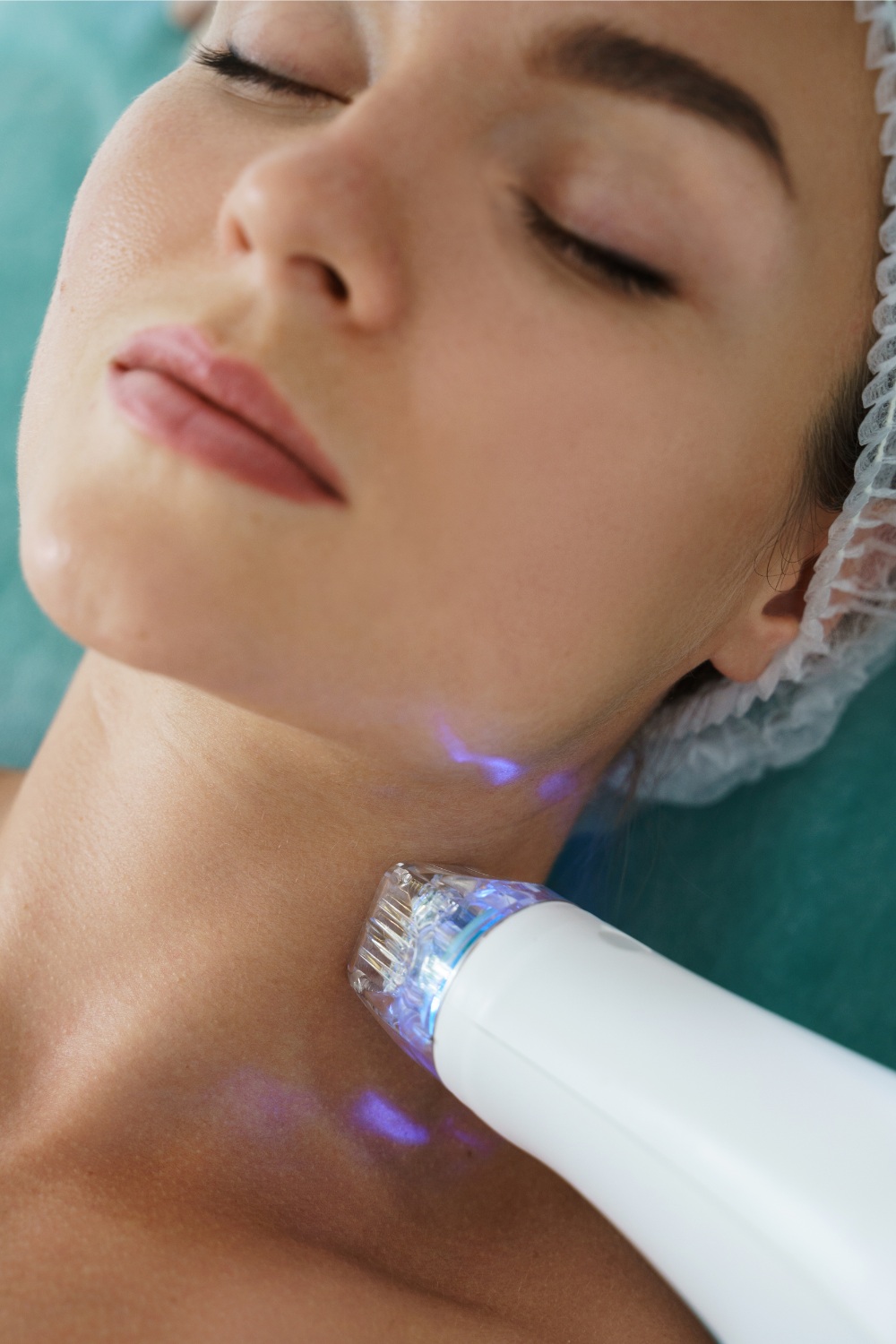
Speaking of repairing and futureproofing, Dr Yannis Alexandrides, cosmetic doctor and founder of 111 Harley St., predicts that nanografting will rise in popularity in the next year. ‘It’s an advanced technique that helps futureproof the skin using the patient’s own fat cells, which are spun in a centrifuge before the stem cells and growth factors remaining are reinjected,’ he explains. ‘This can be performed as an outpatient procedure and is gaining in popularity as a way to improve skin quality – it’s something I increasingly use with my facelift patients at 111 Harley St.’
5. Next-Level Surgical Recovery
And with people wanting to get their treatment and go, the demand for low- or no-downtime is at an all-time high. One treatment that Dr Alexandrides says will make a major impact is Elixir MD. ‘It uses advanced photobiomodulation technology to infuse energy into the skin at different wavelengths for seamless and swift surgical healing,’ explains Dr Alexandrides. ‘I have incorporated it into our surgical protocols to prepare for surgery and throughout the recovery process to optimise their results.
‘There are many benefits of light therapy, but the capabilities of this particular device are outstanding,’ he adds. ‘It is also a device we can use to treat patients who aren’t undergoing surgery, for example to create a healthier skin environment, lower inflammation in the skin, reduce oxidative stress and bolster overall skin health.’
6. Hair Loss Treatments
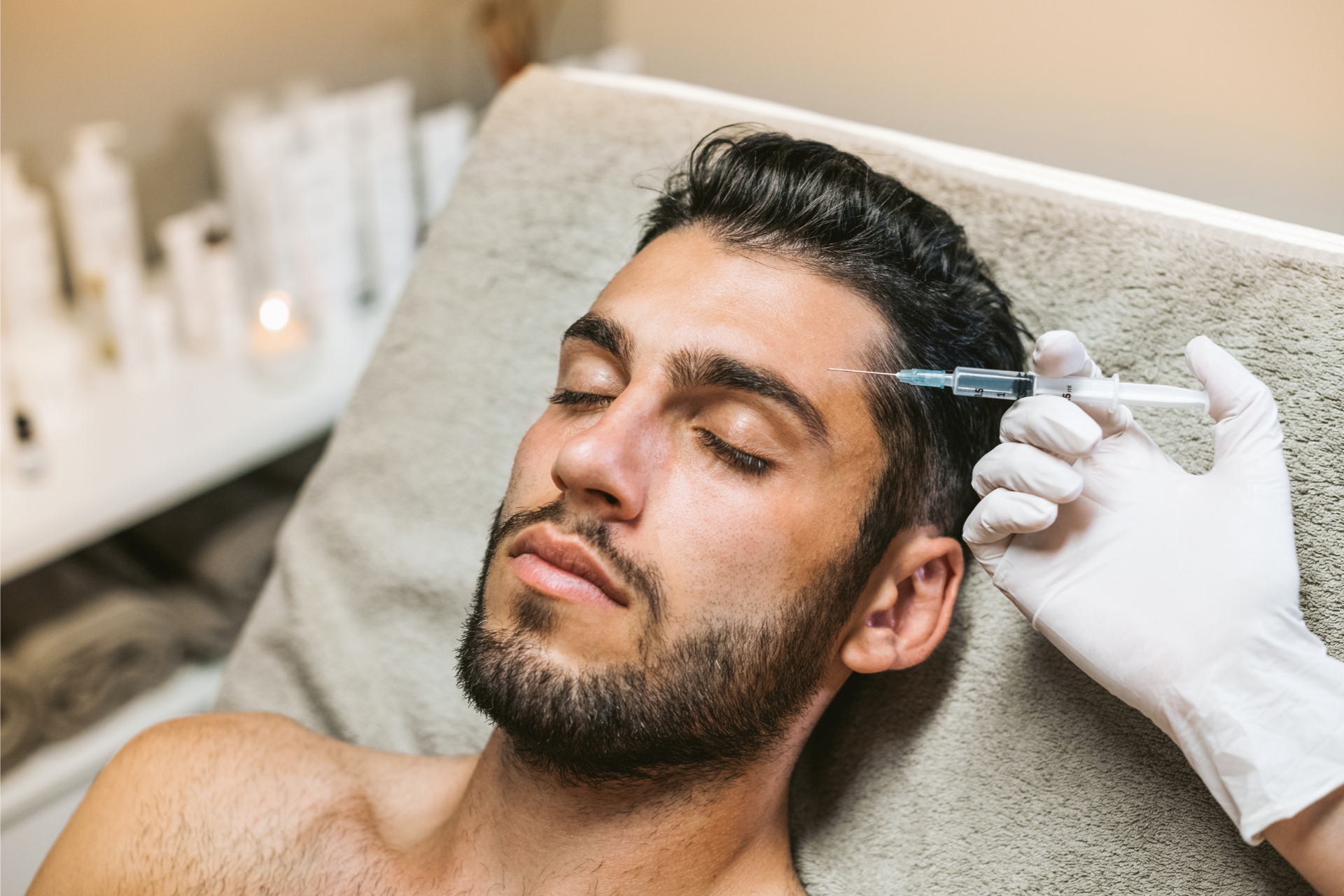
A bigger focus on men’s treatments is also predicted for 2026. ‘Demand from male patients continues to rise – from subtle toxin use to skin-boosting treatments and hairline restoration – particularly in the UK, where stigma around aesthetics is finally fading,’ says Dr Nicoloso.
And the main issue men want to treat? Hair loss. ‘We are seeing more advancements in regenerative treatments of utilising a patient’s own skin tissue to slow shedding and strengthen existing follicles,’ highlights Dr Nicoloso. ‘New devices now allow for more controlled processing of samples, enabling the extraction of higher concentrations of stem cells and exosomes than we have been able to do previously – up to 90 billion – leading to more effective and visible results.’
CACI Facial with Lisa Franklin
7. Microcurrent Treatments
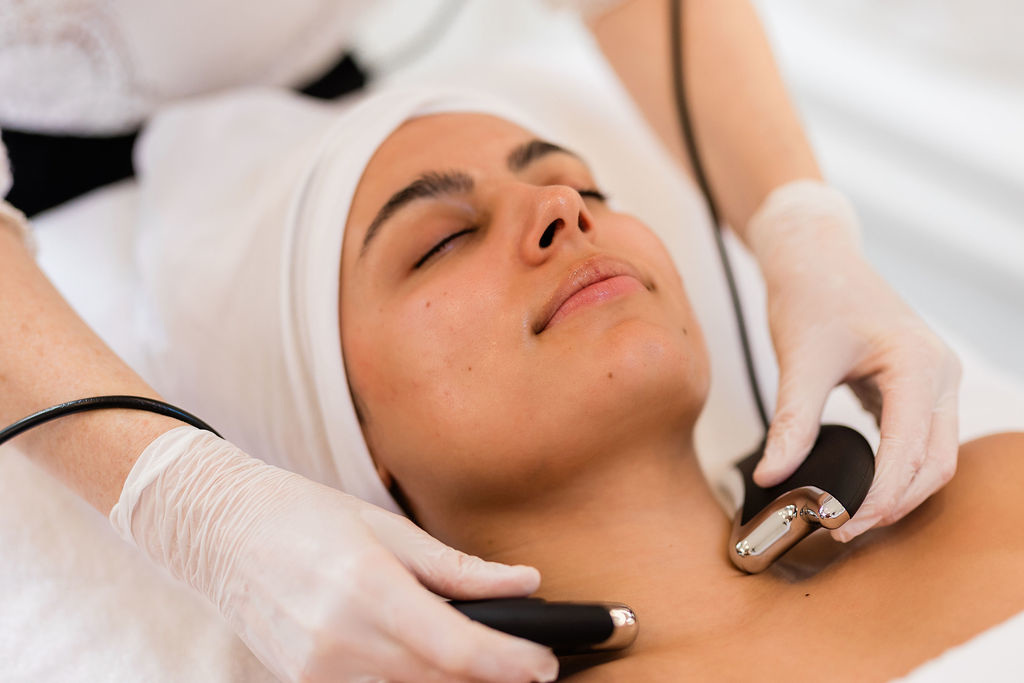
Franklin also sees non-invasive procedures like microcurrent coming back into the mainstream – especially with CACI, or Computer Aided Cosmetology Instruments. ‘Over the past year, we have seen a significant increase in CACI treatment courses booked within the clinic – reflecting a renewed appreciation for trusted, long-established technologies such as microcurrent.
‘Microcurrent is a low-level electrical therapy that gently stimulates facial muscles and enhances cellular activity,’ she goes on to explain. ‘It works by delivering tiny electrical impulses – similar to the body’s own natural currents – to encourage ATP (cellular energy) production, support collagen and elastin synthesis, and improve overall skin tone. The outcome is a lifted, more sculpted appearance, improved firmness, and enhanced circulation. It is often described as a “workout for the face” because it strengthens the underlying muscles while promoting healthier, more energised skin.’
8. Layering Technologies
What about a facial that could do it all? ‘Multi-action facials are quickly becoming the go-to alternative to multiple standalone treatments,’ says Lauren Evans, CACI’s Training, Research and Development Manager. ‘As clients juggle increasingly busy lifestyles, the demand for efficient, highly personalised, and results-driven high-tech skincare has never been greater.’
She predicts that layering technologies in one session will ‘become the new gold standard in aesthetics.’ And one session she’s keen to see have its moment is the Rejuva Med system: ‘Combining five advanced, clinically proven technologies, including CACI’s iconic microcurrent, the new-for-2026 Rejuva Med system will stand out as a next-generation aesthetics skin care solution.
‘This 90-minute powerhouse of stackable treatments with layered benefits will deliver visible results from the very first session (one session recommended per week), aligning perfectly with client demand for efficiency, personalisation, and technology-driven skincare,’ she adds. ‘One session will brighten, tighten, lift, rejuvenate and renew the skin without disruption to daily life.’
9. Treatment Stacking
Speaking of layers – while some issues can be tackled in one fell swoop, others may need a combination of treatments to get the job done. ‘Treatment stacking is being recognised as the new gold standard for longevity led rejuvination,’ notes Debbie Thomas, skincare expert and founder of Cellis. ‘In-clinic tech is having a real moment, because energy devices can create changes topicals simply can’t, especially when you stack (or combine) them to get multiple benefits using a bespoke treatment. Pigment, blood vessels, texture, laxity, scars – they don’t live in one depth, and one device rarely solves everything. So we’ll see more intentional pairings. Think laser and LED, fractional resurfacing and targeted pigment work, tightening and texture – and then a tight, supportive home routine that keeps the gains.’
10. Cold Fiber Laser Treatments
Following the demand for customisable treatments, Dr Alexandrides also sees cold fiber laser treatments being a big hit in 2026. ‘I was recently introduced to cold fiber laser treatments, specifically UltraClear,’ he tells us. ‘The technology is groundbreaking and allows for a fully customisable treatment that remodels the skin from within for deep skin renewal. It can tackle a multitude of concerns, including pigmentation, scarring and texture.
‘I incorporate this laser into my facelift plans to achieve the most comprehensive results for my patients,’ he adds. ‘However, my team is also using this device with our non-surgical patients as a standalone treatment. The results are extremely impressive.’