


Britain’s Most Beautiful Houses Inspired By Other Countries
By
5 months ago
Travel the world without leaving the UK with these 7 culture-rich destinations
Craving culture but don’t have the time for an overseas getaway? Thankfully, there are plenty of British houses with interiors and exteriors paying homage to almost every place you can think of – meaning you can travel far and wide without leaving the country. From Italian palazzos to Mughal splendour and even space, these remarkable destinations offer escapes into other worlds.
7 Beautiful Houses In The UK Inspired By Other Countries
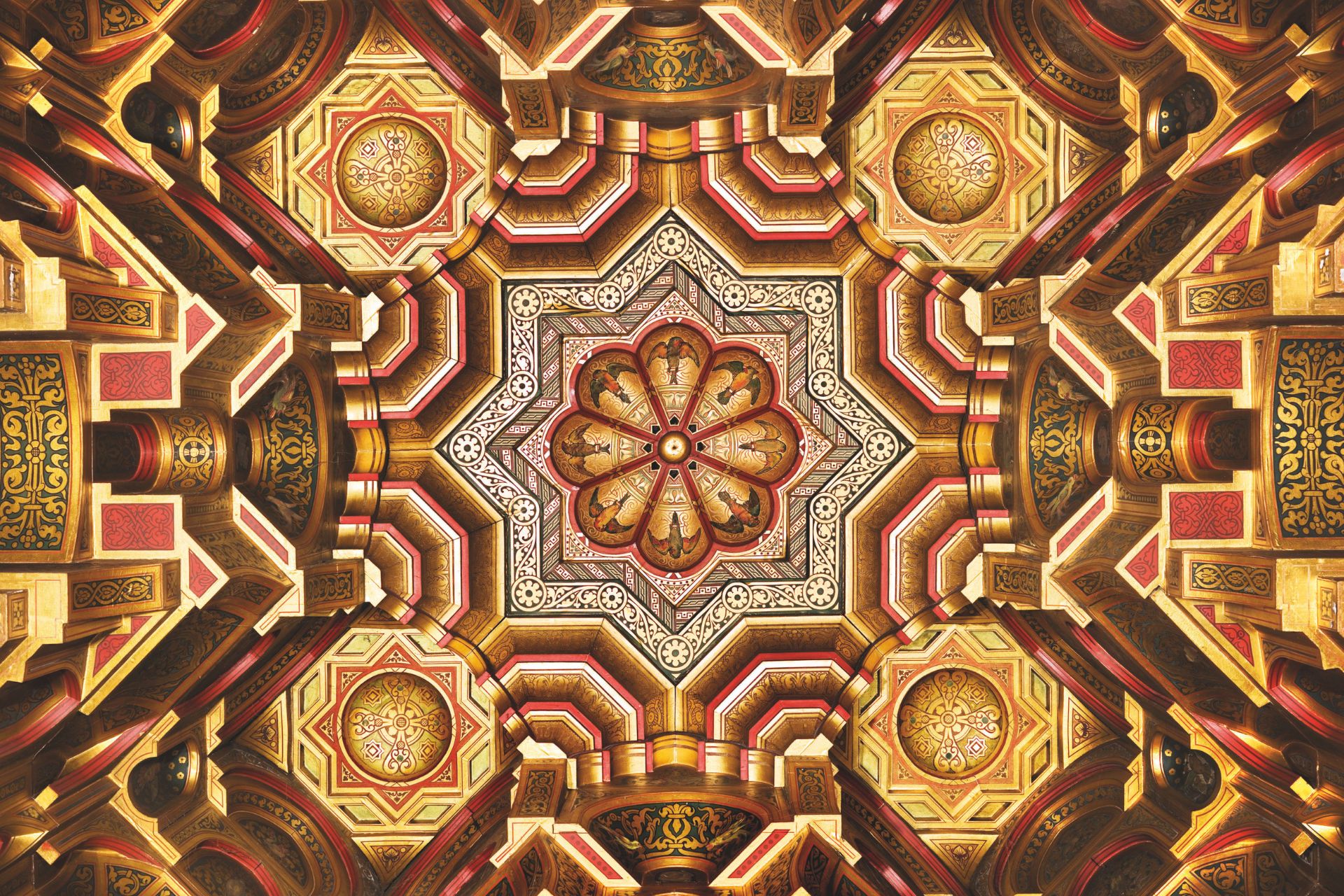
The North African-inspired ceiling at The Arab Room, Cardiff
North Africa: The Arab Room, Cardiff
When it comes to Islamic interiors in the UK, the Arab Hall at Leighton House seems to get all the attention. However, there’s another Orientalist jewel box on our doorstep (one that is arguably more opulent) that deserves your attention: The Arab Room at Cardiff Castle. While the castle itself has Norman roots dating back to the 11th century, the Arab Room was built in 1881 by William Burges – a stalwart of the Gothic Revival and a supporter of the Pre-Raphaelites and the Arts and Crafts movement.
Like an Orientalist painting, the Arab Room is a stylistic conglomeration of pan-Islamic cultures and the imagined – with a dash of British. Styled after paintings of harems, it boasts Egyptian-inspired stained-glass windows, mashrabiya shutters, wall-to-wall marble, and the heraldic shield of the Marquess of Bute. The pièce de résistance is, undoubtedly, the ceiling of gold-leaf-smothered muqarnas – reportedly valued at a casual £8m. cardiffcastle.com
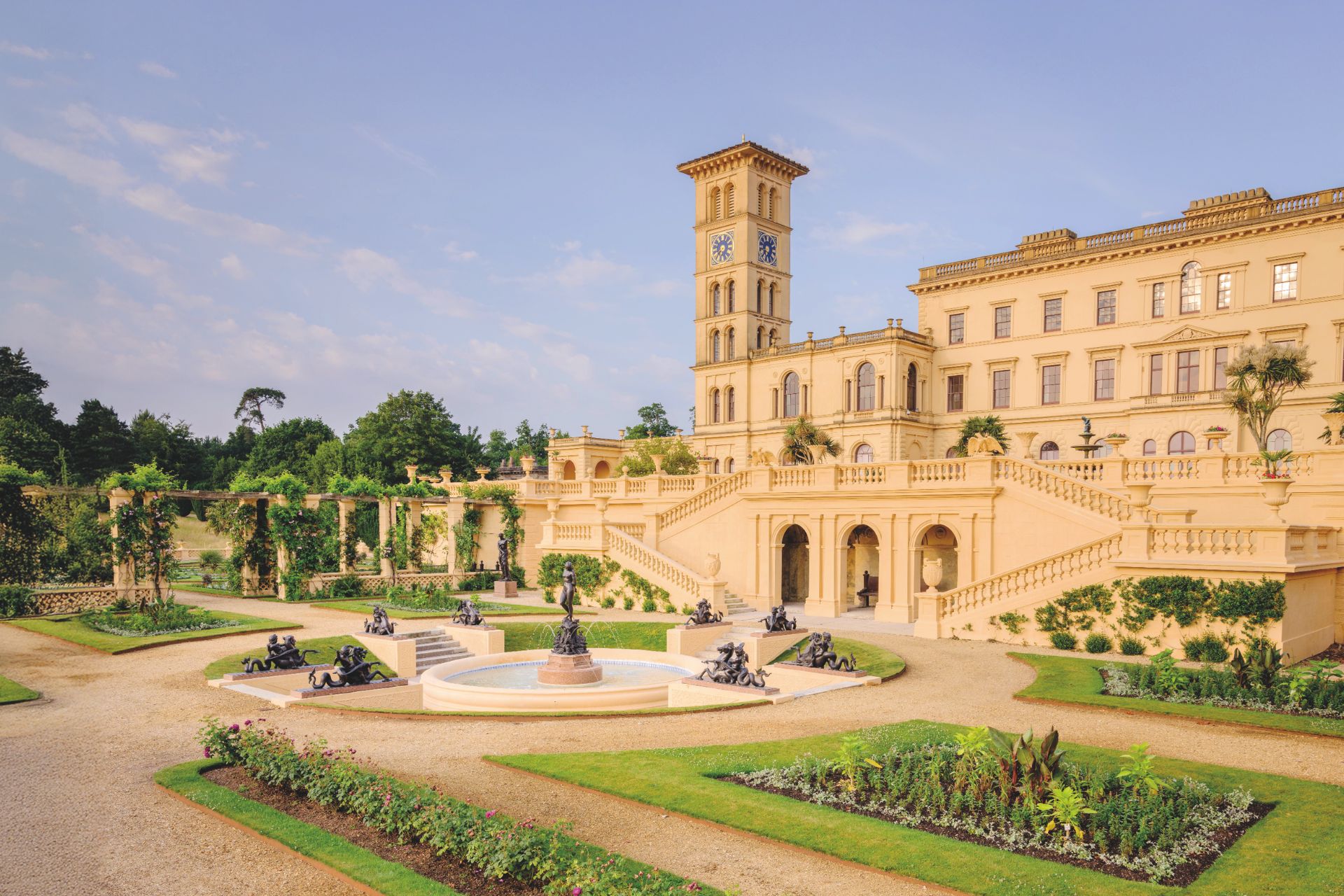
Former royal residence Osborne was built in the 1840s to echo Italian Renaissance palazzos
Italy: Osborne, Isle Of Wight
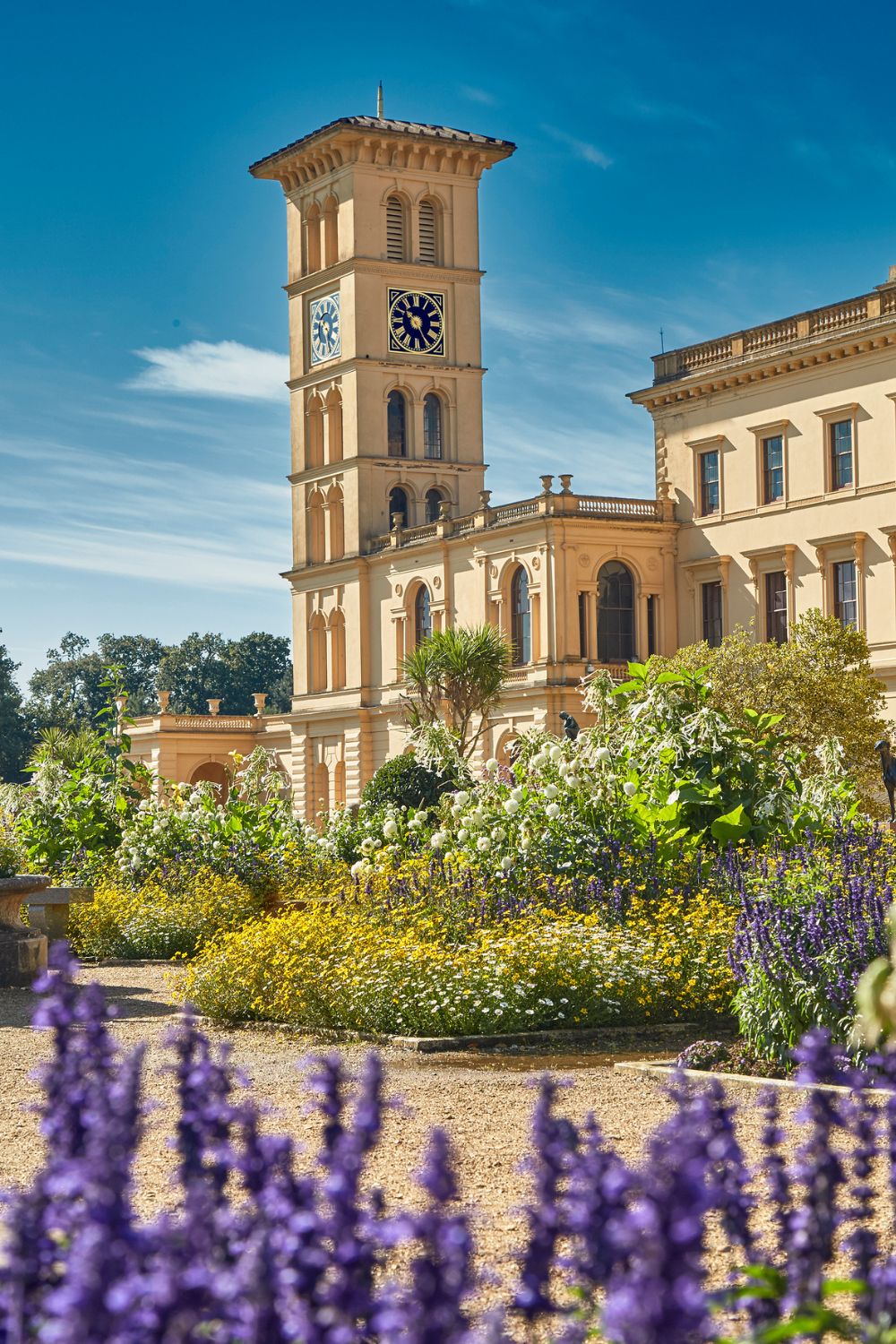
Italy is having a bit of a moment on television. You might have found yourself pining for the Italian countryside, as Stanley Tucci ate his way across his ancestral land in Tucci in Italy. Alternatively, if Emily in Paris is more your niche (we won’t tell), you probably fell in love with La Posta Vecchia – the 17th-century seaside palazzo-turned-hotel, filled with priceless Roman sculptures and museum-quality pieces of furniture from previous owner J. Paul Getty himself. Well, the UK has its own little slice of Italian countryside finery in Osborne House: Queen Victoria and Prince Albert’s seaside summerhouse on the Isle of Wight.
Built between 1845 and 1851, the Italianate house was made to echo Italian Renaissance palazzos, and was designed by Thomas Cubitt – the architect who famously developed Belgravia as well as redesigned the façade of Buckingham Palace. Osborne’s interiors are adorned with frescoes, marble statues, and Minton tiles in the technicolour Renaissance revival style. Osborne also offers a bit of bonus faux jetsetting. In addition to Italy, you get both India in the enchanting Durbar Room, a dining room ornamented by Indian master carver Bhai Ram Singh and designed by John Lockwood Kipling (Rudyard’s father), and Switzerland, in a Picturesque Swiss cottage built for the royal children. english-heritage.org.uk
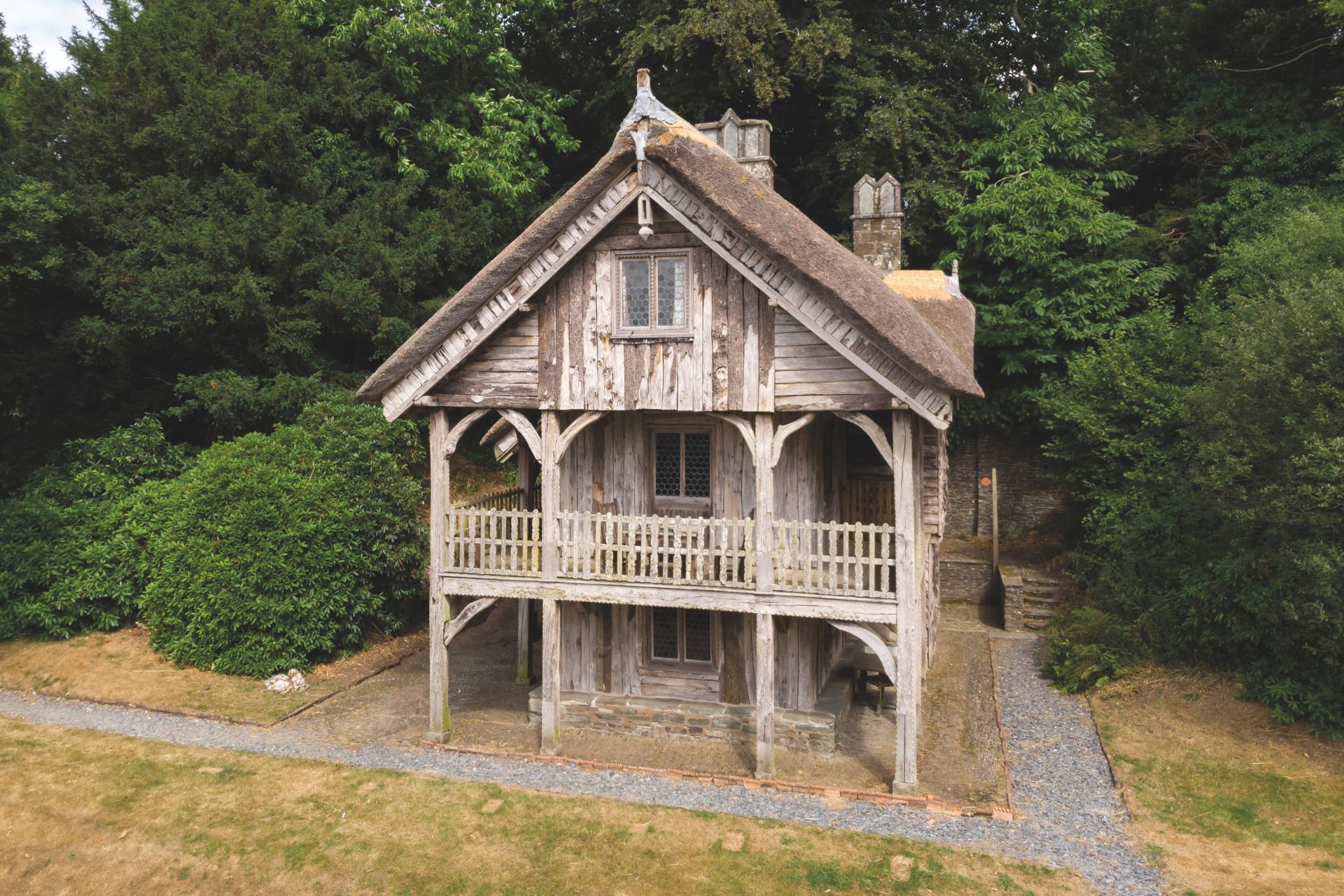
Swiss Cottage is a two-bedroom petit chalet overlooking the Tamar River and miles of topographic woodland
Switzerland: Swiss Cottage, Devon
If a three-quarter scale Swiss cottage at Osborne has your attention, then we have some excellent news: you can rent a (full-scale!) Swiss cottage via The Landmark Trust. Did you catch the Marie Antoinette exhibition at the V&A? If so, did her Sèvres porcelain breast cup remind you of her milkmaid fantasy within her personal hamlet on the grounds of Versailles? Well, this Swiss cottage was a Picturesque adult Wendy house for Georgiana, Duchess of Bedford (wife of the sixth Duke) to play milkmaid in the grounds of Endsleigh House in Devon. Cosplaying milkmaids was a bit of a trend for royal and aristocratic women of the 18th and early-19th centuries, in case you hadn’t noticed – the original ‘tradwife’ trend.
Designed by Jeffrey Wyattville, this two-bedroom petit chalet offers a charming country kitchen, leaded glass windows, and a balcony that overlooks the Tamar River and miles of topographic woodland. If you’ve ever dreamt of recreating scenes from Heidi, this is your chance (it’s also a fabulous excuse to buy a dirndl). landmarktrust.org.uk
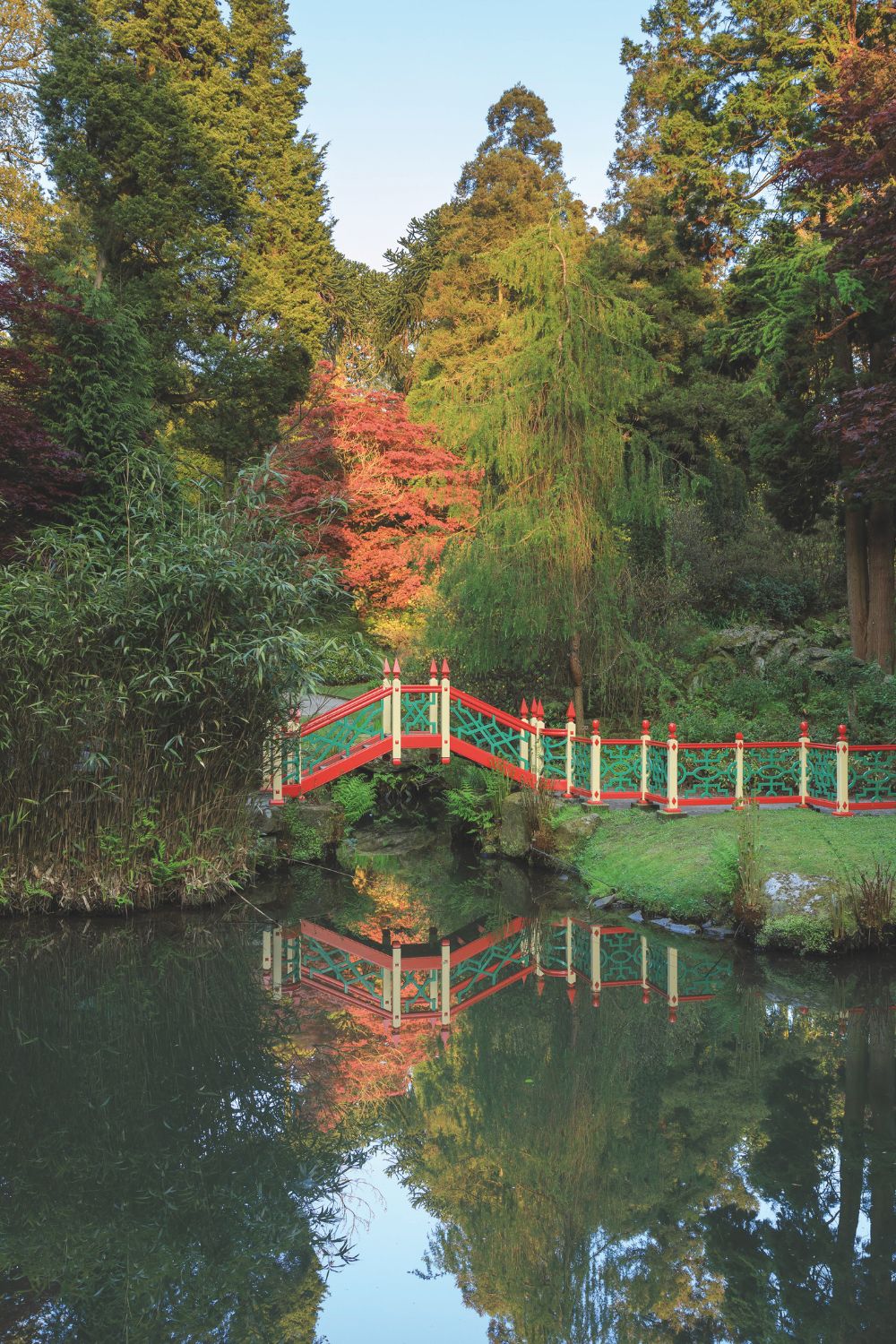
The gardens at Biddulph Grange mansion boast many a theme, such as Egyptian and Italian – but it’s the Chinese garden that stands out
China: The China Garden at Biddulph Grange, Shropshire
After all these houses, maybe a nice walk is in order. Fancy a walk in China? Designed in the 1840s, the gardens at Biddulph Grange (a moody Victorian mansion) boast many a theme, such as Egyptian and Italian – but it’s the Chinese garden that stands out. Fiery red pagodas, golden statues, and bright green fences of ornate fretwork stand out against the foliage (as does the miniature replica of the Great Wall). You may recognise this bridge, as it was inspired by the Blue Willow pattern seen on tableware originating in the 18th century (and remains popular to this day – probably found at your granny’s house). Children will love it for the pond and excellent hide-and-seek potential within the winding paths. nationaltrust.org.uk
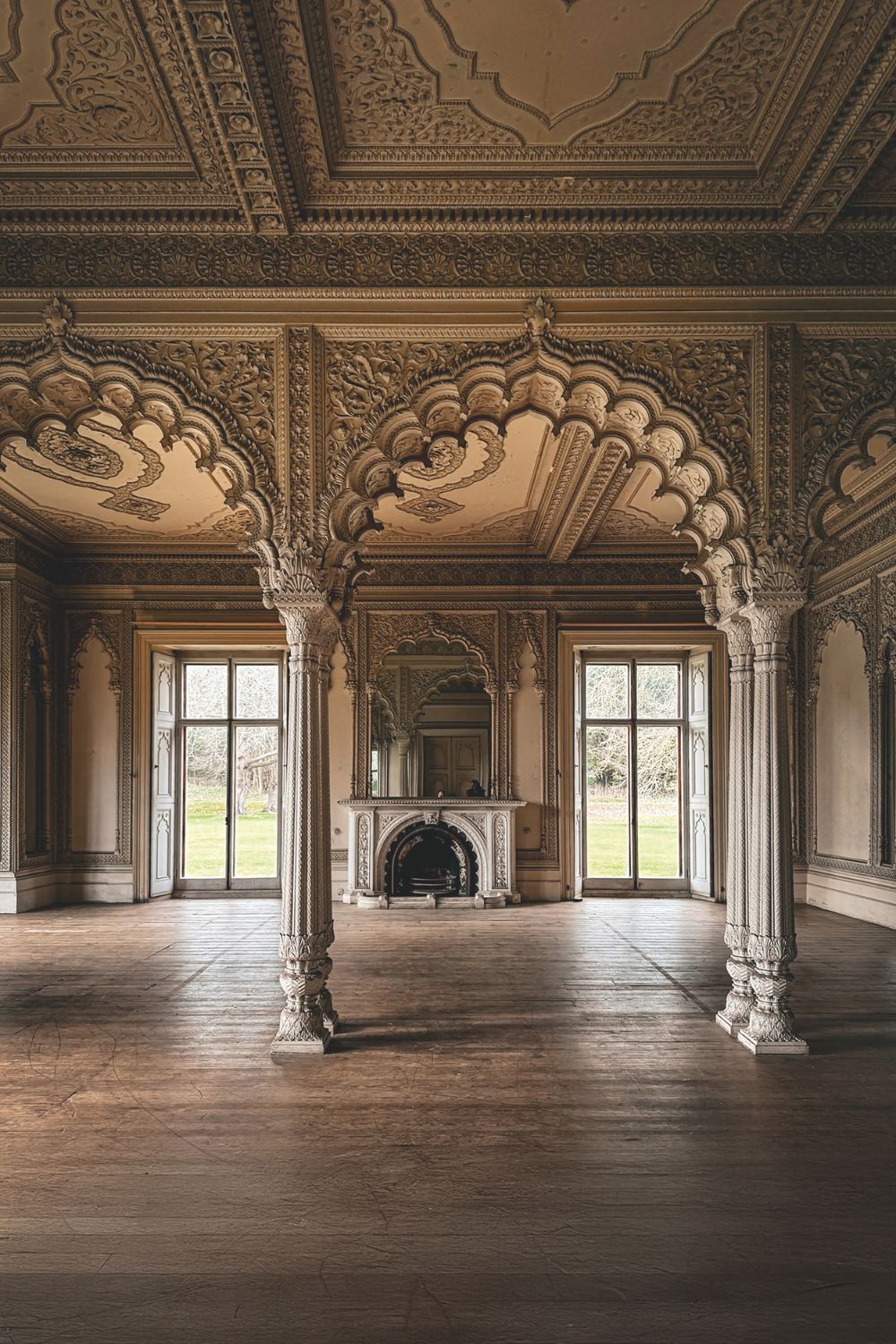
India: Elveden Hall, Norfolk
The Koh-i-Noor diamond isn’t the only Indian jewel in the UK. Built in the mid-18th century, Elveden Hall had quite the glow-up when Maharaja Duleep Singh, the final ruler of the Sikh Empire, purchased it in 1863. With the help of Gothic Revival architect John Norton, he redesigned the interiors of Elveden to resemble the palaces of the Mughals – a bit of Indian splendour in the middle of East Anglia. From the mid-18th century through well into the 20th century, British interpretations of Indian architecture weren’t unusual, like Sezincote House, the Royal Pavilion in Brighton, and Queen Victoria’s Durbar room at Osborne House. What makes Elveden’s Indian interior architecture so special is that it was owned by and designed for an actual Indian to evoke his homeland rather than for an Englishman based on drawings and the imagined. In other words, it truly is the closest thing to historic India that one can find in the UK. heritagexplore.com
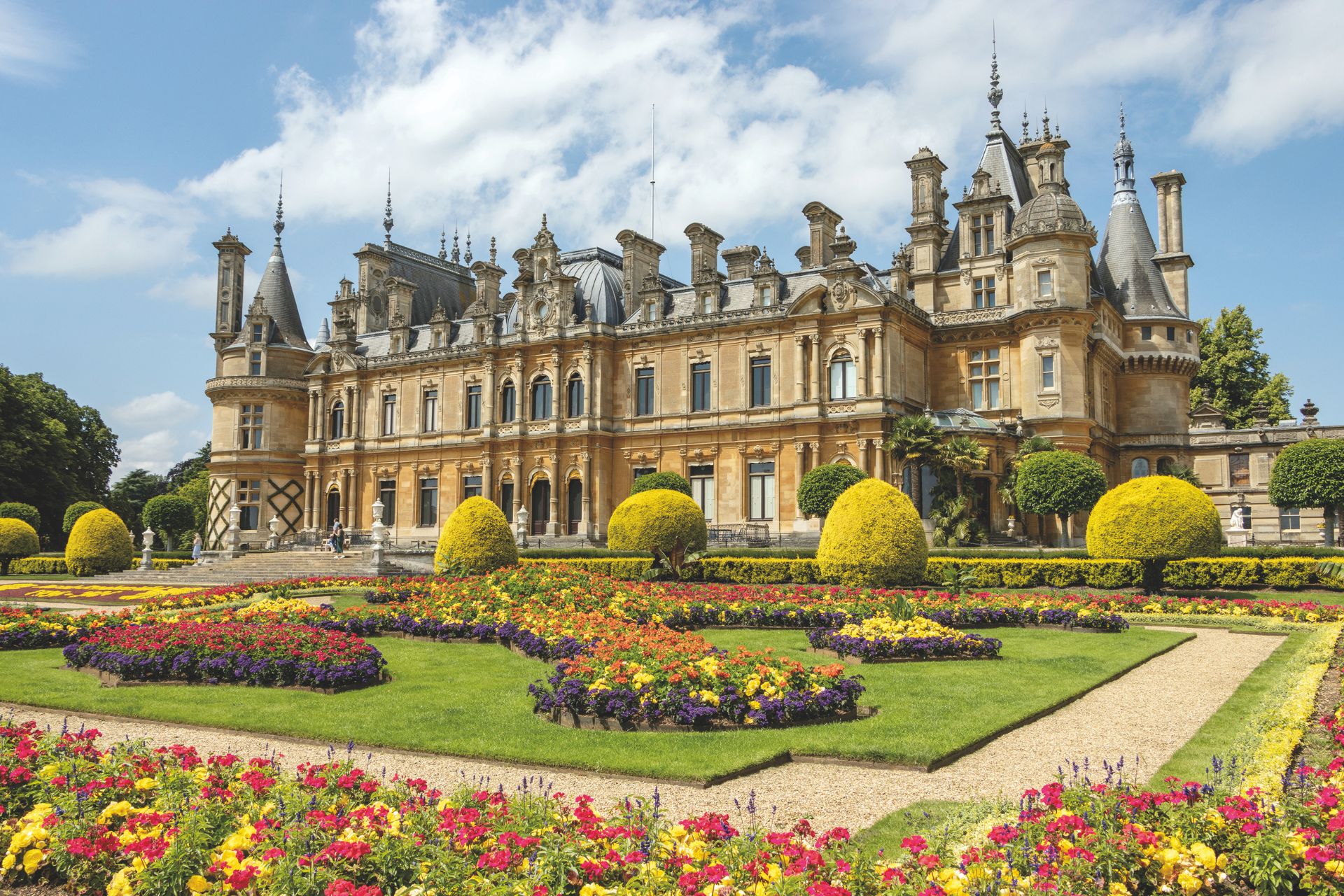
Waddeson Manor was built by Baron Ferdinand de Rothschild in the mid-1870s
France: Waddeson Manor, Buckinghamshire
While Boughton and Petworth Houses may be crowned ‘The English Versailles’, it’s Waddesdon Manor that truly offers the gilded opulence of France’s ancien régime. Built by Baron Ferdinand de Rothschild in 1874 and 1875, it was a way for the Rothschilds to show their wealth and establish a sense of familial heritage via the use of pieces from the French royal family. While the exterior was built to look like a French Renaissance château, the public quarters of the interiors were primarily made to feel like the 18th century, with its gilded panels, Savonnerie carpets, and its mirrored dining room (a not-so-subtle nod to Versailles).
Pieces by royal ébéniste Jean-Henri Riesener like a writing table that belonged to Marie Antoinette, a chest of drawers made for Louis XVI’s sister Madame Élisabeth, and a roll-top desk made for his brother, the comte de Provence, are but a small handful of 18th-century functional works of art on show. While the furniture at Waddesdon is nothing short of breathtaking, it’s the world-renowned collection of Sèvres porcelain that steals the show – including three of the ten ship vases known in existence. nationaltrust.org.uk
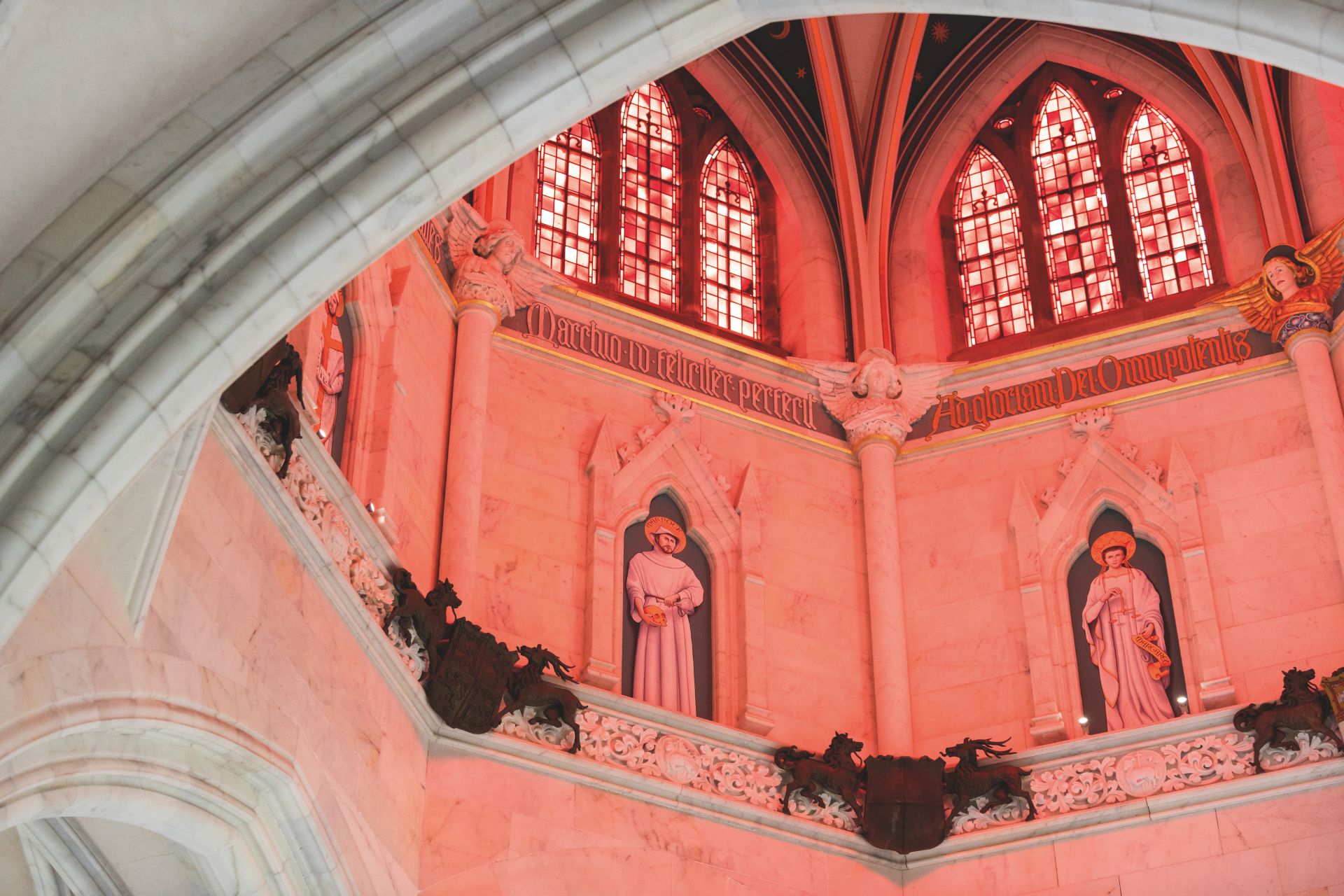
The ceiling of the Marble Hall at Mount Stuart depicts the signs of the zodiac, illuminated by astrology-themed stained-glass windows
Space: Mount Stuart, Isle of Bute
Earth is a messy place right now, so why should we limit ourselves to it? If Katy Perry can go to outer space, then so can we. Envelop yourself in the cosmos at Mount Stuart house on the Isle of Bute. Originally built in the early 18th century, it was destroyed by a fire in the 1870s, and was subsequently rebuilt in the Gothic Revival style – an aesthetic that allows for lots of eccentricity within interiors.
The third Marquess of Bute, its custodian at the time, was completely fascinated by both astronomy and astrology, and he wanted to make sure his interests were reflected. The ceiling of the Marble Hall depicts the signs of the zodiac, which, illuminated by astrology-themed stained-glass windows, glisten with crystal-studded stars. Additionally, the ceiling in the marquess’ own bedroom display the planets’ and stars’ alignments at the moment of his birth, which is undoubtedly a sign that, if alive today, he would be that friend who insists upon knowing your birthday and the exact time you were born in order to analyse your astrological birth chart at parties. heritagexplore.com