


What Is It Like Meeting Gorillas In Rwanda?
By
2 months ago
Luke Abrahams embarks on a bucket list adventure
In an effort to transport his sick mother one step closer to meeting a gorilla, Luke Abrahams treks in Rwanda to meet the great apes face-to-face – and FaceTime her in.
Gorilla Trekking In Rwanda
It was always my mother’s dream to go to Rwanda and see the gorillas. But life had other plans for her, and her dream of coming face-to-face with a mountain gorilla remained just that: a dream. I tried to facilitate a trip over the years, but the onset of her Addison’s disease, among other ailments, led to a total flight ban.
She was crushed, but I did the next best thing: trekking on her behalf while she followed the journey digitally from her own bed. After a few years of planning, I found myself aboard a RwandAir flight bound for Kigali, the capital of ‘the land of a thousand hills’.
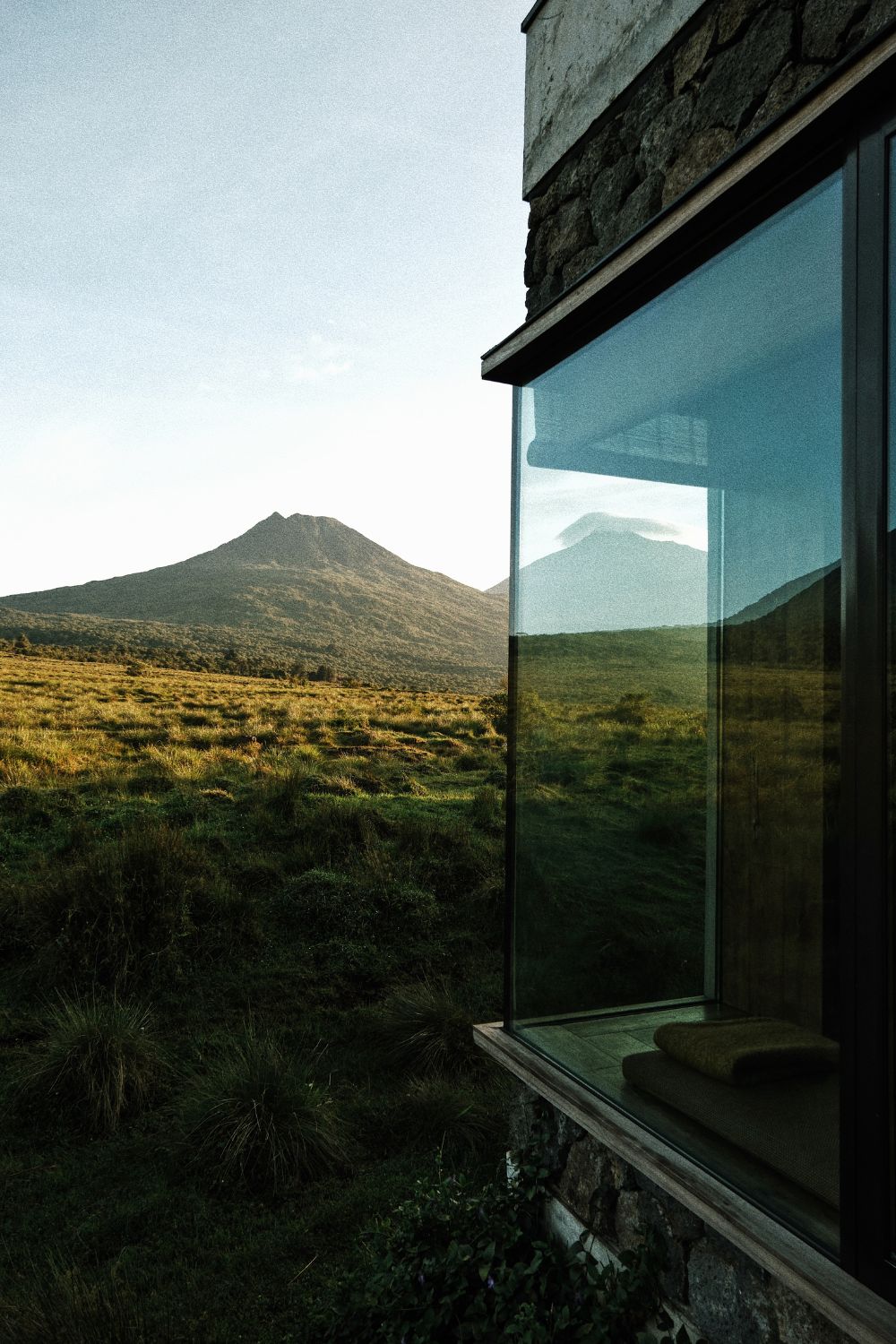
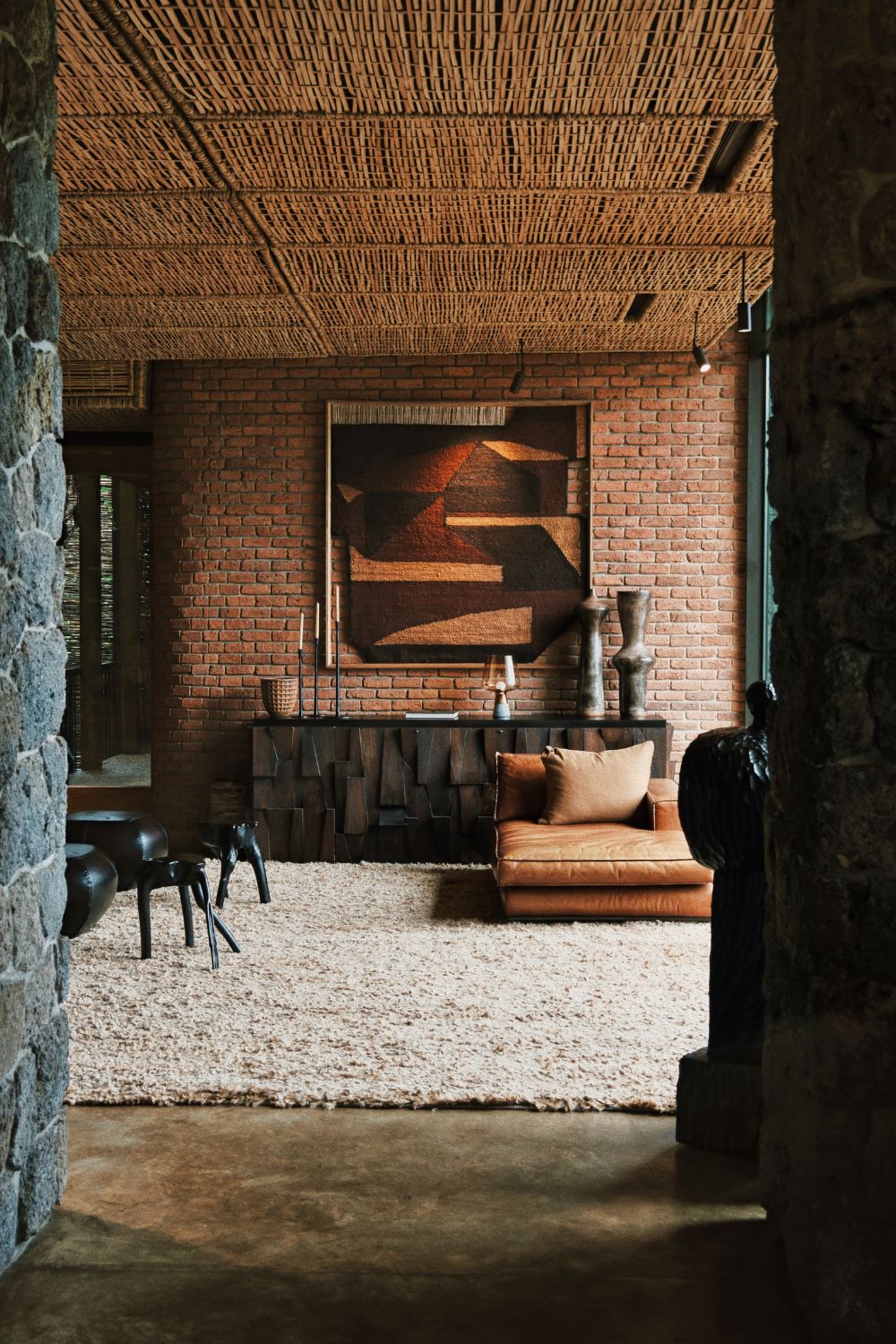
My home for four nights was Singita Kwitonda lodge, a 12-suite boutique sanctuary set in the most coveted part of gorilla country on the edge of Volcanoes National Park. Aside from its unrivalled views and prime location, a celebration of Rwandan culture is what sets it apart. In all the main spaces and suites, Kwitonda has subtle odes to its locale through a variety of textures handmade, blown and woven by local artisans and cooperatives. Much of it was built using volcanic rock, oven-fired clay bricks and recycled materials hewn and wrung from neighbouring villages following stringent One Planet-aligned values to minimise energy consumption and the lodge’s impact on the wildlife and environment.
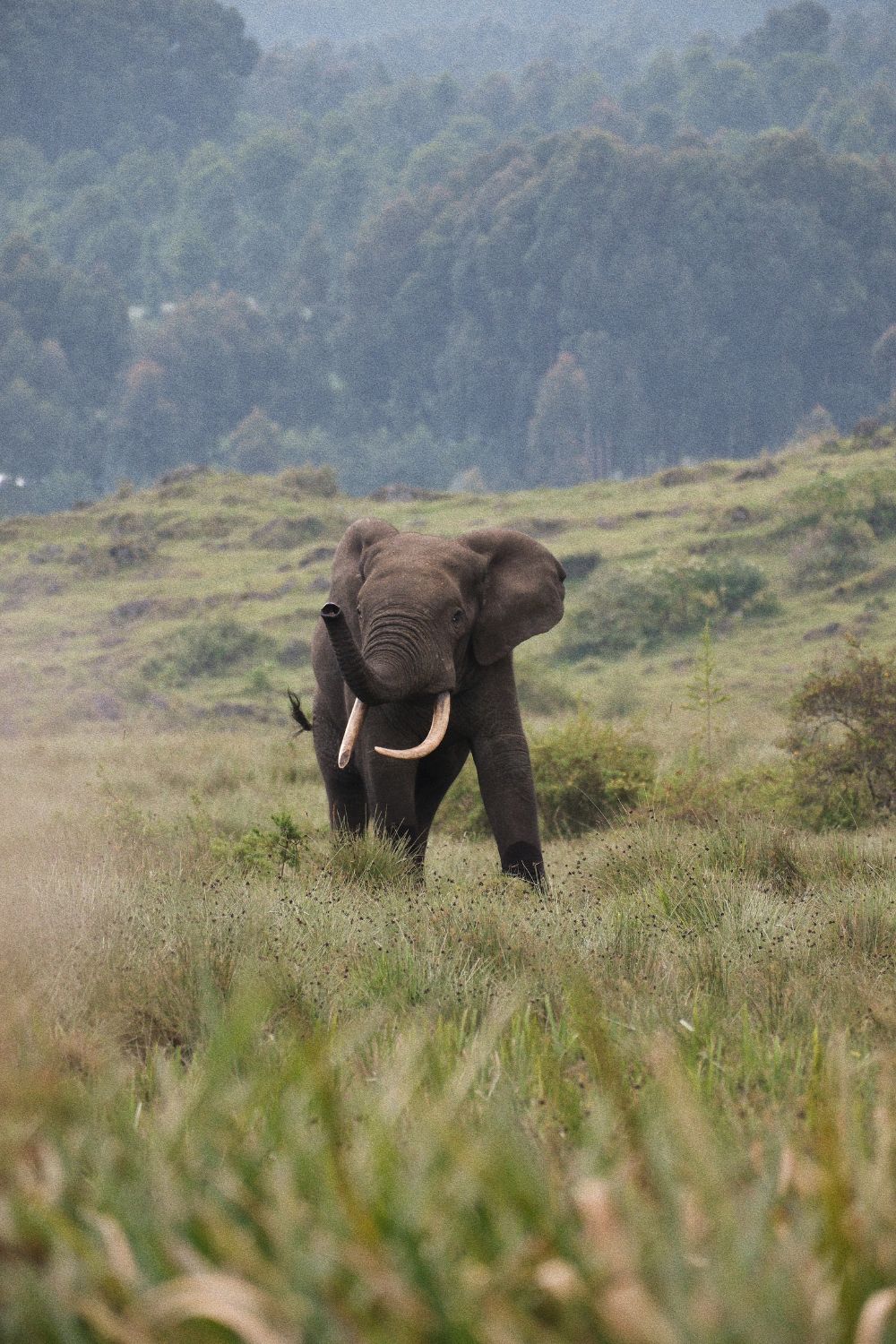
Elsewhere, the lodge is a picture of serenity. Glass box suites overlook the green plains and bamboo forests which snake their way up the volcanoes and into the surrounding villages. During my first night here, I was treated to a rare sight: a forest elephant wandering down the hills heading straight for room number two, the temporary home of yours truly. Twenty minutes later I found a giant bull drinking from my plunge pool before waltzing off in search of dinner.
I followed his lead and did the same: back in the main lodge I devoured my first typically Rwandan veggie feast, famous Kinigi potatoes included, before my first gorilla trek briefing. After a quick lesson in primate behaviour and language, Henry, my hands-on Singita guide, asked me to choose my trek intensity: easy, easy to medium, medium to hard. I chose a respectable easy to medium, and with that was ushered to bed.
The day of the trek began at 7am. The air was crisp and the sunlit clouds hung low, swirling over the southern Rwandan mountains in the distance eclipsed by rays of pink, red and maroon. Suited and booted, we departed for the Rwandan Development Bureau (RDB) headquarters where we were sorted into groups and assigned our gorilla family for the day. As we arrive, Henry introduced me to a lively and charismatic bystander who told us he was François Bigirimana, a legend in these parts who once worked with the late American primatologist Dian Fossey to help conserve the country’s gorilla population. I shook his hand and after all the greetings, I was assigned to my trekking group where I met my fellow travellers and field guide for the day, Patrick Rwagasana.
The trek began through pyrethrum fields, past women who eyed us with an air of superstition. ‘Gorillas!’ Patrick shouts at them. The looks of quizzical curiosity soon faded into bright smiles, heartfelt nods and murmurs of ‘good luck’. Soon we encountered our park ranger, a stocky man in military ware armed with a gun and a machete to ward off unruly forest elephants and bush buffalo. It was here, at this gateway between two worlds, where the hard work really began. As we set into the green abyss, the rocky paths slowly morphed into mucky trails flecked by ancient Hagenia abyssinica trees covered in moss, towering ferns and alpine shrubs. Amongst them leafy greens like thistle, nettles, celery, galium and earthy roots from bamboo shoots to pith and sweet eucalyptus sap covered the ground – all, Patrick tells us, staples of a healthy gorilla diet.
As the suspense grew, so did my heart rate. The higher we climbed up through the dense foliage, the harder the trek became. The air fell thinner and the clouds thicker, and after an hour or so, I was drenched head to toe in sweat and my boots were caked in mud so viscous it felt like I was walking in quicksand.
In between all the godsend breaks to catch our breaths, my ticker roared and my lungs screamed as my veins bulged blue and my cheeks ignited into a shade of fire truck red. ‘This is no easy hike,’ I whispered to myself. To that, Patrick patted me on the back and simply said: ‘They are there, just up that hill.’
With a jolt of excitement, I quickly forgot how brutally exhausted I was and ran for the hills, dodging wiry thorns and prickly fruits. Ditching our walking sticks and packed lunches with our porters, we slowly meandered through the forest brush and as if by magic the Hirwa (‘Lucky’) gorilla family came into view.
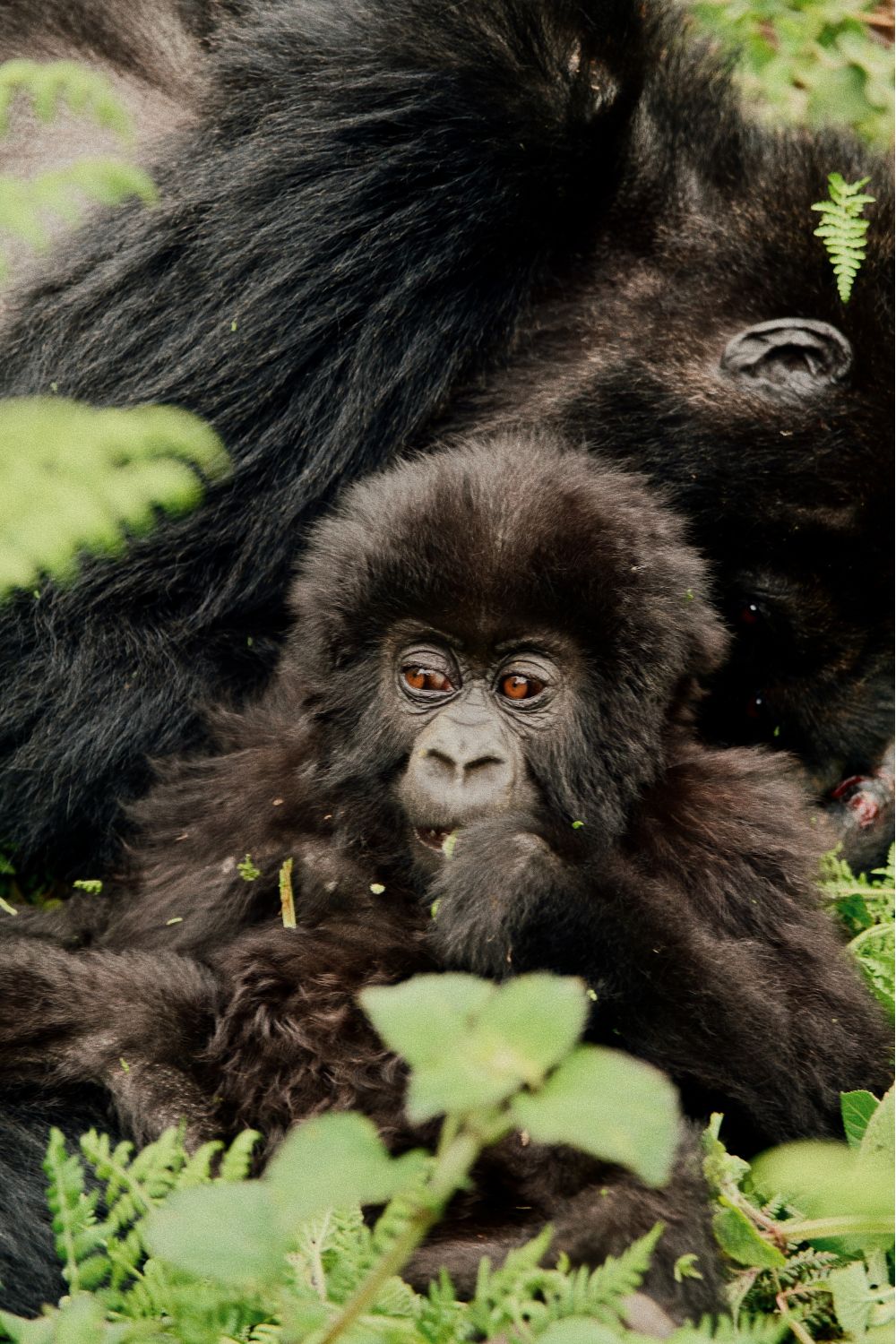
Sat on a branch was a young and feisty gorilla, jumping excitedly as he wolfed down a generous helping of bamboo shoots. As we slowly approached, he swung on repeat, twisting his body in every direction before he comically fell off the branch wearing a look of disbelief on his face. Behind him, a giant silverback named Uburanga emerged from the bushes. His head was godly and giant, and with every tilt, he inspected his kingdom with undisputed authority. Desperately fatigued, my legs buckled and I fell to the ground in awe. The mighty alpha male sat crouched near beside me, joined by several other young gorillas and their mothers.
Instinctively, I should have been terrified – but instead I felt exhilarated and oddly calm. Here I was, weak and flustered, sitting next to a 300-pound gorilla who was totally unbothered by my presence. It was a moment best described as hilariously surreal.
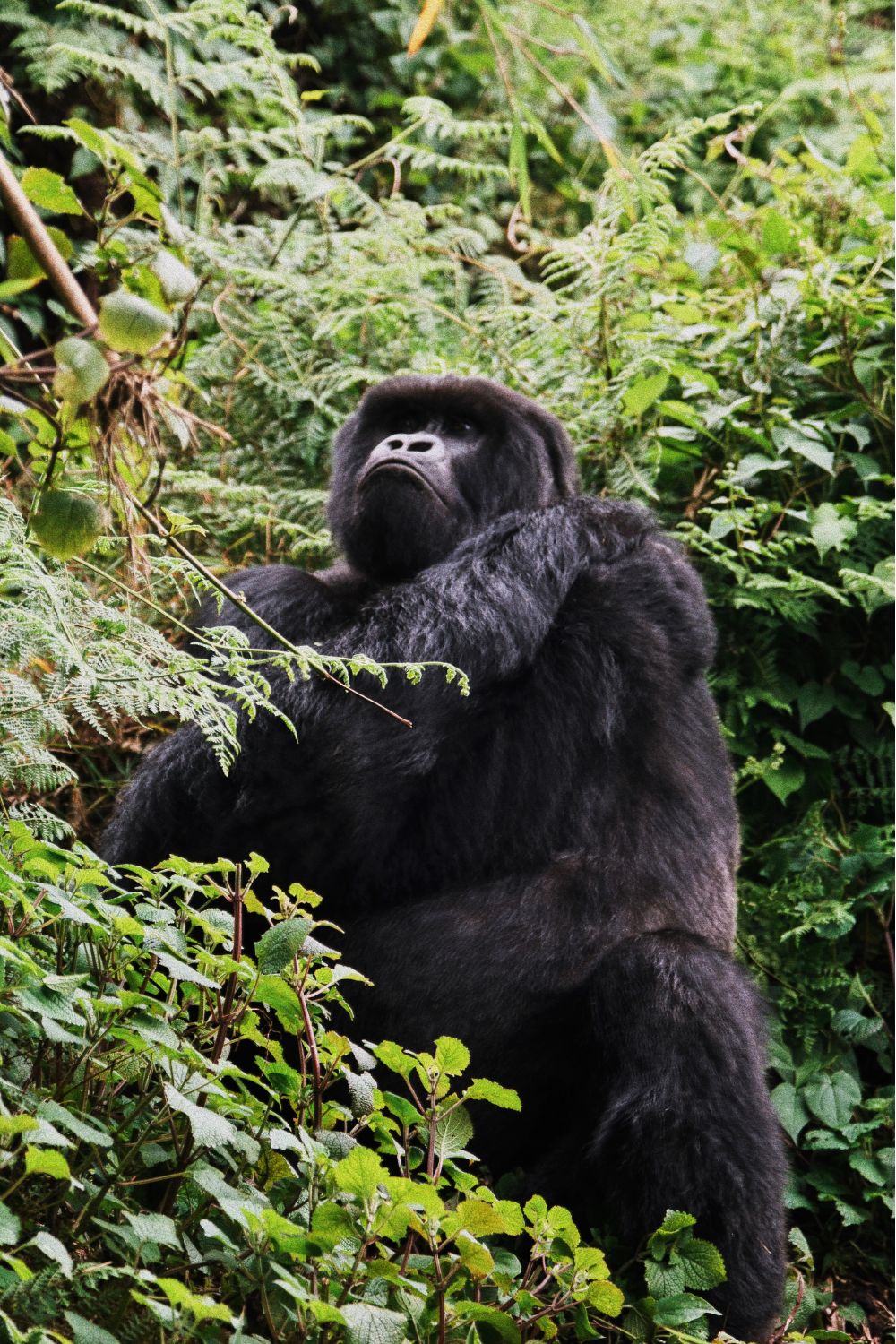
Eventually, I stood up and we followed the family of 22 along a stream until we reached a dizzyingly long clearing. To my amazement, there sat seven females, the majority mothers cradling their young. In the background, the sound of young blackbacks beating their chests with their fists and stamping their feet hard on the wet ground echoed through the forest.
‘The gorillas make several sounds to iterate their emotions. They belch to signal they are content and whine if they are distressed,’ Patrick explains. My personal favourite was the guttural throat sounding ‘ummm-ummm’, a vocalisation used among gorilla groups to signal safety within the group. It’s basically their way of saying ‘we’re cool’, something I chokingly also belched on repeat.
Relaxed, I continued to watch these gentle giants interact in their home. Mothers disciplined their children and the toddlers, curious and mischievous, played and fought as they rolled around the bushes. One of them even cheekily tried to snatch the golden buttons off my hiking trousers before being told off and grabbed back into the clearing by his mother. Despite how entertaining it was, there was an indescribable feeling of familiarity.
David Attenborough once said: ‘There is more meaning and mutual understanding in exchanging a glance with a gorilla than with any other animal.’ And this is exactly how I felt. Staring into the golden eyes of a gorilla is like looking into your own, while living inside another creature’s world. It was as though the past was being lived in the present, eerily mirroring my every move. The mannerisms, the hands and even the lips of our distant primate cousins transport you into a world lived and experienced long before humans ever evolved into what we are now.
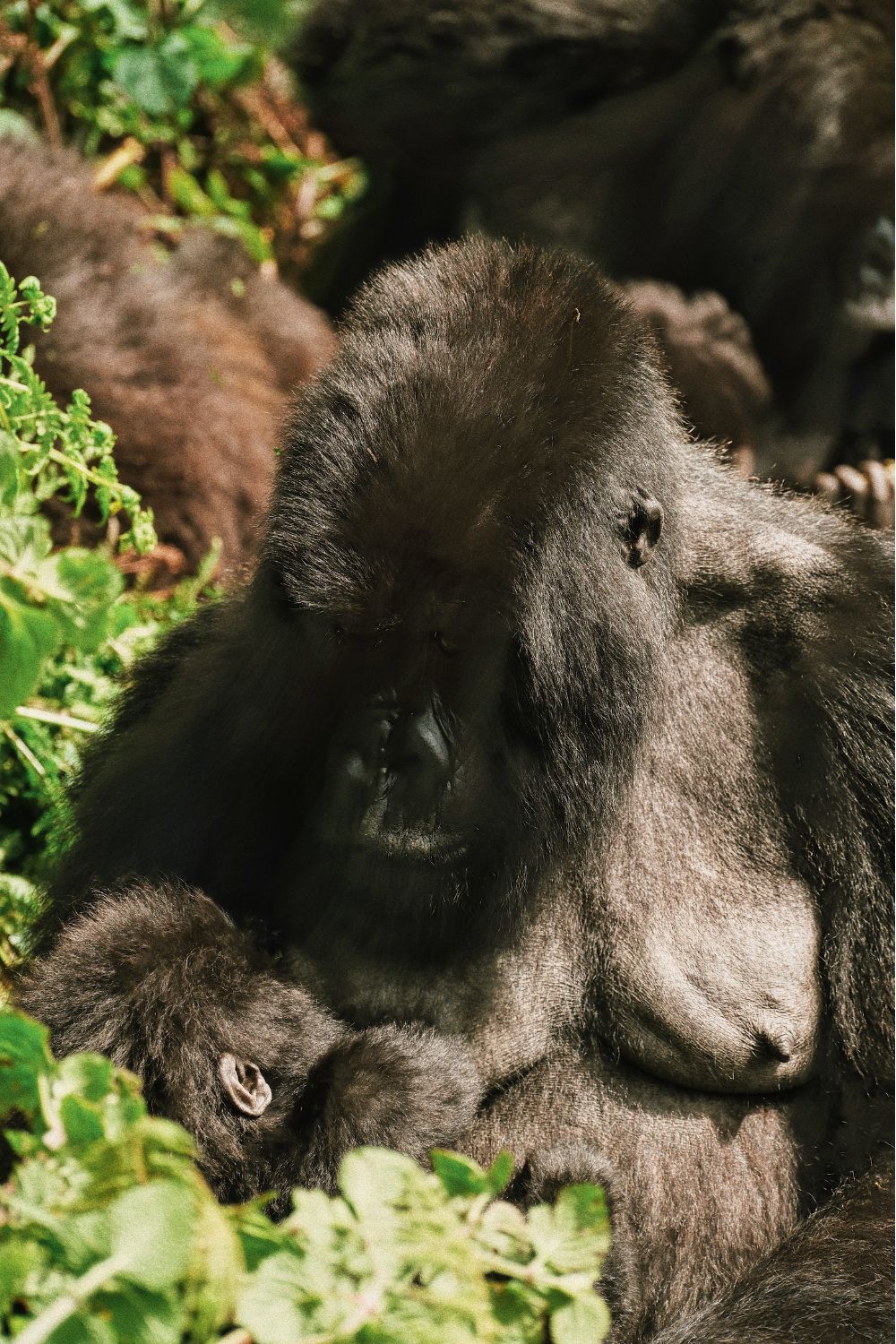
As a young mother sat cradling her two-month-old, I called my own. She sat there, more than 6,000 miles away, watching a world far different from her own unfold on screen. Ten minutes or so passed and tears welled up in her eyes. We didn’t speak a word, but I knew and felt this moment for her was as raw and as personal as it was for me experiencing it all in the flesh on her behalf. With a nod and a murmur, I put my phone down and Patrick told us our time had come to an end. My hour with the Hirwa family felt like an eternity – of the good kind.
As we began the long trek down, all the members of my group looked at each other, visibly moved and elated. The one thing we all agreed on is that the feeling of meeting a gorilla, and being in such close proximity to one, is near indescribable. There is no way of summing it up, except by saying it’s one of those transformative experiences that forces you to look at our natural world differently and with profound respect.
This backstage pass into the gorilla’s nest invites you into a state of deep reflection, and one that hits you harder than any palpitating espresso shot. I left the forest with buzz, awe and humility, as though I was stepping off some kind of cosmic rollercoaster. By the time I got back to the lodge, I was spinning – not just from being high off the day’s adventure, but with a burning desire to protect and conserve the natural world around me. And this, thanks to my mother, was Rwanda’s parting gift, etched and marked forever into my memory, as now hers.
BOOK IT
Natural World Safaris can arrange an all-inclusive five-night Rwanda nature-focused itinerary including accommodation at Singita Kwitonda Lodge and return flights in business class with RwandAir from £12,260 per person. Permits for gorilla-trekking cost $1,500 USD per person and can be booked via the Rwanda Development Board. naturalworldsafaris.com