




A Guide To The Timeless Art Of Istanbul
By
15 minutes ago
Exploring the city that straddles two continents – and two empires
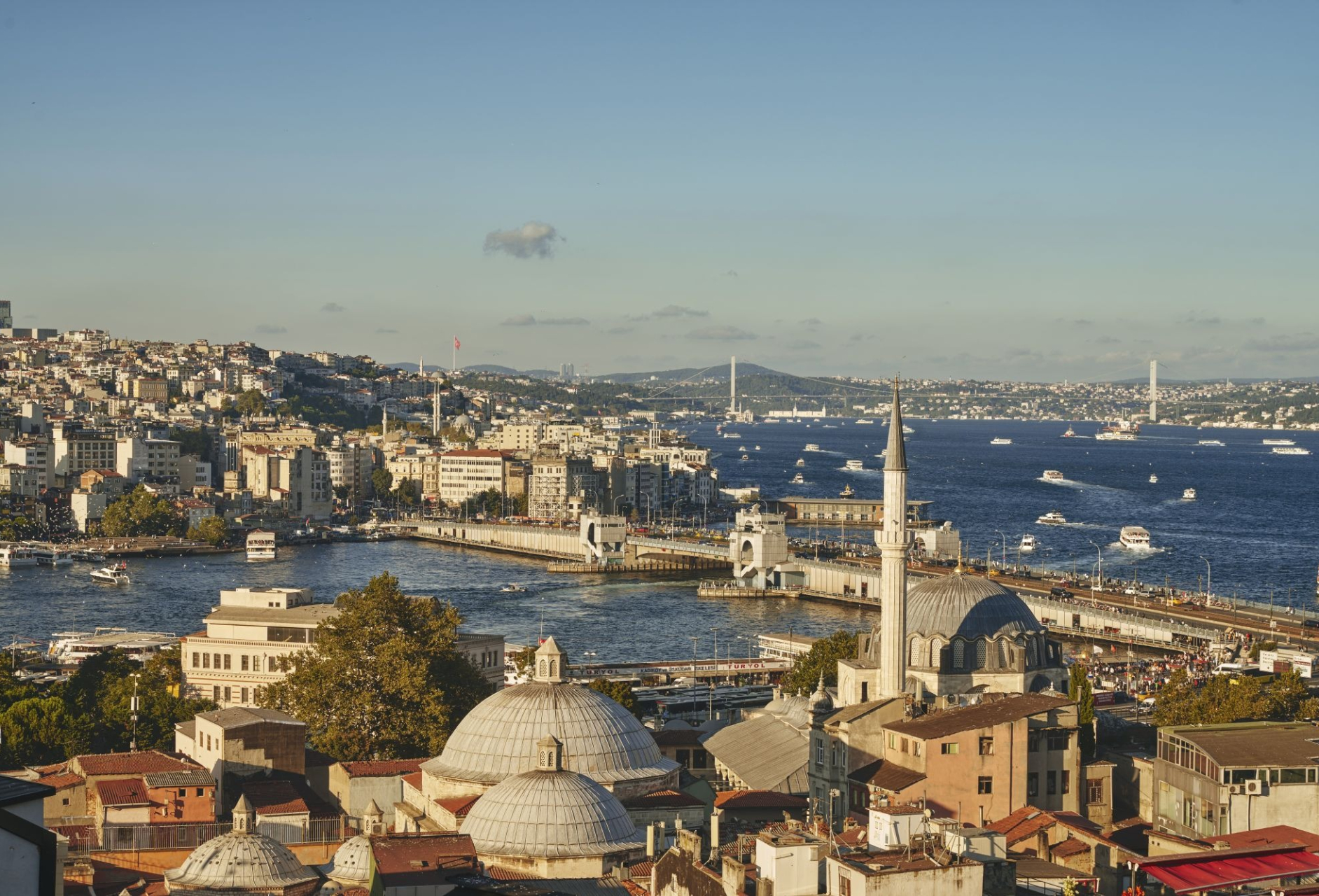
A new exhibition at London’s V&A puts the spotlight on Istanbul‘s multi-layered cultural heritage, forged out of the city’s double history as capital to two great civilisations, straddling both Europe and Asia. We go inside the legendary Grand Bazaar to speak to designers, artisans and vendors keeping ancient arts and crafts alive, and visit The Peninsula Istanbul, spearheading a major regeneration project on the Bosphorus waterfront.
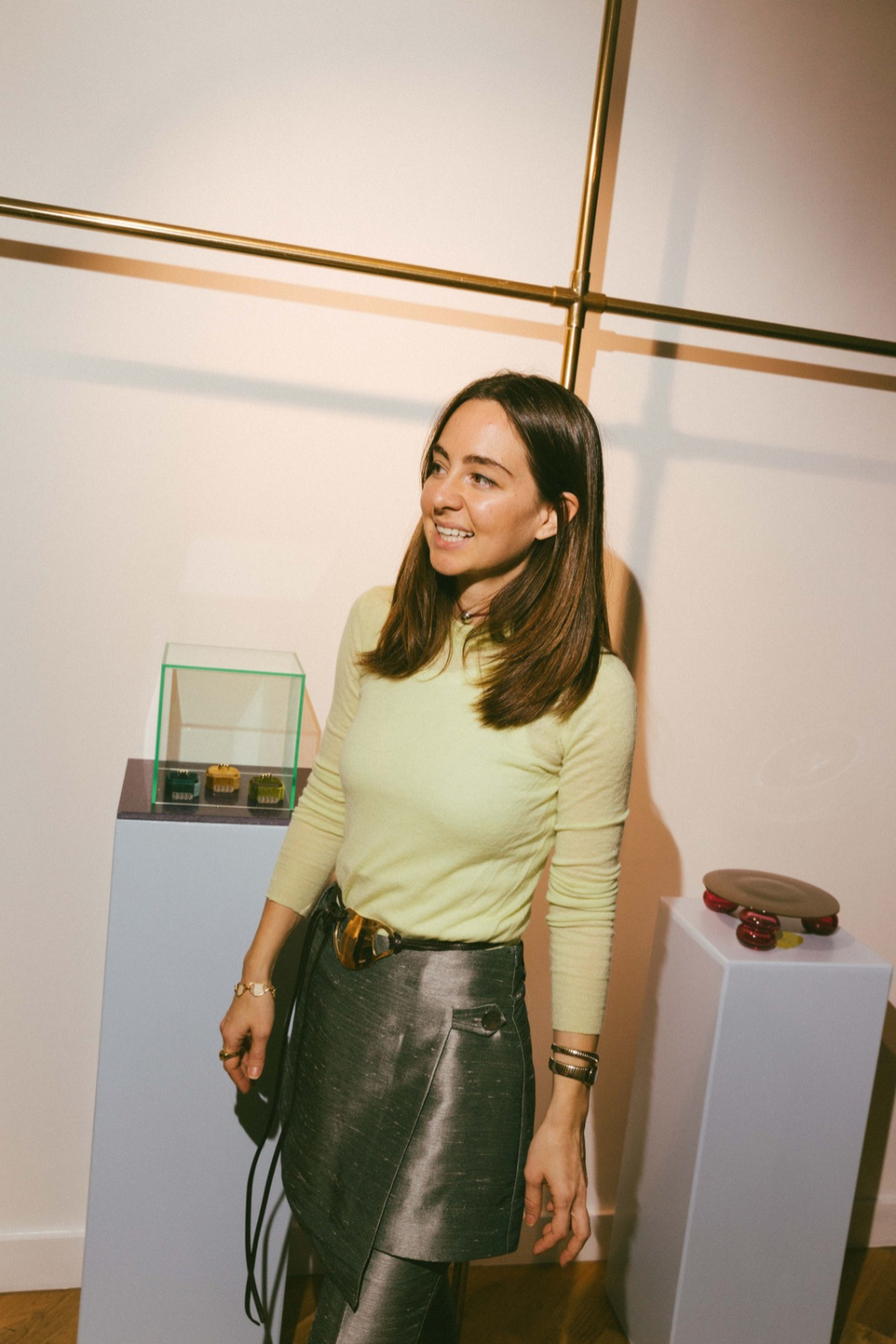
Begüm Tiryaki Uyulur
Cultural Crossroad
Zig-zagging through Istanbul’s maze-like Grand Bazaar, our guide, jewellery designer Begüm Tiryaki Uyulur, exchanges greetings of ‘kolay gelsin’ with assorted shopkeepers. Meaning, ‘May your work come easy to you’, the friendly refrain is a common social courtesy acknowledging anyone engaged in human endeavour, whether labour, study or chore. ‘For me, it’s a small but meaningful gesture of respect,’ says Begüm, whose designs are handcrafted in the bazaar. ‘It creates a little moment of connection between people who might overwise never speak to each other. It’s another way of saying: “I see you. I see what you’re doing”.’
Significantly, this simple gesture has served as a social equaliser across class, faith and nationality in Türkiye for countless centuries. It is also subtly indicative of how Europe’s largest city, straddling two continents and capital to two successive powerful empires, the Byzantine and the Ottoman, has so successfully retained its melting pot status, blending Greek, Roman, Christian and Islamic influences for more than a millennium.
Earlier this month (November), a major exhibition opened at London’s Victoria and Albert Museum, Constantinople to Istanbul: One City, Two Empires, charting 1600 years of art, design and history in a city that stands as a historical and contemporary cultural crossroad, with a creative legacy that extends far beyond the Mediterranean region. The first exhibition of its kind in the UK, it offers a new perspective on an imperial capital built on distinct yet connected traditions of art and design during both empires (AD 330-1922). It brings together ‘two worlds that are usually kept well apart – the Byzantines and the Ottomans’, explains curator Tim Stanley, by showcasing not only internationally significant art, including rarely seen objects dating back to the 4th century, but everyday luxuries, such as fine silks and textiles, jewellery, ceramic tiles and tableware.
Master Craftsmen
All these handicrafts and more are on dazzling display during our whirlwind tour of the network of some 4,000 shops across 61 covered streets that make up the sprawling Grand Bazaar, founded by Ottoman Sultan, Mehmed II, in 1455. It may be a tourist mecca with more than 400,000 visitors streaming daily beneath its arched and vaulted ceilings in search of jewellery, gold, carpets, kilims, ceramic tiles, Ottoman lamps, spices, textiles and Turkish Delight.
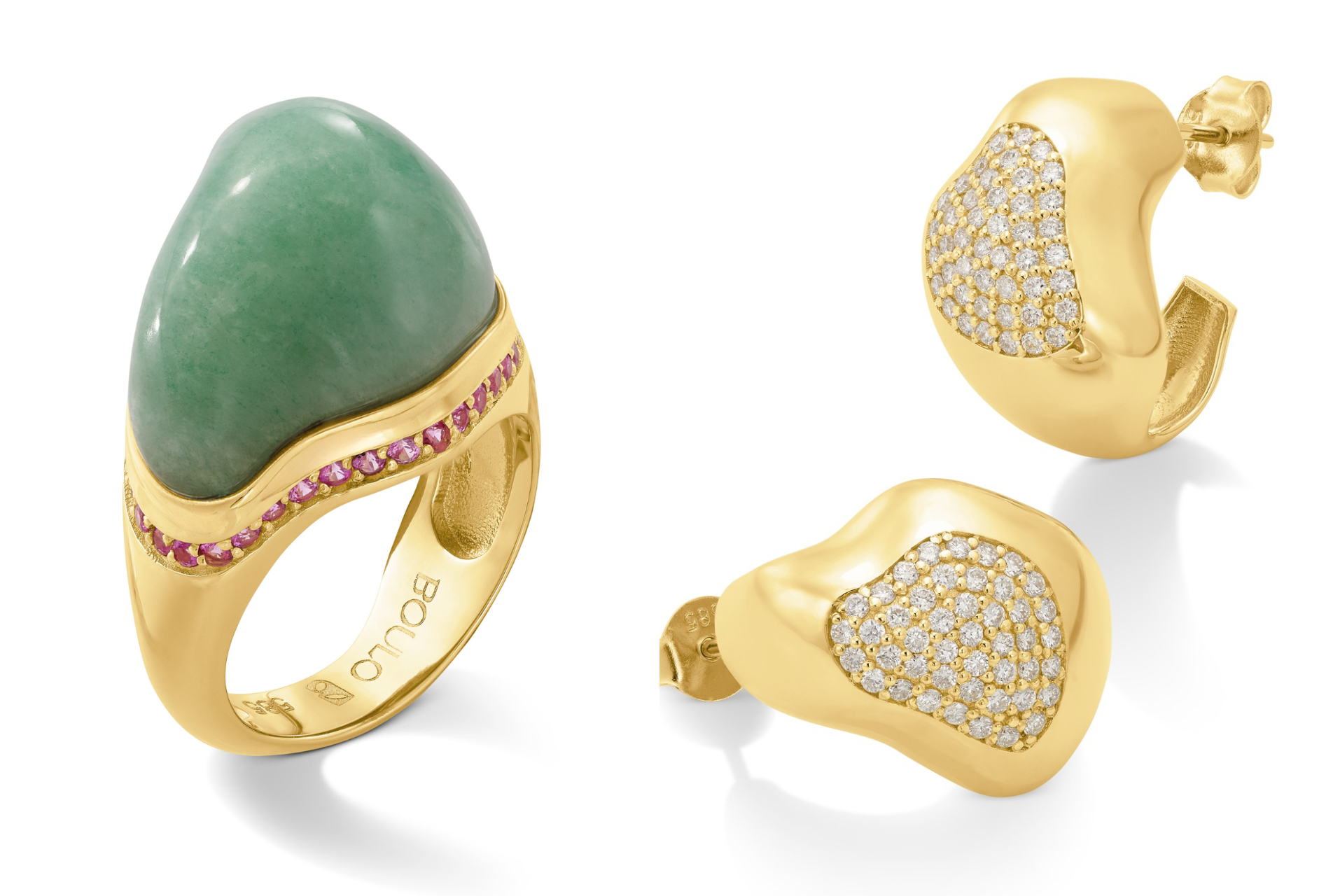
Boulo Jewellery
But for young Turkish designers like Begüm, founder of fine jewellery brand Boulo, this thriving commercial heartland represents a vital pipeline to the skilled artisans, who continue to preserve their centuries-old specialist crafts. ‘I’ve always been proud of being Turkish and I knew that no matter where my brand was based, my roots would be a part of its story,’ says London-based Begüm, whose hometown is Izmir on the Aegean coast. ‘Having my pieces handmade in the Grand Bazaar was the most natural choice. Working with these meticulous craftsmen is my way of showing respect for that heritage.’
Her fluid, organic designs bear testimony to own ‘melting pot’ background: ‘My family comes from Iran, when it was Persia, also Greece and Albania, and my jewellery reflects this mix. There are a lot of people [with backgrounds] like this in Türkiye.’ Master craftsman Robert Eskici, entrusted with bringing to life Begüm’s creations in gold and precious gemstones, hails from a long line of Armenian artisans and started work in the Grand Bazaar 50 years ago at the age of ten.
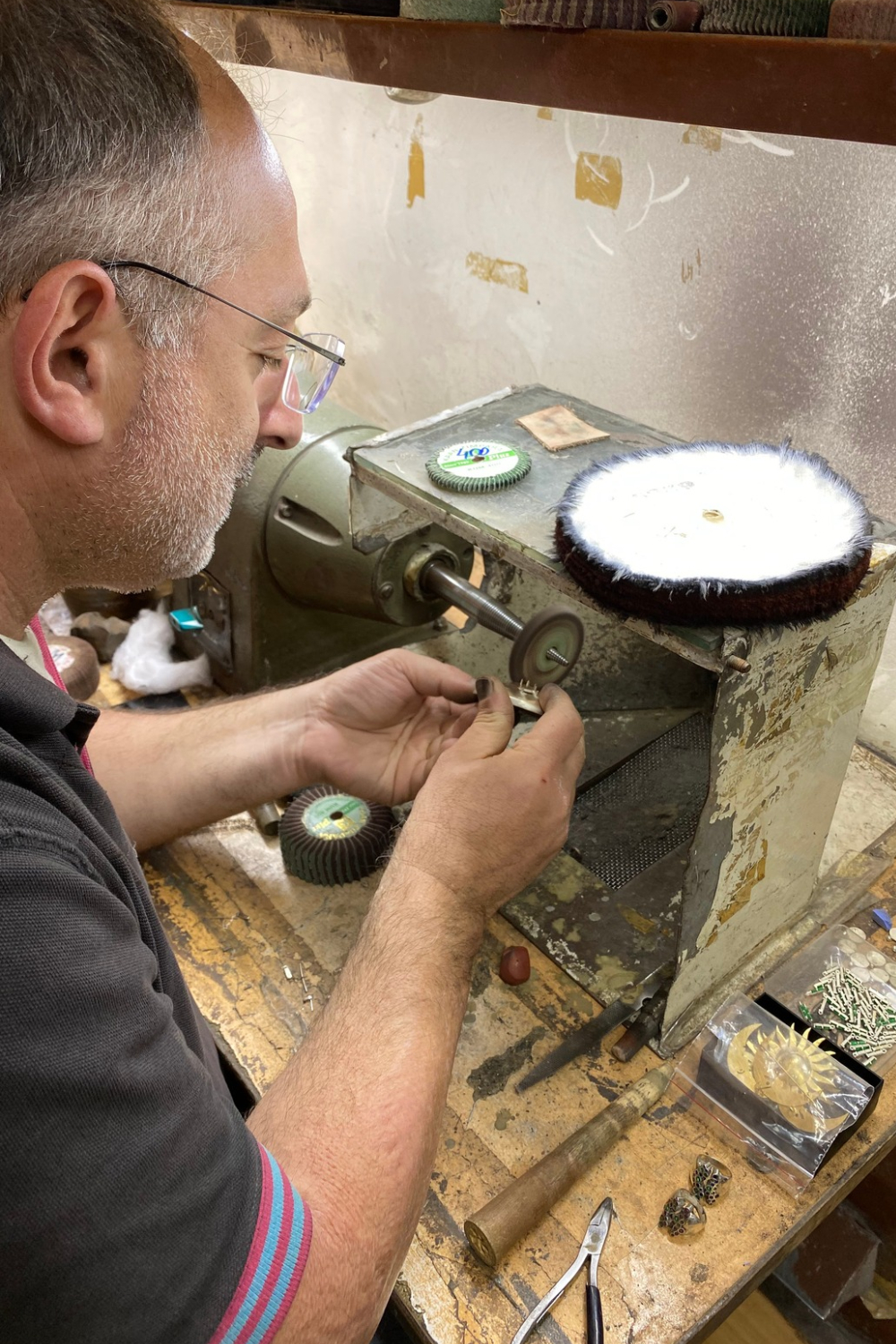
Robert Eskici
‘I would run between shops doing errands, like taking jewellery to the polisher,’ he says, showing us around his bijou workshop, tucked away from the hustle and bustle. ‘I came every day [as a child] with passion and energy, and this is what makes us who we are,’ he says, his eyes sweeping over his precious domain, where every piece is still made by hand. Although he worries that the number of skilled next-gen craftsmen is dwindling, he is cheered by contemporary designers like Begüm, committed to incorporating ancient techniques in their work. ‘I can’t think of a better way to honour these traditions than to help keep them alive,’ she reassures him.
Back in the bazaar, textile dealer Ibraham Gureli, whose shop is bursting with brightly coloured fabrics, proudly reveals that he supplied the material for Istanbul’s swish Soho House‘s soft furnishings. ‘I love my business. I put my life here for 40 years and I am happy to be doing my work,’ says Ibraham, whose family originates from the Balkans, known for its deep historical ties to the Ottoman era. ‘Every fabric I buy and every fabric I sell, is a story to me.’
Where Tradition Meets Innovation
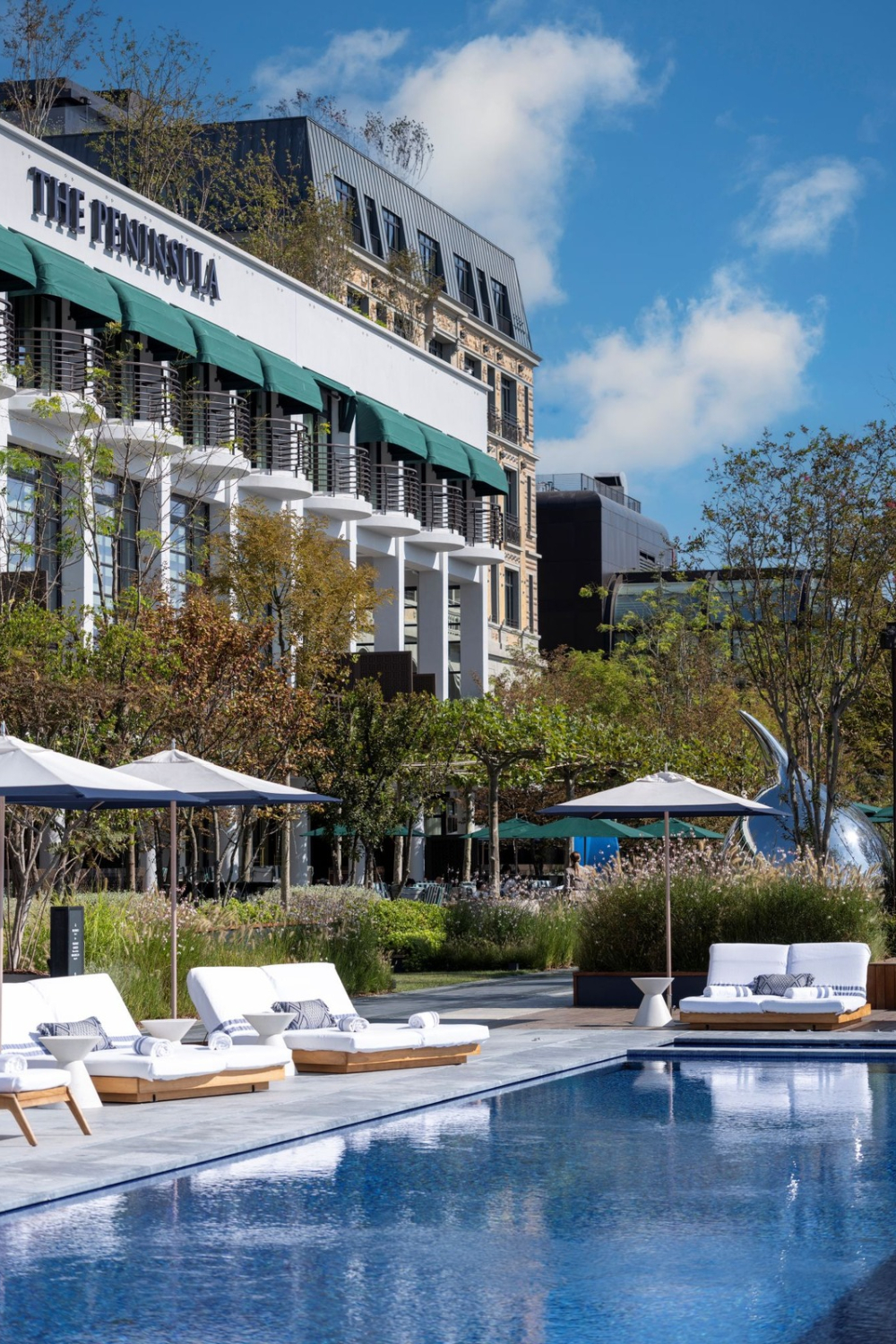
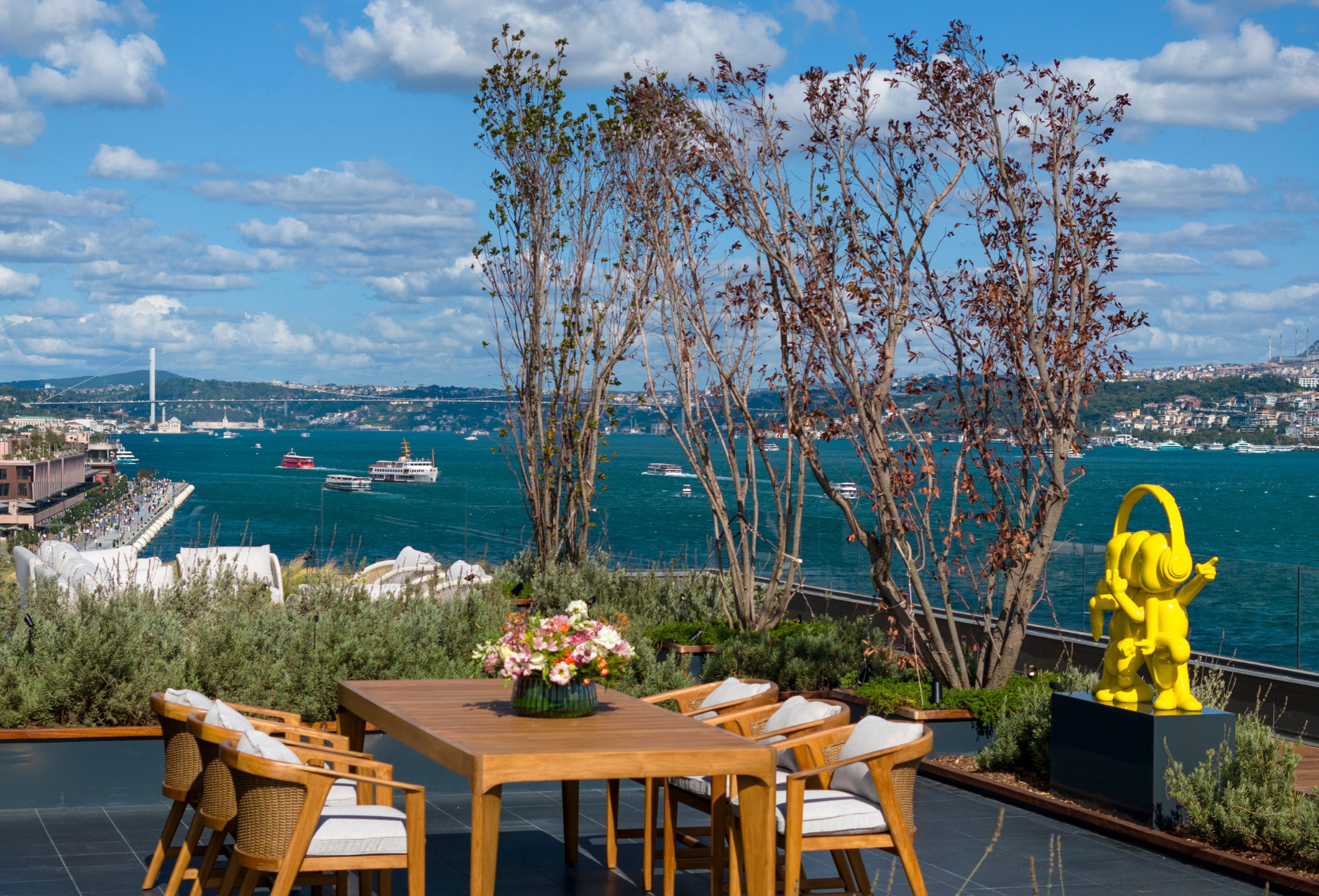
The city’s ‘East meets West’ cultural mosaic is nowhere more evident than at The Peninsula Istanbul, which opened in 2023 on the shores of the mighty Bosphorus. Located in the diverse waterfront neighbourhood of Karaköy, the hotel offers views across the water to romantic Old City landmarks like Topkapı Palace, 6th- century Hagia Sophia and the Sultanahmet Mosque.
Where once heavy market caiques and imperial barges crossed the strategic strait, now passenger ferries and private craft, including the hotel’s sleek new PEN 1 motor yacht, make up much of the water traffic looping between the two sides. On Galata Bridge, fishermen start casting their lines as early as sunrise – when the fish ‘wake up’ to the sound of the first call to prayer – or Adhan -echoing over the Golden Horn. According to urban folklore, in any case.
Occupying a quartet of buildings, including three restored heritage properties, the hotel pays homage to local craftsmanship and artistry in every aspect of its design. The Yolcu Salonu building which now houses the grand lobby with its soaring, stained-glass ceiling and marble floors, was once a cruise terminal through which ‘the world streamed into Istanbul to behold its treasures and experience the hospitality of the Turkish people’ – as Sir Michael Kadoorie, non-executive chairman of The Hongkong and Shanghai Hotels group, owners of The Peninsula, describes it.
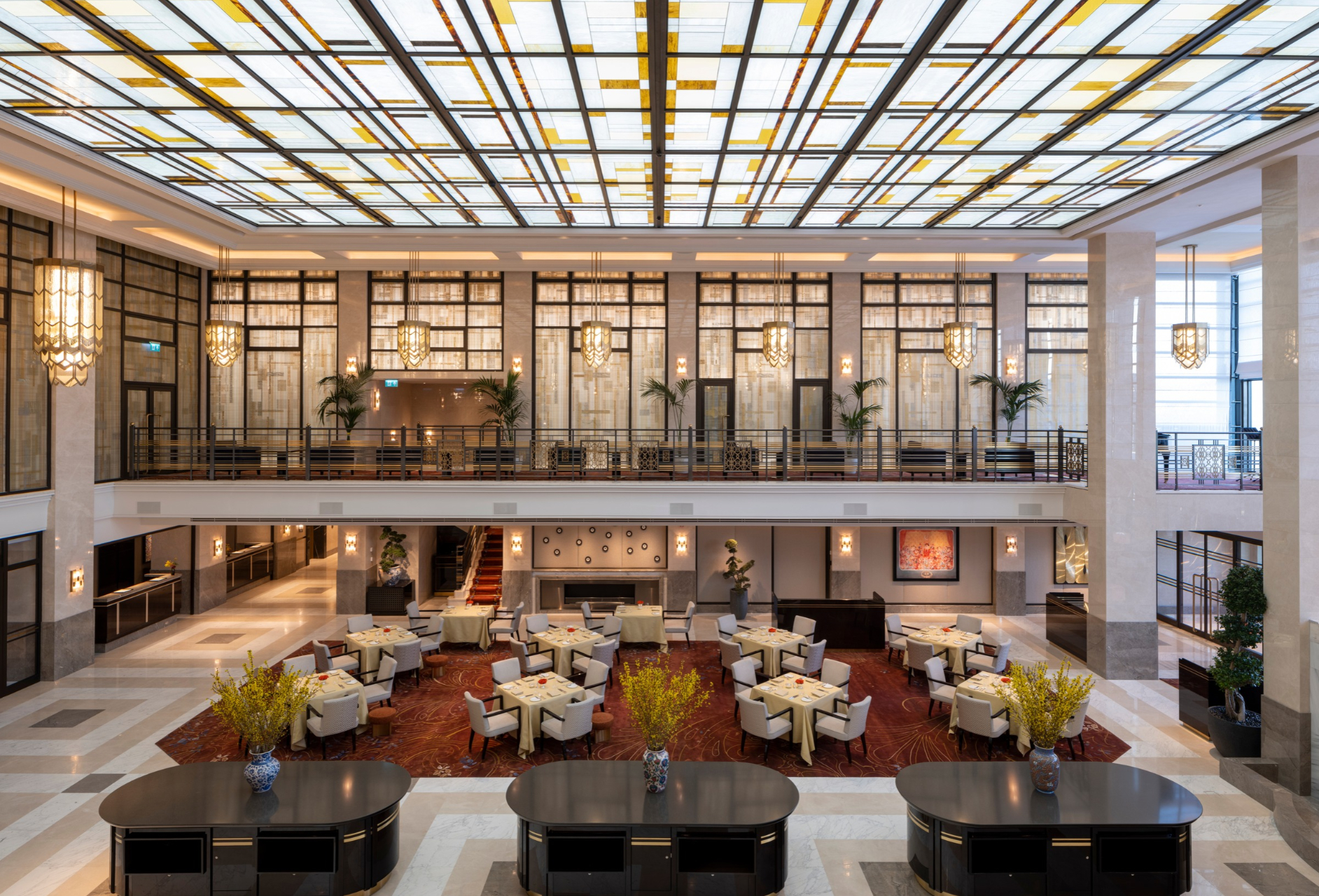
For the interiors, Istanbul-based architectural designer, Zeynep Fadıllıoğlu, put the focus firmly on artisanal work and her own interpretation of traditional Turkish patterns, motifs and cultural nuances, evoking the spirit of an old phrase – ‘Eser-i-Istanbul’ – meaning ‘masterpiece of Istanbul’. One such masterpiece can be found in the lobby. The striking decorative wall panels on either side of the mezzanine level are fashioned from glass in the form of Bauhaus-inspired engraved and printed panels, by renowned Turkish glass artist Kerim Kılıçarslan, known as ‘The Magician’.
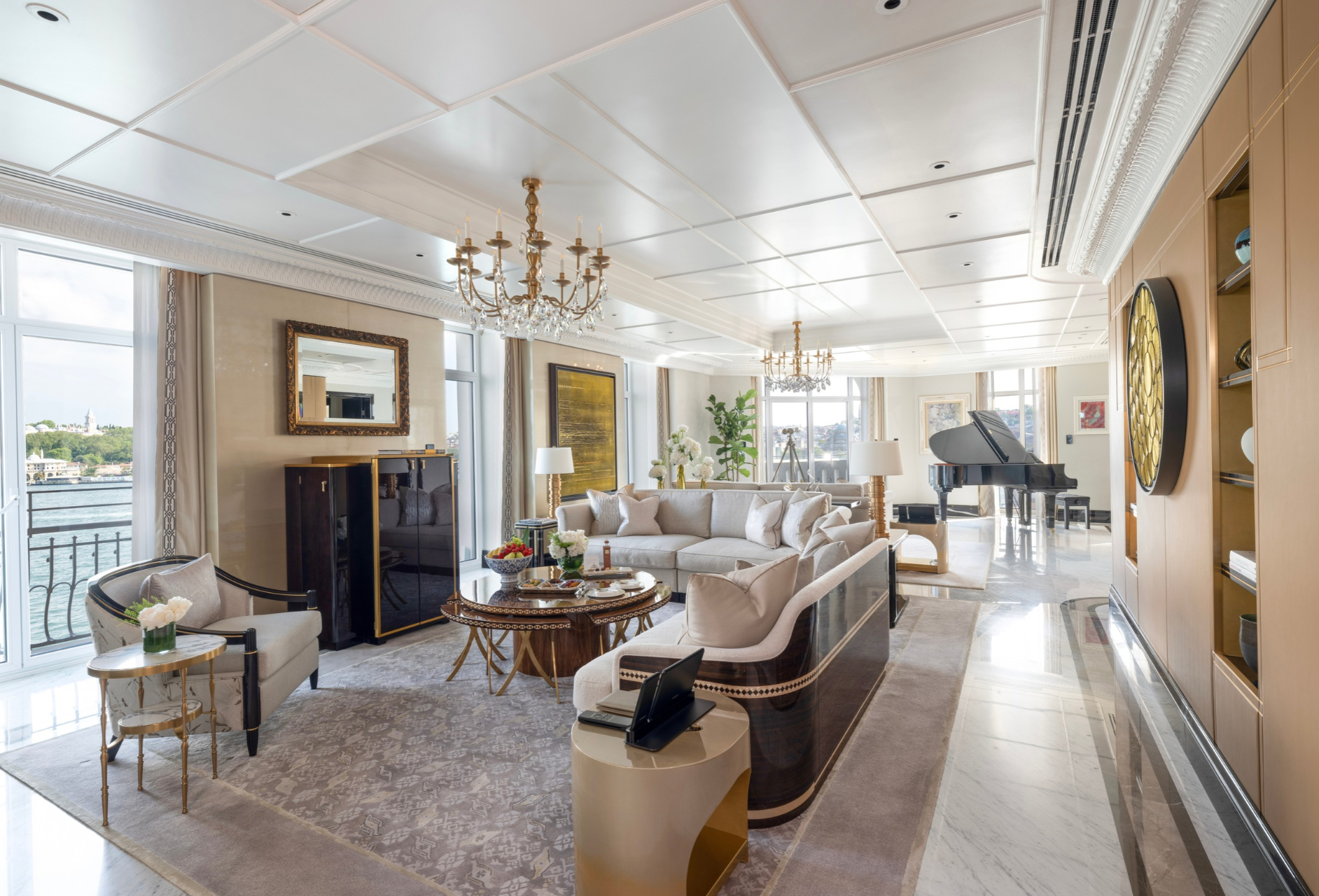
Modern interpretations of traditional design elements like wood-and-mother-of-pearl inlay, kilim-style carpets and Marmara marble baths feature in the 177 rooms and suites, and artwork is by prominent Turkish artists, sculptors and photographers, including the late Ara Güler, Elif Uras and Mevlüt Akyildiz, whose bold satirical canvasses light up the lobby. Even the staff’s vegan silk uniforms take inspiration from both the Byzantine and Ottoman periods, with specific detailing crafted in the Grand Bazaar. ‘I worked very closely with some of the artisans who still have their workshops there,’ says fashion designer Arzu Kaprol.
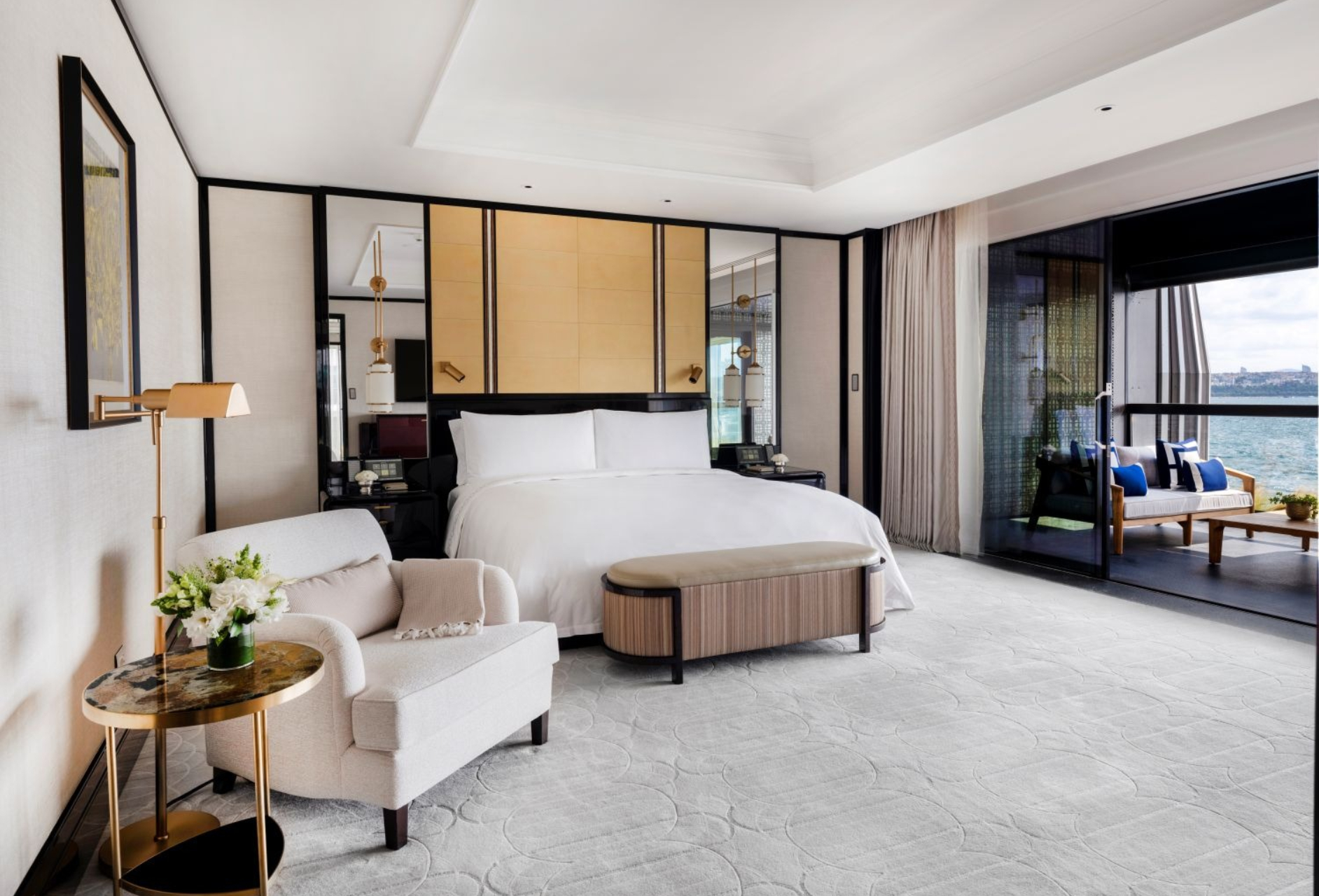
Outside, a lush, landscaped terrace lines the shore, filled with the scent of fragrant flowers and herbs, including thyme, rosemary and lavender. A delicious trio of pistachio, strawberry and Lebanon cedar trees creates a welcome microclimate in the middle of the historic city. On the rooftop terrace is the Gallada restaurant, where you can feast on Silk Road-sourced dishes such as Adana kebab dumplings and wood fired monkfish by uber chef Fatih Tutak, under the shade of pomegranate trees.
The Peninsula Istanbul forms part of the wider Galataport development project to regenerate the area’s cultural richness, including the world’s first underground cruise passenger terminal, which opened in 2021, and incorporating museums, art galleries, restaurants, shops, public hammams, parks and other communal spaces.
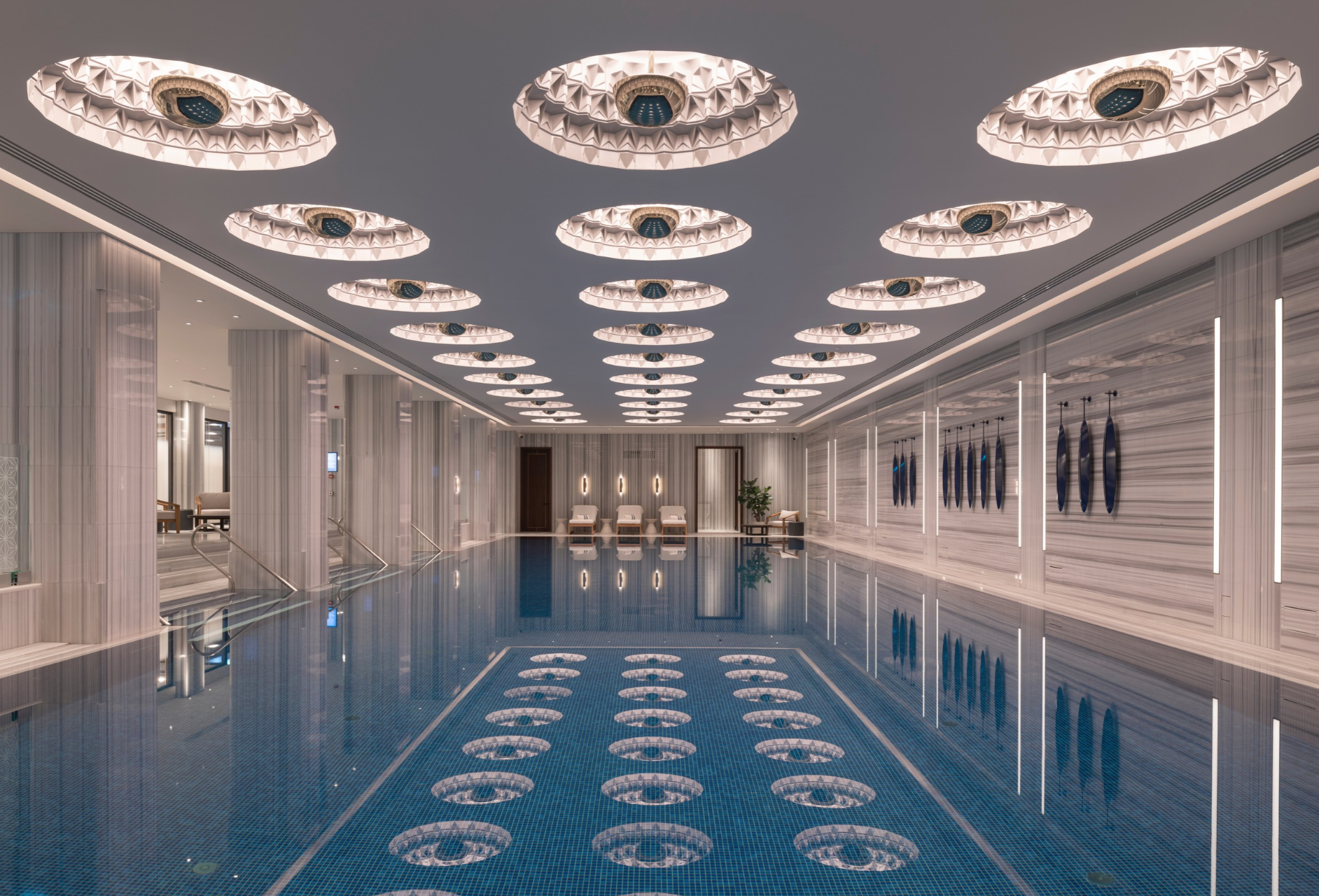
Enjoy an early evening stroll along this vibrant, re-energised waterfront and the juxtaposition between old and new takes on new meaning. It’s a place that seamlessly blends heritage and modernity, ensuring a legacy that will likely endure for millennia to come. And one where the greeting ‘kolay gelsin’ will, no doubt, continue to be exchanged.
Rates at The Peninsula Istanbul start from €650 (approximately £550) per night, excluding breakfast and taxes. peninsula.com/istanbul
V&A South Kensington Constantinople to Istanbul: One City, Two Empires until 9 May 2027, vam.ac.uk


