


Where Was Amadeus Filmed? We Asked The Production Designer
By
3 months ago
Inside Sky’s new Mozart drama
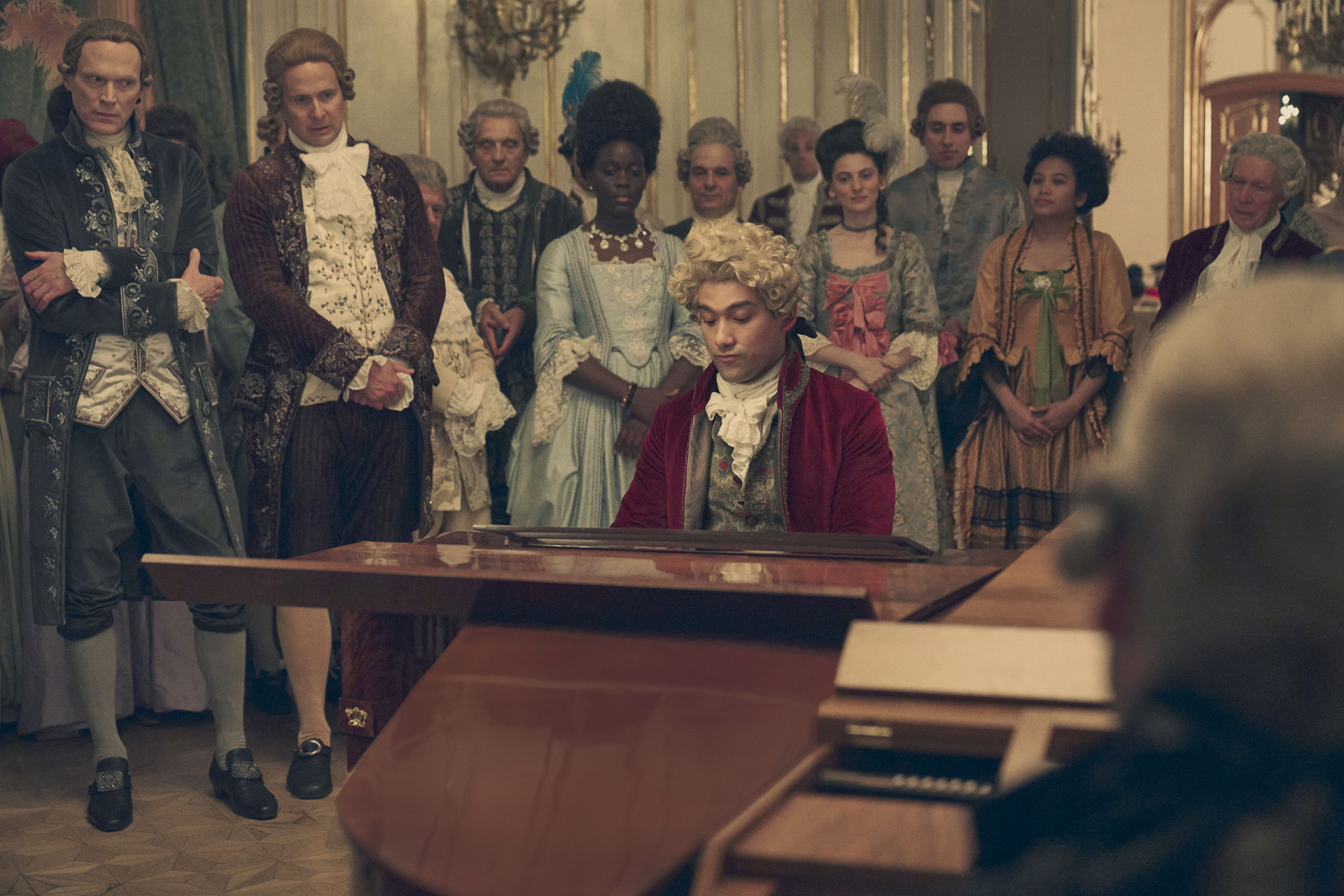
This festive season, we can’t wait to tune into Amadeus, Sky’s new Mozart drama led by Will Sharpe and Paul Bettany.
The gist is thus: a 25-year-old Wolfgang Amadeus Mozart (Sharpe) arrives in eighteenth century Vienna, where his once squashed creativity begins to thrive – much to the dismay of devoutly religious court composer Antonio Salieri (Bettany), from whom he is stealing the spotlight. Unconventional and downright irritating, Salieri’s envy for Mozart grows into a 30-year hatred, threatening everything he holds dear: his reputation, his talents, even his faith in God.
Based on Peter Shaffer’s Tony Award-winning 1979 play, Amadeus was first adapted into ‘an amazing film’ in 1984, production designer Morgan Kennedy shares. ‘And that was the starting point for a lot of the world [of the TV series]’, Morgan says, ‘though Joe Barton had written an amazing script that was a departure from what we knew about it.’
‘From my point of view, the design of Amadeus was about trying to find a world that was faithful to the film and what we already know about Amadeus, but also trying to make it work for Joe’s own moulded version of the story,’ Morgan says. The result is a visual feast with decadent chandeliers, Baroque architecture, thick curtains and drapes, gregarious wallpapers and towering wigs, all evoking eighteenth century Vienna.
‘The trick with anything period – anything about a world that is long gone – is trying to be cohesive and entertaining while also having some nod historically in the right direction,’ Morgan explains. And visually it should ‘portray the characters and build a world around those characters that helps to tell the story that ultimately [series writer] Joe is telling through the emotions they are feeling,’ he says. In this case, that’s emotional tumult, rivalry, high economic highs and low lows told through lofty palaces and tightly enclosed bedrooms.
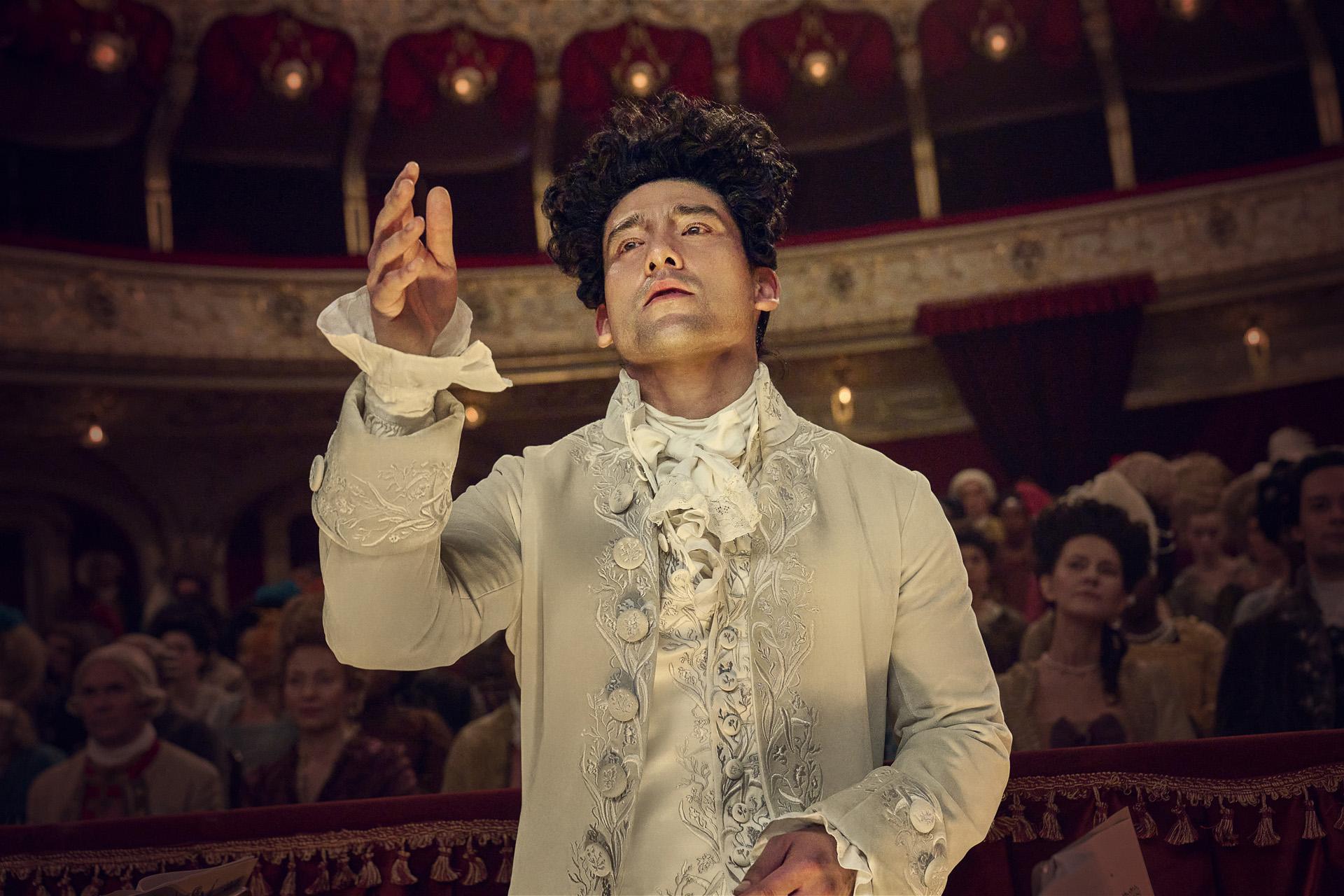
Will Sharpe as Amadeus. (© Sky)
Where Was Amadeus Filmed?
Convincingly set in eighteenth century Vienna, you may be surprised to learn that Amadeus was actually filmed in and around Budapest, the capital of Austria’s neighbouring Hungary, both connected by the Danube River. The original film, meanwhile, was actually filmed in Prague.
‘We went on a day trip to Vienna, and we would have struggled to shoot there – just in terms of what’s available,’ Morgan tells me over Zoom, adding that the decision to film Amadeus in Budapest, made before the production designer joined the project, was ‘probably a financial one, because the tax credit there is good’.
Hungary has a world-renowned film industry centred on its capital city, with ‘amazing technicians, great construction companies, really good painters, and good production companies that are set up, so you just walk into a ready-to-go scenario,’ Morgan explains. Other recent titles filmed here include Sky’s The Day of the Jackal, Yorgos Lanthimos’ Poor Things (2023) and Dune: Prophecy, the latter two making good use of the city’s impressive Origo Film Studios.
The production designer was working to a relatively loose brief: ‘it was really just about finding the energy, the look and the mood of Amadeus,’ Morgan explains. ‘And that happens over the course of quite a few months. It’s not an instant thing, because you never know what you’re going to find [when you location scout in a city].’
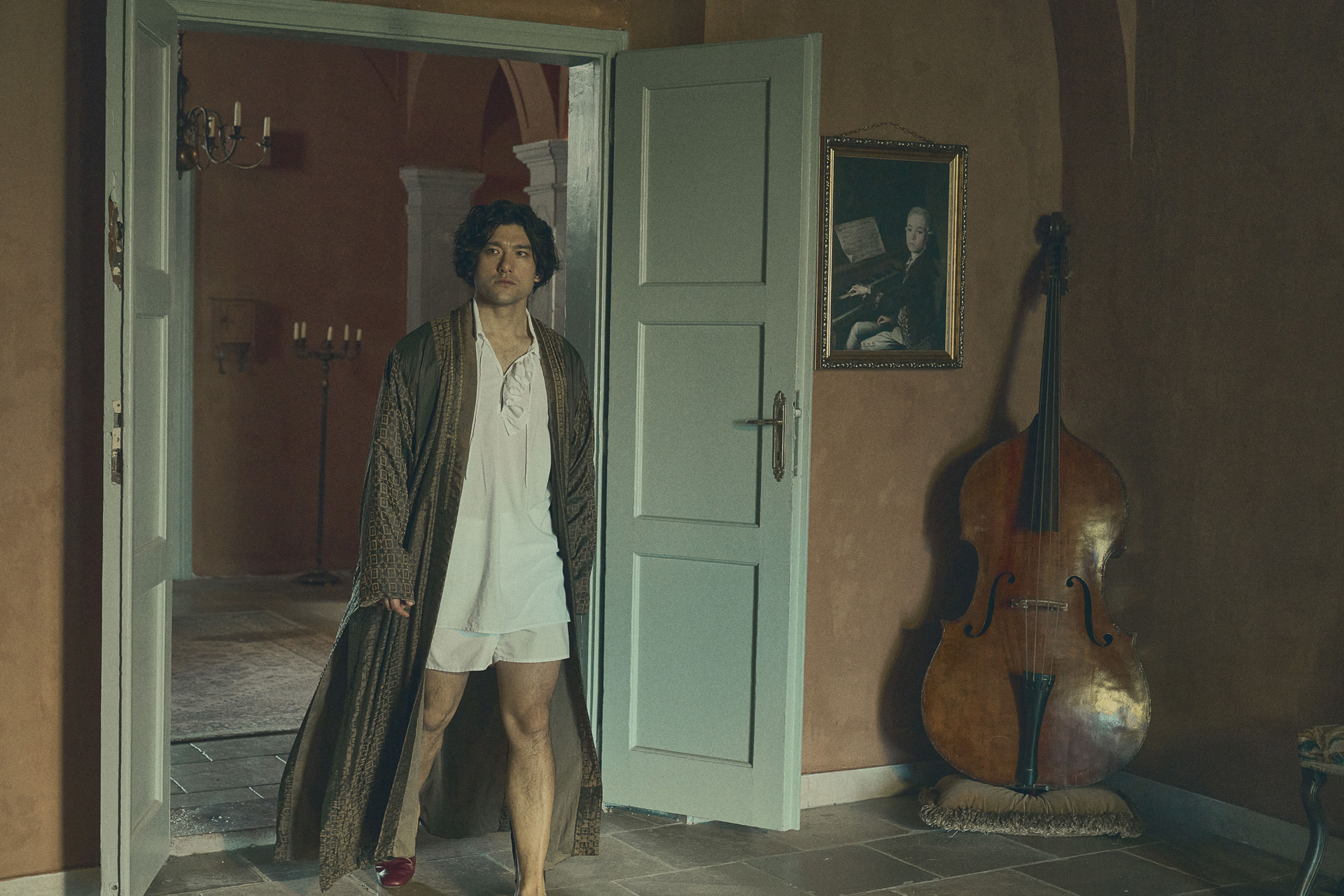
The Webers’ apartment was built on a set, modelled on historical accounts of its layout.
When Mozart was living in Austria in the eighteenth century, across the border Hungary was having a palace-building renaissance thanks to political tranquility. Today the nation is home to 2,000 such palaces and mansions, 700 of which are protected and a handful of which were used for filming Amadeus.
The main one is Emperor Joseph’s (Rory Kinnear) palace, which was filmed in ‘a huge, amazing palace two hours drive from Budapest,’ Morgan says – aka Eszterhaza Palace in Fertod on the Hungarian-Austrian border. Hungary’s largest Rococo structure with 126 rooms, Eszterhaza is often referred to as the Hungarian Versailles, which was interestingly first inhabited by a different composer: Austrian Joseph Hayd along with his orchestra, from 1766 to 1790.
The team changed very little about Eszterhaza Palace , other than dressing it to look more like a working palace (you’ll spot scaffolding – a reference to the Emperor’s penchant for constant renovations and reimaginations) and smartening up the gardens using visual effects in post-production. ‘We also shot in other palaces for extra rooms, and then combined that all into one super palace,’ Morgan says.
Elsewhere, the party where Salieri first hears Mozart play was shot at another real palace in Budapest – Vajdahunyad Palace, which sits lakeside in the City Park and is a conglomeration of Romanesque, Gothic, Renaissance and Baroque architectural styles. Meanwhile a garden square in central Budapest was also used for filming. ‘We covered all the street in mud and earth and ran horses up and down it,’ Morgan laughs.
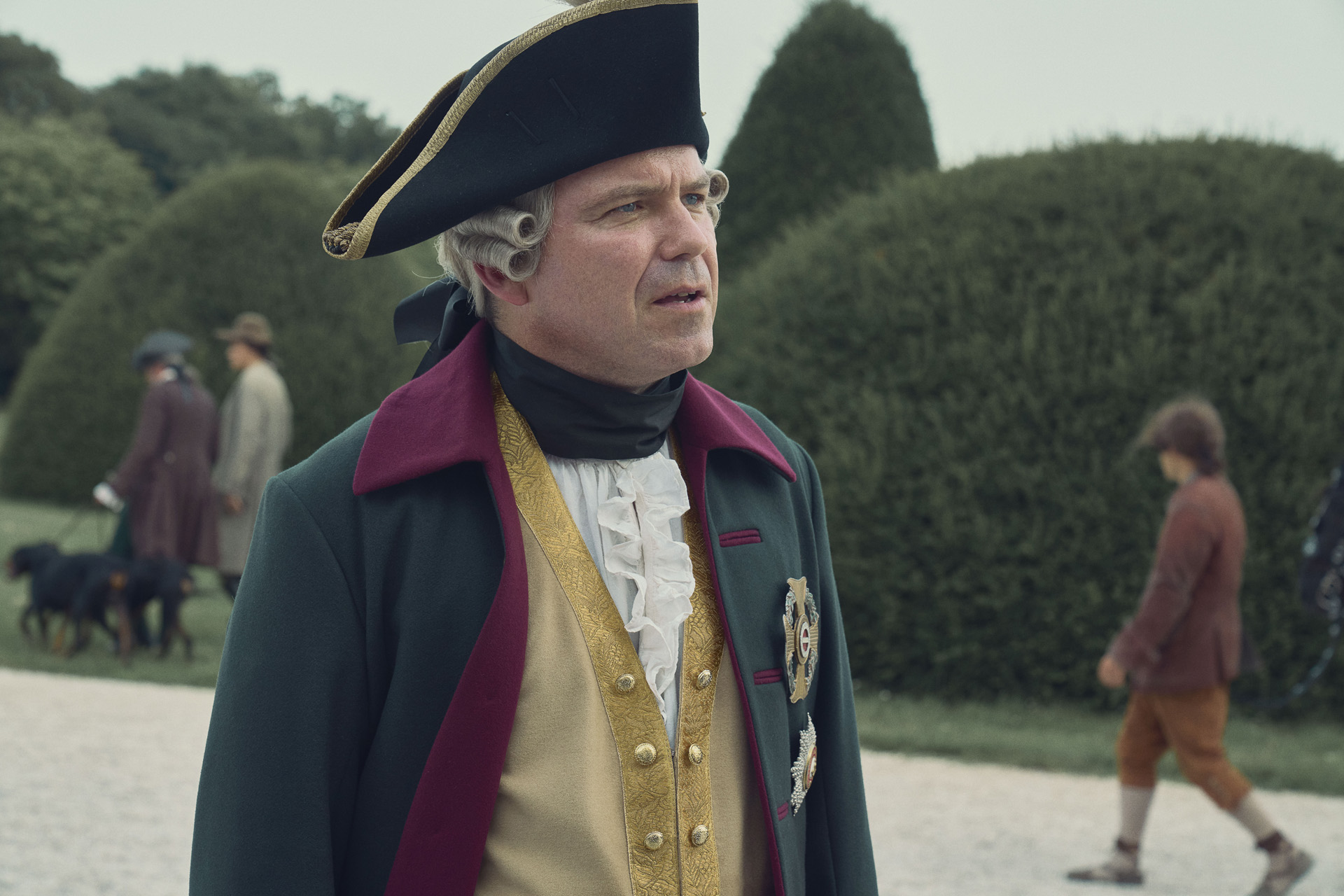
Emperor Joseph was constantly renovating his palace.
Some rooms we see on screen, however, were built sets, including the Webers’ apartment. ‘That was built based on historical accounts of their apartment and Mozart’s little attic room that he goes into where he first meets Constanze (Gabrielle Creevy),’ Morgan says.
But Salieri’s home was real, filmed in ‘a run down palace about 40 minutes outside of Budapest in the countryside,’ Morgan says. This is Ráday Palace in Pecel, which is being gradually restored following a large fire in 1825. Seeing it in the flesh – ‘it wasn’t derelict, but it wasn’t a million miles off’ – worried the production designer at first, but this actually turned out to be one of his favourite locations.
At first, ‘it was very run down and very white,’ Morgan says, ‘and I was worried because Salieri was supposed to be this very successful, very wealthy, very highly regarded figure. I wanted to paint it in a very dark, brooding colour to reflect what was going on within him – like the colour of thunder clouds. So we painted it black, almost, and it became this quite run down black house, which doesn’t really make any sense. But actually, when I watched the show, I realised it had somehow taken on a life of its own.
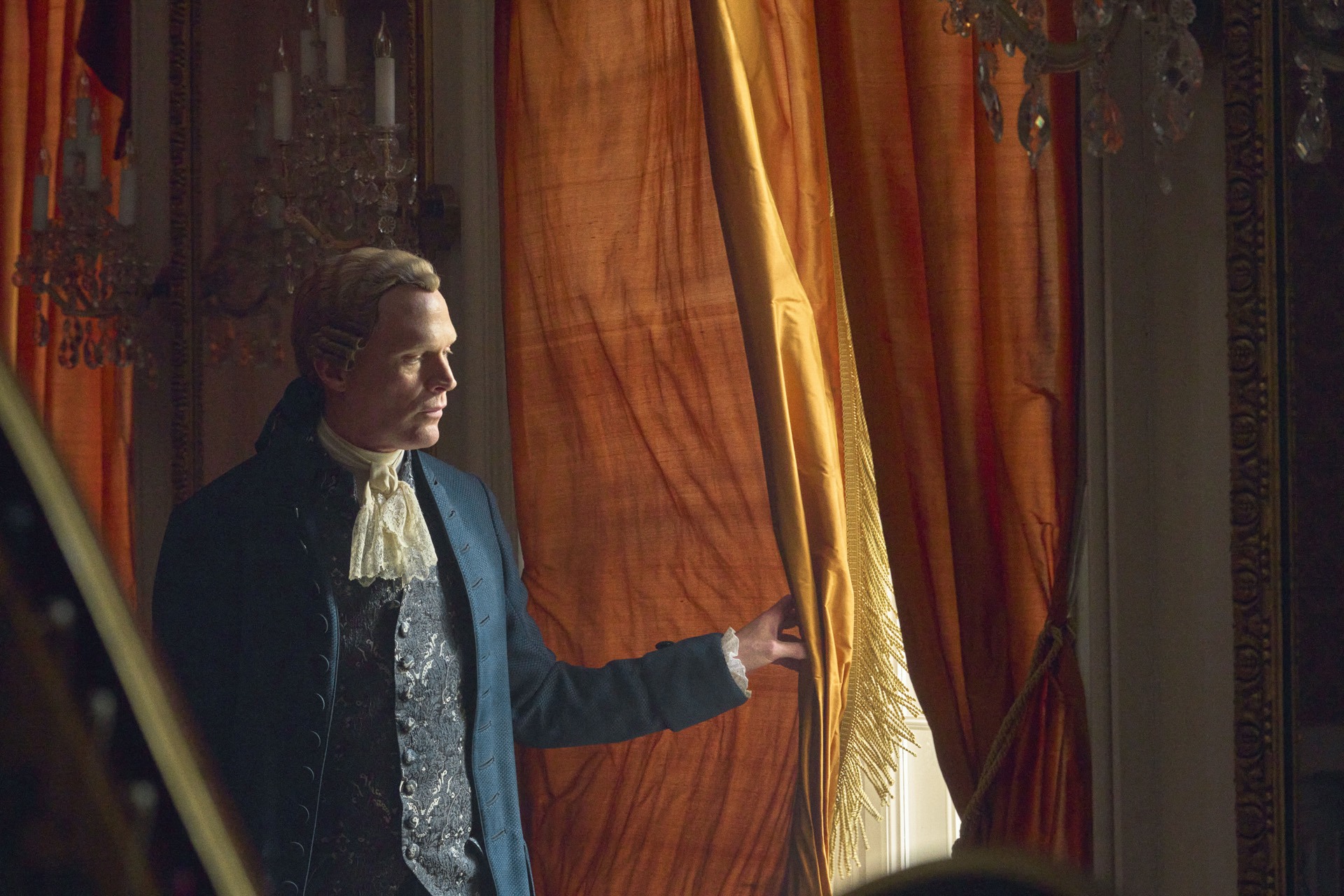
‘Salieri was a very successful, very wealthy, very highly regarded figure.’
‘We had fun with the religious artefacts, too,’ Morgan adds, ‘because Salieri slowly loses his relationship with God. So we slowly started taking out religious bits – crosses and stuff like that. And then we had this amazing room which we weren’t allowed to touch with all the paintings on the walls, which was a bit of a gift, really, in that it just seemed to fit with him when he’s older.’
In Mozart’s apartment, meanwhile, you’ll spot some more secular decor: ‘We got peacock wallpaper and decorated his whole living room in that,’ Morgan says. ‘Peacocks became a bit of a motif for him. It felt like that’s what he is – a peacock strutting around, spreading his feathers wherever he can, and making a lot of noise. And then when he is down on his luck later on in the season, we moved into a much smaller apartment which we built on a set, which gave us the ability to really make it feel enclosed and contrasting to where he started.’
Amadeus premieres on Sky on 21 December 2025. All episodes will be available to stream on NOW.