


Curator Harriet Loffler’s Guide To Relative Ties At The Women’s Art Collection
By
7 months ago
Now open until September, we get the curator’s guide to this Cambridge exhibition
Women’s History Month may be drawing to a close, but if you were planning to see more art by women in this time, you’ve still got until 6 September to see Relative Ties at Cambridge’s Women’s Art Collection.
Below, we get the rundown of the exhibition from Harriet Loffler, curator of the exhibition and newly-minted director of The Women’s Art Collection.
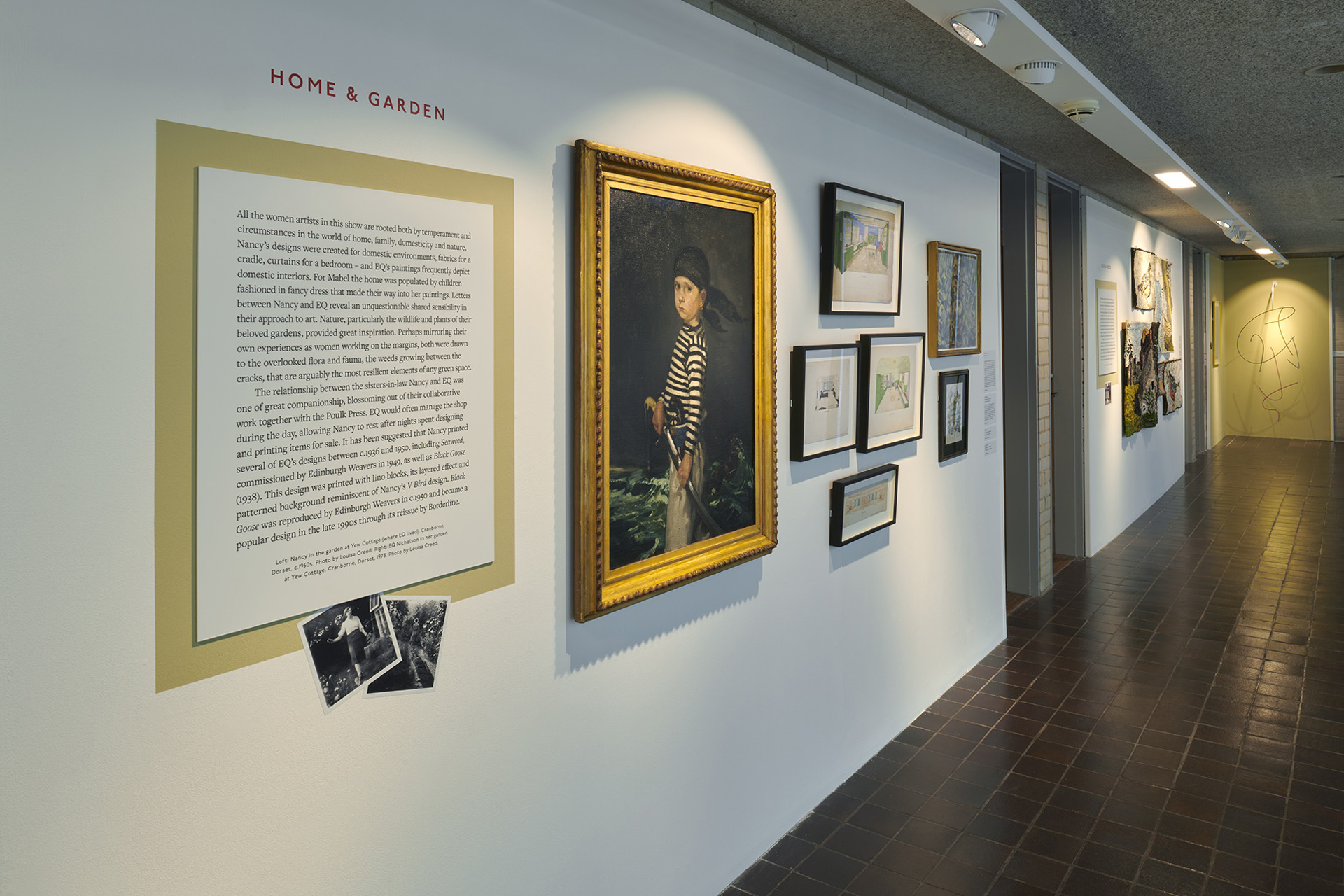
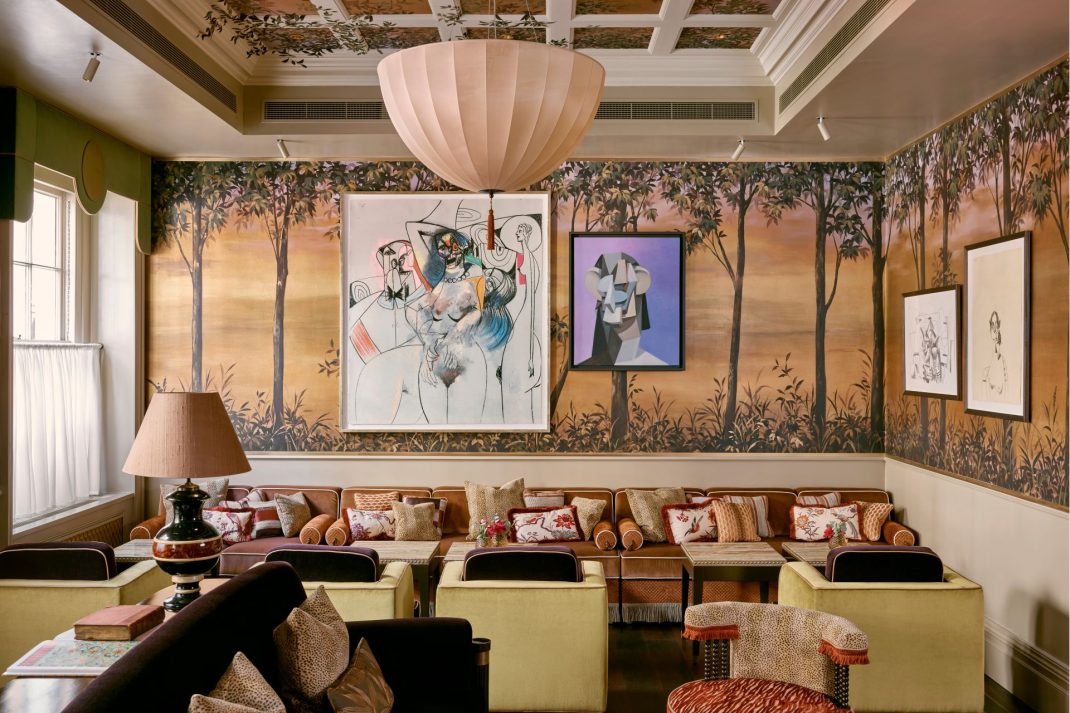
Relative Ties exhibition view, The Women’s Art Collection, Murray Edwards College. Photography: Jo Underhill.
Overview
Relative Ties traces the work of four women artists from three generations of the Nicholson family: Mabel Nicholson, Nancy Nicholson, EQ Nicholson and Louisa Creed. It spans a period of 100 years, bringing together artworks, interior designs, paper ephemera, wallpapers, fabrics, and stencils and other tools to offer a unique insight into the working lives of these artists. The exhibition explores what we inherit from our mothers, how we collaborate with our siblings, and what is passed on to our daughters.
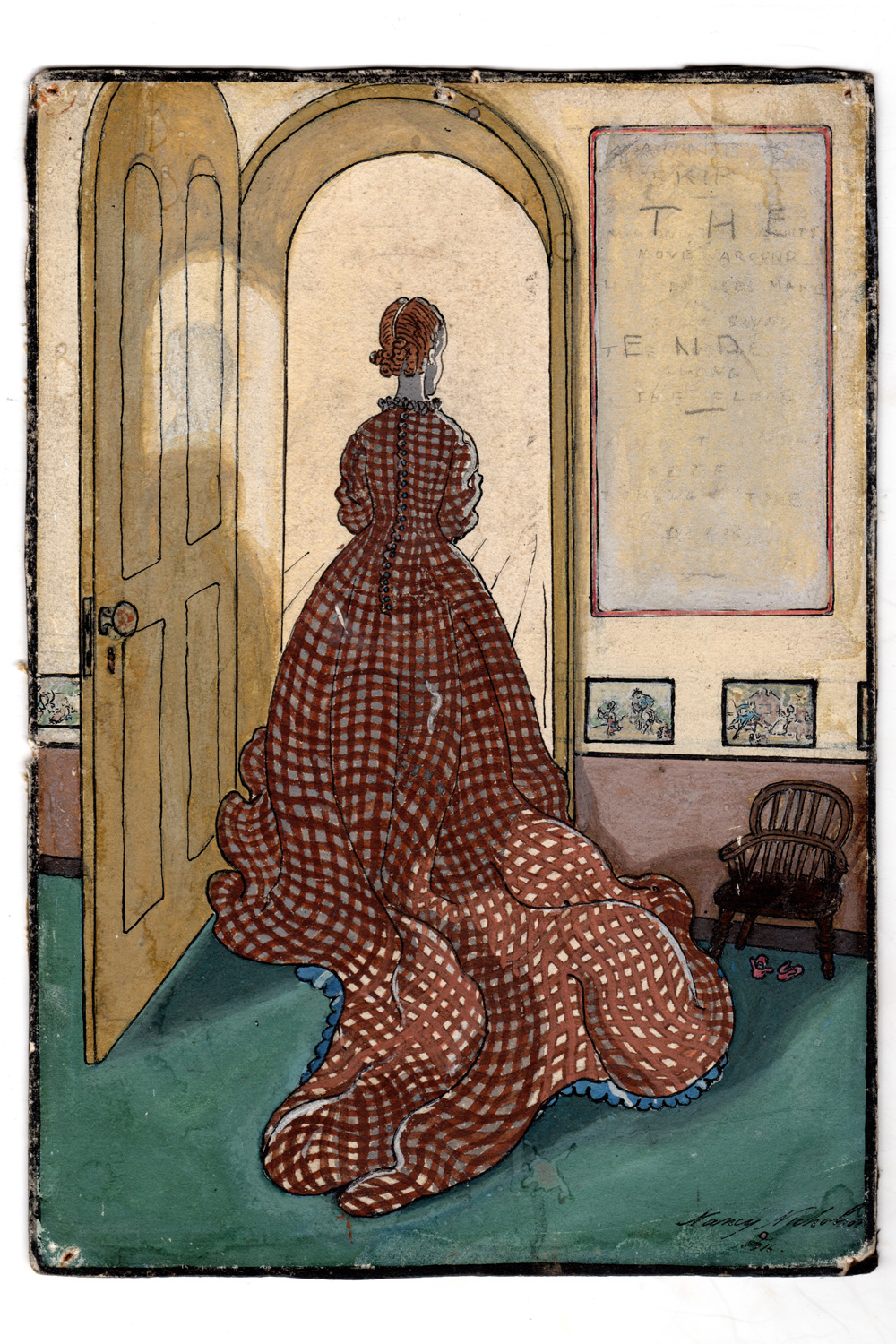
The exhibition begins with Mabel Nicholson (1871–1918), who frequently painted her children as a way for her to combine her role as a mother with her life as an artist. Nancy Nicholson (1899–1977), inherited her mother’s independence and artistic eye. A pioneer of textile design and founder of her printing and design company Poulk Press, Nancy’s hand-printed fabrics are playful in their design and meticulous in their production. She sought inspiration from things found close to home such as her children and her garden. On display are her original lino blocks, stencils, and letterpress designs – a rare glimpse into her creative process.
Working alongside Nancy was her sister-in-law EQ Nicholson (1908–1992), a designer and painter whose bold, modern patterns were produced by the companies Cole and Son, Edinburgh Weavers, Borderline and famously featured aboard the Royal Yacht Britannia. EQ’s artistry bridged fine art and design, blending hand-drawn precision with industrial innovation.
Completing this family story is Louisa Creed (b. 1937), EQ’s daughter, whose richly textured rag rugs continue the family’s legacy of craft. Her vibrant textile works, made entirely by hand, celebrate material, memory and the power of women’s work. In 2004 Hunting Cat was donated to The Women’s Art Collection by Louisa Creed together with Jugs and Quinces by her mother, EQ Nicholson. This act of enduring generosity was what seeded the idea for this exhibition that explores what we inherit from our mothers, how we collaborate with our siblings, and what is passed on to our daughters.
To accompany Relative Ties is a new commission by contemporary artist Katie Schwab (b.1985), whose work explores the relationships between generations of women and their shared creative approaches. Inspired by ribbons – a recurring motif in Nancy Nicholson’s designs – Schwab’s new installation reflects on the passing of time and how this can be traced through relative ties.
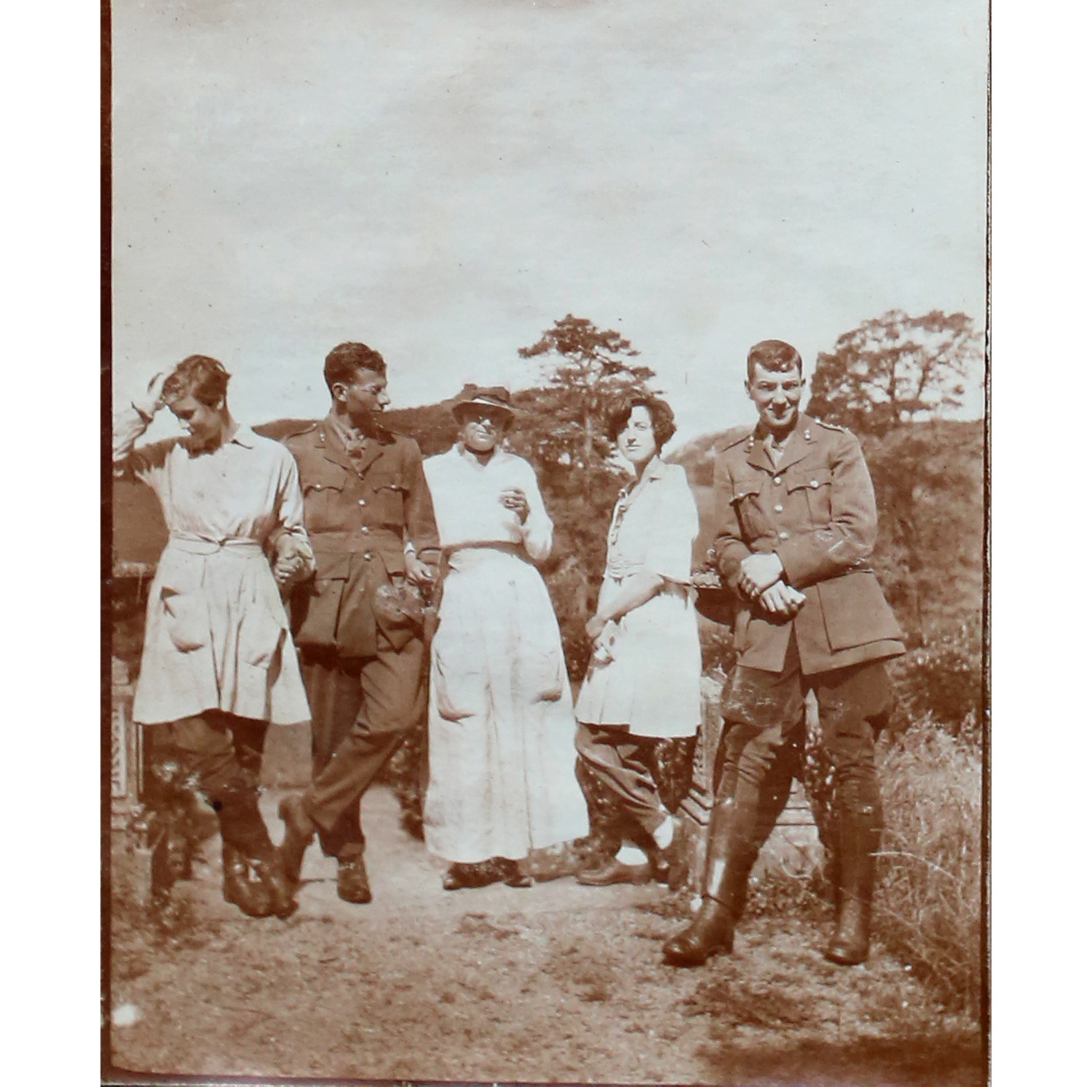
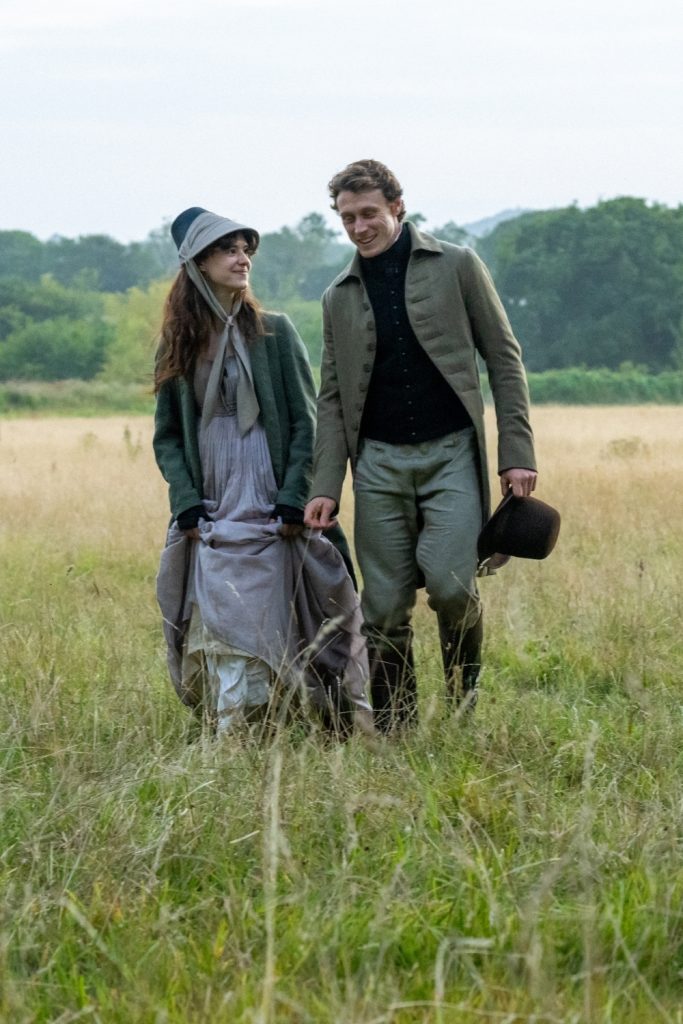
The family in Harlech, 1918.
The Background
In 2003, the artist Louisa Creed donated one of her rag rugs to The Women’s Art Collection together with a work by her mother, EQ Nicholson. I thought it was an interesting act of generosity that tethered the two of them together. The fact that they both worked with textiles also intrigued me.
From EQ I came across Nancy Nicholson and was struck by how unique her fabric designs were and loved how she had worked alongside EQ in the Poulk Press shop in Motcomb street. When I was mapping the family tree, I found Mabel Nicholson who had an extraordinary talent as a figurative painter. Almost all of these artists have arguably been eclipsed by their male partners.
The exhibition aims to tell the story of these remarkable artists and how they relate to one another through familial and also artistic lines. At the heart of the show is the relationship between Nancy and EQ Nicholson. There’s the opportunity to explore these two artists who were great companions and had a shared love of their gardens and things found close to home. Nancy hand printed all her designs and refused to commercially reproduce them. EQ on the other hand did achieve commercial success with the Edinburgh Weavers, for instance. The show offers a rare glimpse into their creativity – be that cushion covers, still life collages, or stationery.
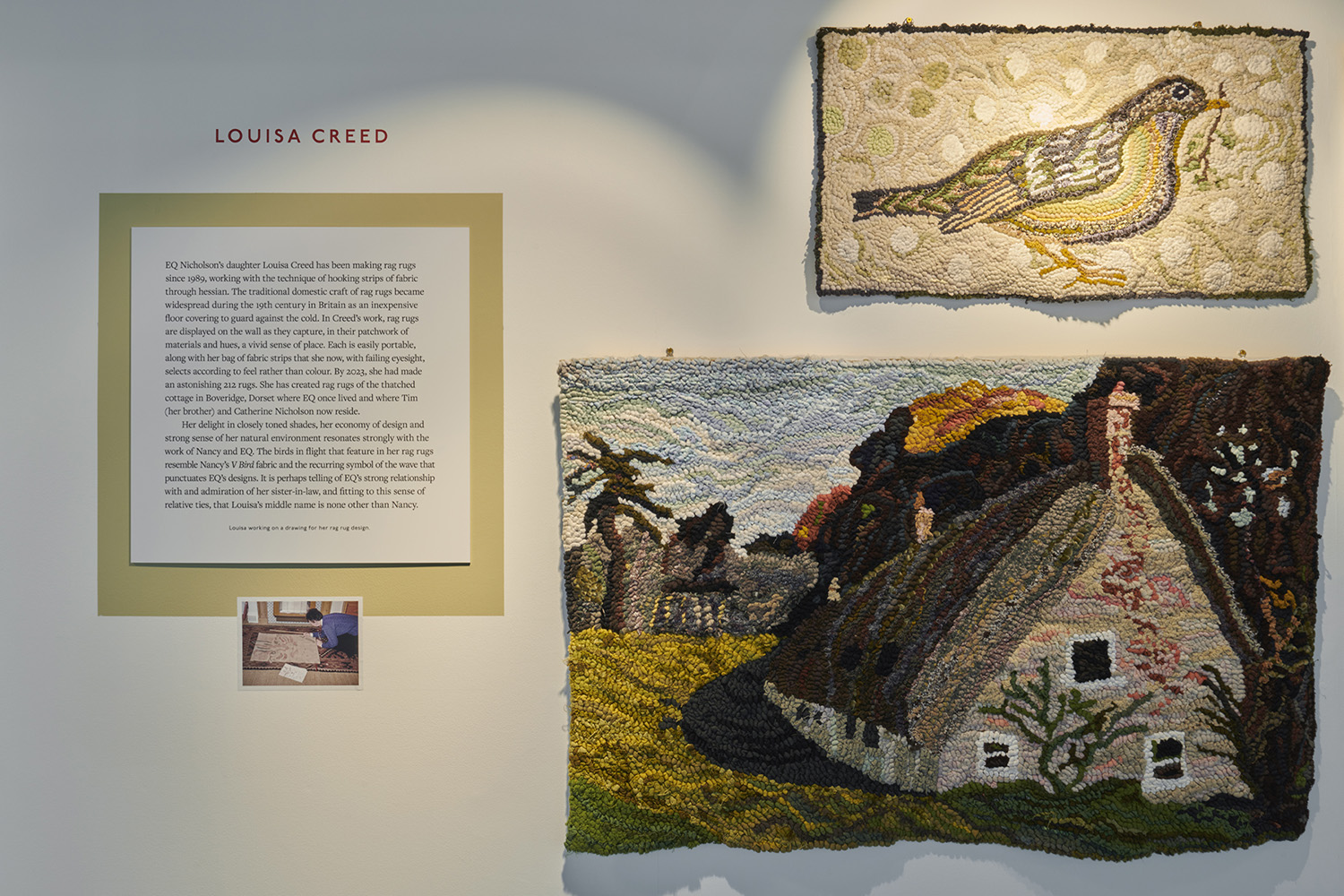
Relative Ties exhibition view, The Women’s Art Collection, Murray Edwards College. Photography: Jo Underhill.
What Is On Display?
Everything in this show has something to tell us – the lion share of the artworks are being lent by the family and haven’t been on public display for decades, if at all.
My personal highlights are Nancy’s stencils and lino blocks that we are including in the show as well as her manifesto of sorts for her Poulk Press. From my understanding, her use of stencils – as early as 1926 – was rare for fabric designers of the time.
There are lots of formal similarities and shared sensibilities across all the works. All the Nicholson women were rooted to the home, the domestic, the quotidian – this is reflected not only in the works themselves but also in what they were intended for.
EQ Nicholson married into the artistic family dynasty of the Nicholsons, yet she arguably had descended from one just as illustrious as that she married into. Her grandmother was Eveleen Myers whose photographs are in the collection of the National Portrait Gallery and who sat for John Everett Millais. Continuing this line, EQ’s mother was Elsie Palmer, an American heiress who features in John Singer Sargeant’s Miss Elsie Palmer, or A Lady in White (1889-90).
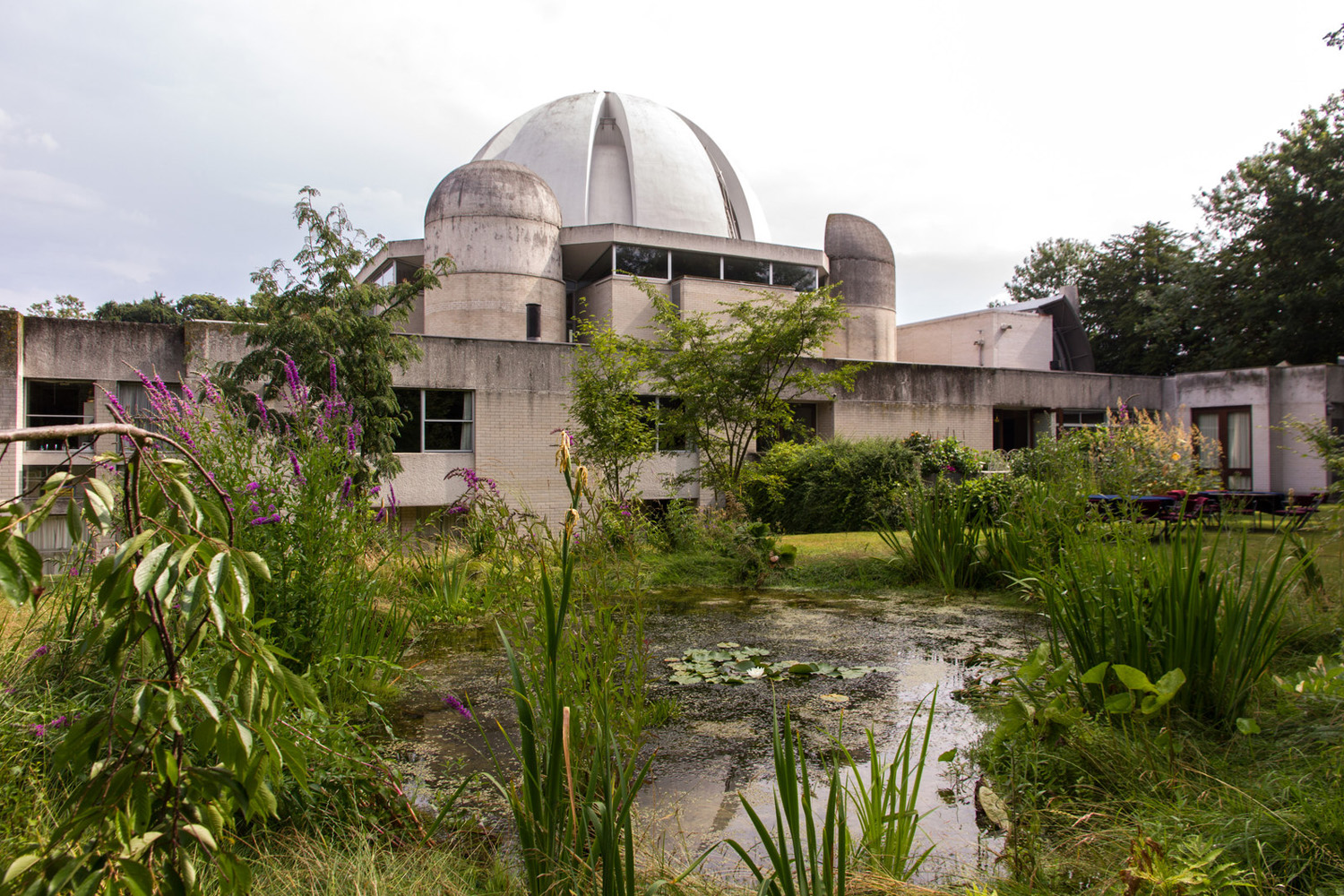
Kim Fyson / Murray Edwards College Fellows’ Garden
How To See It
The Women’s Art Collection is on display across Murray Edwards College, one of two Colleges for women at the University of Cambridge. It’s an iconic Brutalist building designed by Chamberlin, Powell and Bon – who went on to design the Barbican Centre. Given the emphasis on light and its interplay with the moving water of the fountain court – on a clear day it looks positively radiant!
While You’re There…
I would urge visitors to explore the informal college gardens, which have been cultivated to promote biodiversity, and is where we have a majestic work by Barbara Hepworth. Something I love about the gardens are that you won’t ever see a sign (frequently found in the more historic colleges) to ‘keep off the grass’ – students and visitors alike are able to roam and take pleasure in the beauty of the place. And not just that, the students are even encouraged to pick the flowers! In the summer there is an entire cutting bed full of sweet William, dahlias and cosmos…
Kettle’s Yard is a five minute walk away, so a lovely visit would be to see the house and its collection – and to look at the Ben Nicholson fabrics with the knowledge and new-found admiration that his incredible sister Nancy made them!
Harriet Loffler is director of The Women’s Art Collection at Murray Edwards College (Huntingdon Road, Cambridge CB3 0DF), University of Cambridge. The College is open everyday from 10am to 6pm; it is free to visit and you do not need to book. Find out more at murrayedwards.cam.ac.uk