


When It Comes To Office Interiors, We’re Still Taking Notes From Miranda Priestly
By
5 months ago
Gird your loins – the devil (and her office) returns
It’s been 20 years since we first saw Anne Hathaway fumble her way through the offices of Runway, but our love for The Devil Wears Prada still rings true. (And we have the stats to prove it: the 2006 film has held a global Top 10 ranking on streaming service Disney+ for the last five months.) And as we get ready for the sequel to hit screens, we’ve been doing plenty of rewatching and reminiscing – and digging into the nitty gritty behind-the-scenes details from films one and two. Our current fixation? Miranda Priestly’s office.
Ahead of the sequel’s theatrical release, we dig deeper into The Devil Wears Prada’s set design – and enlist top interiors experts to share their tips for nailing the Runway editor-in-chief’s office look.
The Story Behind Miranda Priestly’s Office In The Devil Wears Prada
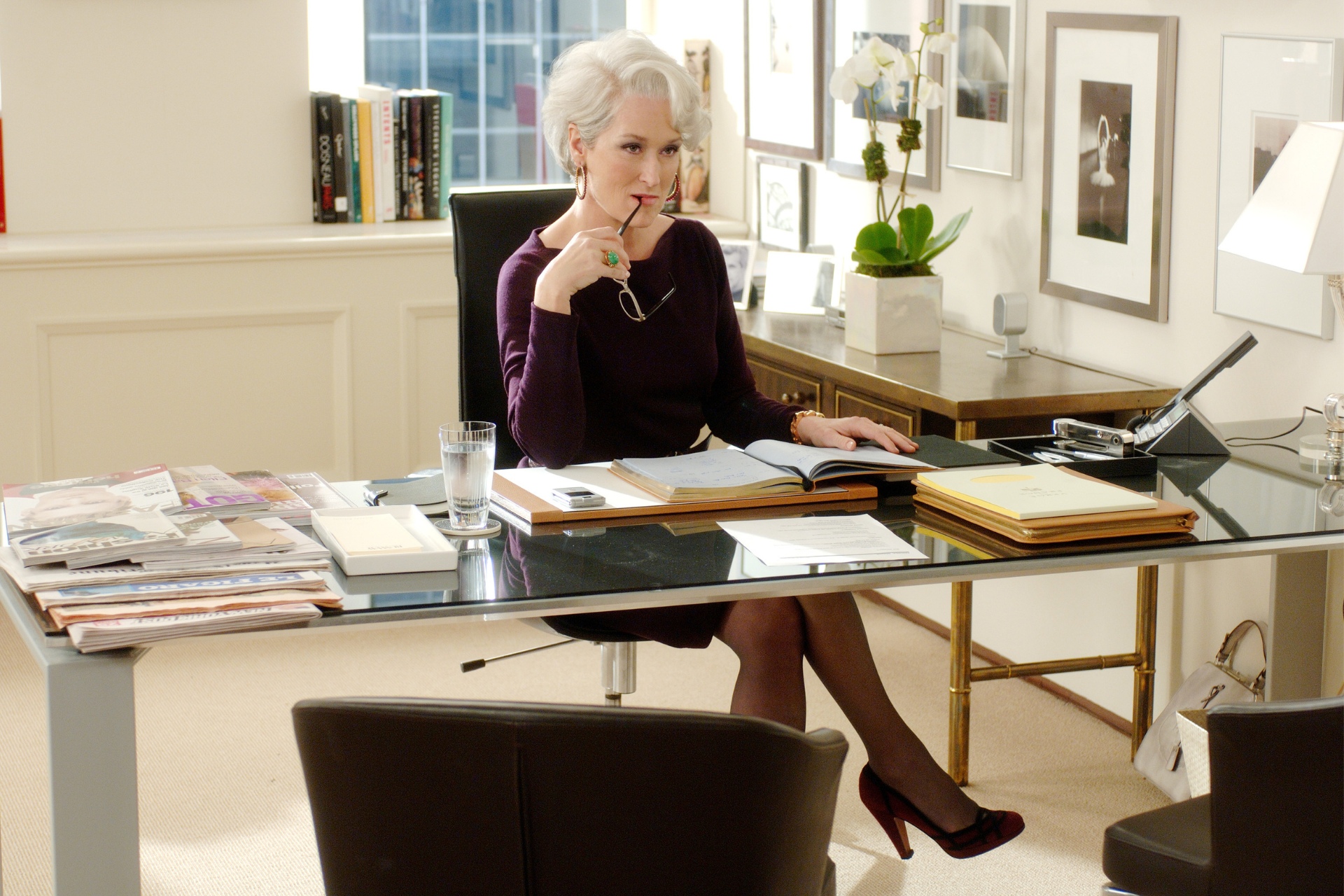
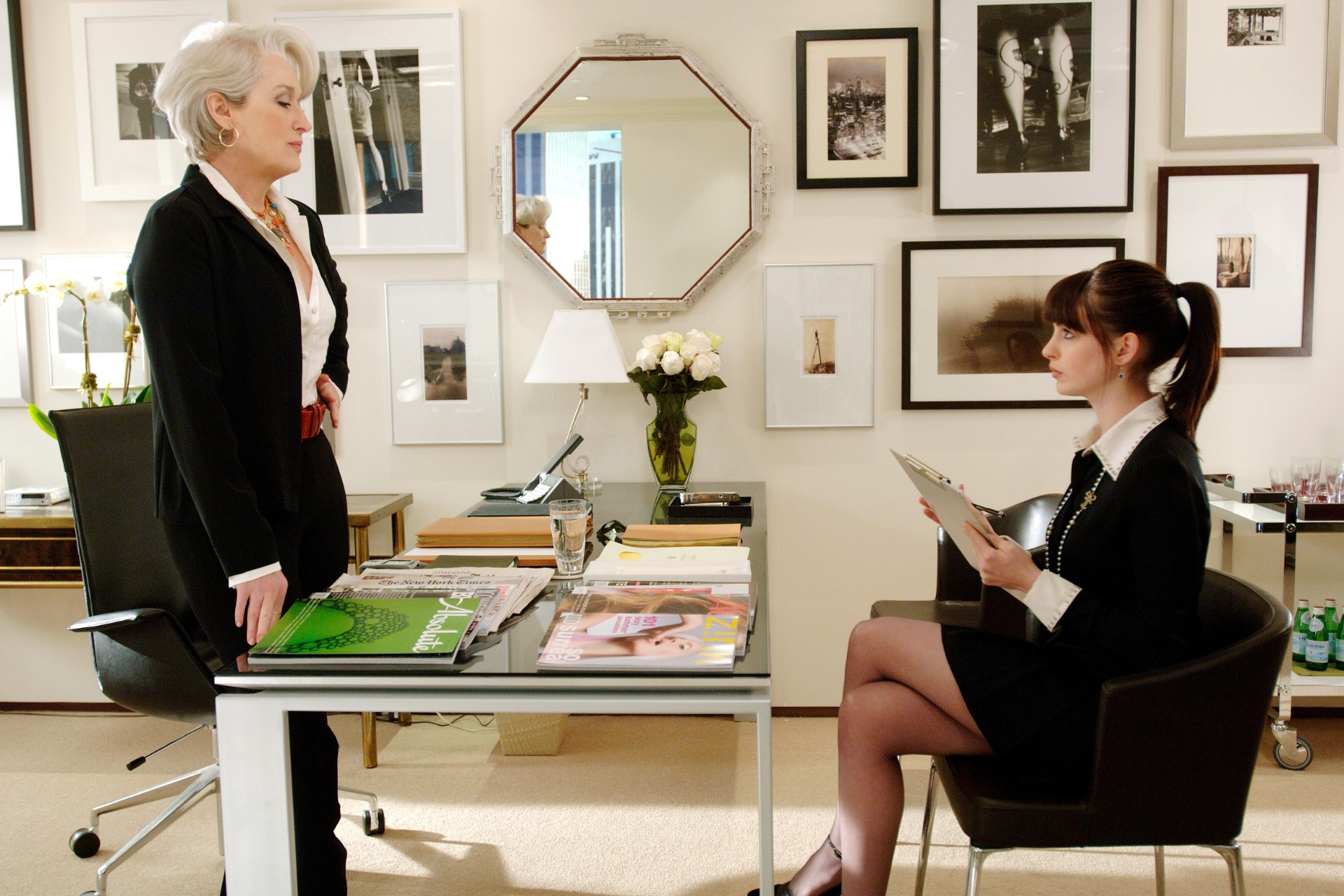
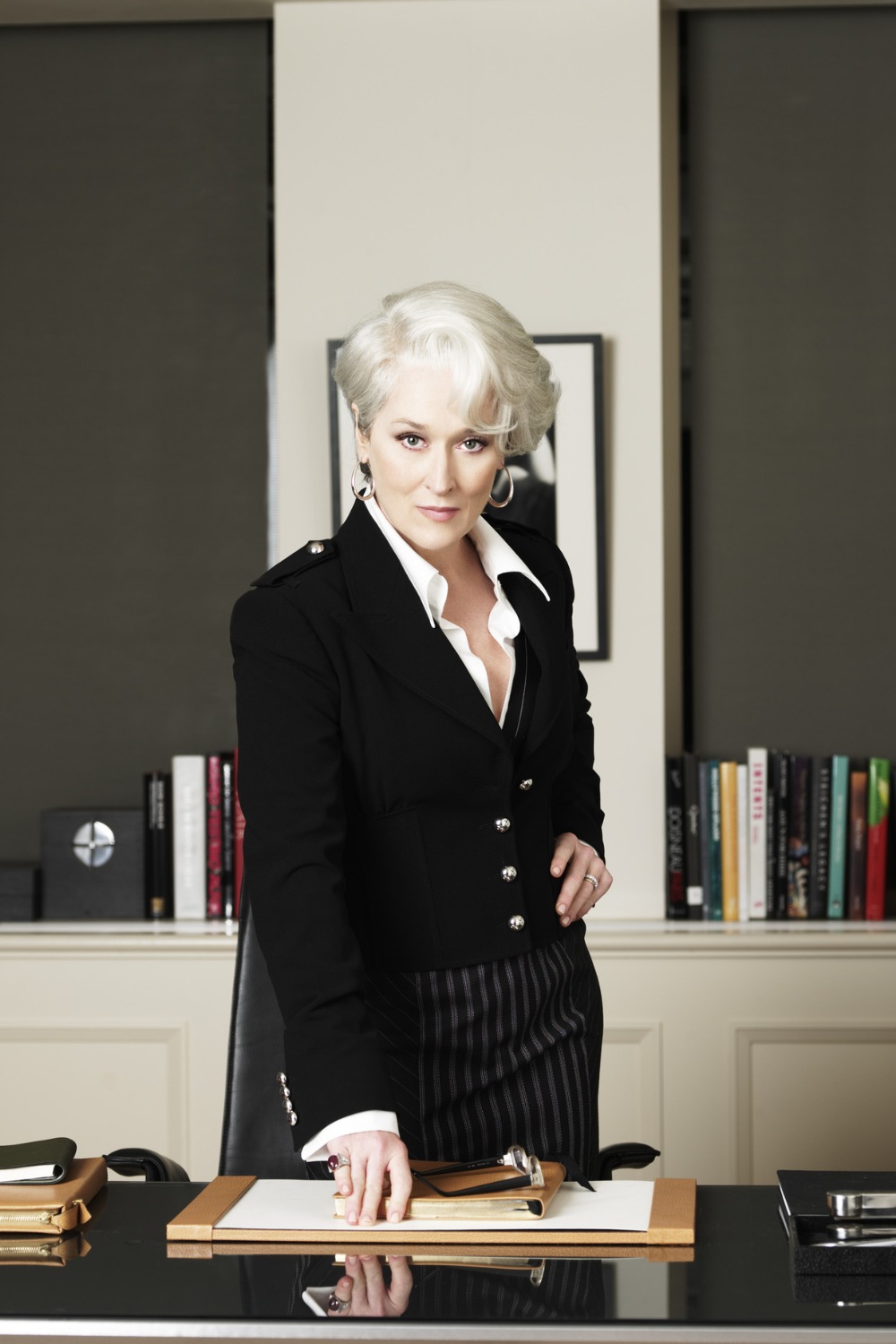
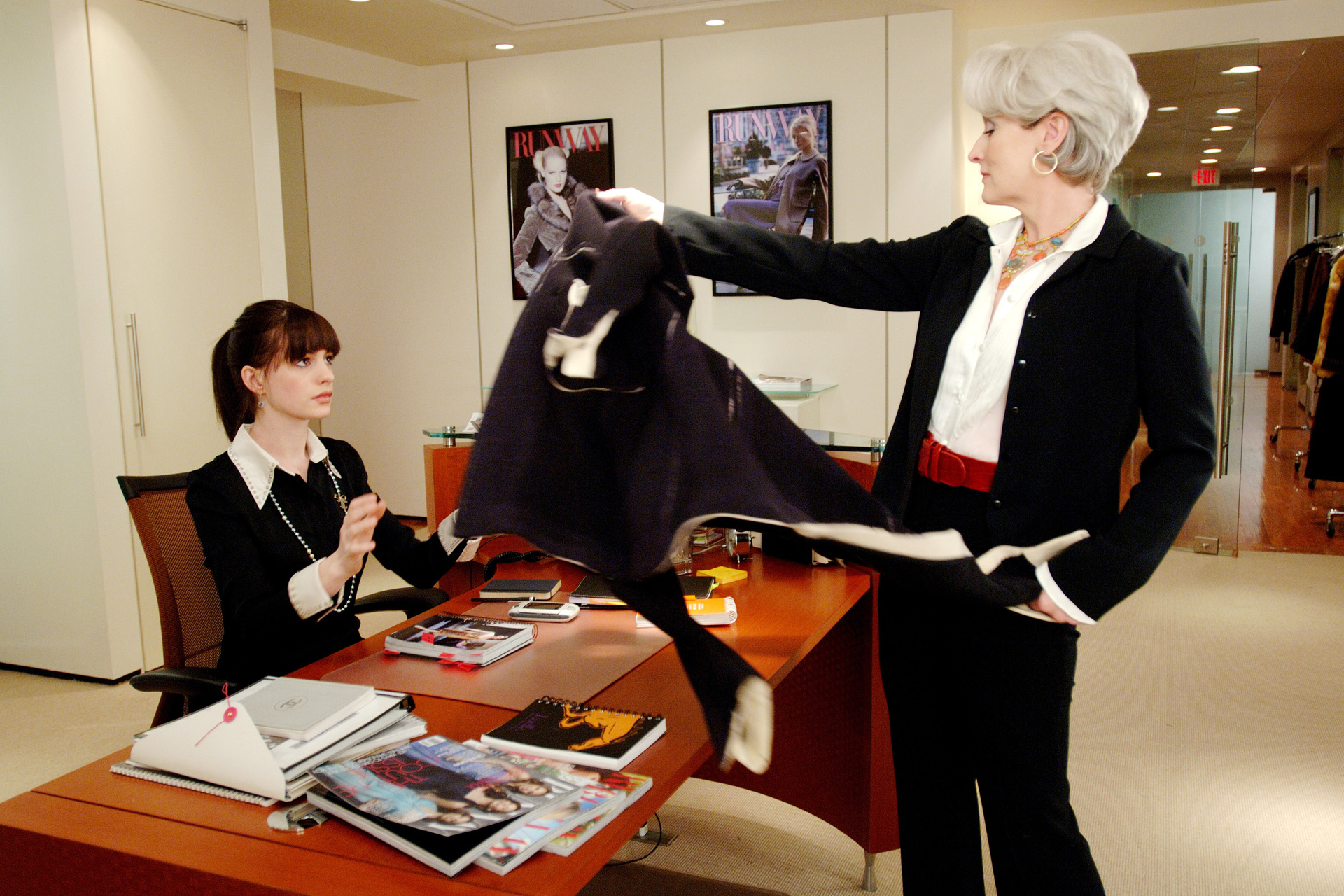
Even after all this time, it’s not difficult to picture the office inhabited by the editor-in-chief of Runway: crisp white walls, a heavy glass-topped desk, black leather chairs and a gallery of monochrome photos on the wall. This was the office of a powerful woman who had her sh*t together (or, at least, a team of assistants to make it look like she did).
‘Miranda Priestly’s original office demonstrated visual authority,’ agrees Murude Katipoglu, designer and founder of London design studio Murudé. ‘It felt sharp, very controlled, corporate and intentionally intimidating. A palette of crisp black and white, the use of clear glass and reflective surfaces, and highly structured styling all communicated discipline.’
The Devil Wears Prada (2006)
And with some of the film’s most quoted moments taking place within its four walls (see: the cerulean speech), it was destined to become a stand out space. But the journey to creating the office that launched a thousand fashion careers wasn’t an easy one.
The task of building all the sets we see in The Devil Wears Prada came down to production designer Jess Gonchor. A fairly new name in Hollywood at the time, Gonchor’s only other production design credit back then was Capote – which, to put it lightly, had a completely different look to the beloved noughties comedy.
‘I did not have a movie out yet that I could call my own,’ Gonchor explained in an interview. ‘I had art directed a bunch, but Capote wasn’t out yet. I interviewed with the director and the producer [for The Devil Wears Prada; David Frankel and Wendy Finerman] and I’m pretty sure if they saw Capote, I would not have been the guy to get that job! It was the complete polar opposite of [The Devil Wears Prada].’
But he had a vision when it came to building the world of Runway. ‘For me, it was just high fashion, polished colours, beautiful shades of white with some colour mixed in,’ he said. ‘It was opening up a 500-page issue of Vogue magazine.’
Speaking of Vogue. It’s no secret that former editor-in-chief Anna Wintour was the inspiration behind the ‘devil’ herself, but it wasn’t just her look that set the foundation for Miranda Priestly – but her taste in interiors, too.
It’s rumoured that Gonchor, while researching for The Devil Wears Prada, managed to sneak into the Vogue offices in New York City for a surreptitious look around. He didn’t film, or take photos – but the production did apparently get a good look at Anna Wintour’s office, making a note of the layout and decor for use in the film. He recreated what he could from memory, tweaking elements here and there to make it feel like Miranda’s (rather than Anna’s) personal space.
And it seems Gonchor’s work was a little too on the nose. Just days after The Devil Wears Prada’s release in cinemas, Wintour allegedly had her entire office completely redecorated.
The Devil Wears Prada (2006)
What Does It Look Like 20 Years Later?
Two decades later, Miranda Priestly’s office still feels relevant. Fans of the original film will be pleased to know that Gonchor was brought back to work on the sequel – this time without a run through the real-life Vogue offices – and the results show a familiar setup to the first film, with a few updates to make the space feel like it lives in 2026.
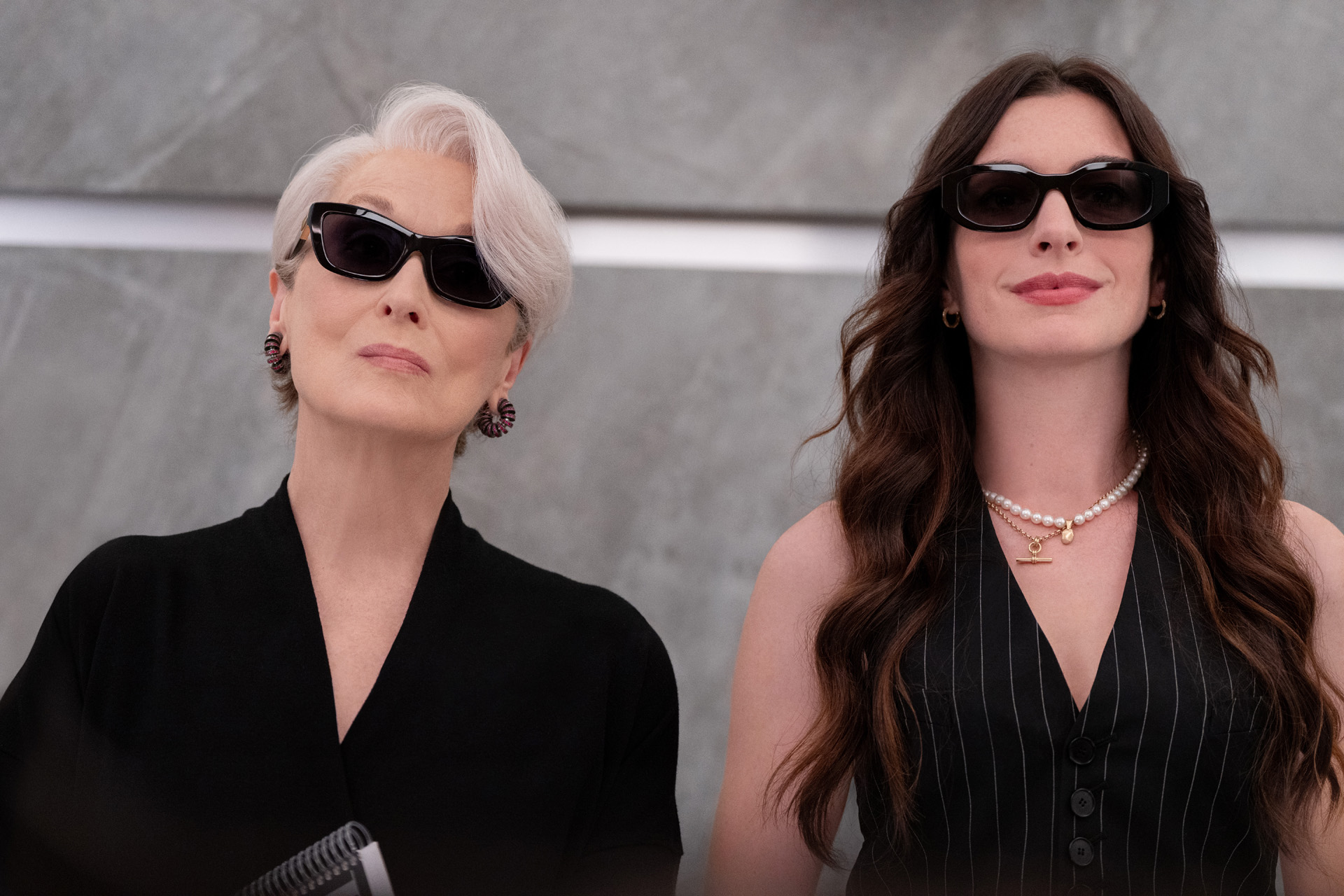
‘In The Devil Wears Prada 2, the overall design remains close to the original, but clever updates have refreshed the room – making it feel more current with how luxury interior design has evolved,’ says Murude. ‘It still leans on a timeless monochrome base, but with softer, warmer layers introduced through natural wood finishes and earthy accents.’
The Devil Wears Prada 2 (2026) | Macall Polay © 2025 20th Century Studios
The designer adds that this is in-keeping with recent interiors trends in New York City. ‘There has been a move away from overtly corporate, cold executive spaces toward environments that feel more residential, relaxed and social. We are seeing more natural materials, warmer woods, sculptural lighting, curated art and a softer balance between function and atmosphere.
‘Miranda’s new office reflects that change perfectly,’ Murude adds. ‘It still signals prestige, but in a quieter, slightly warmer and more sophisticated way.’
Where Miranda’s original office felt sharper and more intimidating – achieved through a combination of rigid furniture, monochrome framed photography and a large, distance-creating desk – in the sequel it feels softer. Less harsh.
‘The overall design language remains polished and recognisable, but the mood has softened,’ confirms Murude. ‘The gallery wall appears more edited and restrained, creating a calmer and more refined feel than the original office. The desk has moved away from cold glass to a warmer, lighter wood top, which feels less severe. Lighting choices are more sculptural and organic rather than metallic or corporate. There are also touches of earthy rust tones through florals and artwork, which add warmth and depth.’
Ultimately, it brings Miranda Priestly into the present without making her a nostalgic caricature. ‘What makes Miranda Priestly’s office so iconic is that it has always reflected the era’s idea of success,’ adds Murude. ‘In the original film, power looked polished, sharp, glossy and intimidating. In the sequel, it feels calmer, warmer and more assured. That shift mirrors how luxury interiors have evolved today away from shiny, intimidating spaces and towards calmer, quietly confident luxury.’
The Devil Wears Prada (2006)
Expert Tips: Get The Look
Start With A Restrained Colour Palette
To nail the sleek 00s minimalism associated with Miranda Priestly’s office, you first need the settle on the right colour palette. ‘A controlled palette, like blacks and whites, will help create that polished look,’ says Cath, co-founder of design studio Yellow London.
‘I would lean into softer off-whites for the background colour – almost as a canvas – with neutrals as your foundation,’ adds Murude. ‘And then use black as the secondary colour: furniture, upholstery and frames for artwork.’
Invest In Statement Furniture & Lighting
Nothing feels out of place in the Runway offices – largely thanks to its carefully curated interiors. No clutter, nothing unnecessarily flashy; everything has a function but also looks great. ‘It is not about quantity, it is about quality and the sculptural impact of each piece,’ says Murude. ‘Be very intentional with every piece you place in the room.’
And when it comes to choosing the right pieces of furniture and lighting, she suggests ‘leaning into sculptural forms. Bring in light wood and pair it with black to keep the restrained palette. Oversized plaster lamps work well as a statement lighting on a desk. Rachel Donath Wave Chairs are a good sculptural addition with their light but impactful form.’
Layer The Space
In contrast with the controlled colour palette, you’ll want to mix and match when it comes to introducing materials to the space. ‘Texture is what stops a space like an office from feeling flat,’ emphasises Cath. ‘So layering materials like glass, leather and metal adds contrast but keeps everything feeling professional.’
And for the other personal touches: ‘Use books, lamps and flower arrangements to layer the space, give the room character, and communicate your personality and what you are interested in without needing to explain it in words,’ suggests Murude.
The Devil Wears Prada (2006)
Create A Wall Gallery
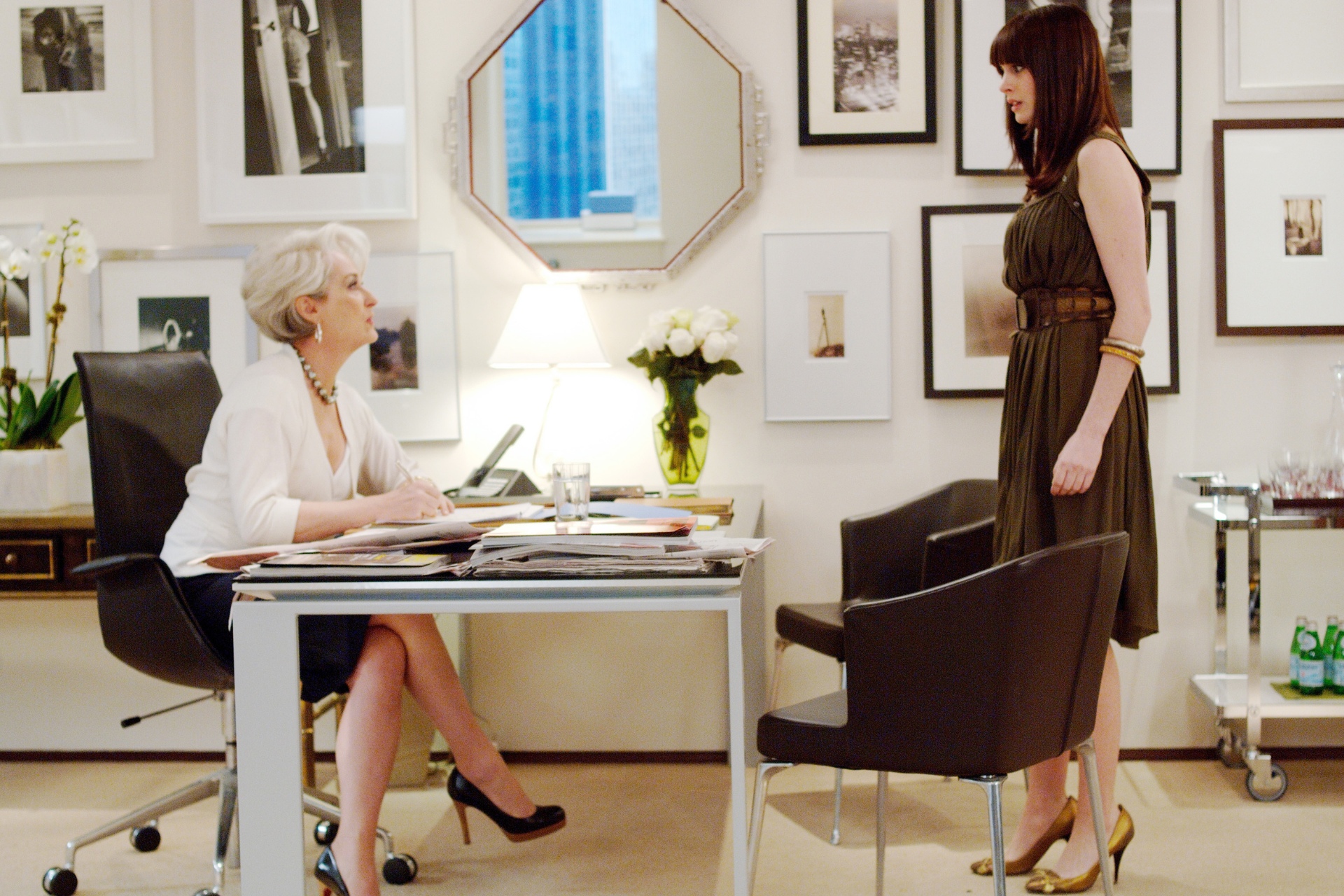
Beyond the white walls and glass-topped table (decorated with copies of Runway, naturally), Miranda’s office is known for its chic monochrome gallery. ‘Artwork is an effective way to introduce interest, and keeping it monochrome with subtle hints of colour helps to maintain a refined feel,’ notes Cath.
‘To recreate Miranda’s office, you need to be restrained with black-and-white photography, with only one or two pops of colour,’ adds Murude. ‘Black frames and white mounts in similar sizes create a sense of uniformity.’
Add A Drinks Trolley
A feature most people might not have noticed in The Devil Wears Prada? A sleek, shiny drinks trolley, neatly tucked against the wall in Miranda’s office. It’s a chic addition to any office plan, but also doubles up as a practical addition when hosting guests and meetings.
‘I love sourcing vintage drinks trolleys for our projects,’ notes Murude. ‘They bring character to a room, add a sense of personality, and there is something quite nice about being able to help yourself to a refreshment without having to leave your office or offer something for your guests. (But I’m not sure if Miranda would offer anyone anything though…)’
That’s all.