



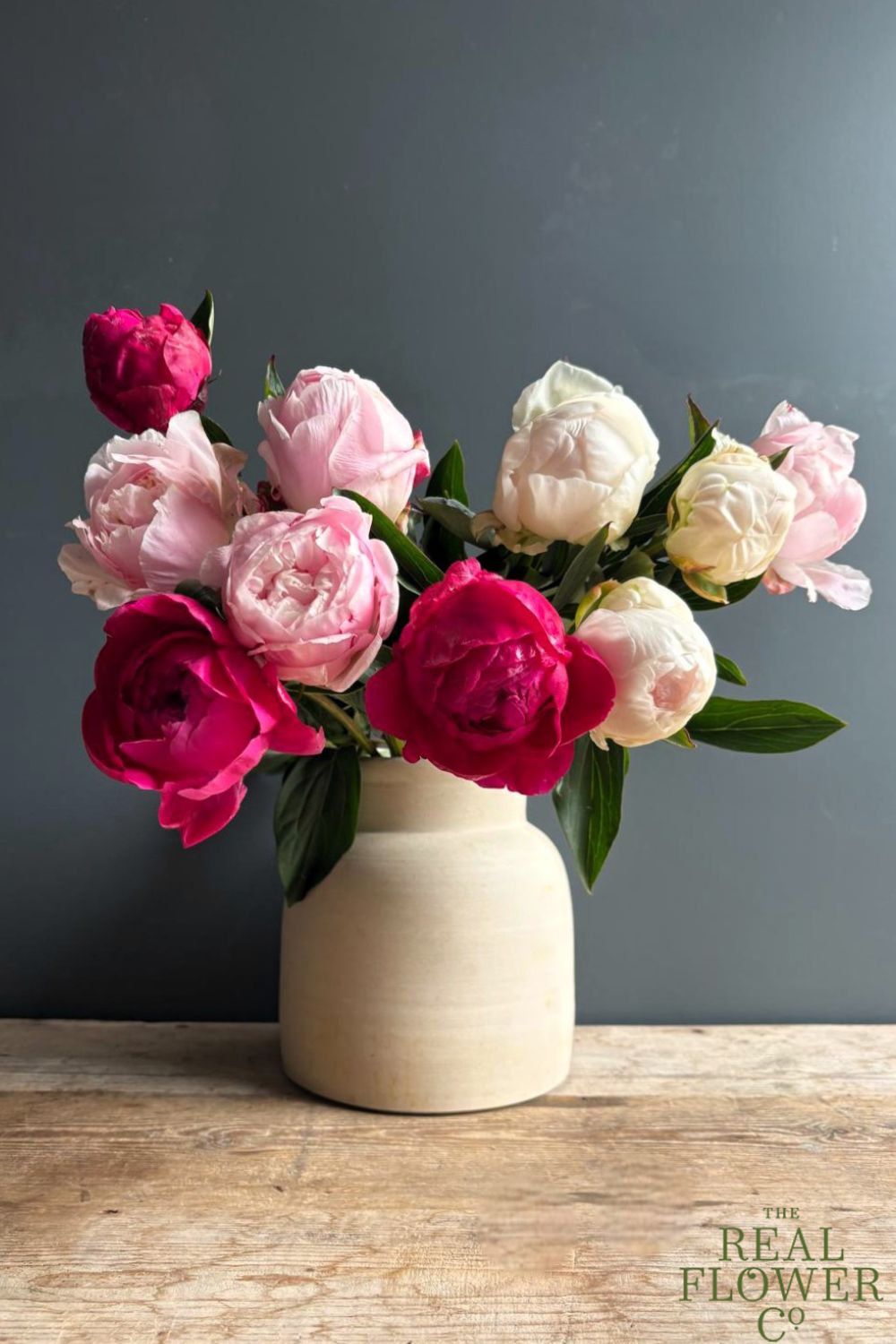
How To Grow Peonies This Spring – Your Expert Guide
By
5 months ago
Top tips from the founder of The Real Flower Company
Spring has arrived with all its hope and optimism – everywhere one looks there are green and verdant shoots appearing. Buds are swelling, ready to burst into bloom at any moment, and there is an irresistible anticipation for when the first plump peony will blossom. Want to know how to bring your own peonies to life? Rosebie Morton, founder of The Real Flower Company, shares her top tips on how to grow them.
Rosebie Morton’s May Gardening Guide 2026

This year so many plants seem to be about two weeks ahead of other years and peonies are no exception. Often described as the harbinger of spring, peonies are rightly considered one of the main showstoppers of the garden. Depending on the variety, they can flower as early as mid-April through to early July and once established are very undemanding.
The key is to get the planting and location correct. Peonies require around six hours of sunlight a day. Other than needing free draining soil, they are unfussy, but it is worth incorporating some compost into the planting hole along with a slow-release fertiliser. The hole wants to be dug about 30 cm deep with the eyes (the shoots) of the peony facing upwards but only covered by 2.5–5 cm of soil. This is really important; planting a peony too deep will result in lots of lush foliage but no flowers, a mistake so often made by gardeners.
Once planted, water well and feed each spring with a slow-release fertiliser. Depending on the variety, you may need to put a support in place to stop the heavy blooms from snapping; this is best done in early spring as the peony comes into growth. Once established, herbaceous peonies require minimal maintenance other than cutting the foliage down in the autumn and applying some mulch (just be sure to avoid the crown of the peony).
How To Choose Your Peonies
Peonies are slow to flower in their first few years, often taking five years to bloom fully so it’s worth spending more and buying yourself an established plant. But the most difficult decision will be choosing which variety of peony you want from the huge wealth available. If you are strapped for space and thinking of a container on your balcony or patio then it’s best to opt for a compact variety, or alternatively an intersectional peony known as Itoh peonies. Named for the Japanese gardener who bred them by crossing a herbaceous peony with a tree peony, the result was a sturdy strong plant ideal for containers with an incredibly long flowering. There is a wonderful selection of colours as well, ranging from whites, yellows, orange and peach through to bright and deep pinks, and every combination in between.
If you are intending to grow a peony in a pot, make sure the pot is at least 40–50 cm in diameter and depth, and fill it with free-draining potting soil and peat compost with some fertiliser. If, however, you’re planning to put your peony outside, keep your flowers away from shady spots: peonies need good sunlight.
Once the location is sorted, the choice comes down to colours and fragrance. For herbaceous peonies, the exquisite pink colour of the lactiflora Sarah Berhardt is one of the most fragrant and popular choices. Another which has captured gardeners’ hearts is coral sunset, an early flowering herbaceous peony which produces huge beautiful and ruffled petals that start coral in colour before fading through to salmon and apricot, to pale yellow and white. For those who prefer jewel tones, there are some wonderful reds such as buckeye belle, lactiflora Karl Rosenfield and command performance. Unlike herbaceous peonies which die down in winter, tree peonies maintain their stems throughout the year producing huge blooms in summer. Though very expensive to buy, they are a long-term investment.