


Inside The Analogue Room Trend Where Phones Aren’t Welcome
By
5 months ago
Switch off
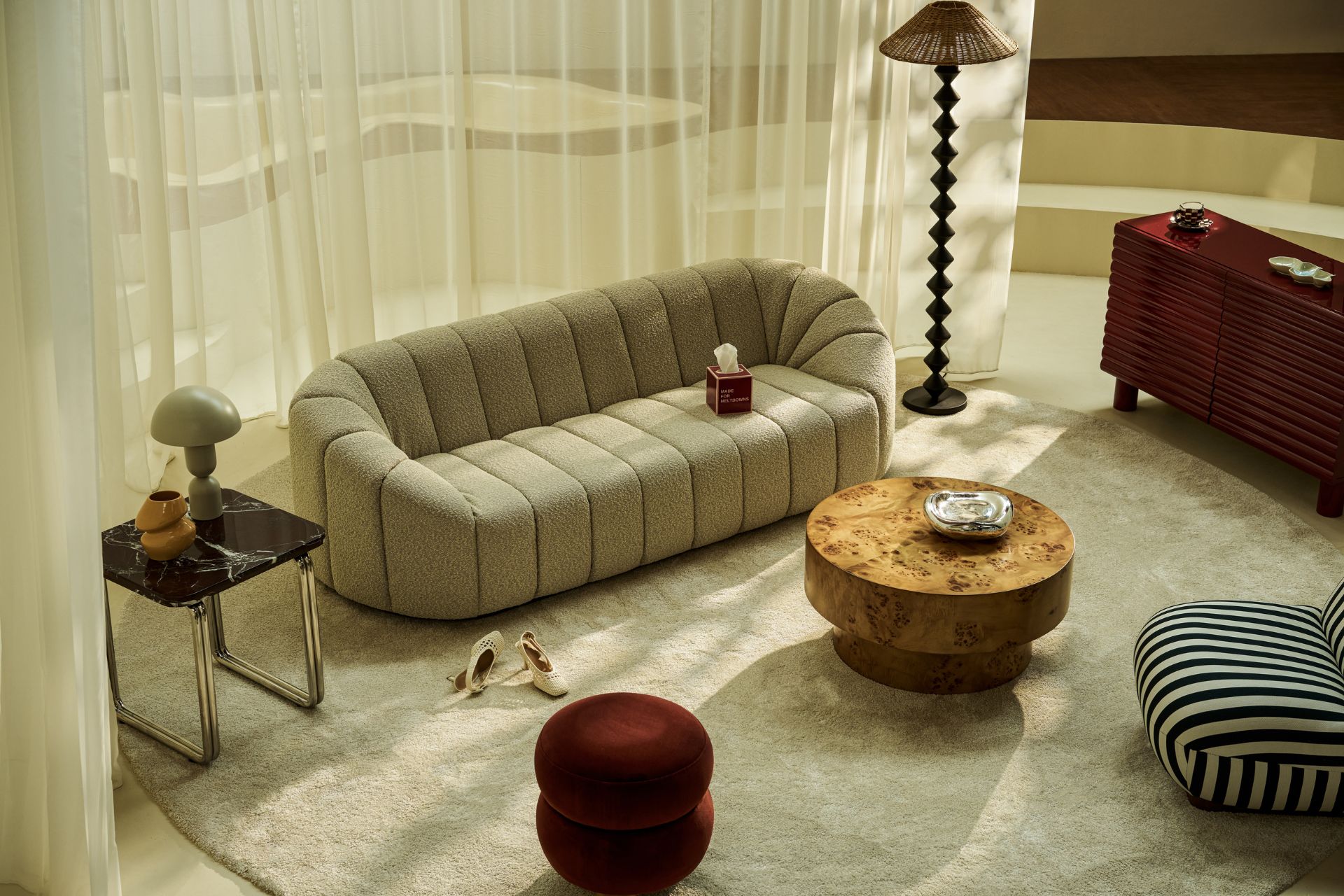
A record is playing and you’ve left your phone in another room. The needle drops and the weight on your shoulders does too. There’s a drink on the side table, books on the shelves, and the only light visible shines through the window. Outside this room, the world is pinging and refreshing and demanding and scrolling. In here, time feels strange. It seems to have slowed down.
This is the fantasy at the heart of the analogue room. Gone are the days when the cinema or the home gym were the most coveted spaces in the high-end home. Technology has seen to that, seeping into all aspects of our lives. We’re surrounded by TVs, smartphones, laptops, and even our watches buzz and glow to tell us someone wants our attention. The feeling people crave, instead, is the sense of being present again.
As Tamara Lancaster, director at Ben Pentreath, explains, in recent years ‘there has been an emerging interest in tech free spaces’.
‘This brings me great comfort,’ she adds. ‘We live in a world where technology is very difficult to escape but we are beginning to see clients take more interest and seriously discuss the considerations around it. There are certain preferences and design tweaks which we’re noticing.’
Flickr
What Does An Analogue Room Look Like?
At its core, an analogue room is about making space for comfort and calm, and eliminating the digital noise that sometimes makes that impossible. iPhone alarms are replaced with alarm clocks, Spotify with radio, and electric bulbs with the light of the natural sun.
The appetite for these spaces is already visible in the homes of those with the freedom to design exactly as they please. Yolanda Hadid’s living room at her Fort Worth ranch has no television and the seating is arranged entirely around conversation. Actor Josh Brolin’s Malibu home takes a similar approach, its warmth emanating from rattan vintage furniture and a gallery wall that gives those in the room somewhere far more interesting to look at than a screen. These are not rooms that have simply decided that technology has nothing to offer them.
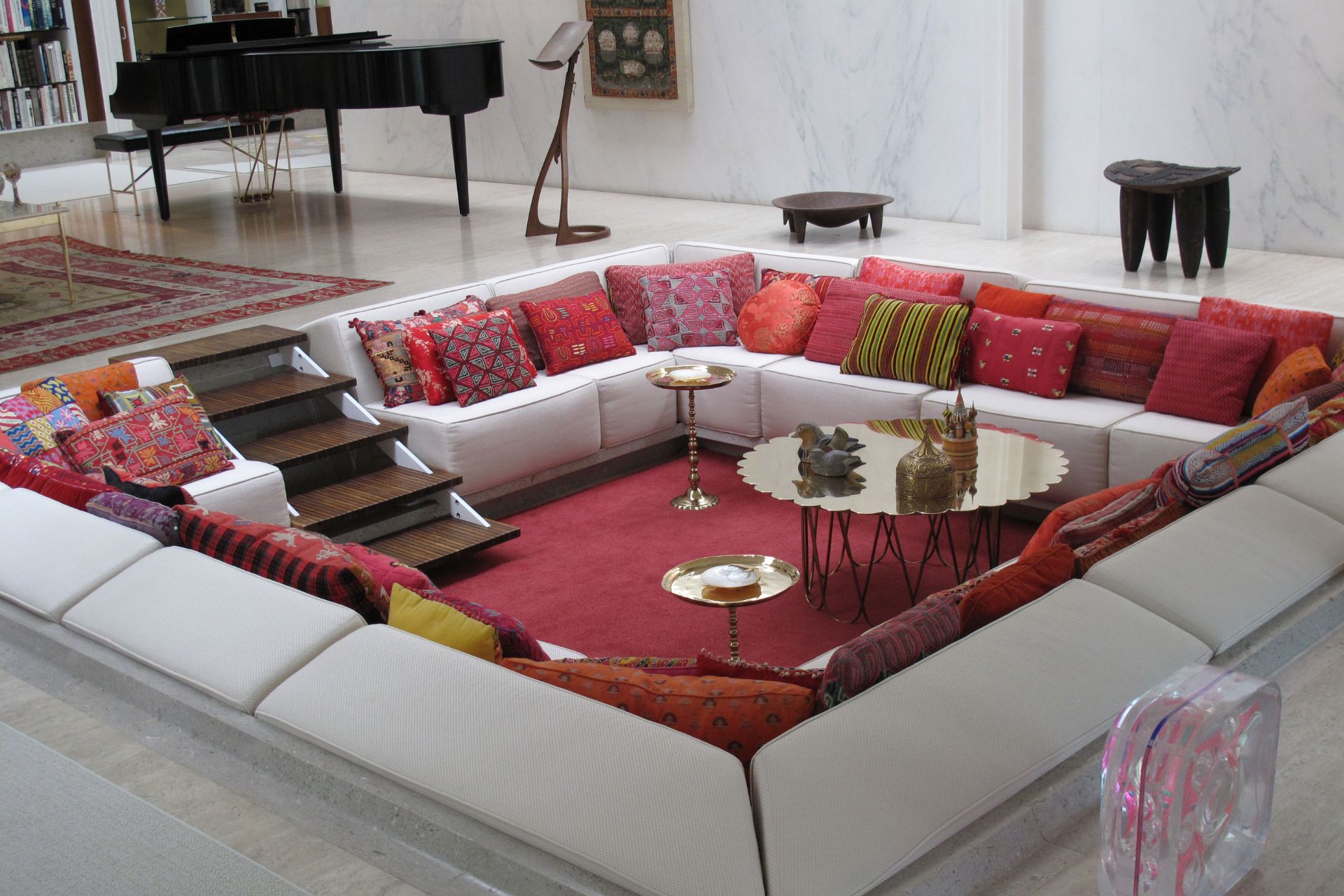
On social media (ironically), inspiration pictures for analogue rooms often draw on the aesthetics of the 1970s – a decade that had its own suspicions of modernity. Back then, consumers valued comfort and flexibility above all else, pushing back against the hard lines and minimalism of decades prior. The result was interiors that felt enveloping. Dark wood, wicker, rattan and leather were used to create warm, tactile atmospheres. The conversation pit, with its sunken sofas and shag carpets, lay at the heart of the home – an emblem of an era that prioritised face-to-face connection.
But the 70s were far from the first decade to centre home design away from screens – people had been doing that for centuries. ‘Quite frankly, the English country house is a perfect example [of an analogue room],’ says Ferguson & Shamamian partner Damian Samora. ‘It’s built for generations of entertaining and designed for dining, sports, conversation, and gardening.’

Barker and Stonehouse
The Design Details That Do The Work
At the architecture firm (which has handled some of the country’s most storied renovations), Samora has noticed that one element which pops up repeatedly in discussions is natural light. ‘As a client once told me while discussing her holiday home, “follow the sun”. Designing rooms that take the morning, afternoon, and evening light is the first building block for staying “present” and away from screens.’
As such, he recommends starting with the view. ‘If you have no views, then art,’ he adds. ‘If no art, then good decoration. If you have all three, I guarantee you’ll forget you have a phone.’ Then there are the smaller interventions. ‘How convenient is the closest electrical receptacle?’ Samora asks. ‘Hide them, make them inconvenient, and then you’ll eventually run out of charge.’
Lancaster similarly agrees that nature needs to be repositioned at the centre. ‘[An analogue room] is a calm space with no discord,’ she says. ‘Ideally it would have a good view of a garden, bringing contact with nature. It’s also about the materials being used and where possible, we try to use natural materials, adding warmth and texture. And we pay particular attention to ensuring the lighting is appropriate.”
That lighting, can of course still include electric bulbs where necessary. As Samora is quick to point out, the goal is not to tear out every wire and live by candlelight. ‘Some technology needs to be a seamless part of any home, even if it’s a cabin in the woods or a true beach shack. Today’s appliances and devices – even lighting – need technological infrastructure to work. The trick is to keep it in its place.’
For him, the goal is reconnection, ‘but differently’: ‘Going to your library and turning on the media or lifting a tablet is a choice. It’s just as easy to pick up a book – or at least it should be. Self-care, friends, and family are all important and should not feel like a luxury. Design spaces for people first, and we all live well.’
The Art Of Switching Off
But is an analogue room really necessary to live that reconnected life? After all, couldn’t we simply choose to put our phones down? Lancaster argues that a dedicated room isn’t necessary. ‘Detaching from technology doesn’t need to be exclusive to the size of the house,’ she says. ‘There are ways of doing it within a modest budget. It’s a choice within the design and the style of the home.’
Oliver Burkeman, the journalist and productivity expert behind Meditations for Mortals and Four Thousand Weeks, on the other hand, thinks we are kidding ourselves if we think we can detox without building in specific technology-free spaces. ‘We tend to flatter ourselves that we have the willpower and self-discipline we need to choose not to be on our internet-connected technologies all the time,’ he says. ‘But the evidence is clear that we don’t.’
He points to traditional religious traditions like the Sabbath in which electricity is set aside. ‘We really need a framework or a set of rules to follow,’ says Burkeman. ‘We can use those rules not as an oppressive thing we have to serve, but as a safety net for doing what we want. The analogue room, then, is not such a radical idea. It is a very old one.’
What we need instead, he argues, are environmental cues like rooms and spaces that tell us firmly what they are for. ‘We are very much the creatures of our environments,’ he says. ‘I’m reminded of occasions where I’ve found myself in vacation rentals where I was expecting there to be wifi. It turns out there wasn’t and after the initial horror it turns out to be a very good thing indeed. There was a peacefulness that came from it taking quite a lot of effort to actually go and connect.’