


Inside Kinz, the New Lebanese Restaurant Bringing Beirut’s Artisans to Notting Hill
By
2 months ago
Though the restaurant faced delays due to the war in the Middle East, its restaurateurs paint an optimistic picture of Lebanon – and are bringing a little of Beirut to London
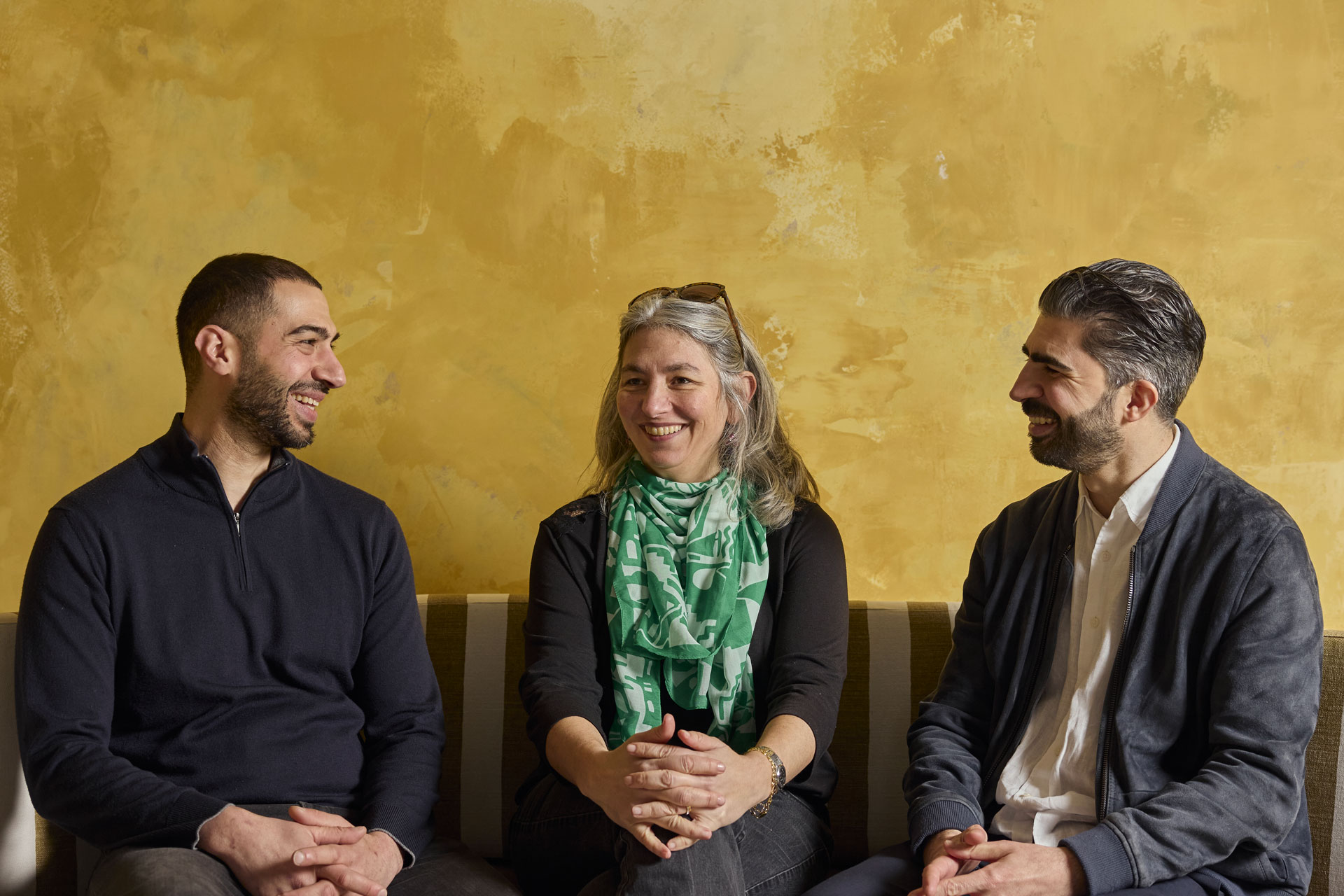
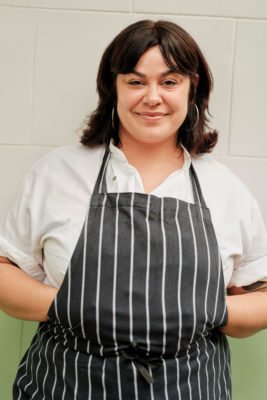
Though set to open in May, the restaurateurs behind new Lebanese restaurant Kinz faced unexpected delays due to forces well beyond the reach of their Notting Hill Gate dining room: global politics. It started with a delayed ceiling lamp. This was being made in a studio in the southern part of Beirut, an area which, as conflict intensified across Lebanon, became increasingly hard to reach. And delays on other items began to flood in. ‘It didn’t feel right,’ says co-founder Jad Lahoud, ‘to pull the plug on that. Their livelihood was being stripped from them. For us, it was the least we could do to keep the order in and carry on.’ C&TH meets the restaurateurs – Rasha Khouri Bruzzo and Jad Lahoud – celebrating the beauty of Lebanese culture at recently opened Kinz.
Interview: The Restaurateurs Behind Kinz
Talk me through the delays.
Rasha: We’d been working with artisans in Lebanon who were producing various parts of the building and elements of the building. For example, our beautiful ceiling lamp – which sits above the mezzanine floor – was being built in an area of Beirut by an artist who could no longer safely reach his studio. And we wanted to stay true to our Lebanese identity, and this relationship.
Jad: It just has a knock-on effect, doesn’t it? When one part gets delayed, it affects other parts of the project. So it set everything back a little bit. But we’re getting there.
Rasha: We’d also gotten so far down that path. When the war started in February, we had just put in orders for all of our serving ware from Lebanon. And again, it was all being made by artisans, and we knew – because we put the order in late – that it would struggle to turn up in time – and that was even providing a plane was able to get out, we didn’t even know if that was going to arrive.
Those relationships sound important to you.
Rasha: It’s been really special for us to know that all these artisans have been excited to be involved; they would send us lots of photos and updates.
Jad: It also didn’t feel right given everything that was going on in Beirut, in Lebanon, to pull the plug on that. Their livelihood was being stripped from them. For us, it was the least we could do to keep the order in and carry on down the path; they didn’t know when the next bit of money would be coming in for them. Lebanon’s got a special place in all of our hearts – we all suffer together in this. That played a big part in our decision as well.
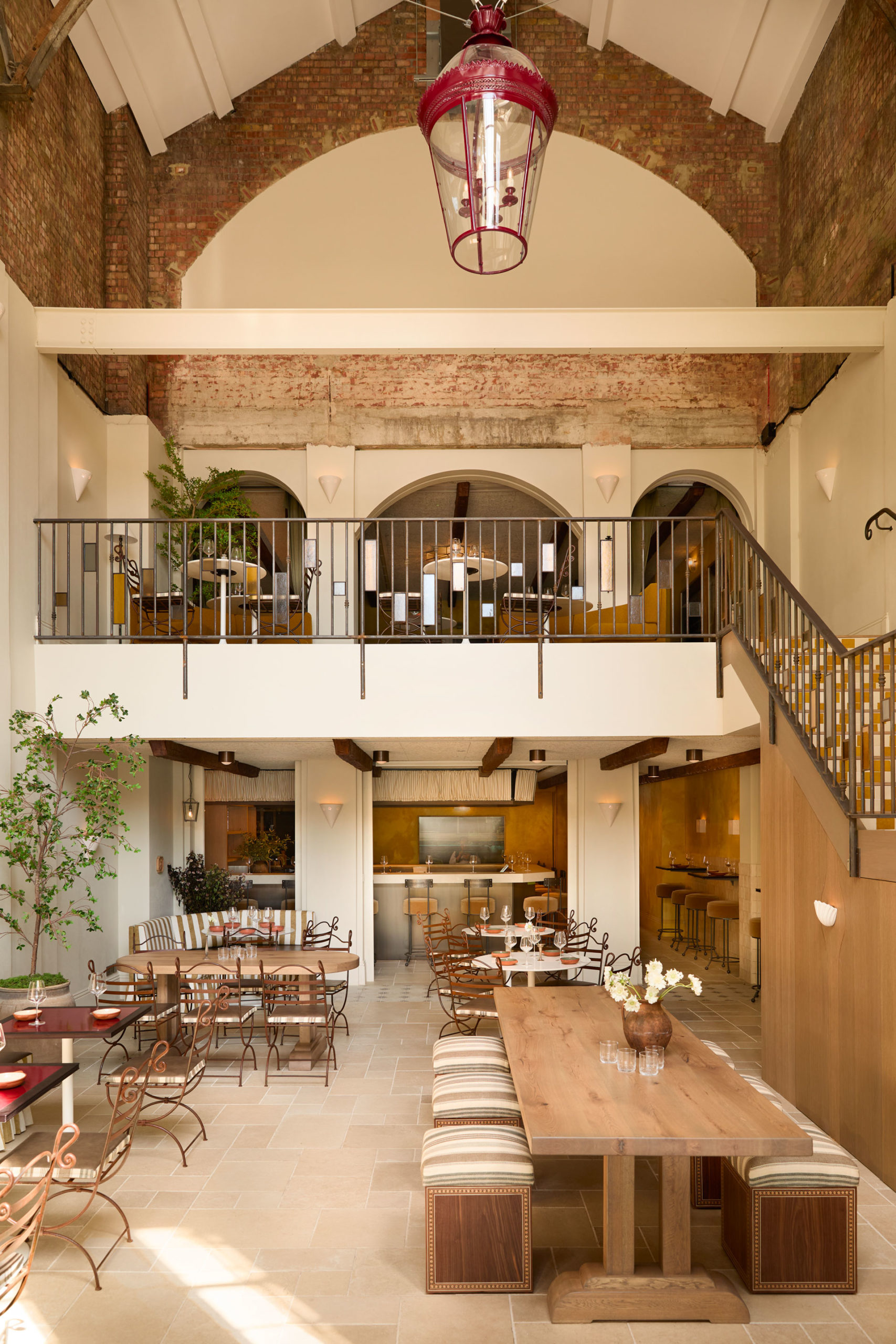
KINZ’s craft-filled interiors
Rasha: At the end, it will be a very special story to share with the London scene. And I’ll tell you a funny side story. We had all the aprons and tote bags made in Lebanon. Because of the situation, a friend of mine was flying, and she brought the suitcase with her, and then she picked up the wrong suitcase at the airport. So on top of everything, we ended up having to do a massive search through Heathrow Airport, and we found the suitcase had made its way to Bath. So we had to go to Bath to collect the suitcase and return the other one. It’s been a comedy of errors, let’s say.
Do you hope Kinz could be a way for people to understand a bit more about how the conflict is affecting people in Lebanon?
Rasha: No – Kinz is more of a labour of love. Kinz means treasure in Arabic. What we hope is to show the treasures of Lebanon. For example, in the bar, we’ve inlaid a backgammon set; we love that sense of playing, of community, chatting together. All our wines are Lebanese wines. We have wines from the south, wines from the north, wines from 1,800 metres altitude; we even have a sparkling wine. The flower motif we’re using is based on the Lebanese coffee cup, but modernised for a London audience. So it’s not about representing Lebanon from a political perspective or what’s happening on the ground. It’s about showcasing parts of Lebanon that people haven’t seen. Everyone knows tabbouleh and hummus, but on the menu we will have home-cooking dishes that Jad’s mum’s recipes are gracing us with, and that’s more the element we want to share with Kinz.
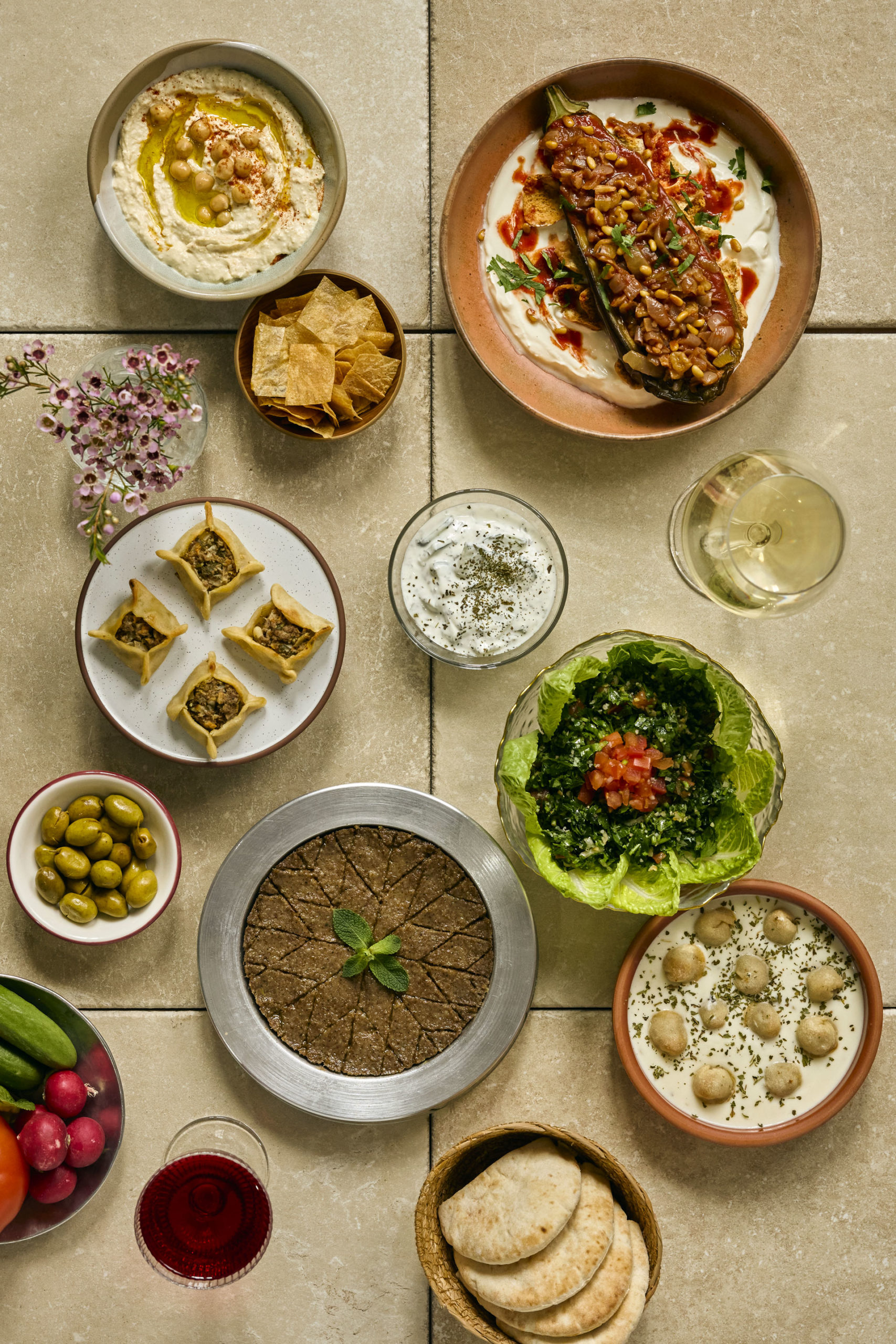
Lebanese food you may know – and some you won’t
Jad: Yeah, politics is the dirty side that we don’t really want to get involved in. We want to showcase Lebanon’s beauty instead.
Rasha: There are other people who do politics well. We do food and hospitality.
It sounds like celebration is a good frame for it.
Jad: Absolutely, and that’s what we want to focus on. What’s happening in Lebanon is a tragedy. We’re very sad – and so we feel it’s important to spend time celebrating the beauties of Lebanon, not talking about the bad side of it.
Talk to me about the interiors. It was a bank building – walk our readers through the space.
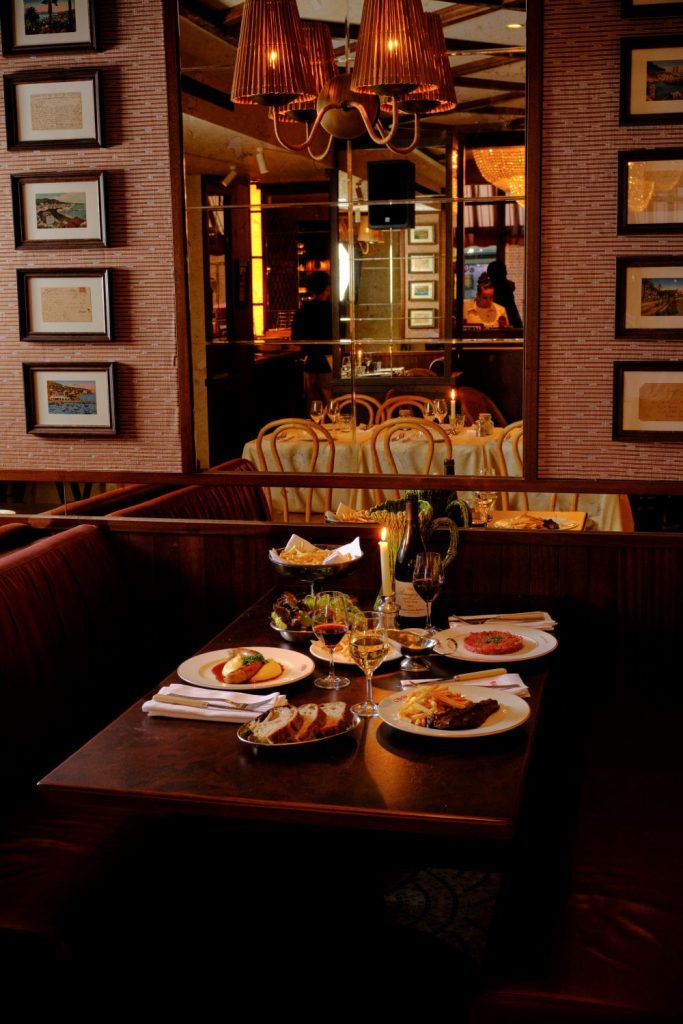
Rasha: It’s an old bank. Apparently it’s the thinnest bank in London. And it has an eight-metre ceiling with an incredible amount of light. The wine room at the back is situated in its old bank vault. We have also gone for very typical Lebanese architecture and motifs – arches, stripe fabrics, etcetera. You get that sense of Lebanon the minute you walk in, and hopefully the aromas as well.
Jad: When you go to Lebanon, hospitality starts at home. It’s all about entertaining guests and eating around the communal table with a good meal. We very much wanted to make you feel like you’re going to someone’s home, or to a house in the mountains of Lebanon.
On the topic of home, then: did you grow up in families where food was very important?
Jad: My mum and dad are both chefs. My cousin’s a chef. And just about every lady in Lebanon cooks. Visiting Lebanon as a child, food was always around me, whether at my nan’s house, my aunt’s house or my cousin’s house. [My brother Karim] and I always thought we’d go into hospitality, because it was something we were familiar with, but my mum Lena was actually the reason we first started. She started off as a caterer and a lot of the recipes and dishes you’ll have at Kinz are from recipe cards she’s put together. She’s not our head chef but our chefs have been trained by her – and she’s been there for quality control, with a stick in her hands, you know, to make sure the chefs get it right.
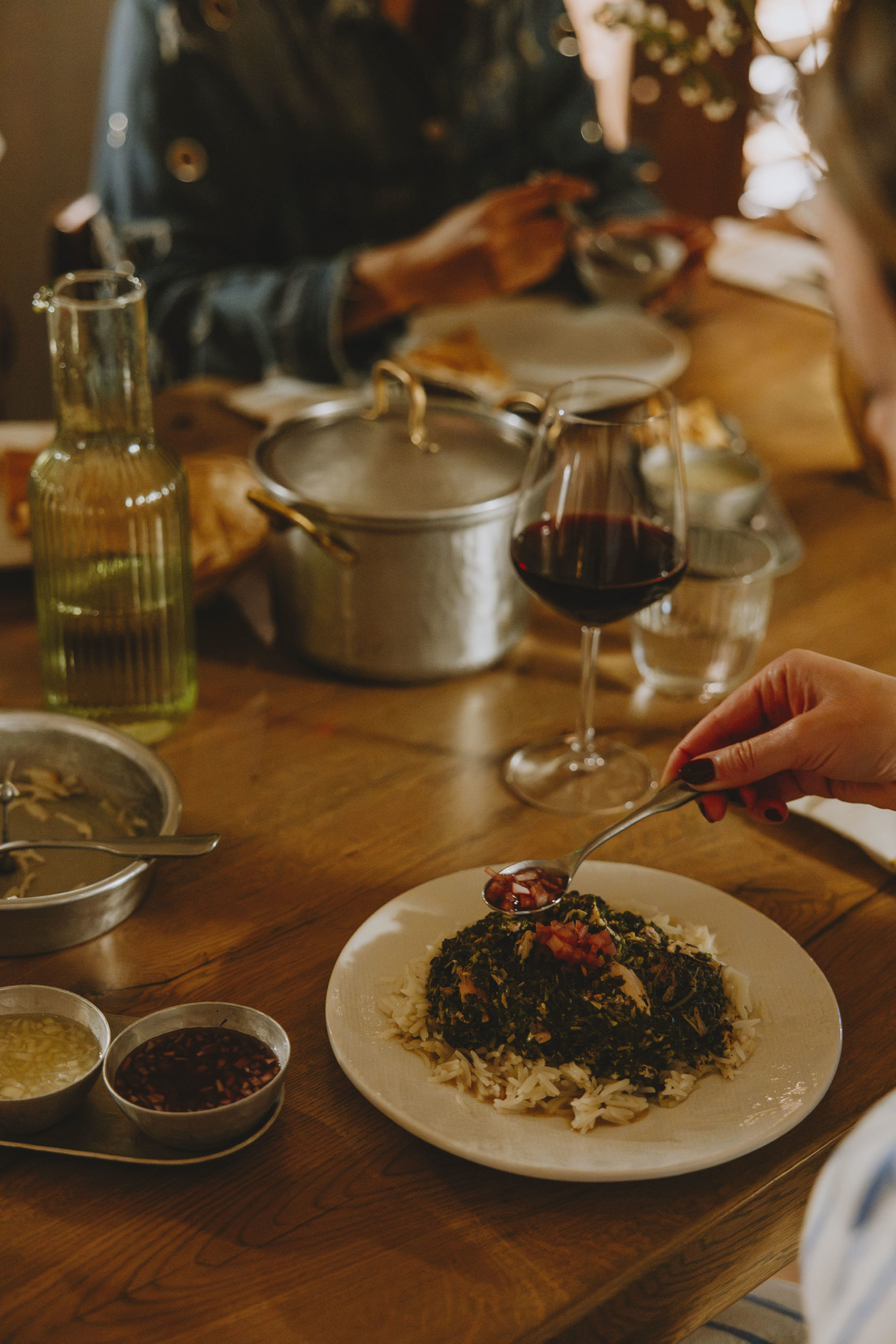
The team say they want diners to eat like you might in a family home in Lebanon
Rasha: A metaphorical stick. My background is slightly different; I pivoted from a finance and startup background to open Akub about three and a half years ago. That was about celebrating elements of my heritage – and food is such a nice way to do it. I’d been ordering from Len’s kitchen for about eight years, and Jad, Karim and I had this idea, Kinz, about two years ago.
Do you feel like there are any lessons you’re taking forward from Akub into this project?
Rasha: Yes, many. Akub is slightly different, it’s smaller and chef-led, and a different concept. But the learnings: for one, team energy is so important, we’ve been lucky to replicate that here. It’s funny how both the restaurants are so near to each other in Notting Hill and both telling special stories [about the Middle East] in their own way and very different styles. Some people will say Palestinian food is very similar to Lebanese food, but not in this case. They’re treated and presented in a very different way. So I think that’s the exciting part for us, to have Akub on one side and Kinz on the other.
What do people get confused about with the differences between both?
Rasha: So, firstly, there is no desert in Lebanon, whereas in Palestine there is desert. So the food profile is very different. For example, in Lebanon there’s a yoghurt dish that we eat with meat and rice – it’s fresh yoghurt that you boil and then you put kibbeh inside with rice. In Palestine and Jordan, there’s a similar dish but instead it’s fermented and dehydrated yoghurt, which is then rehydrated with stock from the lamb. So for a nomad in the desert, you just carry this yoghurt with you. The flavour profiles are very different, but both come from the same kind of basis. In Gaza, which is very close to Egypt, they love chilli, and especially fermented chillies. In Lebanon, we eat chilli, but we eat a crunchy fresh chilli or a pickled chilli – we don’t ferment them. At Akub, I can always tell when someone’s from Gaza because they order an extra bowl of chilli on the side. You’d almost never see that in a Lebanese restaurant.
Jad: It’s not typical of Lebanon at all. My mum would never reach for it.
Rasha: And the other big difference – Akub is reimagined dishes, based on the flavours and tastes of Palestinian food in different formats or shapes. Kinz is purely traditional Lebanese food. It’s what your mama would be cooking, not what a chef would reimagine. For example, at Akub we serve something called Red Lentil Moutabbal – moutabbal means mixed together, so it’s red lentils with tahini and lemon, which looks almost like hummus. At Kinz we just have hummus. One is taking the idea of hummus and reinterpreting it from a chef-led perspective; here it’s your traditional, very well-executed dishes. So you can go one night here and the other night there and never be bored.
Why do you think that Lebanese and Palestinian cuisines are frequently conflated?
Rasha: It’s because each have similar dishes, due to historic movements of people. The Ottomans came through the regions, then the Persians, then the Greeks – all went through Lebanon, Syria, Palestine, and parts of Jordan. Thus some flavour profiles made it through all those areas. For example, Tabbouleh is a Lebanese dish, but it made it to Palestine and is in Syria and Jordan. And who’s the proprietor of hummus? We could have a whole conversation on that… Like, who’s the proprietor of falafel? Is it Egypt, Palestine, Lebanon? There are fantastic food historians who study the travel of these dishes around the region. Muhammara, for example – a walnut and roasted pepper dish – probably comes from Turkey, but everybody eats it across Syria, Lebanon and Palestine. The area has been a melting pot of cultures for hundreds and thousands of years, which is what makes the food so special.
And then, here, in London – has Lebanese food been represented wholly as you’d like it to? Do we do it well here?
Jad: To be fair, London Lebanese restaurants have been doing Lebanese food for a long time, and it is a true taste of Lebanon. But where they differ, I’d say, is that a lot of Lebanese restaurants tend to do the same dishes over and over – grills as standard main courses, for example. Whereas what we want to focus on is what you’d expect to see if you went to someone’s home – the home-cooked dishes, the stews, the stuffed vine leaves, the aubergine dishes.
Our Warak wa Ab’rous [stuffed vine leaves] are amazing, it is a labour of love. It takes someone to sit there and roll the vine leaves individually, core the courgettes, stuff them with lamb, and then leave it on the hob for two and a half to three hours. Most restaurants won’t do it because it takes so much time. Even in Lebanon you won’t find it on most menus, whereas for us, that’s one of our staple main course dishes that we’re very proud of – dishes that you find when you go to people’s houses.
And beyond London – is Lebanese food global now, is it influencing other parts of the world?
Rasha: Yes. If you go to the beach in Rio, you get kibbeh – but they stuff it with shrimps, where we stuff it with meat. They’ve modernised it. Lebanese food in particular is a very easy food. It’s bright, it’s zesty, it’s olive oil, it’s very healthy. There’s a lot for vegetarians and vegans. You also don’t walk away feeling heavy if it’s done properly.
Jad: And, on that, I’ll tell you a funny story. When my wife Charlotte and I first got together – she’s English but grew up with a Brazilian stepmother – my mum offered her kibbeh and she said no, she didn’t like kibbeh. I asked her where she’d tried it, and she said in Brazil. She thought it was a Brazilian thing. So we went to a Brazilian takeaway and I bought a kibbeh from there, because I wanted to see why she didn’t like it. I took one bite, and it was completely different. In Brazil, it’s just a ball of the outer shell, not stuffed. I understood immediately. I said, Charlotte, when you come next time, try the real thing. She did, it was completely different, and now it’s her favourite dish. There are 15 million Lebanese around the world and only 4 million in Lebanon – we travel very well.
Kinz is open now at 50 Notting Hill Gate W11 3JD, kinzrestaurant.com