


Inside The Garden of Tomorrow: Where Nature Is The Headline Act
By
3 months ago
'What made my heart so full is the amount of people who feel they left the festival and their mindsets have had a shift'
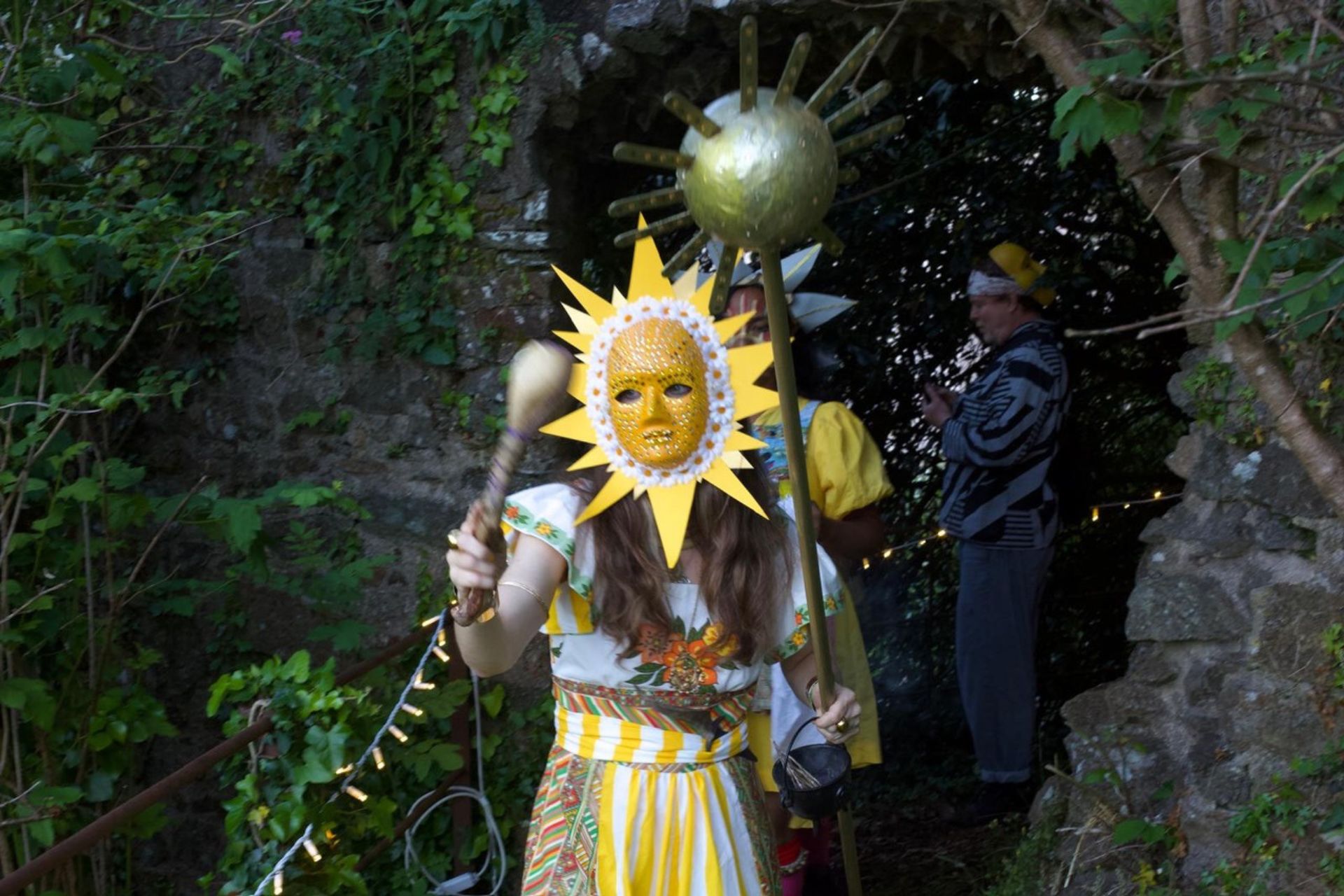
As the midsummer sun reached its peak over Trematon Castle, there was no festival roar of clinking beer cans or heavy soundchecks coming from the stages. Instead – a crowd of 200 people silently pledged their vows to the earth beneath our feet.
I was partaking in a literal marriage to nature, complete with vows and wedding speeches, and nobody was laughing. If anything, the atmosphere was thick with a mystical, collective reverence for the world around us. Within these high stone walls, it somehow didn’t feel that weird – more like the only logical response to a world in crisis, and a moment of calm shared between a group of connected souls.
Welcome to Garden of Tomorrow, a radical new cultural experiment held within the edenic gardens of Trematon Castle in Cornwall. The theme? Solstice, with the festival spanning across the longest day of the year from 19 to 22 June. Capped at just 300 guests, this was an intimate, luxury gathering of artists, designers and environmental thinkers, hosted by Frieda Gormley inside House of Hackney’s Cornish stronghold.
Credit: William Templeton
What Is Garden Of Tomorrow?
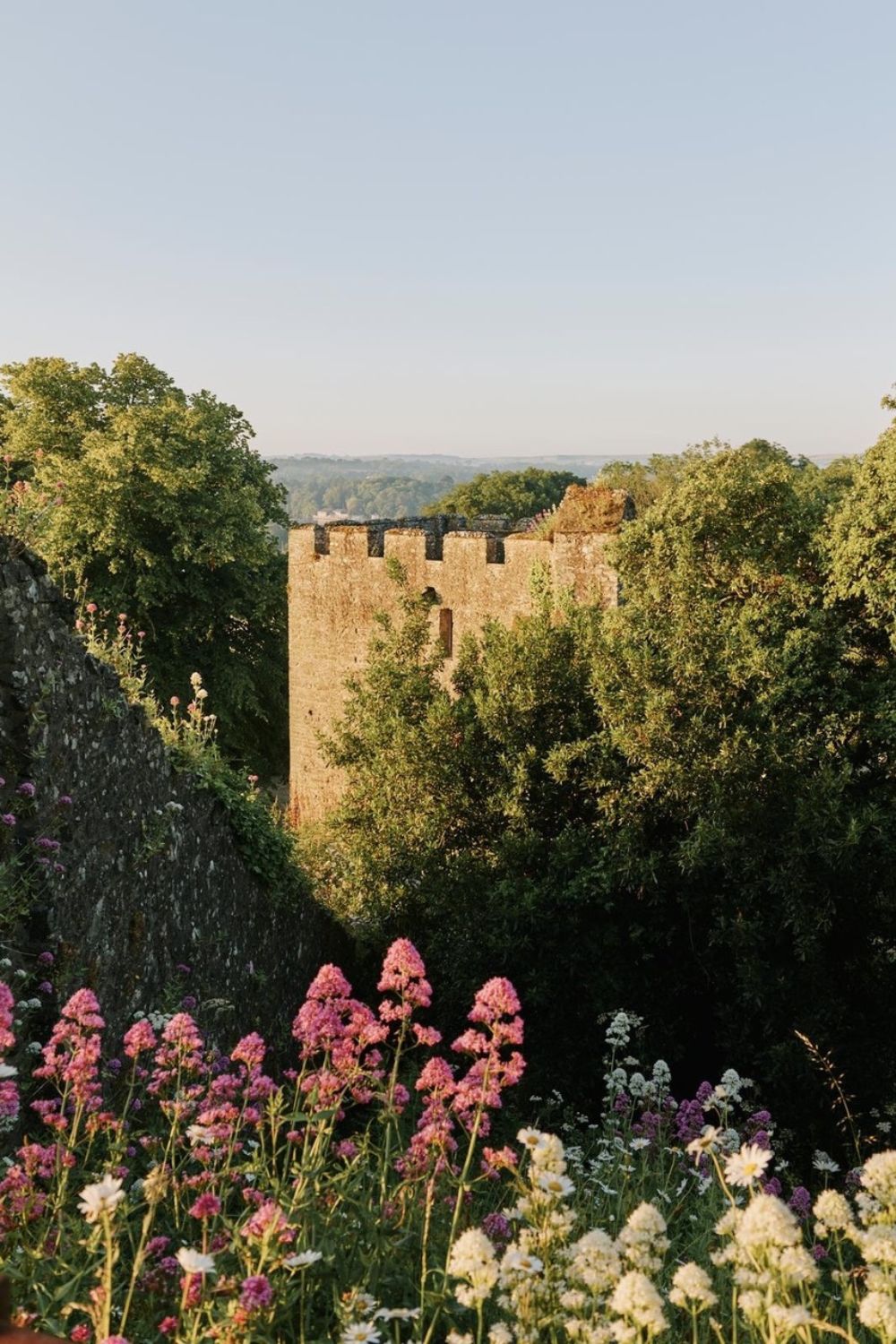
Wandering around Trematon’s grounds was like basking in a sort of botanical opulence. A 1066 fortress once belonging to William the Conqueror’s brother, its historic rooms now feature grand, romantic antiques and wallpaper blooming with maximalist flora. But last weekend, the focus shifted to the living world outside, where the historic keep and sunken stages became the backdrop for a profound ecological celebration.
For decades, festivals have treated nature as a pretty, passive backdrop, or worse, an ecosystem to be trampled on. Famously, many have had to resort to fallow years just for the land to recover from all the debauchery. At Garden of Tomorrow, the question was more sophisticated, what happens when nature is not the venue, but the billed artist?
To make this happen, every single musician on the line-up was issued a clear brief: you must deeply collaborate with the living world on stage. I read the brief the artists were sent and, refreshingly, the instructions were not a generic ‘add nature sounds to your set’. Instead, the document encouraged them to think about listening differently, creating space on stage and recognising the living world as a creative force and – of course – the original composer.
Credit: Louis de Rohan
At times, the sonic boundary between avant-garde art and random background noise became beautifully, if slightly confusingly, blurred. But as founder Frieda Gormley noted, perfection isn’t the point.
‘Regeneration work can be joyful,’ she tells me. ‘The key thread here is the power of culture to really shift the narrative and the power of creativity, music and art to move people. As humans these are our unique gifts. The rest of nature can make music and sound, but I think humans’ unique gift is the moral imagination, the ability to look back, reflect, envisage into the future and action that.’
The financial model behind this imagination is equally pioneering. Through the Sounds Right initiative, a portion of the streaming revenues from tracks that collaborated with NATURE as an artist (look her up on Spotify) are permanently directed toward global conservation and biodiversity projects – such as in the Amazon and Congo basins, funding grassroots ecosystem restoration in Colombia, and marine and coastal conservation in Cameroon and the Asia-Pacific.
On top of that, 100 percent of the festival profits went directly to EarthPercent, a major climate foundation within the music industry. Co-founded by the legendary ambient pioneer and producer Brian Eno, the charity acts as a direct conduit between the music ecosystem and frontline environmental action. The result of this collaboration was an extraordinary sensory shift for us, the guests.
Credit: William Templeton
Solstice Review
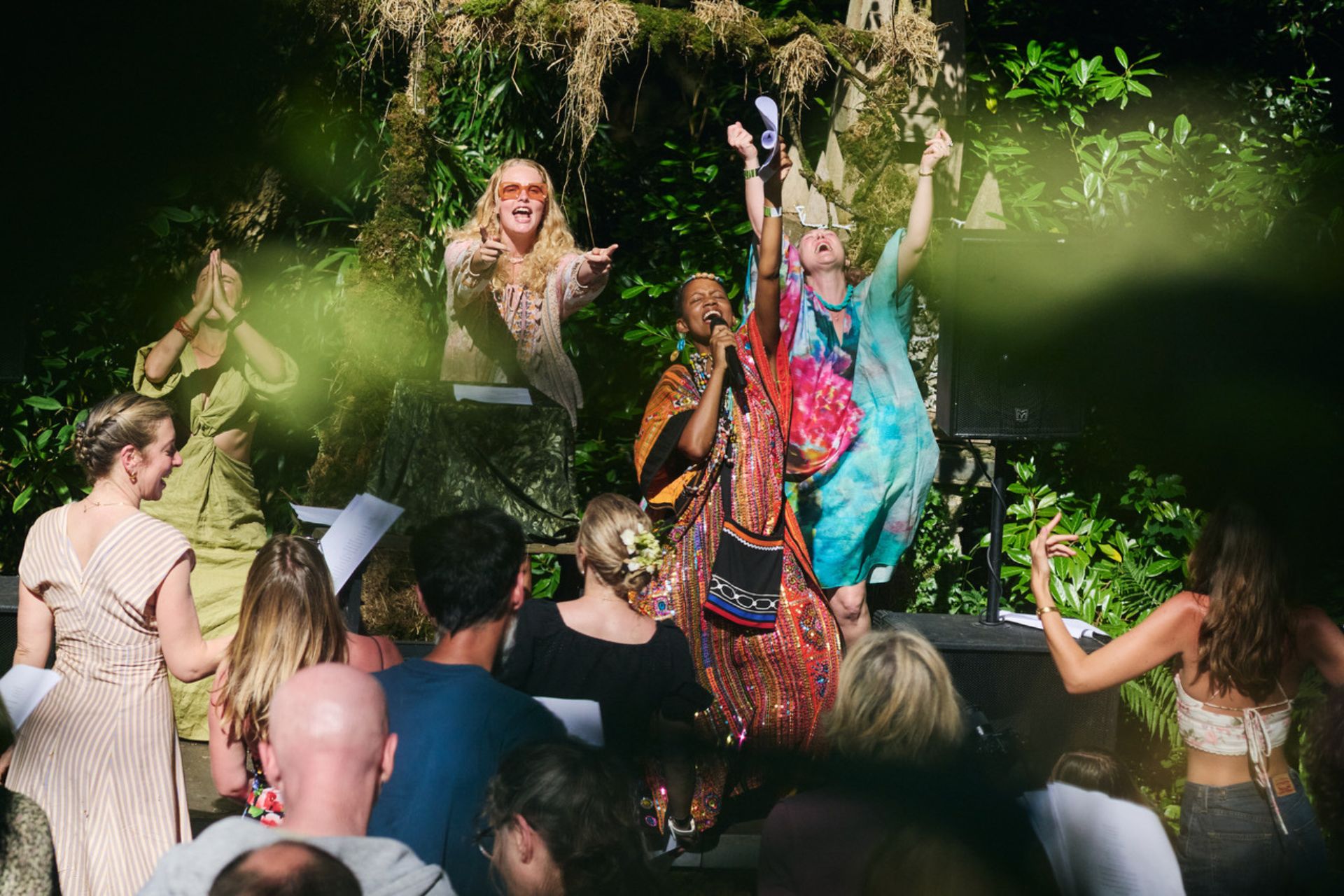
On Friday evening, a three-part listening journey produced by Auntie Flo and Plum Village entered us into a lush nature symphony. Later, hip-hop artist and zoologist Louis VI took to the stage. Known for his fierce advocacy for environmental justice, his tracks were punctuated by calls from the endangered mountain chicken frog, native to Dominica (of which there are only around 50 left) layered against a syncopated bassline.
The next afternoon, the wizard-like Cosmo Sheldrake, who plays at least 30 different instruments, turned the castle grounds into a theatre of interspecies imagination. He treated the audience to what he described as ‘oceanic hip-hop’, a dizzying composition where you could hear the clicking of a sperm whale, a humpback whale on the bass and the degraded sounds of an Indonesian coral reef, layered with the bizarre grunts of an oyster toadfish.
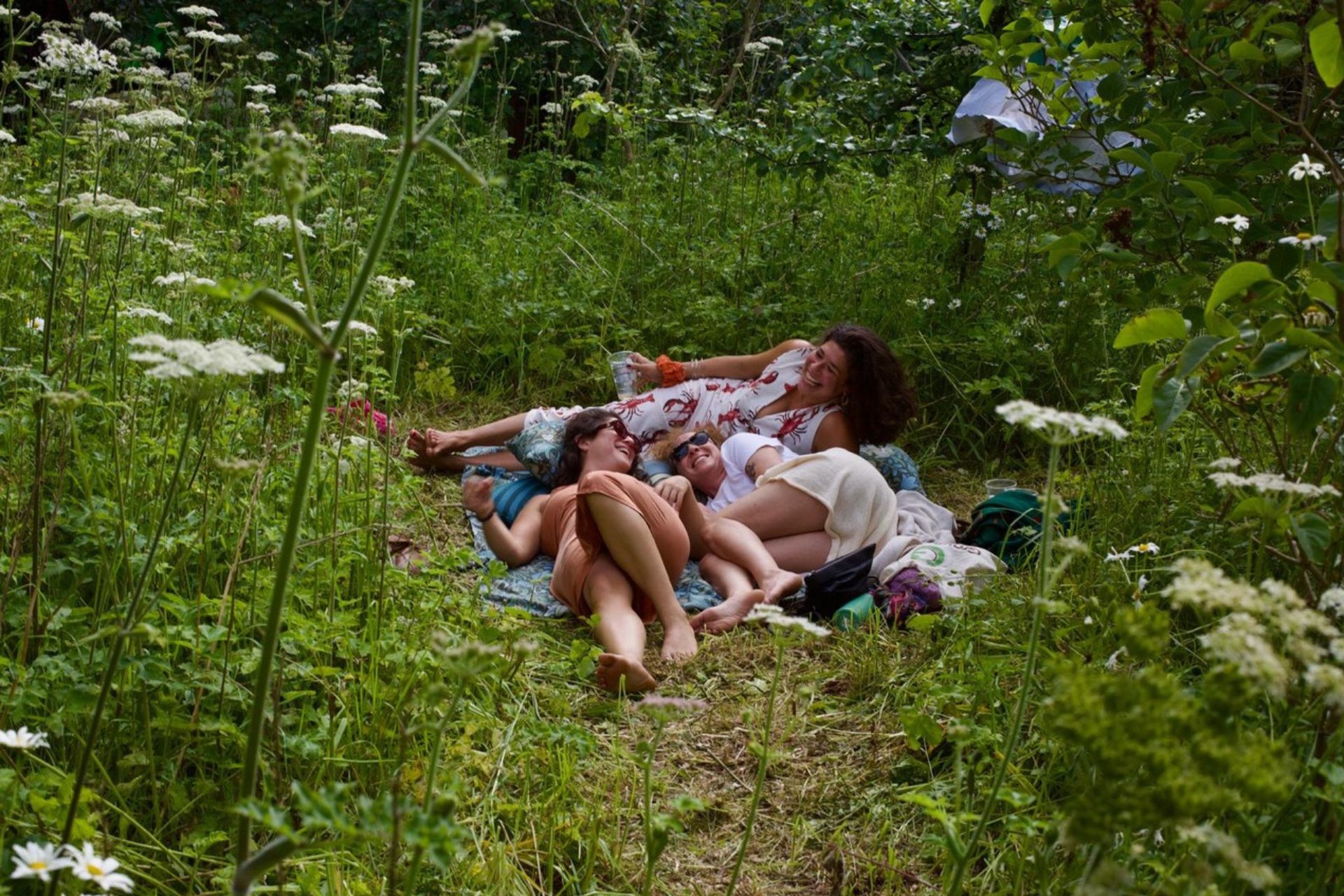
Between sets, the crowd, which included everyone from eco-activist Jack Harries to electronic pioneer Alexis Taylor of Hot Chip, ambled through a landscape that felt like a permanent state of midsummer wonderland. You would walk through a wildflower meadow to find a hidden swimming pool that looked like nirvana, or sit on the grass with a plate of lentil dahl, grilled halloumi and a glass of crisp Sauvignon Blanc sourced from Shillingham Vineyard, on the banks of the River Lynher just next door.
Credit: Christopher Horwood
But Garden of Tomorrow never fell entirely into a state of mindless hedonism. The programming was underpinned by genuine intellectual rigour. With panels curated by the likes of Christabel Reed from Advaya, the conversations moved seamlessly between culture, land rights and folklore. Legendary community artist and filmmaker Jeremy Deller hosted a packed talk on his public art installations, while Sophia Shnapp, herself part of the founding team at EarthPercent, delivered a live rendition of her recent TED talk on how our world is fundamentally ‘out of tune’.
‘We have created dissonances in the very living system we are part of,’ she says. ‘I spent a decade of my life deep in the heart of international climate policy. But I watched more politicians cry in karaoke bars than in the climate negotiations. Music did what policy couldn’t. It helped them feel. Because if we can’t feel something, how can any of us possibly care?’
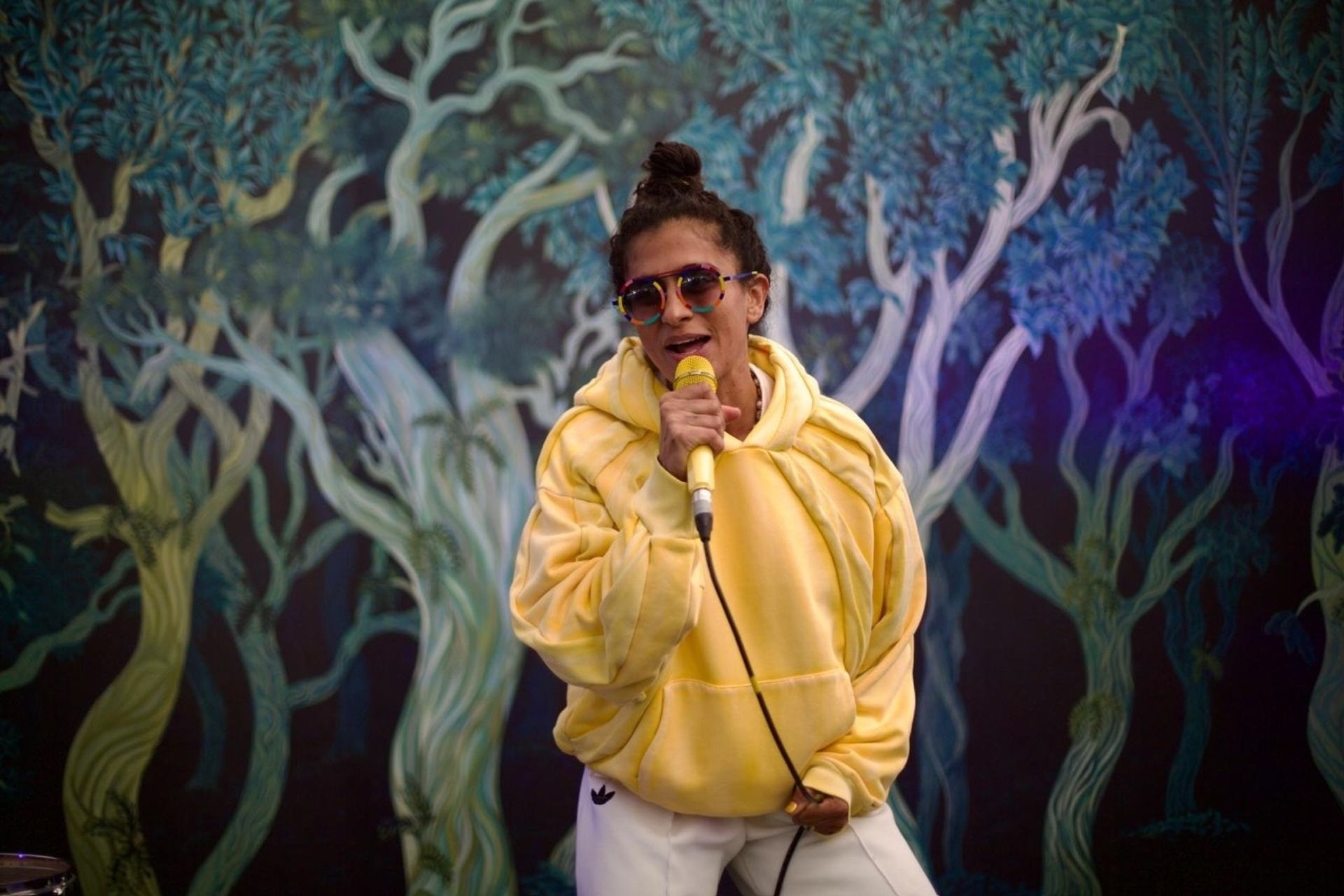
Madame Ghandi. Credit: William Templeton
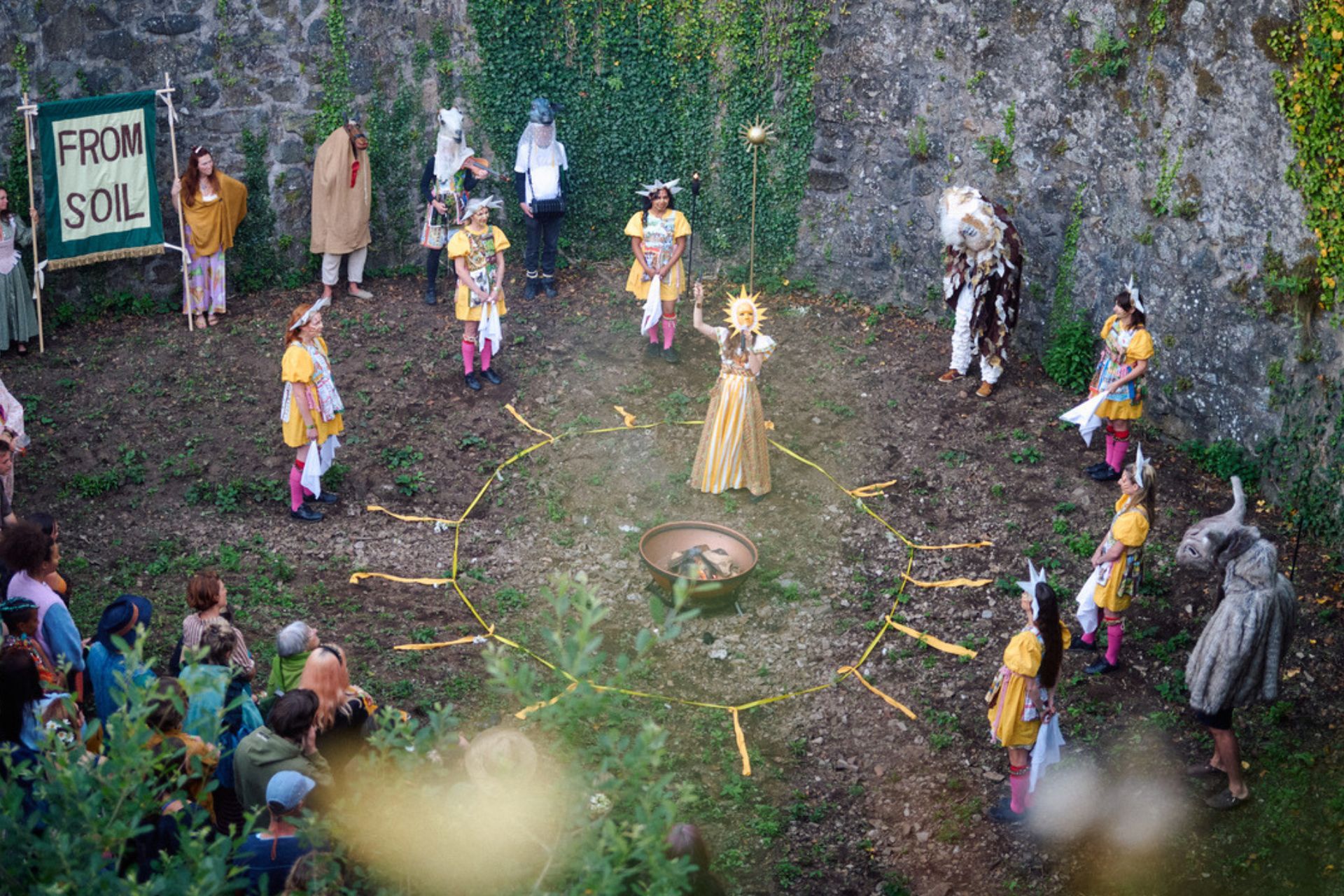
As night fell over the 1066 medieval keep, the festival took on a more pagan energy. Author and mystic Tree Carr hosted a summer solstice ceremony that tapped into witchy magic, complete with dancers and embroidered animals navigating the shadows of the ancient stone walls. Later, I lay on the earth during a sober sound trip led by DJ Andy Bell, the former Oasis bassist. Listening to a deep, textured landscape of sound beneath the Cornish sky, the music felt like a mutual conversation between the artists and the breeze.
By Sunday morning, eating fresh nettle scones and a cup of cacao in the shadow of the castle, any lingering questions I’d had about the exclusivity of the event melted away.
‘What made my heart so full is the amount of people who feel they left the festival and their mindsets have had a shift,’ Gormley reflected as the tents came down. ‘They are looking at nature through a new lens. That’s the work we’re trying to do.’ This tiny Cornish gathering showed me that moving people to care about the planet requires more than data – we need to harness the power of culture to move hearts and minds. At Trematon Castle, nature took centre stage, just as she always should.