


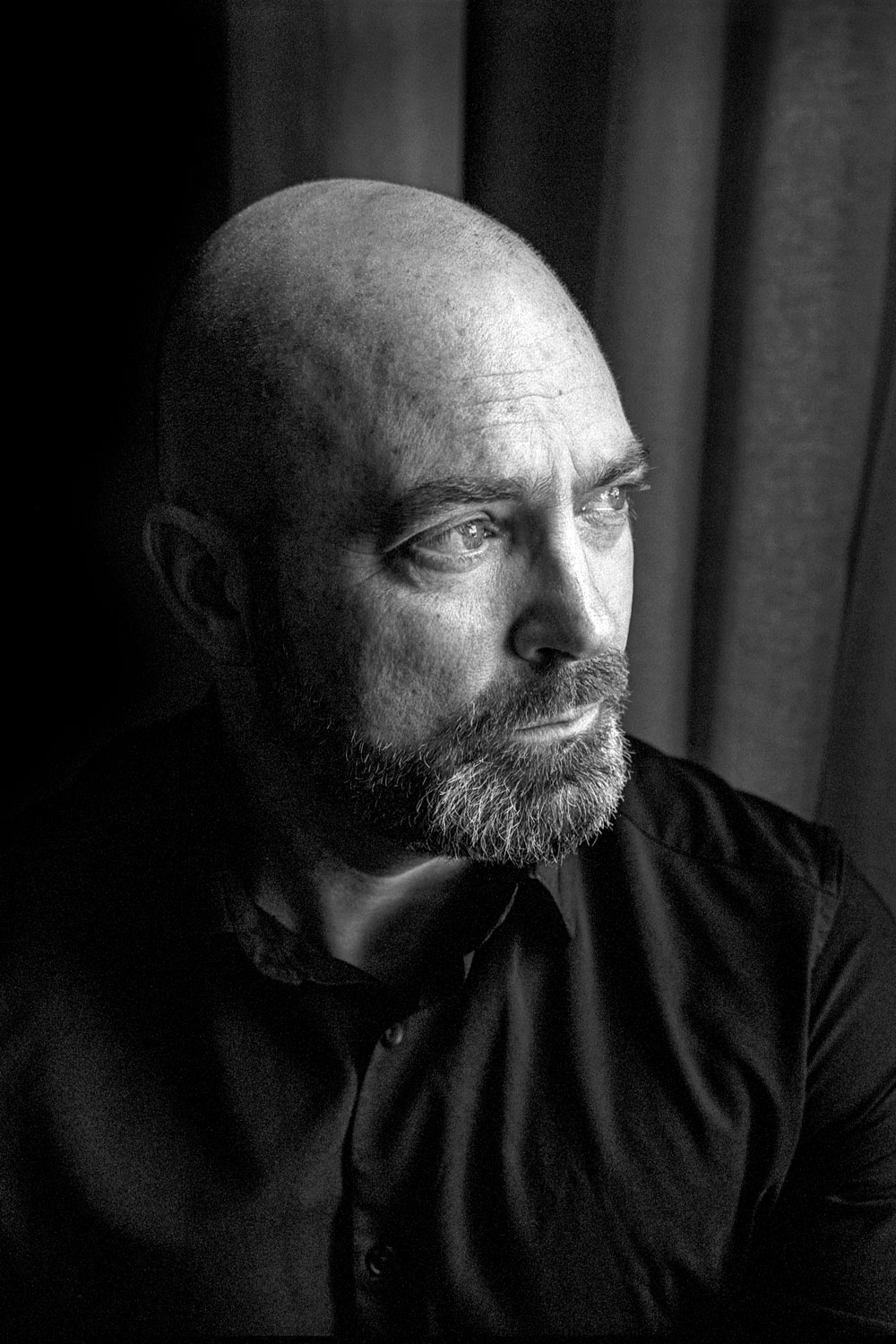
Donal Ryan On The Deep-Rooted Grit Of The Irish
By
2 months ago
Where are the Kings is out today (13 Aug)
In August’s Book Club, Irish multi-award winning author Donal Ryan talks to Belinda Bamber about beauty, grief and the deep-rooted grit of the Irish.
C&TH Book Club: Where are the Kings by Donal Ryan
What’s the story in a sentence?
It’s the story of two years in the life of a boy, Jack, who has lost his whole world.
How did it begin, and did you know the ending from the start?
It began, like most stories, as a dim blur of an idea that gained definition slowly and incrementally over months, maybe years. I first gave Jack an outing in language as an unnamed character in a chapter of an unpublished novel that I wrote four or five years ago. I didn’t tell his story there, but he felt very real, and weighted with history. The final moment in the novel was clear in my head before I started to write. It’s a highly symbolic moment, and still believable, I think. I could see it happening, I could feel all the parts of it.
Why did you write Jack’s story in the third person, instead of one of your characteristic monologues?
I actually write mostly in the third person, though I know it doesn’t seem that way, as I usually use a very close third-person voice. Of my eight novels, including this one, only three are written in first-person. I couldn’t find a way to a monologue for Jack that felt authentic; I found myself stuck in a mimetic Holden Caulfield mode, or reaching for a flamboyant Vernon God Little; then I considered an epistolary arrangement where Jack left voice notes for his dad, or wrote letters to his mom, but neither approach felt right. Finally, the options narrowed to one, the close-third, where I’m most comfortable, really. There’s no harm in allowing yourself a bit of comfort.
The title, Where are the Kings, comes from Yeats, but why did you leave off the question mark?
I’ve tried and failed to think of a brainy, cool reason for leaving out Yeats’s question mark. I just don’t really like the look of some punctuation points. They feel weirdly insectile. And ‘where’ itself is interrogative. It’s like quotation marks. I completely understand how their absence upsets some readers, and how my merged speech can cause problems, but I resent them in my text. They make no sound. I always want to brush them away, to open a window and let them out.
This novel resonates with deep grief, particularly Jack’s overnight loss of his beloved parents, one to a mental breakdown. The first novel you wrote, The Thing About December, also began with the loss of a parent. Why has grief been such a deep vein in your writing, even before you experienced the loss of your own parents?
Grief can be absorbed, inherited, assumed, appropriated, long before it’s directly experienced. I was always aware of it, bracing for it, as a child. I had a happy childhood, though. I dwell in my imagination in my childhood home in times of stress. Grief is a major theme in my writing because it’s a major theme in life. I gave myself the task, when I started out, of writing about good people – as most people are – and describing what I understood, or wanted to understand, about how they existed. This novel describes situations with which I’m deeply familiar. I didn’t have to make any of it up, just transpose the experiences to a different body and a different time. I don’t usually stray too far from home, in every sense of the word, when I write.
This novel is also full of heartlifting moments when Jack feels connected and alive – such as when he’s working alongside his uncles Theo and Haulie. You give hope that it’s possible for him to rebuild his life with the help of his extended family. Where do you yourself find joy when the undertow of loss feels overwhelming?
Everywhere. We’re all surrounded by saving beauty all the time. Sometimes I feel so happy for no real reason except the way light falls on a field of grass that I feel guilty about it, like it’s too much of a gift for me. I tried to articulate some of that in Jack. He comes to love the sound of engines, the way oil smells, the way it drains from a sump. And he feels almost undeserving of that simple pleasure because of what’s happened to his family. It’s a natural human instinct, I think, to feel guilty about pleasure, when there’s so much suffering in the world. But I’ve learnt that we have to let go of guilt and allow beauty to wash over us, to remind us of the wonder of it all, the way that the temporal can become divine.
I was worried for Jack when he first moved to his grandparents’ house, but you gradually won me round to each eccentric member of his estranged family. You often give voice to complex, difficult characters in your novels, so where does your extraordinary empathy and respect for others come from?
I was worried too, to be honest. I was convinced for a while that I’d never get Jack out of that living room in the second chapter. Until JJ had his outburst and Grandad slapped the shit out of him. I hadn’t been expecting that to happen but the characters worked away themselves, thank God. Theo and Haulie are still blurry shapes in the near distance in that chapter; ageless and formless, waiting to stretch their hands out to Jack, to catch him when he falls. Those people are familiar to me. I’ve been lucky enough to know very kind, very laconic, stoic people all my life, who don’t need to perform their kindness; they wouldn’t know how, they wouldn’t know any other way of being.
Is there anyone for whom you would struggle to find redemption?
I struggle to find redemption for loads of people. I have to try really hard to tamp down my anger all the time, to force myself towards some kind of semblance of empathy. I used to spend a bit of time in court in an old job. I remember once hearing a judge tell a guy that he was ‘really impressed’ because he’d come to court with some cock and bull story about having changed his ways, having done some course or other. The guy had, for no reason, attacked another young guy on the street who was just walking home, and slashed his face with a knife, disfiguring him. It made the whole courtroom feel sick, the way the judge was kissing the scumbag’s ass. That happens a lot. It makes me feel redundantly (euphemistically) murderous. I can’t understand how anyone can ever think it’s okay to hurt someone else, no matter what’s happened in their life.
Many of your characters reappear in different novels, giving the reader a sense of community. Jim Gildea, for example, enters many stories like a good shepherd, bringing a sense of order and justice, more like a wise priest than a policeman. In this one, he earns extra fruitcake from Nan for his compassionate understanding of why Rose ended up punching Butty Dowel. Does he represent your own moral compass?
I love Jim Gildea. He’s in all my novels and loads of my short stories. He arrives into a scene belly first and just sorts things out. He’s an old-fashioned, sensible, kind cop. He’s got vast stores of emotional intelligence and empathy, and he’s perennially underestimated, like a lot of quietly rational and sensible people. Jim is such a great character that I’ve noticed him turning up in other writers’ novels! But of course I drew on characters similar to Jim myself, in life and in fiction.
Jim is aspirational for me, as are nearly all of my good and strong male characters. I wish I was more like him, like I wish I was more like Bobby Mahon or Theo and Haulie. Jim knows the score in any given situation almost immediately. He’ll bumble about Columbo-like for a bit before subtly revealing the truth of himself, and his own instinct for truth and natural justice. He’s not afraid of bending all sorts of rules to expedite a ‘case’ and to direct people acting foolishly back towards common sense.
Jack is introduced as ‘a good boy’, but that’s a tough label to live up to. What does it mean, really, to be good? I think you yourself come across as ‘a good man’, both in your writing and your public appearances, but is it reductive of me to suggest that?
I’m grievously flawed, like every human. The goodness of my characters, especially in this novel, represents on the one hand something almost Panglossian in my hope that everything will eventually work out for the best, that goodness and kindness will ultimately triumph; and on the other hand my depiction of their goodness is drawn directly from my experience of goodness and kindness shown by the people around me in my life. But I’m always aware of the impossibility of absolute knowledge about other people, other lives. It’s a dark well we draw from when we attempt to explicate humanity through language. Wonder propels most writers, the attempt to confront the unanswerable. What are we really like?
It’s true that every character in this novel, as in your others, is capable of violent thoughts, if not actual deeds. What makes you angry?
I’ve probably sounded a bit angry in this interview already! I probably shouldn’t answer these questions until I’ve eaten. But I’m on this bloody intermittent fasting thing. Oh well. Self-importance pisses me right off; self-obsession; people who can’t stop thinking about themselves, worrying about themselves, studying themselves, telling you about themselves. But they’re mostly harmless, in fairness, just wearying. People who are absolutely convinced of their rectitude, moral or otherwise, worry me. Absolutists, ideologues, have always caused terrible problems for the world. I try to avoid them. I like people who wonder, who change their mind, who are open and accepting of differences of outlook and opinion and belief.
Why do so many of your characters, including Jack, struggle with the impulse to end it all?
I think it’s a much more common impulse than we admit to ourselves. I won’t bang on with half-baked, appropriated philosophising about staring into the void, but death has its own strange and constant appeal. The end of all pain and all possibility of pain, the lightless relief of extinction. But I believe deeply that we are all flawed and complex iterations of something pure and divine, that we are eternal, that we have a purpose and a reason for being here on this plane of existence, and that we have an obligation to hold on, and to strike for the joyful, and to take care of the people we love, and allow them to take care of us.
Time and memory run like a deep stream of meditation in this novel. Do you appreciate the temporal aspect of our lives, which has provided a structural framework for some of your earlier novels and which hopefully will give your own life a well-balanced beginning, middle and end, or do you rail against time’s arrow?
I was obsessed with Shakespeare’s sonnet [number 60] about the inexorability of time when I was in my early teens. I still love it. I use it as a pace-setter when I run, a syllable per step. One recitation is a tenth of a mile at a nine-minute pace. Like as the waves make towards the pebbled shore, / So do our minutes hasten to their end; / Each changing place with that which goes before, / In sequent toil all forwards do contend.
I read books now about quantum theory, and I slow right down for chapters on entropy, on the nature of time, its connection to chaos, to the dispersal of particles, the arrangement of the universe’s parts. I wrote a story once called ‘Tommy and Moon’, a vain attempt at articulating the idea that time doesn’t exist as we perceive it, but rather as a mechanism that allows, or shapes, perception.
It could easily drive you mad, the idea of time. On a more practical level, I always thought that I’d start to panic as I entered the middle to late part of middle-age about time running out, but I haven’t panicked yet, a half century in. Maybe it’s a particular kind of laziness, but I don’t have a list of unfulfilled ambitions, or any desire to experience as much as possible before I die. What comes my way comes my way, all I can do is my own work, to the best of my ability.
Talking of old age, the grandparents in your books are marvellously contrary in their capacity for wisdom, folly, comfort, violence, loyalty, stoicism and hilarity. You make grandparents an integral part of the push-pull of family life in which youngsters learn to navigate the wider world. Yet multi-generational families are increasingly rare in Britain and everyone dreads the care home – are you writing about a vanishing world?
Yes, I agree. The world of the matriarchal/patriarchal, wise and benevolent grandparent is vanishing. Language around old age is increasingly patronising, pejorative, resentful; there’s so much talk of ‘our ageing population’ like it’s a negative that people have longer lives now. The word ‘boomer’ has invaded the idiots’ lexicon and it’s often deployed with venomous hatred. We have to honour and respect and learn from our forebears.
My father’s father and my mother’s mother were a huge part of my life, and they still influence how I behave and how I see the world. They were beautiful, hard-working, faithful, loyal, loving Irish country people, the best people in the world. I never met my paternal grandmother, but I feel a deep affinity with her spirit. People’s memories of her have become almost my own memories. She was, like my other Nana, so kind, so funny, and so loved. She was a caretaker farmer, and she had a library in her cottage of banned books. She ran an underground railroad of the censored. Edna O’Brien, JP Donleavy, Kate O’Brien, all secreted behind a couch, and borrowed by all sorts of ‘bigshots’, on condition that they were returned promptly and in the same condition.
How do you remember so well what it’s like to be a child observing adult behaviour? And did you experience the anguish, confusion, embarrassment and hilarity you describe so piercingly about Jack’s adolescence?
I used to hide under the kitchen table when my mum’s friends called around. It seemed some days like every woman in the village was in our kitchen, smoking cigarettes and gossiping about whoever wasn’t there. I was hooked. I loved them all, the sounds of them, the smell of fags, perfume, countryside, baking bread, the mad hilarity of some of the things they said, their profanity, their wicked turns of phrase. And all the dads of the area were a howl as well, my neighbours and uncles, all seeming to hold these huge mysteries about the grown-up world, that they revealed glimpses of in crazy jokes and aphoristic speech. I was learning to be a writer by watching them and listening to them, and I didn’t even know it.
Your characters take different kinds of risks, requiring courage or recklessness. What risks are you conscious of taking in your writing and which do you avoid?
I avoid descriptions of physical intimacy. I feel no impulse to do so, and it’s never really been narratively crucial in my work, and also, I will never take the risk of being nominated for or awarded one of those smug, sneery, juvenile ‘awards’ that those preppy magazines give out. My blood pressure is already too high. I was named ‘Log Roller of the Year’ once (by Private Eye I think) and it was all I could do not to fly to London and punch some posh boy’s lights out. But seriously, you have to take all sorts of risks all the time as a writer of fiction, because, no matter how informed you are, or how autobiographical you’re being, you’re always making guesses about how it might be to be someone else.
You described writing as an apprenticeship even with two published novels under your belt, are you still learning anything about your craft after nine?
I actually think that reading is the best apprenticeship for a writer, wide, open-minded, open-hearted reading, of everything: fiction, non-fiction, poetry, drama, journalism, song-lyrics, advertising copy, the back of the cereal box… I will never stop learning about storytelling, nor will any of us; we’re passively absorbing stories all the time, we’re all immersed in them, composed of them. And every time I sit down to write a story or a novel I’m starting off as a writer again from scratch. It’s different every time, and just as daunting, and just as full of joy.
Whenever I read your books I start phrasing my own thoughts in the cadence and idiom of your characters, it’s like music that takes over my head. When did you realise this distinctive voice was your literary gift? It reads like poetry to many British readers (including bolloxology, my new favourite word), but how does it land with your Irish neighbours?
People seem to appreciate it. I’m not doing anything new – writers around the world have used a demotic voice since the very beginning of recorded narrative. But the beautiful lilt and cadence of my native place gave me a voice that felt authentic. An American blogger turned literary agent called Cassie Mannes Murray once dismissed The Spinning Heart as one of the worst books ever written, and she further dismissed my vernacular as no achievement; it was, she declared, “just the slang and grit” of my own people. I actually forgave her the invective for that one lovely phrase. I love, and am deeply indebted to, the slang and grit of my own people.
You were brought up in Tipperary but live in Limerick, where you lecture at the university. Do you see yourself as ‘a chronicler of modern Irish life’ as some critics have suggested? What’s the most defining aspect of your Irish roots?
I’ve lived in Limerick city for over thirty years. Ever since I was an enthusiastic but blundering student of civil engineering at Limerick Institute of Technology. I was even given the huge honour of being named Limerick Person of the Year in 2013! But I can see the Silvermines mountains from my attic window, so the hills and lakeshore from where my people came are just down the road. I couldn’t bear to live away from Tipperary. I love the green and giving place I’m from with all my heart, and the people that live there. We’re as flawed and complex and full of contradictions in rural Ireland as people anywhere, but our ancestors struggled for the bones of a thousand years to live free, and the land that gives us life is sacred. We are defined to a great extent by the battles of our forebears, the sacrifices they made for us.
Your early novels described the terrible impact of the recession on Ireland, the struggles for fair pay and the housing crisis. What’s your greatest worry for your country right now?
The biggest danger to Ireland is political virtue-signalling.
Which writers and song lyricists have influenced you?
I’m influenced to some extent or other, by everything I experience and read. People like Stephen King, Doris Lessing, Roddy Doyle, Margaret Atwood, Roald Dahl, Enid Blyton, John McGahern, Frank McCourt, Syliva Plath, shaped me as a writer. And there is no song lyricist who ever lived that comes close to our own beloved Shane MacGowan. Bed of Heaven to the good man.
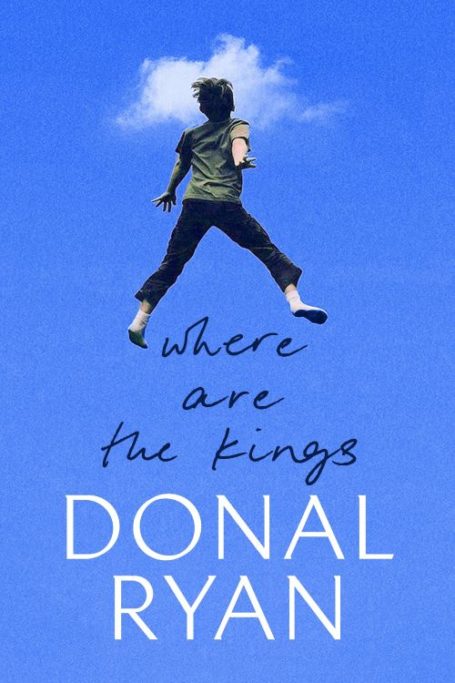
Where Are the Kings by Donal Ryan is published by Transworld today, 13 August 2026
Hardback, £16.99