


‘Homer Is For Everyone’: How Emily Wilson Elucidates & Obfuscates In Equal Measure
By
2 months ago
Homer's epic poem is at the centre of the culture war, a clash this classicist has been battling for a decade
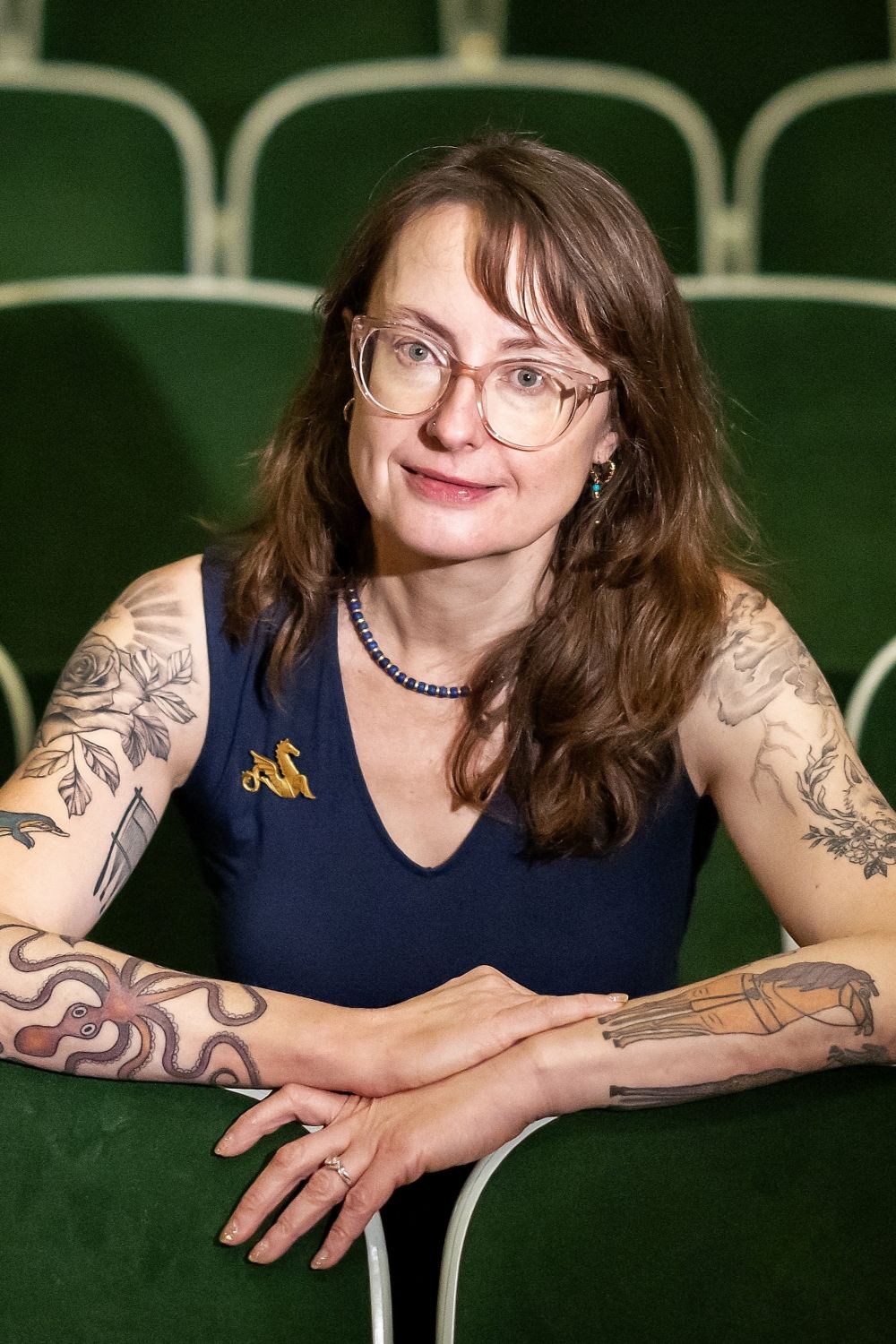
Classicist Emily Wilson has made headlines in recent weeks for slating Christopher Nolan’s blockbuster adaptation of The Odyssey – for which the director, for better or worse, cited Wilson’s lucid 2017 translation as an inspiration. She wryly tells Country & Town House: ‘It’s been fun to get to talk to so many different people about Homer! I never get tired of rereading, thinking about and discussing the Odyssey, and it’s really fun to realise that, thanks to Christopher Nolan, many more people feel the same way.’
The historical action film was shot entirely with IMAX 70mm film cameras (the first feature film to do so) on location in Morocco, Greece, Sicily, Iceland and more. It is currently the sixth-highest-grossing film of the year, pulling audiences worth $683 million into premium cinemas worldwide. However she feels about Nolan’s at times inaccurate spin on the source material, Wilson says: ‘It’s wonderful to see the value of a humanities education demonstrated out in the world [Nolan has an English Literature BA from University College London] – I hope many deans and those who hold the educational purse strings will take note. More broadly, I hope the film, and the huge sales of the Odyssey in mine and many other translations, will bring many more people to the study of literature, history and classics, whether in academia or just as curious readers.’
But today we are here to talk about another of Wilson’s works, one which has perhaps sunk beneath the shipwreck of recent headlines. Crossing the Wine-Dark Sea, published earlier this summer, scrutinises the role of the translator across a series of essays that span Homer to Cardi B, Helen of Troy to Han Kang. ‘It’s a book about the fascinations and challenges of reading, interpreting and translating ancient Greek and Roman literature, and the surprising gaps and equally surprising links between antiquity and modernity,’ is how the translator herself summarises it, hoping both seasoned classicists and newcomers alike will find something illuminating inside.
And as audiences embrace Nolan’s Odyssey in droves, there has nary been a better time to bat away the obfuscating egos that for so long have cast murky shadows over classical literature. But Wilson, whose translations are now the modern standard on many university courses, has been denigrated as much as she has been lauded for the lucidity of her translations of these cornerstone texts. Indeed, where Tom Holland’s Americanised ‘Dad’ rings through Nolan’s film, so too do Wilson’s modernisms through her Odyssey on the page: ‘bad luck,’ ‘poor unhappy man,’ and the opening line that launched a thousand critiques, ‘Tell me about a complicated man’.
‘Classics, in both the UK and the US, has sometimes been used as a tool of social gatekeeping, and knowledge of classics has itself been gate-kept,’ Wilson says. ‘Both these things strike me as very unfair, bad for society as a whole, and also bad for the field of classical scholarship. Nobody in the modern world is an ancient Greek or Roman. The study of these very alien ancient cultures belongs to us all, and all of us can benefit from engaging with worlds that are both so very strange to us, and yet so extraordinarily resonant with our own worlds and lives.’
Wilson’s 2017 translation of the Odyssey was the first complete translation to be published by a woman and, in its simple modern English syntax, it broke away from the canon of more flowery, archetypally poetic takes on ancient Greek literature. As Wilson herself puts it in an essay in Crossing the Wine-Dark Sea, originally published in the London Review of Books, Robert Browning’s translation of Aeschylus’s Agamemnon is ‘arguably more difficult to understand than the Greek’.
When I probe this refusal to obfuscate, Wilson retorts that ‘a translator should obfuscate, if the original obfuscates’, adding: ‘If the original is in some meaningful way clear or obscure, I think my job as a translator includes echoing that obscurity. For instance, in my translation of Oedipus Tyrannos, I very much wanted to replicate the dense, riddling, punning language, which is so different from the poetics of Homer. I adore Sophocles, and Seneca, and Euripides, and I want those differences, of difficulty and of denseness in the language, and of other stylistic elements like allusiveness, to be legible in the translations I create of them.
‘But Homer doesn’t obfuscate,’ she continues, ‘and I want people who won’t have time in this lifetime to learn Homeric Greek to have the option of a profound, clear, vivid engagement with what are (I believe) two of the most profound works of world literature. My goal is to make translations of the poems that are like the originals.’ She does this in several ways, including echoing the meter of the original and avoiding free verse and prose, the crutches many contemporary translators lean on.
She also strives towards enargeia – ‘the vividness and excitement and emotional impact of Homeric poetry’. ‘If the original feels rapid, clear, thrilling, or heartbreaking, I want the translation to have those qualities too, as much as I can manage,’ Wilson explains. ‘My Odyssey has sold over a million copies, and I’ve been thrilled to see that it’s been read by readers of all ages and walks of life. It’s used in many college classes, but also read by general readers, young and old. Homer is for everyone.’
Regardless of the objective success of her Odyssey, it seems the act of translation is never a finished task for Wilson, who is working on another re-translation as we speak. ‘It will still be metrical, and still aiming to evoke the vividness and proto-dramatic qualities of the original, but it will use more lines than the original, to enable me to use more long words and more formulaic phrases, and with much more end-notes,’ she explains. ‘I wish I could keep doing it forever.’
She describes her translation process as ‘a writing process, but also a reading process’, adding: ‘I think any literary translator would say the same’. ‘Of course, I’d been reading Homer in Greek for decades by the time I was asked to produce publishable translations of these poems; the primary challenge was about how to write what I read,’ Wilson expands. In practice, the classicist reads passages over and over, consults the original usage of words in dictionaries (‘I can’t check with a native speaker about connotations of specific phrases, so that’s where the value of philological scholarship comes in’) before the drafting process begins.
‘I usually write a draft or 20 by hand, so I can try out five or ten or 20 options, cross things out, and still see my earlier ideas, because seventh thoughts aren’t always better than your fourth idea,’ Wilson explains. ‘I go through many drafts, and I also try out almost-finished drafts on other readers, to test what doesn’t work for other people. In many ways, this is all quite similar to what I do as a writer of literary and historical criticism, or the kind of essayistic writing I’m doing in Crossing the Wine-Dark Sea. I write a lot of drafts, and I do a lot of returning to the text to reconsider and reshape my story. Writing clearly, and making things easier for the reader, requires the writer to work very hard.’
As Wilson continues to plug away at her re-translation, C&TH delves into her reading life for the latest edition of Shelf Life, where book-lovers tell us about the reads that shaped them. From George Eliot to Elizabeth Taylor, you can find her picks below.
Shelf Life: Emily Wilson
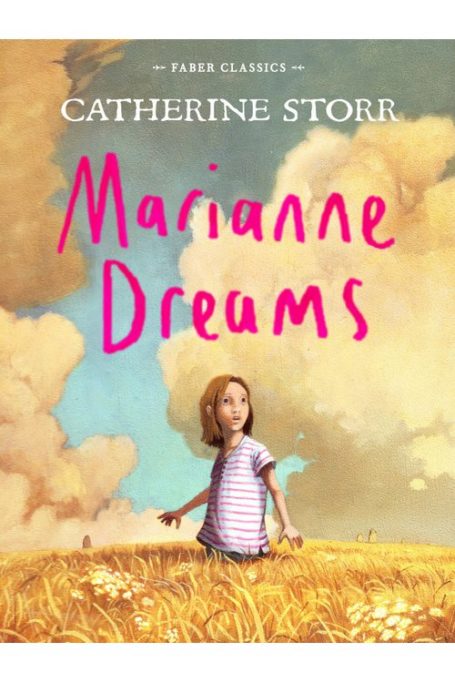
This book made me a reader…
Marianne Dreams by Catherine Storr. I was already a pretty obsessive reader by the time I read this book, at the age of probably eight or nine. I was already addicted to re-tellings of Greek myths, as well as the Narnia books, and many other books, especially if they had magic in them. But this is the first case I remember where I got to the end of a book and then instantly flipped back to the beginning to start again. I loved the way that book pointed to the possibility of closing the gaps between the imagined and real worlds – and of overcoming inner demons.
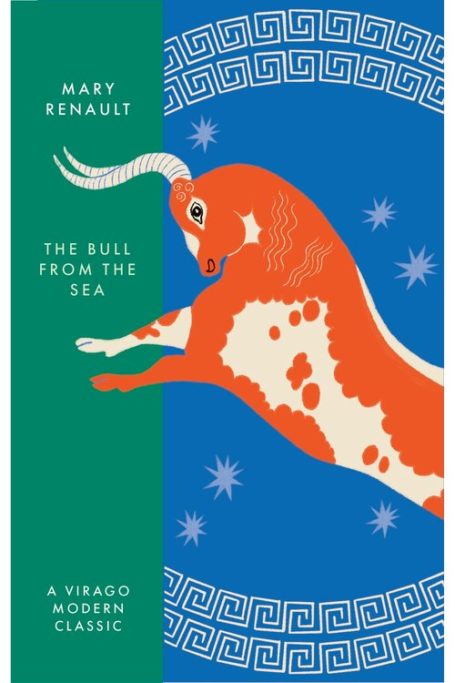
This book was formative in my youth…
I read all the ancient Greek myth and historical novels of Mary Renault at a pretty young age. If I hadn’t read Renault’s Theseus books (The Bull from the Sea, The King Must Die) when I was young, maybe I would still have had the career I’ve had, but maybe not. I’ll name just a few more of many formative books from youth that are relevant for the Odyssey: Homeward Bounders and Dogsbody, both by Diana Wynne Jones, and Harding’s Luck by E. Nesbit, which are all books about a painful, complicated journey home through time as well as space. I reread all three of those books many times as a kid, and it’s only recently that I’ve realised they were all the Odyssey.
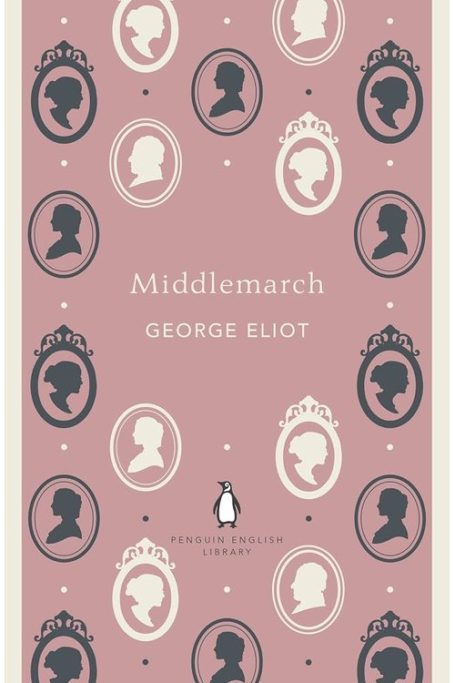
This book is one I can’t stop returning to…
Middlemarch. I remember first reading it as a teenager, and staying up most of the night with it (which is something I very rarely do – I’m an early to bed, early to rise kind of person) – I just couldn’t put it down. I reread it fairly recently and was blown away all over again by the breadth of vision in that book, and the profundity with which it explores these big themes of how individuals can contribute to change or inhibit it, and the tragic gaps between trying to be good, being good, and doing good. I also recently reread Ursula LeGuin’s Lathe of Heaven, which I hadn’t read since I was a teenager; it’s still an extraordinary book – in fact in some ways overlapping with Middlemarch, in that it’s also about the human desire to change the world and the dangers of trying to do so.

This book broadened my horizons…
I just read Prairie Fires: The American Dreams of Laura Ingalls Wilder by Caroline Fraser, which I found very illuminating as a history of the American West, focalised through a single family’s story. The original Little House books definitely opened my eyes as a child, to whom America was as much of a mythical country as ancient Greece. I read and reread them endlessly, and I remember playing with my then best friend in North Oxford, when we were seven, pretending to twist grass into hay to burn fires, as if we were in the blizzard conditions of The Long Winter. This biography is a wonderful invitation both to revisit those books, and to set them in a much larger historical and social perspective – and to understand the human costs and dangers of Laura and her Pa’s yearnings for an ever broader horizon in the west.
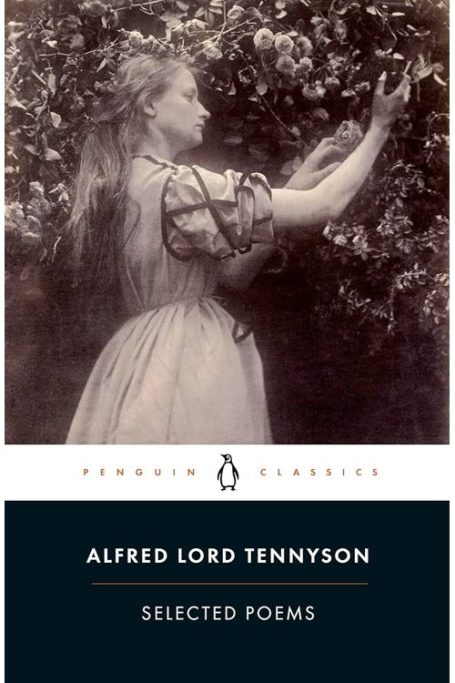
This book is my comfort blanket…
Tennyson. Familiar poetry in general is a major comfort blanket for me, and I could pick other poets, but I’ll go with him, because there’s so much in Tennyson (and also so much Tennyson), and he’s not particularly fashionable at the moment, so I think he deserves to be read and celebrated by more people. I have known several passages and poems of Tennyson by heart for years, and I find it a great comfort whenever I’m waiting in a boring queue or getting my teeth cleaned, to be able to be saying inside my head, ‘On either side the river lie / long fields of barley and of rye / that clothe the wold and meet the sky / and through the fields a road runs by / to many-towered Camelot’. I feel my cortisol levels going down as soon as I get to the second rhyme, the lovely rye that meets the sky.
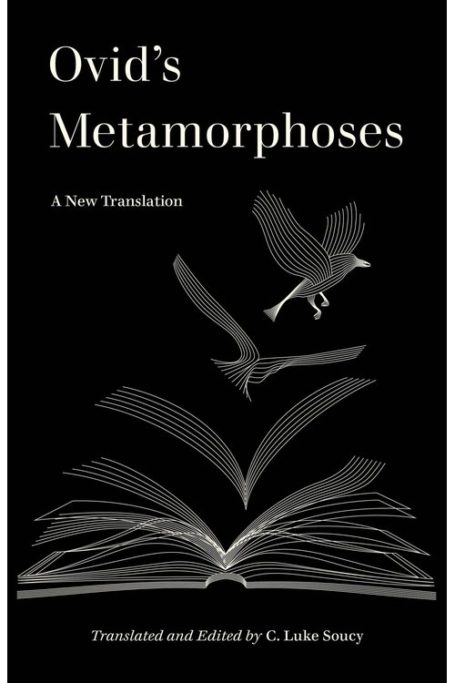
I wish I’d written this book…
Luke Soucy’s translation of Ovid’s Metamorphoses, and Christopher Childer’s Penguin Book of Greek and Roman Verse – both such impressive, virtuosically skilful translations of metrical ancient poetry.
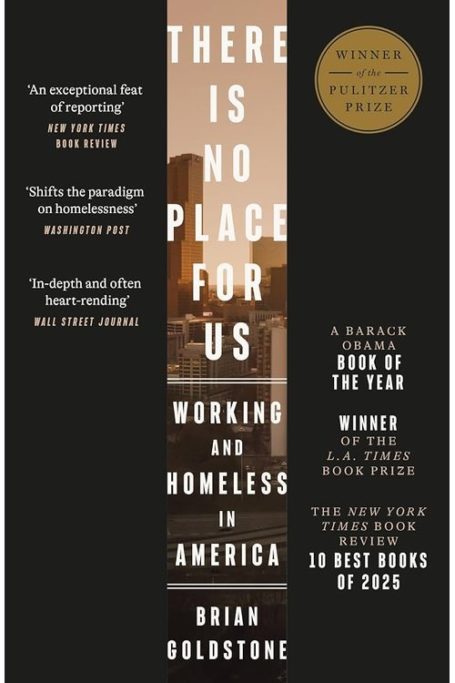
I can’t stop talking about this book right now…
There is No place for Us by Brian Goldstone – if I want to depress whoever I’m talking to. I found this book devastating, but also so brilliantly executed in how it evokes the specific human beings in the contemporary United States who work hard to feed their families, in a society that makes it impossible to do so.
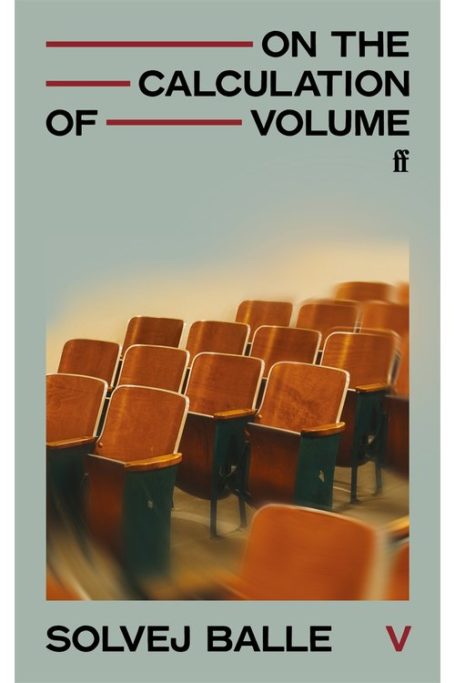
I can’t wait for this book to hit the shelves…
Definitely the next volume of On the Calculation of Volume by Solvej Balle. Only the first four volumes have been translated into English so far. I feel like the Dickens fans waiting on the docks of New York for the latest volume of Old Curiosity Shop, to see if Little Nell is going to make it (and I won’t reveal the answer to that question for anyone who doesn’t know – Old Curiosity Shop is also such a wonderful novel).
Out 05/11/2026
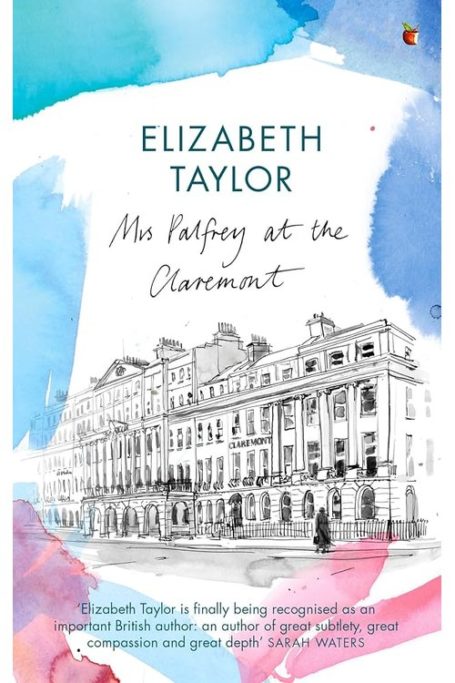
I recommend this book to anyone and everyone who will listen…
An under-read book that I read only recently and think almost anyone would find very funny and very touching is Mrs Palfrey at the Claremont by Elizabeth Taylor. If I had to tie it to the Odyssey, I’d say both are wonderful books about the power of fantasy, the fear of time and change, social complexity, and what it means to find a home somewhere, when we’re never at home anywhere.
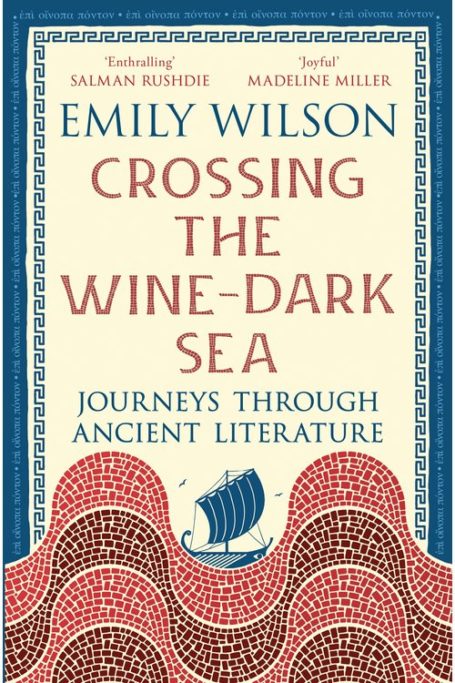
Crossing The Wine-Dark Sea by Emily Wilson
Profile Books, Paperback, £12.99