


King George III’s Royal Observatory Is For Sale (& Boasts Connections To Andrew Scott’s New D-Day Thriller)
By
2 months ago
This royal observatory turned family home was once managed by the man who changed the course of WWII
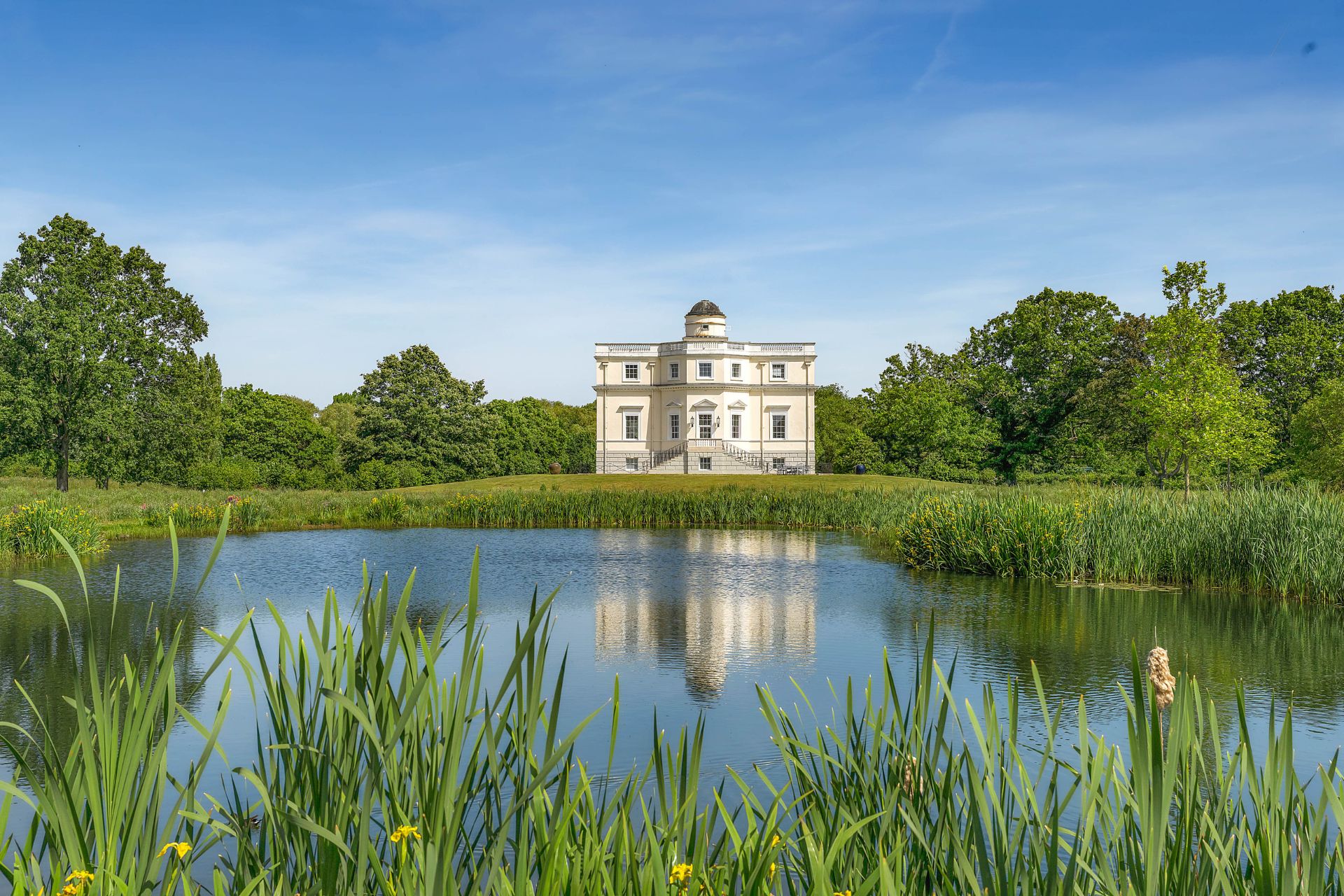
Queen Charlotte: A Bridgerton Story isn’t exactly heralded for its historical accuracy. But if there’s one thing it gets right, it’s King George III’s love of astronomy. Even if you’re not clued up on your astronomical history, you may recognise the Transit of Venus – in which the planet Venus passes directly between the Sun and the Earth in 243-year cycles – from the show. For it is this rare astronomical event that so enraptures the king, a piece of scientific solace to cling to as he attempts to conceal his madness from his new wife. And true to history, the real King George III had the King’s Observatory constructed in Old Deer Park, Richmond to observe the transit on 3 June 1769.
Credit: Alex Winship
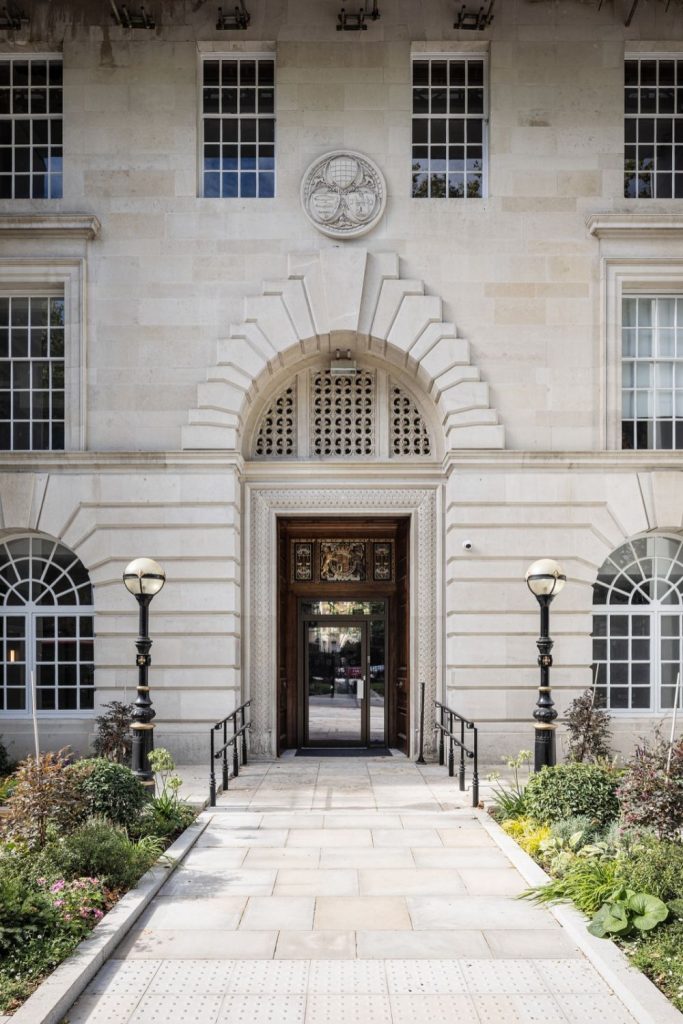
Positioned close to George’s summer homes of Richmond Lodge and Kew Palace, the observatory was designed by Scottish architect Sir William Chambers – best-known for the Great Pagoda at Kew Gardens (built for George’s mother Princess Augusta and visible from the observatory) and Somerset House. An exceptional example of 18th century Palladian architecture, his design of the cupola and revolving dome, said to be the oldest in the world, was influenced by the Swedish astronomer Anders Celsius (of temperature fame). The grounds, meanwhile, were designed by renowned 18th century landscaper Capability Brown.
With his observatory in place, King George watched the heavenly spectacle alongside his wife, their young sons (Princes George and Ernest) and eight others from the domed cupola at the top of the building. A budding astronomer with a keen interest in scientific discovery, the king also dispatched explorer Captain James Cook to Tahiti so he could use the transit to measure the distance between the Earth and the Sun. And his measurements weren’t half bad, calculating 93.7 million miles, just a little over modern day estimates of 92.96 million miles.
Credit: Alex Winship
With the transit concluded, Stephen Demainbray was appointed as the observatory’s first superintendent. His passion for astronomy, meteorology and timekeeping kept the observatory at the forefront of scientific discovery. John Harrison – who first discovered how to keep time at sea – carried out many of his observations here. It was also the birthplace of daily weather forecasts in the 1860s.
Amongst its most famous superintendents was Scottish meteorologist Group Captain James Stagg – currently portrayed on the big screen by Andrew Scott in new D-Day thriller Pressure. Appointed in 1939 (as noted by the plaque out-front), his meteorological observations changed the course of WWII. As chief meteorological adviser for Operation Overlord, he advised General Dwight D Eisenhower and the Allied commanders on the weather conditions that governed the timing of D-Day. His advice was instrumental in postponing the invasion from 5 June to 6 June 1944 – an error that could have been fatal for the soldiers on the ground, and the course of history.
Having passed from royal patronage to the British Association, the Royal Society and the Meteorological Office – by 1980 the Royal Observatory was all but abandoned. It was briefly leased out by the Crown Estate as a commercial office space, but in 2011 it was then left empty for three years. Its fate would finally change, however, in 2014 when a man by the name of Robbie Brothers bought up the observatory with the vision to transform it into a family home.
Credit: Alex Winship
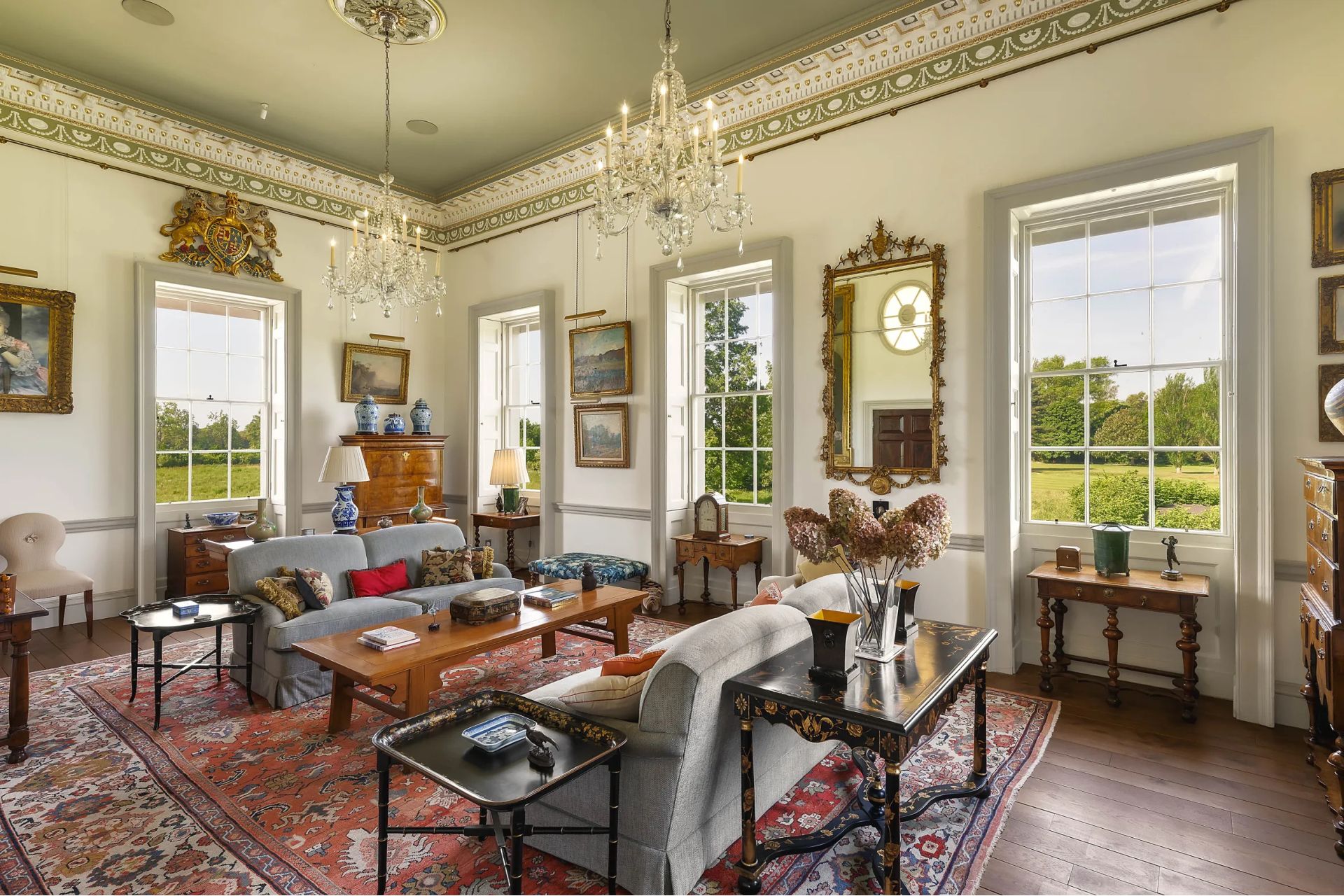
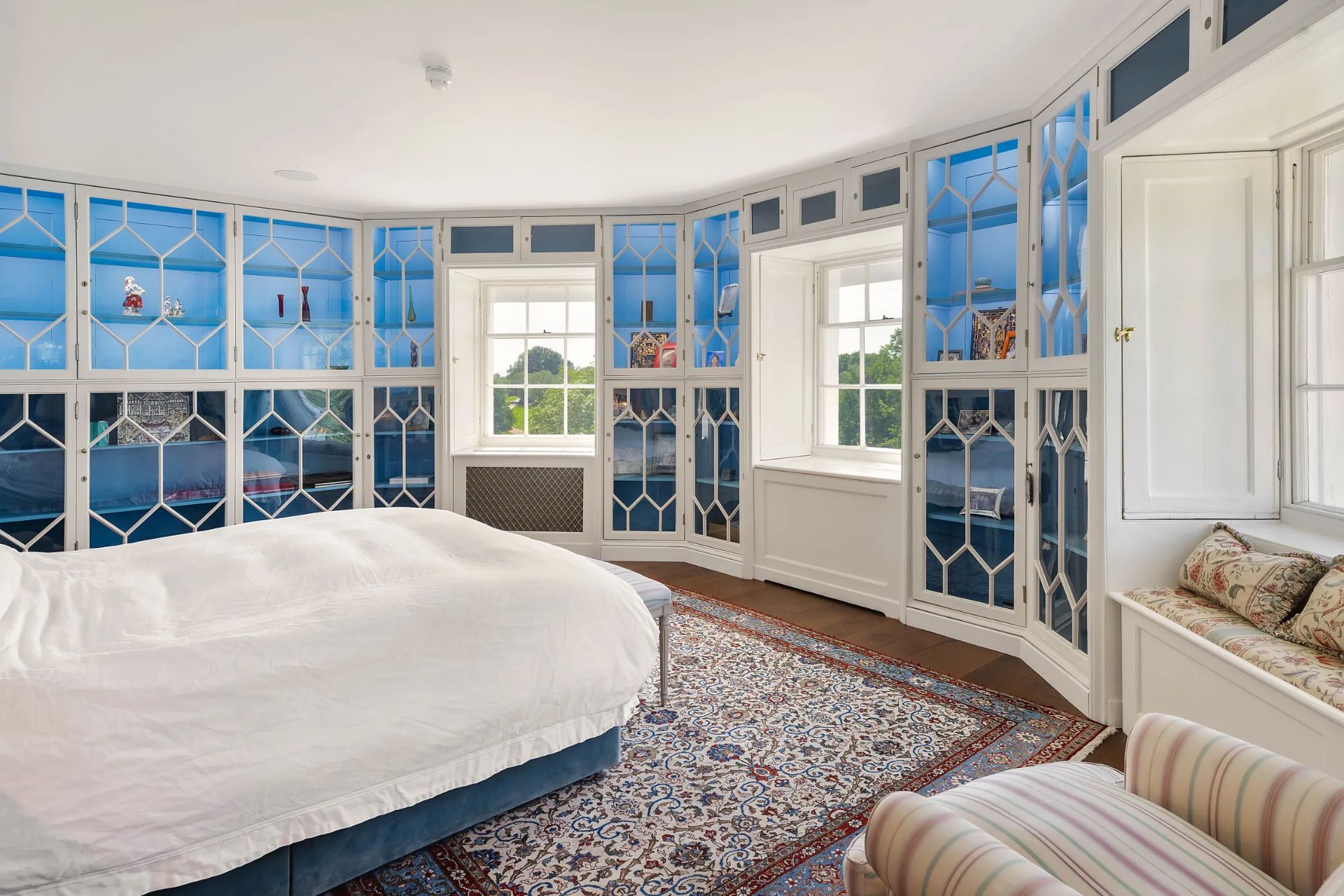
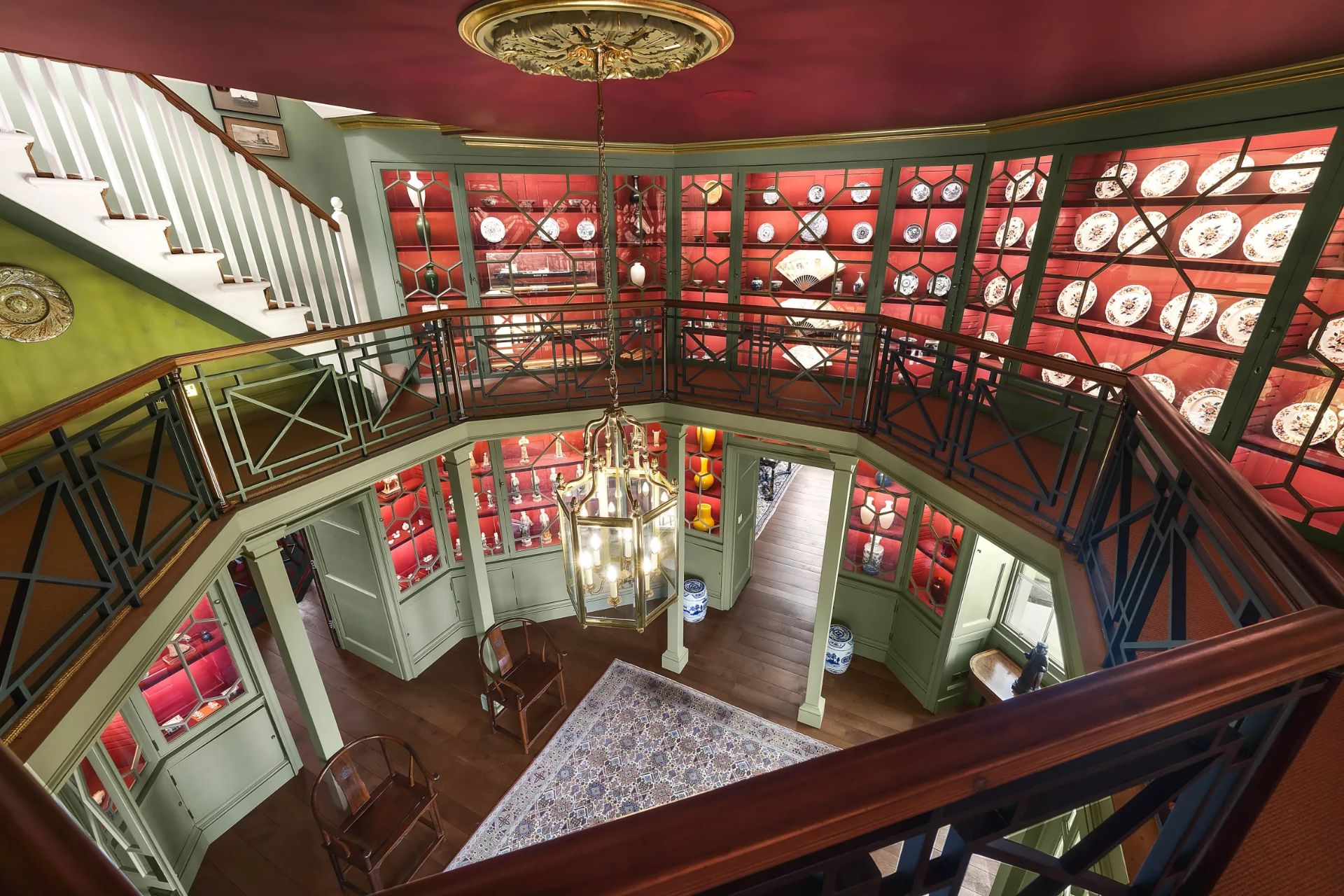
Imagining how the building would’ve looked as a Georgian home, rather than an observatory, he spent four years restoring and renovating the Grade I listed property. Today, the thermometer room has been transformed into a drawing room, the computing room into a library, and the barometer room into a dining room. Drawing on the Georgian love of the chinoiserie, the home features a replica of George III’s coat of arms, a Chinese-made copies of his and Queen Charlotte’s coronation portraits, and a hand-painted Chinese silk wallpaper (based on a 1772 painting) which took 5,000 hours to create. (If of interest, the house can be sold with furniture and antiques by separate negotiation).
Modern luxuries have also been incorporated. There’s a lift, a dumb waiter, air-con, security glass and doors, and an automated lighting system. There’s also planning permission for a substantial modern extension. And though the original telescope now sits in a museum, the royal cupola is still a great spot to open up the dome and stare at the stars.
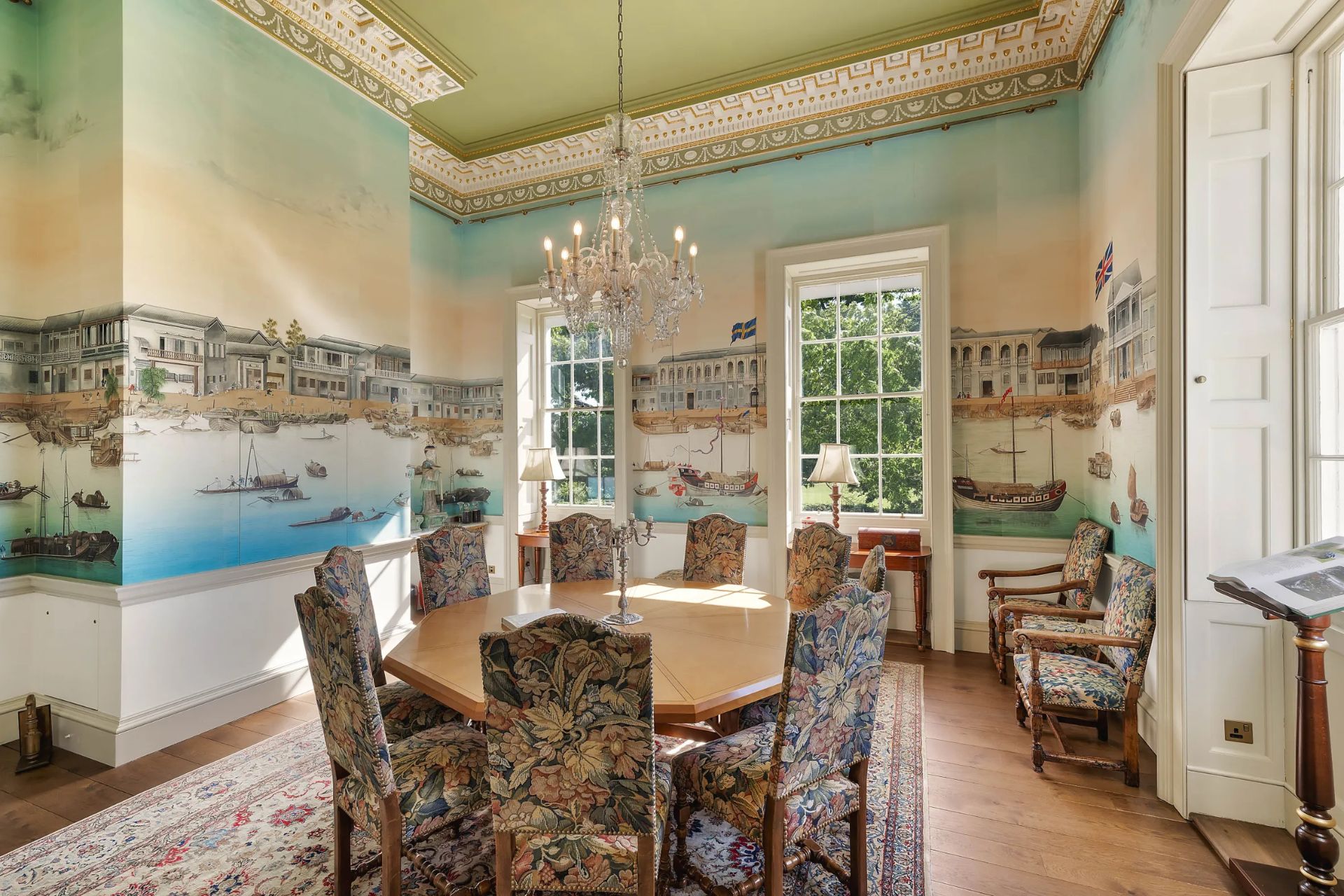
Credit: Alex Winship
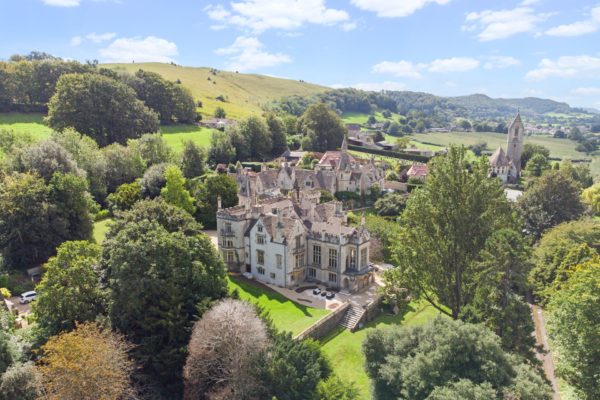
Be wary, however, of golf balls flying overhead. Today, the observatory sits with Royal Mid-Surrey Golf Club – separated from the course via a ha-ha. Its own grounds span 6.19 acres, recently done-up by award-winning landscape architect Kim Wilkie, who worked to preserve and reinterpret many of Capability Brown’s original features. Within them, a brand-new carp-filled lake and a Portland stone boathouse surrounded by a wildflower meadow. And for those on the hunt for history, 19th century anti-magnetic huts and two 18th-century stone markers, used to align the observatory’s transit telescopes with true north-south meridian lines, still remain.
As you’d expect, this historic property is still of interest to the general public and is opened up 28 days a year. Tours are conducted through the main reception rooms by professional guides – though this and the promise to maintain the building does grant you a tax exemption.
On the market for £18m (on a leasehold basis from the Crown Estate until September 2164). Find out more at charliewillis.london and cwlondon.thebrochury.pub