


Why Are All The Chicest Cocktails Suddenly Crystal Clear?
By
17 minutes ago
From milk-washing to beef-fat bourbon, clarification has gone from bartender trick to cocktail-menu mainstay – and transformed what sophistication looks like in the process
There is something slightly disconcerting about pouring a pre-mixed margarita and getting what looks like water. The Naked Margarita comes in a thick, monumental glass bottle that feels suitably special for its £49 price tag; inside, however, the liquid is completely clear. Take a sip and there’s another moment of sensory dissonance. Where’s the searing lime? The familiar tequila bite that whisks you back to nights better forgotten? Then your palate catches up: lime, tequila, and a lingering sweetness from the agave. It’s unmistakably a margarita, just stripped of some of its usual noise.
Technically, The Naked Margarita isn’t clarified at all – founder Lydia Ward tells me its clarity comes from combining tequila with extracts of organic Mexican citrus, rather than using lime juice which then needs to be stabilised – but it taps into an aesthetic I’ve been noticing everywhere recently. Earlier this year, after ordering yet another cocktail containing ingredients I expected to be opaque only for something transparent to materialise, I started to wonder: when did clear become the new sign of taste? And when did this trend burst out of experimental bars to enter the mainstream?
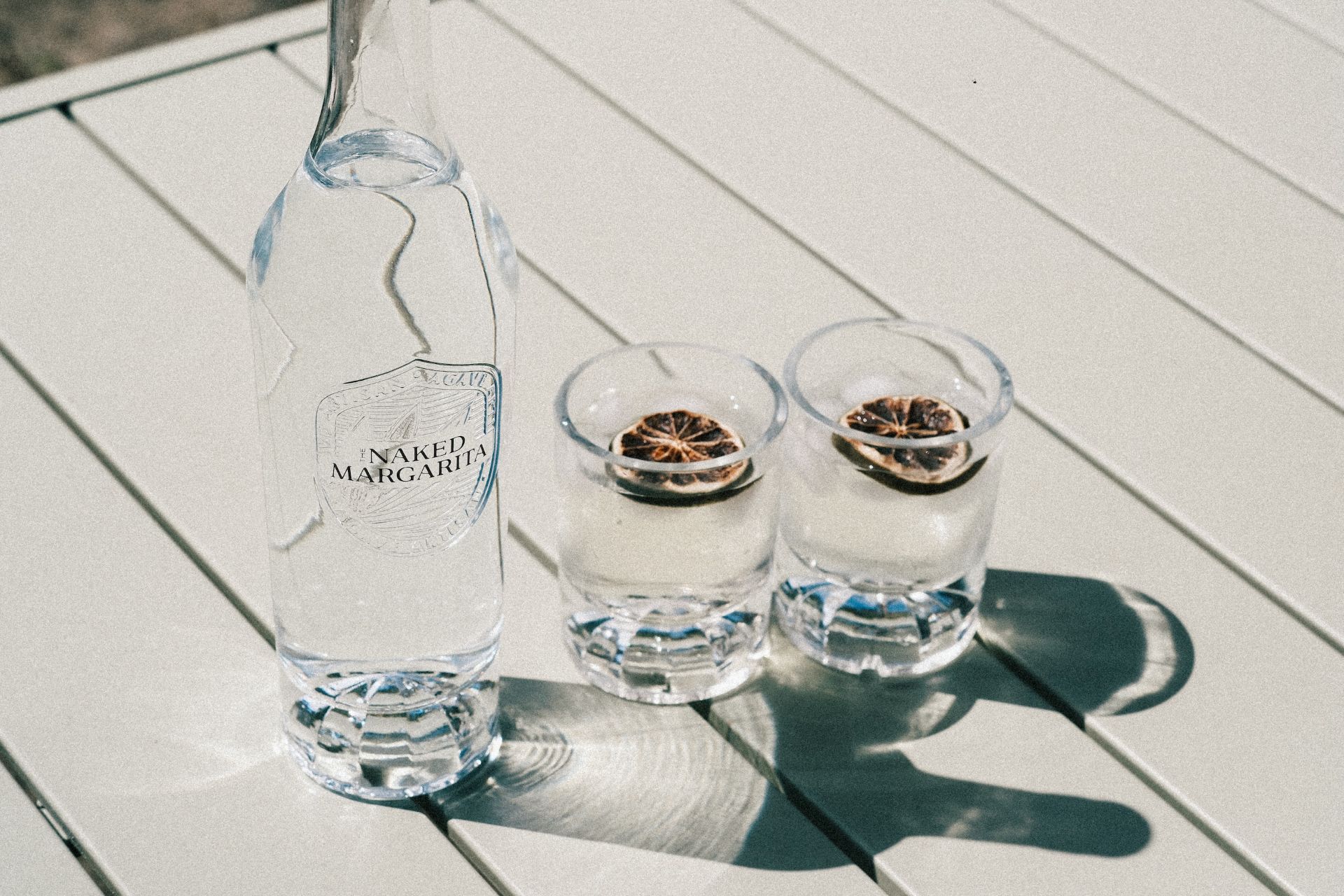
The Naked Margarita is a premium, crystal-clear twist on the beloved cocktail.
Crystal Clear
‘Clarified cocktails are cocktails where most of the solids or particles have been removed,’ explains Paul Lougrat of London’s A Bar with Shapes for a Name. Despite the visual impact, transparency isn’t really the point of the clarification process. Removing those particles alters the texture of a drink and changes how we perceive its flavour. Take ginger juice: once the solids are removed, Lougrat says, its bolder spice softens and more delicate, floral characteristics emerge.
The process can involve something as ordinary as a coffee filter or as scientific as a centrifuge, while enzymes, agar-agar, egg whites and milk can all be deployed depending on the desired result. And despite its current fashionability, none of this is especially new. Clarified milk punch dates back centuries: an early written recipe appeared in 1711, while Benjamin Franklin recorded his own version in 1763, curdling hot milk with brandy and lemon before straining it clear. Fat-washing is newer, however, taking off in bartending during the 2000s.
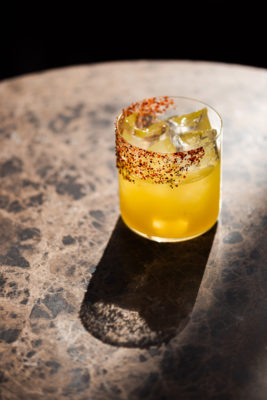
What has changed is its ubiquity – and the increasingly eyebrow-raising ingredients getting the clarification treatment. At Hakkasan Mayfair, the Peking Sour contains duck fat-washed bourbon, while Basement Sate in Soho makes its Miso Noir with miso butter fat-washed rye whisky. You could even go as far to say fat washing – which involves infusing alcohol with the richness and smoothness of fat without leaving the greasy residue behind – is commonplace, adding a new dimension to Old Fashioneds across the capital. But more familiar cocktail ingredients are making the disappearing act, too. Yauatcha Soho’s Crystal Colada contains pineapple, lime and clarified coconut milk, while the Palm Court at Sheraton Grand London Park Lane serves a Colada with clarified mascarpone and milk.
Lougrat isn’t convinced that bartenders are necessarily using stranger ingredients, however. Instead, he thinks they are simply becoming better at extracting exactly what they want from them. Much of that experimentation, he points out, now happens behind the scenes.
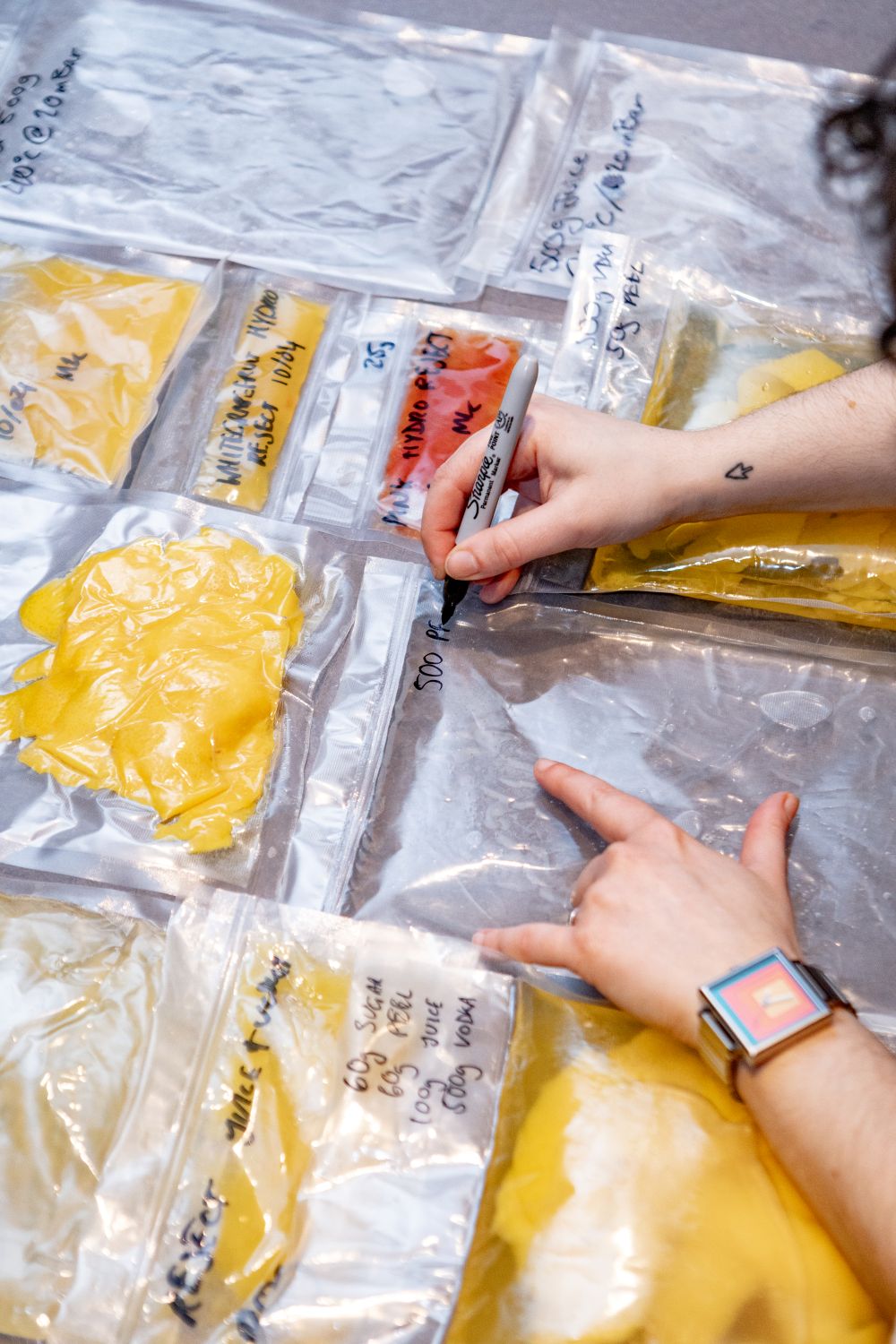
At A Bar with Shapes for a Name, the mixology magic happens behind the scenes.
When Did Cocktail Theatre Go Backstage?
Think of an expensive cocktail a decade ago and much of the pleasure was watching it become one. Bottles came down from shelves and were tossed about circus-style, ingredients were meticulously measured and vigorously shaken, glasses smoked. Then came the garnish: flowers, fruit, foam, perhaps something inexplicably on fire.
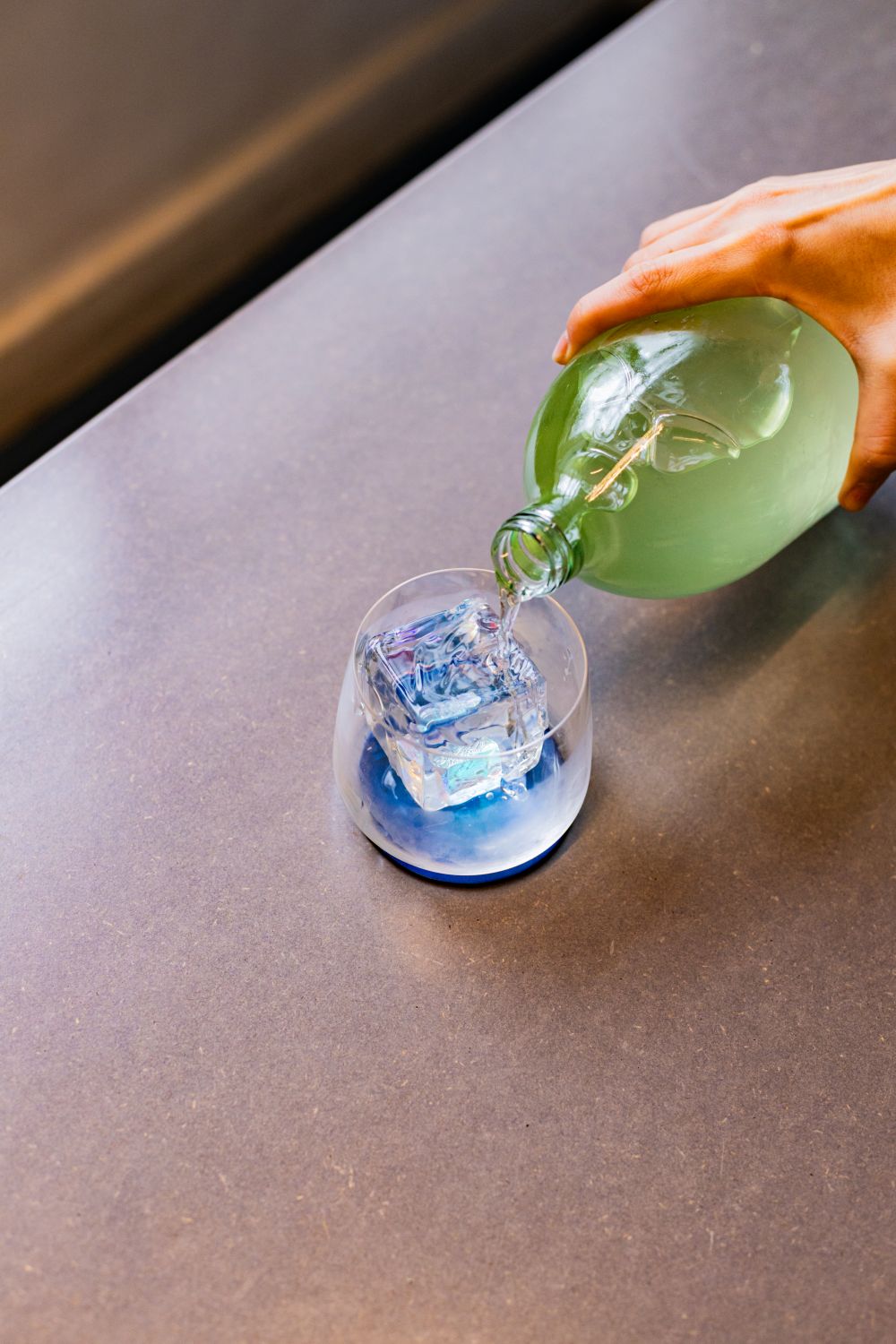
Today, you’re increasingly presented with translucent liquid poured over one enormous, immaculate ice cube. But the magic of mixology hasn’t disappeared; it’s gone undercover. A cocktail might have been filtered for hours, washed with fat or milk, treated with enzymes and tested through multiple iterations before you arrived. By the time you sit at the bar, all that remains is the pour.
‘Most of the experimentation happens behind the scenes,’ says Lougrat, who believes bars are investing more time in development and production. At his own bar, the Kazimir combines vodka and peach yoghurt passed through a coffee filter before absinthe is added. The result, he says, is ‘unique, elegant, super drinkable and deceptively simple’.
Deceptively simple could describe the entire trend. At a time when £20-plus cocktails are hardly remarkable in London, it’s reassuring to know effort and experimentation has gone into those three inches of clear liquid. But there’s a broader aesthetic shift at work, too. The OTT garnishes have receded along with our preferences for maximalism, giant ice cubes reign supreme and minimalism has reached the cocktail glass. Yet there’s something curiously un-photogenic about clarification; the magic doesn’t translate through the camera. Sipping The Naked Margarita, for example, I found myself paying more attention to what I was drinking precisely because the usual visual cues were absent; even the aroma seemed less assertive. Perhaps, after years of dining and drinking designed to be understood instantly through a phone screen, deinfluencing has reached the dinner table – and cocktail clarification is the latest trick reserved for the person actually consuming it in the moment.
Have We Reached Peak Clarification?
Clarification has become so embedded in cocktail culture that it isn’t always announced – a drink simply arrives unexpectedly translucent. Like natural wine creeping onto restaurant lists, perhaps the surest sign a once-niche movement has gone mainstream is that nobody feels the need to explain it anymore.
Ward thinks this appetite for refinement stretches beyond cocktails, with consumers increasingly interested in quality, provenance and what exactly they are drinking. With pared-back drinks, she says, ‘there’s nothing to hide behind’.
But there are limits. Part of the fun is ordering something that sounds as though it couldn’t possibly emerge clear, then being surprised when it does. When the ingredient list starts reading like stunt casting, however, technique risks eclipsing the more important business of making something that tastes good (I’m looking at you, wasabi-infused cocktail).
Lougrat remembers a colleague regularly reminding himself: ‘Not everything has to be clear.’ He expects the pendulum eventually to swing back towards texture, body and perhaps a little less refinement. Clarification, after all, should be a tool rather than the destination. And the pendulum may already be swinging. According to The Spirits Business, bartenders are beginning to move away from the ‘minimalism and Scandi chic vibes’ of the past decade towards a new cocktail maximalism. At London’s Scarfes Bar, that means cocktails garnished with lollipops and delicate rice-paper butterflies, alongside Martinis gilded with caviar or truffle. Bacardi’s 2026 Cocktail Trends Report goes further, naming ‘More Is More Mixology’ as one of the year’s defining trends: 76 percent of consumers surveyed said they value heightened, memorable experiences, as bars embrace everything from edible pearls and metallic garnishes to fire and high-drama glassware.
As clarified cocktails enter the mainstream, that countercurrent from mixologists is probably inevitable. And while the distinguishing feature is the clarity, these drinks will carry a different legacy forwards: the uber-experimental, scientific cooking-up behind the scenes, producing something that arrives with all the serenity of a duck gliding across water, while all the frantic paddling happens out of sight beneath the surface. Because cocktail culture never actually stopped showing off – it just got much better at pretending it isn’t.