


These Radical Designers Are Disrupting The Jewellery Industry
By
2 minutes ago
Meet the brands and the brains bringing fresh zeal to a once-traditional industry
In 2003, George Bamford started customising classic watches for friends. ‘I’d always wanted to make watches more personal,’ he says. ‘I liked the idea of something darker, more graphic and individual, and began blackening watches.’
It was, he says, ‘an interesting time’ as brands pushed back against what they called ‘piracy’. ‘Customisation wasn’t part of the Swiss vocabulary then, but soon some brands began to realise they could work with us,’ he recalls. That list now includes names from Girard-Perregaux, Chopard, TAG Heuer and Bremont to Oris, Seiko and G-Shock – and Bamford still works on private commissions and brand collaborations.
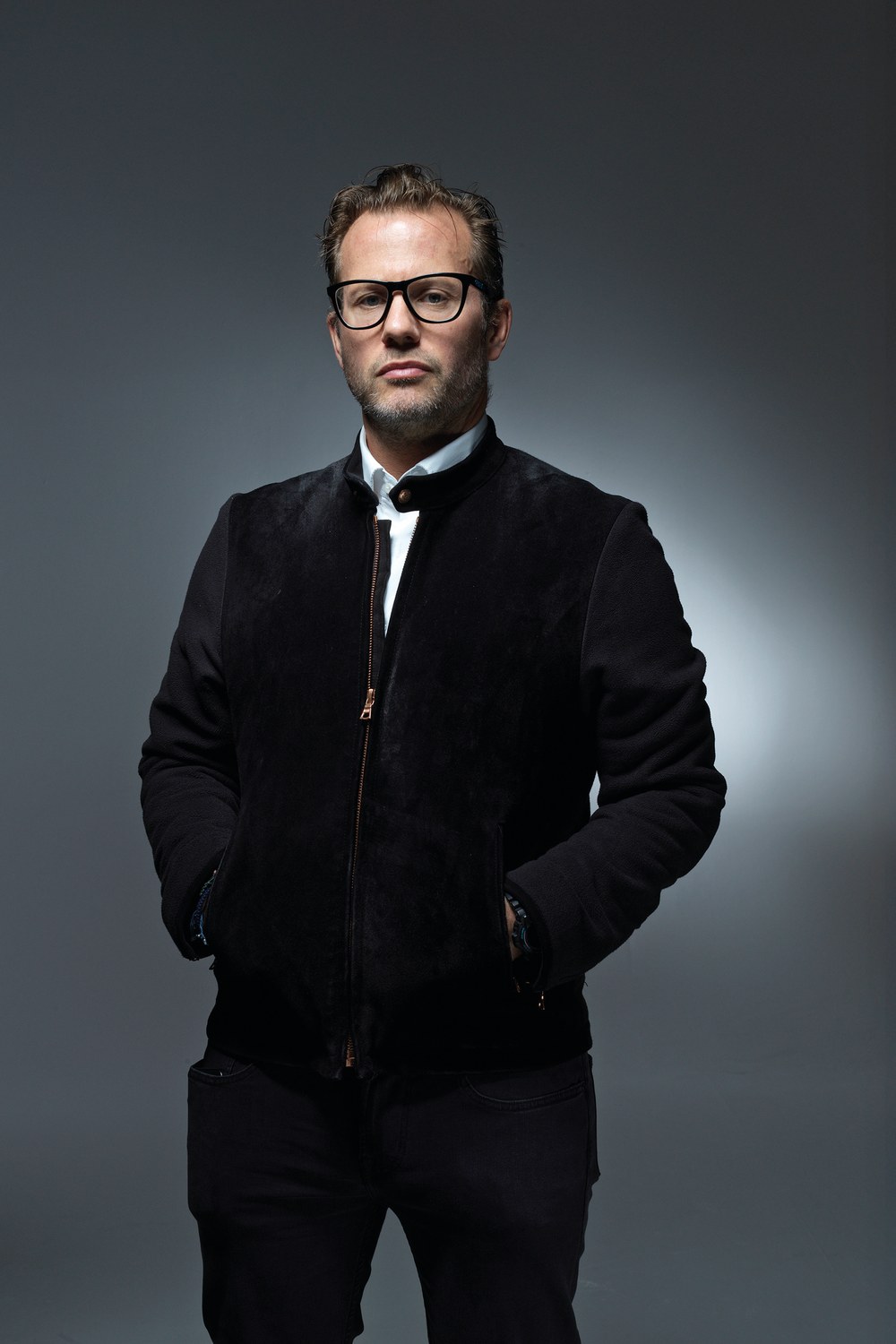
George Bamford © Jude Harrison
A deeper industry move was ‘never part of the masterplan. When we did our version of the TAG Heuer Monaco using our style and forged carbon – a material then new to them – it was exciting that they trusted us enough to give us creative freedom’. Eventually, though, he launched his own line of ‘colourful, graphic watches with personality’ in 2017, through his brand Bamford London. The latest model is the GMT Neon, in five day-glo shades, each priced at £1,450.
The DIY Watch
For centuries, the very wealthy have commissioned bespoke timepieces. Now, this rarefied privilege is being democratised. Swatch was founded in 1983 to disrupt and demystify watches so more people could afford appealing designs. Over the years, it has collaborated with contemporary artists such as Keith Haring and Vivienne Westwood, as well as top watchmakers like Omega, Blancpain and Audemars Piguet.
The brand has enlisted ‘artistic intelligence’ for its new AI-DADA project, which allows customers to create their own watch. Buyers have 300 words in which to describe their favourite colours, mood and watch details, which are then synthesised by AI and delivered in two weeks for £270. Each watch comes with a ‘1/1’ engraving, and that exact design is never used again.
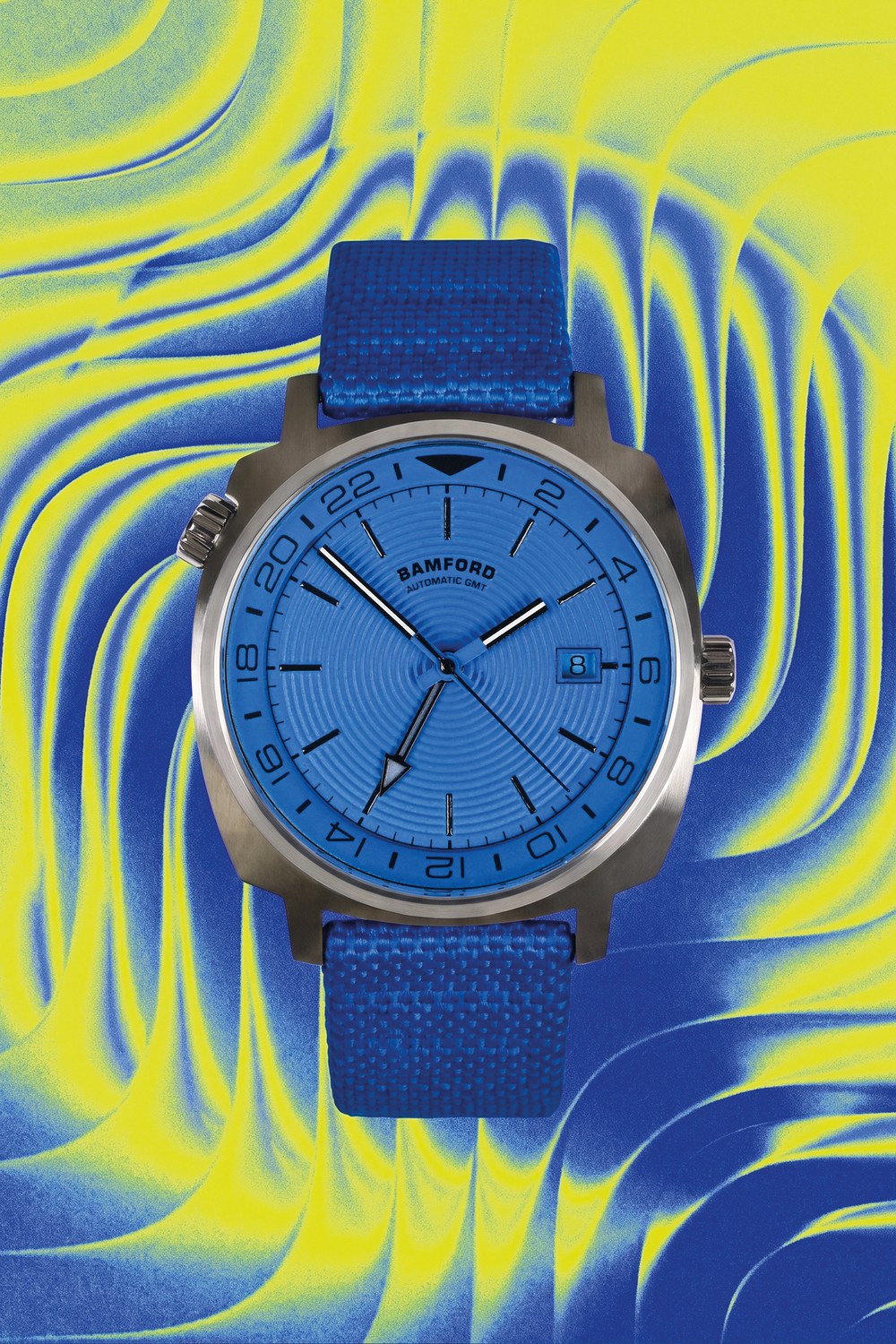
Bamford’s GMT Neon in aqua blue
Studio Underd0g’s watches are similarly playful. I first met Richard Benc five years ago; he was exhibiting a bright pink and green chronograph called Watermel0n, which had a grainy, ombré dial and a sapphire back revealing a modified Chinese movement, the famous Seagull ST-1901B. Benc’s sales model – occasional nine-hour, online purchase windows with a maximum two-month delivery time – was based on his experience in product design, and created anticipation for limited-edition dials and models.
Studio Underd0g now makes 14,000 watches a year and its witty, colourful style has won high-end collaborations with names like H. Moser & Cie. In May Benc opened The D0ghouse in Maidenhead, where all watches are assembled by experienced makers while clients have private appointments in the quirky salon, and can even assemble their own watch. Benc is about to launch his third new model – expect fun and surprises.
The Independent Fair
When I ask GemGenève’s Thomas Faerber what expectations he and his co-founder, Ronny Totah, had when they set up their fair in 2018, he answers with a twinkle: ‘We didn’t have a clue. We thought it would last a year, two at most.’
Ten fairs later, GemGenève is still going strong. It was started in protest at what Faerber and Totah, a vintage jewellery and diamond dealer respectively, thought was poor treatment at the Baselworld fair. ‘We felt sidelined,’ says Totah. ‘Every year we were moved to less prominent areas, but we still paid big money.’
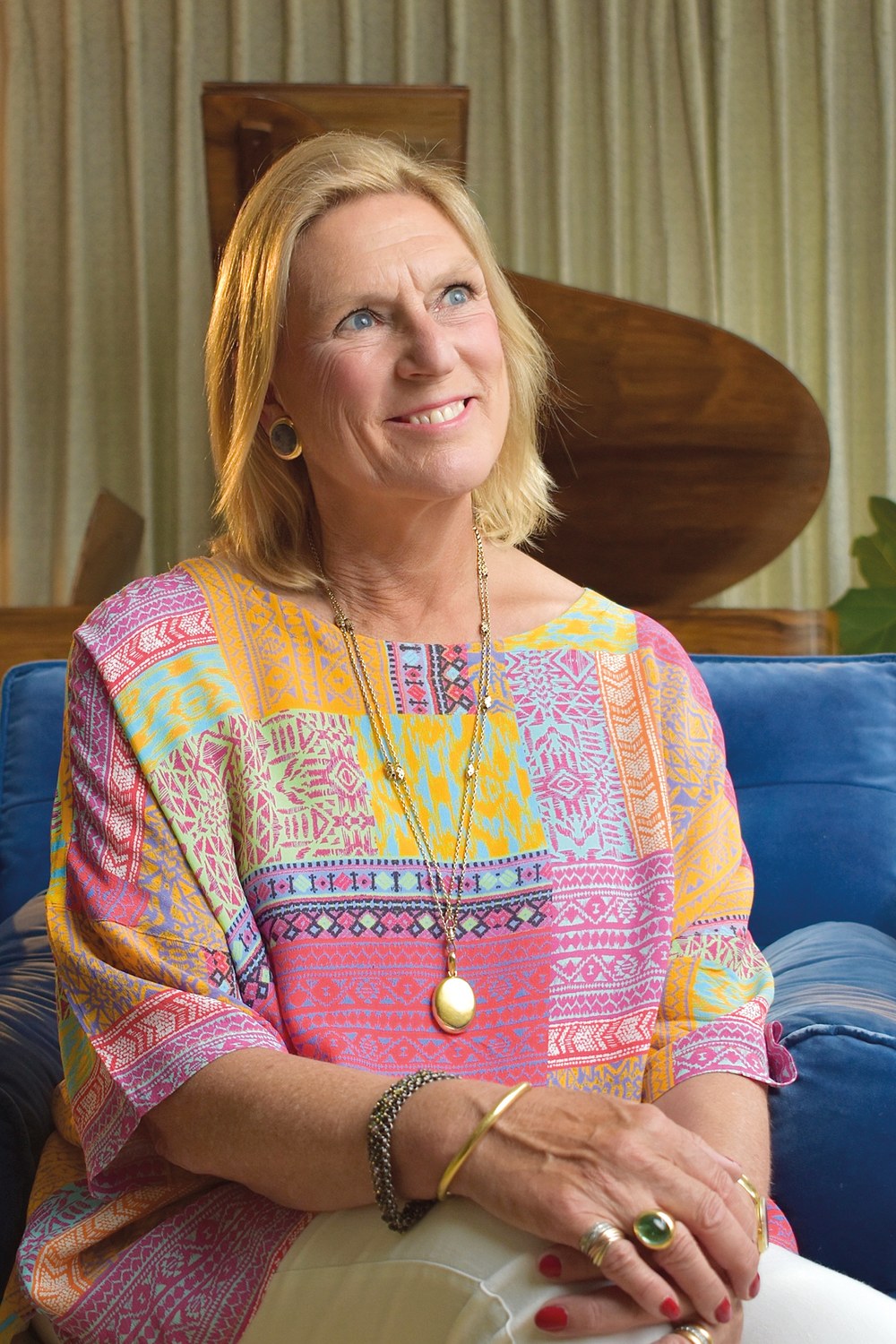
Joanna Hardy will become the Goldsmiths’ Company’s third female prime warden in 700 years ©
So they rounded up 147 like-minded colleagues and launched their own operation. This year GemGenève had almost 250 exhibitors, attracting top-end vintage dealers, collectors, international design organisations and the interested public. It includes expert talks and discussions, themed exhibitions and hands-on jewellery making, and spotlights young designers. Add a thriving social side where global friends can reacquaint and you have a near-perfect industry fair.
Meanwhile, new watch fairs spring up faster than autumn mushrooms, often featuring the independent brands that create today’s excitement. The newest is Chronopolis: set up to support young brands who felt they didn’t fit elsewhere, it came bursting into Geneva Watch Week in April. It offered inventive designs, reasonable pricing and a cool, youthful atmosphere. There were 20 exhibitors this year – in ten years’ time, who knows?
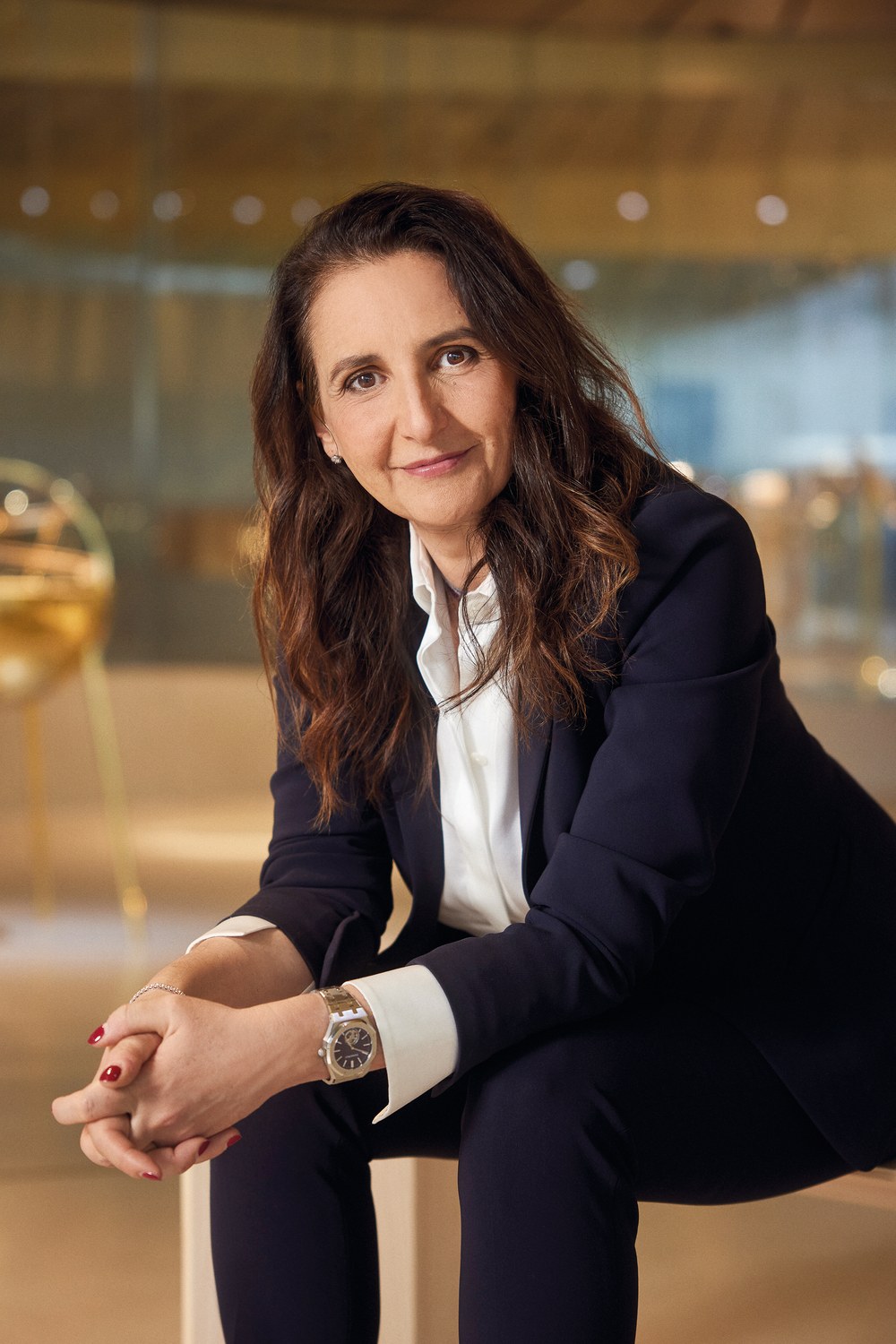
Ilaria Resta is the first female CEO at Audemars Piguet © Scott Emerson
The Female Leaders
‘Women are jewellery’s main customers, so they should have a big say in the industry, but historically they haven’t,’ says Joanna Hardy, best known as an expert on BBC’s Antiques Roadshow. Today, more women are smashing the crystal ceiling – like Boucheron’s double act of innovative high jewellery designer Claire Choisne and CEO Hélène Poulit-Duquesne, who together produce mind-blowing mixes of high-tech materials and exquisite craft.
There’s also Ilaria Resta, Audemars Piguet’s first female CEO. She arrived when the Royal Pop collaboration with Swatch was under discussion. ‘It would not have happened without her,’ says Swatch CEO Carlo Giordanetti. ‘She knows how to attract a younger generation and lighten up the brand, showing its sense of daring and humour.’
When Hardy becomes prime warden of the 700-year-old Goldsmiths’ Company next May, she will be the third woman to take the role, but the very first from the jewellery industry. Hardy’s career spans grading rough diamonds for De Beers at 22, diamond dealing in Antwerp, auctioneering, her own consultancy, and journeying to visit mines around the world.
She is now launching the first luxury jewellery travel business; it will start with sapphires in Sri Lanka, offering visits to trusted mines and experts as well as the chance to buy. ‘I hope my experience will encourage young women to enter many areas of the industry,’ she says. ‘Next year, several senior officers at Goldsmiths will be women, and it’s just the start.’
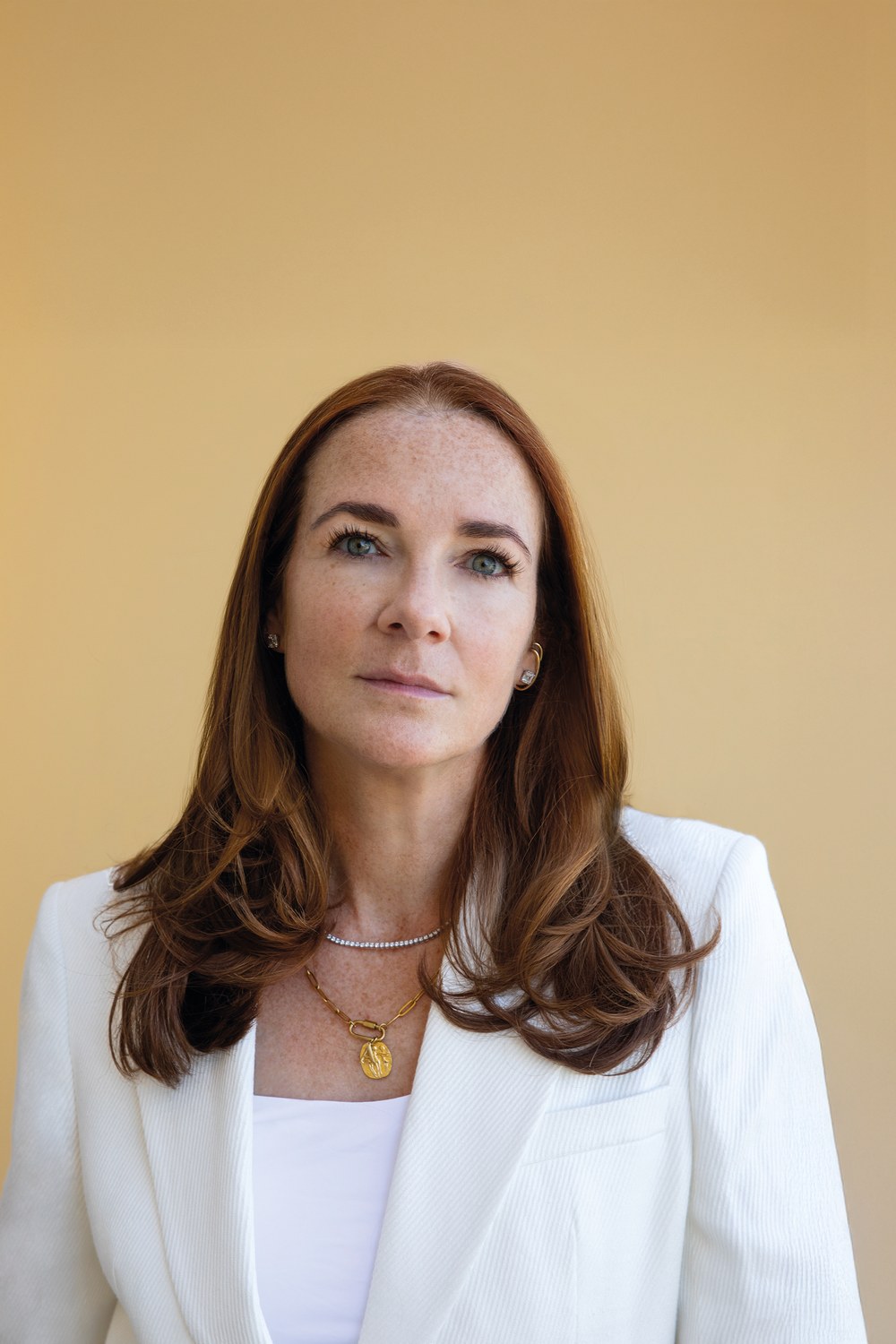
Amber Pepper joined the Natural Diamond Council as CEO this year © Scott Emerson
Amber Pepper, recently arrived CEO of the Natural Diamond Council, tells me she is on a steep learning curve. With a background in fashion and luxury companies, she has a ‘different perspective’ to offer. ‘I’m learning every day, especially about the passion of everyone in the industry: families who have worked with diamonds for generations, whole communities dependent on them, and people who feel responsibility for its future.’
With prices falling for smaller diamonds and pressure from the lab-grown industry, she says that her challenge is to make natural diamonds culturally relevant to price-aware younger people, and ‘make them aware of the difference between a unique gem formed billions of years ago and a mass-produced, modern item’.
Pepper is also aware the world is increasingly paying attention to issues of human rights, sustainability and conservation. ‘Young people are very tuned into ethics, traceability and transparency, and we must make progress if future generations are to continue loving the magic of these unique stones.’

Shimmer Ripple necklace and earrings by Central Saint Martins graduate Lengling Bai, who receives expert mentoring as a Bright New Gems 2025 winner
The Talent Shows
The jewellery industry long stood accused of not offering enough support to young designers trying to set up in a trade with notoriously expensive materials and equipment. Now it recognises the value of independent talent, a slew of competitions have popped up.
Britain’s pioneering Bright New Gems mentoring programme celebrated its 20th edition this year, its alumni a roll call of home-grown success stories including Pippa Small, Alexandra Jefford, Tomasz Donocik and Imogen Belfield. Supported by industry bodies including the Goldsmiths’ Company, which funds the annual judging, exhibition and launch party, the programme is more practical than monetary but provides expert mentors and bench space – invaluable for fledgling designers. The Goldsmiths’ Centre also runs a raft of initiatives aimed at early-career makers, including Shine and Spotlighting Getting Started.
Meanwhile, young watchmakers can enter the Cartier Watchmaking Prize for Talents of Tomorrow, which started in 1995. Candidates need to be highly creative, submitting drawings from which chosen finalists are mentored to create a themed movement. Next year, it is expanding to include jewellery design. Louis Vuitton’s Watch Prize for Independent Creatives has a global entry pool and high-profile judging team, while Piaget, known for jewellery watches, runs competitions across jewellery and watchmaking disciplines in several countries, including for young high jewellery designers.
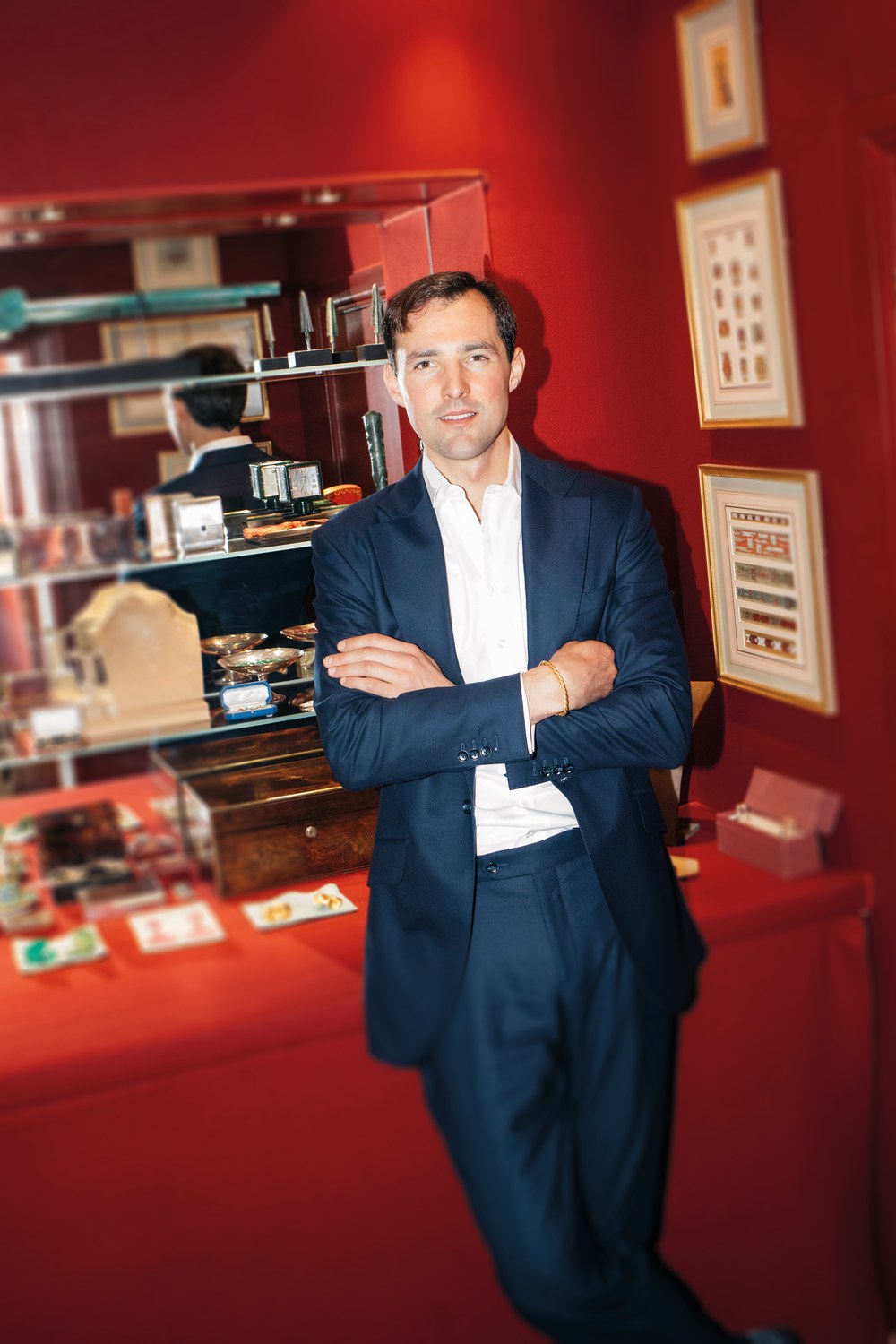
Charlie Barron breaks the mould of a traditional dealer © Scott Emerson
The Private Dealer
An independent dealer in high-end antique jewellery, Charlie Barron’s methods are far from traditional, yet he maintains cooperative relations with industry veterans. ‘I don’t steal anyone’s clients. I culture new ones,’ he says. They are in their late 20s or 30s and not collectors, ‘but people who have made money young, have been through status logos, and are now cultivating an interest in unique, beautiful, historic things.’
This generation moves fast, so Barron has to be faster. Once introduced to a seller, he offers to buy their entire collection, pricing each item speedily and with encyclopaedic knowledge at above market rates, and paying almost instantly. He then sells to targeted buyers.
‘We shift a lot,’ he says. ‘I’m no expert on Cartier table clocks, but I’ve sold 50 this year because people love having them on show. Some don’t work but they’re beautiful objects, and much cheaper that way.’ He does not offer restoration, believing that wear and tear are part of an object’s story.
Barron has a Mayfair salon arranged with erudite jewellery books, favourite precious objects and a gallery of supreme pieces that could be available for the right price. He also works with top contemporary British jewellers and has plans for a rural jewellery workshop where craftspeople could live locally. A potential industry game changer.
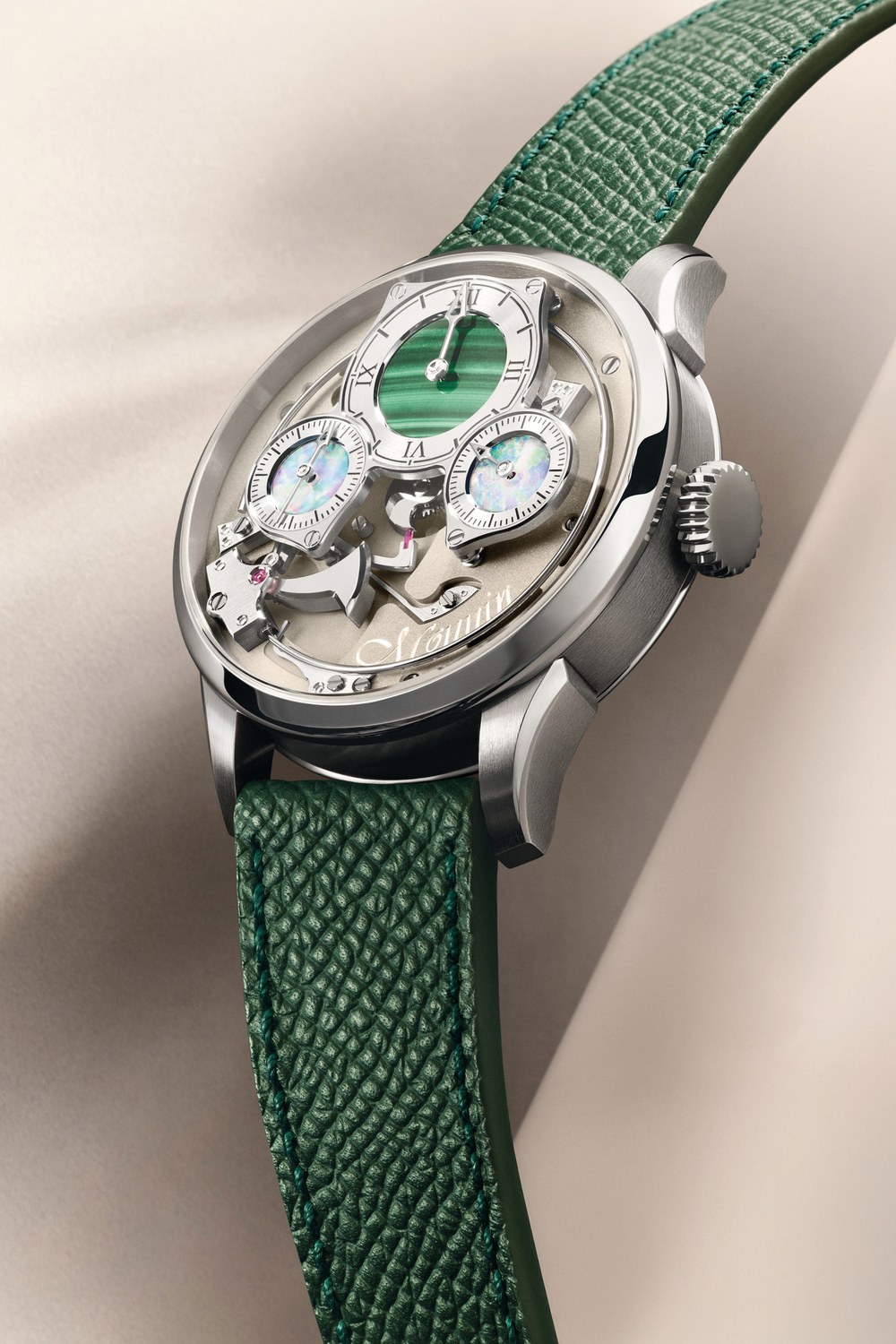
The School watch by Hazemann & Monnin was awarded the 2026 Louis Vuitton Watch Prize for Independent Creatives