


This Chelsea Home Is A Haven For Artists
By
5 months ago
Discover the history of Chelsea Studios
From Oscar Wilde and J.M.W Turner to Mick Jagger and David Bowie, Chelsea has always attracted artists to its bohemian streets, and Chelsea Studios is no different. First it was the foundry of renowned 20th century sculptor Frederick Mancini. Then the foundry was taken over by Italian sculptor Mario Manenti. (It was here he cast many of his most ambitious projects including his series of WWI memorial sculptures.)
But Manenti was not content with hiding out in a studio of his own. He wanted an artistic community around him to create and inspire. In 1925, he transformed his vision into a reality, expanding the site into an enclave for fellow artists. Inspired by his family estate near Florence, Chelsea Studios became known as the ‘Italian Village’ – a distinctly Florentine vision in the heart of London, complete with whitewashed walls, terracotta roofs, and stone pathways which wind throughout the mature gardens and quiet courtyards.
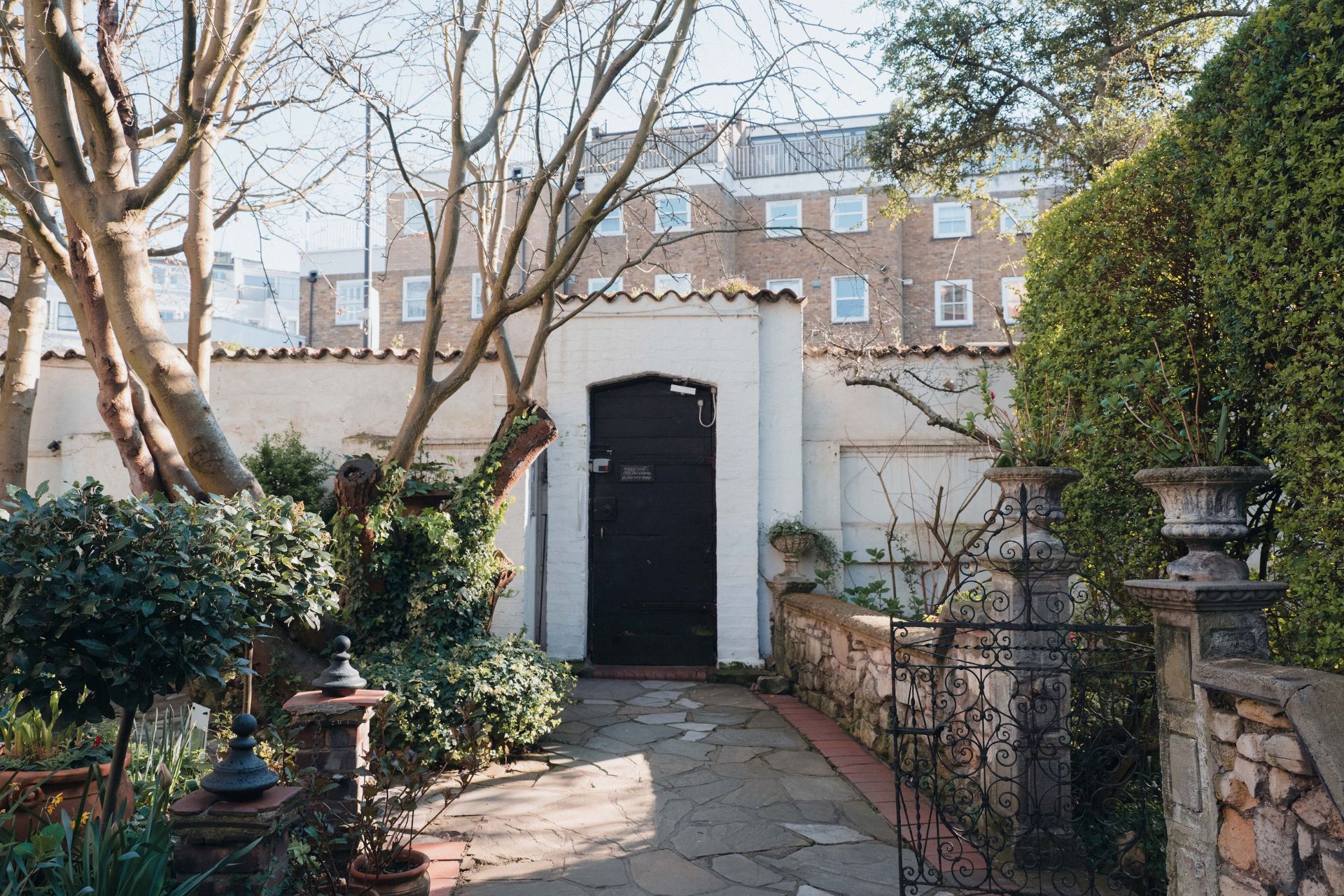
By the 1930s and 1940s, the studios had evolved into a true artistic hub. Sculptor Feridah Forbes moved in, raising her daughter Juanita Forbes among the artists, and immersing her in ‘lots of art of all description’. Cultivating a salon-like atmosphere, Forbes’s connections brought in an array of eminent creatives, including American-British sculptor Jacob Epstein, who worked on portrait sculptures – including of Juanita Forbes – within the complex. Through this network, artist Timothy Whidborne and the Italian painter Pietro Annigoni (regarded by fellow artists as ‘the best portrait painter of the 20th century’) were also drawn to Chelsea Studios, painting there in the early 1950s. Before Annigoni’s royal commissions, he painted Juanita’s portrait in 1953 while she sat for him at Chelsea Studios.
By the late 50s and throughout the swinging 60s, the studios become home to a new generation of creatives, including photographer David Hurn, model-turned-fashion-editor Grace Coddington, and Joseph Keenan (also known as Derek Ashley), co-founder of the Green Park Open Air Exhibition. Though she didn’t live there, model and photographer Pattie Boyd was familiar with the artistic hub, recalling in her memoir that in the early 1960s: ‘[Erick Swayne] lived in a flat in Chelsea Studios… with the photographer David Hurn next door. Grace Coddington… had the flat above.’
Though you no longer have to be an artist to live there (as the rules stipulated in its 20th century heyday), Chelsea Studios has continued to draw in creatives. Contemporary artist Suzy Murphy, for example, purchased a unit and converted it back into a working art studio in the 2010s, painting large-scale landscapes and hosting friends like the late writer A.A. Gill for life-drawing sessions in the home.
As Lindsay Cuthill, co-founder of Blue Book Agency, says: ‘Chelsea Studios has always had this slightly mythical quality to it. It’s hidden, it’s discreet, and yet for decades it has quietly attracted some of the most interesting creative minds in London […] What I love most is that the spirit of the place hasn’t changed. It still draws people who want something a bit different, something with character and a bit of soul. In a market that can feel quite formulaic, this is the complete opposite. It’s London, but not as most people know it.’
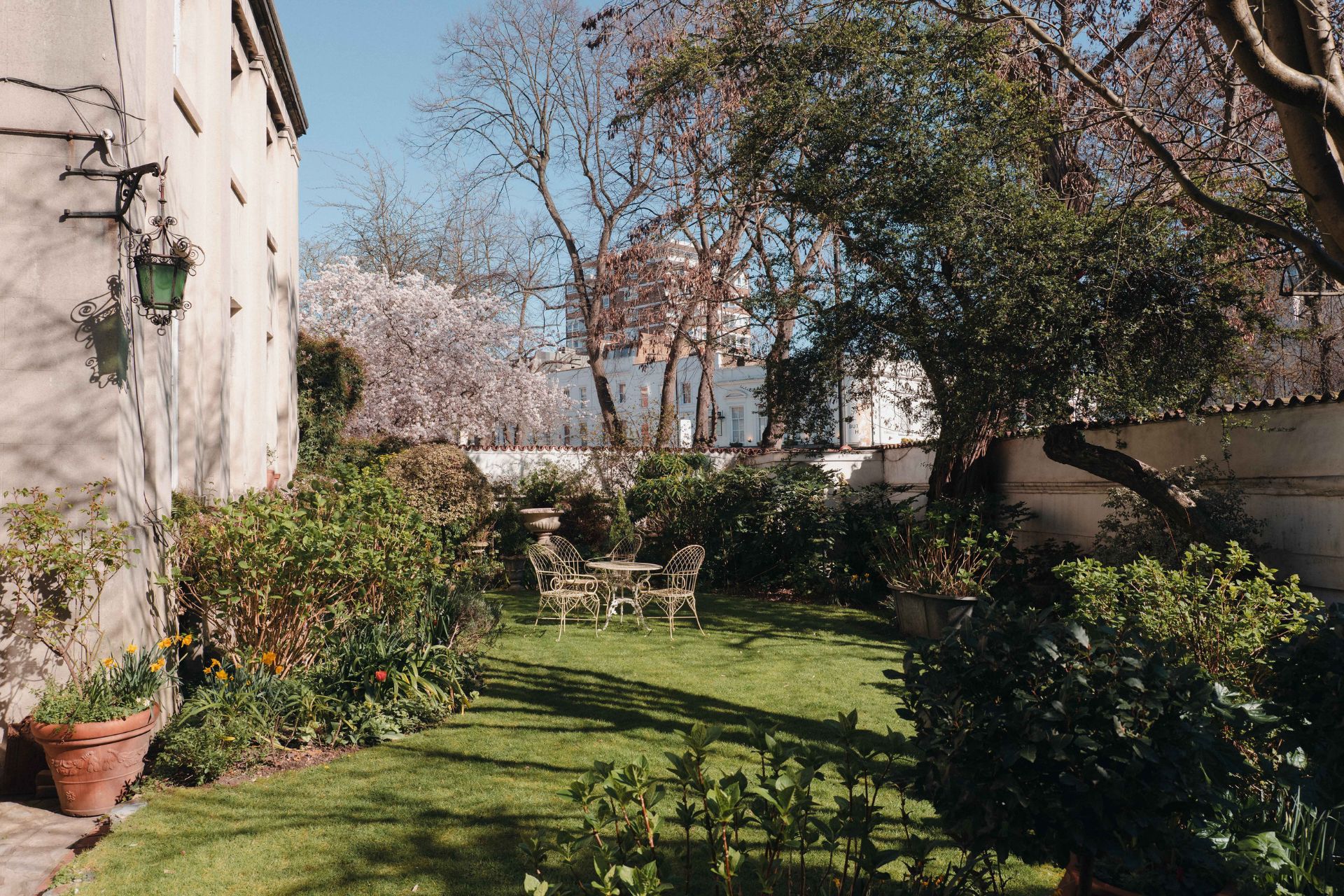
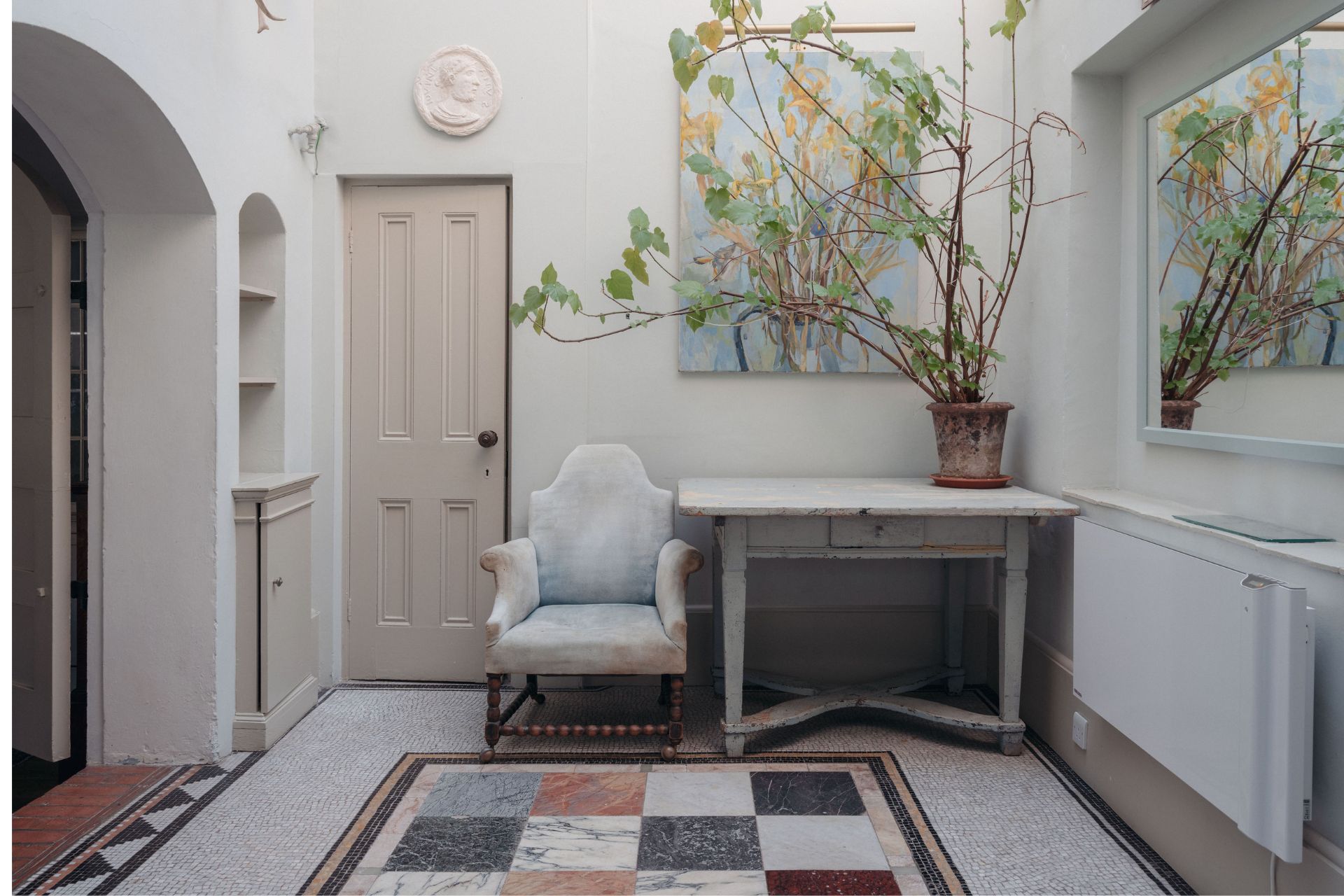
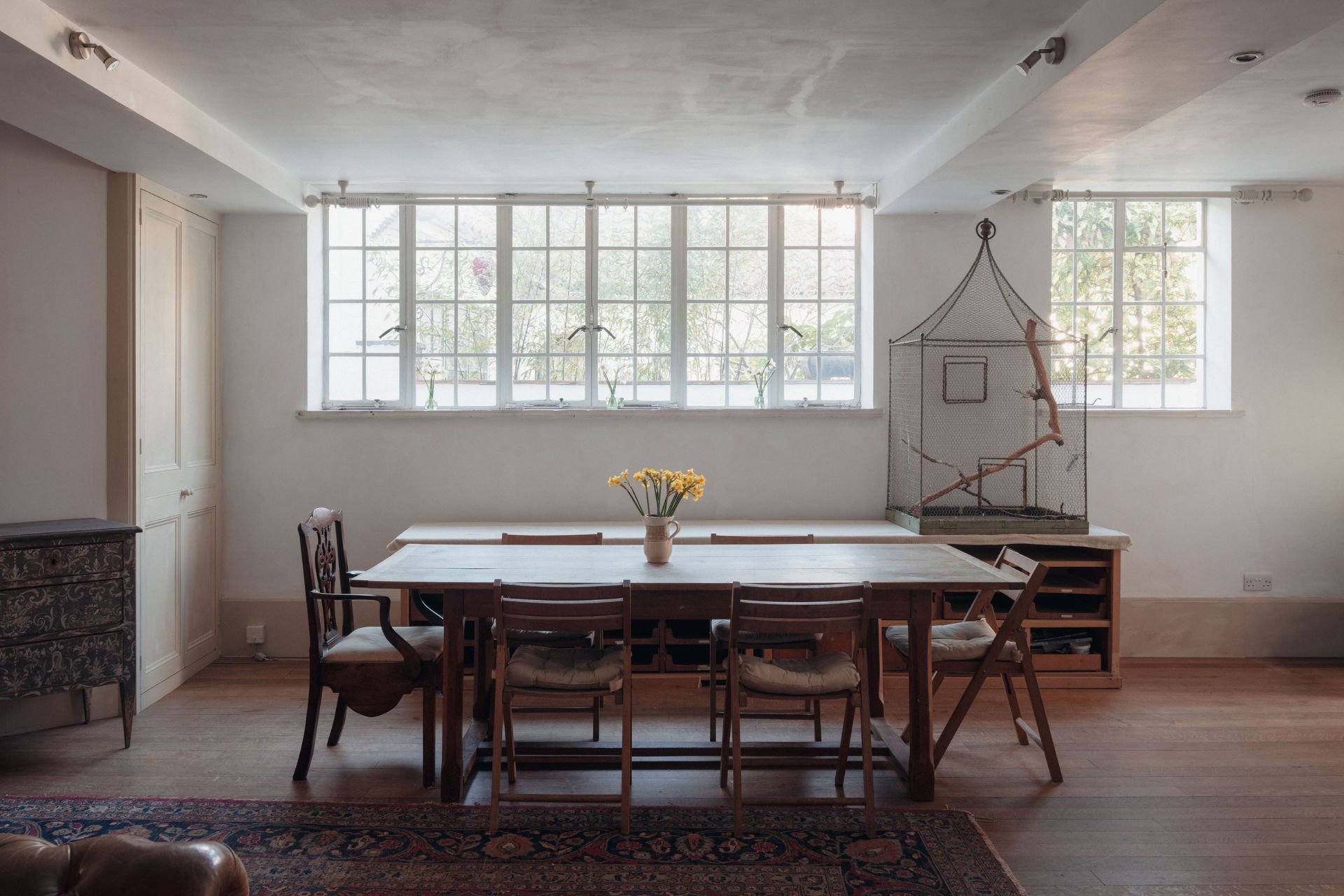
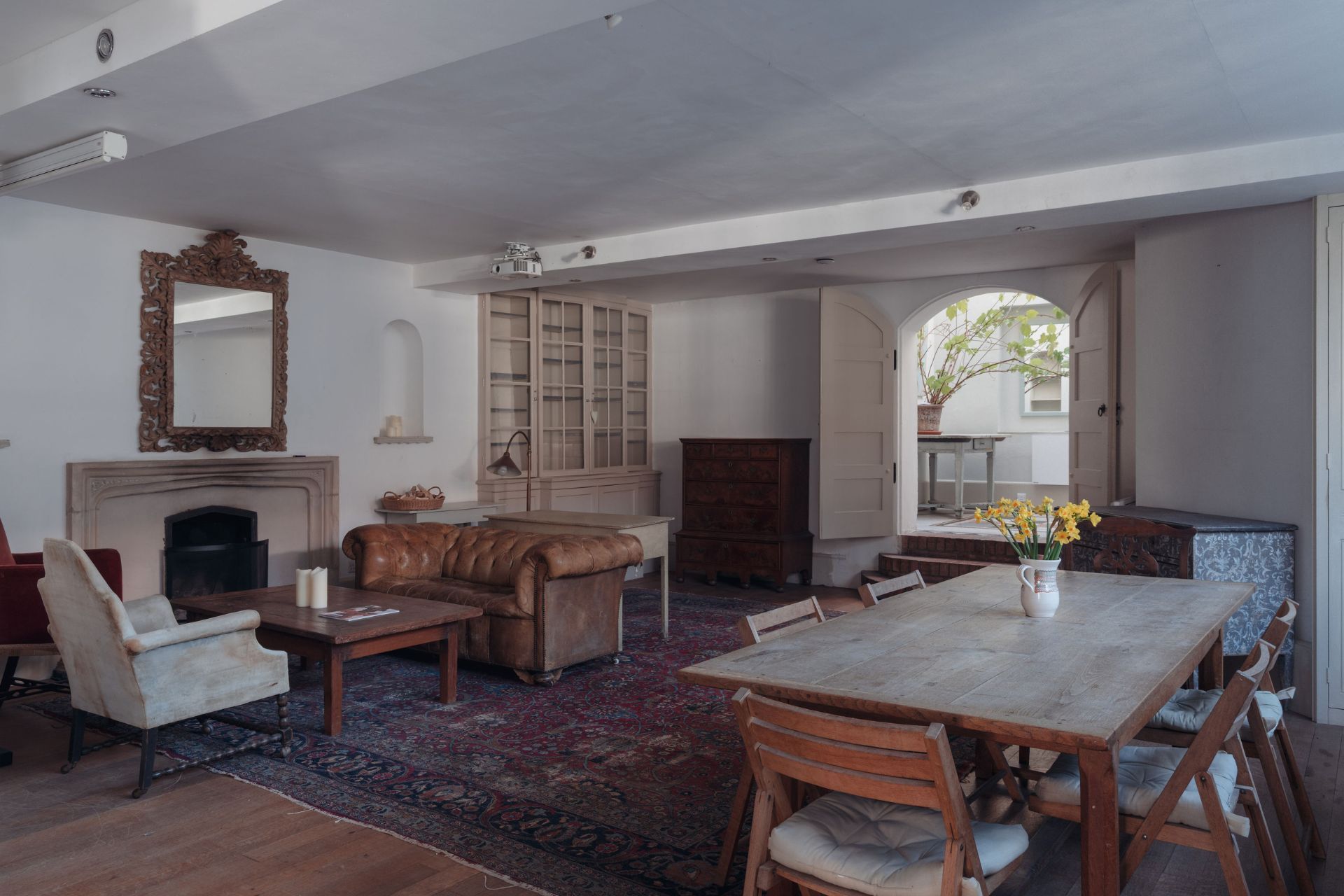
Discreetly tucked away behind gates, located just off Fulham Road on the border between Chelsea and Fulham, Chelsea Studios is just a stone’s throw from the King’s Road. This apartment, Studio 9, was Manenti’s own residence. Located on the ground floor, the home spans 1,044 sqft and boasts a wealth of period features, from Vitruvian scroll skirting and oak flooring to expansive Crittall windows and a chimneypiece with an open fire. With an open-plan living and dining space at its centre, Studio 9 then opens onto a vestibule with a glazed roof and intricate stone flooring which then leads through to the kitchen. For now, there is only one bedroom (with an ensuite bathroom and built-in storage) though there is potential to reconfigure the layout to make space for a second sleeping space. Outside, the communal gardens span lawns, magnolia trees, a lily pond with a fountain and abundantly planted flower beds.
Studio 9 is on the market for £1 million. Find out more at bluebookagency.com