


Bernardine Evaristo: ‘As A Black Girl, I Was Never Going To Belong – So I Made A Virtue Of My Difference’
By
3 months ago
The author and activist discusses community, creativity and why she's donating her latest prize money to women over 60
Conventional wisdom holds that the closer you are to the stage at an awards ceremony, the more likely you are to win. At least, that was Bernardine Evaristo’s experience. When the Girl, Woman, Other author was seated one table over from Margaret Atwood at the Booker Prize ceremony, she thought, ‘I have a good feeling about this’. Both women ended up sharing the prestigious fiction award, with Evaristo becoming the first black British winner in its decades-long history.
Today, Evaristo greets me at the door of her home on the hottest day of the year yet, ushering me into a spacious, open-plan house. ‘It was a career-defining, career-changing moment,’ she says of her Booker win. Sales rocketed from a few thousand to 1.5m copies; her older work was republished and her 2013 novel Mr Loverman, following the lives of a closeted Antiguan man and his wife, has been turned into a BBC television adaptation. She rearranges herself in an armchair, reupholstered in African wax-print fabric in a nod to her Nigerian roots, and smiles: ‘I mean, I did Desert Island Discs!’
Winning catapulted the wryly charismatic writer into the heart of the literary establishment. Seven years on, she has served as the second ever female president of the Royal Society of Literature and is the creator of several schemes to diversify publishing, one of which includes personally loaning out her seaside cottage for a writing residency. ‘As somebody who’s been an activist pretty much all my professional life,’ she tells me, ‘I am always looking at producing projects that fill in a gap or meet a need.’
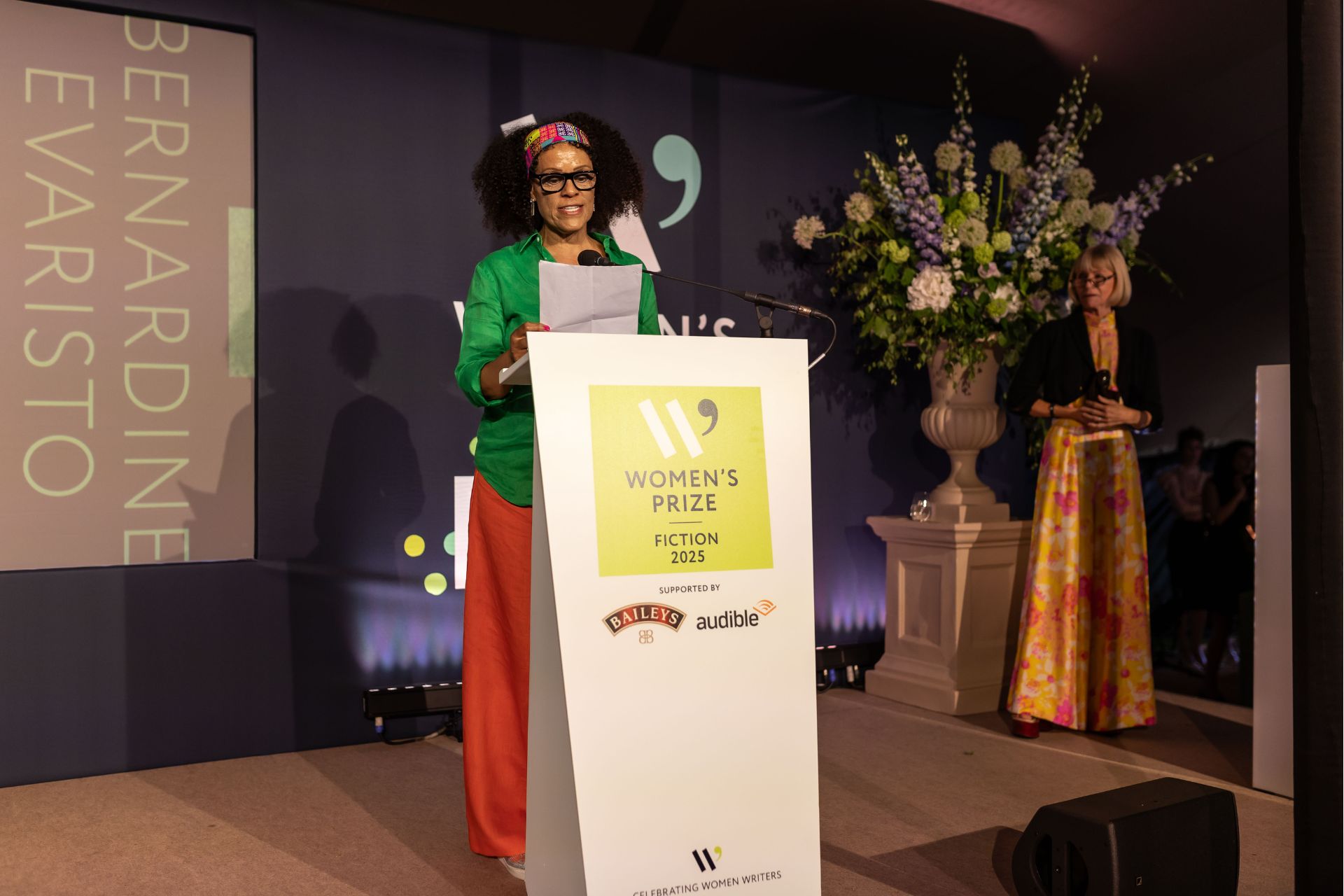
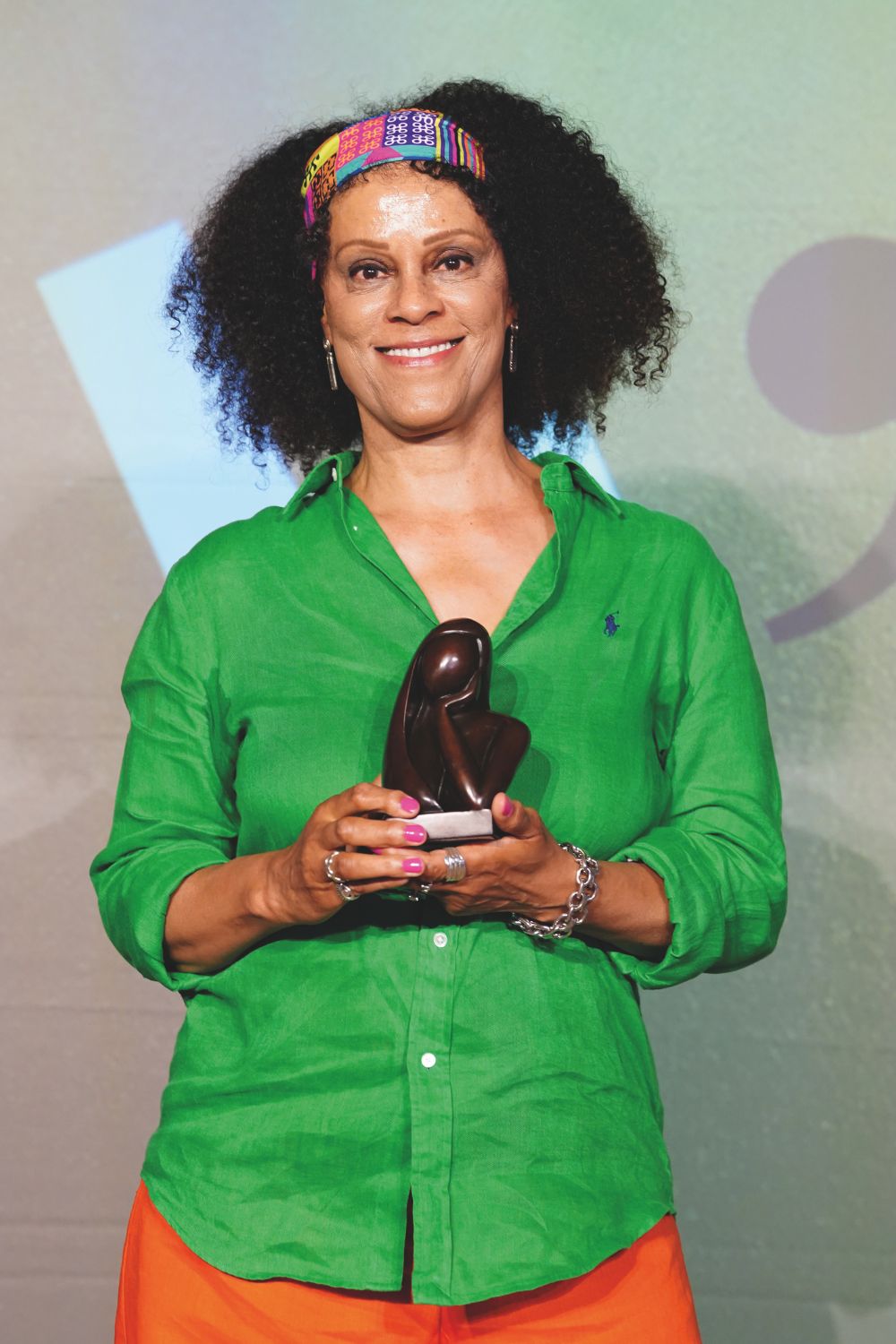
Bernadine Evaristo was honoured with the Women’s Prize Outstanding Contribution Award in 2025 – and is putting her £100,000 prize money towards creating an award for women over 60
Thinking of others clearly comes naturally to the Londoner, whose first instinct is to fill a jug with ice-cold water and turn on a fan for her guest. Evaristo was 60 when she won the Booker. It’s clear that age is on her mind. She recently diverted her winnings from the Women’s Prize Outstanding Contribution Award – given last year in recognition of her books and her tireless support of underrepresented writers – to set up a prize for writers over the age of 60. Over the next decade, the RSL Pioneer Prize will redistribute her prize money to ten living writers – all £100,000 of it. ‘It felt right to share it,’ she says, adding with a flash of dry wit, ‘not because I’m some kind of sanctimonious prick, but just because that’s what I believe.’
Born in southeast London to an English schoolteacher and a Nigerian factory worker, Evaristo is one of eight children. ‘I grew up in a household where community was considered very important,’ she tells me. Her parents subscribed to the Socialist Worker newspaper and took her on anti-fascist marches; her father later became the first black councillor in the Borough of Greenwich. Evaristo would walk to the school with a nose buried firmly in a library book: ‘From the age of five or so, reading was what I did all the time.’
Joining her local youth theatre group proved the making of her: ‘It was my introduction to the creative world.’ It inspired her to sew her own clothes, including a Technicolour Dreamcoat-style knitted coat, scandalising her suburban grammar school classmates. Her outfit today – navy dungarees, a colourful headscarf and bright yellow Birkenstocks – is only a little more low-key by comparison. ‘Theatre gave me a sense of being proud to be who you are,’ she reflects. ‘I was never going to belong because I was a black girl. So why didn’t I make a virtue of my difference?’
At drama school, she wrote one-woman plays and went on to found the pioneering Theatre of Black Women with friends from college. When the group closed down in 1988, she had an epiphany: she wanted to spend her life writing. ‘It felt like an impossible kind of career choice. How do you make a career as a writer?’ Over the intervening decades, she took on part-time work in the arts while poring over her manuscripts at night. Often described as her breakout novel, Girl, Woman, Other is actually her eighth work of fiction – an expertly observed, polyphonic novel featuring 12 voices, mostly belonging to black British women living in the UK, spanning wildly different classes, occupations and ages.
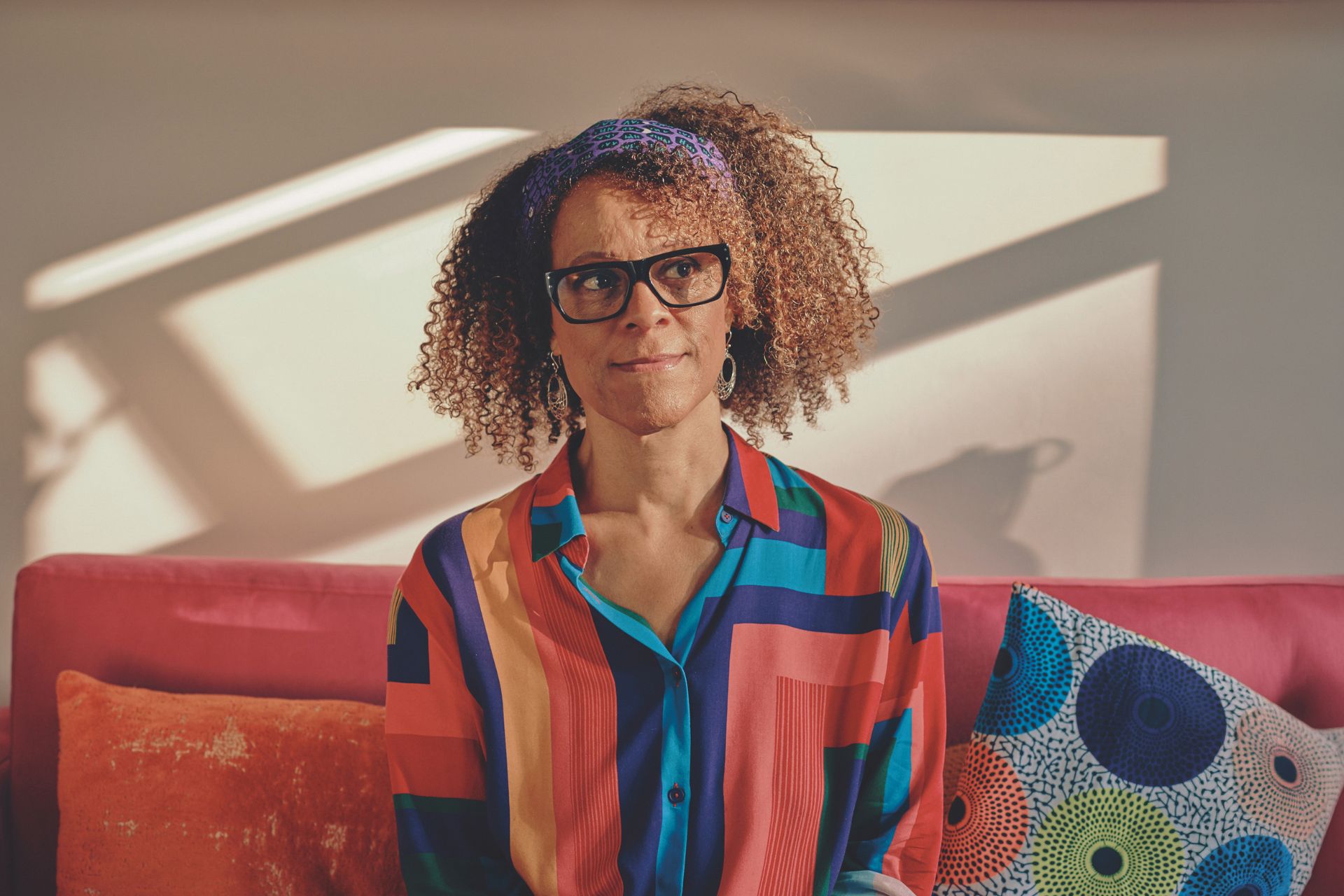
Bernadine Evaristo: ‘‘The whole point of the Pioneer Prize is that writers – women writers in particular – disappear as they get older. I would have disappeared.’
‘Older women don’t appear very often in fiction,’ Evaristo notes. The same thing applies, she adds, to authors themselves. ‘The whole point of the Pioneer Prize is that writers – women writers in particular – disappear as they get older. I would have disappeared,’ she adds. Does she honestly think that? ‘For sure,’ she says equably. In Manifesto, her memoir slash call to creative arms, she describes winning the Booker at 60 as the ‘perfect age’ for it to happen. ‘Early success can be very damaging,’ she explains. ‘Later success is just so appreciated.’
With a string of accomplishments to her name, Evaristo is clearly one of life’s great doers. Even the darkening political climate isn’t cause for despair. ‘You can’t afford to be pessimistic – that’s not my default,’ she says. ‘[But] liberal people are too complacent, and that will be our downfall.’ Reform pushed two leaflets through her door ahead of the local elections: ‘Labour sent none. That’s complacency.’
If optimism is one lesson to draw from Evaristo’s example, the other is that it is never too late to chase a dream: ‘If somebody has a creative urge, they should pursue it… otherwise you will live to regret it.’ She remains gleefully schtum on the question of her next book: ‘Nothing to say! I keep [things] very close to my chest.’ If her past achievements are anything to go by, I don’t doubt she’s cooking up multiple projects in the background.
An Evening with Bernardine Evaristo and Friends, including Gugu Mbatha-Raw, presented by the Women’s Prize, is at Chelsea Arts Festival on 17 September. chelseaartsfestival.com