


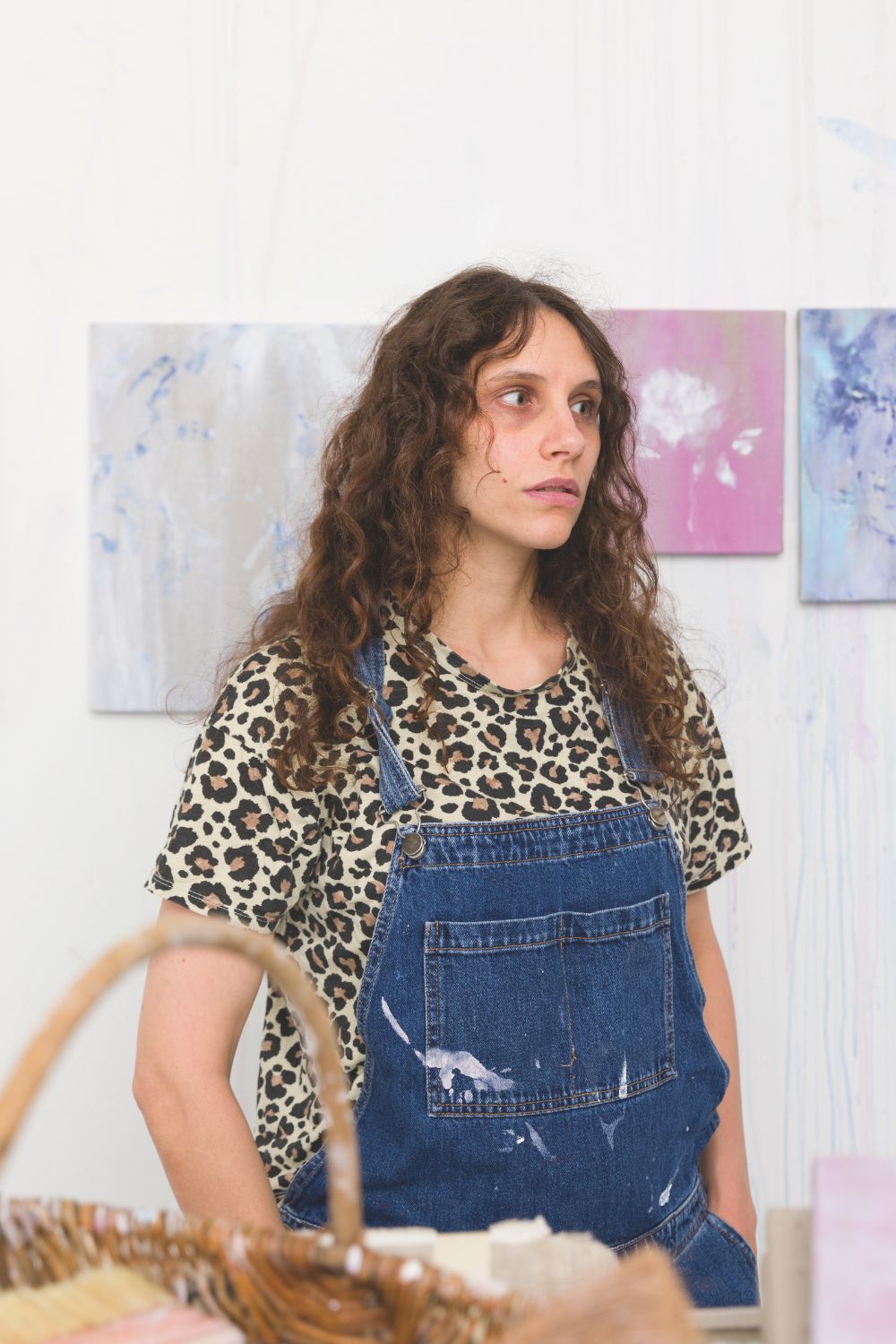
Partially-Sighted Painter Bianca Raffaella On Her Sensory Works & Tracey Emin’s Life-Changing Residency
By
3 months ago
‘My work reflects the harsh realities of sight loss: the haze of white glare, fragmentation, and missed forms'
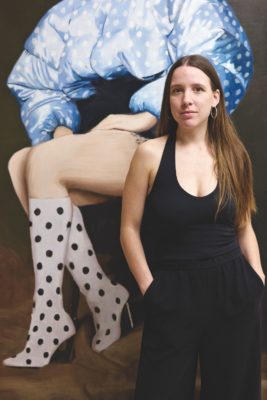
Partially sighted painter Bianca Raffaella – the first artist selected for Dame Tracey Emin’s Margate residency – tells Olivia Cole how she uses she uses sensory cues to inform her textural works.
Artist’s Studio: Bianca Raffaella
Everything changed for partially sighted painter Bianca Raffaella when she was the inaugural choice for Dame Tracey Emin’s Margate artist in residency programme (known as TEAR) in 2023/2024. Here, in Margate’s TKE Studios, she was given the freedom of painting in a purpose-built studio for 18 months, ‘being allowed to find myself as an artist,’ she says. ‘It was a life-changing experience. I went from being unemployed – having been dismissed as a domiciliary care worker for not being able to navigate to different houses – to supporting my family through my art. I feel eternally grateful.’
Of Emin’s rolling residencies, created to support artists and boost her deprived hometown (a rich source of inspiration for artists from JMW Turner to John Keats), Raffaella remains one of her most exciting discoveries. Now firmly on the map and represented by Flowers Gallery, she last year held a memorable show of her sensual atmospheric paintings. Faced with the visceral detail of the way she uses paint, it can seem hard to fathom how severely the artist’s sight is impaired (a result of congenital toxoplasmosis). She uses all of her other senses to experience what’s around her and to translate it onto the canvas.
Her base is now the Isle of Wight, where she’s taking care of her newborn son and finalising plans for her studio at the bottom of the garden, tucked under overgrown honeysuckle and surrounded by lilacs and weeping birch. Inside, one half is for stretching and priming linen, the other for painting canvases directly on the wall with ample natural light. ‘Knowing the space intimately is the only way I can work.’
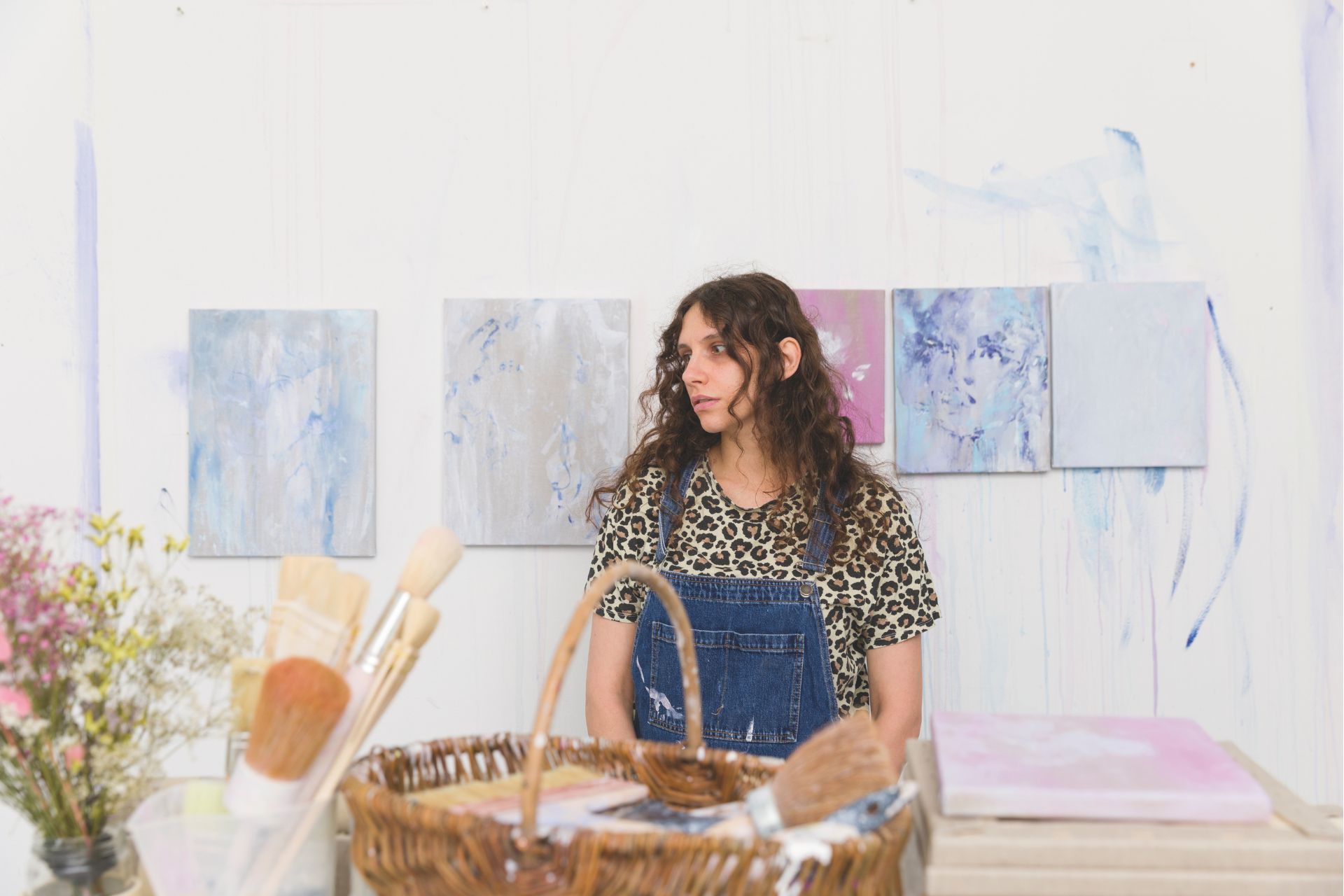
Photography: Antonio Parente
It’s a new landscape, as an artist and new mum, but also a familiar one. As a child, Raffaella spent many holidays in a small family cottage here. ‘My parents knew it was a safe place where I could learn the surroundings. My first independent journey was a memorised walk to the post box at the end of the road, while my mother watched from the gate. I have a deep affinity with the wild coastline of the “back of the Wight”. It feels like home.’
In the studio, she often has real cut flowers to hand. ‘I find them grounding,’ she says. ‘Holding them helps me access the subject, and their scents are reassuring.’ But she dislikes being labelled a ‘flower painter’. ‘My work reflects the harsh realities of sight loss: the haze of white glare, fragmentation, and missed forms.’
It is no surprise she has inspired many fans, keen to savour what she does next. For now, that is ‘making the most of the space I have as a severely sight-impaired new mum: a compact, well-known studio in a beautiful location’.
Handpicked: Painting Flowers from 1900 to Today is at Kettle’s Yard until 6 September. kettlesyard.cam.ac.uk