



Who Is The 2026 Booker Prize Winner M John Harrison?
By
1 minute ago
The End Of Everything author is the first science fiction writer to win the Booker Prize
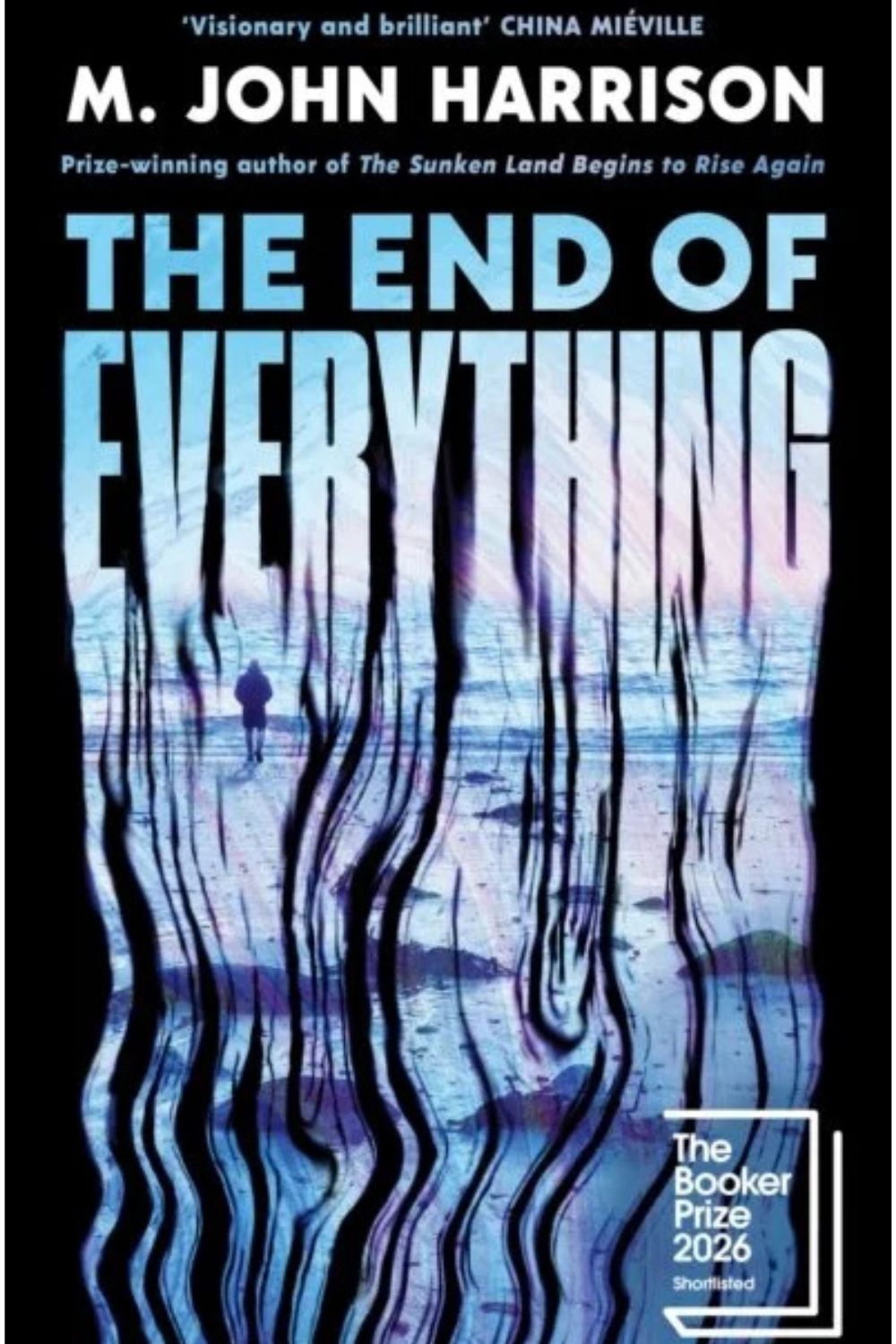
The End Of Everything by M John Harrison has just clinched the crown at the 2026 Booker Prize. The award’s oldest winner and its first science fiction author, M John Harrison might not be a name you’ve been familiar with up until now. Consistently overlooked throughout his career, writer China Miéville once said of the author and critic. ‘That M John Harrison is not a Nobel laureate proves the bankruptcy of the literary establishment.’ The writer of 13 novels, five short story collections and an ‘anti-memoir’ (on the grounds that memoir will always be a fictional study), he has been described as a ‘genre contrarian’. Never been one to fit easily in a mould, the fantasy and sci-fi writer has always opted for imaginative and insightful tales that comment on our world and society over purely escapist prose.
Early Years
Born to an engineering father and a housewife mother on 26 July 1945, just two months after VE Day, M John Harrison (full name Michael John Harrison) was raised near Rugby in semi-rural Warwickshire. His father tragically died when he was just 13, leaving Harrison feeling ‘bored, alienated, resentful and entrapped’. Acting out, he frequently played truant from school (then Dunsmore School, now re-christened Ashlawn School). Though he was not from a family of great readers, nor (it seems) the most conscientious of pupils, it was one teacher that rerouted the trajectory of his life when he introduced the young Harrison to the works of Irish playwright George Bernard Shaw.
First Forays Into Fiction
Despite his interest in writing, he did not easily fall into his career. When he finished school at age 18, he worked various odd jobs as a groom, a student teacher, and a clerk for the Royal Mason Charity Institute, London. It wasn’t until three years later in 1966 that he got his first short story published in Science Fantasy magazine and moved to London. In the city, he was able to meet fellow creatives including Michael Moorcock, then editor of New Worlds magazine, for whom Harrison wrote reviews and fiction before being appointed books editor in 1968.
His Career
With his literary career on the rise, he continued to write and edit for various publications including New Writings in SF, Transatlantic Review, The Magazine of Fantasy & Science Fiction, New Worlds, and Quark. He published his first novel, The Committed Men, in 1971. Similar to his Booker Prize winner, The Committed Men is an archetypal New Wave novel set in a post-apocalyptic England, plagued by cancers, anarchy, and alien-like mutants. That same year, he also published The Pastel City, the first of his Viriconium sequence.
As more novels were published, his star rose further. His 1983 short story collection The Ice Monkey and Other Stories was praised by Ramsey Campbell, who said: ‘M. John Harrison is the finest British writer now writing horror fiction and by far the most original.’ Moving to Manchester and later the Peak District, he developed a love of rock climbing which inspired his semi-autobiographical novel Climbers (1989), described by Robert Macfarlane as ‘the best novel about rock climbing ever written’. Climbers remains one of his most famous, and award-winning works, alongside the Viriconium sequence and the Kefahuchi Tract trilogy.
Harrison Today
While praise for his work has previously been contained to small, science fiction circles, his new novel The End Of Everything has at last erupted him into the limelight. Published in June 2026, The Guardian named it a ‘book to read in 2026’, and The Irish Times called it ‘the best book in 2026 so far’.
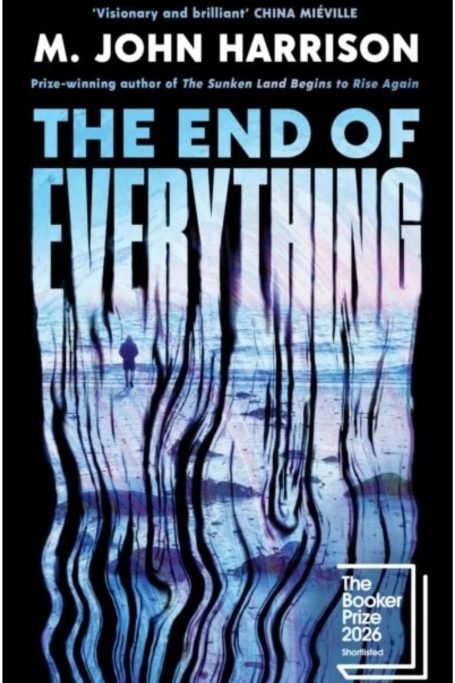
Set in a near-future, post-crisis England, in and around the fictional coastal town of Dalston-on-Sea in Kent (near Margate and Hastings), society has fragmented following an ambiguous, slow-moving global catastrophe. Governments barely function and strange alien-like entities known as the iGhetti have appeared – taking over major financial hubs like London and mimicking human speech and customs.
The plot follows Phillip Tennent, a beachcomber and scavenger along the tidelines of the English Channel. When he recovers a strange, shape-shifting object (an iGhetti) washed up from the sea he is forced to transport this shifting artifact inland. Along the way, he encounters random acts of violence, and confronts the limits of human comprehension as reality itself seems to glitch and slip away.
The End Of Everything by M John Harrison