


Stars In Her Eyes: Sarah Jessica Parker On The Latest (Lab-Grown) Jewel In Her Crown
By
1 month ago
From small screen sensation to literary guru, SJP talks about the shiny new addition to her heavily-feathered cap
Sarah Jessica Parker tells Lucy Cleland about the ambition and appetite driving her role as creative director of lab-grown diamond brand Astrea London.
Interview: Sarah Jessica Parker
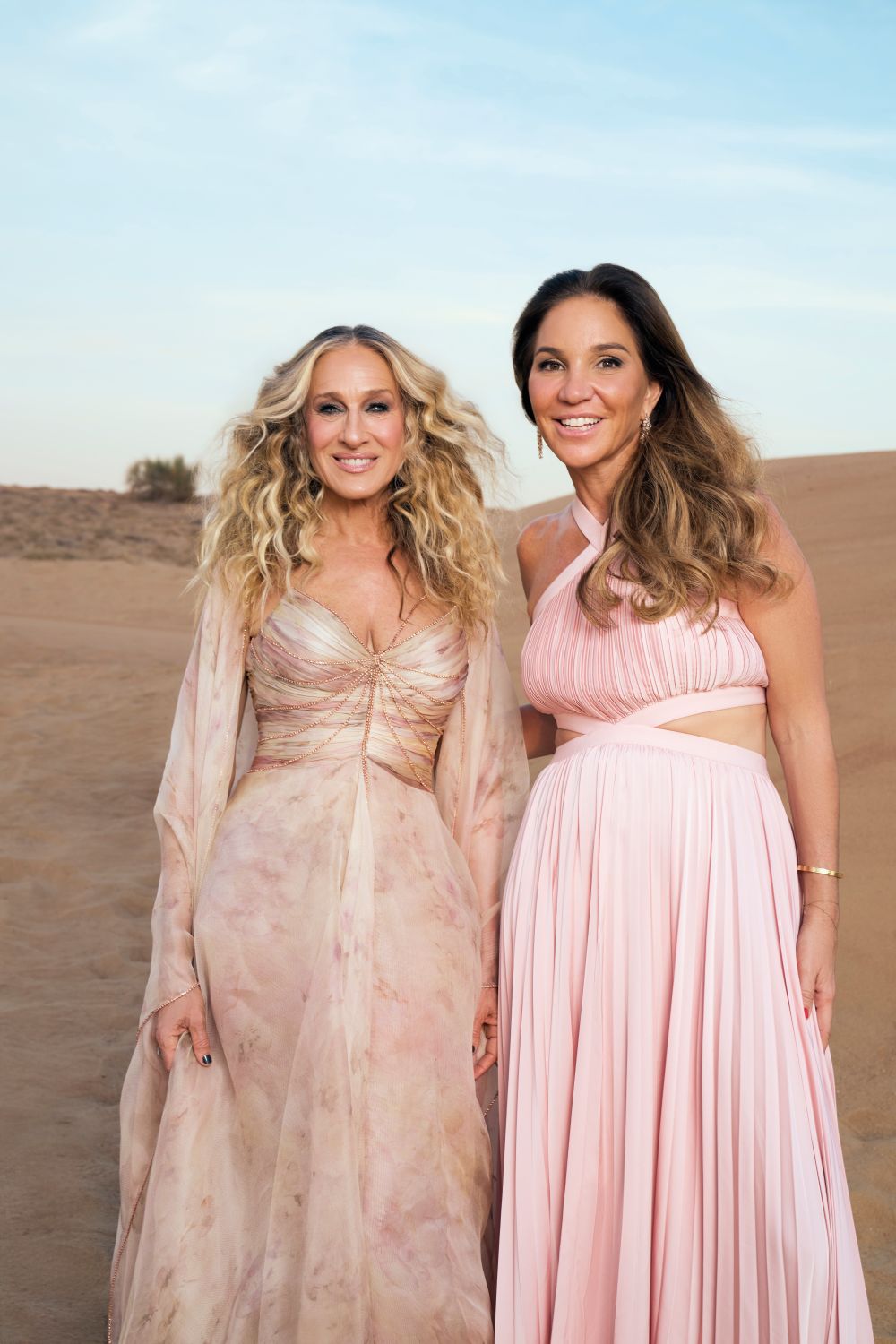
Sarah Jessica Parker with Astrea London founder, Nathalie Morrison. Credit: Daron Bandeira
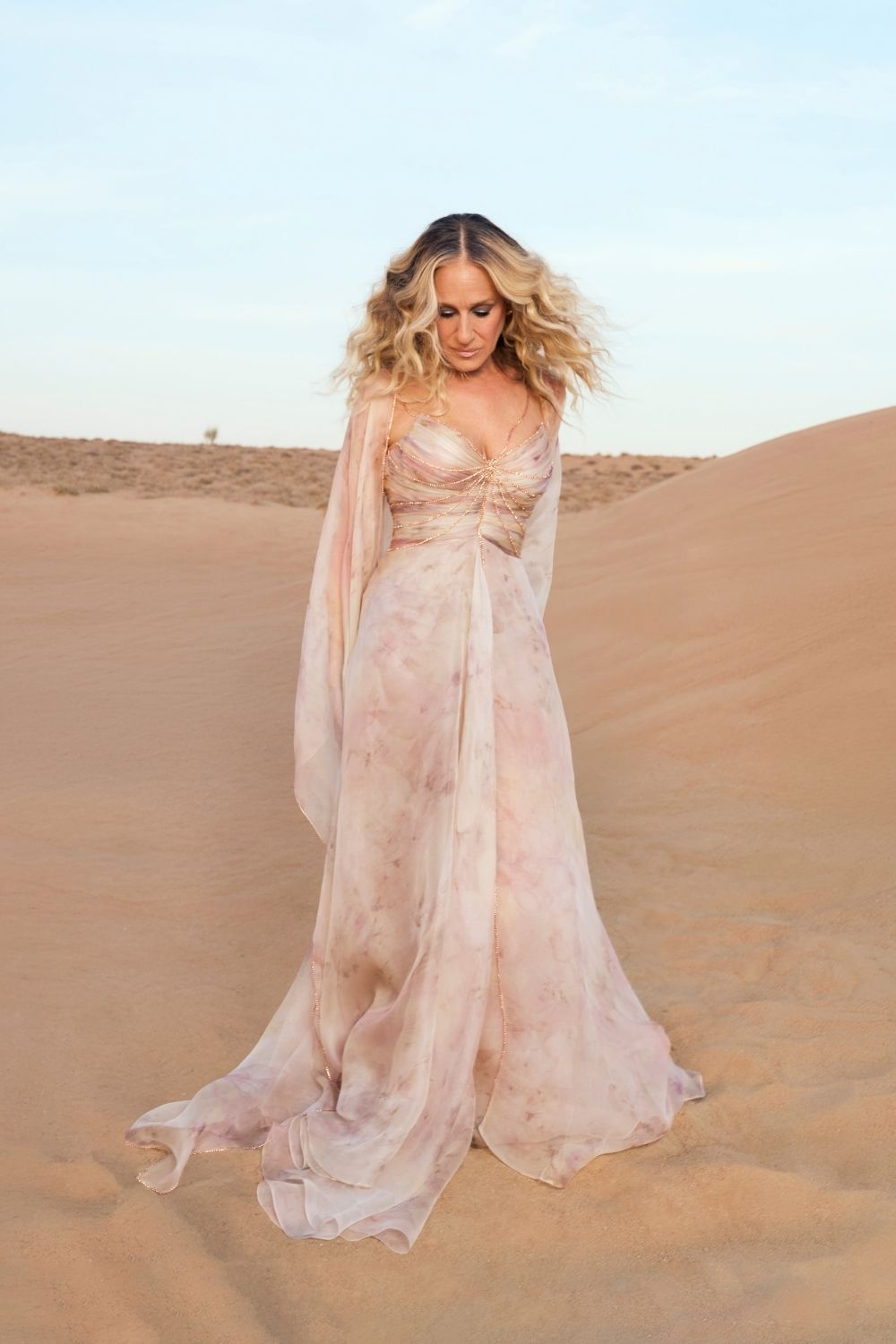
Sarah Jessica Parker dazzles just like the lab-grown diamonds she wears. Cheesy? Sure, but nonetheless true. Her smile, that warmth you hear in interviews, that slight self-consciousness, are real. As is her iconic hair (her hair stylist, Serge, who has tamed or frizzed those lustrous blonde locks for the past 28 years, barely leaves her side) and her style. No one rocks fashion like SJP. I’ve seen her in five different dresses – all designed by Dubai-based Turkish designer Dima Ayad – each more Cinderella than the last; georgette, taffeta, tulle, crepe de chine, sequinned confections in creams, champagnes, candyfloss pinks, golds and greens. At 60, she looks sensational.
For two days in Dubai, I’ve witnessed her welcome guests she’s never met like they’re old friends; she’s apologised and thanked, deferred and both asked and answered questions with thoughtfulness and consideration. She’s pushed through the New York jet lag with megawatt smiles.
In December, Sarah Jessica Parker – indelibly etched in our souls as her character Carrie in Sex and the City – was announced as global creative director and shareholder in Astrea London, a high-grade lab-grown jewellery brand founded by French businesswoman Nathalie Morrison in 2023. And this was the sparkling Dubai launch: a series of dinners (intimate and spectacular, on the water and in the desert), ribbon cutting, press junkets, photoshoots, client meetings and presentations, with flamethrowers, acrobats, margaritas, film crews and the very highest of Dubai society in attendance. A circus maybe, but nothing happens quietly in Dubai.
‘I went deep into the world of lab-grown diamonds and I fell in love with their possibility, their beauty, and their future’
This possibly explains why Morrison decided to base Astrea London there. She’s just opened three stores (hence the arrival of Parker) – and it’s where 60 percent of the diamonds are actually made (the British store is found at Fairmont Windsor Park and is the world’s first hotel boutique dedicated to lab-grown diamonds). The pace, technology, talent and investment pouring into the United Arab Emirates are reasons enough to base a brand there, it’s clear – and Morrison is ambitious for Astrea. The company exclusively produces diamonds in D and E colours only (the highest tier of diamond colour quality), with VS2+ clarity (meaning the stones are exceptionally clean to the naked eye). This represents the top one percent of diamonds worldwide. Parker, I’m certain, would expect nothing less.
It was only five months ago [from December 2025] that Morrison wrote to Parker’s business agent with a proposition to come and be not just a brand ambassador but a true partner. It would have been easy – expected, even – for Parker to simply front a campaign, but this partnership goes much deeper, despite the short time frame and Parker’s then admitted lack of knowledge on lab-grown. Since then she has gone full-immersion. ‘I think what I knew about lab diamonds [before] was probably what a lot of Americans think about them, which is they tend to be – and this is not a judgment – affordable, and a really good substitute for a lot of people.’
Under Morrison’s – and now Parker’s – direction, no longer are lab-grown a ‘cheap’ alternative to the real thing; they are serious competition, and ethically produced to the highest standards at that.
The diamond market as a whole looks complicated and volatile – both for lab-grown and natural. According to Reuters, last October World Diamond Council President Feriel Zerouki said that lab-grown diamonds were ‘rapidly losing appeal’ due to oversupply and ‘plunging prices’ and that, according to industry analysts quoted by the WDC, wholesale prices for common one- and two-carat lab-grown diamonds have dropped by as much as 96 percent since 2018.
It’s no surprise that the WDC, which promotes the interests of natural diamonds, might sound the alarm, especially when natural stones aren’t finding it easy either. Macroeconomic headwinds (weaker luxury demand, fewer weddings, softness in key markets such as China and the US), rising inventories of unsold natural rough diamonds at major producers, and indeed lab-grown competition, are seeing sharp falls in valuations. This is an industry in flux, which makes it all the more interesting for a brand like Astrea London.
Skewing towards larger carats (some stones can take up to three months to be created) and placing transparency and ethical production as key tenets, the brand chimes with consumer appetite. According to wedding platform The Knot, from a survey of 17,000 couples conducted in 2024, 52 percent of engagement ring stones were lab-grown, up from 12 percent in 2019. And, despite the gloomy warnings of the WDC, Bain & Company predicts that the lab-grown diamond market is expected to reach $55–$60bn by 2035. Currently, Fortune Business Insights cites its value at $25.9bn.
‘I went deep into the world of lab-grown diamonds and I fell in love with their possibility, their beauty, and their future,’ says Parker. ‘Nathalie was willing to share everything she knew, and gave me the time to learn more. I’m always learning more about the business.’
Parker has even designed her first 20-piece collection, which had its global reveal at the Mandarin Oriental Jumeira hotel (where the first shop is located – and a hospitality brand notable for its sustainability credentials). And very Sarah Jessica Parker it is too. This is, after all, the woman who keeps the Sex and the City wardrobe (which she owns in its entirety) meticulously archived, who still wears a charm necklace bought in a junk shop for her three children, each charm standing in for a star sign and three tiny hearts (though currently usurped by Astrea London pieces, natch).
‘I’ve just always done what felt exciting and felt like me’
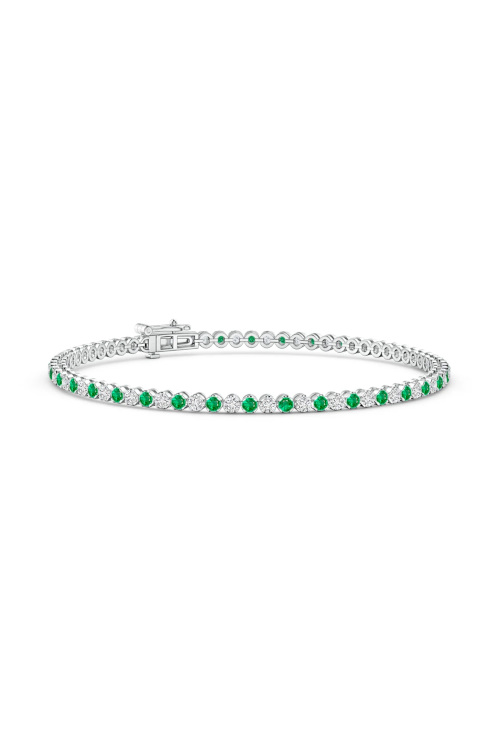
Modelled on vintage finds and treasures found in thrift stores and flea markets that held real meaning for her, Parker’s collection consists of pieces that can be spun, twisted, detached and transformed. There are diamond leaf earrings which double as brooches; rippling heart pendants; drop earrings which convert to studs. Plus, a stonking diamond necklace with 50 carats. How they hinge, curve, spin and articulate were incredibly important to her. ‘I’ve just always done what felt exciting and felt like me,’ she says.
Not one to conform to trends, Parker was wearing secondhand dresses on red carpets long before it became a thing; her collaboration with costume designer Patricia Field on SATC pushed high–low fashion as a concept precisely because neither of them cared whether it was ‘correct’ – only whether it was interesting. ‘We wanted to create something that feels singular and unique, and expresses our point of view which we are excited to offer to a customer,’ she says.
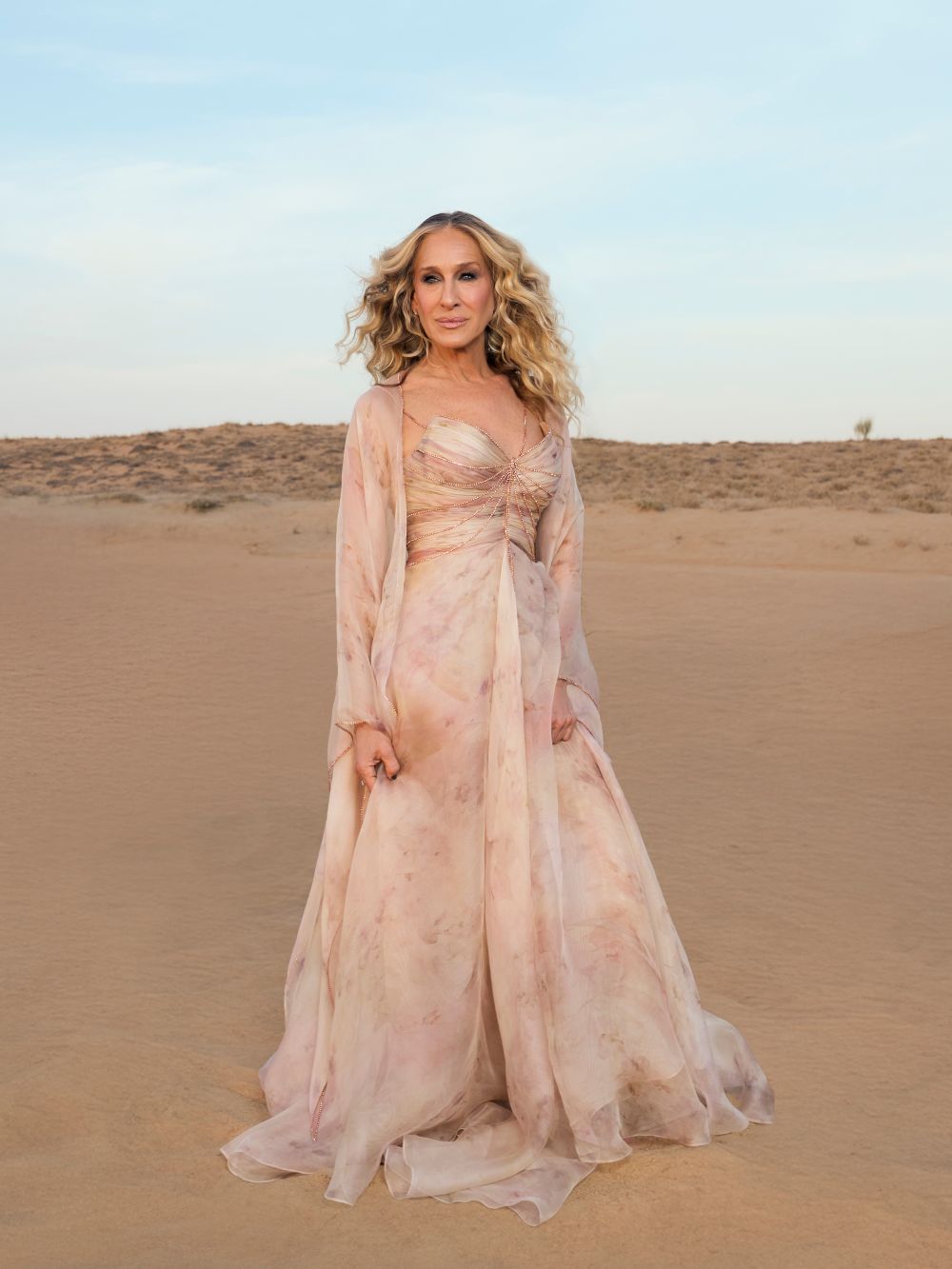
Credit: Daron Bandeira
Despite the heart of the brand being in Dubai, the name spotlights a different city: London, where Morrison lives full-time. But what is Parker’s, the consummate New Yorker, relationship with the city? ‘I’ve loved London since I was a very little girl at 11 years old,’ she tells me. ‘I auditioned for a play (The Innocents) that Harold Pinter was directing. Claire Bloom was going to be starring in it. I ended up getting the part and I had to fly to London on very short notice with my stepfather.’
In rather different circumstances from her childhood home in the mining town of Nelsonville, Ohio, where she was one of eight siblings, Parker found herself in London living around the corner from Buckingham Palace, in Roebuck House on Stag Place. ‘The prince and princess of Abu Dhabi each had a Rolls-Royce parked outside – pink and baby blue. Peter Sellers lived there too,’ she recalls.
‘My stepfather would walk me there [to Buckingham Palace] before rehearsals in the morning, to watch the Changing of the Guard,’ she continues, ‘and then we’d walk to rehearsals before going to that famously haunted theatre, the Theatre Royal Drury Lane.’
Most recently, Parker was back in London – and meeting the Queen, though not at Buckingham Palace – for the Booker Prize in November last year. For the past few months, as well as getting a crash course in the lab-grown diamond industry, she had joined the judging panel of literature’s most prestigious awards, reading 153 novels in seven months. That is some serious multitasking, as even she admitted that ‘you can almost do nothing else [but read]’. Being a judge was a long-held ambition for Parker, who had commented in 2022 on the Booker Prize Instagram feed: ‘Oh let me try!!!!’
Parker is the first judge with a strong public profile outside of the traditional literary establishment, but she’s no lightweight. Though best known as an actress, reading and publishing have been part of her professional output for years. She first launched an editorial imprint, SJP for Hogarth (in 2016) and later SJP Lit in 2022 – championing new and international voices.
What books have recently grabbed her – apart from the Booker shortlist, of course – I ask. Perhaps as an antidote to all the contemporary fiction she’s just devoured, she cites the ‘magnificent’ Tokyo Express by Seichō Matsumoto, first published in 1958, and Moon Tiger by Penelope Lively from 1987.
But right now it’s diamonds that are demanding her time. Our interview is cut short, for which she apologises, and I trail out behind her as she dials up that dazzling smile and goes out graciously to greet her next audience.