


Worm Moon: How & When To See March’s Full Moon
By
7 months ago
Here's why this full moon is named for the pink wriggly creature
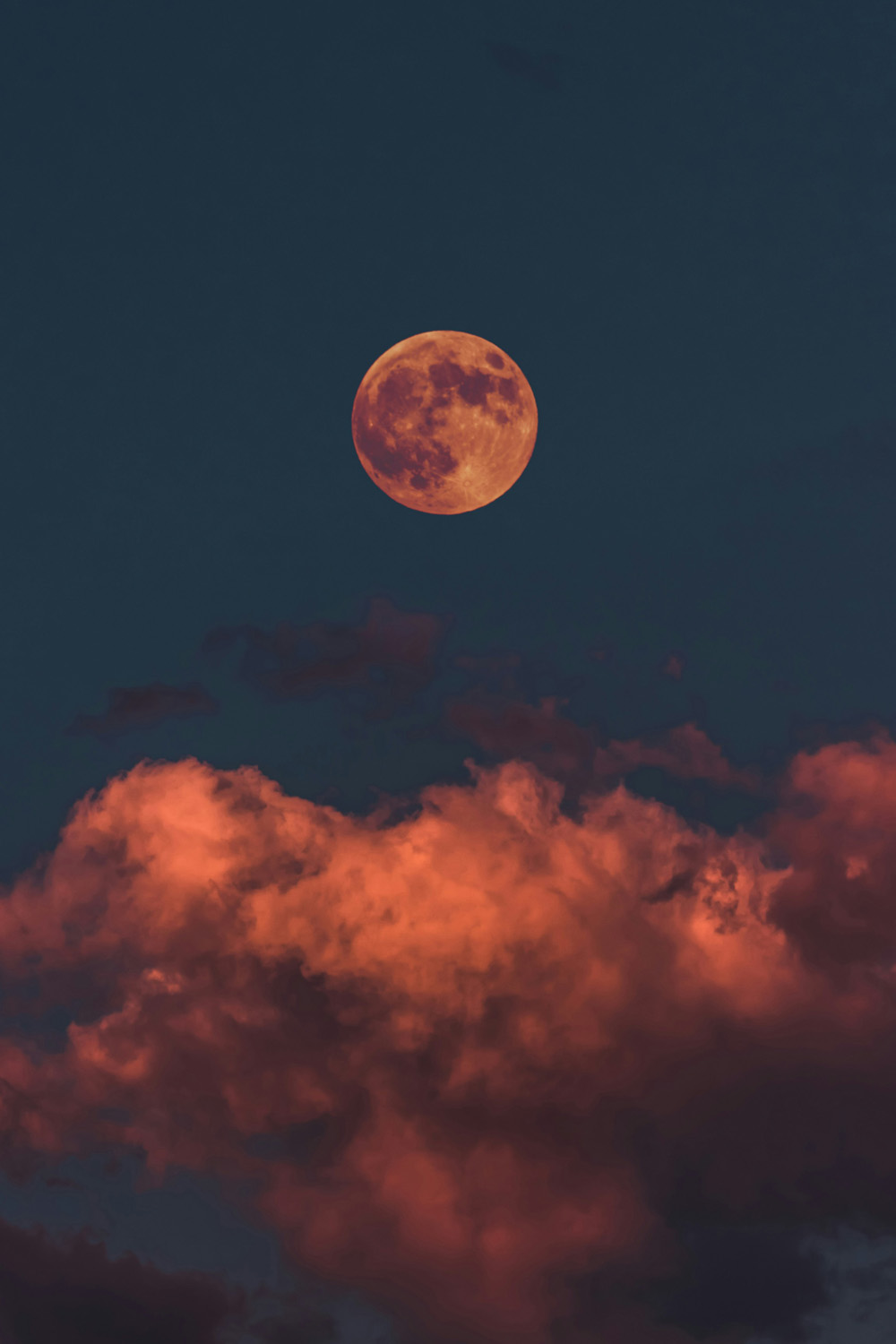
Another month, another full moon – and this one has a curious name. Lighting up the night sky this week, here’s what you need to know about March’s full moon, the third of the year, also nicknamed the Worm Moon.
Worm Moon UK 2026: Date, Time, History & More
Typically, there are 12 full moons each year as the moon completes its 29.5 day journey from new to waning crescent. But since that does not add up to 365 days, occasionally we have 13 full moons in a year – and the additional one (there will be two in one month) is known as a Blue Moon. Such is the case in May, which is bookended by full moons.
Across centuries and continents, civilisations have recorded these lunar milestones, though they are especially associated with Native American communities who relied on the moon’s phases to guide hunting, planting and harvesting. By watching its steady transformation in the night sky, they could mark the passing seasons easier than relying on deciphering the intricate patterns of the stars.
For professional astronomers, a luminous full moon is not always welcome. Its brilliance can flood the sky with light, obscuring fainter celestial sights such as distant galaxies and star clusters. For newcomers to stargazing, devoted selenephiles or simple admirers of the night, though, a full moon’s glow is part of its enduring magic.
Every full moon has a nickname in line with the Native American tradition. January is the Wolf Moon, February is the Snow Moon and, the first full moon of meteorological spring, March’s full moon is called the Worm Moon. Much less poetic, perhaps, but named after another seasonal phenomenon – this time the pink wriggly creatures burrowing through newly thawed soils as the winter transitions into spring.
Also known in Old English as the Chaste Moon (signifying the renewal of life as winter breaks) and the Death Moon (don’t worry: this refers to the death of winter), the Worm Moon is a less-pretty harbinger of spring compared to daffodils and bouncing bunnies, but a sign of ensuing warmth nonetheless.
Total Lunar Eclipse & Blood Moon
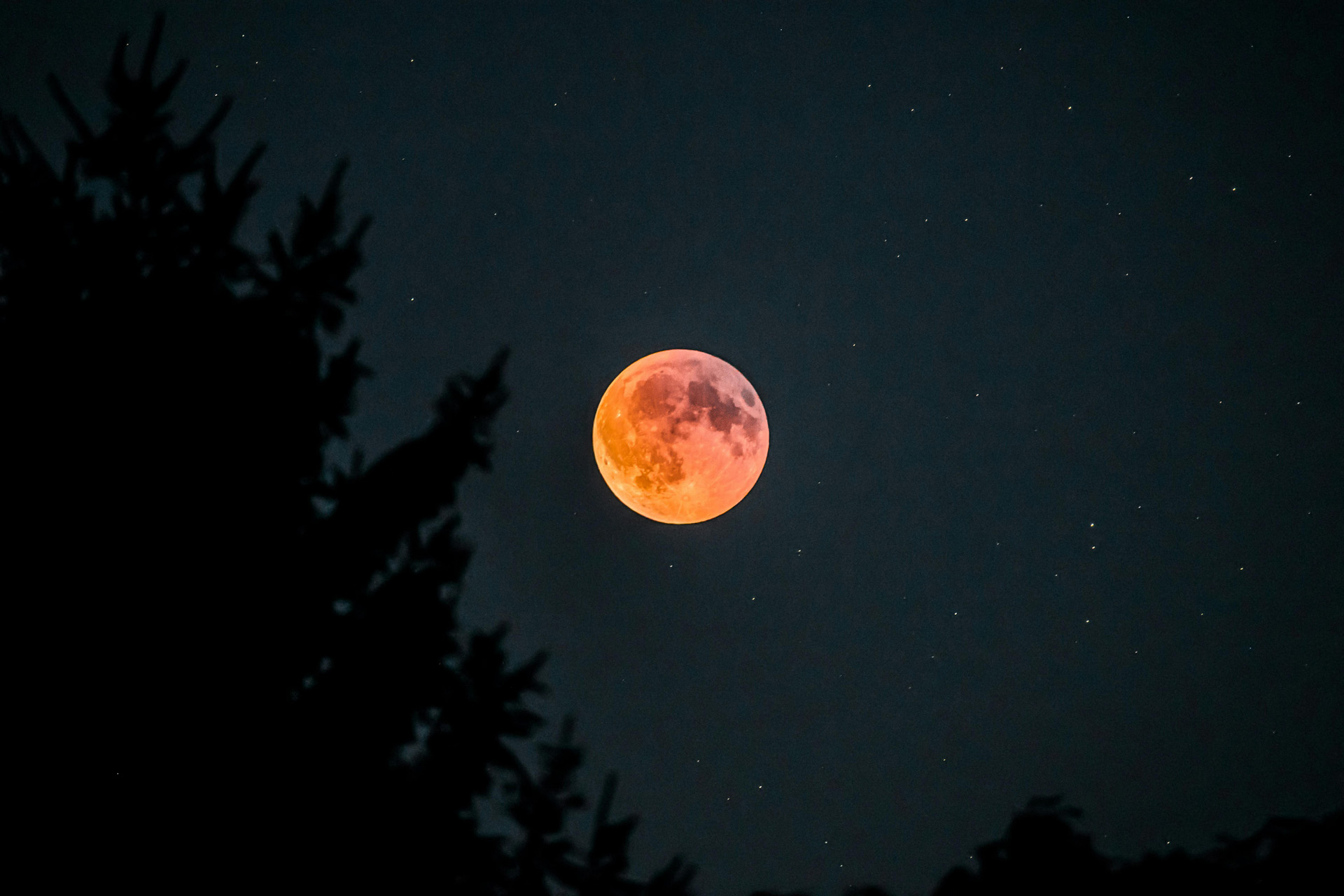
The Worm Moon also spells the first Total Lunar Eclipse of 2026 – and the last until New Year’s Eve 2028. This will cast the silver surface in a red hue as the Earth sits exactly in the middle of the Moon and the Sun and the Moon moves through Earth’s umbra, the dark centre of its shadow, giving the phenonmnon its Blood Moon nickname (rather than referring to anything supernatural on the ground).
But bad news for Brits: the Blood Moon will be visible in western North America, Australia, New Zealand and East Asia for around 58 minutes – but we won’t see the red-hued effect from the UK.
Best Time To See It
Here in the UK, the Worm Moon will reach its pinnacle at 11.38am on Tuesday 3 April 2026 – but we won’t actually be able to see it in the sky at that time, as moonset takes place at 6.40am followed by moonrise at 6pm that evening.
However, the Worm Moon will appear full on both evenings either side of the pinnacle: from moonrise at 4.39pm on Monday 2 March 2026 (best seen after sunset at 5.42pm) and from moonrise the following evening at 6pm on Tuesday 3 March (again most visible when the sun has set at 5.44pm).
It’s set to be a relatively clear night on Monday, with showers slated for Tuesday evening. If you spot the full moon without any clouds, with the help of some binoculars, you should be able to get a clear view of the lunar surface with all of its craters and marias.
A full moon marks the midpoint in the monthly lunar cycle, when the moon is perfectly opposite to the sun (with Earth in the middle), allowing its face to be entirely illuminated. As the moon wanes once more, it’ll still appear relatively full in the sky for a few days, so it’s not game over if you miss it on 2 and 3 March.

Sleep Impact
March’s full moon can be plagued with reports of disrupted sleep, but this is more to do with longer daylight hours and lighter evenings than the moon itself. You might notice yourself feeling more energetic by day as the sun sticks around for longer – but this can translate to feelings of restlessness by night. This is because extra daylight exposure can reduce melatonin production – the hormone in charge of regulating sleep – meaning you might struggle to fall or stay asleep.
As meteorological spring enters its stride and astronomical spring approaches, you might find yourself battling restlessness at night. To conquer it, Rex Isap, CEO of Happy Beds, recommends:
- Maximise darkness: ‘Even small amounts of ambient light can suppress melatonin production and make it harder to fall into deep sleep. Creating a dark environment with blackout curtains to block out any slight bit of light can help with falling asleep faster.’
- Reduce screentime: ‘Technology emits blue light, which alone can affect your sleep. But combined with the Worm Moon, it will impact it even further. Creating a technology cut-off point at least an hour before bed allows the body to transition more naturally into sleep mode. Or swapping scrolling for reading can significantly improve sleep onset.’
- Consistent sleep schedule: ‘It’s tempting to stay up later and wake up later as daylight hours change. Inconsistent sleep and wake times can cause the body clock to become confused, which eventually lowers the quality of sleep. Going to bed and waking up at around the same time every day promotes deeper, more restful sleep and strengthens the circadian rhythm.’
When Is The Next Full Moon?
After the Worm Moon, the next full moon is April’s Pink Moon, named for a perennial American plant, moss pink, which grows and blooms over spring and summer before dying back in autumn and returning again the following spring. The Pink Moon will rise in the wee hours of 2 April 2026 – at about 3.12am to be precise.
2026 Full Moon Calendar
There are 13 full moons in 2026, including a Blue Moon in May. They are:
- 3 January: Wolf Moon
- 1 February: Snow Moon
- 3 March: Worm Moon
- 2 April: Pink Moon
- 1 May: Flower Moon
- 31 May: Blue Moon
- 30 June: Strawberry Moon
- 29 July: Buck Moon
- 28 August: Sturgeon Moon
- 26 September: Harvest Moon
- 26 October: Hunter’s Moon
- 24 November: Beaver Moon
- 24 December: Cold Moon