


Interview: Dara Klein, The Chef Behind One Of 2026’s Buzziest Openings
By
55 minutes ago
The chef behind Tiella, Colombia Road's latest dining spot
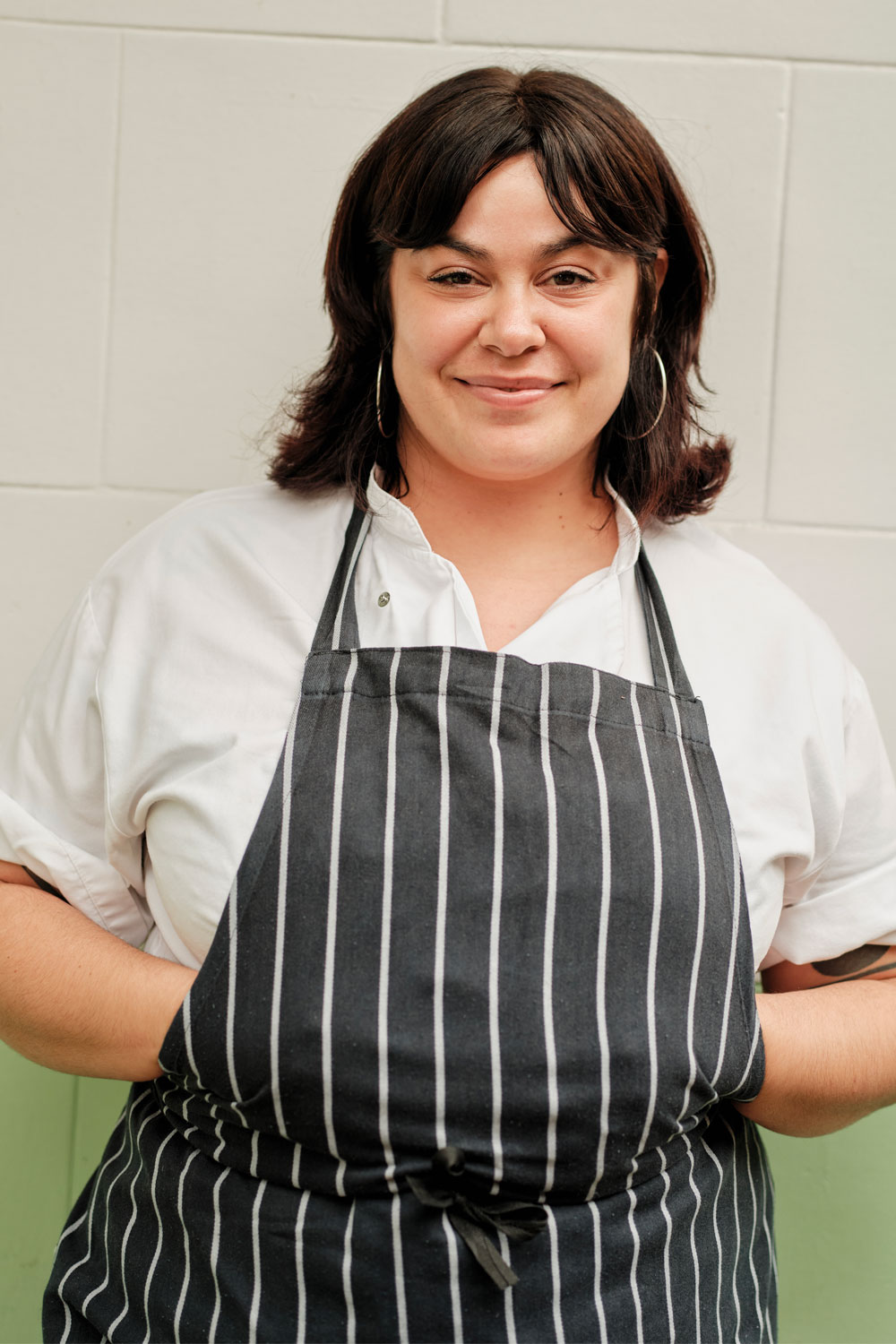
Dara Klein’s old school Italian trattoria, Tiella, opened on Colombia Road in January this year. It is the sequel, in a way, to her wildly popular residency at the (career-making) Compton Arms in 2023. Though formative, the chef says, ‘I was always going to need my own four walls’. Her follow-on dining spot is now jam-packed – you will be hard-pressed to secure a Friday or Saturday dinner booking in the coming months. The story, she says, begins well before the residency, though, with her family’s trattoria in New Zealand, and a surprising string of office jobs. C&TH meets one of 2026’s most talked about chefs ahead of dinner service.
Chef Dara Klein On Tiella, Resilience & Being Hungry To Prove Herself
How are you doing?
I’m good. It’s been two months since we opened, so I feel that we’ve bedded in. Tiella is still in its infancy, of course, and we’re just finding out place in the community – which has been lovely – but we’re swimming.
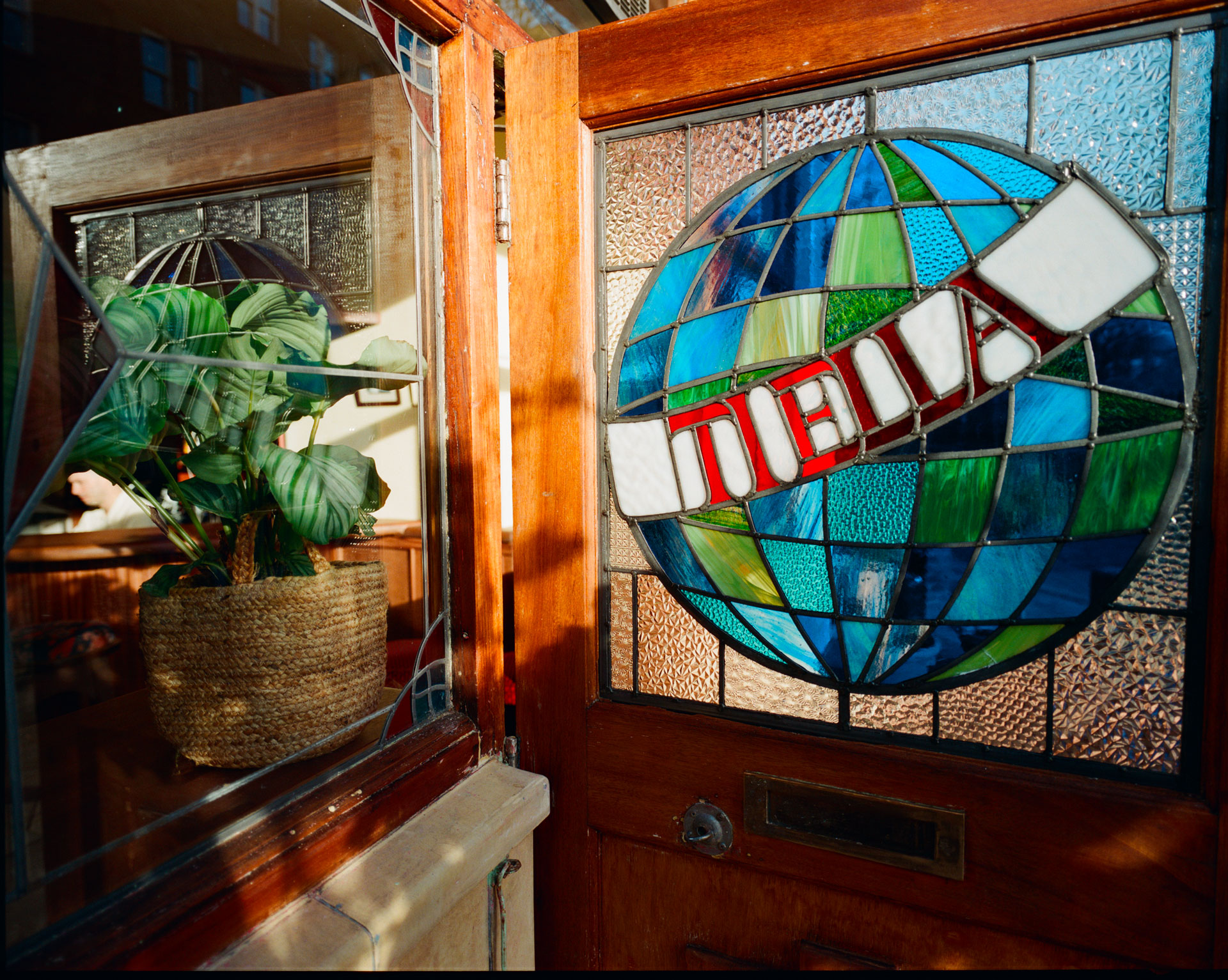
Tiella’s front door
Take us back to how the story began.
It probably started when I was a kid. I was working in my family’s restaurant from the age of eight; I always hesitate to say that. Tiella started in 2023 [at the Compton Arms] because it’s been a lifelong project. I grew up in my family’s deli, later a restaurant, in Wellington, New Zealand, called Maria Pia’s. My adolescence was spent working with my parents.
Talk to me about that childhood restaurant.
It was very classically a trattoria, in that it was small, local. It was beloved by its community, too. Trattorias have always been the way Italians move around the world; when we moved to New Zealand in 1997, my mum brought regional dishes from home that you wouldn’t really find in Wellington [at the time]. Anyway, it was a beautiful but really chaotic place, full of character. Around the same size as Tiella, with 40 covers, and championing homely Italian dishes. They changed with my mum’s seasons, and her mood: she’d drop something as soon as she was sick of it.
Especially for the time, my mum saw quite a lot of success. She wrote a cookbook with Penguin, was featured in The Silver Spoon – which is the Bible of Italian cooking – and she made something of the whole thing. But it definitely wasn’t easy, I think my parents were figuring it out as they went along.
Did you always know you’d follow them into the family business?
Absolutely not. I wanted to be a writer and an actor. When I finished high school, I went to Melbourne University, where I studied creative writing and film, and I was doing a lot of theatre. From there, I went to drama school, and studied acting for three years. It was when I came to terms with what the life of an actor looks like, and how you don’t have much control, that I decided it wasn’t for me.
And then my life took an interesting turn and I needed stability. I ended up working in offices [in New York], for five years, doing admin, marketing, social media… You can name the industry and I’ve tried it. Government jobs and non-profits, too! I was honestly quite lost, without direction.
I have always cooked, but I never wanted to be a chef. And then, lo and behold, it’s 2017, I’ve had a big mental health crisis, and I started cooking – a lot. I moved to my mum’s, in Auckland, and we began doing popups together. The first was in April 2018, and it was five courses to 30 covers. From that point, I was in. So when I needed to move to London to be with my boyfriend and I thought: should I actually give this a go? And it stuck.
That’s a twist-and-a-turn journey. I’m curious if there was anything you feel has stuck with you from the office years?
I learned a lot in those five years, including, I think, some crucial lessons around business. I can work my way around a spreadsheet, for one. Then there’s the importance of relationships in business, which I learned then, and something I take seriously for my restaurant. Every supplier I work with I need to have a strong relationship with.
My dad always said that in life you will have about seven different careers; he was a musician, linguist, restaurateur, wine importer, furniture salesman. So I have never been afraid to take a gamble in life [whether on a career] due to my unconventional family, but those years were definitely about figuring it out. I was very tough on myself in those chapters, that I hadn’t achieved something concrete. Like a lot of creatives who then have to make a living, you can sometimes berate yourself for not being able to live off your art. The restaurant somehow has threaded everything together, though. You’ve got to trust the process a bit.
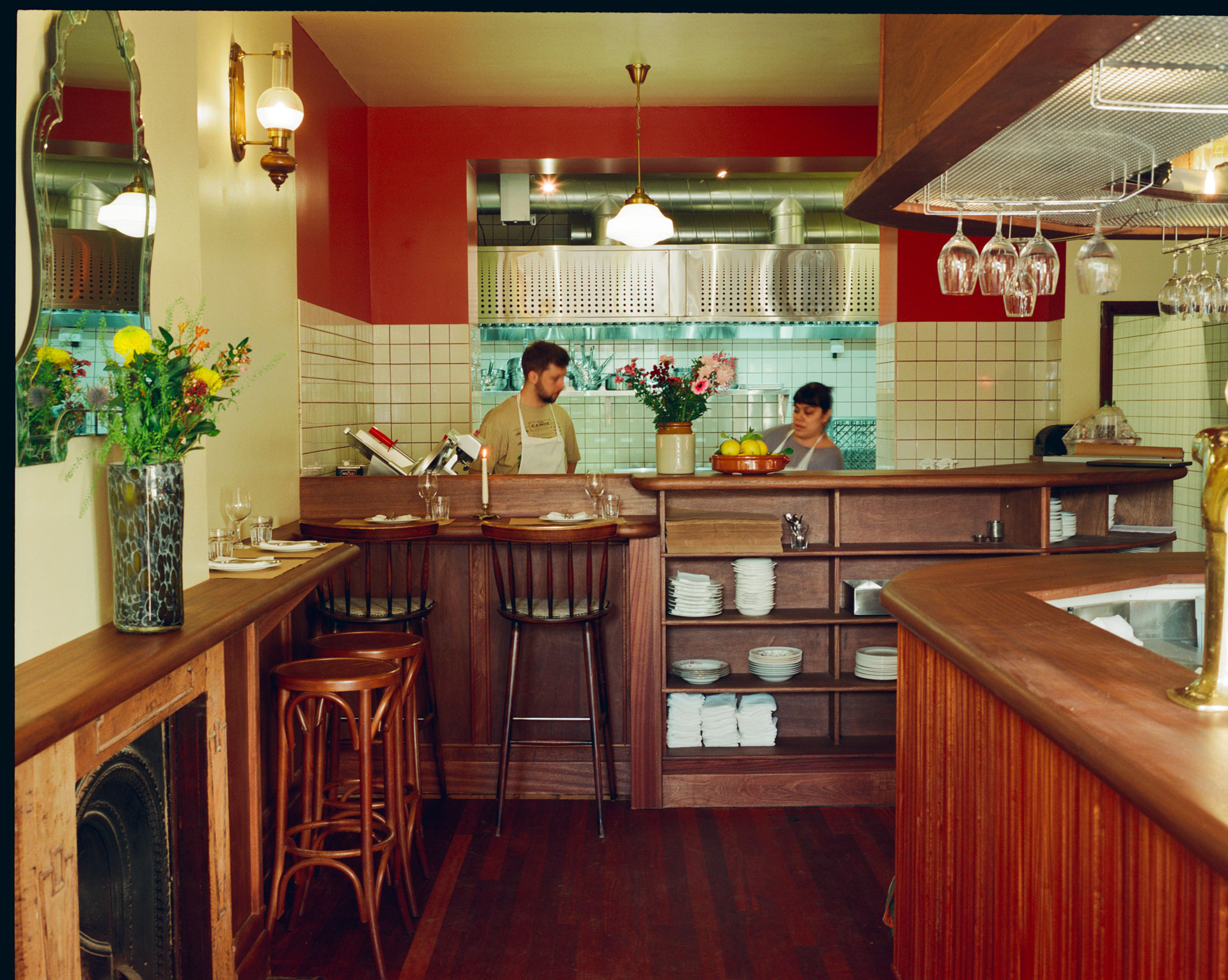
An open kitchen keeps Dara on a stage of sorts
On your work as an artist: do you ever miss performing?
You know, restaurants are a nightly performance. You’ve got the costume (your shift jacket) and you set the stage – we have a very open kitchen. Greeting the guests, the welcomes, that’s all performance. And I think today, in the landscape of food, you have to be comfortable selling yourself. Like it or not, content is king. Which is something I’m still grappling with a bit. But those skills from acting come into focus with the content landscape.
How’s your relationship with those social media platforms, and influencers?
I’m really torn by it, if I’m honest. I love that we can share our stories. But I think you have to be realistic. You have to be visible… We’re also very busy, and we’d love to make beautiful video content like kitchen tours, but when you’re challenging a prep list as long as the Great Wall of China, and then just running the business, you don’t have the time.
I hesitate to say this but I don’t really agree with [the concept of] influencers. As a rule, we don’t work with them because it’s an economy I’m so conflicted by. My feeling is that people are tired of being given disingenuous content. And I think… algorithms don’t promote nuance, nor humanity. It tends towards shock and quick bites. Whereas I’m in the game of old school hospitality, welcoming people every day and allowing them to sit down and connect to something human.
Why do you feel strongly about ‘old school hospitality’?
It’s cultural. I know I sound like a kiwi, but I’m Italian, and hospitality is in our blood. Tiella is a third generation trattoria – my grandmother had a pasta shop, too!
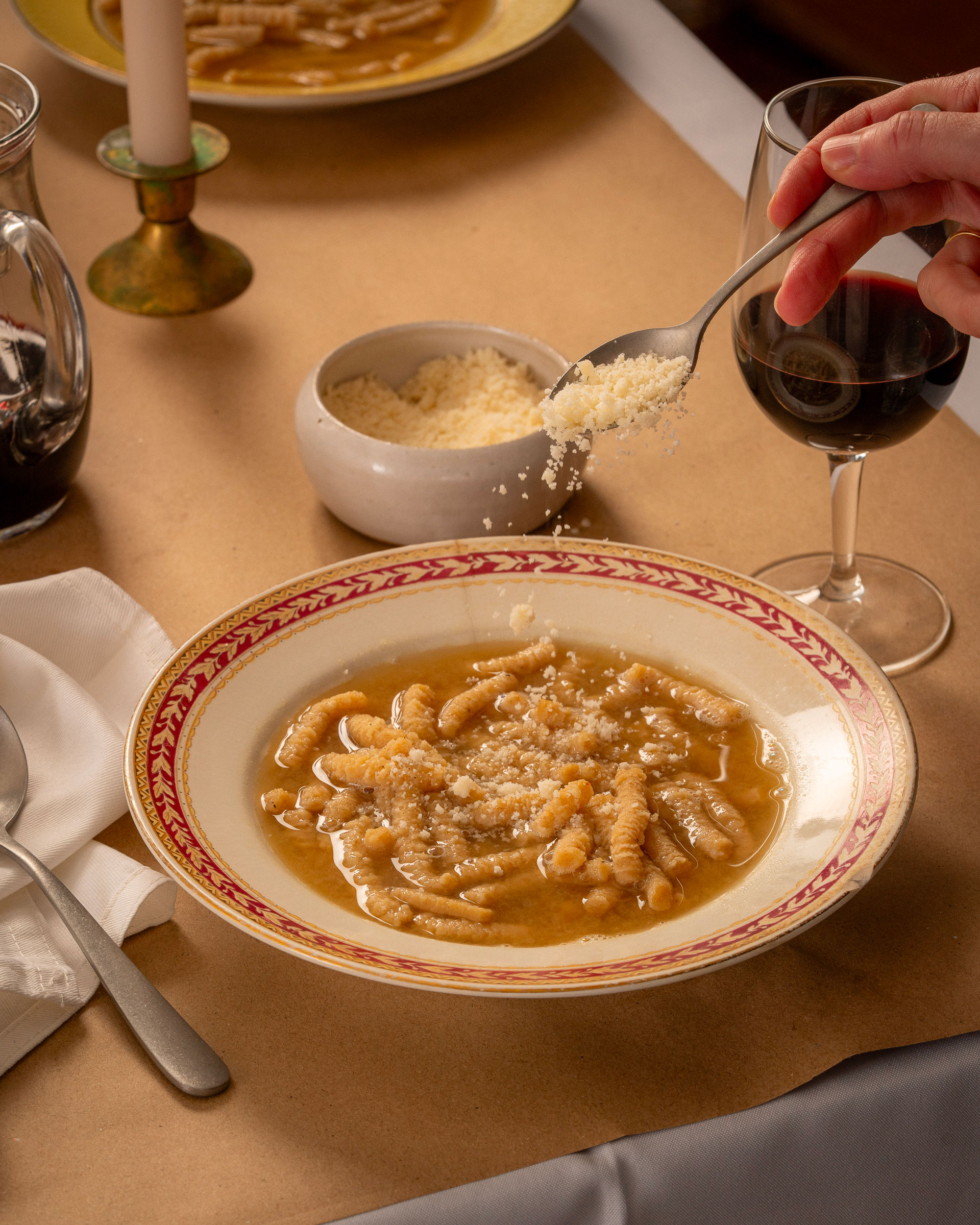
Passatelli in brodo. Photo by Caitlin Isola
Are there any recipes that have been passed down across all three dining spots?
The pasta I make in the restaurant is the same recipe that’s been handed down. And then there’s a dish called passatelli in brodo, which is a breadcrumb noodle made with parmesan and nutmeg, served in a really rich, clarified meat broth, and that was on my mum’s restaurant menu for years. I honestly constantly refer to my mum’s cookbook, and I send her a lot of WhatsApps voice notes asking for tips. Tiella would not have existed without the restaurants that came before; I’m just trying to continue what my mum and dad started.
There’s the weight of a legacy there.
Yeah, for sure. Definitely.
I’m interested that, earlier, you spoke about mental health. Which feels very open – the hospitality world feels quite closed doors on these subject matters.
I don’t shy away from talking about my story. My mum suffers from severe mental health diagnoses, too, and when I was 23, I was diagnosed with type one bipolar. It’s been a journey for the better part of 12 years, since. I think the thing that changed my life was working with my hands; it got me out of the chaos of my head, to make order.
I think then it’s important to talk about mental health in hospitality because people need to understand that there are human hands who pour your drinks. We’re not robots, nor machines. Service is a reciprocal act. People walk into a restaurant carrying all their emotions and the trials and tribulations of the day.
And restaurant kitchens feel like unforgiving environments. Especially at the moment, perhaps.
There’s currently a national conversation about the economic crisis we find ourselves in, and it’s certainly not specific to hospitality. But I think in certain parts of the world, eating out is part and parcel of daily life. Governments in those spaces reflect the necessity for these spaces by alleviating certain business rates, by making rent controls, not making a tax so high that it’s crippling. Now that I’m an operator, I’m seeing all the costs and realities associated with running this business. I know then that I’m pushing myself and my team because it’s the only way we can work, and I refuse to give up because I think restaurants are part of the fabric of society. Trattorias are meant to be watering holes dining rooms – for all. We’ve tried to keep prices amenable, which has made it very tough.
All these things, in relation to mental health… Food is reflective of society. I do also think that restaurant kitchens are specifically tough environments. They’re tough because you should be serving your food hot and fast, because that’s how people want to eat it. You can’t get around it. I was very lucky early on, though, to work for chefs who showed me the incredible community that’s found in restaurants. It’s just not for the faint of heart.
Do you pressure to be resilient?
It’s tough not to be too sensitive, but at the same time, enough so to be a real person. My coping mechanism has always been to shut off the noise, and show up each day the best I can.
But I’m turning 36 this year, and I’ve decided that this year, I’m really game to be seen. I’ve gone through harrowing stuff in my life, like being sectioned, and I’ve crawled my way out of all of that. I have a total hunger to prove myself, that I’m up for it. My cookbook is coming out in July, and it’s a really honest story about growing up in hospitality. It contains 75 recipes from both my restaurant and my mum’s – I do a lot of this for my mum. My mum had a really tough go of it, and her mental health blocked her, and so I want to try to do the things she wasn’t given the chance to do, because of the year it was or the conversation around psychosis and mania. I’ve got to be gung ho for it.
It was a very different picture for female chefs in the 90s. She must be proud.
My mum is such an athlete. She writes me these long, sort of rambling poems in Italian that make it known how proud she is. Her picture is the first thing you see on the wall when you get into the restaurant. I’m just reminded of her everything, even if I’m kind of on the other side of the world.
Dara Klein’s restaurant Tiella is located at 109 Columbia Rd, London E2 7RL. Book via opentable.co.uk