



How British Communities Are Building Fairer, Local Food Systems
By
1 hour ago
From Hertfordshire to Cambridge and Cheshire East, grassroots groups are building local food systems that are fairer and more resilient. Here's how they work.
From a community farm in Cambridge to a county-wide vision in Hertfordshire and an alliance tackling food poverty in Cheshire East, grassroots groups are building local food systems that are fairer and more resilient. Meet the people putting them into practice.
How Local Food Systems Are Being Built Across The UK
Food Futuring in Hertfordshire
Food Futuring is a research collaboration between the Institute for Creative Futures at Loughborough University London and Reimagine Everything, a St Albans-based participatory design collective. Over the past year, it has brought together Hertfordshire farmers, landowners and community growers, as well as people in policy, food distribution and more, to create a collective vision for a healthy, fair and resilient local food system.
‘No single organisation or sector could address these challenges alone,’ says Tony Elkington from Reimagine Everything. ‘It’s a systemic challenge, so it demands joined-up collective action, to listen to diverse perspectives – a kind of movement building from the ground up.’
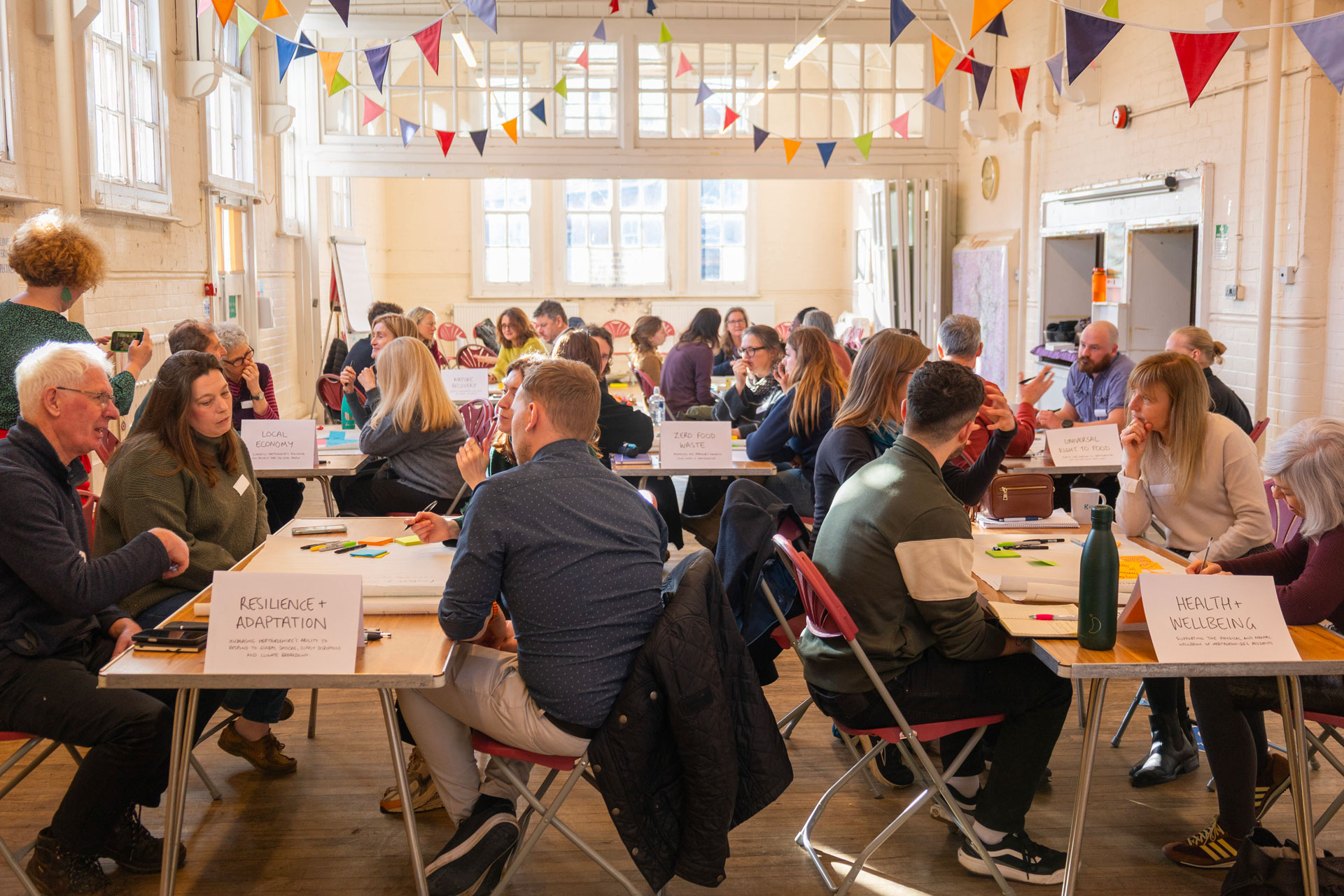
Working groups at Food Futuring
As such, Food Futuring has formed working groups with the aim to release an online food map, a regional food hub, a public procurement pilot, a food and nutrition curriculum resource and a circular food waste network. The map – unlike the new initiatives – aims to display the good things already happening in Hertfordshire, from the community gardens, kitchens and pantries to the farm shops, markets, veg box schemes and composting hubs. The regional food hub, though, aims to bring new skills and ideas into the area. By relocalising the food supply, the hub would increase its resilience against global shocks and enable local producers to retain more value, as well as upskill others. It will also be a place for people to come together and rebuild a strong sense of community around food.
Visit the Food Futuring exhibition at Lannock Farm on 3 November, 3-6pm. Come along to get inspired, meet people working to change the local food system and find out how you can get involved. Register for free on Eventbrite.
Cambridge’s First Community Farm
Cambridge Sustainable Food (CSF) is a community organisation running a community farm, Grow Cambridge, that grows food for the new Arbury Social cafe, a pantry and community meals. The cafe’s not-for-profit meals fund local food projects, and it also offers cookery sessions and volunteering.
The farm and cafe are both part of a wider ambition to create a more joined-up local food system. Produce from the farm can support community meals, as well as reach those facing food insecurity through CSF’s wider network. Produce will also go to the Abbey Food Hub pantry, and the farm is developing as much more than just growing: it will look at its role in skills and training, volunteering, health and wellbeing, education and community connection.
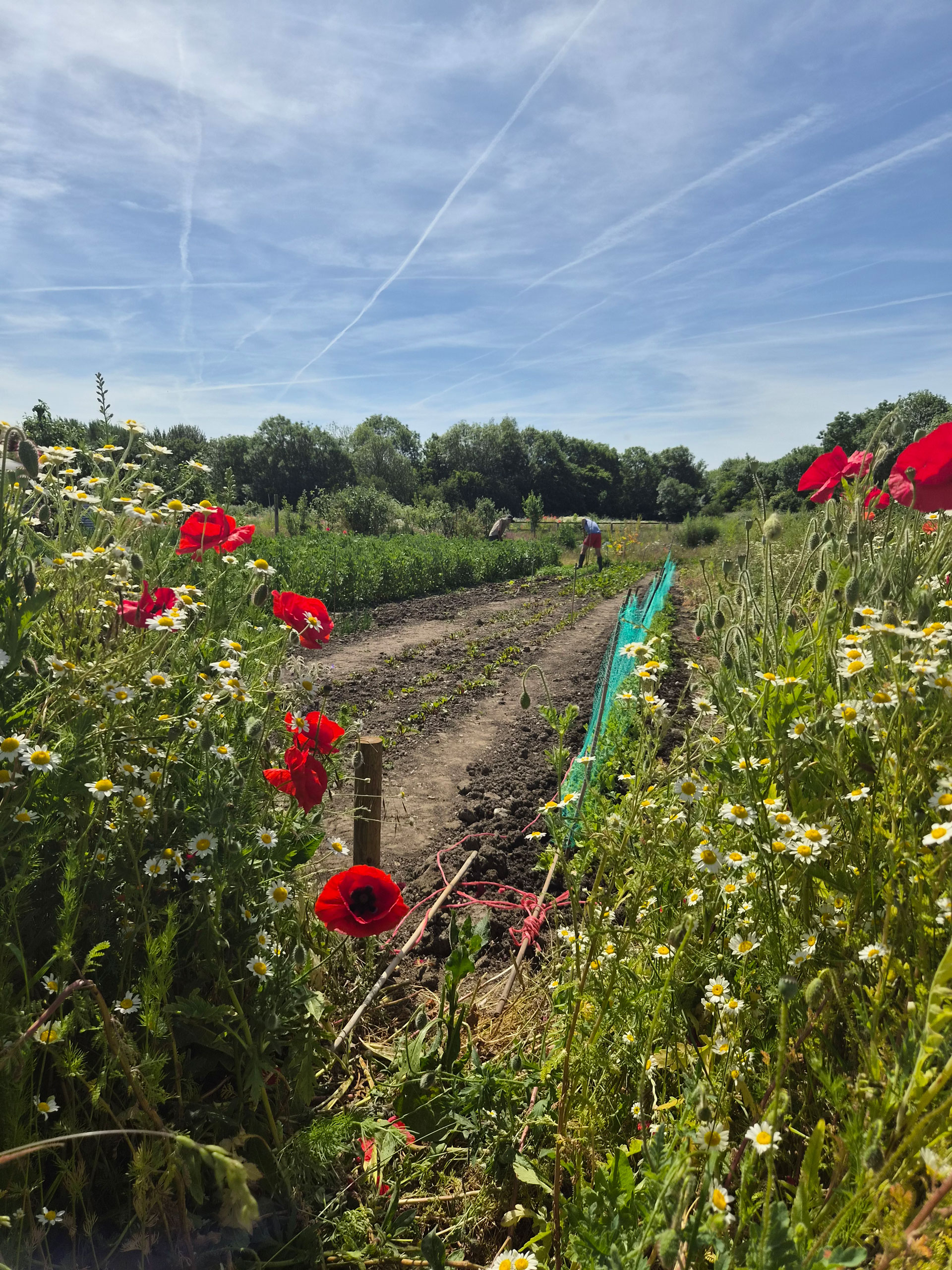
The Cambridge Community Farm
‘Food systems can feel very abstract,’ says Sam Dyer, CEO of CSF, ‘but at the most basic they are about whether people can access affordable good food, whether local growers, producers and processors can thrive, and whether communities have the resilience to respond when things get difficult.’
‘We’d love to see the cafe become a lively hub for the local community,’ adds Dyer, ‘where people can not only eat well but connect with others and feel part of something really positive.’
The Arbury Social community cafe is now open to the public, Monday to Friday, 9am-2.30pm, at Meadows Community Centre, 299 Arbury Road, Cambridge CB4 2JL.
Tackling Food Poverty In Cheshire East
Cheshire East Food Alliance was formed in October 2023 to address food poverty. Analysis from May 2026 revealed that over 8,500 residents there regularly rely on community food projects to access food, including food banks, social supermarkets, community cafes and meals on wheels services. To this end, the Alliance focuses on two areas in particular: food governance and strategy, and broadening access to healthy food for all. Secondary to these goals is food for the planet, which tackles the nature emergency through sustainable food and farming and an end to food waste.
‘Our priorities are based on local needs,’ says food coordinator Graham Brown, ‘but we’re evolving our food strategy at present.’
The aim of Cheshire East Food Alliance is to reduce inequality: ensuring more families are fed, making supply more consistent, improving health and financial resilience through wrap-around services, and stopping food ending up in landfill. Specific examples include the redistribution of large quantities of food and other household items, and shared storage and logistics, getting food to where it’s needed across a geographically dispersed region.
To find out more or get involved as a volunteer, visit cvsce.org.uk
The Future Of Food
It is humbling and exciting that so many compelling, important organisations are coming together to implement new collaborative food systems that benefit all local stakeholders. As Michael Pollan says in his book Cooked: A Natural History of Transformation, ‘the rising movement to rebuild local food economies, a movement that ultimately depends for its success on our willingness to put more thought and effort into feeding ourselves. Not every day, not every meal – but more often than we do, whenever we can’. And as Food Futuring concludes: ‘The shared vision offers a north star to align our efforts towards, and an invitation for each of us to play our part.’