





Can Dark Showering Really Improve Your Sleep?
By
5 months ago
We delve into the latest wellness craze
Steamy candlelit baths have long been the poster child for self-care. But the latest wellness trend sees people turning their evening showers into mindful rituals – all in the name of better sleep. Dark showering has blown up on social media recently, with devotees claiming removing bathroom light sources creates a low-stimulation environment that helps prepare the body for nighttime. But what does the science say? And is this not a major safety hazard?
What Is Dark Showering?
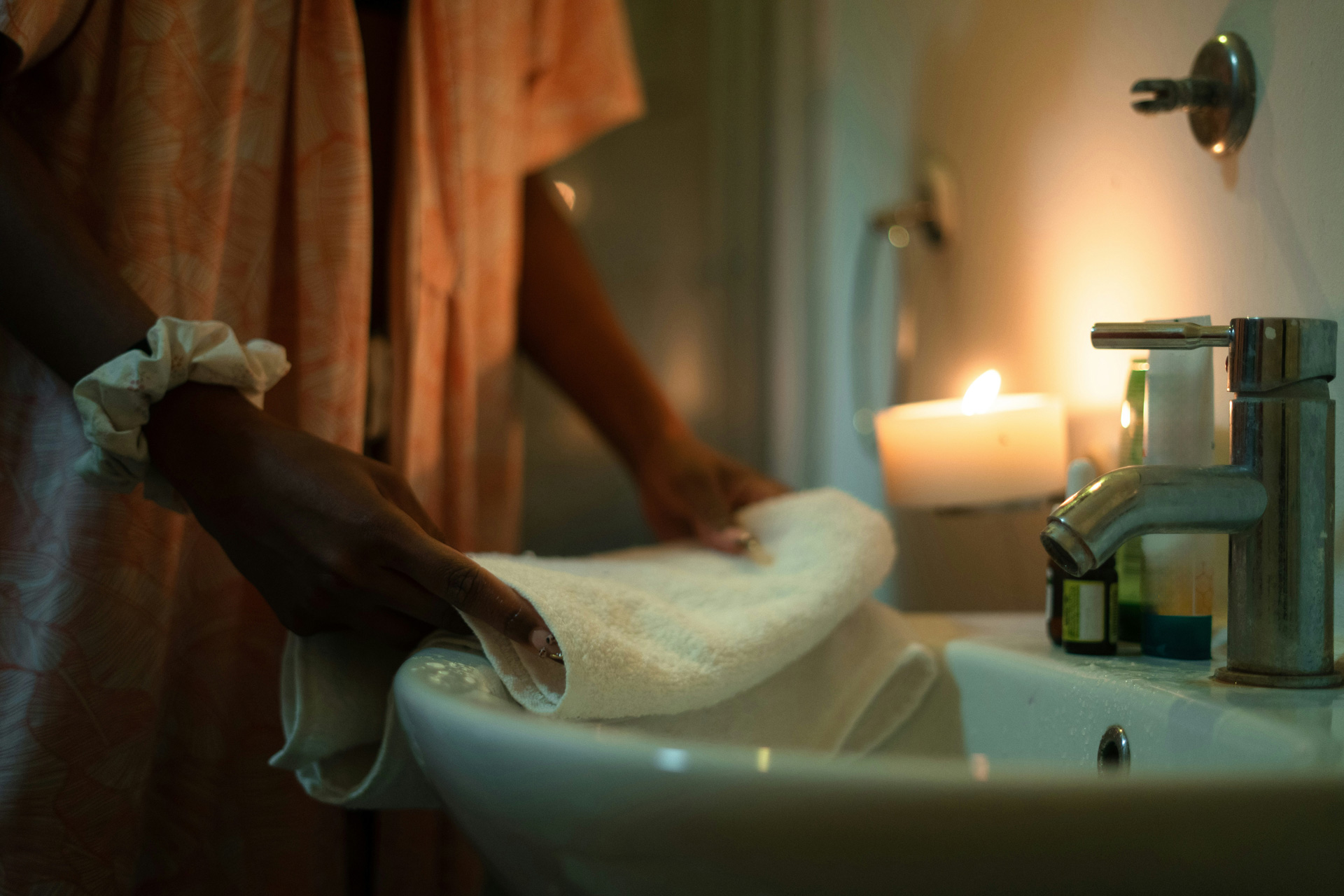
Dark showering is pretty much what it says on the tin: the practice involves switching off the bathroom light before hopping (well, maybe carefully stepping) into the shower. You can either wash in total darkness (potentially risky) or light a couple of candles – the idea is to create a calm, spa-like environment as part of your evening wind-down routine.
What Are The Benefits?
Now, we know TikTok can be a bit sketchy when it comes to wellbeing trends. But it turns out showering in darkness is actually a long-established Ayurvedic ritual, believed to calm the nervous system and de-stress. ‘“Dark showering” isn’t a traditional Ayurvedic term, but it reflects a broader concept from Ayurveda known as Snāna, or mindful bathing, described in texts like the Charaka Samhita,’ explains Dr. Vijay Murthy, Ayurvedic doctor and founder of The Murthy Clinic. ‘Bathing was seen as a daily reset for both body and mind, ideally done in a calm, non-stimulating environment. The modern trend is essentially a simplified, contemporary take on that idea.’
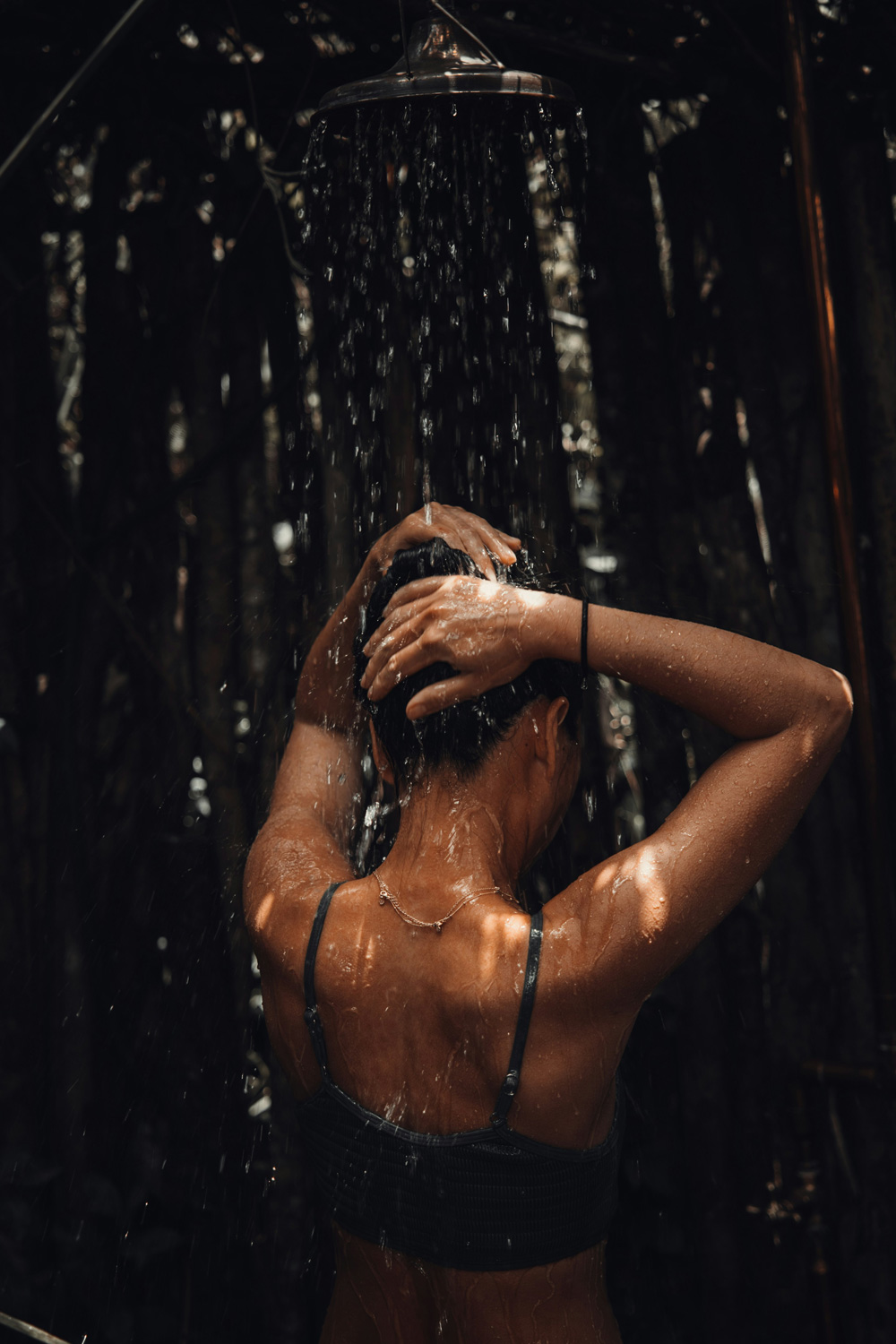
The principles are also rooted in modern science. While research specifically on dark showering is limited, there’s plenty of evidence showcasing the impact of heat and light on sleep. The sleep perks of taking a hot bath or shower before bed have been well-documented – the hot water temporarily heats you up before triggering a rapid cool down afterwards, which aids the natural body’s natural temperature regulation process and results in better sleep. A 2019 meta-analysis of 17 studies, for instance, concluded that taking an evening shower or bath between 104-108.5°F improves sleep quality – stressing the importance of timing (it should be at least one hour before bed).
However, racking the temperature up too high can actually go the opposite way. ‘If your shower is too hot, this can cause your core body temperature to rise at a time of day when we need it to drop,’ notes Hannah Shore, Head of Sleep Science at Mattress Online.
Unsplash
Light is also a key factor. We all know it’s easier to drift off in the dark, but it’s not just the light we expose ourselves to during the night that has an impact. Science also shows the type of light we see in the hours leading up to bedtime has a critical effect on sleep as light regulates our circadian rhythms – while also influencing the body’s production of melatonin, AKA the sleep hormone. One study from 2010 found that bright light in the evening signals to the body that it’s still daytime, suppressing the release of melatonin. And dim lighting is known to be calming, hence why spas tend to be low-lit.
‘The bathroom light is often one of the brightest in the house, and because there’s usually no option to add a lamp, we often have no choice but to use the main light,’ says Shore. ‘In the morning, this can be great as the bright light can help to wake you up. Although not as good as natural light, it may help suppress the production of melatonin, the main sleep hormone, making you feel more awake.
‘However, applying the wrong type of light on the wrong type of day can have serious consequences. If we use bright light in the evening, it has the same effect as suppressing melatonin, which needs to be produced to help us fall asleep more easily and stay asleep for longer.’
Murthy, too, notes wellbeing benefits of dark showering, highlighting that this kind of ritual can help calm the nervous system. ‘Reducing stimulation during a shower can help the body shift into a more relaxed state – people often report feeling calmer, more present and better prepared for sleep. From an Ayurvedic perspective, this is particularly helpful for balancing stress and restlessness.’
Sleep expert Kerry Davies, founder of The Sleep Fixer, is also on board with the trend, but is keen to stress that it’s less about hacks and more about the bigger picture. ‘Sleep works best when multiple signals are aligned, not when we rely on one thing to do all the heavy lifting. Lowering light in the evening helps the brain begin releasing melatonin, the hormone that supports sleepiness. But it’s not just about dimming the lights at 9pm and hoping for the best. It works best when it’s part of a wider rhythm.’
How To Do It Safely
Navigating around slippery surfaces in the dark evidently comes with safety risks, so it’s best not to shower in total darkness – dim lights or a couple of candles will achieve the effects while stopping you from falling over. Use a non-slip mat if you can, and before going dark declutter your shower so you know where all the relevant products are.
Pexels
What Else Can Help?
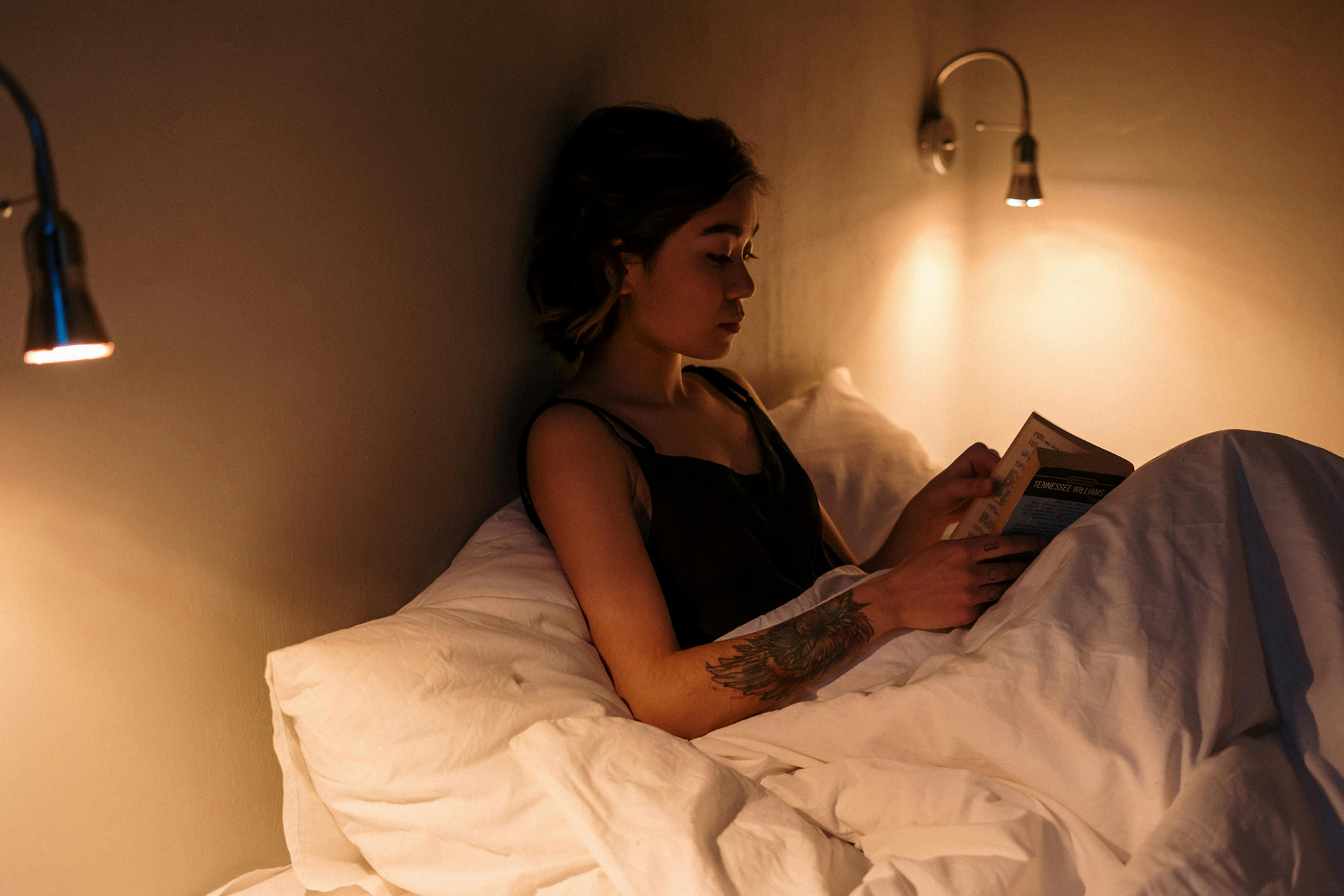
Experts have long shouted about the importance of a good bedtime routine, which signals to your body that it’s time for rest (why not try the viral Mel Robbins formula?). Limiting screens can help, as the blue light from electronic devices can disrupt the production of melatonin and make it harder to fall asleep. You’re likely to notice an impact if you switch your evening scroll for some reading: a 2021 study tasted 991 participants with reading for 15-30 minutes before bed, finding sleep quality improved in 42 percent of people (in the control group who didn’t read before bed, only 28 percent of participants reported improvements during the trial). And finally, make sure your room is the right temperature – experts say between 65-68°F is optimal.
To bring some Ayurveda into your evenings, Murthy recommends simple practices like ‘a warm oil massage before a shower, gentle foot massage before bed, and keeping a consistent wind-down routine. Ayurveda also emphasises reducing sensory stimulation in the evening; less light, less noise and a slower pace, to support better sleep.’
Davis recommends focusing on the key foundations:
- ‘A consistent wake-up time – this anchors your circadian rhythm and builds sleep pressure.
- Morning light exposure – this tells your brain when the day starts.
- Enough time awake to build sleep pressure so your body is actually ready for sleep at night.
- A darker, calmer evening environment to support melatonin release.
- Gentle wind-down cues (like a warm shower) that support the transition, not force it.’
So yes, try the dark shower if it feels good, says Davies. ‘But don’t rely on one slice of the pie and expect the whole system to change. Because sleep happens when the body receives a clear, consistent message: “We’re awake during the day… and safe to sleep at night.”’