



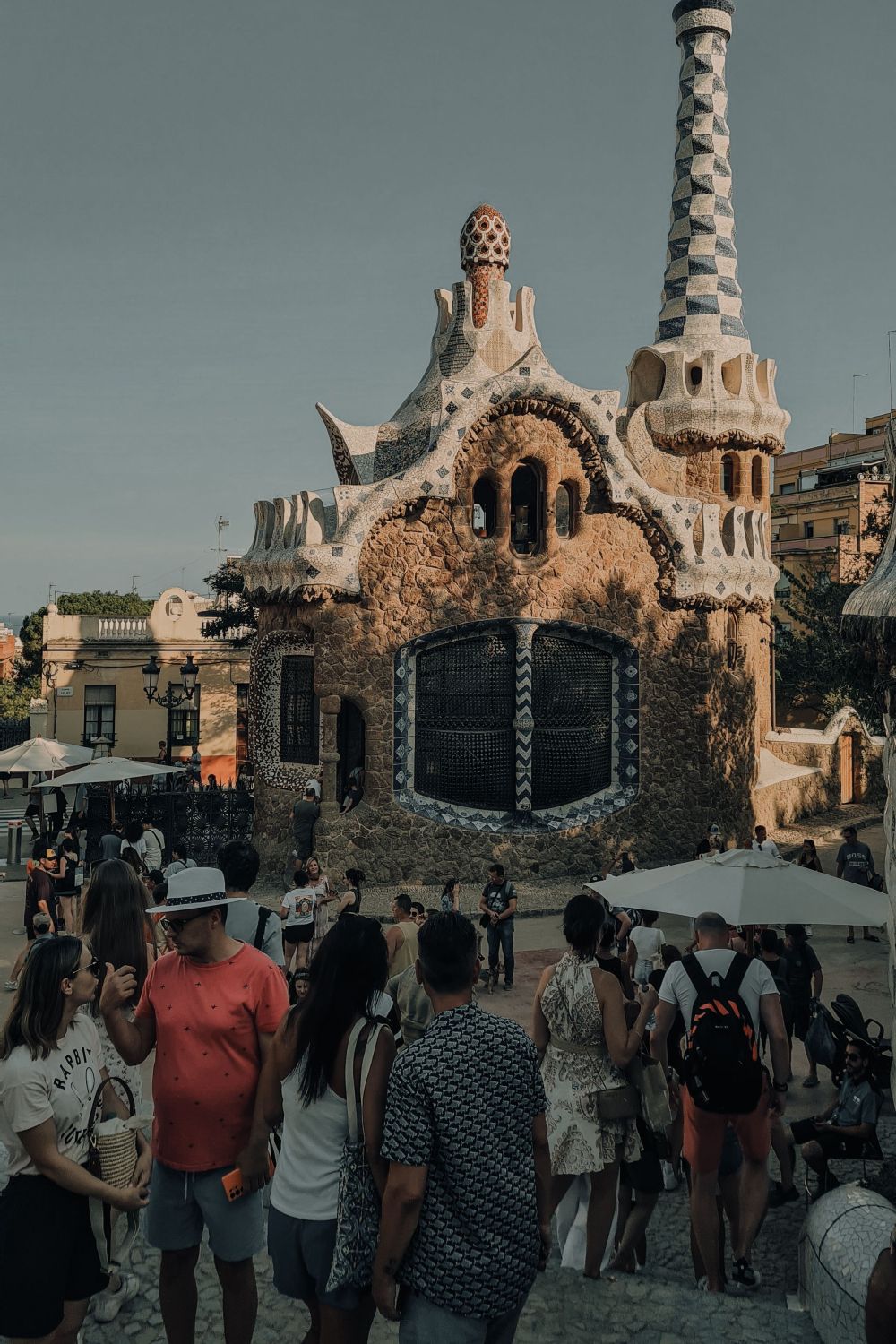
Why Locals Are Gatekeeping Their Favourite Places From Tourists
By
54 seconds ago
Could this be the rebellious solution to overtourism?
We all know about Spain’s fraught relationship with tourists. From the Costa del Sol’s sandy beaches and the mesmerising Balearic and Canary islands to Moorish Seville and the Catalonian capital Barcelona, this Iberian nation is one of Europe’s loudest subjects of overtourism – and the locals are fighting back. I’m not just talking about mass demonstrations, rallies and marches, though these have been successful (tourist taxes have been raised, short-term rentals are being reduced and the government is promoting offbeat regions in its tourism campaigns). I’m talking about a subtler rebellion that stems from a cardinal 21st century sin: gatekeeping.
What Is Travel Gatekeeping?
Where gatekeeping is traditionally the withholding of access to a specific resource from those deemed unworthy, on the internet, it has increasingly come to refer to the snobbish act of keeping things like skincare routines, cocktail recipes, clothing brands or, especially pertinent in this context, affordable hotels, authentic restaurants and locally beloved coffee spots under wraps. When it comes to travel, gatekeeping is locals’ clapback against overtourism – keeping beloved neighbourhood spots off the internet and out of the media, while letting visitors buzz around places that locals don’t care about.
One example was when Londoners ‘love-bombed’ Angus Steakhouse – a neon-signed, red leather-boothed steak chain with venues in Leicester Square and Piccadilly Circus – with glowingly positive reviews in the hopes that tourists would book a table there instead of overwhelming their favourite foodie spots.
Why Are Locals Gatekeeping Their Cities?
That was in rebellion to TikTok and influencer culture allegedly ruining London’s food scene by clogging foodie favourites with chocka queues; virality can be a gift, but is more often a curse. But Londoners aren’t alone in their deterrent of tourists. Barcelona local and day tours operations manager for Intrepid Travel, Juan Sanchez has noticed the growth of travel gatekeeping amongst his friends.
‘Part of the reason is because Barcelona, like many other cities, is constantly changing. Locals want to maintain a sense of community and there’s concern that when a place becomes more popular with visitors it can become more expensive or lose the atmosphere that made it special in the first place,’ he says.
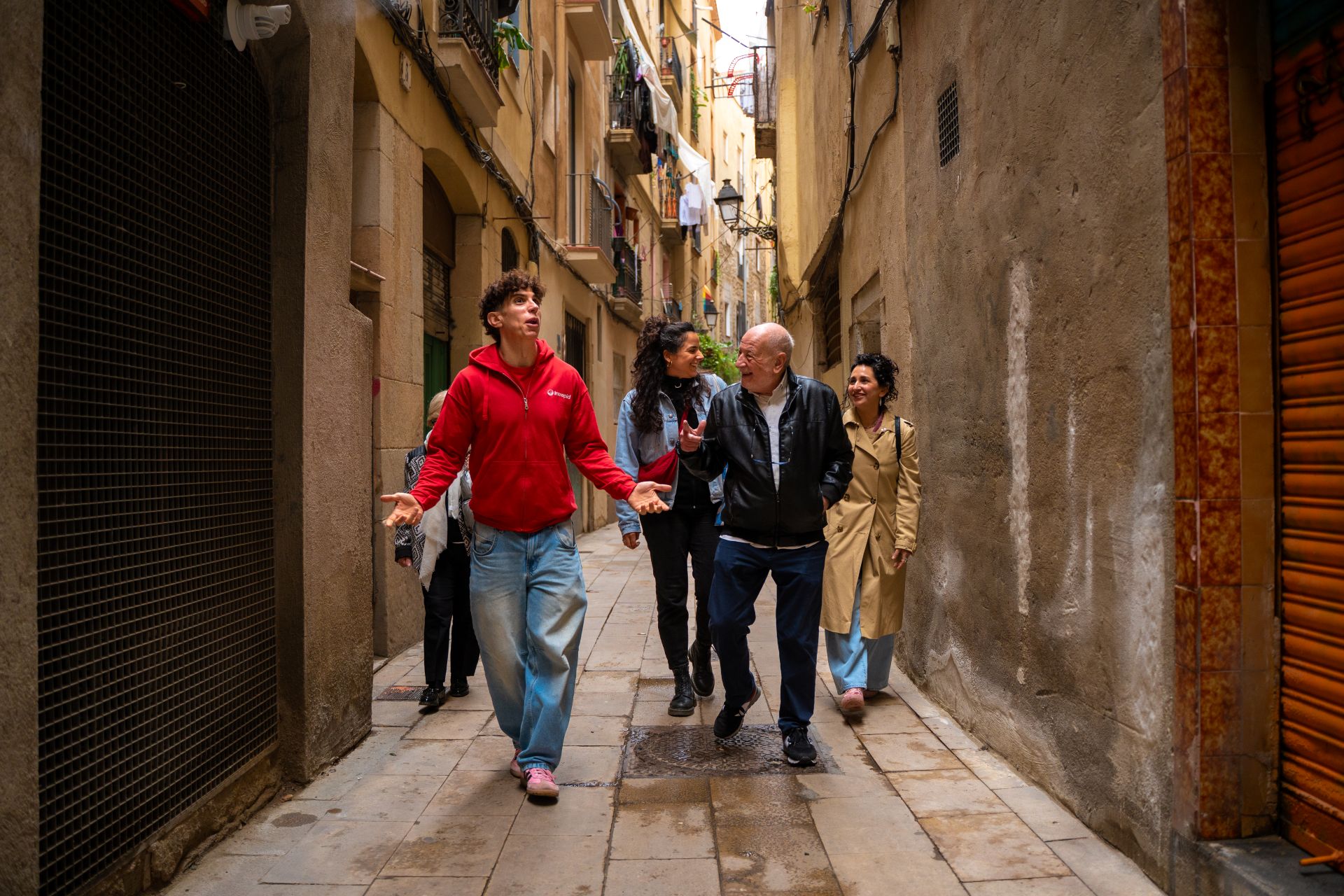
Juan leading a tour in Barcelona. (Intrepid)
Is Travel Gatekeeping Really The Answer To Overtourism?
Is it right? Wrong? On the surface, it can sound frustrating for prospective travellers who are merely looking to experience a destination authentically. After all, who wants to go on holiday to visit a chain-filled hub merely full of other tourists? ‘I don’t think gatekeeping is always the answer,’ Juan concedes. ‘Sharing culture and traditions is one of the best parts of travel, for both locals and visitors, when it’s done respectfully.’
But equally, travel gatekeeping is ‘quite a human reaction – people want to protect the places and experiences that mean something to them,’ Juan says. ‘In cities that receive lots of visitors, some locals worry about seeing their neighbourhood businesses change to cater primarily to tourists.’ This is certainly true in plenty of capital cities, not least Barcelona with its overcrowded Gothic Quarter and proliferating fast-food joints in the previously traditional La Boqueria Market. As a Londoner, there are places I avoid without batting an eye – Leicester Square, Covent Garden, parts of the South Bank. But there are other parts of the city it is a shame to be locked out of, Portobello Road, Borough Market and Camden being just a few previously pleasant, now totally intolerable locations that locals reluctantly squeeze through everyday, and watch deteriorating before their eyes.
The same can surely be said about many overtouristed capital cities, from New York to Venice, Tokyo to Paris. Will that stop me visiting? I cannot honestly say I will blacklist any destination from my travel list – and it makes sense that people still visit these cities even when local residents are begging them to stay away. August is hellish for Edinburgh locals as the Fringe takes over the city, but it couldn’t be any other way. Visitors now need to book the Vatican and Sistine Chapel weeks in advance to guarantee a visit – but it’s worth it to see a uniquely magnificent monument, the only of its kind on the planet. The same goes for the Louvre in Paris, the Sagrada Família in Barcelona or St Mark’s Square in Venice: these are places that have become almost synonymous with their cities, and it is difficult to argue that travellers should simply cross them off their lists because too many other people want to see them too.
The problem, perhaps, is not that tourists want to visit these places, but that so many of us end up having the same idea at exactly the same time. When everyone follows the same advice from the same viral videos, queues for the same attractions and eats at the same handful of restaurants, a city can quickly begin to feel less like somewhere you are visiting and more like somewhere you are passing through on a conveyor belt.
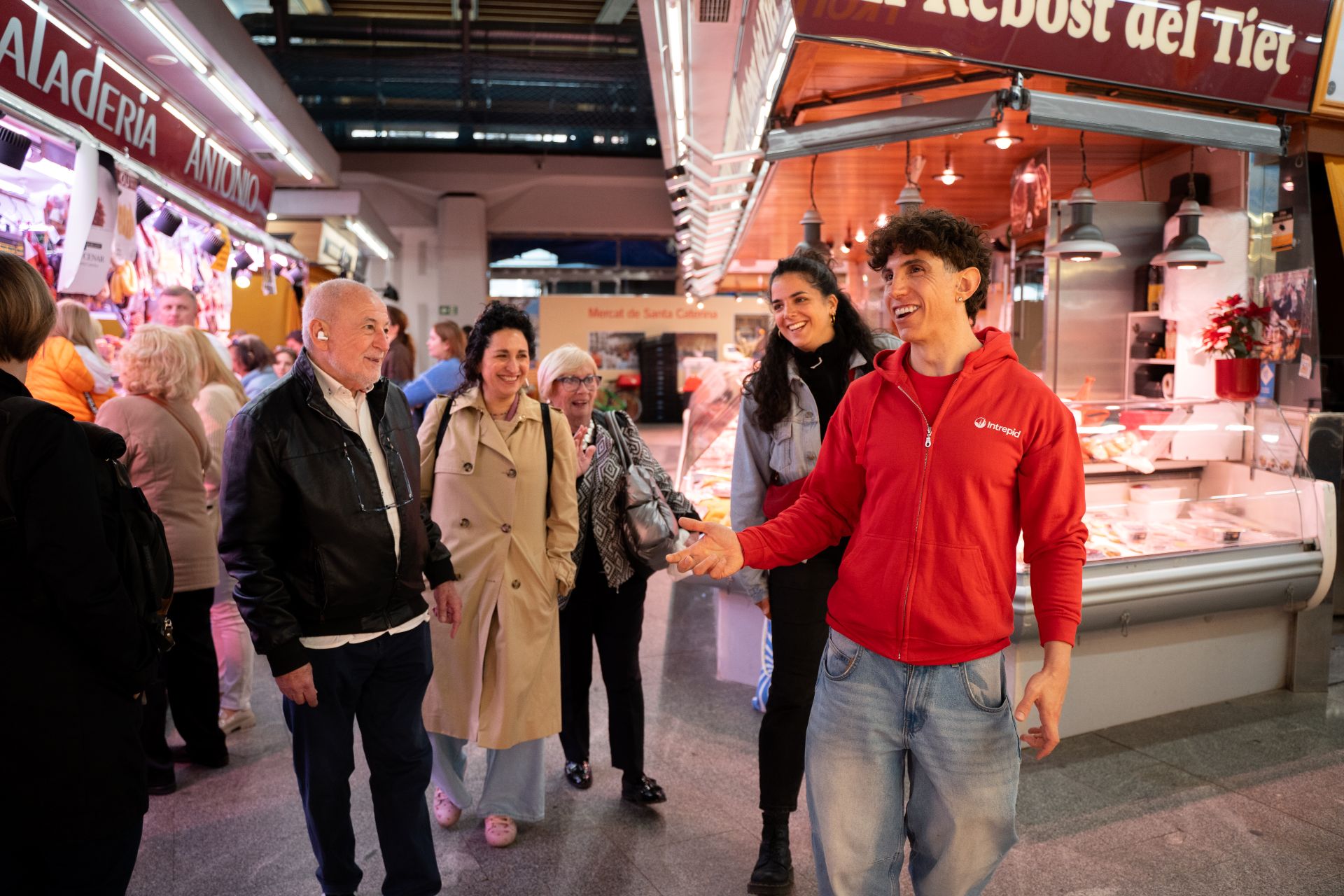
Juan leads visitors around a still-local market. (Intrepid)
Is Authentic Travel Still Possible?
Can visiting an oversubscribed city that does not want you there ever result in an authentic experience of that location? ‘For me, this is one of the most important questions in tourism today,’ Juan says. ‘My belief is that you can visit a place authentically, when it’s done responsibly.’ That’s why Intrepid Travel has released a new range of Uncommon Day Trips in Barcelona, Paris and Venice to offer alternative, enriching experiences off the over-beaten path.
‘We take travellers beyond the most visited areas, supporting local businesses and communities, many of which are far removed from the chain stores and large restaurants that often dominate tourism districts,’ Juan explains; he leads the tours in his Barcelona hometown, one stop being the El Clot Market. ‘At first, some of the vendors were quite sceptical and a little surprised that we would bring visitors to such a local market but they quickly came to appreciate the idea because it gave them an opportunity to showcase what they consider to be the real Barcelona. Many of them feel that the city has lost part of its identity over the past twenty years, so they are genuinely proud to share this side of Barcelona with our guests,’ Juan says.
In Venice, where the ancient canals are clogged with tourist-filled gondolas and the Rialto Bridge is unnavigable for locals because of flocks of tourists, the Uncommon tour takes visitors deep into the heart of the water city’s crafty heritage, tasting artisanal chocolate and visiting family-run workshops. The Uncommon Paris tour, meanwhile, takes visitors off the city’s clogged streets and into the historic village of Passy, to a neighbourhood market still shopped by locals and glimpsing less-sighted views of the Eiffel Tower.
‘Every vendor we meet speaks passionately about their market, and their neighbourhood,’ Juan adds on his Barcelona tours. ‘The local bar where we stop for a tapa also creates memorable moments. Seeing our guests sharing a table with local residents, sometimes older people who speak very little English, is always special. It’s a reminder to me that tourists can experience a place authentically.’
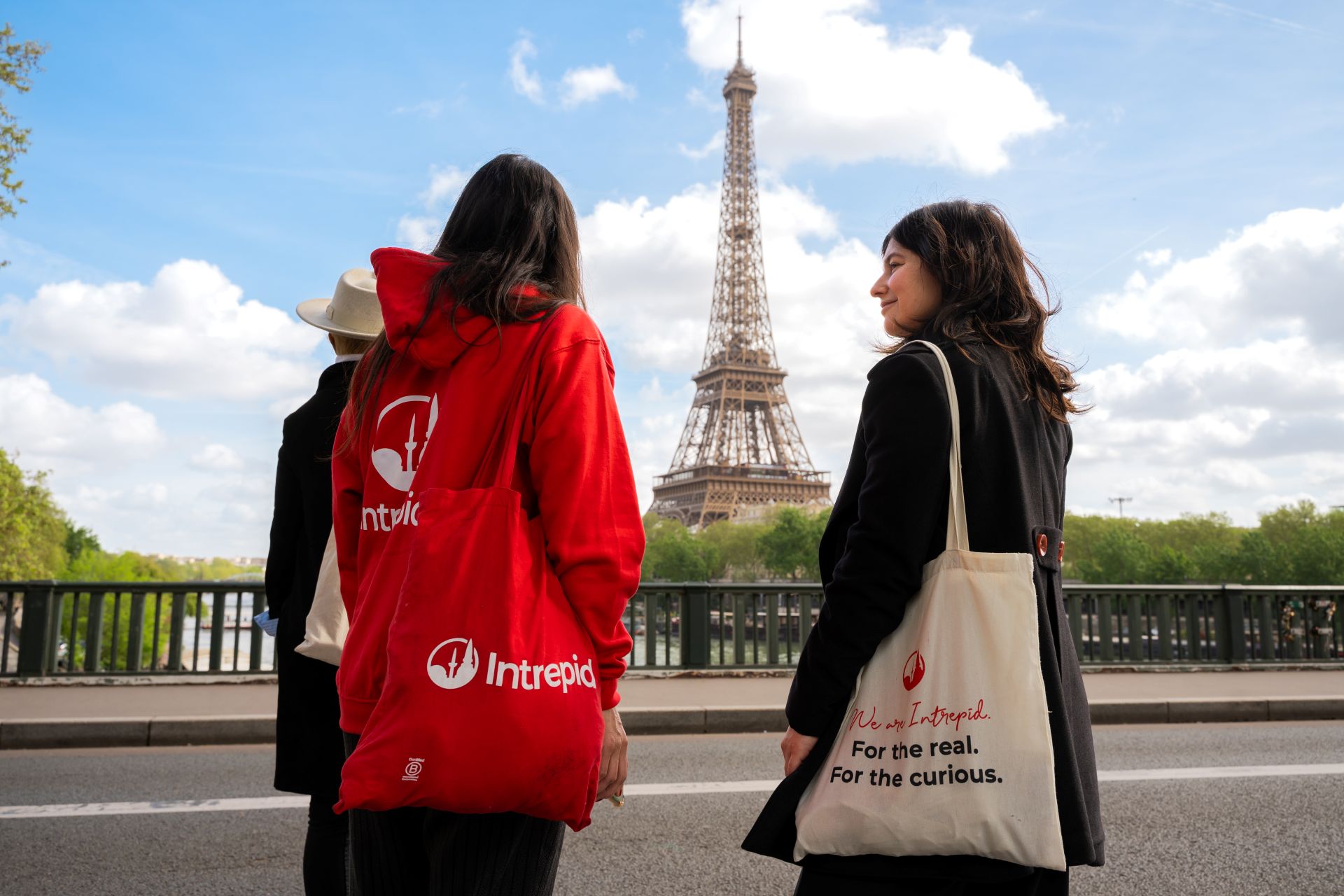
Intrepid’s Uncommon Paris day trip takes visitors off the over-beaten path. (Intrepid)
Beyond Gatekeeping
It’s a strange tautology: travel is more accessible than ever before, yet it can also be incredibly damaging. And living in an era blessed with low-cost air travel, as well as cross-border train and boat travel, discouraging exploration is not only ineffective but irresponsible for those countries that actually rely on it. Where would Spain be without tourism?
‘Rather than trying to stop people from travelling, we should encourage responsible travel,’ Juan suggests. ‘This includes exploring neighbourhoods beyond the main attractions, supporting locally owned businesses, respecting local communities, travelling during quieter periods when possible, and being mindful of the impact our presence has on the places we visit.
‘This is something our Uncommon Day Tours do well,’ he adds. ‘They are designed to take travellers beyond the most crowded areas and introduce them to different sides of a city. By spreading tourism more thoughtfully and creating stronger connections between visitors and local communities, we can help ensure that tourism benefits destinations rather than overwhelming them.’
Discover more about Intrepid’s Uncommon Day Tours at urbanadventures.com