



Amy Powney On Her Relationship With Sustainability: ‘We shouldn’t walk away from the word “sustainable”‘
By
9 months ago
With many brands and consumers turning their back on the label, the designer shares why she continues to call her work sustainable
What do you think of when you hear the word ‘sustainable’? The environment? Recycling schemes? Regenerative farms and solar panels? Or maybe it’s something slightly less uplifting, like false labels and greenwashing.
While the word ‘sustainable’ is, inherently, rooted in positive meaning – according to the Oxford English Dictionary, it refers to ‘designating forms of human activity (especially of an economic nature) in which environmental degradation is minimised’ – overuse by brands (the aforementioned greenwashers) and media outlets has meant that its reputation has become tarnished.
‘I think there’s a lot of distrust around it, mainly,’ says Amy Powney, environmental activist and founder of London-based fashion label AKYN. ‘It was the word that popped up, the word that people sought out when they wanted something made better. But now that word’s been so overused that there’s a lot of distrust in it now.’
In short: ‘The customer sees the word “sustainable” and doesn’t believe in it anymore.’
The shift in attitude towards the term has pushed many brands who do promote sustainable practices – whether that be by use of organic materials, regenerative production methods, small batch collections, or otherwise – to avoid using it completely, both to prevent being lumped in with brands who aren’t authentically sustainable and to avoid public scrutiny.
But for Powney, this doesn’t feel like the right solution. ‘There’s nothing wrong with the word itself, it’s something wrong with the people that abuse it,’ she tells C&TH. Below, the designer shares her thoughts on the way people perceive sustainability today, and why she’s reclaiming the term for good.
Amy Powney On Reclaiming Sustainability
What status does the word ‘sustainable’ have today?
Whether you agree with its definition or not, it’s become the word we all use when trying to make products better. Obviously, it’s flawed – there are many different ways to make things better – and professionals will agree and disagree on what is sustainable and what’s not sustainable. It’s laden with complexities.
From the public’s perspective, it’s become a word that people can relate to. When they see that word, they think, ‘oh, that means this brand is doing something better’ – even if they don’t necessarily understand what that is.
How would you describe general attitudes towards the word?
There’s been a real shift recently. I think a lot of people that are actually trying to do things in an authentic way – and trying to really do things in a more sustainable way – have seen this word be so overused by people not doing things better that they feel like they have to distance themselves from it.
It’s such an overarching term that people use so flippantly – but this is because it is a generalisation rather than a specific term. Something more specific would be a brand using terms like ‘organic’ and ‘regenerative’ to describe the fibres in the clothes they make, while the word ‘sustainable’ can mean lots of things.
It’s really complex, and the public can’t always break it down. And when they see a high street fast fashion retailer or fashion brand using the word, and then they see me using the word, it gives mixed messages. They know that ‘sustainable’ means doing better – probably more from an environment and climate perspective, rather than a socially responsible lens. But when they see brands with different messaging hosting the same labels, they have to draw conclusions themselves, do their own research.
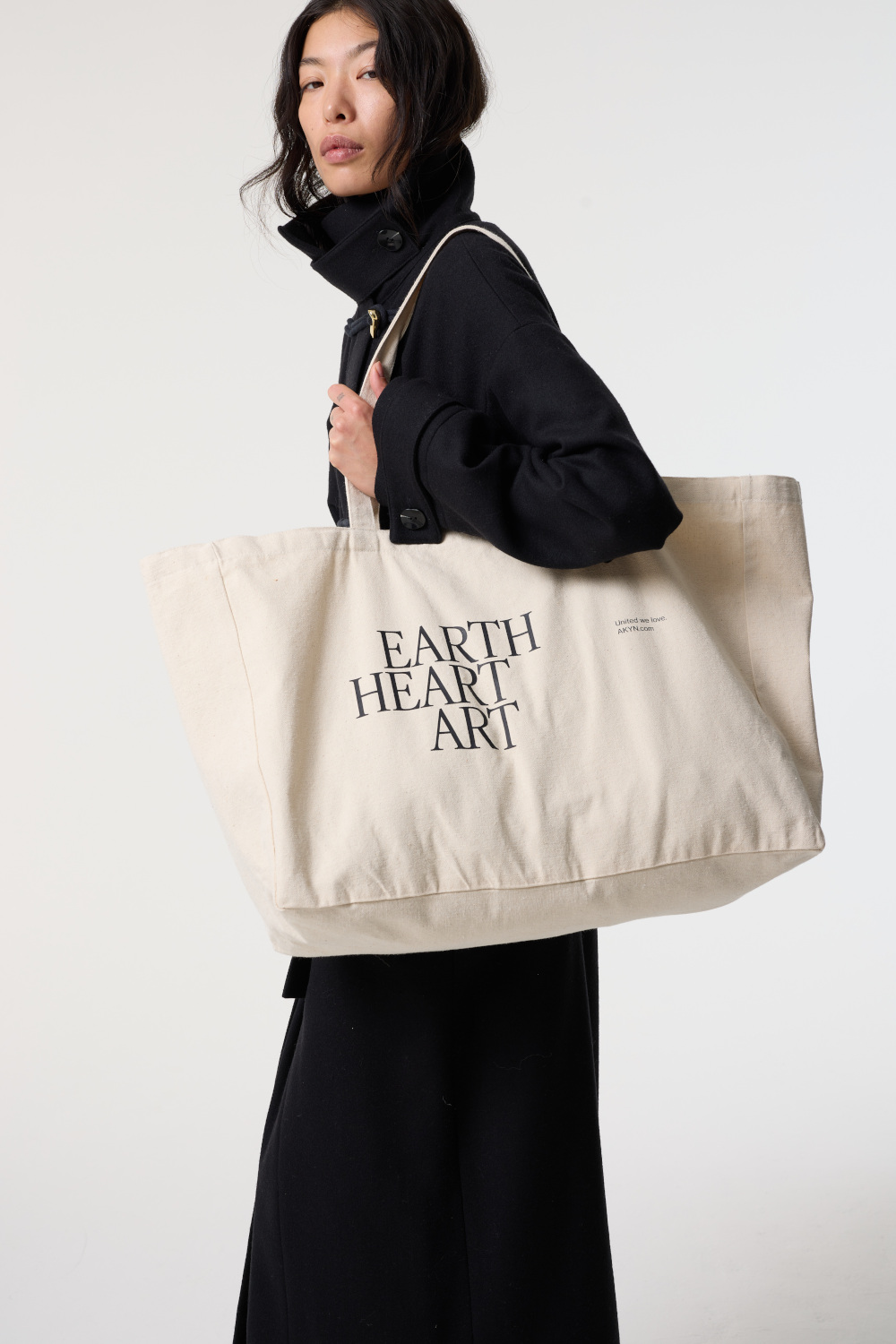
AKYN
Why do you think the word has become so muddied?
I think there’s a lot of distrust around it. It was the word that popped up, the word that people sought out when they wanted something made better. But now that word’s been so overused that there’s a lot of distrust in it now.
The customer sees the word ‘sustainable’ and doesn’t believe in it anymore.
And for brands, it’s like, if that one’s become grey and muddied, then what? How else are we going to communicate what we’re doing in a succinct way so that people know we’re the authentic version of the word ‘sustainable’? That’s really hard.
How do you feel about it all?
It makes me really mad. People like us, we’re the ones who created the brands and communications around trying to do things better, around what the actual impact fashion and consumerism has on people and planet. This word was ours, and then big companies came in and used it to greenwash their own processes. They’re the ones making it really complicated for the consumer, because now they’re not sure what sustainability even really means.
I’m not saying it’s simple, but it really annoys me that they get to keep the word and we must come up with a new one. It’s not necessarily about the word itself, but when you reroute towards a new word, like ‘responsible’ or ‘conscious’, you’re making it more confusing for the public. And so, I feel like the people that are doing the right thing deserve to use the original word.
Do you think legislation or government guidelines would help the situation?
Well, nothing has been passed – and that’s the problem. A lot of it is off the table or on hold because of our political situation. I’ve really realised of late, specifically when it comes to reversing climate change or bettering our industry, just how intertwined everything is into politics.
I used to think that communication projects were the way forward – that it was a project of eye-opening and communication and solutions, and that that was all we needed. And 10 years later, I feel like it’s lobbying politicians and big leaders and corporate groups – because for all the will in the world, a lot of it’s coming down to them.
So a lot of policies are currently on hold because of what’s going on geopolitically. But if they could pass something like the Green Claims Directive – which is essentially legislation that requires you to be able to back up any sustainable claim with transparency and proof – it would make such a difference. It’s completely needed.
But you need to get political these days to be able to get there.
AKYN
What about the brands themselves – do you think they could have more sway in the discussion?
I’m trying to work that out. I’ve been thinking about where’s best to put our energy: going back down to grassroots and creating movements and collectives at the bottom, or trying to lobby the top. Because I’m wondering if we need people power, we need education, and we need communities to rise. I’m wondering if brands like ours should go much more into our community, so that we can spread the word, and then they can spread the word – and we just create our own mini movement over here.
Because I’m sort of concerned these days that I spend way too much of my energy on thinking about how bad these terrible people are, and what can I do to stop them. It’s like when you were at school, really. When someone was being nasty, the advice given by grown-ups was to give your energy to someone else who is kind to you. And yet, I feel like we’re all spending too much time giving more energy to the bullies.
So I’m wondering if we just need to start the revolution over here on our own. I’m sick of giving my energy to them and thinking about how to stop these horrendous people. But maybe if we give our energy to growth and community and nurturing something, we’d be spreading more positivity than hate.
What kind of impact does it have on brands who feel reluctant or fearful to use the word ‘sustainable’?
I still think it’s a valid word. It’s about the storytelling beneath it. To an extent, I feel like it’s become a subculture – you know, like you’re either street fashion or couture. Sustainability has become a term to explain a USP of your product.
So I think it’s maybe fine to still use it as a top line explainer – but if you’re authentic underneath that, you need to do the storytelling that backs it up.
Brands are frightened of using it. If they’re not doing it right, then good – be frightened. I hope you’re frightened. But the ones that are really doing it, I think it’s fine to own it. I think, sadly, we’ve just got a harder job. It’s almost a matter of authenticating ourselves. Although this does mean there’s an opportunity for some really lovely storytelling.
Communication is key, but it’s really hard because there’s already so much out there. That’s why I’m really keen on going back to in-person communication. It’s really hard to pop through the noise, and it’s really hard to do so authentically through retail and through a digital platform. But I think if you can see a person’s mannerisms and their expression and their passion, then it resonates so much more. I’m keen to try and navigate how to tell a story in a way that keeps people connected.
AKYN
Do you think more authentic brands also compete with feelings of imposter syndrome that might deter them even more from using the word?
Personally, I feel it all the time. It’s a problem. With AKYN, I talk about our natural fibres – and I say, ‘We use four fibres. However, in our knitwear, there’s like 20 percent that is still recycled synthetic and we’re trying to work it out.’ Like, I always pull out my flaw because I don’t want to lie to people, you know. But I think that is the most important storytelling.
I remember when I was at Mother of Pearl, we ordered some black denim. And when we were chasing the supplier for their GOTs certificate, they wouldn’t give it to us. And we chased and chased, and it turned out they didn’t actually have it. So we were stuck with all this non-organic cotton. And we had to think it through – obviously it’s more unsustainable to throw everything away, so we needed to sell them, but we didn’t want to lie to anyone and say the products were still organic.
So we created this whole piece of comms and we put it on the product description and emailed everyone within our community. We just said, ‘this is what happened, and this is why we’re still selling the product’. We were just honest about it. But it showed that spending the time and energy to try and tell the truth pays off, as it showed we were truth-tellers and that people could trust us. And it just feels human, to communicate the mistakes that have been made along the way.
With AKYN, we emphasise that we’re about progress, not perfection. We talk about all the bits that we haven’t done yet, but we’re working on, and that will grow and change as we go. I think honesty is the best policy.
How do you describe your relationship with the word sustainability today?
That’s a really good question. I use it as my overarching word, like when I talk to my husband or my kids that’s the word I reach for. I’ll say, ‘we need to be more sustainable’ or ‘that’s a more sustainable choice’.
I still think I have a good relationship with the word. I just don’t have a good relationship with people that have abused it.
And what’s your definition of ‘sustainability’?
I think what I’ve realised is it’s not one thing. It’s not like, ‘we use this sustainable fibre, therefore we are sustainable’. I think it’s more of a mindset, an approach, like holistic thinking.
I actually use the word ‘regenerative’ more than I use ‘circular’ these days, because I feel like every single part of our thought process has to be regeneratively thinking – which is to sustain something and keep it in motion. So if it’s growing a fibre, we ask how we do that in such a way that we can grow a crop, it can sustain the farmers so they can live the life that they need, and it can sustain the life in the soil? That’s a more regenerative approach to it all: how can we do it in a way that sustains life on Earth?
To sum it up, I think sustainability is that, with every decision you make, you choose the one that would benefit the greater good.
AKYN
Do you think your definition will evolve over time?
Maybe, yeah. The world is in a weird place, and I’m not really sure what it means to be human right now. I’m not even sure what it means to be a citizen, or a business owner. I feel quite confused and conflicted at the moment about so many things. So I’m sure it will evolve and change, and maybe I’ll have a different thought process down the line.
How can brands reclaim the word for themselves?
You have to back it up. Either with storytelling, or with legislation, certification and claims. You shouldn’t have to change the word – you just have to, sadly, prove your point harder.
And the public, what can they do to feel more confident about assessing how the word is used?
Start with something small: Google who owns the brand or business you’re interacting with. Research doesn’t need to be so intense; you don’t need to ask what fibres are being used, what the supply chain is, where everything is being produced. (Although they’re definitely useful to know.)
The idea of in-depth research can really turn people off, so just start by looking at who owns it. That’s one task, rather than 50 – and it will tell you a lot. Just look at where your money’s going and be present in deciding who you want to give it to. From there, you can start to make changes that slowly adds up and help.
More generally speaking, is there anything we shouldn’t do – both as brand and consumer – when it comes to the word ‘sustainable’?
If you’re a sustainable brand, you shouldn’t be fearful. If you’re not a sustainable brand, you shouldn’t use it. And if you’re a customer, you shouldn’t believe the label at face value; you should be a little more wary, but don’t be frightened of it.
I think of it as an indicator; if someone’s brazen enough to connect it to their brand, that means they are truly doing it, or they think they’re doing it. Or, on the flip side, they’re total liars. But on the whole, I’d say that it’s a pretty good indicator that the brand believes they’re doing something good. It’s a good starting base.
My main feeling is that we shouldn’t walk away from the word ‘sustainable’. We shouldn’t not use it. Ideally, we want to get proper legislation so that people can’t abuse it.