


Is This London’s Coolest New District?
By
7 months ago
Ransome's Wharf has been built on the spot of London's old ice-importing hub
You want some ice with that?
Unfortunately not a question easily solved before the invention of affordable domestic freezers in the 1940s. Though the gadget was first imagined-up in the 1850s, these expensive, vapour-compressing, industrial ice-makers weren’t exactly ready for the mass market. And so, sweaty Victorians and sweltering flappers had to source their cubes from elsewhere.
With undramatic British winters offering up a rather pitiful ice and snow supply, history has made us a nation of room-temp drinkers. It wasn’t until the mid 19th century when more Americans crossed the pond and complained of tepid tipples that they prompted hotels and clubs to keep large blocks of ice on hand for people to pop in their glasses.
As such, ice soon became madly fashionable, at least for those who could afford it. Often purchased from luxury department stores (rather than the frozen aisle) the cold revolution prompted what wine writer George Saintsbury referred to as a ‘barbarous time’, when people drank their claret chilled and put ice cubes in their champagne. And when not upsetting all of mainland Europe, the ice was used to cool interiors – as sculptural centerpieces, or in the case of the Queen’s railway carriage, an early form of aircon.
But without freezers or fjords from which to source it, how did us Brits meet the growing demand for this cool new sensation?
The answer lay in Norway. During the late 19th and early 20th centuries, around 1 million tons of ice were brought over to London by boat annually; packed in large blocks tightly wedged into ship hulls. Insulated by sawdust, though significant melting still occurred – sometimes losing up to 50 percent of the load en route – the cold, dense nature of the ice allowed the bulk of it to successfully survive the journey.

One of London’s main Norwegian ice hubs was Ransome’s Dock. Underground ice wells were built for the Natural Ice Company Ltd around the industrial hub to store ice before it was distributed across the rest of London. During the 1920s, with advances in refrigeration technology, the store was replaced by an ice-making plant above ground, while an additional ice-making factory was built in Parkgate Road.
Inside Ransome’s Wharf
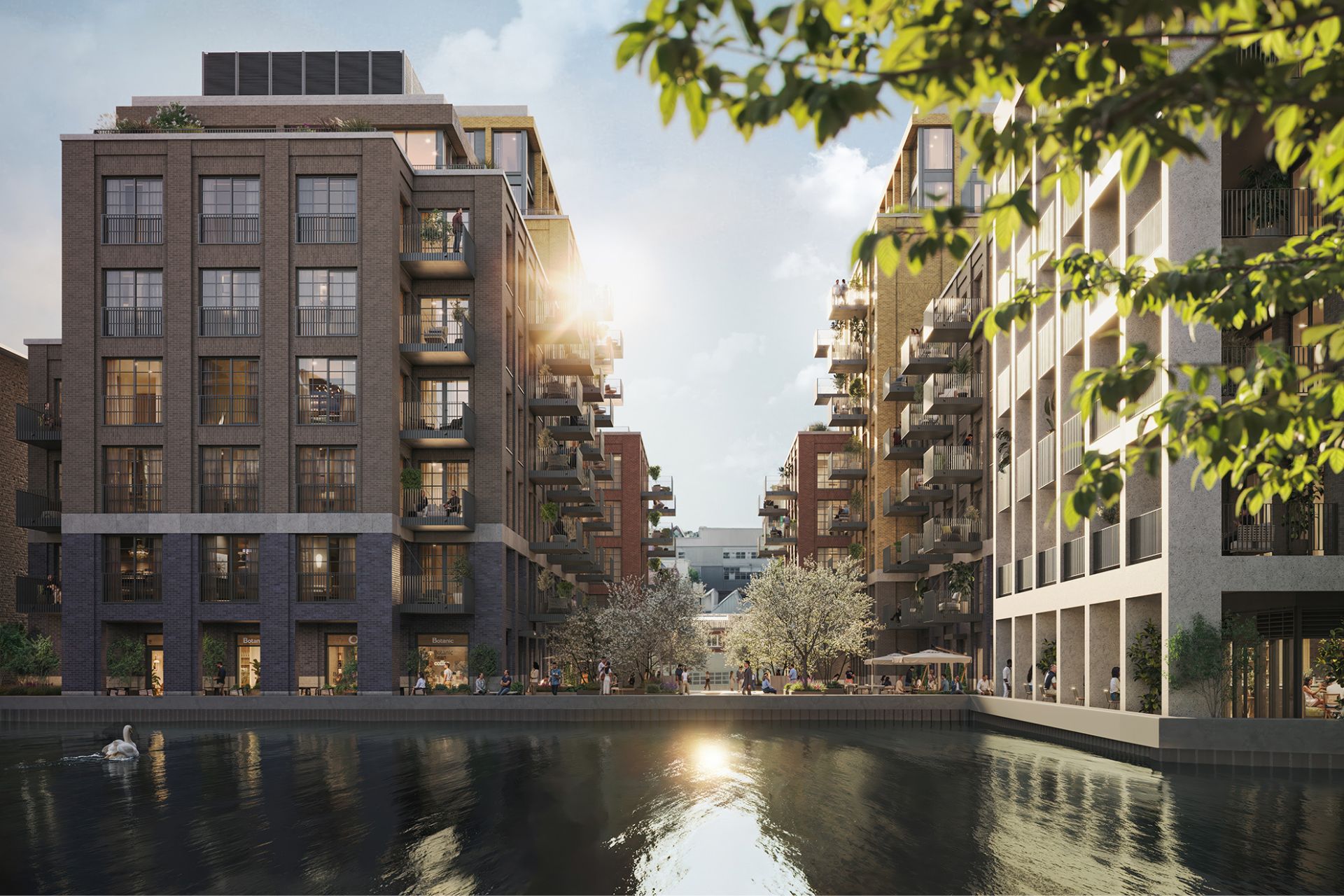
Today, the site is entering its next chapter with the development of London Square’s Ransome’s Wharf – a 6,475 sqm dockside development of 118 new homes arranged across five buildings. The project is anchored by a new plaza, which offers up a curated retail and commercial space complete with destination restaurants, cafes, leisure facilities, wellness amenities and communal gardens.
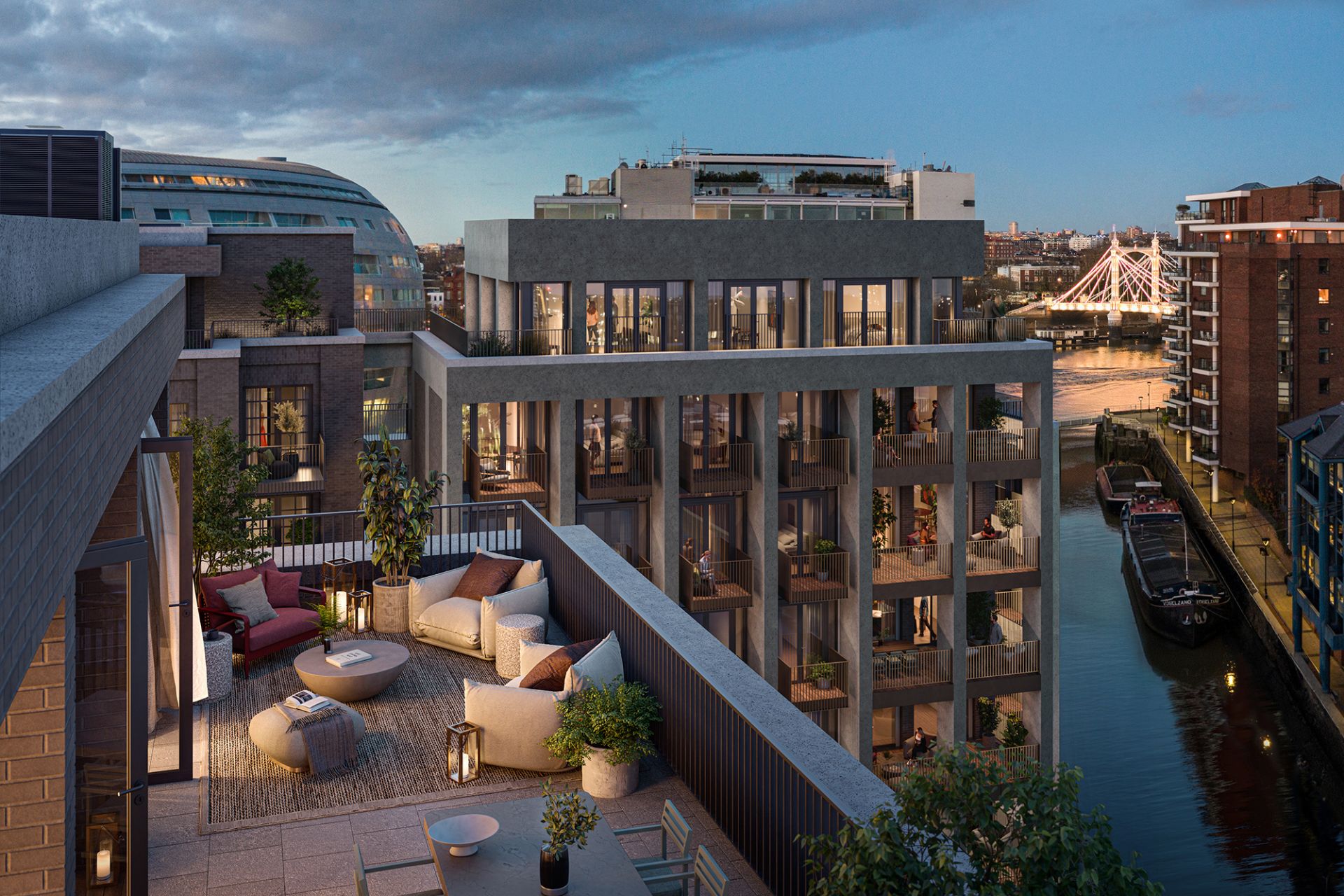
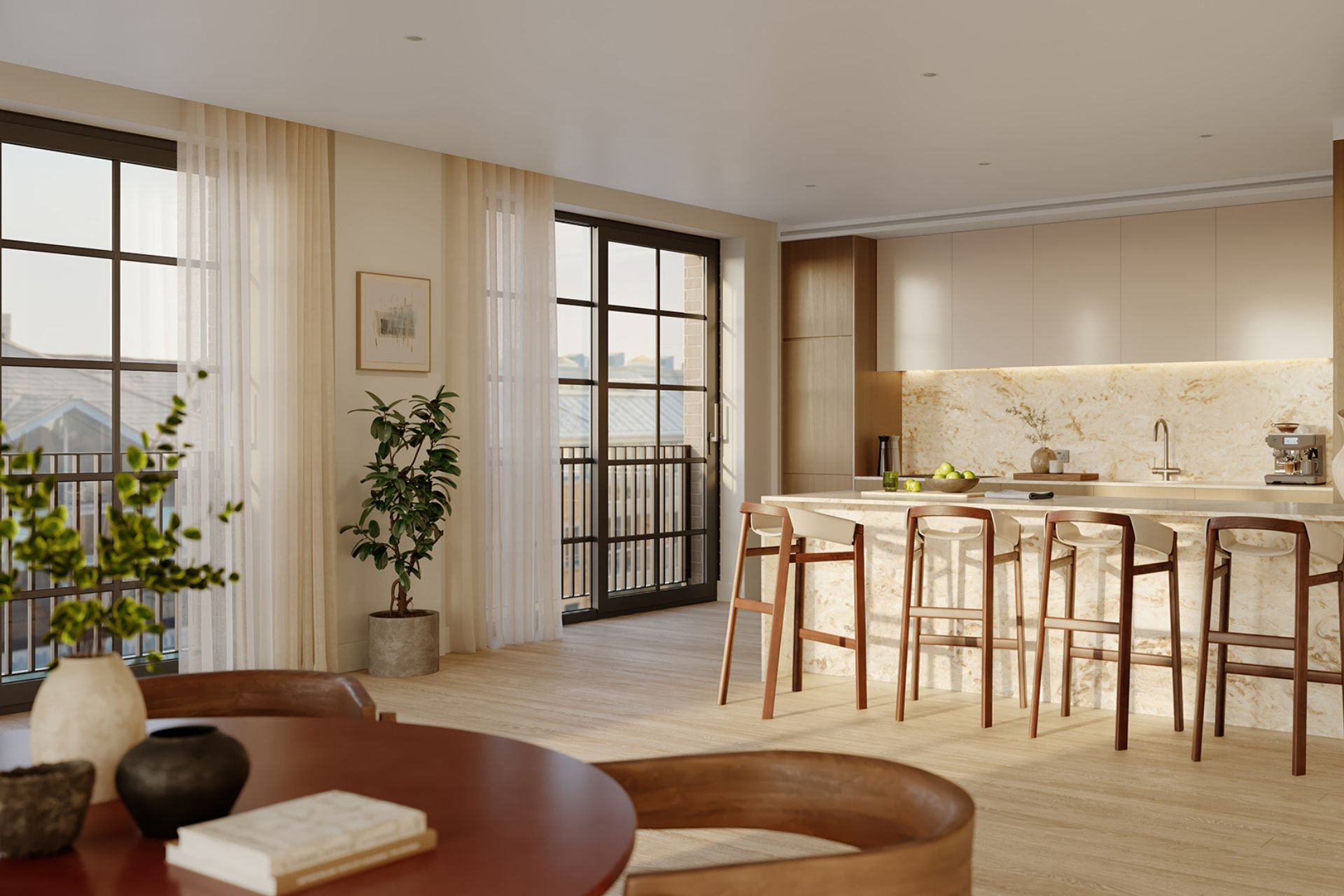
Occupying a 1.6-acre site just south of Chelsea, between Albert Bridge and Battersea Bridge, the development stands on the former home of Ransome & Co., an engineering works that formed part of Battersea’s dockside industrial heritage. With planning developed by architectural practice Fourfoursixsix, post-planning design and delivery led by 5PA Architects, and interiors from British based design house Echlin, the development takes cues from Battersea’s mix of creative heritage, industrial past and riverside environment, using natural materials, robust proportions, brickwork and metal detailing to create calm, light-filled interiors with a contemporary warehouse character. Meanwhile, the architectural approach ensures every home enjoys access to the outdoors, whether via balconies, terraces or the landscaped gardens below.
As part of the development, water flow in the dock will be restored for the first time in decades through the installation of new dock gates, plus a new public riverside walkway and dockside square will be introduced. Other key features include on-site concierge services and underground parking. Positioned at the heart of Battersea’s Creative Quarter – home to Foster + Partners, the Royal College of Art and the late Vivienne Westwood’s atelier – Ransome’s Wharf promises residents a Chelsea-meets-Battersea lifestyle.
Prices start from £1.1m for a one bedroom apartment to about £5m for penthouses. Completion set for 2028. Find out more at ransomeswharf.co.uk