


Jackson Boxer: ‘London Is Back – And It Feels Really Good Right Now’
By
5 months ago
The chef is opening new restaurant Vesper in Exmouth Market, and he's feeling optimistic
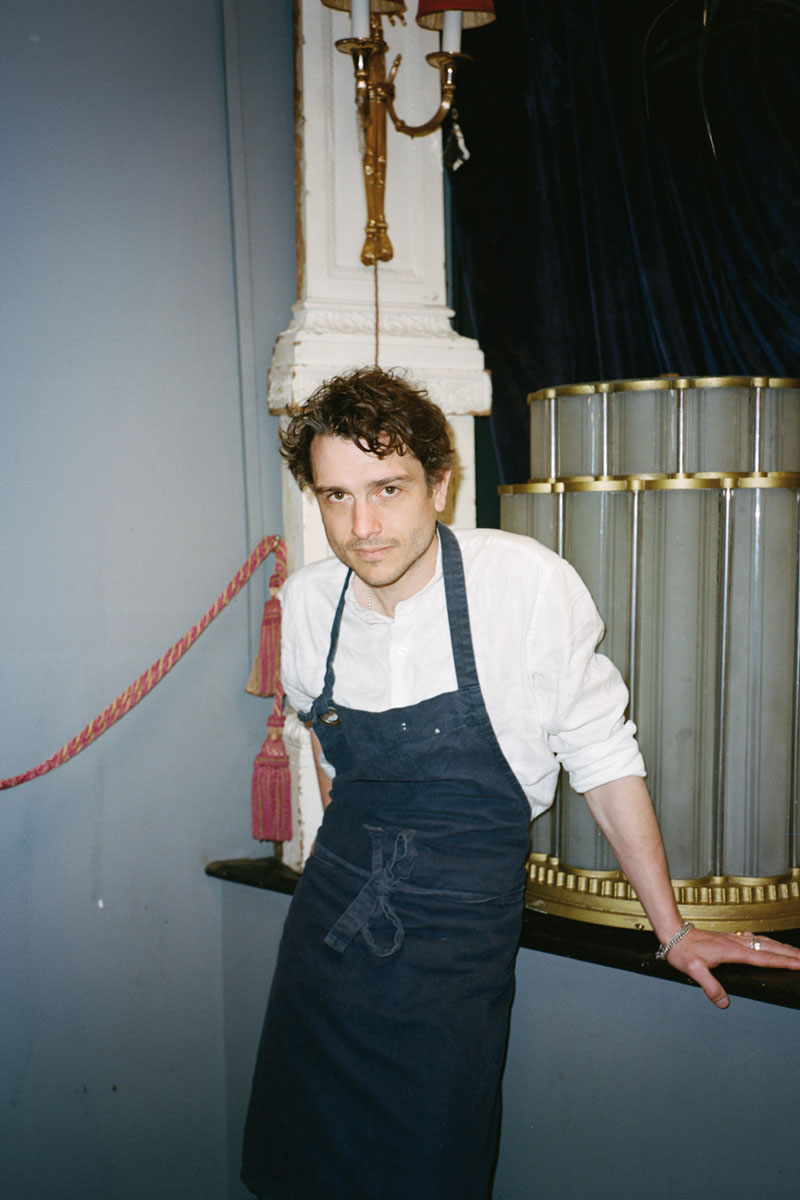
Chef Jackson Boxer was in his mid-twenties when he opened Brunswick House on an initial six-month basis (‘and it was a disaster at first’). 15 years later, he’s still there and alongside a clutch of other food projects, including Dove, and Soho late-night bar, Below, he’s undoubtedly part of the London restaurant furniture. Early next month, he will add a new restaurant to the roster: Vesper, located at 8-10 Exmouth Market. But how did the chef – who never planned to be a chef (‘it was the only thing that actually paid me money to live’) – land in this position? Jackson Boxer sits down with C&TH to talk about his career, share his recipe for optimism, and what he’s loving in London’s culture and restaurant scenes.
Jackson Boxer On London, New Restaurant Vesper, And The Recipe For Eternal Optimism
What’s bringing you joy at the moment?
London. There’s a whole new generation coming through. For a while it felt like London was becoming too expensive for culture to happen – but it feels like the tide has shifted. While no good thing, the economy being less buoyant has meant that spaces which might have previously been snapped up for a shiny new shopping centre or luxury hotel aren’t being developed. Those empty spaces are suddenly providing room for art projects, performances, libraries, reading rooms. There are many young people who are very talented just building things. I’m glad to see it back, in that way, because London has always punched far above its weight culturally, considering the relative size of the UK. Everything we do here rings out, whether it’s music, fashion or art. I do think that maybe we got a bit rich and a bit complacent, and there just wasn’t the room or the drive to make really original things happen. But I think that’s back; it feels really good right now.
You mention culture broadly – what about food? Is London’s restaurant scene part of that energy?
If I was going to be slightly critical, food is one of the areas where it does feel like it’s slipping from prominence a bit. Its high point was maybe ten years ago. People have to spend so much more on rent, and wages have stagnated, so they have less money to eat out – and because there’s less money to eat out, there are fewer restaurants to meet that need. There was a golden age when London was full of people on relatively high salaries paying relatively low rents, who ate out with a Manhattan-like frequency. It was an incredible flowering. Suddenly it felt like London was up there with, if not ahead of, Paris and Copenhagen in terms of its restaurant culture.
That said, our food culture is amazing here, especially outside of top-tier restaurants. We have a city of 8.5 million people – and it’s one of the most diverse cities on earth – all of whom are cooking their own food. You only need to leave the centre of London to find almost any cuisine you could ever hope to explore. We have really good examples of almost every cuisine in the world. That’s an extraordinary thing.
You’re opening Vesper at Exmouth Market in the first week of June. What makes a new opening so exciting for you?
I love opening restaurants. It’s the high point and the greatest expression of everything I do, because it involves so many aspects outside my day-to-day life. There’s a huge plasticity to restaurants – they evolve, they change, they shift. Like the sun shifts across the sky and changes the patterns of shade in a room, the whole mood can change within a day. The structure is really interesting.
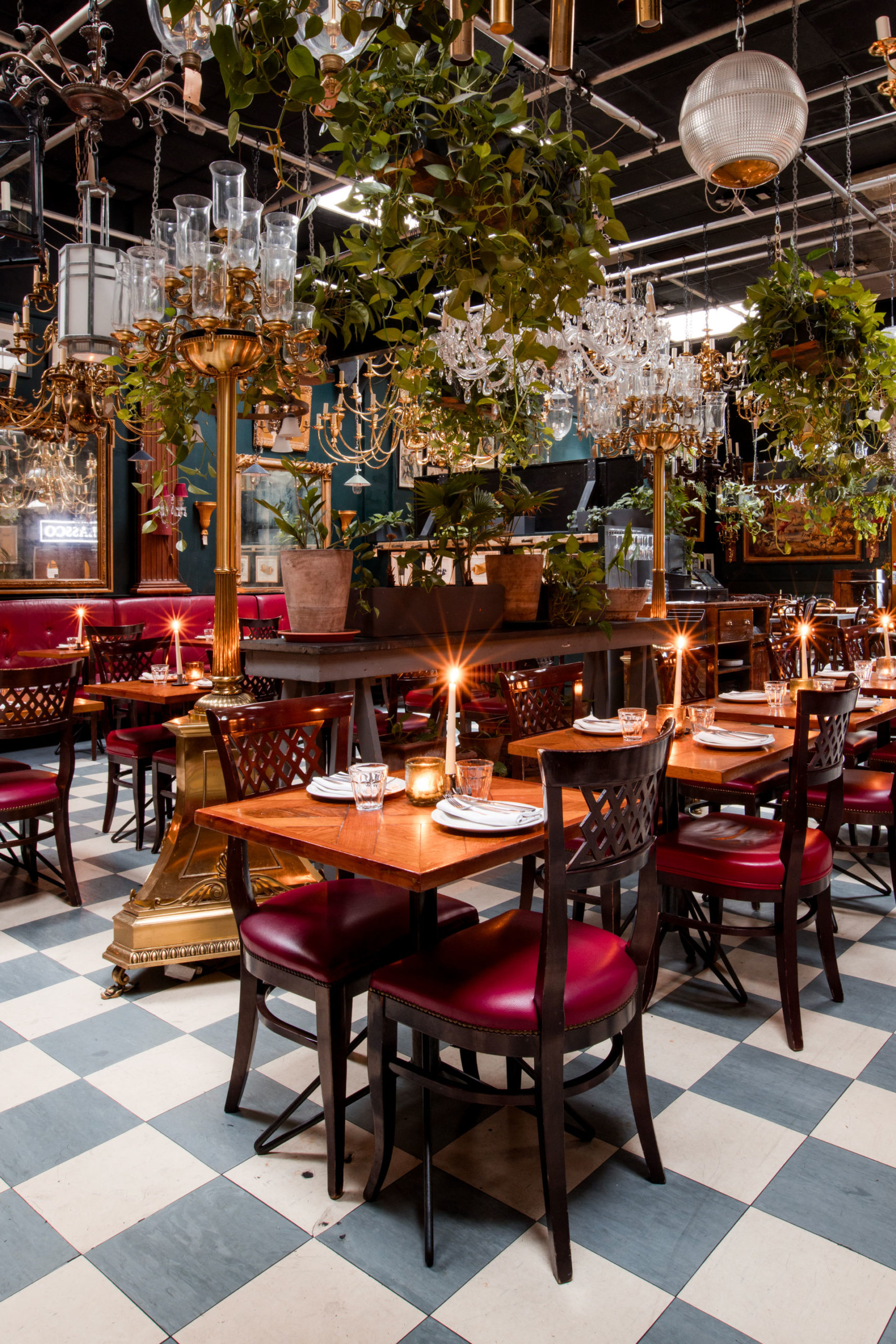
The delightfully eclectic and antique-filled Brunswick House. Photo by Greg Hammond
The fun thing is you can do whatever you want. But once you’ve installed a kitchen, once a menu takes shape and has things people always want to see, those things start excluding other possibilities. I’ve got Brunswick House, I’ve got Dove and Henri – and they’re almost too good in that they do everything they do so well that I can’t do anything else with them. Building a new project gives you that sense of absolutely limitless possibility, which I find makes me genuinely giddy.
It’s also a bit of a cheat code to open a new restaurant in a space you already own and operate. And thank god it’s not me alone. I have an amazing team of people who collaborate with me, and all the restaurants are self-contained with their own teams. But you get to know your team intimately. You know what works, and you have a very clear idea about what will work in that space and what your regulars will respond to. And this project – working collaboratively with Jermaine, one of my oldest friends, who I’ve known for nearly 20 years – has been incredible. We worked together at Frank’s the first year my brother opened his bar in Peckham, and he worked with me in the early days of Brunswick House. He now has this incredible career as a designer. [My late-night bar in Soho] Below was quite light-touch; this is the first project we’ve really collaborated on intimately from start to finish. I think he’s so talented and brilliant.
As much as I find my life incredibly stimulating – every day I’m in a different place, working with enormously talented people — I do miss being in one kitchen, every single day. There’s a focused creativity that comes from getting into an amazing routine of standing in the same position, and entering this flow state where the ideas all come together. My deepest, most original ideas about cooking only really emerge when I’m very immersed in one place. That’s why new openings are so particularly exciting for me.
What’s annoying you most right now?
Lots of things make me hopelessly depressed about the world today, but there are lots that fill me with optimism too. Of course, in life, there will be annoyances – it’s beholden on us to relegate those annoyances relative to hope. In the grand scheme of things, we’re so lucky. The things that make me genuinely sad feel vastly out of my hands, and that’s what’s so debilitatingly miserable about them. You see things happening that you have no ability to influence, and it’s utterly devastating. If you allow yourself to become preoccupied by annoyances, you can find limitless things — but there’s also so much that’s wonderful.
My legitimate annoyance? Interviewers who ask for my death row meal. Every time I’m asked that, I feel so depressed. Being waiting to be executed for something I didn’t do, trying to make my peace, and eating some horrible prison food. Thank you for not asking me that.
Your greatest triumph?
Genuinely, the thing that gives me most pride is seeing my children grow. And the relationship I have with my wife – that we’ve built something loving, powerful, supportive, kind and funny, and that we’re still really good friends. Modern romance is very hard. I feel incredibly lucky to have fallen in love when I was very young with this brilliant, talented, beautiful person, and for us both to have been able to grow together over the last 15 or 16 years in a way that has allowed us to lead very rich personal lives, raise four children together, and still really enjoy each other’s company. That’s a source of enormous pride.
Your greatest failure?
I have a lot of failures, but not many I’d consider particularly great. Everyone is going to fail at stuff – you just get over it and move on. I’m very lucky in that I don’t particularly have a fear of getting things wrong, or a fear of being laughed at. I was laughed at so much in school, it stopped mattering. That fear of failure, that fear of trying things, is a terrible handicap — and it’s one of the things I’m always very keen to discourage in my children. That self-consciousness can be so inhibiting.
Triumphs are lovely, but they literally last a minute. You get a good review, all the restaurants are going well – you feel fantastic for a moment, and then I get distracted and move on to the next thing. My biggest fear is complacency. I don’t really allow myself to indulge in prolonged satisfaction from a job well done. It’s just: right, we did that, beautiful, on to the next thing.
Where do you go to escape?
The Outer Hebrides. Every summer, since I was a child. It’s astonishingly beautiful, wild, magical, ethereal. I find it incredibly restorative. It’s also somewhere I spent every summer growing up, so I love taking my kids there and maintaining that connection.
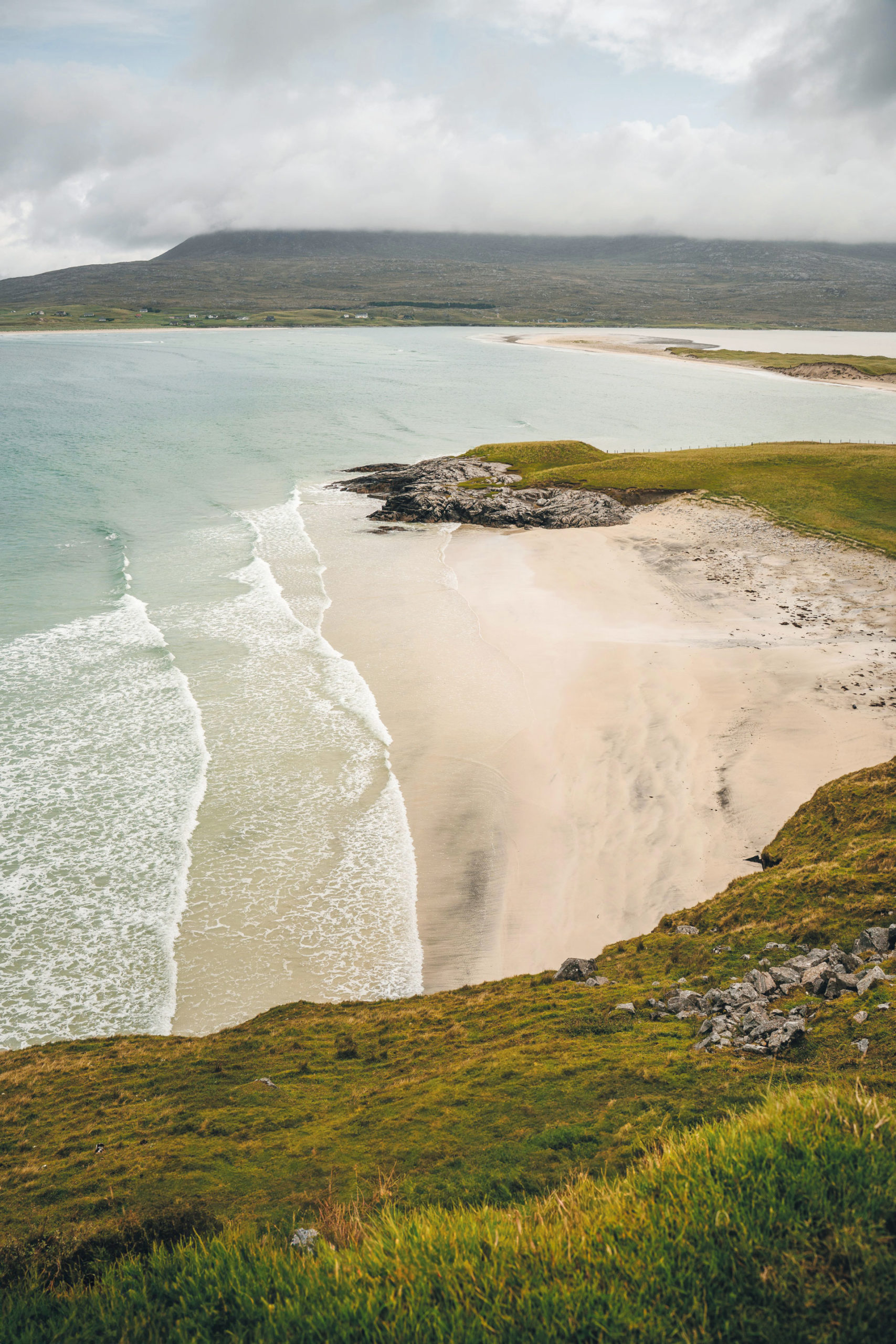
The Outer Hebrides. Photo by Clement Proust via Pexels
But the real draw is that there’s no phone signal. It’s the only place in the world where I can actually shut off. A few months ago I was invited to spend a week cooking at a safari lodge in Laikipia, Kenya, which was incredible – I thought I’d be really in the wilderness. But I had far better signal there than in the Outer Hebrides, where for a week, no one can get in touch with me. It has its downsides: I once missed buying a beautiful restaurant site because by the time I walked up a hill to get signal, someone else had already put down the deposit. But in the grand scheme of things, maybe it wasn’t supposed to be. I feel very fortunate to have somewhere I can go and feel completely free.
Advice you’d give to your 15-year-old self?
I wouldn’t give any. My 15-year-old self would absolutely laugh in the face of 40-year-old me. I’d think I was completely ridiculous. The only way to find out is to do it yourself and make mistakes. Trust your instincts and don’t listen to anyone – especially not me.
What did you imagine you’d be when you grew up?
A grown-up, really. I just wanted to be free and out in the world doing stuff. When I left university I was writing, considering postgraduate studies, helping run a small arts project space, throwing parties, working as a chef – doing a lot of things, as lots of young people do. The only thing that actually paid me money to live was being a chef, and that’s why I kept doing it. As I’ve grown and really pursued it, taken it seriously and built things around it, it’s become this huge driving force. But it was always part of a plethora of things I was excited about.
When I started Brunswick House I was 24 or 25. It was meant to be a six-month residency in a big antique shop – and it was a disaster at first. No one came in for the first three months. It wasn’t until we found out the building used to be a working men’s club, and therefore had a lapsed alcohol licence that Lambeth Council almost just waved back through, that we were able to open in the evenings. Vauxhall didn’t have a huge audience for my cooking at lunch, but in the evenings we suddenly found a crowd, and it took off. If someone had told me when I was 24 that I’d still be there 15 years later, I would have run a mile. But I fell in love with it.
How can we save the world?
Climate change has always been something I’ve been very proactive about. With sustainability, I feel a little cynical – I think everything that makes us incredible as a species, our technical ability, our adaptability, our ability to mould the world around us, feels like it contains the seeds of our downfall. This idea that we can ever live in perfect balance and harmony feels contrary to what I think of as our nature.
On the other hand, I remain ever optimistic. It would be wrong to give up hope. We’ve already done vast amounts of damage that will only reveal itself in the fullness of time, and I do fret about what the future looks like for my children and grandchildren. I feel more unhappy about the damage we’re wreaking on other species. And I think if you catastrophise too deeply, it can really crush the soul and breed a feeling of absolute hopelessness. It’s important to hold that in perspective with a sense of optimism.
I remain convinced there are better ways for us to live, in relation to each other and in relation to the world around us. How that revolution in thinking and living comes about, I’m very poorly qualified to answer.
What book inspires you most right now?
I’ve been reading a lot of poetry again – Emily Dickinson and Wallace Stevens. I find the act of reading poetry and grappling with it, engaging with the pressure it puts on language, very enjoyable. Generally I tend to read to avoid inspiration – purely for pleasure, things that take me out of myself. I’m a romantic and I still find the act of reading itself really meaningful, especially fiction, which forces me to think about what it is to be someone else. Children and teenagers are incredibly empathetic; as we get older we get coarsened and toughened, and it’s important to keep working that muscle. Reading stimulates our capacity for empathy in a way that I find genuinely inspiring.
Is there a comfort dish you turn to at home?
The thing I cook most, I wouldn’t make in a restaurant. Quite peasanty soups, roasted vegetables, grains, pulses – that’s pretty much my diet at home. It’s the antithesis of restaurant cooking: everything’s fudgy, the flavours are slightly indistinct, and it’s texturally all of a similar soft, mushy quality, which is completely counter to what I find interesting about cooking in restaurants. But in terms of domestic cookery, it feels like such a lovely way to cook and eat. I especially enjoy making it for my wife and children – it’s nourishing and sustaining.
And your favourite restaurant right now – preferably one that isn’t yours?
My favourite restaurant in London right now is Planque. It’s a really wonderful and special place, and it feels very distinct within the London landscape.
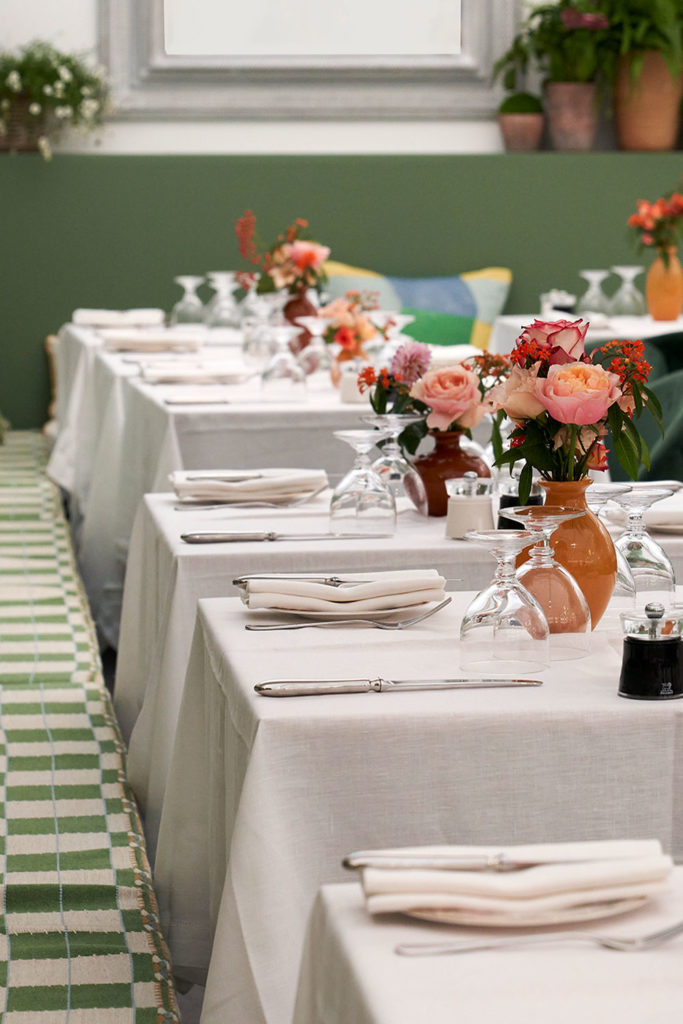
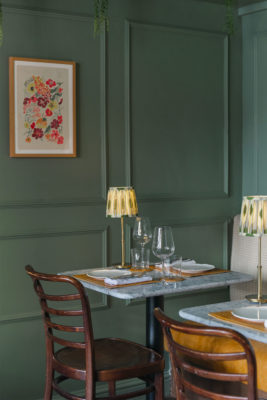
Vesper will open in the first week of June, and will be located at 8–10 Exmouth Market, London EC1R 4QA. Follow @jackson_boxer. Photo credit: Louis A. W. Sheridan