





I’ve Lowered My Biological Age (By 22 Years) Through My Diet – Here’s How
By
5 months ago
Retreat chef Bettina Campolucci Bordi has the recipe for a youthful diet
People often imagine that because I have been cooking on retreats for years, I must eat in a perfectly polished way all the time. The truth is far more human than that. I have spent the best part of 15 years feeding people in retreat settings, and what I eat now looks quite different to what I ate in the early years. Part of that is age. Part of it is hormones. Part of it is simply knowing myself better. I do not want the same things I wanted in my twenties, and I have learned, often the hard way, that eating well is less about being strict and more about being steady and inclusive.
Yet – and I do not state this in a triumphant way, more in some sort of relief – I recently took a biological age test that stated that I am 21, a staggering 22 years younger than my chronological age. The test I used, GlycanAge, took a snapshot of the glycans attached to IgG, which are used as indicators linked to immune system ageing and long-term inflammation (this is why I like biological age testing; it moves the conversation away from vanity and towards what is happening underneath). Discovering this, I’ve been asking myself the question: what am I doing right? It certainly wasn’t one green juice or early night alone, but, presumably, the cumulative effect of habits. The vegetables, beans, herbs, olive oil, soups, stews, slower mornings when I can get them, and the fact that I genuinely love feeding myself well.
Because I am not a wake-up-at-5am, strict-regime kind of woman. There is nothing wrong with that, but being that regimented has never been me. That does not mean I eat perfectly. I do not. It means I eat in a way that is supportive, most of the time. In a way that has become more intelligent with age: to sustain my energy, my mood and my hormones. It is this latter point that has been the biggest lesson retreat cooking has taught me. For years, so much of my work has centred around feeding other people. But the older I get, the more I understand that the way I eat matters just as much. Not because it has to look a certain way, but because it shapes how I feel, how I work, and how well I can hold everything else (and perhaps to keep your biological age down, too).
What I Eat As A Professional Retreat Chef
What I Eat On Retreat
When I am cooking on a retreat, the day starts early and it asks a lot of me. I am on my feet for hours, making decisions constantly, tasting, adjusting, checking on guests, managing the flow of the kitchen, and somehow staying calm enough to hold the whole thing together. I cannot run that kind of day with a light breakfast and good intentions.
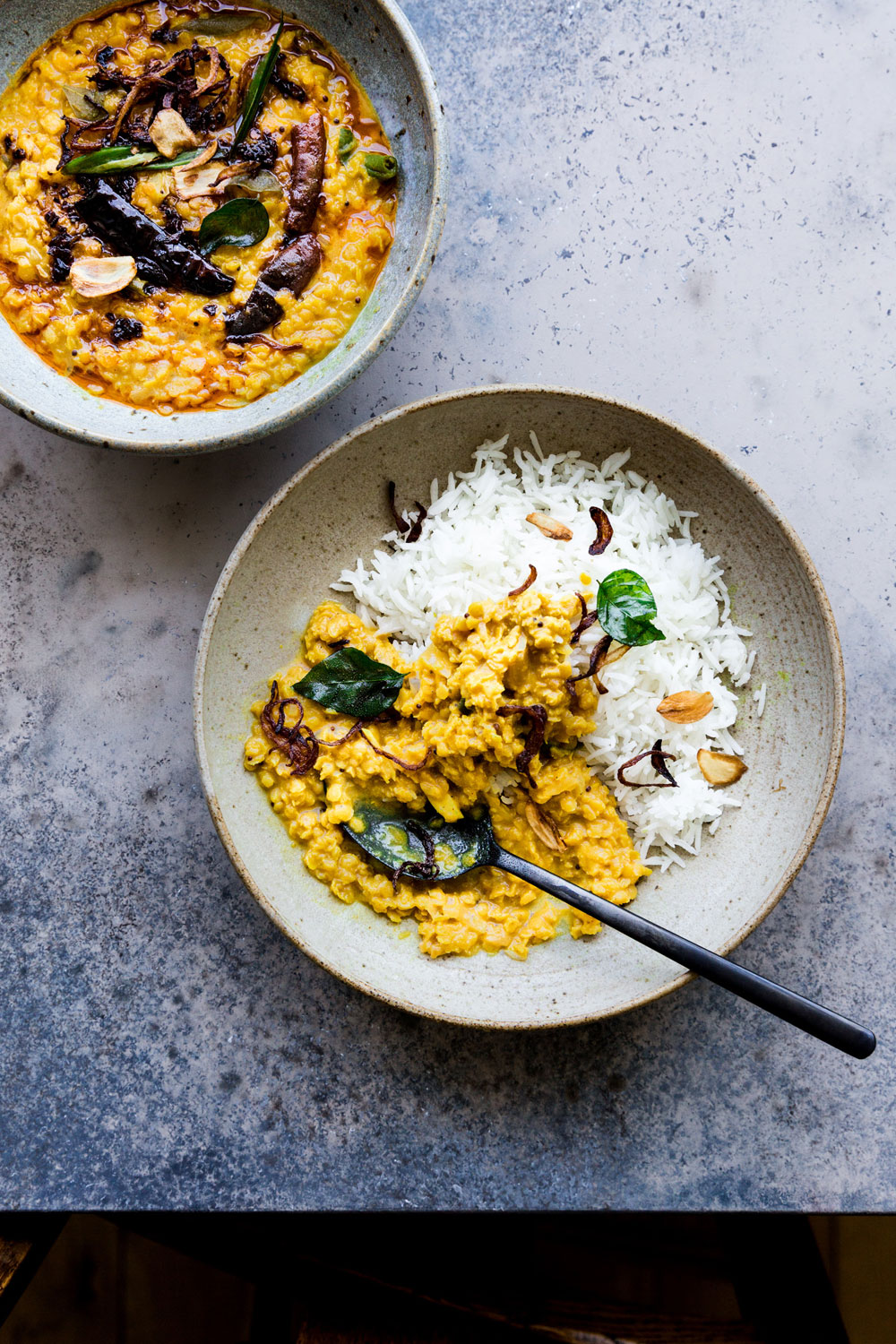
Leftover dhal for breakfast forms part of Bettina’s dietary mainstays
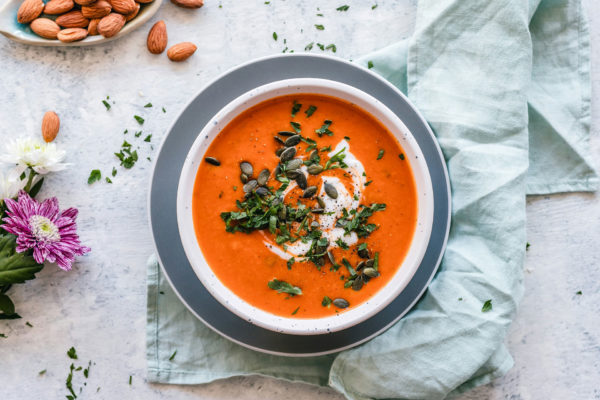
So I always eat a substantial breakfast. It is nearly always savoury. I am not someone who wakes up wanting something sweet. More often than not it is leftovers from the day before: a bowl of soup, a spoonful of dal, roasted vegetables with tahini, a bit of stew, maybe some rice, herbs, seeds, a dollop of yoghurt. If there is curry left from the previous night, even better. I have never been precious about what counts as breakfast. If it is nourishing – often containing greens too if I can – and it sets me up well, that is enough for me.
As I have gotten older, I am much more aware now of blood sugar, energy dips, hormones, and how quickly a whole day can feel harder if I have not properly fed myself in the morning. Years ago, I could get away with coffee first and food later. Now I know that does not serve me. That said, coffee is still a small religion in my life. I am very particular about it. I buy beans I really love, grind them properly, and take the time to make one very good cup. It is not something I rush through – it is a ritual I treasure. On a retreat, where so much of the day is about giving, that cup of coffee often feels like a tiny act of returning to myself before the rest of the house wakes up. I love having it in complete silence as I plan my day.
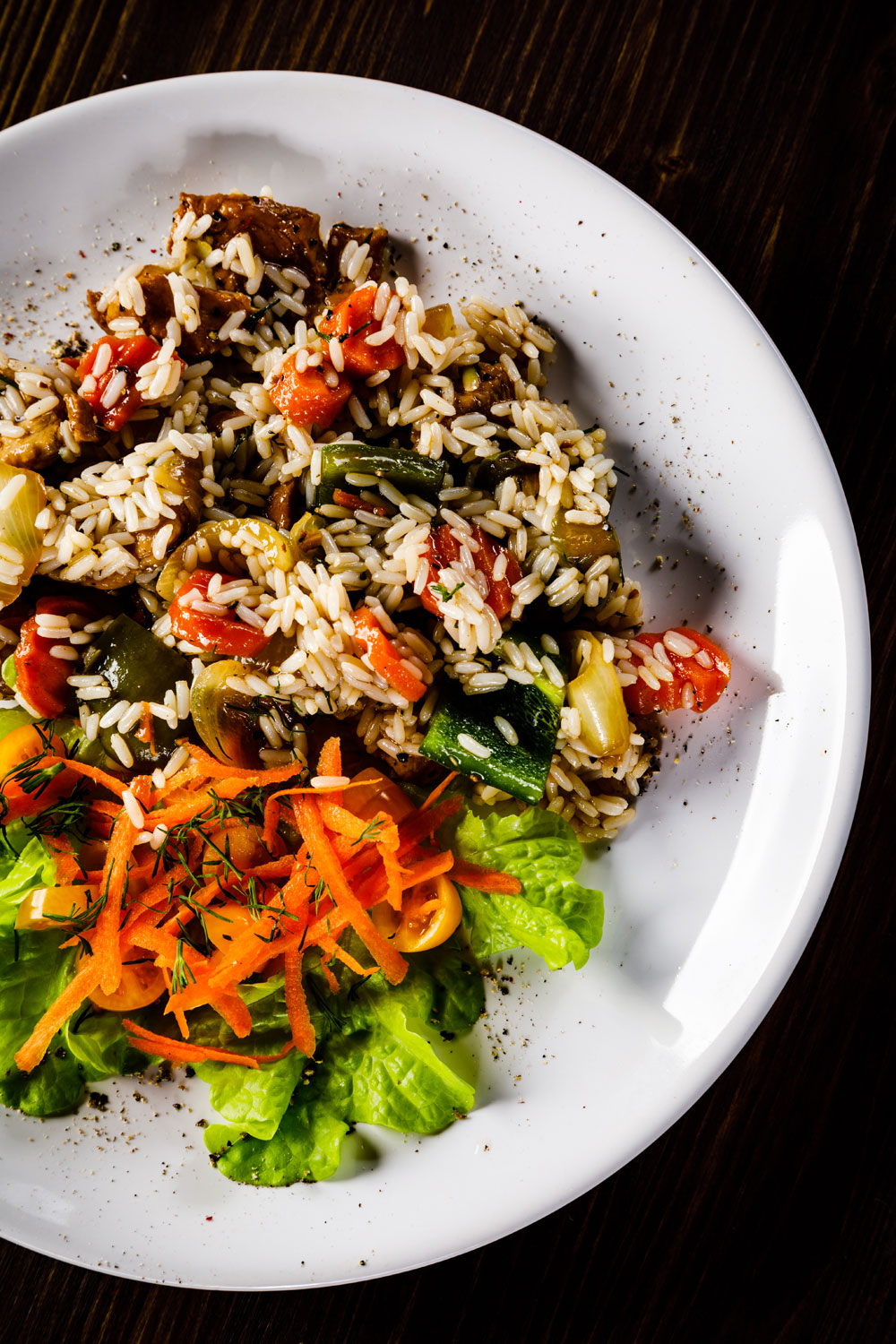
Salads with grains and roast veg. Getty Images
Lunch is usually my biggest meal of the day, both on retreat and off. If I am with guests, I will often sit down and eat with them. Sharing food is part of the work, but it is also part of the joy and the sense of community I am building. A proper lunch might be a generous salad with grains and beans, a tray of roasted vegetables, some kind of broth or soup, maybe a spread of dips, herbs, pickles and warm bread. I still want it to feel satisfying and genuinely delicious.
What I Eat At Home
At home, I am not wildly different, just a little less structured. I still lean towards proper meals. I still like a savoury breakfast. I still eat a good lunch. Dinner is where things get lighter. By that point I usually want something simple and easy to digest: a brothy soup, cooked greens, rice with miso and vegetables, a small bowl of something warming. If lunch has been substantial, dinner tends to be less so, and sometimes it can even be what we in our family call a pick and mix, i.e. a little bit of everything from the fridge.
I think that has been one of the biggest shifts with time. I no longer feel the need for every meal to be exciting. Some meals are there to restore you. Some are there to carry you. Some are there to bring you happiness, and they do not have to be complicated to do that. Often the simplest meals are the best.
Bettina Campolucci Bordi is a regular C&TH contributor and runs an academy for retreat chefs. Find out more at bettinaskitchen.com