


Forte Dei Marmi’s Slow Homecoming: A Stay At The Hermitage
By
3 months ago
As Russian money recedes and old Italian families return to the Tuscan resort, a meticulous renovation at the Versilian institution tells a story about a town finding its way home
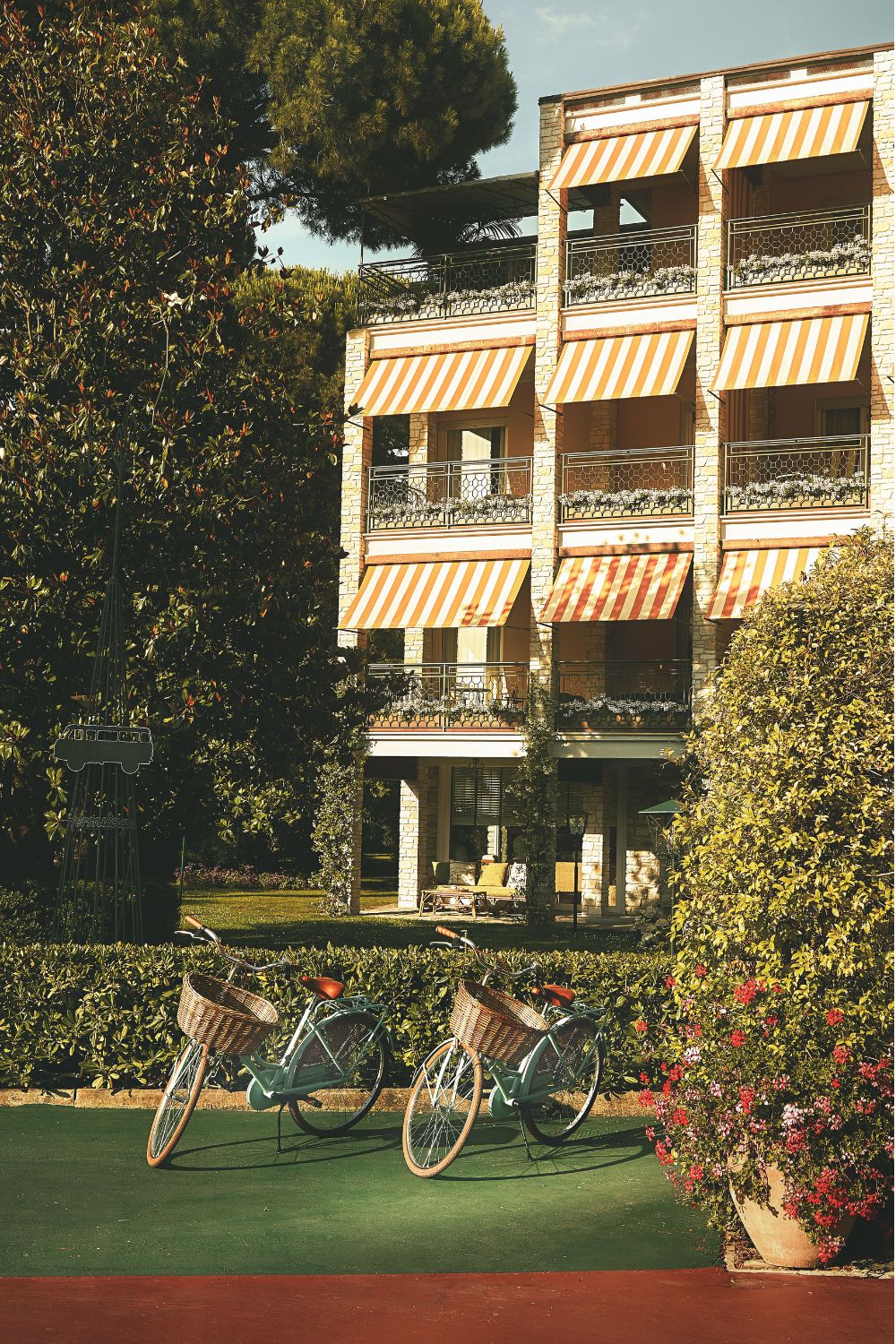
There is an hour at the Hermitage, just before dinner, when the whole hotel turns gold. 57 of its 59 rooms open onto balconies striped in the original orange and cream of the 1960s, and as the sun drops behind the pines that pattern seems to catch fire – the building flooding, briefly, with the kind of light that makes you put your phone down. Stand there long enough and something else happens too: time, which moves so insistently everywhere else, simply stops.
Two weeks is the average stay here, a revealing statistic. Families don’t come to the Hermitage to tick Forte dei Marmi off a list. They come to disappear into it.
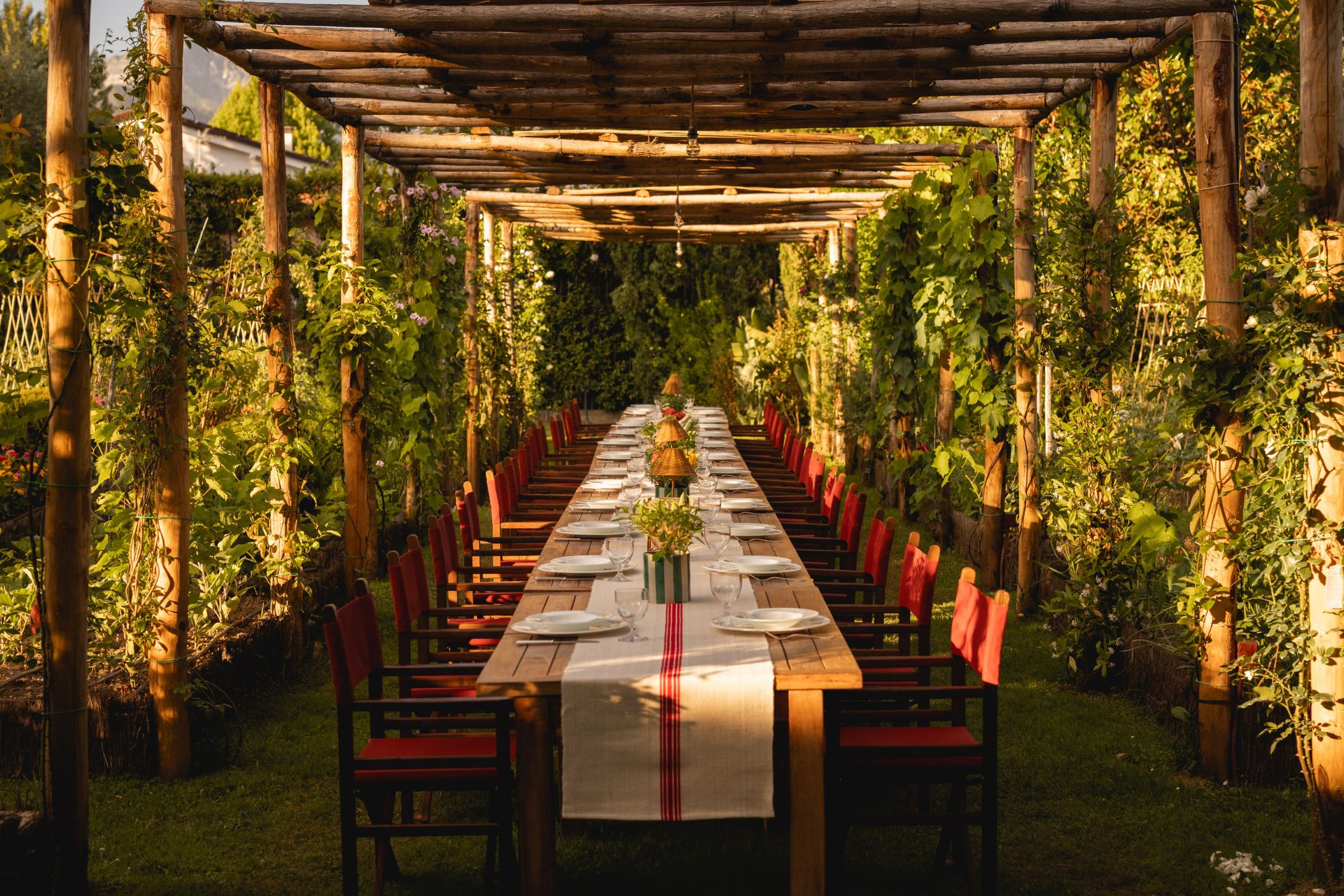
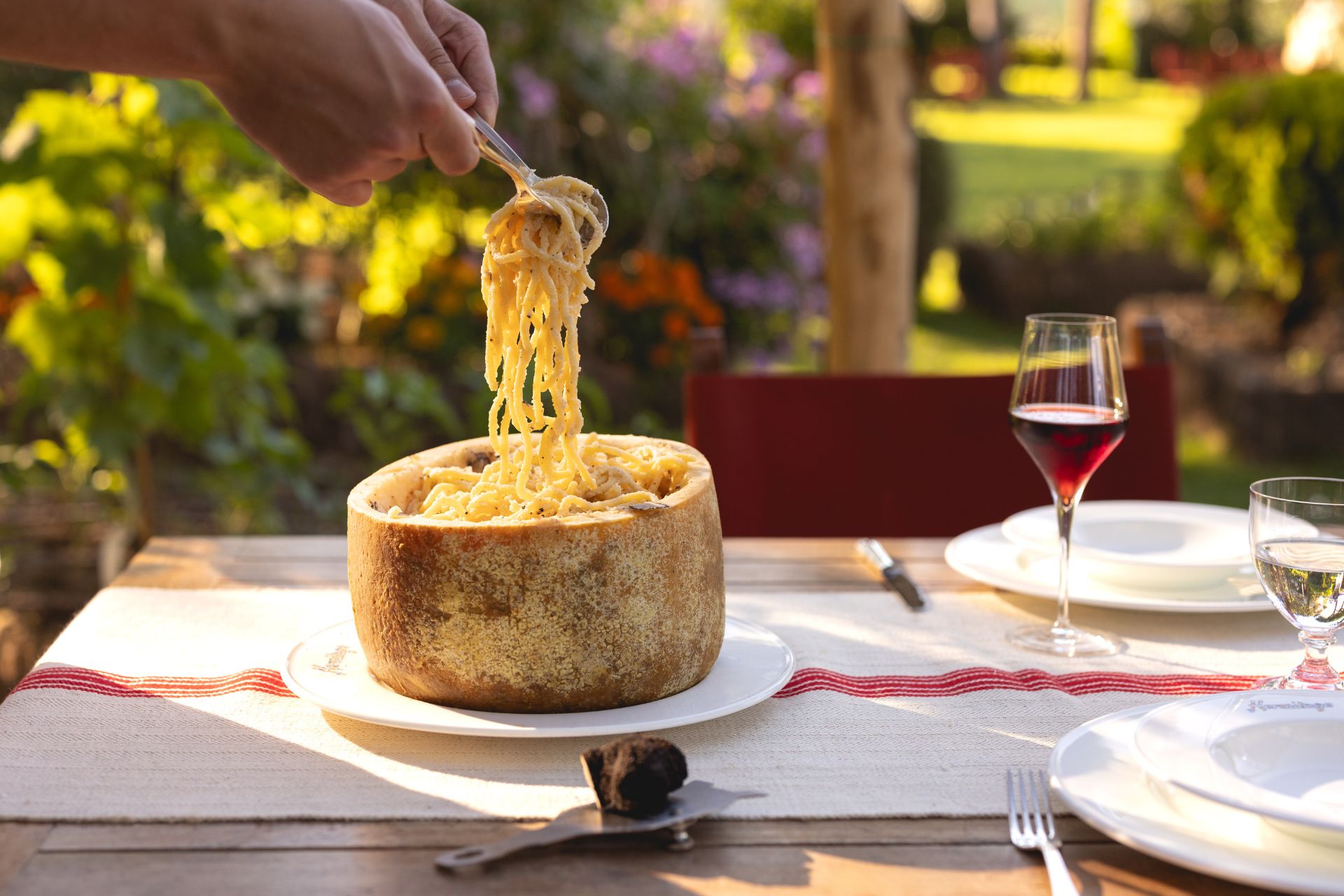
The hotel has just finished a renovation, and the word that keeps surfacing, is restored rather than reconstructed – an important distinction. Nothing here has been smoothed into a generic five-star sheen. The restaurant, one of the oldest in Forte, has been serving since the 1970s and still runs on the conviviality it always has: shared plates, a vast pot of pasta brought to the table for everyone to spoon from, the kind of unfussy abundance that turns strangers into regulars.
That word – restored – could just as easily describe Forte itself. For a decade or more, this stretch of Tuscan coast was bought up, loudly, by Russian money: villas gutted for helipads, beach clubs reshuffled, the old Italian etiquette of striped cabanas and inherited front-row positions briefly overwritten by something brasher, more dependent on the sound of money. Since 2022 that wave has receded – sanctions, frozen accounts, the war – and what’s left in its place isn’t nostalgia so much as a quiet return. The Italian families are coming back. At the Hermitage, 70 percent of guests are repeat visitors, some across three generations, and the hotel’s whole philosophy seems to bend toward that loyalty rather than away from it: respect the identity, don’t reinvent it, let people come home to something they recognise.
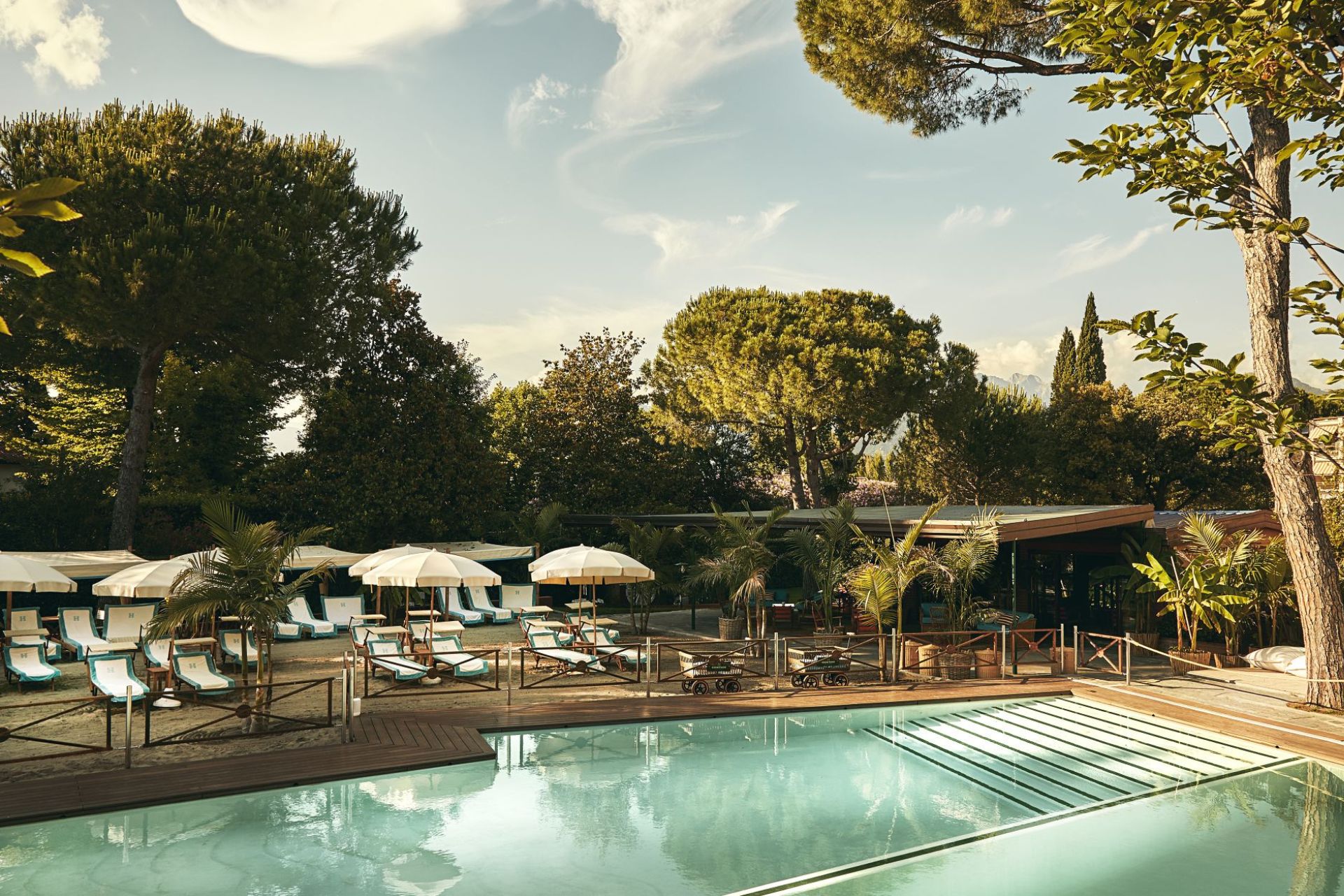
The garden helps. It’s the largest of any hotel in Forte, broken into enough discreet corners that you can find privacy even in August, with the marble peaks of the Apuan Alps visible behind the pines, looking improbably close. The hotel can arrange private events in the caves quarried into those same mountains – the right scale of theatre, I think, for a place this committed to its own mythology. There’s a vegetable garden too, where children plant their own seeds weeks before the same vegetables turn up, smaller and stranger and entirely theirs, on their plates at lunch. Kids here are properly looked after, not merely tolerated.
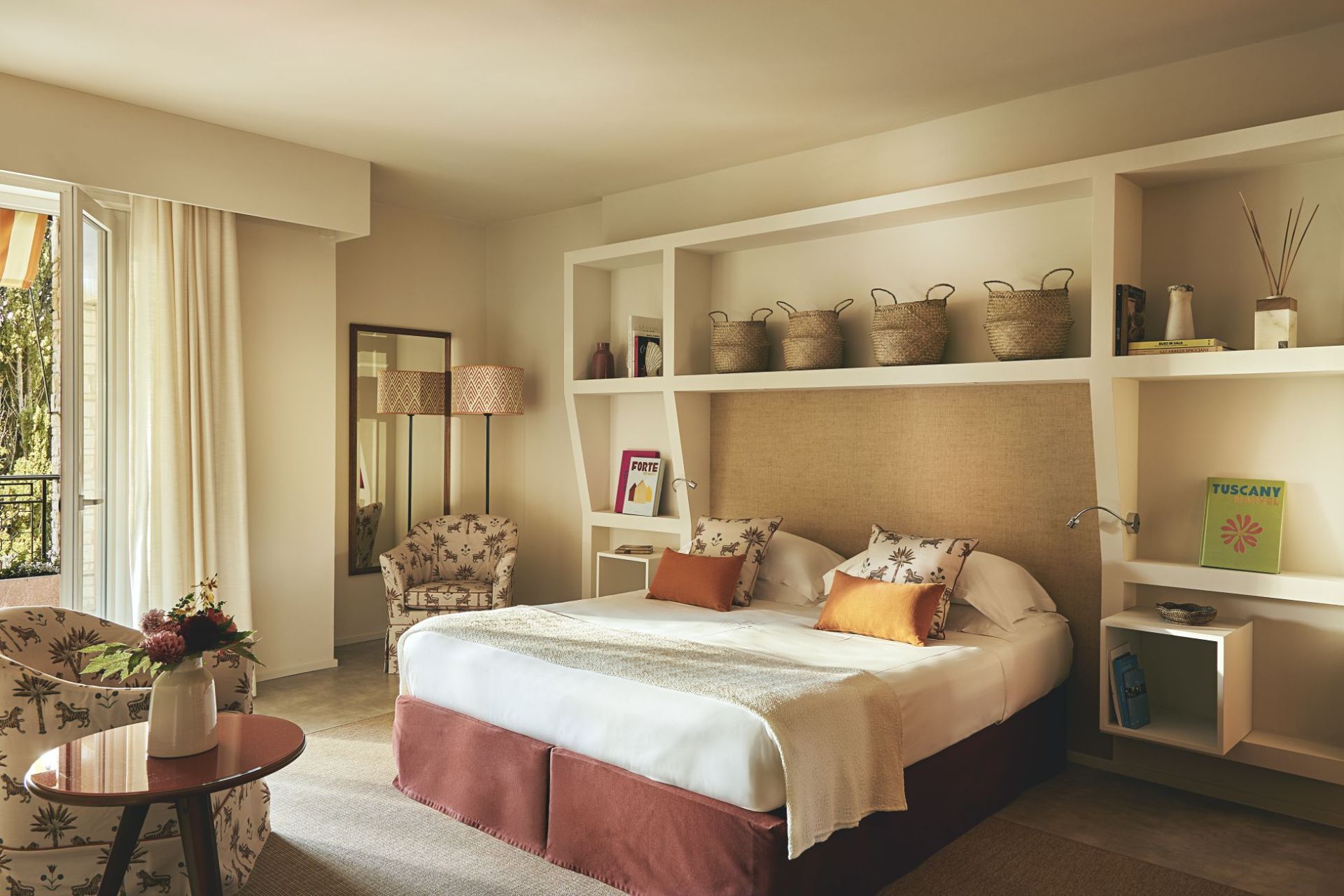
Elsewhere, the hotel is quietly pushing its four stars toward five: a kitchen sourcing locally rather than through international supply chains, a digital concierge for the practical stuff, and a human one – Gennarino, 30 years in Forte and, by every account, beloved by everyone from hoteliers to fishmongers – for everything else. The bar borrows its mood from La Capannina, Forte’s legendary 1960s beach club, now under Armani’s ownership, though here the homage feels affectionate rather than commercial. Nothing here is mass-produced nostalgia. The ironwork, the ceramics, the textiles – even the room balconies’ original stripe – have been restored or remade by the same kind of local hands behind Forte dei Marmi’s other great institutions, the zoccoli-makers and bronze-casters in the hills above town: Forte’s own design classics, kept rather than replaced, just brought up to date.
The Hermitage doesn’t run its own beach club at all: Forte’s beach culture has a fierce internal hierarchy – front-row bookings, house DJs, decades of unwritten seniority – that no new arrival could simply buy into. So the hotel has struck a partnership instead, with the club one minute’s shuttle ride away, complete with its own changing cabin and all the luxurious amenities of the hotel. It solves the problem with more grace than competing with it could.
Two experiences arranged by the hotel stayed with me after I left. The first was the town’s famous weekly market – all linen and leather sandals and a particular Forte swagger – followed by a visit to Giovanni del Forte, a shoemaker now three generations deep with roots in Florence, who hand-makes each pair of sandals while you wait, shaping the wooden sole of the classic zoccoli (Forte’s famous wooden clogs) and nailing the strap to your foot in minutes. The second was a boat out toward Liguria, around Porto Venere, slipping into sea caves where the water turns an improbable turquoise, eating oysters straight off the boat watching the sun set – briny, cold, and like eating the sea.
Back at the hotel that evening, the stripes were doing their thing again, the garden going quiet, the pasta pot making its rounds. Rooms start around €350 in low season, climbing to €700-800 in August. In a town where two sun loungers and an umbrella in one of the most exclusive beach clubs costs €600 for a day, the rooms here feel beyond reasonable. On the strength of everything I saw – a town slowly becoming Italian again, a hotel resisting every temptation to become anything other than itself – it felt entirely worth it.
THE KNOWLEDGE
Rooms: 59, from Single Superior up through Junior Suite, Garden Suite and Royal Suite; most have a private balcony, terrace or veranda.
Rates: From roughly €350 a night in low season to €700-800 in August (Junior Suite and above).
Eat & drink: Orto all’Hermitage, the hotel’s restaurant, draws on its own organic vegetable garden and local Versilia producers; Cabana Lounge Bar serves a lighter, poolside menu by day.
Garden: Over 15,000 sqm of private parkland – the largest hotel garden in Forte – with a pool, play areas and views to the Apuan Alps.
Beach: No in-house beach club, but a partnership with a nearby stabilimento, reached by a one-minute shuttle, with its own changing cabin and full hotel amenities.
Best for: Multi-generational family holidays, long stays (the average is two weeks), and anyone who wants old-school Forte dei Marmi rather than a five-star reinvention of it.
Getting there: Pisa airport is the closest, about 40 minutes by car; Florence is roughly 1 hour 15 minutes.
The market: Piazza Marconi, every Wednesday, year-round, 8am-1.30pm. Founded over 50 years ago and still regarded as Italy’s most beautiful market, with over 200 stalls under the pines selling fashion, leather goods, cashmere, ceramics and homeware, with a separate Wednesday food market a short walk away in Piazza Donatori di Organi.
The artisan: Giovanni del Forte, Via Roma 16. Opened in 1980 by Maestro Giovanni Lenzoni and now run by Massimo Martini, this is the address for Forte’s signature zoccoli: handmade wooden-soled clogs and sandals, shaped and nailed to your foot on the spot, in more than twenty styles and any strap colour you like. +39 0584 83395 · giovannidelforte.it · @giovannidelforte_
Hermitage Hotel & Resort, Forte dei Marmi: Via C. Battisti 50, 55042 Forte dei Marmi, Italy +39 0584 787144 · [email protected] · starhotels.com