


The Dutch Approach To Water Could Really Teach Britain A Thing Or Two
By
3 months ago
How a nationalised water system in the Netherlands – a third of which sits below sea level – drives civic action in the wake of climate change
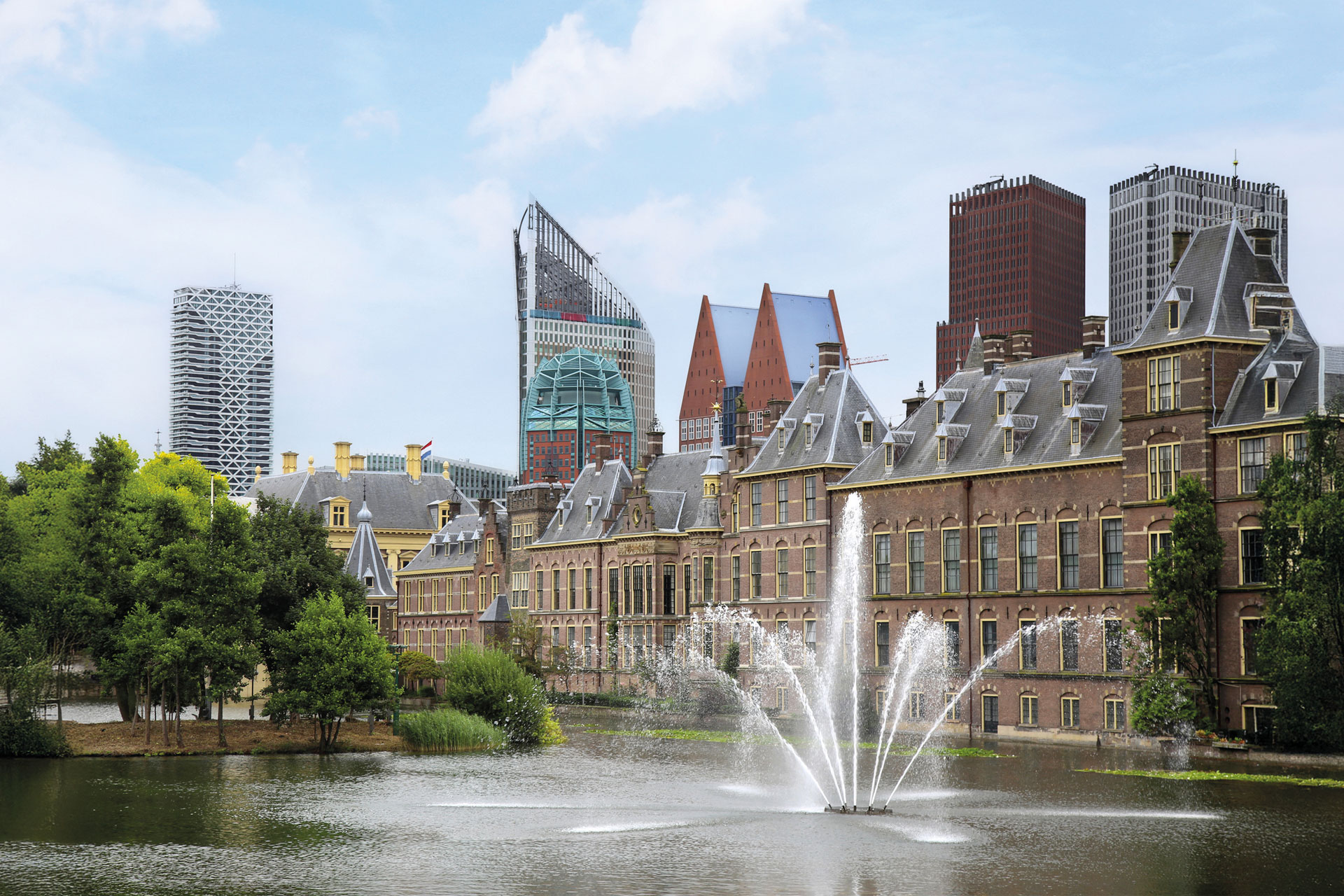
‘God created the world, but the Dutch created the Netherlands’ goes the phrase. In Den Haag, the Dutch political capital, canals, controlled by electronic flood gates, crawl through the city like capillaries. When heavy rain threatens to overwhelm the historic centre, those gates open at the push of a button, releasing water elsewhere. For centuries, this exchange has been carefully balanced. But climate change threatens to tip it: as seas rise, parts of the city, half of which sits on peat and clay, are sinking faster than Venice.
The Dutch answer, however, may not be technological. Instead, it lies in a philosophy of environmental governance known as polderen. Derived from the polders, the low-lying tracts of land reclaimed through dikes and canals, polderen describes a culture of consensus built around the practical necessity of managing water together. ‘An art,’ says Piet-Hein Daverveldt, dike reeve, or chair, of the local water board, the Delfland.
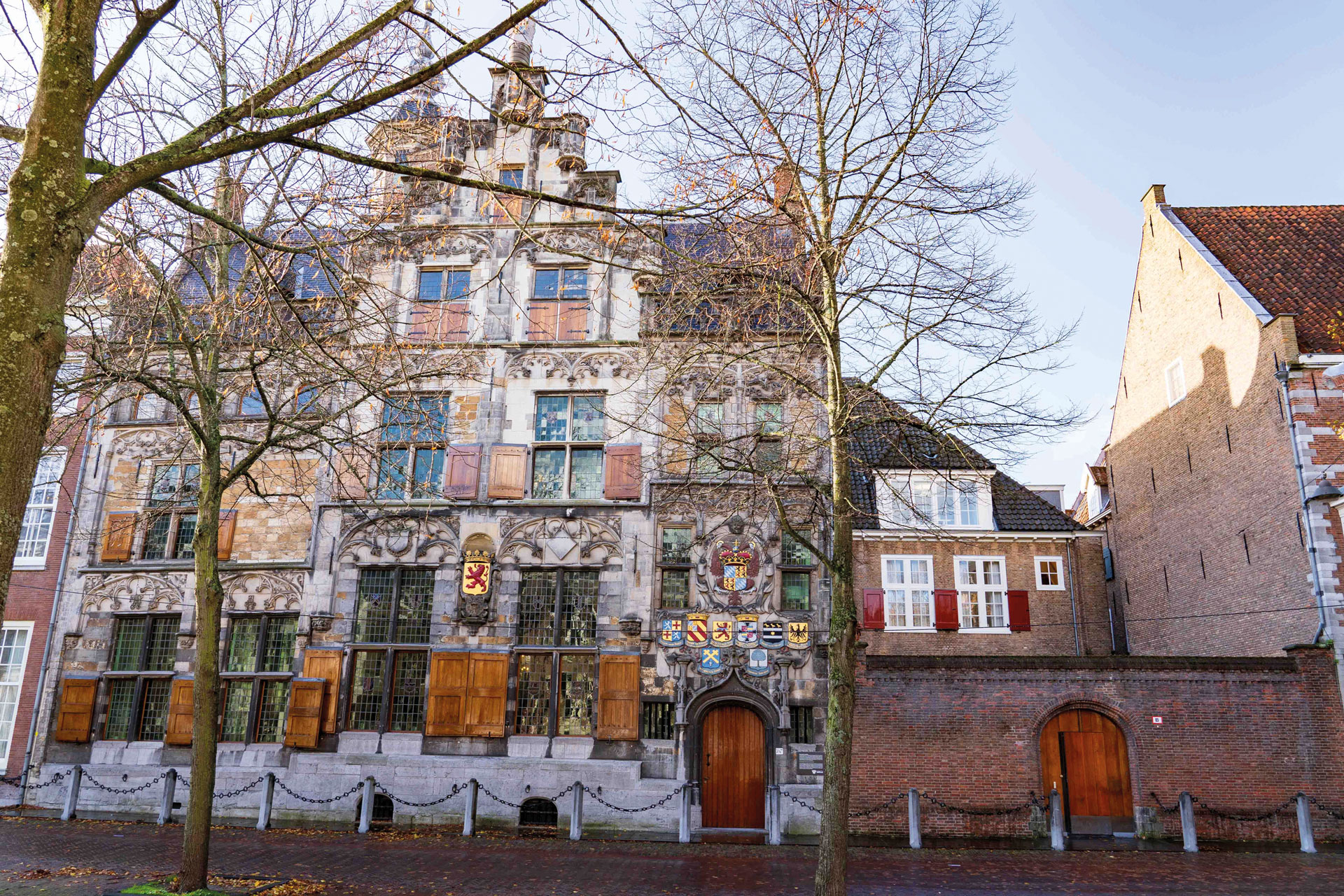
The Delfland Gemeenlandshuis
Meeting Daverveldt in the Gemeenlandshuis, the Delfland’s HQ, I am struck by the building itself, more Oxford college than utility office, with its late-Gothic intricacies and gilded coat of arms. ‘The Delfland predates the constitutional monarchy,’ explains Daverveldt. ‘It was the first form of governance in the Netherlands.’ The Delfland is a public-elected authority, meaning it answers to voters, including on matters like tax rises. ‘We will run a general assembly so the public can have a say,’ continues Daverveldt; those in attendance will help define the exact figure of the tax hike, which then goes to water system and purification levies.
Professor David Hall of the University of Greenwich says there is a ‘strong’ correlation between nationalised services and public engagement with water management. He points to two inverse examples in the UK: ‘the first very hot summer after privatisation in 1992, the public response was grudging’, versus ‘an accepted sense that the public ought to limit its consumption during the drought of 1976, when water was still public’.
And for the Dutch, that sense of ownership can produce unusual forms of civic participation. In 2021, The Hague made international headlines after winning a national ’tile-whipping’ competition. Residents ‘whipped’, or removed, more than 200,000 paving stones from driveways and gardens, replacing them with permeable greenery. ‘When faced with short-duration rainfall,’ says Daverveldt, who helped orchestrate the competition, ‘you don’t have time to guide water elsewhere, you have to capture it where it falls. This kind of extreme rainfall is becoming more frequent, so it’s important to take residential measures that allow it to infiltrate the soil.’
From a British perspective, this degree of public participation feels unusual. Under Thatcher, England and Wales privatised their water systems in the 1980s; public frustration with pollution and infrastructure failures has grown steadily since, as private water companies land controversy after controversy in the headlines.
‘It was an extreme ideological experiment,’ says Cat Hobbs, director of campaign group We Own It, of the privatisation. ‘And it’s now very clear it has failed. Eighty-two percent of Britons across all voter groups are in support of public ownership.’
The contrast is not simply public versus private ownership. The Dutch model asks citizens to view themselves as participants in land and water management, not just recipients of it. Admittedly, this is possibly easier in a system where citizens have the ability to participate in making change via democratic process.
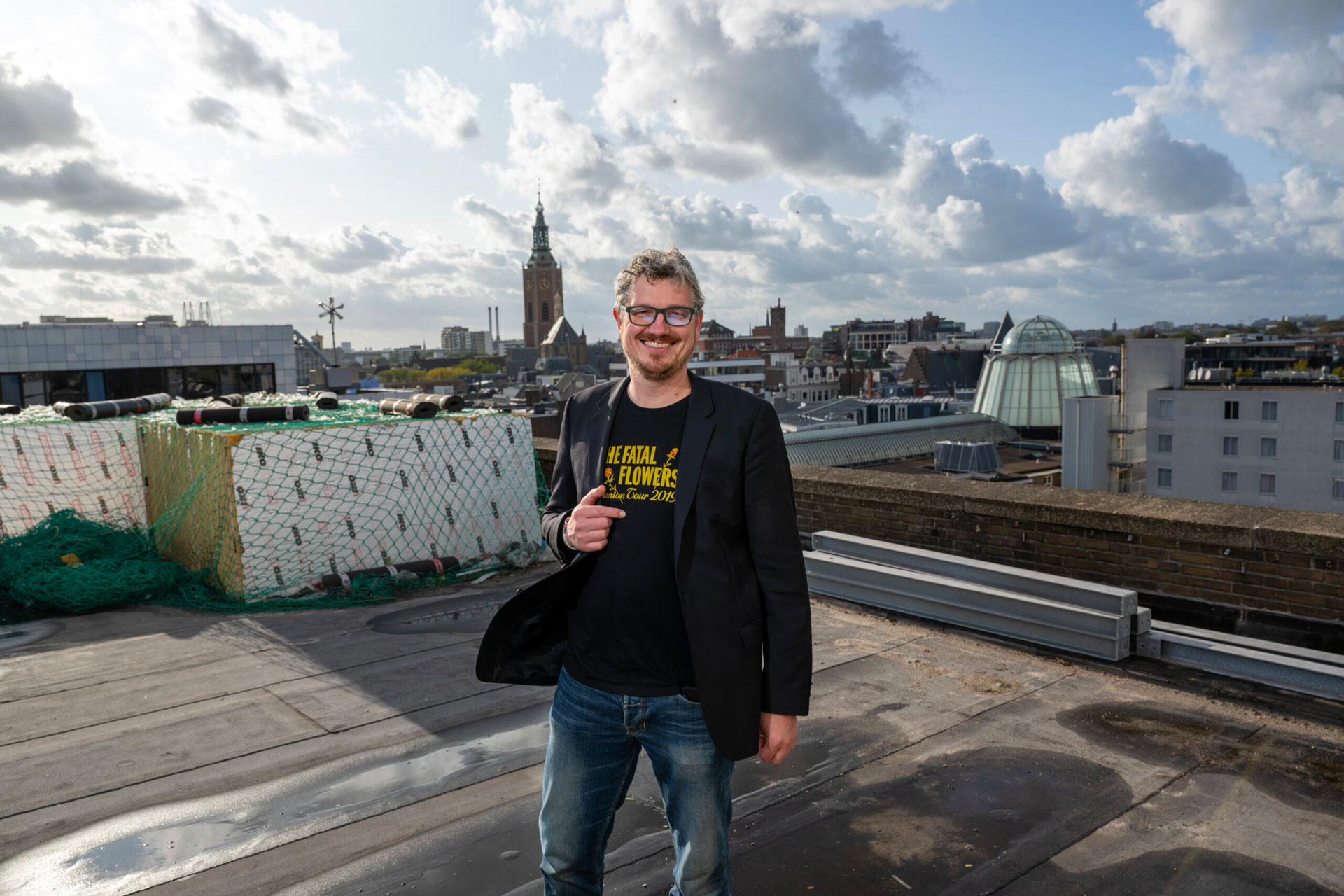
Alderman or deputy mayor Arjen Kapteijns
That becomes obvious elsewhere in The Hague. In a local thrift shop, Arjen Kapteijns, effectively the deputy mayor, sits beside competitive sprinter Jeffrey Vanan, the city’s energiecoach, speaking directly with residents about reducing water use at home. Here, they are handing out water-saving showerheads; earlier this year they fronted a scheme to subsidise garden water butts in paved-over communities. Vanan’s presence, in particular, is intended to reach those who might otherwise never consider attending a municipal meeting. In all, thanks to these meetings and devices, there is a sense of communal responsibility in managing water, the art of polderen, and the need to bring everyone on this journey at play.
There are limits to consensus, of course. Critics argue that polderen can dampen the political will of governments. The Netherlands itself is struggling to meet its climate change goals, with only a five percent chance of hitting net zero targets by 2030, and zero of its waterways hitting cleanliness benchmarks, much like the UK. Nonetheless, where the nation has stood on an international stage at climate talks, polderen has been a credit; at COP28, the Netherlands co-launched an international coalition dedicated to phasing out fossil fuel subsidies.
And when it comes to fostering a sense of communal responsibility, the Netherlands has it nailed. Perhaps it’s time for the UK to embrace a bit of Dutch courage? The art of polderen is proof that when frontline communities have the opportunity to buy in, they will step up.