


A Brief Fashion History Of British Punk
By
2 months ago
After taking over Chelsea in the 1975, punk went on to change British fashion forever
When it comes to British pop culture, no movement was as disruptive, rebellious and freeing as punk. Crash-landing in Chelsea in the mid-70s, this leather jacket-clad, spikey-haired brand of youth culture became a catalyst for many of the trends we see today in art, fashion and, of course, music. But to get a better idea of how punk sits in today’s mainstream, we need to go back a few decades to where it all started.
Punk In The UK: A Brief Fashion History
British Beginnings
While punk played a pretty huge role in British pop culture, it’s largely accepted that the UK was not the actual birthplace of punk. ‘There are on-going squabbles as to where punk originated,’ notes Matthew Worley, professor of modern history at the University of Reading and academic expert in punk. ‘But the word has a long history and has been used in relation to young people for some time – just look at Elvis, he was called a punk as early as the 1950s.’
The first time punk was used to specifically describe music, however, was around 1970. ‘This was with regard to gigs in New York by synth-punk duo Suicide, made up of Alan Vega and Martin Rev, who advertised they’d play “punk music”.’ It was here, in the United States, that the term really began to take off in a big way.
So, how do you get from the US to the UK? ‘The seeds of punk were already established stateside with artists like Patti Smith, The Stooges, Ramones and Blondie,’ explains Kate Bailey, senior curator of theatre and performance at the V&A, and lead curator on the upcoming exhibition Punk to Pop. ‘And in the UK, it took root in Chelsea.’ More specifically, in a little shop on the King’s Road called SEX.
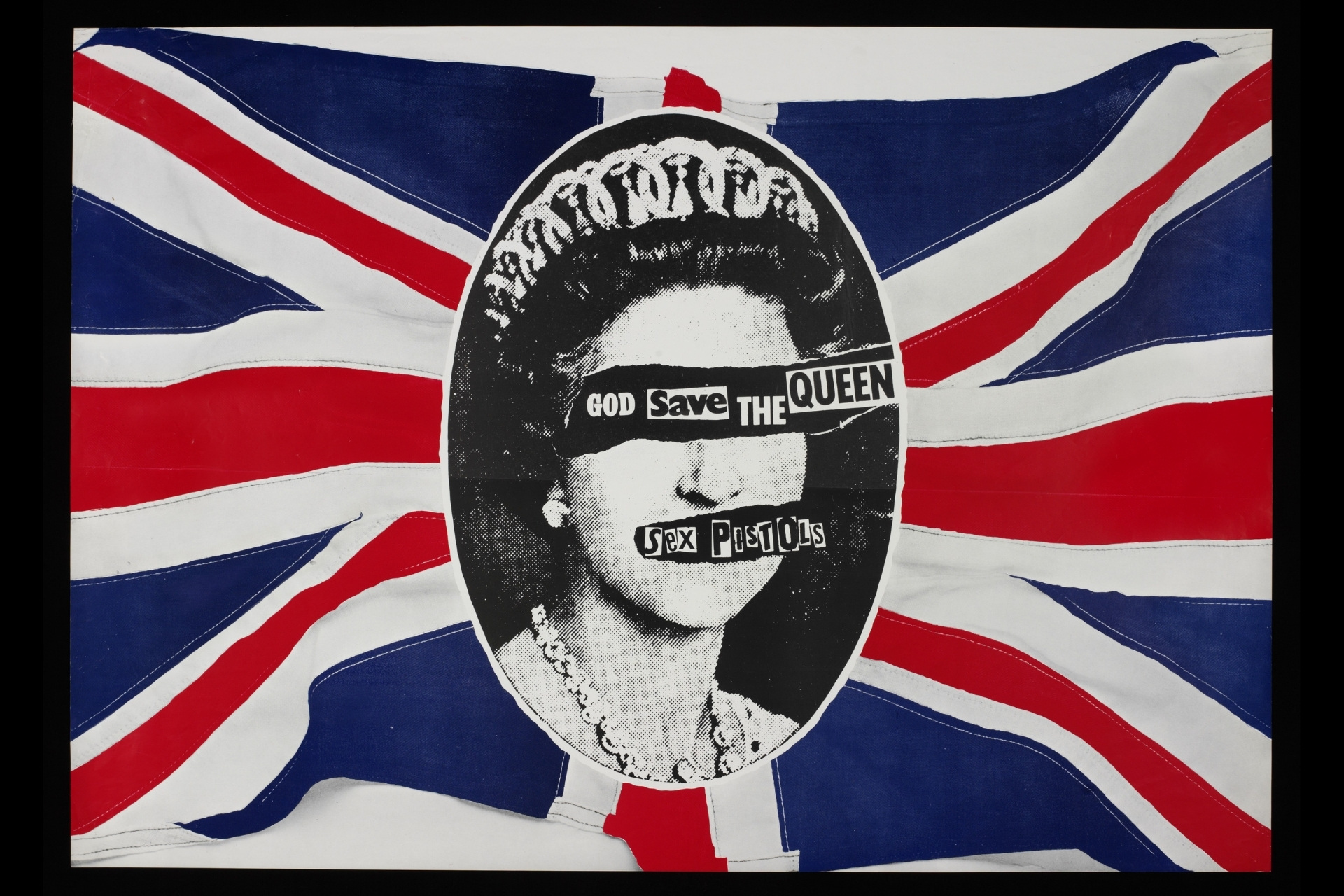
Promotional poster for Sex Pistols’ single God Save The Queen, 1977. Jamie Reid. Artwork Jamie Reid, (c) Sex Pistols Residuals, Universal Music Group
SEX Leads The Charge
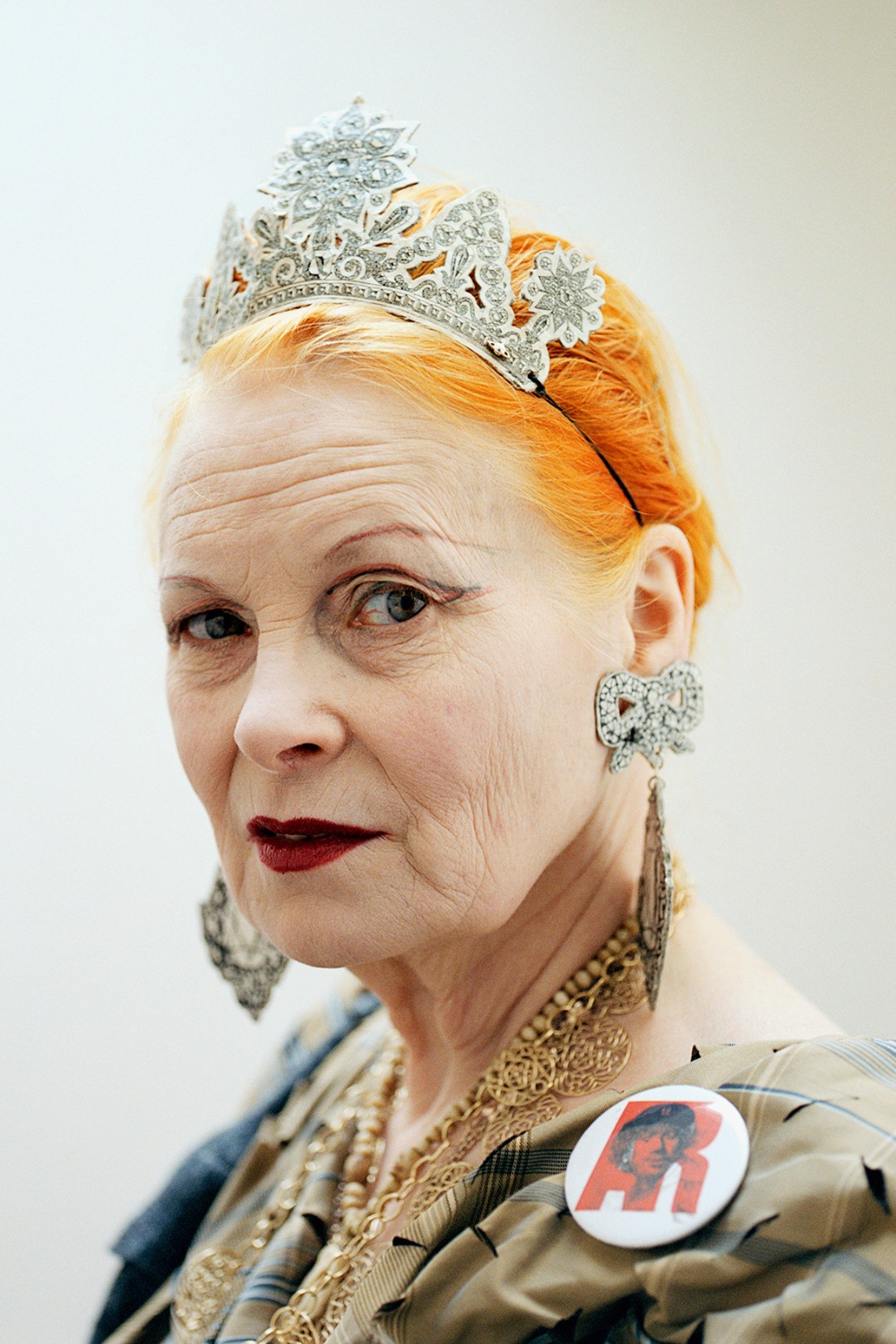
Chelsea locals will no doubt be familiar with one very famous designer from the area: Vivienne Westwood. Opening her first shop on 430 King’s Road with partner Malcolm McLaren in 1971, Westwood was one of the key figures who brought punk to Britain.
‘430 King’s Road was central to the emerging punk scene in the UK,’ confirms Bailey. ‘Vivienne Westwood and Malcolm McLaren’s iconic boutique SEX was the birthplace of punk fashion and the location of the Sex Pistols’ formation in 1975.’
‘Over the years, we saw their shop run through various incarnations,’ notes Worley. In fact, the shop changed its name five times between 1971 and 1980 to match the designers’ interest in evolving subcultures and clothing styles – there was Let It Rock in 1971, Too Fast to Live Too Young to Die in 1973, SEX in 1974, Seditionaries in 1976, and finally World’s End in 1980 (which still stands on the King’s Road today).
‘The shop was a hub for those rubbing against the mid-1970s grain,’ adds Worley. ‘Its designs fused youth subculture with sexual subculture, constructing a new style and sensibility that reflected and informed the time.’
View this post on Instagram
Alongside Vivienne Westwood and Malcolm McLaren, there was one band that drove British punk into the spotlight: the Sex Pistols. Although, says Worley, the collective encompassed many more people than that.
‘It’s best to think of the Sex Pistols as not just the four band members (plus Sid Vicious), but as a coterie of people that included McLaren, Westwood, the model and actress Jordan, artist Jamie Reid, the so-called Bromley Contingent (think Siouxsie Sioux) and various others who coalesced around the band,’ he explains. ‘It was the combination of the various looks, attitudes, selves, influences and imaginations that kickstarted punk.
‘Jordan especially was a key player in the movement,’ he continues. ‘She was the first Sex Pistol, whose look and attitude encapsulated what became punk and, crucially, embodied a female dynamism that drove the culture.’
The London nucleus continued to grow with the addition of groups like The Damned and The Clash, before trailing out of the city towards Britain’s other urban centres – Worley notes the Buzzcocks up in Manchester, who helped arrange a Sex Pistols gig and spread the word for punk.
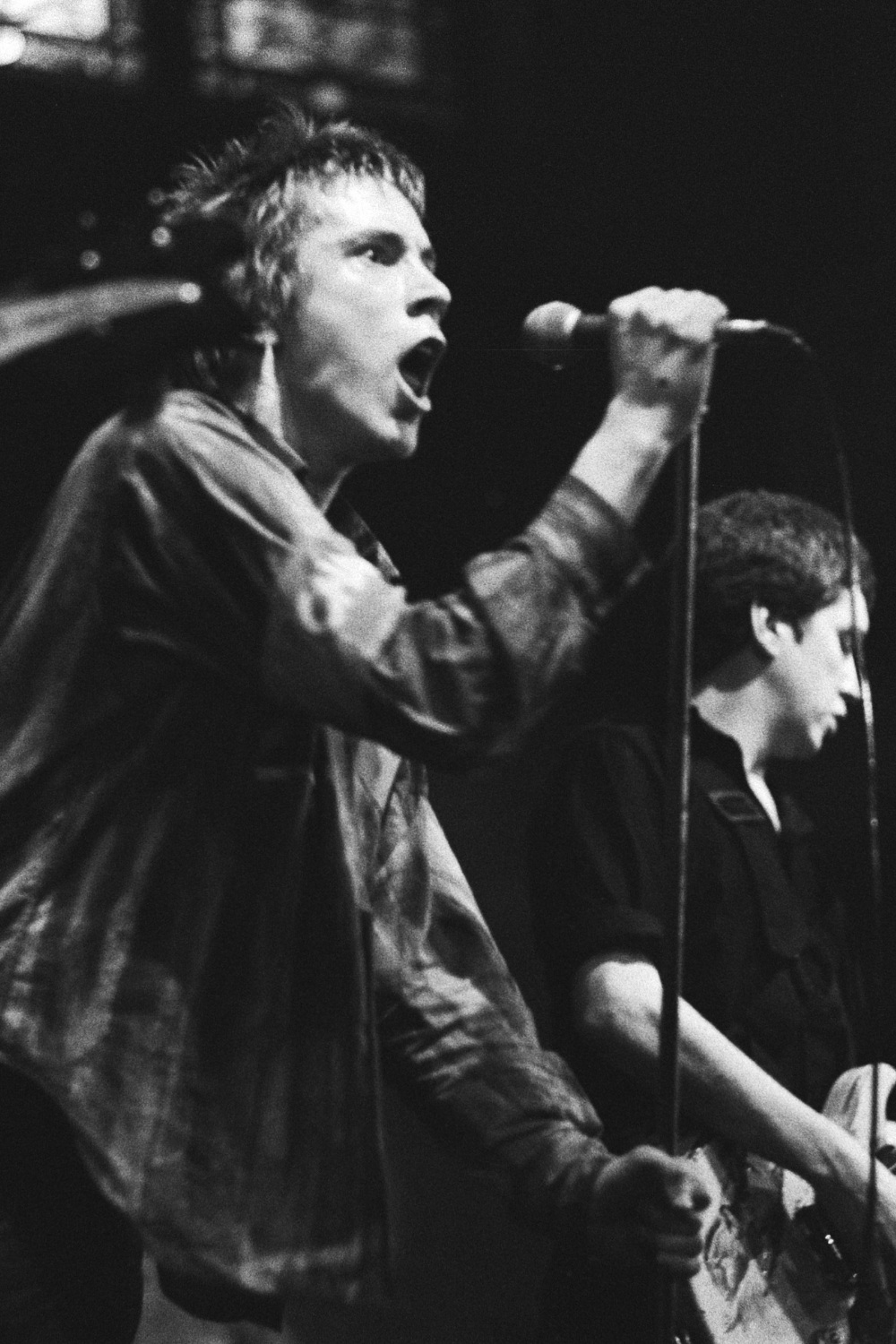
The Sex Pistols performing in Paradiso, Amsterdam, January 1977 (c) Nationaal Archief (via Wikimedia Commons)
Fashion In Focus
Punk music and fashion went hand-in-hand – with the clothing worn by punks designed to be just as outrageous as the music they played. ‘Punk fashion was experimental, DIY and provocative – with a ripped and torn aesthetic and bold graphic designs,’ notes Bailey.
It’s not too difficult to imagine the typical punk – even 50 years after they first stepped into Chelsea. Spiked hair, a jacket littered with patches and safety pins, bunched up tartan kilts, shredded jeans and clunky black boots. A look cemented in fashion history.
And, as expected, many of the sartorial trends – the safety pins, distressed fabrics and Doc Martens – can be traced back to SEX and the Sex Pistols. ‘Punk fashion by 1977 was becoming a homemade (DIY) adaptation of what the Sex Pistols and, a little later, The Clash were wearing,’ confirms Worley. ‘So, on the streets, there was a move from flared to straight trousers, long to short hair, autumnal hues to colour-drenched vibrancy and stark black, and the adoption of accoutrements that signalled punk.
‘This translated into debris and detritus, like safety pins, but also badges and slogans. Clothes, especially shorts and jackets, were repurposed and decorated.’
But what made British punk fashion really stand out was its roots. ‘The early UK pre-punk style that became punk in 1975-6 was a mesh of other prominent subcultural styles,’ says Worley. ‘Bits of Teddy Boy, Mod, Skinhead, Rocker, Soulboy and Glam mixed up and offset with slogans and provocative imagery. The sexual aspect was important early on, but lessened over time.’
But punk fashion was never static. ‘Punk was very quickly codified and commodified, but it also evolved,’ says Worley. ‘You can see evolutions towards the mohican caricature of the early 1980s, the dark aesthetic that became goth, the particular stylistic anti-style of the anarcho-punks, the elaborate self-creation of the Blitz kids, the New Romantics.
‘But what made punk style so recognisable remained: a declaration of self that was both an expression and a challenge, original and innovative. That which challenges and startles.’
View this post on Instagram
Punk In Its Prime (& Decline?)
By 1977, punk was mainstream. As Bailey highlights, ‘Punk exploded across the UK at the end of the 1970s, with the birth of thousands of punk bands. And punks, with their distinctive look – ripped clothing, safety pins, leather jackets and spiked hair – were visible across UK towns and cities.’
‘Punk went overground after the Bill Grundy incident in December 1976, which led to moral panic and overkill,’ adds Worley. (The incident in question being a swear-y altercation between the Sex Pistols and host Bill Grundy on a live broadcast of Today.) ‘So 1977 is really punk’s moment – but then it gets even bigger, so that by 1978-79 punk was on Top of the Pops and mainstream radio.’
But this is also when ‘pure’ punk began to decline, tapering off into hybrid music genres and subcultures. ‘We quickly entered the post-punk era, where punk began diversifying in a host of interesting ways.’ It’s important to note, he adds, that this wasn’t necessarily the end of punk, but a new chapter. ‘Punk’s influence continued even as its popularity as a style or music waned. Traces of punk ran into the 1980s, via New Pop, early indie, goth, psychobilly and into the realms of fashion and design.’
Punk Fashion Today
Fast forward to today, and while punk fashion might not necessarily looks the same as it did in the 1970s, it still very much plays a role in British design. ‘Punk now has a legacy as an inspirational “way in” and site of protest for people,’ says Worley. ‘It remains a means of impetus and action. However, it is also very much part of the cultural fabric and site of nostalgia and familiarity. Punk has relevance in terms of its original critique and urge to action.’
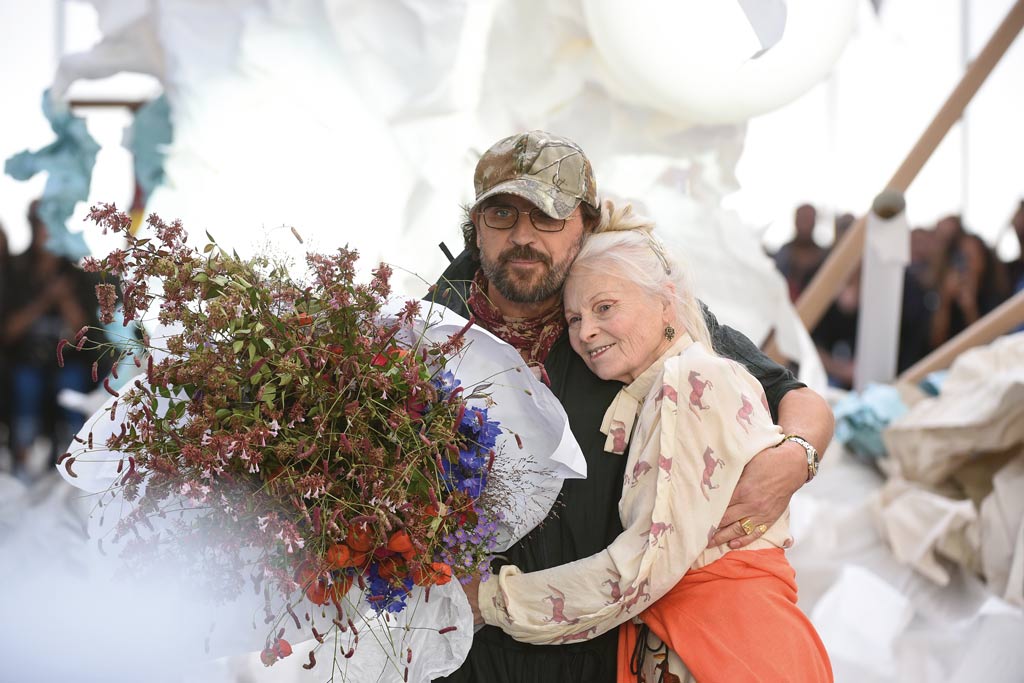
This is something we see time and again with designers at London Fashion Week. In 2016 – the year of Brexit – designer Daniel Fletcher staged a guerrilla-style sit-in and presentation, dressing models in tracksuits emblazoned with the word ‘STAY’. And for her AW19 show, the late Vivienne Westwood hosted a political performance art runway, where the collection was made from repurposed eco-conscious fabrics, activists recited speeches and models trudged down a raised platform wearing custom decks of climate change playing cards.
More recently, in February 2025, US-born designer Conner Ives closed his London Fashion Week show while wearing his now-famous ‘Protect the Dolls’ t-shirt; made the night before using a white deadstock tee and heat-transfer paper, the shirt was a message of support for the global trans community. (Ives now sells the shirt on his official website, with profits going to pro-trans organisations like Trans Lifeline. )
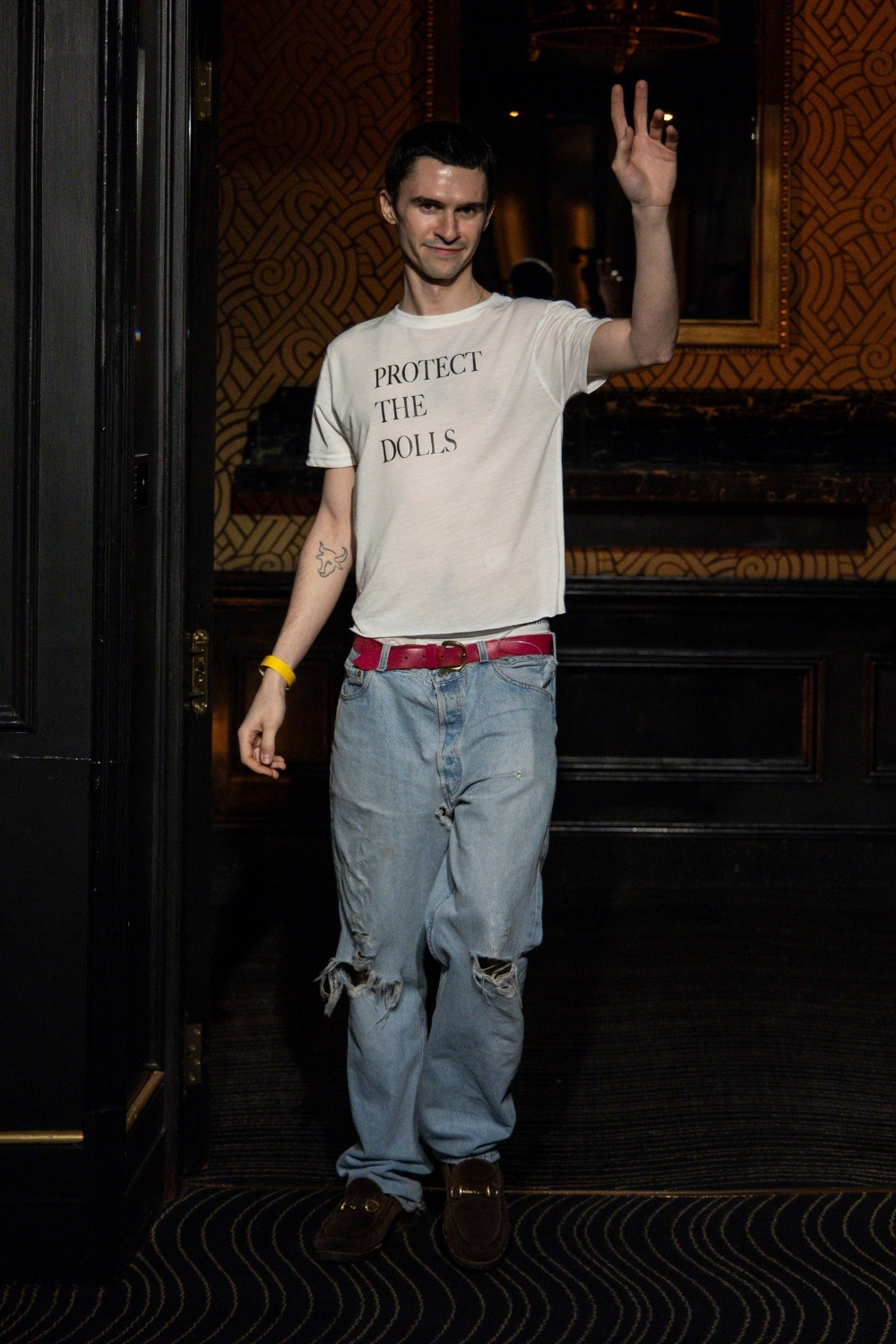
Conner Ives wearing his ‘Protect the Dolls’ t-shirt at his AW25 London Fashion Week show
In short, punk is still well and truly alive in the UK. ‘A rebellious and radical punk spirit underpinned by DIY creativity is at the heart of British culture,’ emphasises Bailey. ‘Breaking the rules to innovate, experiment and protest is something that never went out of fashion.’
A Night of T/Reason: Celebrating 50 Years of Punk
Fifty years after punk exploded onto the King’s Road, Chelsea Arts Festival and Saatchi Gallery mark the anniversary with A Night of T/Reason, a Friday late on 18 September bringing together voices from the original scene. Robert Elms, Gaye Advert, Terry Chimes, Gaz Mayall, Phil Strongman and Chris Salewicz reflect on punk’s roots, while Lloyd Johnson and Caroline Gration trace its fashion evolution, and Celeste Bell, Lauren Estelle Jones and Edie Ashley explore its lasting legacy – all set against live music and Jane Ashley’s intimate photographs of the Sex Pistols and The Clash. Book your tickets below.
When: Friday 18 September 2026 at 6pm
Where: Saatchi Gallery (Duke of York’s HQ, King’s Road, London SW3 4RY)
Details: Tickets are £28.50, plus a booking fee