


August’s Full Moon Will Rise This Week – Bringing Another Eclipse With It
By
2 months ago
This time, the moon has a trick up its sleeve
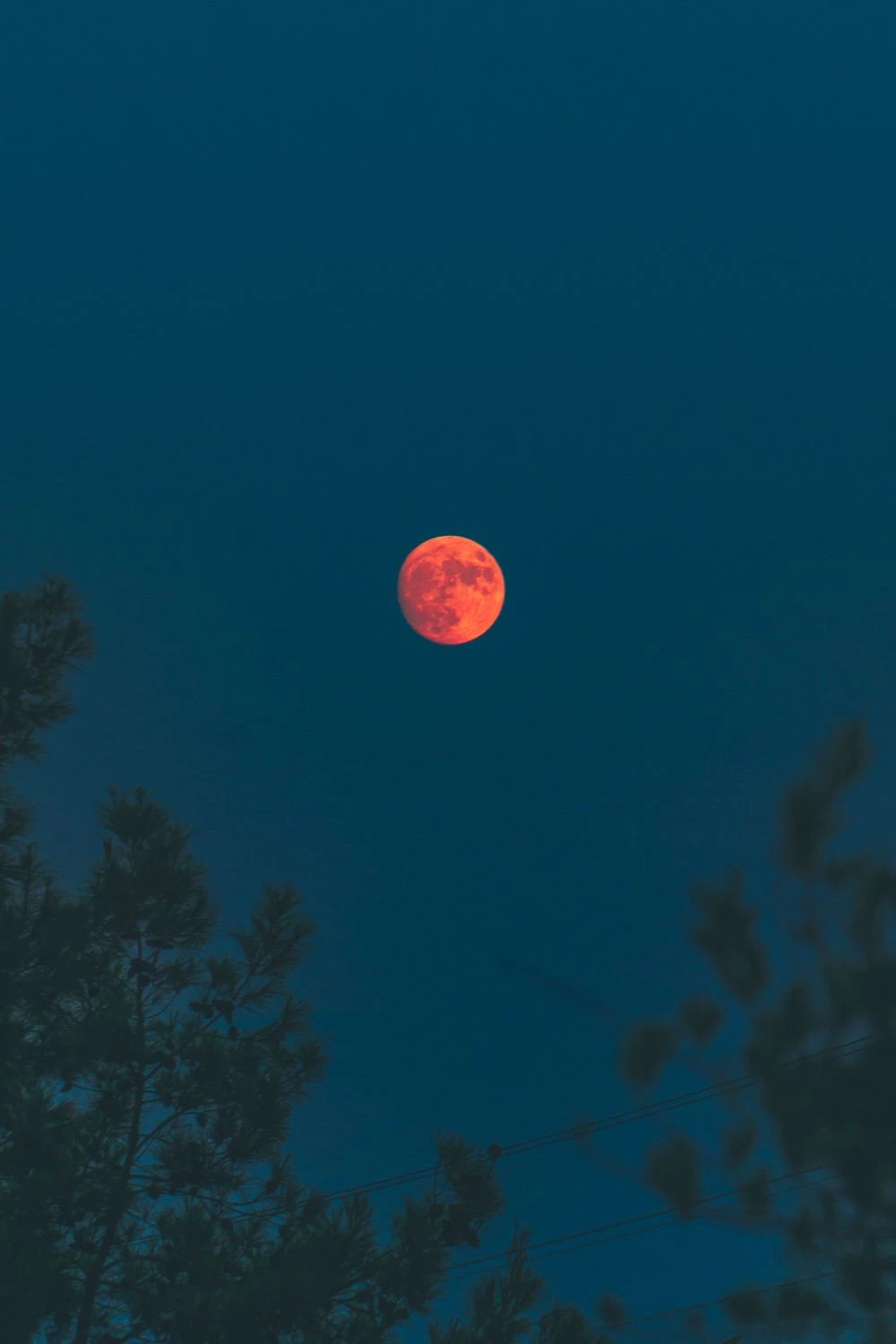
The ninth full moon of 2026 will rise in the sky this week, and for the first time all year, it won’t rise alone. Here’s everything you need to know about the Sturgeon Moon, August’s full moon, including when to see it, and why, for a few hours before dawn, it will cast a mysterious shade of red over the UK.
What Is The Sturgeon Moon?
Every month has its own full moon name, and August’s belongs to the sturgeon: a giant, prehistoric-looking freshwater fish that Algonquian tribes around North America’s Great Lakes traditionally catch in great numbers at this time of year. The name was first recorded in The Old Farmer’s Almanac, published continuously since 1792, and has stuck ever since.
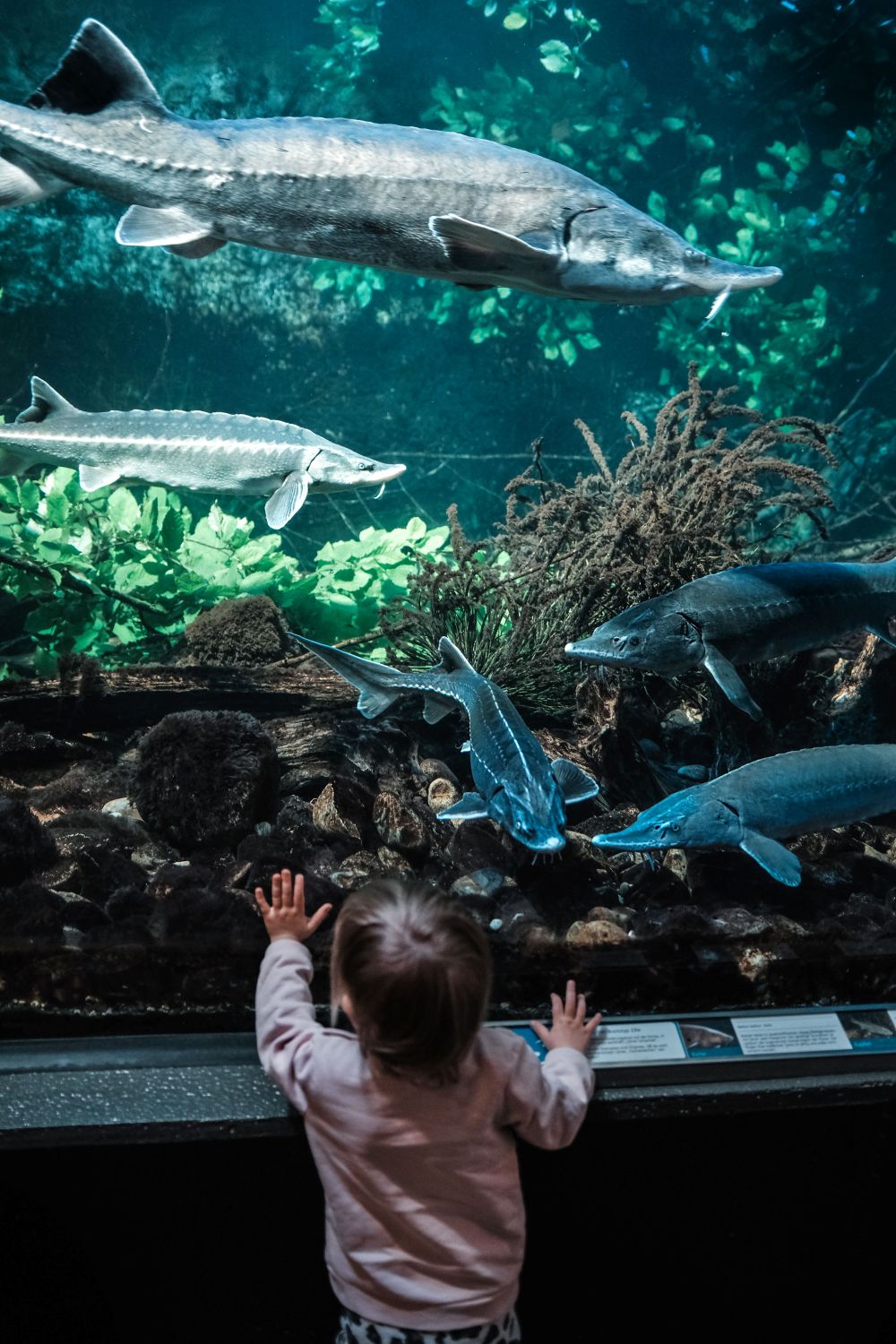
Sturgeon are prehistoric-looking fish considered extinct in UK waters.
If Sturgeon Moon doesn’t feel especially British, you’re not wrong: native sturgeon are considered locally extinct in UK fresh waters, with the last recorded wild sturgeon caught in Wales in 1993. On home shores, August’s full moon has historically gone by the Corn Moon or Grain Moon, marking the point in late summer when cereal crops ripen in the fields, while the Green Corn Moon and Red Moon crop up as alternatives elsewhere in Native American tradition.
This year, the Sturgeon Moon carries an extra event. As it rises, it will also slip into the Earth’s shadow for a partial lunar eclipse, deep enough to briefly dim and discolour the Moon overnight. It follows the rare partial solar eclipse that wowed Britain earlier this month as the moon slid in front of the sun in the early evening.
How To See It
The Moon turns officially full at 5.18am on Friday 28 August, but the more sociable moments to look up are the evenings either side. Look for moonrise (7.44pm) over London shortly before sunset (7.57pm) on Thursday 27 August, when the Sturgeon Moon will already appear full and bright, low on the horizon. On Friday 28 August, though it has officially started waning by evening, the Sturgeon moon will still appear full; look to the sky after moonrise (7.56pm) to see it, which coincides with sunset (7.55pm).
No telescope is required for any of this, though binoculars will help pick out the Moon’s reddish tinge at its peak. If you’re prepared to stay up (or set an alarm), the real spectacle unfolds overnight, as the Moon drifts deeper into Earth’s shadow.
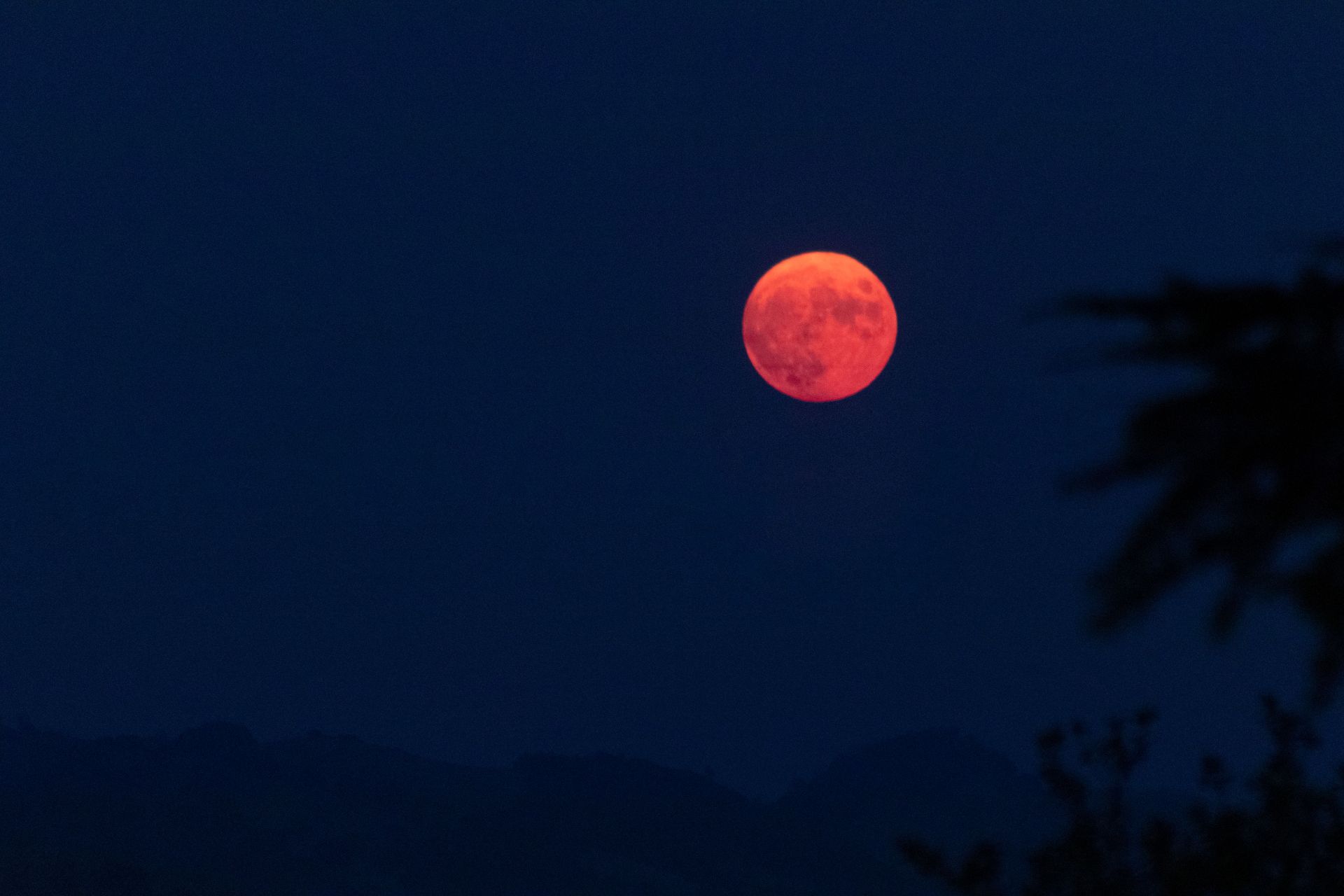
August’s full moon will take on a dim, reddish or copper-coloured glow at its peak.
Why Will The Moon Turn Red?
Lunar eclipses happen when the Earth sits directly between the sun and a full moon, so that the Moon passes through the Earth’s shadow. On the night of 27 into 28 August, around 93 percent of the Moon’s face will fall into the darkest part of that shadow, the umbra, according to the Royal Observatory Greenwich, making this a very deep partial eclipse, just shy of totality.
For the UK, the timings are as follows: the faint penumbral phase begins at 2.23am, the more noticeable partial phase begins at 3.33am, and the eclipse reaches its maximum, and its reddest, at 5.12am, just minutes before the Moon turns officially full. From there, the Moon sets below the horizon in London at around 6.15am, before the partial phase itself ends at 6.51am. The advice is to look towards the south-western horizon as the Moon sinks lower through the night.
Because so much of the Moon is obscured, it won’t vanish altogether, but will take on a dim, reddish or copper-coloured glow at its peak. That said, it won’t technically count as a ‘blood moon’, since the Moon never sits fully within the umbra, which happens during a total eclipse.
The best views is in the Americas, where the eclipse falls at a far more sociable hour. Roughly 987 million people (12 percent of the world’s population) will see every phase, and 1.3 billion (16 percent) will catch the whole partial stage. The UK still sits within the path of the eclipse, but the timing is less convenient, and the Moon will already be low in the sky by the time things get going. Anyone keen to catch it will need to be up before dawn, find a clear view south-west away from street lights, and hope the British weather cooperates.
2026 Full Moon Calendar
There are 13 full moons in 2026, including May’s Blue Moon. They are:
- 3 January: Wolf Moon
- 1 February: Snow Moon
- 3 March: Worm Moon
- 2 April: Pink Moon
- 1 May: Flower Moon
- 31 May: Blue Moon
- 30 June: Strawberry Moon
- 29 July: Buck Moon
- 28 August: Sturgeon Moon
- 26 September: Harvest Moon
- 26 October: Hunter’s Moon
- 24 November: Beaver Moon
- 24 December: Cold Moon