


10 Fun Facts About The Bayeux Tapestry We Learnt At Chelsea Arts Festival
By
35 minutes ago
Unravelling the tapestry with the curator of the British Museum exhibition
The Bayeux Tapestry exhibit at the British Museum is currently the hottest ticket in the town. In the nation for the first time since it was embroidered nearly 1,000 years ago, people are swarming to catch a sight of the historic artefact before it returns to France next July.
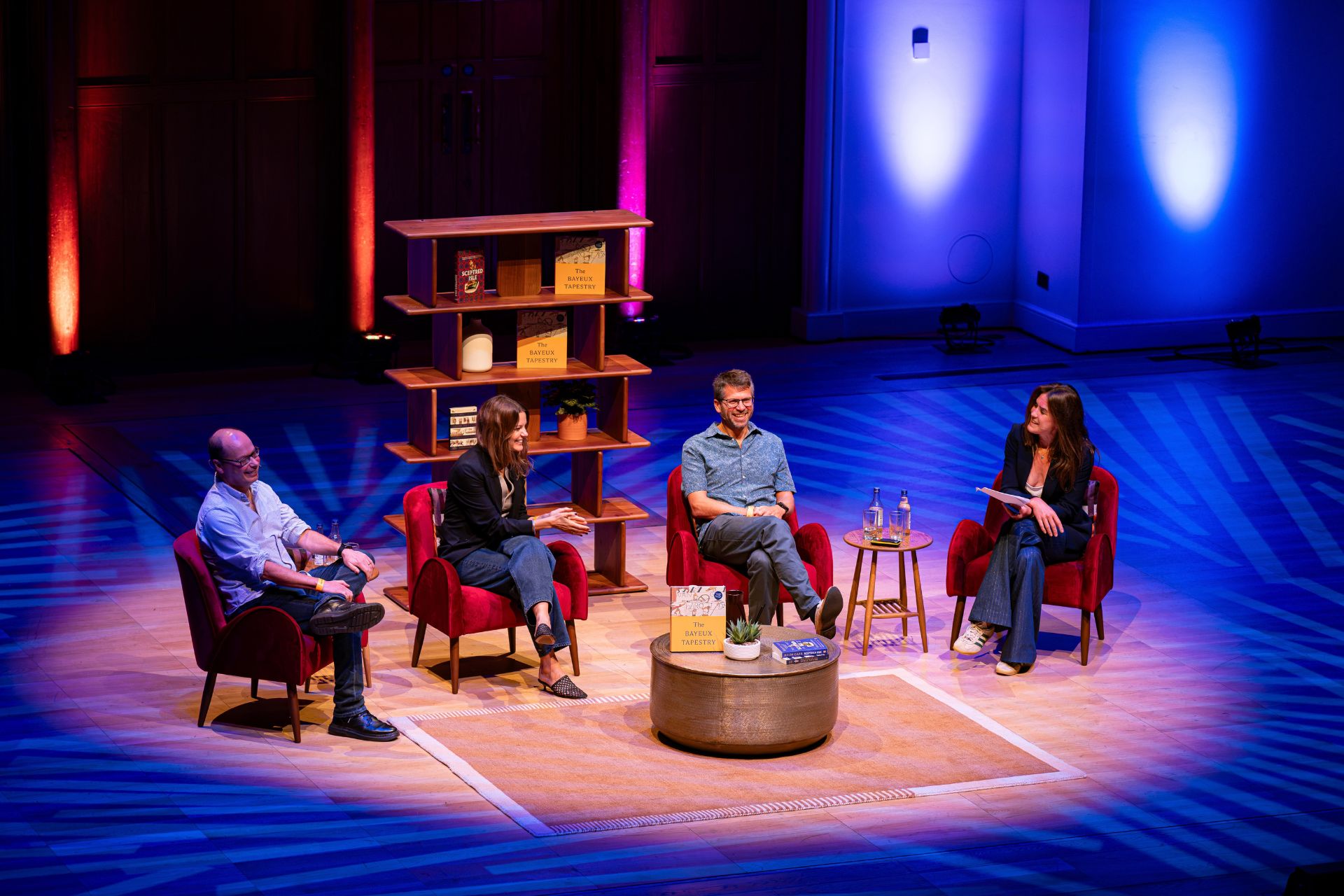
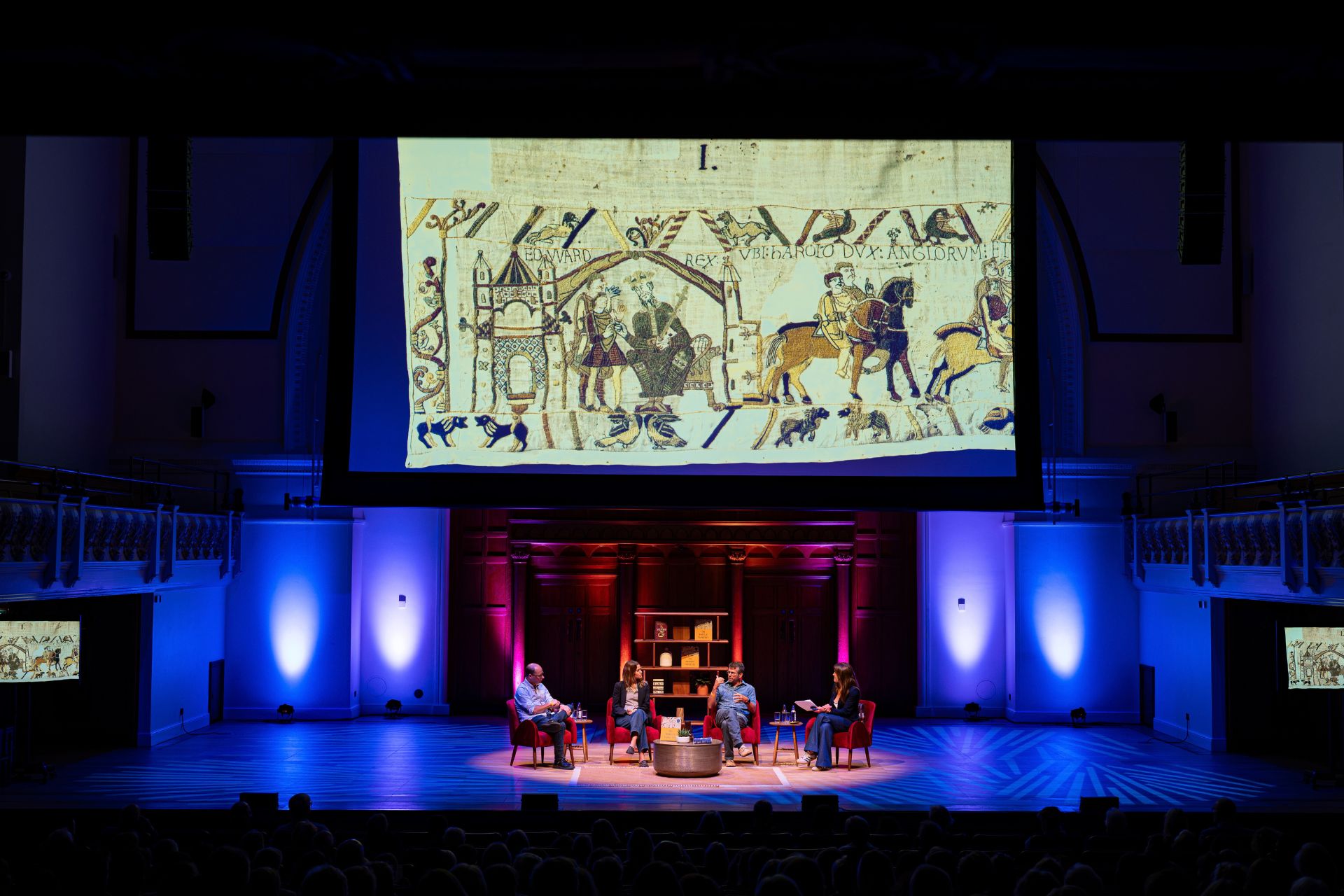
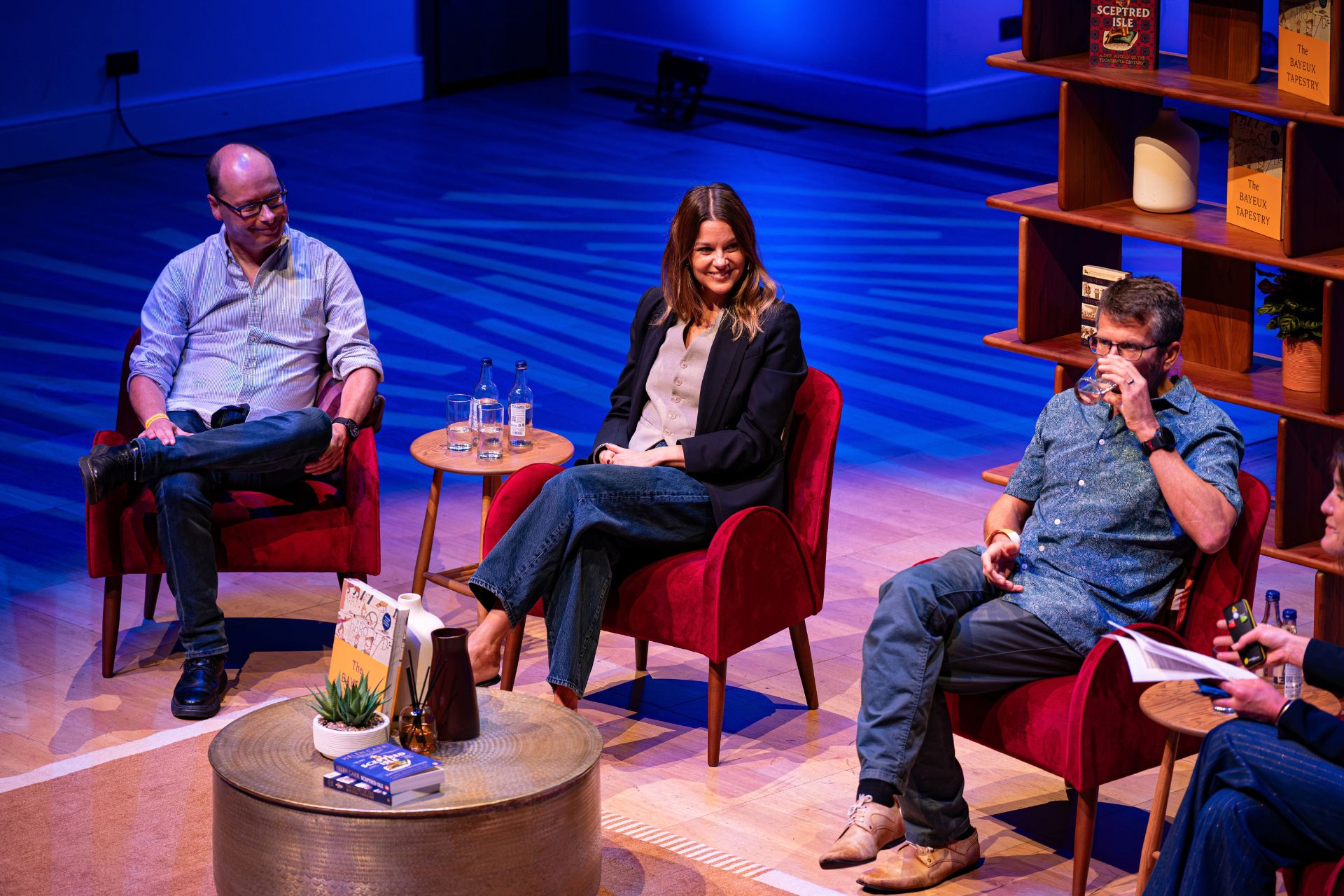
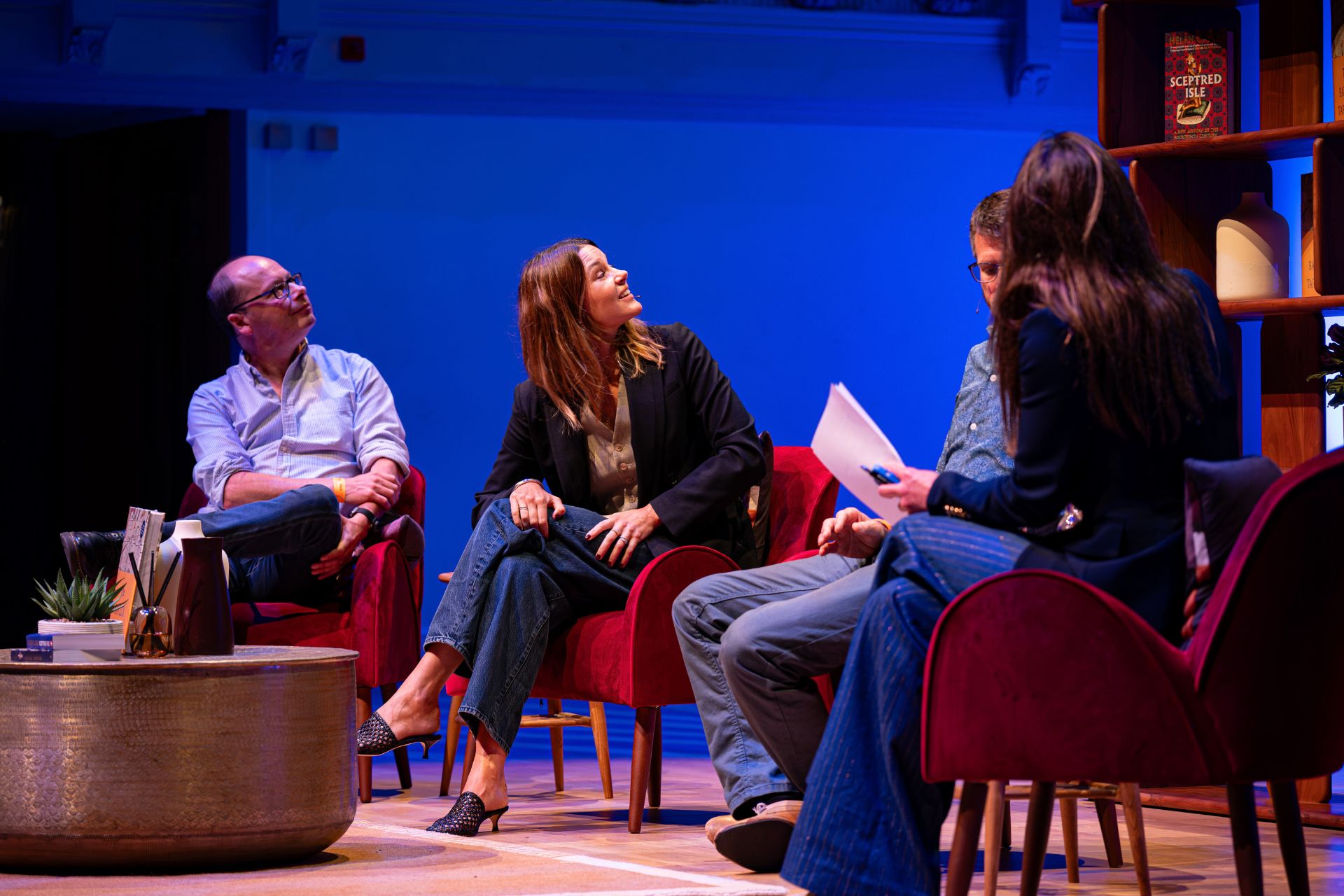
But beyond those long-forgotten history lessons, how much do we actually know about the Bayeux Tapestry? For those looking to brush up on their school history lessons, Chelsea Arts Festival welcomed in a panel of experts to illuminate its secrets. Hosted by broadcaster Hannah MacInnes, ‘The Bayeux Tapestry – Mystery and Marvel’ brought exhibition curator Professor Michael Lewis to the stage, alongside historians David Musgrove and Helen Carr to unravel the tapestry’s stories. Here are 10 fun facts we learnt at the event.
1. It’s Pronunciation Can Vary
Is it Bay-aeux or By-eaux? No need to fret about mispronunciation, even the historians pronounce it differently. The truly correct version, said Helen, is of course the French By-aeux, but us Brits typically favour the former. As Michael explained: ‘I don’t think it matters too much. I’ve never found the French too offended when I’ve said it the way I say it.’
2. It’s Not A Tapestry
Though it’s in the name, the Bayeux Tapestry is in fact not a tapestry but an embroidery. ‘Tapestry is where the design is woven on a loom, and embroidering is where you’ve got stitching on a panel,’ explained David. In total, the embroidery spans 68.3 metres, formed of nine separate panels that were subsequently stitched together.
3. It’s Taken Over A Decade To Get To The UK
When Michael first joined the Bayeux Tapestry Scientific Committee in 2013, he learnt that the team were reconsidering the tapestry’s storage. Planning to lay it flat to better preserve the artwork, the French museum would need a renovation, and the tapestry would have to go in storage. ‘I said to my French colleagues that I think it would be a nice idea for it to come to the UK. They obviously looked at me and said: “It’s a nice idea, but it’s not going to happen.”’ Progress was slow, until political intervention from President Macron in 2018 pushed the project forward. And so it arrived at the doors of the British Museum in a crate at 3am on 10 July 2026. ‘It was a bit of a surreal experience being there, in the middle of the night, watching this story unfold,’ said Michael.
4. It Was Probably Made By Female Embroiderers In Canterbury
Though no one’s exactly certain, all the historians on the panel agreed that the ‘tapestry’ was most likely made in or around Canterbury by female embroiderers in the decade or so after 1066 (though there is at least one scholar who argues that it was made in Barking Abbey). There’s no historical record of the tapestry until 1476, but it was most likely commissioned by a Norman figure called Bishop Odo – largely because he appears so much more prominently in the tapestry than in other sources of the period. As David explained: ‘The tapestry is basically a story of two men, Harold and William, with a third man in the background. He pushes himself into the frame. That’s Odo.’
5. It’s A Brilliant piece Of PR
Not only is Odo making himself look good, but he’s making the Normans look good too. ‘My view,’ said David, ‘is what it’s all about is legitimising military actions, explaining why William chose to invade England […] It’s all about saying William had to invade because Harold made an oath, promising to support William’s claim to the throne and then went back on it.’
6. It’s Extremely Ambiguous
Don’t worry if you struggle to follow the story when you visit – historians don’t really know what’s going on in every scene either. In the first panel, for example, Helen explained that we could be watching Edward the Confessor asking Harold to confirm his promise to make William king. But, from an anti-Norman perspective, you may believe that Edward is sending Harold to France in order to rescue hostages. One historian even believes that the men in this scene were going on a fishing trip, and only met William by chance. Elsewhere, there’s the scene in which Harold makes his oath to William, Duke of Normandy – which could be perceived to be under duress or not, depending on whether you’re on the side of the Anglo-Saxons or Normans.
7. There Are Many Appendages
Depending on how you count, there’s either 93 or 94 ‘appendages’ featured on the Bayeux Tapestry – 88 of those belonging to horses, and five of them to men. Their presence may surprise modern audiences, but as Helen explained, anyone who’s read Chaucer’s The Canterbury Tales will know that medieval people were a bawdy bunch.
One very prominent penis in the margins sits below a ‘flashback’ of a woman – Emma of Normandy also known as Aelfgyva, wife of English King Aethereled and mother to Edward the Confessor – with the Bishop of Winchester. Historians believe that the appendage hints at a historic sex scandal between the two, which would make Edward’s claim to the throne illegitimate. As for the horses, the bigger the appendage, the mightier the steed. As Helen put it, William’s well-endowed stallion is the equivalent of a ‘11th century Ferrari’.
8. There Are Only Three Women
As well as Aelfgyva, the tapestry only depicts two other women: Edward’s mourning wife, Queen Edith of Wessex, and a woman fleeing her home with her child as it’s burnt down by Norman invaders. While we may be tempted to call the tapestry anti-feminist today, Helen warned against imposing our modern-day standards on the work. ‘It has a particularly military overtone […] I think this is a very deeply male military piece of legitimising propaganda.’
9. Halley’s Comet Is Featured
Often cited as people’s favourite feature on the Bayeux Tapestry, is Halley’s Comet. Positioned next to the coronation of Harold, as David explained, its appearance is essentially saying: ‘What’s just happened is bad, folks. Get ready for trouble.’ As Matthew pointed out, in reality Harold was crowned in January, but the comet didn’t appear until April. ‘The tapestry designers have joined these events together, when in fact they were so far apart, and that’s done to emphasise the point that this wasn’t great news for Harold.’
10. The Tapestry Has Evolved Over Time
While we may think of the tapestry as a fixed historical artefact today, it has changed and evolved over time. Famously, the Nazis studied the tapestry in the 1940s and dropped their cigarette ash all over it. But they weren’t the only culprits. In the 1700s, when it was first rolled out for antiquarians they similarly studied it with candlelight. As Matthew explained ‘You’ve got these marks from candles where it’s dripped onto it, where people have been looking at it in darkness, and it’s a commentary on the way that people have been studying the tapestry over time.’ Most notably, the numbers on the tapestry were added when it was displayed for Napoleon.
There’s also, of course, the question of the arrow in Harold’s eye. The arrow was ‘added later during 19th century restorations,’ said Michael. ‘The earliest references to Harold’s death say he was cut down and chopped up’. As such, some historians believe that Harold was originally holding a spear and that the arrow was added afterwards. Others believe that the figure being chopped down on the right is in fact the scene of Harold’s death.
In case the tapestry returns to France before you catch a look, there’s a replica much closer to the home – with all the rude bits taken out. Made in the 1880s by the Leek Embroidery Society, today this sanitised version of the tapestry can be found in Reading Museum.
The Bayeux Tapestry – Mystery and Marvel was held at the 2026 Chelsea Arts Festival. Discover the full programme of Chelsea Arts Festival events at chelseaartsfestival.com
The Bayeux Tapestry is at the British Museum until 11 July 2027. Tickets available at britishmuseum.org