


Meet Glitch – The Chatbot-Bug Reconnecting Us To Urban Green Spaces
By
2 months ago
Founder Kalpana Arias talk us through this new app, innovating how we interact with the nature in our cities

It was while reading Legacy Russell’s Glitch Feminism: A Manifesto that nature rights campaigner Kalpana Arias began to rethink that seminal adjective. ‘Russell writes about the glitch not simply as an error, but as an opportunity to disrupt existing systems and imagine different, softer and more liberatory relationships with technology and the world around us,’ explains Kalpana. ‘That made me think about how we might “glitch” technologies we use every day and rebuild them to help people connect with nature.’
The result? The aptly-named Glitch, a new app designed to make growing in urban spaces playful and accessible. Supported by the National Trust, Glitch uses AI, AR, and local biodiversity data to map green gaps, find community gardens, log wildlife, discover local projects, learn practical nature skills, interact with fellow enthusiasts, and plant virtual trees. As a guerrilla gardener and food grower herself, Kalpana understood how difficult it could be to find these things alone: ‘I wanted to create the tool I had needed when I first started.’

Kalpana Aris
This isn’t Kalpana’s first foray into the world of green tech. She is the founder of PLAY – a social enterprise fighting for urban nature, which builds tools, runs campaigns, provides learning hubs and workshops, creates community gardens, and sets up grassroots growing projects. It was while PLAY was hosting hackathons in London, New York and California in 2023 that the team encouraged people to imagine how they would want to use technology in cities and green spaces. ‘Glitch developed through those early prototyping sessions, where people questioned the technologies available to them and imagined new tools for connecting with their neighbourhoods and nature,’ explains Kalpana. From here, it took around a year and half of development alongside Pitch Studios to create the product they have today.
Whilst the initial concept had a strong augmented reality element, the platform has since evolved into a broader system that combines mapping, citizen science, local knowledge and an AI chatbug. Described as ‘part bot, part bug’, Glitch acts as a local guide that answers practical questions, identifies plants, pollinators, bugs, fungi and blossoms, gives growing tips, and introduces users to nearby gardens, events, workshops, volunteer opportunities and projects.
Log in to the site right now, and you’ll discover a whimsical world, brimming with blossoms that look like something straight out of a 2000s Barbie movie. These blossoms are the main focus of the site for now, but the team hope to release more species in the future, alongside interactive challenges and quests. This, Kalpana hopes, will help people understand not only individual plants, but the relationships between them: how trees provide shade, how food growing can support habitats, how pollinators move through a neighbourhood, and how separate green spaces can become connected ecological corridors.
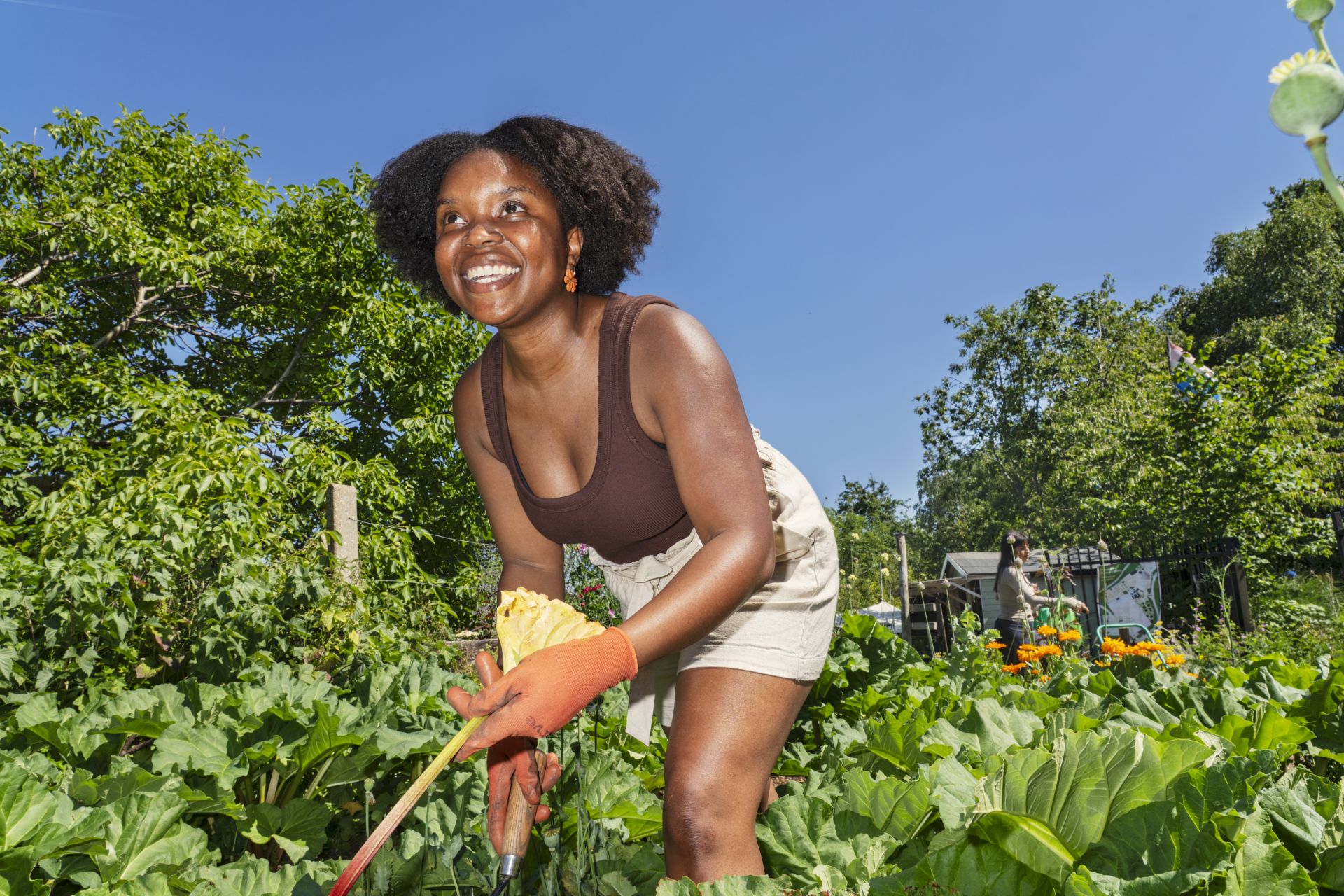
Launching in one of the hottest summers Britain has ever faced, its arrival couldn’t be more timely. As Kalpana explains: ‘Glitch feels important right now because cities need more nature, and we need more play.’ Though London is 51 percent green, only 20 percent of this green space is public. Meanwhile, England’s urban green space as a whole has declined from 63 percent in 2001 to 55 percent in 2018. ‘As our cities grow, making space for nature must become a central part of how we plan healthier and more resilient neighbourhoods to help cool streets, reduce flooding, support biodiversity and improve people’s health and wellbeing,’ says Kalpana.
Right now, the mapping technology on the app is only available in London and Brighton, but Bristol, Birmingham, Manchester and Newcastle are next on the list. Whilst cities are the starting point, the long-term plan is to roll out Glitch across the UK and globally. The chatbug element, meanwhile, is already available worldwide. ‘We’re already seeing interest and users from places including the United States, South America, India and Japan, which is super exciting.’
But creating greener cities is just step one: ‘People also need to be able to access it, feel welcome in it and have practical ways to participate in shaping and caring for it,’ says Kalpana. Glitch has lowered the entry barrier by meeting people where they already are: on their phones. By doing so, they’re reaching those people who would typically reach for a Gameboy over a spade. ‘By turning nature restoration and growing something playful, Glitch gets people outside.’

Though phones and tech may seem antithetical to nature and community, Kalpana insists the real story is happening away from the screen. Having launched a beta version of the app last year (which accrued 5,000 users within three months), people soon started contacting them, saying they wanted to introduce Glitch to their clubs, communities and neighbourhood groups. ‘Others told us they had discovered gardens, green corridors and walking routes they had never known existed, and that these had become part of their regular journey.’
Ultimately, Glitch is designed to turn this online play into real-world action. As Kalpana explains: ‘When someone plants a cyber tree through augmented reality, it is not only a digital tree. It also creates a location marker showing where someone would like to see more nature.’ When someone highlights a plantable patch, Glitch will share practical next steps: what might grow there, what permissions may be needed, what local organisation can help and what skills or resources they will need to start their own patch. Of course, not every cyber tree can become a physical tree – land ownership, underground infrastructure, ecological suitability, access to water and long-term maintenance all need to be considered. But what it does do is create a shared picture of where communities want to see more trees, biodiversity and green space.
Glitch then builds a shared dataset that can be used with councils, local government, developers, grassroots groups and partners to co-design greener spaces. ‘We can then work with organisations such as the National Trust, community groups and ecologists to assess sites and develop planting plans,’ says Kalpana. ‘Our next planting sessions based on Glitch co-designs are planned in London and Brighton this Fall alongside the National Trust with citizens directly shaping their neighbourhoods through the platform.’
Where growing can often feel inaccessible, Glitch means that people no longer ‘need a background in gardening, ecology or urban design to have a say in what their street could look like’, adds Kalpana. ‘They can explore their area, learn about nearby species, suggest a place for planting and co-design ideas with Glitch. It gives people a way to become active ecological citizens and players within their own neighbourhoods.’
Test it out at glitch.mu