


Almost 80 Years Later, Queen Elizabeth II’s Wedding Dress Is Still Stunning
By
6 months ago
The late queen’s royal wedding garments are now on display at The King’s Gallery
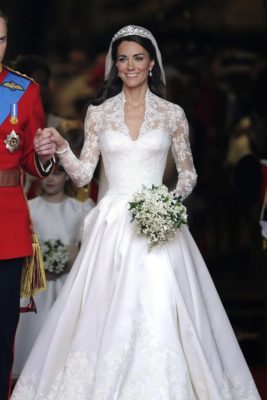
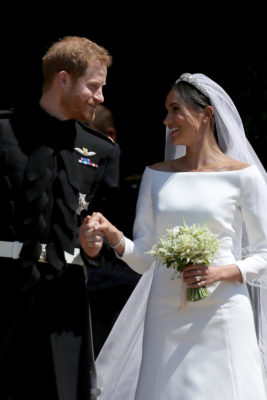
Very few things rally the nation quite like a royal wedding. More recent occasions include the nuptials of Prince William and Kate Middleton, Prince Harry and Meghan Markle and even King Charles III and Queen Camilla – all massive events on the contemporary calendar, with extravagant celebrations to match.
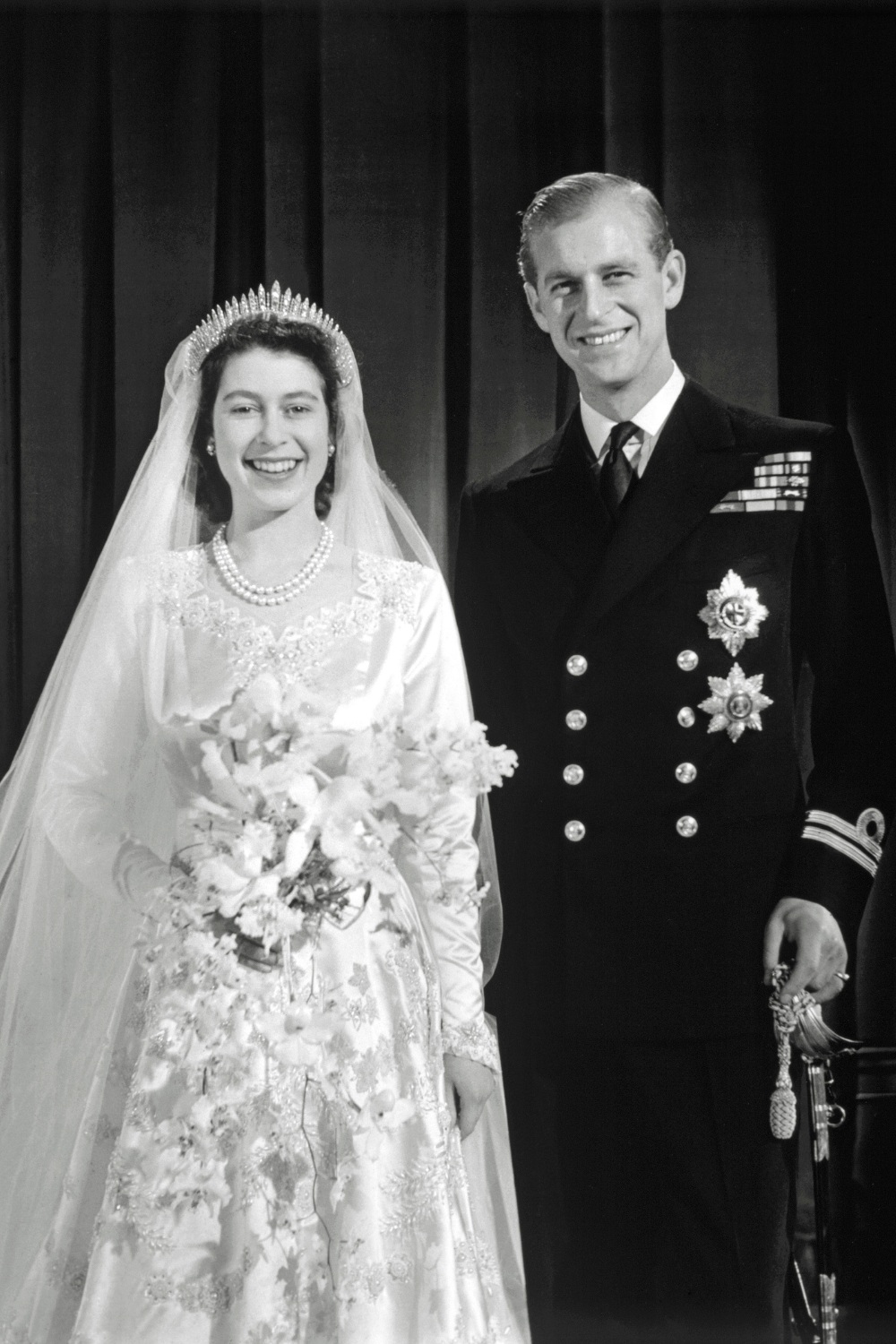
But one of the biggest royal weddings to make its mark on the country would be that of Queen Elizabeth II and Prince Philip. Their big day was a chance for post-war Britain to hold a nationwide celebration – meaning the buzz around the ceremony, vows and the future monarch’s wedding dress was astronomical.
It’s said that a BBC radio broadcast of the big day reached an estimated 200 million listeners worldwide, while newsreel footage of the ceremony was shown in cinemas. The latter was a popular option for those who especially wanted to see Queen Elizabeth II in her wedding dress.
And now, all eyes are back on the royal’s bridal ensemble, thanks to a brand new exhibition at Buckingham Palace. Queen Elizabeth II: Her Life In Style tracks the royal’s sartorial evolutions from young child to reigning monarch – with her wedding dress serving as a key highlight of the exhibition. Here, we revisit the story of what would become one of the most beloved royal wedding dresses in history.
A Look Back At Queen Elizabeth II’s Wedding Dress
When a young Princess Elizabeth set her wedding date – 20 November 1947 – Britain was still dealing with the aftermath of World War II. A nation quietly shadowed by post-war austerity, rationing was still in effect for everyone – including the royal family – and so the princess saved up and paid for her wedding dress with rationing coupons. (People from across the country allegedly sent their own coupons to contribute, as a show of support, but these were returned by the royal.)
‘It’s a historic gown, and it marks a real turning point not just in the Queen’s life, but also post-WWII society – it marked the beginning of a new chapter,’ says Caroline de Guitaut, Surveyor of The King’s Works of Art and curation of Queen Elizabeth II: Her Life In Style.
For most, a royal wedding seemed like a sign that things were changing; the war was over, a new generation of royals were growing up, and nationwide celebrations were coming back into the spotlight. In other words, Britain had entered a new, post-war era.
View this post on Instagram
Who Designed Queen Elizabeth II’s Wedding Dress?
Naturally, the then-Princess Elizabeth would turn to a trusted designer for what would be (at the time) the most important dress she would ever wear. To make her wedding dress, she enlisted the help of couturier – and close collaborator – Norman Hartnell.
‘The queen’s wedding dress is one of two really great masterpieces by Hartnell, and it’s so interesting on so many levels,’ says Guitaut. (The other ‘great masterpiece’ being the gown made for the monarch’s coronation in 1953.)
Hartnell shared a close creative relationship with the queen. The designer began making clothes for the young royal as early as 1935, when she was just nine years old; he created the bridesmaid dress worn by the young princess for Lady Alice Montagu-Douglas-Scott’s wedding. He went on to design hundreds of outfits for the royal throughout her lifetime, and even secured a Royal Warrant as a dressmaker to Queen Elizabeth II in 1957.
But the creation of Queen Elizabeth II’s wedding dress comes with its own story. Apparently, Hartnell submitted 12 wedding dress designs for the royal to look over – which she did, but a final dress was only approved in mid-August, just three months before the wedding date. The subsequent rush saw a team of 350 women take up the seven-week job to make the dress from scratch.
The designer also drew-up outfits for other key members of the royal family on the day, including Queen Elizabeth (the Queen Mother), Queen Mary and Queen Elizabeth II’s bridesmaids – Princess Margaret, Princess Alexandra of Kent, Margaret Elphinstone, Pamela Mountbatten and Diana Bowes-Lyon.
Queen Elizabeth II: Her Life In Style exhibition details
What Did It Look Like?
When designing Queen Elizabeth II’s wedding dress, Hartnell had one clear inspiration in mind: the painting Primavera, by Renaissance painter Alessandro Botticelli.
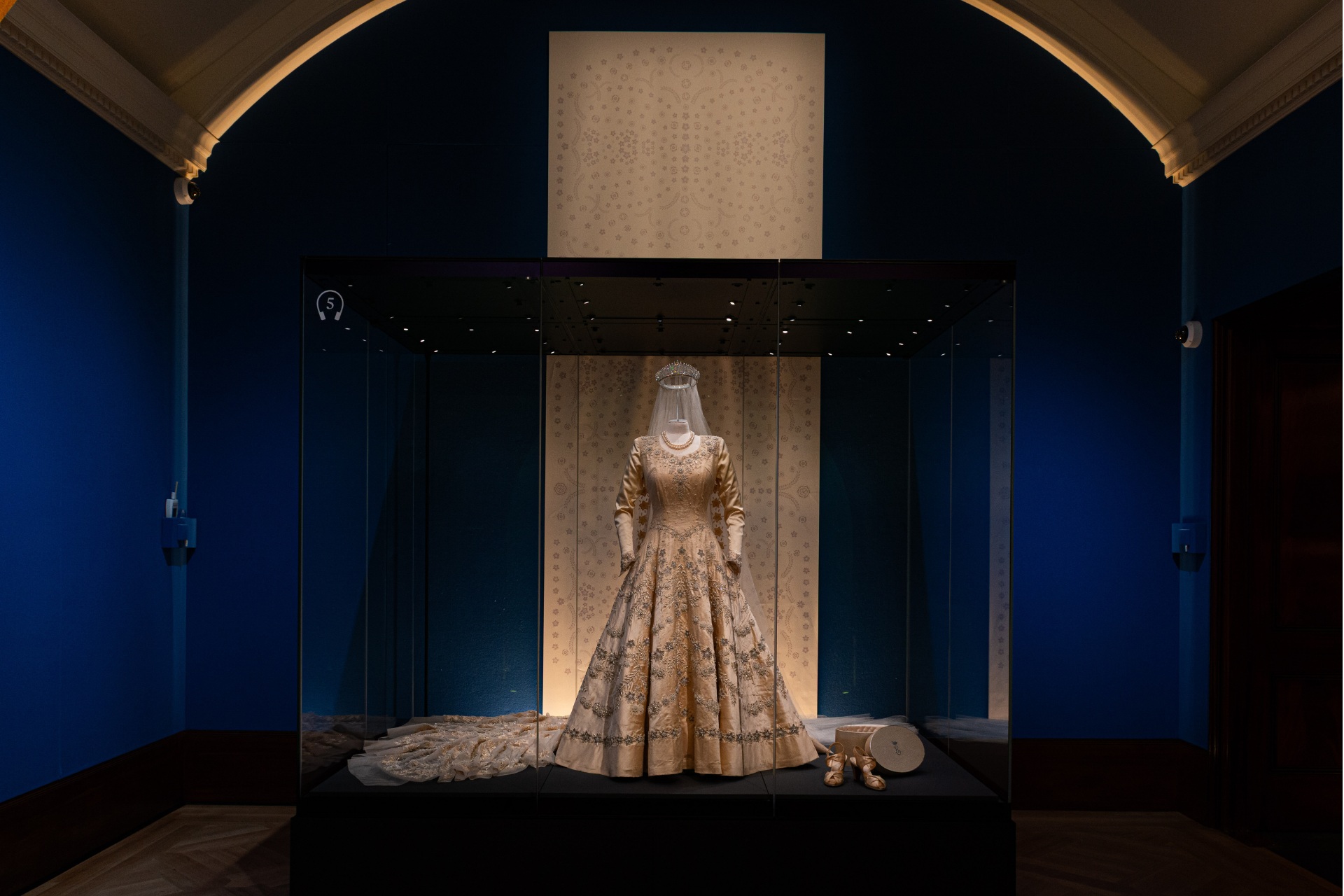
Tapping into the latest fashions, the gown featured a princess line cut and was made using duchess satin supplied by the Scottish firm of Winterthur. To capture the feeling of ‘spring’, meanwhile, Hartnell employed a detailed embroidery scheme of wheat ears (for prosperity), garlands of York roses, star flowers, jasmine and orange blossom using more than 10,000 seed pearls.
It’s said that Hartnell struggled to find the number of tiny pearls needed for the design, but according to Hugo Vickers in his book Elizabeth, The Queen Mother, the designer’s manager took charge here: he allegedly imported them from the United States, declared them at customs, and paid the duty himself to get them to Hartnell’s studio.
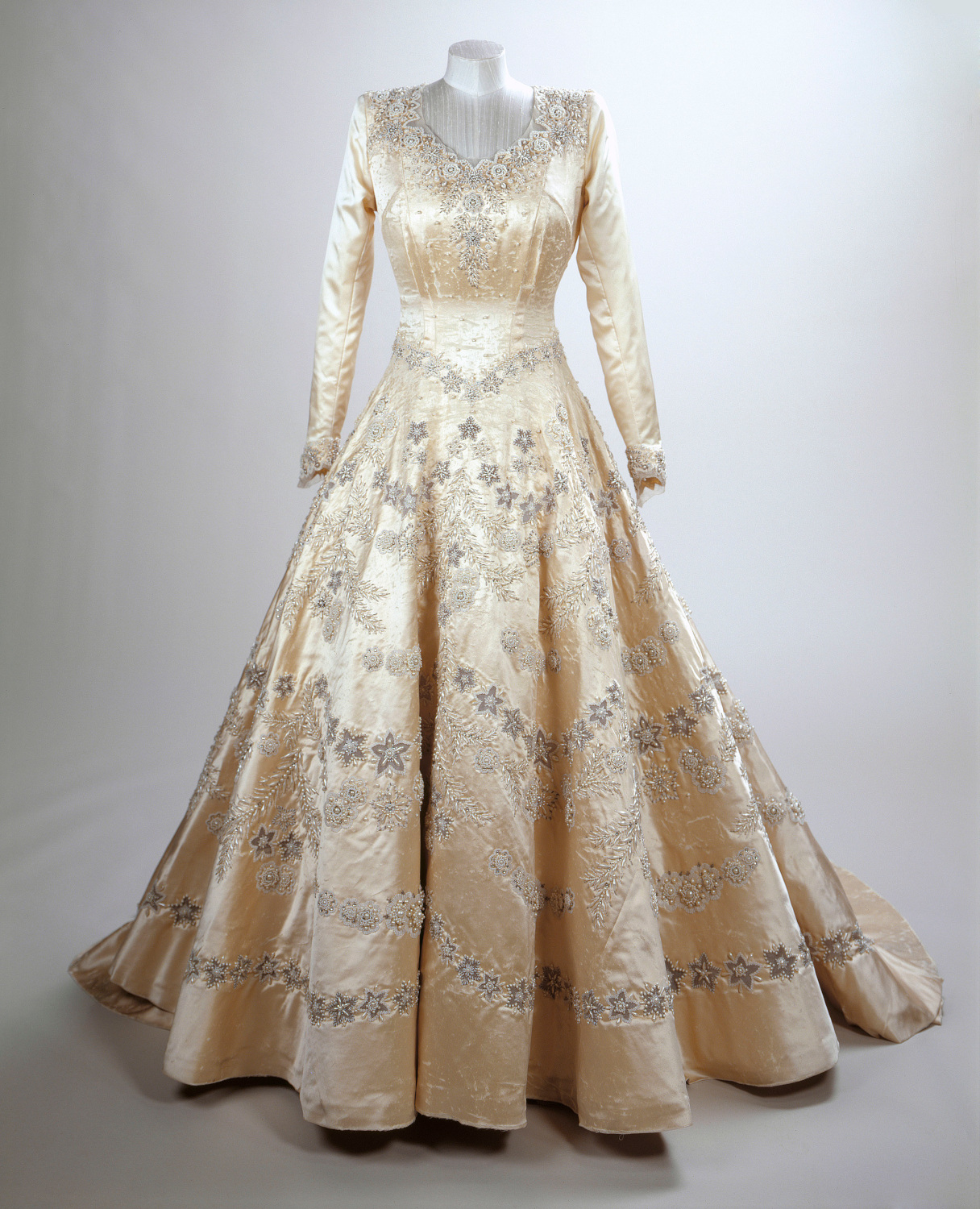
Princess Elizabeth’s Wedding Dress, Norman Hartnell, 1947
The dress also featured a dramatic 13-foot court train, made from silk woven by Warner & Sons and designed with applique embroidery. On her feet, meanwhile, the princess wore a pair of silk satin sandals by Edward Rayne, also decorated with seed pearls (at the palace, you can see the shoes on display with their original box, monogrammed with the letter ‘E’).
Her jewellery also played a significant role in her ensemble, with each piece having been owned and worn by previous members of the royal family. On her neck, the royal wore two pearl necklaces – the Queen Anne necklace, dating back to the 17th century, and the Queen Caroline necklace, from the 18th century – which were gifted to her by her parents, King George VI and Queen Elizabeth, ahead of her wedding day.
As princesses tend to do on their wedding day, the royal also wore a tiara. Known as Queen Mary’s diamond fringe tiara, the tiara has also since been worn by Princess Anne and Princess Beatrice on their own wedding days – and it too boasts a vivid history.
While now a tiara, the diamonds that make-up the headpiece were once part of a Collingwood necklace gifted to Queen Mary in 1893. The gemstones were later handed over to Garrard in 1919, which was tasked with transforming them into a tiara in a fashionable Russian halo style.
It’s also said that, on the wedding day, the tiara snapped as it was placed on Elizabeth’s head. It was quickly shipped off to Garrard for a jeweller to make a quick repair, before being returned to the bride by police escort. The result of the repair job – a small gap between the centre fringe and its adjacent spike – can still be seen in some photographs from the day.
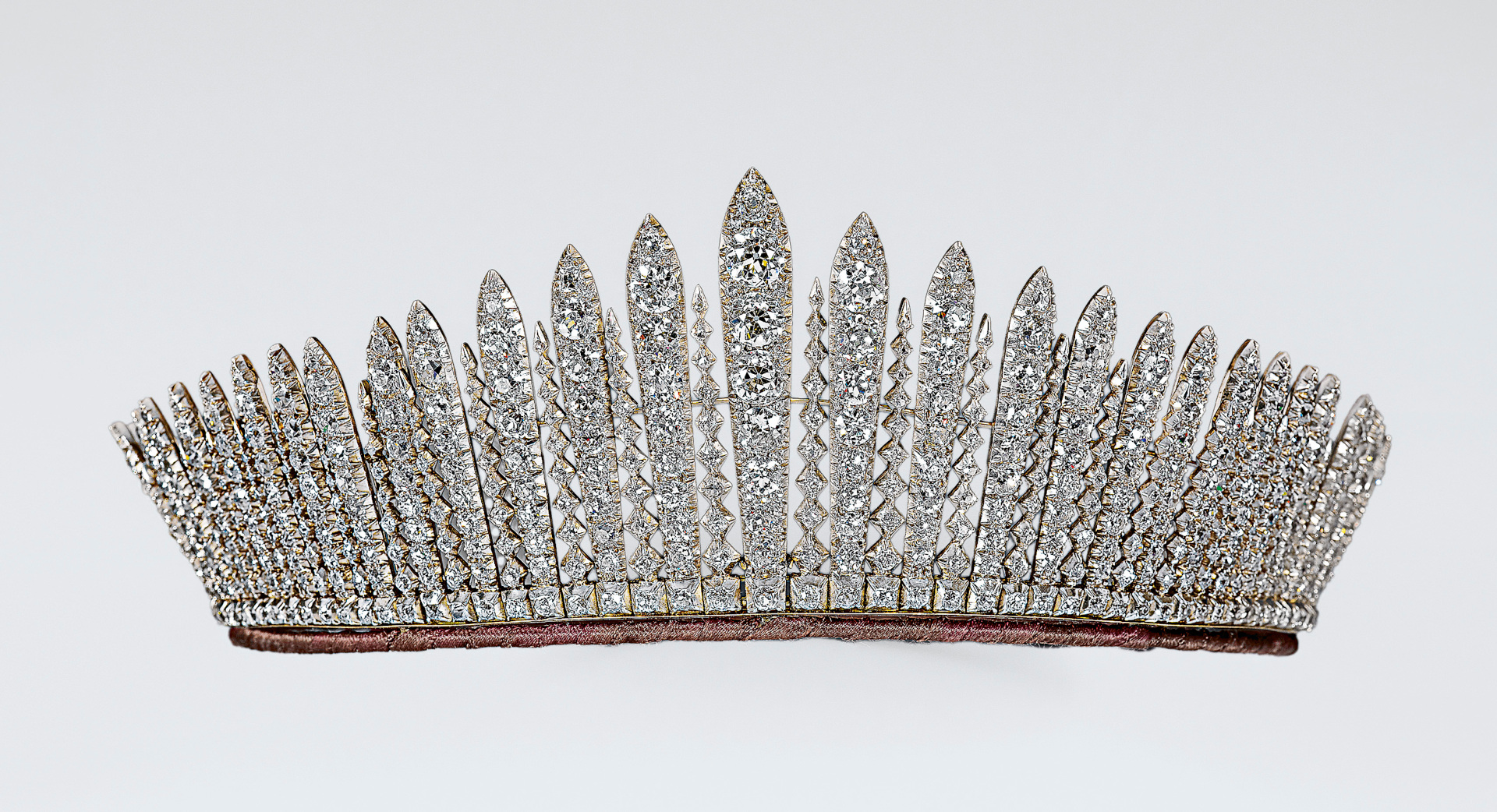
Queen Mary’s Diamond Fringe Tiara
Did She Follow Any Bridal Traditions?
Unlike today’s modern brides, it’s believed that Queen Elizabeth II didn’t stick to any particular traditions for her bridal ensemble. She certainly had something new – her Norman Hartnell gown and Edward Rayne sandals – and something old and borrowed – a wardrobe of antique jewellery lent to her from the royal vault – but these were more coincidental than planned.
The royal didn’t wear anything blue on the big day (although, funnily enough, in later life she chose to wear the colour to several other weddings), which means any notes of tradition end there.
Can You Still Watch The Royal Wedding?
The royal wedding was not televised – people in the UK mainly followed along with the day’s events via radio – but some highlights were shown on TV later in the day.
Preserved archival clips of Queen Elizabeth II and Prince Philip’s nuptials mean we can watch the big day unfold to this day. You can catch glimpses of the big day below:
See It In Person
Queen Elizabeth II’s wedding dress is now on display as part of the palace’s latest exhibition, Queen Elizabeth II: Her Life In Style. A key highlight of the exhibition, visitors will be able to see the queen’s wedding gown as she wore it on the day, with her shoes and accessories also on show for all to see.
But it’s worth noting that this might be the last time we get to see the late monarch’s wedding dress like this. ‘It is likely to be one of the last times we can display it in this manner, on a mannequin,’ says Cecilia Oliver, textile conservator for the Royal Collection Trust. She notes that the dress, due to it having been originally treated with tin salts to improve the weight and drape of the fabric, has since become incredibly brittle. ‘Moving forward, we might be able to display it flat, but it will get to a point where we can’t display it anymore. And so this is a very special moment to be able to see it in its full glory, with its train, with its veil.’
She adds that, for the exhibition, the wedding dress needed ‘comprehensive conservation treatments’ for it to go on display. ‘It’s just a result of the manufacturing process,’ she says, referring to the tin salts. ‘The silk was washed in tin salts, which is what gave the fabric its lustrous look and richness. But they didn’t realise at the time that it would accelerate the degradation of the fabric.
‘We can’t reverse the process, but we can try and slow it down with correct support,’ Oliver continues. ‘There’s a full net support underneath the dress – if you go and have a look at it, you can see the net peeking out of the back.’
When: 10 April – 18 October 2026
Where: The King’s Gallery, Buckingham Palace, London SW1A 1AA
Tickets: Tickets are £22 | rct.uk