



The Newt’s Live Well Retreat Offers A Food-Led Approach To Winter Wellbeing
By
3 days ago
‘The New Year is a time for nourishment, not reset’
In January, Somerset hotel The Newt unveiled a trio of Live Well winter retreats, created in collaboration with a line-up of leading industry figures and expert speakers. Each two-night stay explores a distinct theme: nourishment, which launched the series in January; movement, kicking off in February; and balance, bringing the programme to a close in March. C&TH Wellness Editor, Camilla Hewitt, joined the first retreat to find out more.
Live Well At The Newt
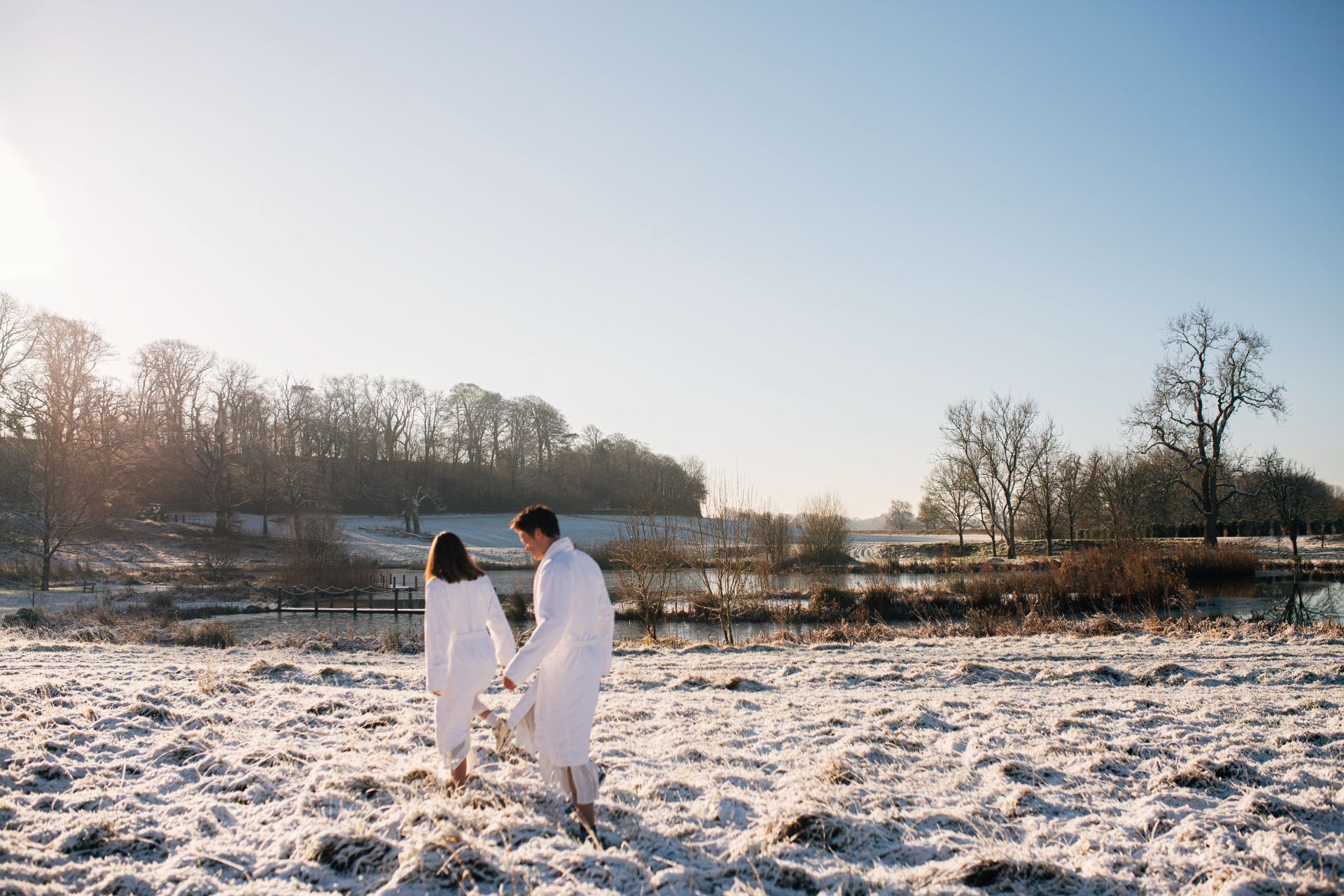
Arriving at The Newt, it’s easy to see why this celebrated hotel has joined the growing roster packaging up wellness retreats. All the hallmarks are here: a spa with a glass-fronted sauna and woodland views, bedrooms fitted with roll-top bathtubs, and a beech-lined studio for yoga and breathwork classes. Live Well, however, was not a conventional spa break. Over the following two days, the focus would be on nourishment – a food-led approach to winter wellbeing.
As a working estate with extensive gardens, farmland and cider orchards, The Newt is well placed to explore this aspect of wellness. Under the guidance of David Rowley, head of productive growing, we ventured behind the scenes, stepping into growing spaces rarely seen by guests to gain a deeper understanding of how food, land and wellbeing are intrinsically connected.
Making our way through the orchard (planted with 30,000 trees across 70 varieties) to the fields of winter squash and mineral-rich greens, we paused at the high-tech glasshouse. Here, the team is tasked with cultivating the tastiest tomatoes to serve at both the hotel and The Garden Café, where head of food Gelf Anderson – one of the first chefs to receive a Michelin Green Star – creates vegetable-led menus.

Here David noted how the nutritional density of modern food has declined, with so many of us eating nutrient-poor and ultra-processed foods: overfed but undernourished. With The Newt’s farm-to-fork ethos firmly established, things are different here. Produce reaches diners’ plates just hours after harvest, ensuring peak nutritional content.
Working on the land, David explained, deepens our connection to the seasons and appreciation for where our food comes from. To eat well, he says, is to choose what’s in season: foods bursting with flavour, because they are rich in nutrients. When dishes taste as they should, like the tomatoes from The Newt’s glasshouse, there’s less temptation to reach for processed alternatives.
Quoting a philosophy attributed to American chef and author Dan Barber, he added, ‘If we are going to change the food system, we must be merchants of pleasure, not armies of virtue.’ This resonated with me. In the wellness world, we’ve seen a rise in so-called ‘health foods’ – many of which, let’s be honest, aren’t truly healthy. If we shifted our focus and took pleasure in eating what grows in our gardens or is stocked in local farm shops, we could begin to transform a food system that isn’t serving us well.
Back indoors, beside a crackling fire, we settled into a conversation on winter nutrition with Jasmine Hemsley. An expert in Ayurveda – a 5,000-year-old system of medicine – Jasmine’s approach to food and health is centred on living in harmony with the seasons. In Ayurveda, winter is considered a time of strong digestive fire (Agni), when we should be building strength and nourishing the body for the year ahead. Our metabolism naturally increases during the colder months, meaning we can eat more substantial, nutrient-dense meals rather than dieting – despite this often being the dominant narrative in January.
Because winter is cold and dry, Ayurvedic principles focus on balancing those qualities with their opposites: warmth and moisture. Jasmines recommends oilier foods such as soups and stews, as well as ferments like kimchi, all of which can play a supportive role at this time of year. Spices including ginger, turmeric, cinnamon and cloves are also encouraged for their ability to stimulate digestion and ward off winter-related illnesses.

Using the warming hearth beside us as a metaphor, Jasmine described our digestive fire as something we want to keep steady and burning gently. Constant snacking keeps the fire perpetually on, weakening it over time, while raw foods, smoothies and cold drinks dampen digestion by requiring extra heat to process, often resulting in poorer nutrient absorption. Ideally, our food should mirror our internal environment, warm and moist, in order to support digestion.
In the modern world, our metabolism can easily become confused by artificial light, central heating and the year-round availability of foods. As much as possible, Jasmine encourages us to remember that we are part of nature. There was once a time when life was lived by candlelight and winter evenings naturally wound down at dusk. Today, the new year arrives with a barrage of health and fitness directives, urging us to start a new regime at a time traditionally reserved for rest and replenishment. Jasmine notes that in many cultures, spring is considered the true start of the year, when light returns and nature begins to bloom. By prioritising nourishment in winter, we allow ourselves to emerge into spring restored rather than depleted.
Building on Jasmine’s recommendation to embrace fermented foods during the winter months, we joined a fermenting and preserving workshop led by Peter Prescott, founder of local brand CULTJAR. With a background in hospitality that’s seen him work alongside some of the culinary world’s leading names, Peter shifted his focus after moving to Worminster Farm, a smallholding in Somerset, where he began experimenting with fermentation.
Inspired by forward-thinking restaurants around the world that are using ancient preservation techniques to intensify flavour and introduce new taste profiles, CULTJAR’s recipes extend far beyond kimchi and sauerkraut. During the workshop, we learned to make red cabbage, beetroot and garam masala from scratch and sampled golden beetroot senmaizuke, a recipe developed in collaboration with acclaimed Japanese restaurant Koya.
Listening to Peter, it was clear his philosophy echoed David’s: it’s about finding pleasure in what grows close to home. Fermentation not only enhances flavour by adding complexity but also extends the life of nutrient-rich seasonal produce, bringing with it a host of health benefits, too.
While I did indulge in the usual wellness-retreat rituals during my stay – an Epsom-salt bath, guided breathwork session and a full-body massage – this retreat felt rooted in education as much as restoration. I left with a notebook filled with practical advice, recipes and insights to carry into everyday life.
With its nourishing retreat, The Newt tapped into its greatest asset: the green, pleasant (and deeply productive) Somerset landscape. And while I will, of course, welcome the first signs of spring, I’ve taken real comfort in recognising that the start of the year is a time for nourishment, not a total reset.
BOOK IT
For details on the next Live Well retreat (11–13 March), visit thenewtinsomerset.com