


British Country Kitchen Ideas To Inspire You
By
4 months ago
Trinkets, antiques, and memories are key to creating your perfect country kitchen
What first comes to mind when you think of a British country kitchen? For us, the perfect country kitchen is precisely when it’s not perfect. It’s laissez-faire, full of collectables, stories and memories all crammed together in a beautifully chaotic way.
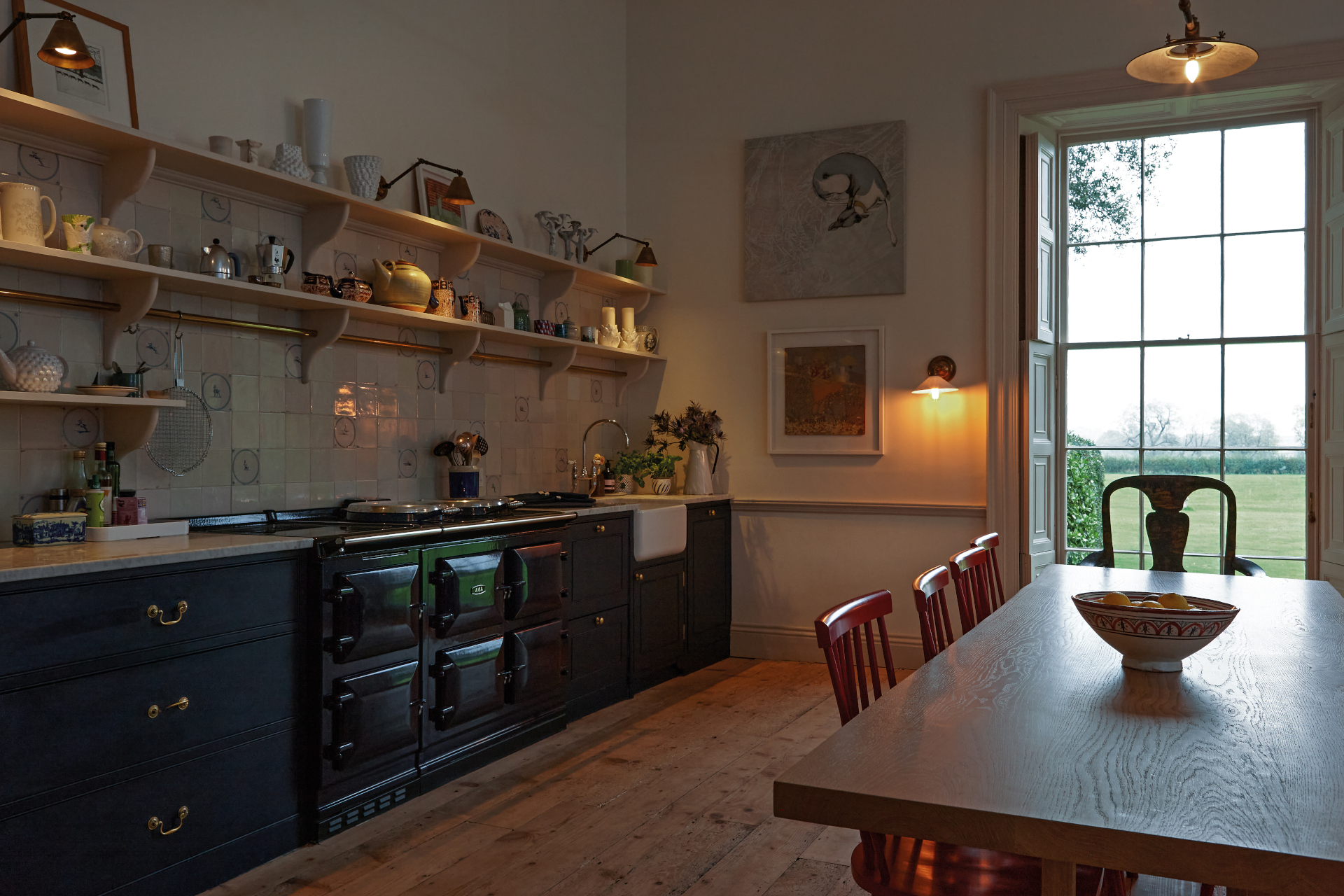
It’s spending most of the winter drinking cups of tea after sitting on the floor by the AGA, with a tea towel drawn down so you don’t completely burn your back. It’s a mish-mash of Emma Bridgewater cups, that stash of vintage plates you don’t know what to do with, and a dog bed you probably need to put in the wash. But then it’s all balanced with the beautiful: assembling intriguing antiques and collectables on a dresser that truly expresses you.
Here, we gather all of our best tips, tricks and inspiration picks to get you started on your own British country kitchen. (Cups of tea not included.)
What Is A British Country Kitchen?
It’s not just us – even the interior design experts love a British country kitchen. ‘This is a space that exudes warmth, authenticity, and ultimately feels homely yet beautifully finished,’ says Rebecca Hughes, founder and Creative Director of Rebecca Hughes Interiors. ‘They’re the true heart of the home; it’s where families gather, conversations unfold, and memories are made.’
AGA
‘A classic British country kitchen feels as if it has always been there,’ adds Laura James, Head of Communications, Engagement and Advocacy at AGA. ‘They aren’t built around trends and their owners tend not to chase fashion. Instead they are driven by the desire to create a space that is comfortable, storied and full of character.
‘It’s a style that endures because it’s built on longevity and usefulness,’ she continues. ‘These kitchens feel established even when new. There’s a permanence about them. People are increasingly drawn to kitchens that feel anchoring, with materials that have been carefully chosen for their provenance. A good country kitchen is easy to live with. You don’t have to worry about putting a glass down on a surface or splashes when cooking. They feel welcoming, uncomplicated and adaptable.’
And when it comes to feature spotting, the key pieces to look out for are what Rebecca dubs ‘timeless British design elements’ – think rustic beams, brass fixtures, a butler sink, simple hand-painted cabinetry and natural materials like wood and stone.
‘You’re more likely to see a prep table or large scrubbed dining table than an island unit,’ notes Laura. ‘There’s often a sofa or comfortable chair and there’s most often a range cooker. These kitchens done well are the perfect mix of form and function, warmth and durability.’
‘It’s a beautiful balance of heritage and character,’ adds Rebecca. ‘These features combine practicality with warmth and understated elegance. Rooted in history and rich with nostalgia, it is a style that remains both enduring and inviting.’
Pluck
How To Nail The British Country Kitchen Look
Mix Old With New
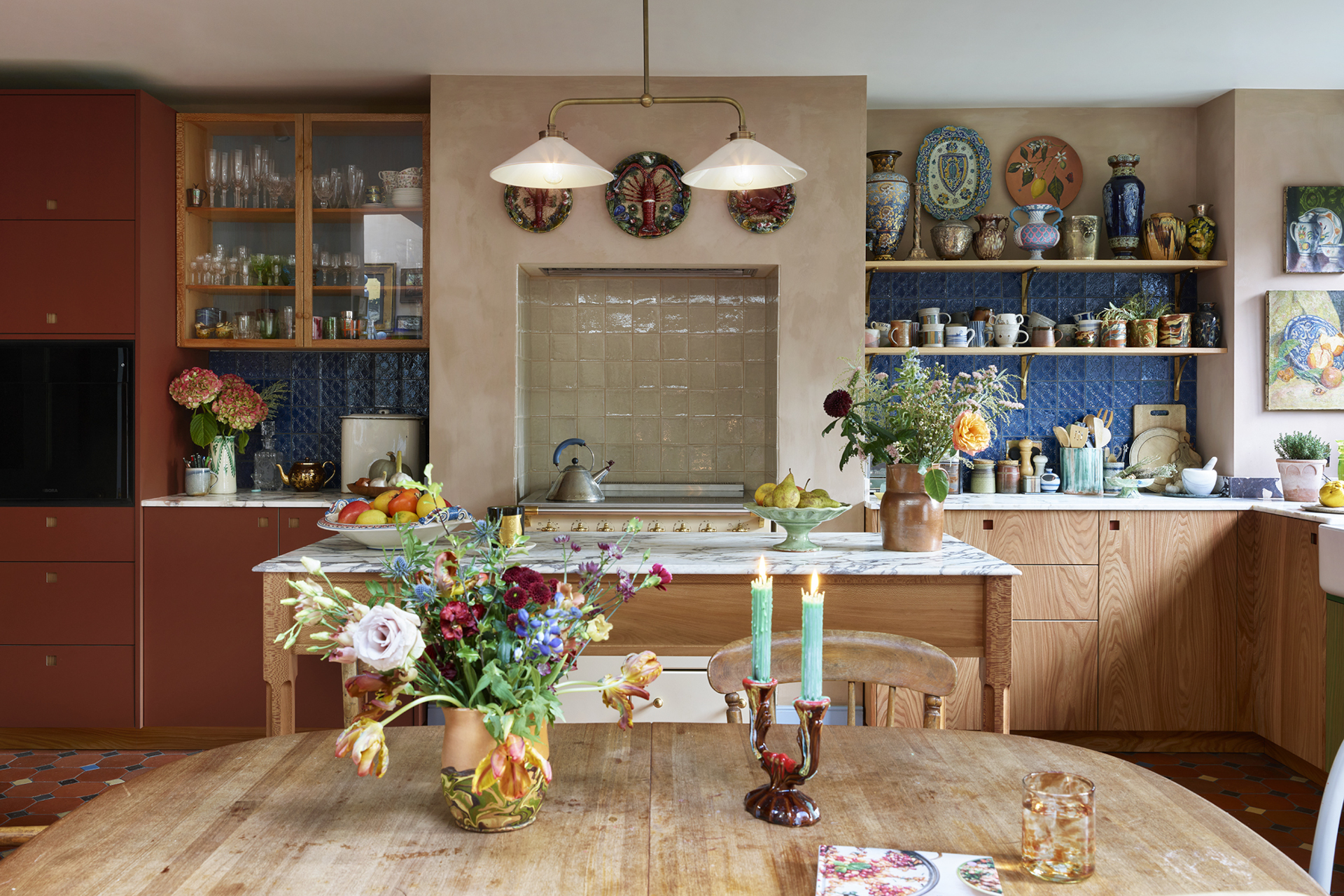
The higgled-piggledy charm of a British country kitchen is its imperfect blend of tools and trinkets – rarely matching, rarely from the same time period. Rebecca recommends styling the space with a collection of antiques you’ve picked out specially. ‘Antiques can really help soften the space,’ she explains. ‘Kitchens can be quite clinical, but an antique jug or battered chopping board can authentically add character. Antique trinkets such as copper kettles or earthenware vases bring a wonderfully warm and cosy feel.’
Invest In Longevity
You’ll also want to design for the long run. ‘Think in terms of choices you’ll be happy living with for a very long time,’ says Laura. ‘Country kitchens aren’t routinely replaced; they evolve through time. This approach favours things that can be maintained and kept in service long after you first buy them.’
Add Character
‘Ultimately, you want your kitchen to reflect your personality and how you use it,’ notes Rebecca. ‘Think about the colours you love and be brave.’
‘Choose a colour palette that will bring you joy every day and layer with items that really mean something to you,’ adds Laura. ‘A beautiful painting, vintage plates or cookware all add to the storied feel.’
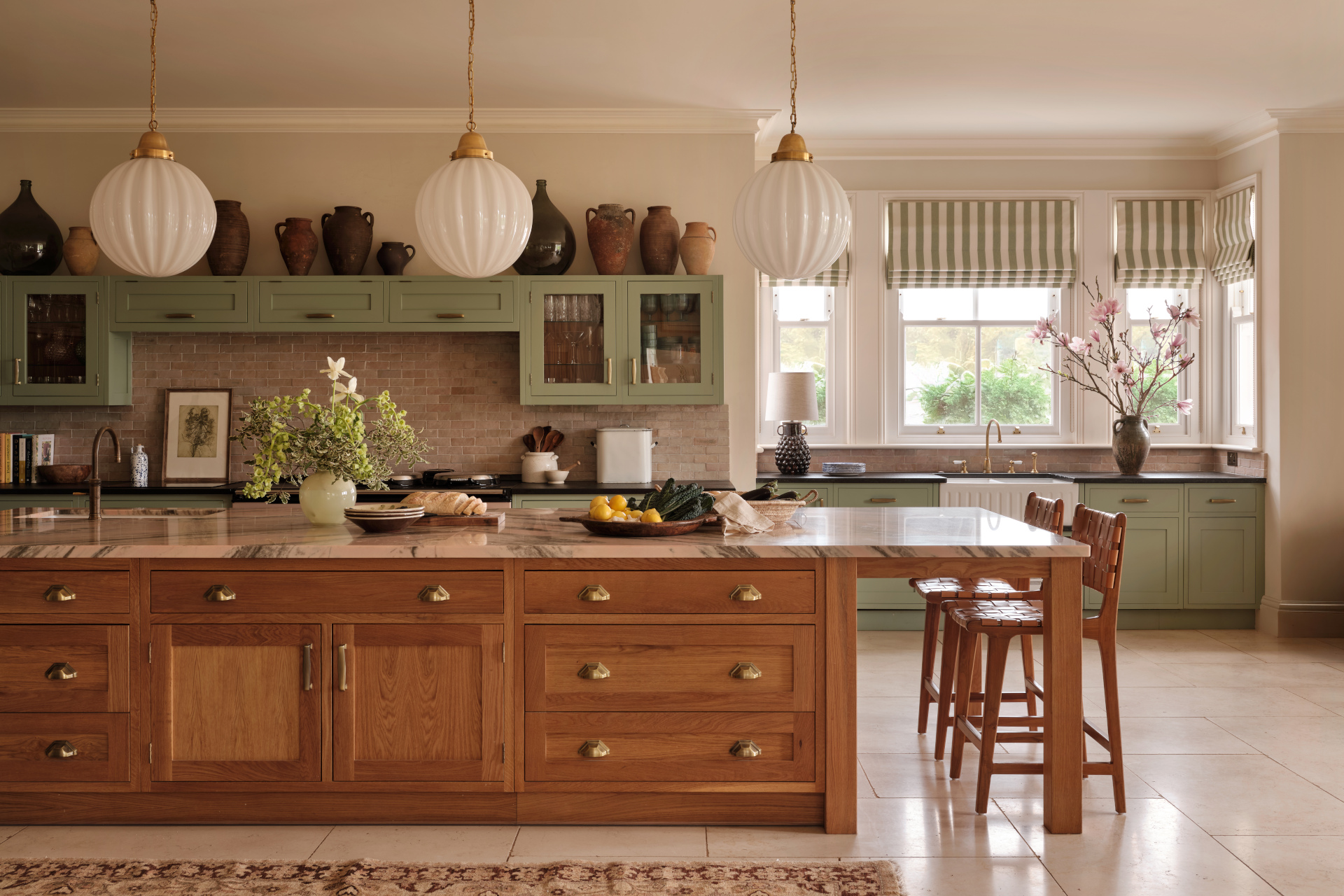
Rebecca Hughes Interiors (photography by Atrid Templier)
Don’t Be Too Coordinated
Be careful not to get too swept up in perfection while planning – coordination is not needed. ‘Mixing fitted cabinetry with more relaxed elements, such as open pantry shelving, a vintage prep table, or a counter-standing cupboard, gives the space a more natural rhythm and will stop it feeling too uniform,’ says Laura.
Layer & Mix
With this in mind, don’t be afraid to mix, match and layer to your heart’s content. ‘In a kitchen design, I believe mixing a range of materials creates an engaging and tactile space,’ adds Rebecca. ‘You can pair a varying selection of materials, such as aged wood with brass fixtures and linen curtains to create a refined, understated, and luxurious space. These natural materials are timeless – they possess an inherent beauty that transcends temporary trends.’
Don’t Overdo It
‘The biggest mistake is overdoing the theme,’ warns Laura. ‘When every detail tries to signal “country”, the result can feel staged instead of authentic. Lightweight imitation materials also undermine the effect. If a surface looks traditional but doesn’t perform as if it is, it rarely ages well.’
Where To Find Inspiration
If you want to see what an authentic British country kitchen looks like, head to the source. ‘Historic houses, particularly Georgian ones, are a great starting point for a country kitchen,’ suggests Laura. ‘Kitchens in older houses, where everything was shaped around the rhythms of daily life and real use, offer the best inspiration. Once you start looking you notice simple but beautiful joinery, practical layouts and honest, resilient materials that were chosen to last.’
From there, you can look at ways of incorporating this aesthetic while keeping your kitchen rooted in its local time and area. ‘When recreating this look, draw inspiration from your surroundings and think about what textures, colours, and materials you love,’ Rebecca advises. ‘Mixing features from a range of periods is a brilliant way to create a layered look, making a space feel as if it has been organically evolved over time. This contrast offers the best of both worlds – the cosiness of traditional style with the crispness of contemporary design, all in one harmonious space.’
Still looking for inspiration? We’ve tapped some of our favourite interior designers, experts and brands for some stunning British country kitchen ideas:
HÁM Interiors
HÁM Interiors
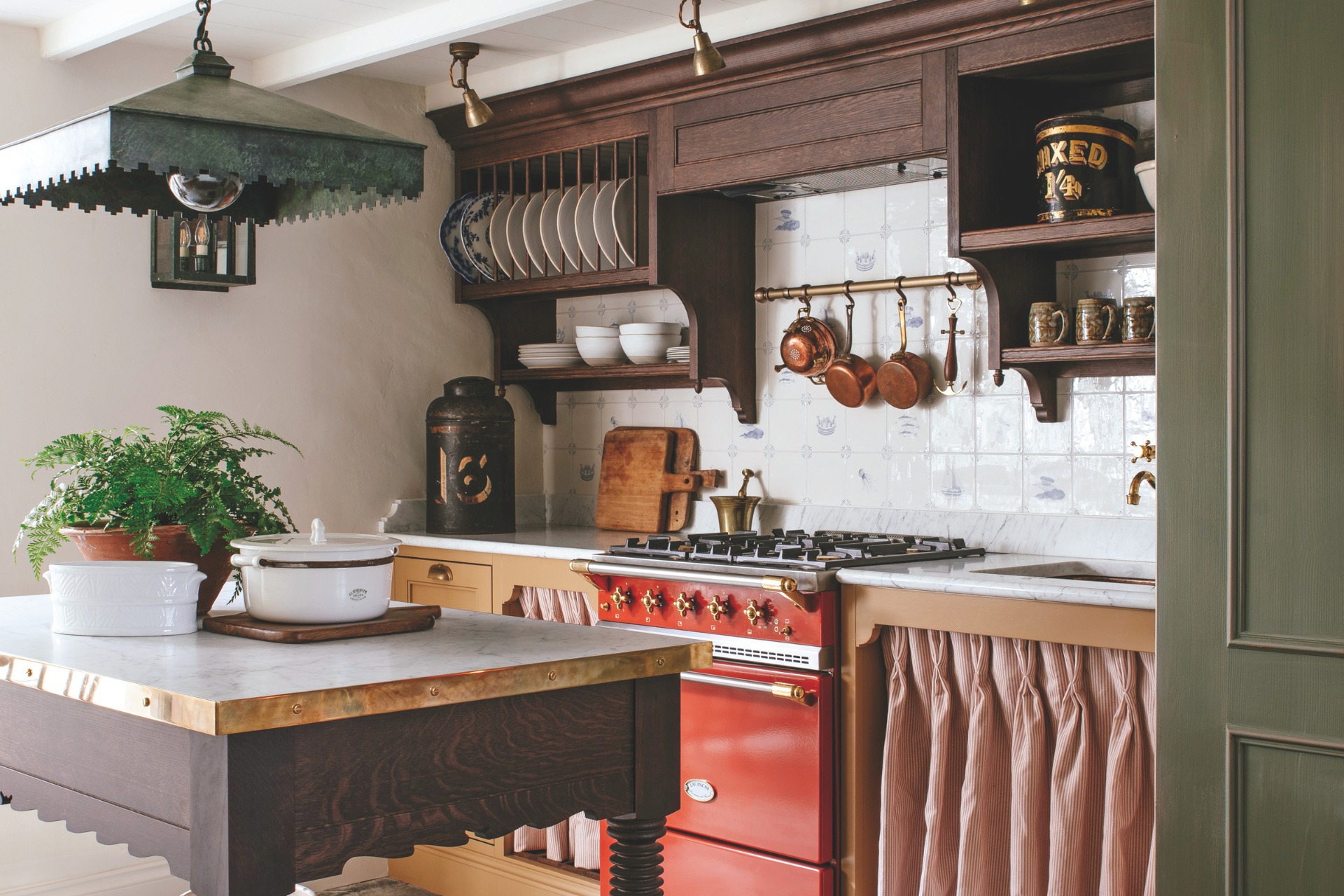
This Cornish kitchen builds on both historic and local design traditions. ‘We drew inspiration from the great Georgian kitchens of English country houses – spaces that were hardworking but full of life and accumulated detail,’ explains Tom Cox, CEO and chief creative of HÁM Interiors. ‘We kept the original Cornish Delabole slate for the floor, adding a freestanding island based on a Georgian dairy table.’ The handpainted Delft tiles were made by local Cornish company Decorum. ‘The motifs – mackerels, seagulls, sailing boats – felt completely right. We loved the local folklore woven into those tiles and were particularly drawn to the stargazy pie, a nod to the traditional pilchard dish from Mousehole.’ haminteriors.com
Emma Sherlock
Emma Sherlock
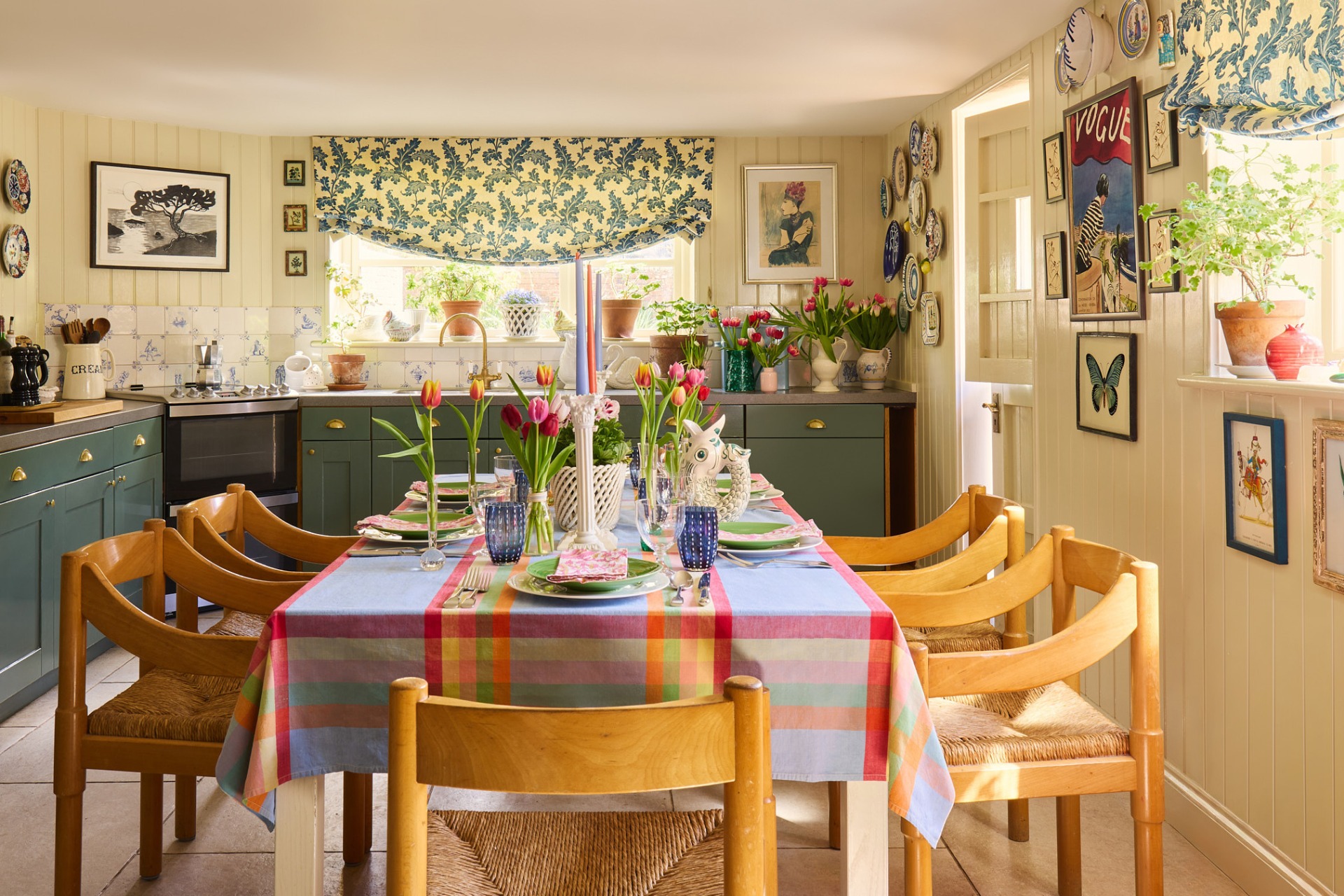
For most of us, the kitchen is the heart of the home. A joyful hub for gathering friends and family, this design by Emma Sherlock starts with a neutral base –cream wood panelling and muted teal cupboards – before it up with colourful wall prints, botanical blinds and eclectic table decorations. emmasherlock.com
Susie Watson Designs
Susie Watson Designs
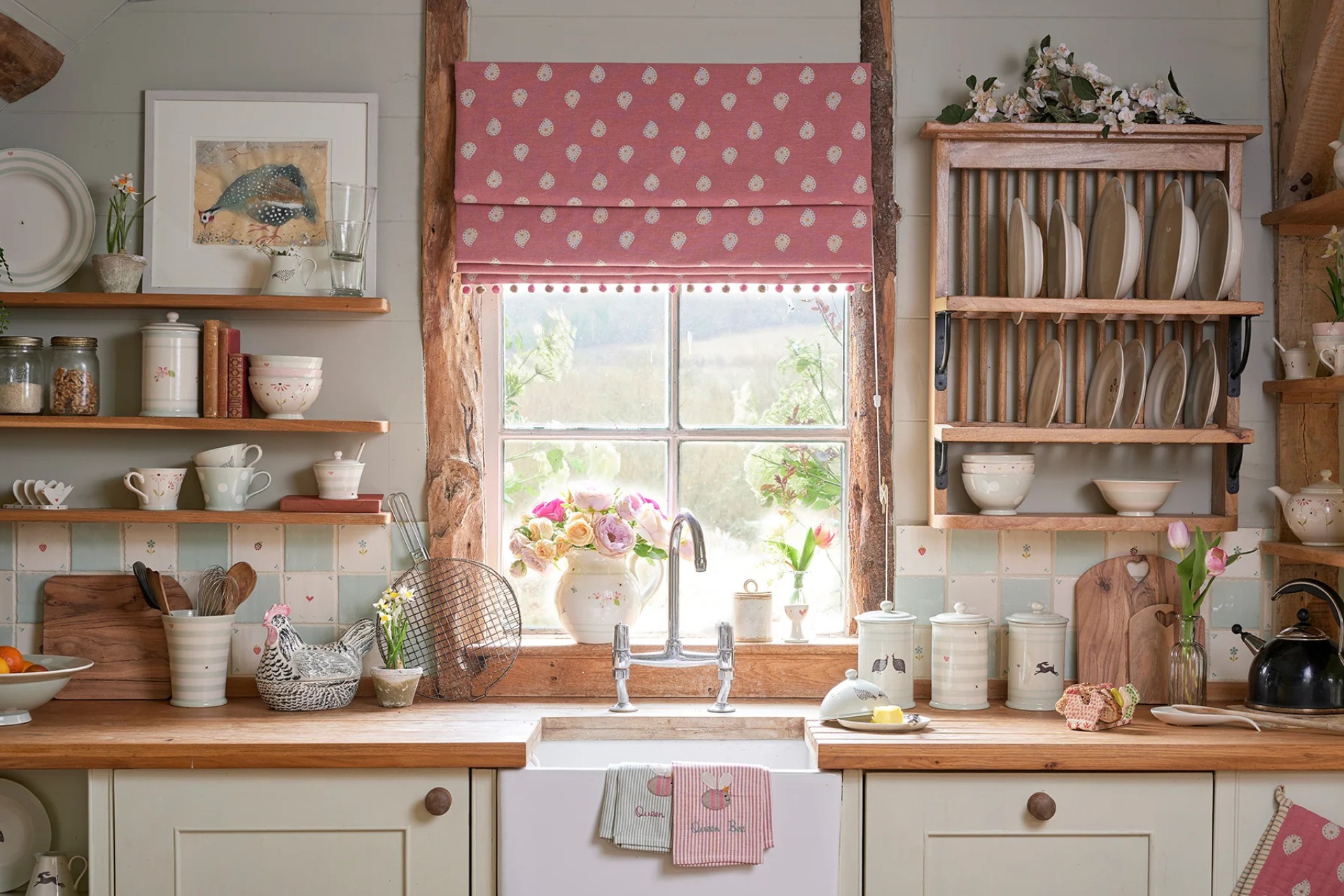
Cosiness comes in spades with this setup by Susie Watson Designs. Cute little wall tiles decorated with fruits and flowers frame a bright window view over neighbouring fields, while shelves and counters cluttered with patterned china signal signs of life – and a very hungry family. Small additions, like flowers on the windowsill and matching tea towels slung over the sink edge, give the space its charming quirks. susiewatsondesigns.co.uk